



The Art of Falling in 10 Paintings
The Japanese proverb says Nanakorobi yaoki, meaning “fall seven times, get up eight.” No matter how much you stumble, the essential is to...
Guest Author 13 August 2026
21 July 2026 min Read
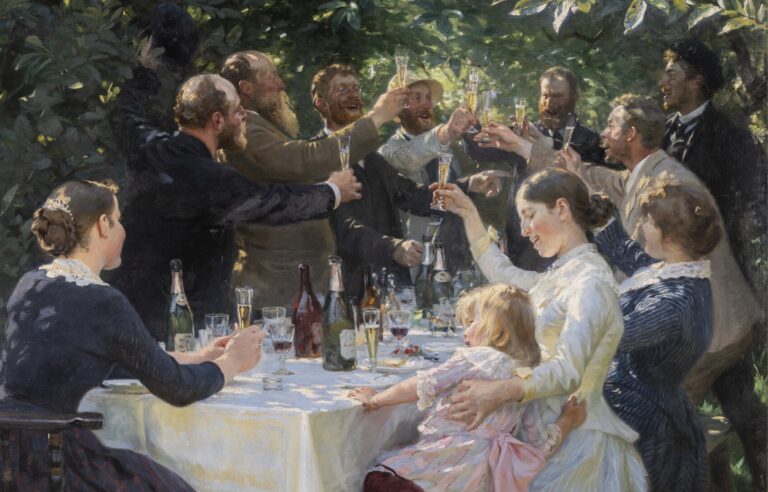
Peder Severin Krøyer, Hip, Hip, Hurrah! Artists’ Party, Skagen, 1887–1888, Gothenburg Museum of Art, Gothenburg, Sweden. Detail.
This July, DailyArt Magazine turns 10. On this occasion, we asked people who create it for symbolic artistic gifts. We asked for artworks that are meaningful to them or important to their story shared with the magazine. Here is our wonderful birthday collection for the decade of existence.
DailyArt Magazine was established in the summer of 2016 by Zuzanna Stanska as an addition to the DailyArt app. She thought that it would be a perfect place for longer texts and more pictures, something which goes beyond the minimalist concept of DailyArt. This is how it still serves: many stories and visuals that don’t fit the app, you will find here in the magazine.
But over the years, the magazine has become so much more. It is now a fully developed, independent online magazine on art and art history, covering a wide range of current and historical subjects. Our correspondents visit events and exhibitions around the world, we partner with museums and publishing houses, and we review and report. We give voice to those who have been silenced and erased. What I found most important, however, is that we created a beautiful community of art lovers, both within the editorial team and among our readers. Many of you have been with us for years, and this is why we are still doing this. Thank you.
Happy birthday, DailyArt Magazine!
Catriona Miller, Author
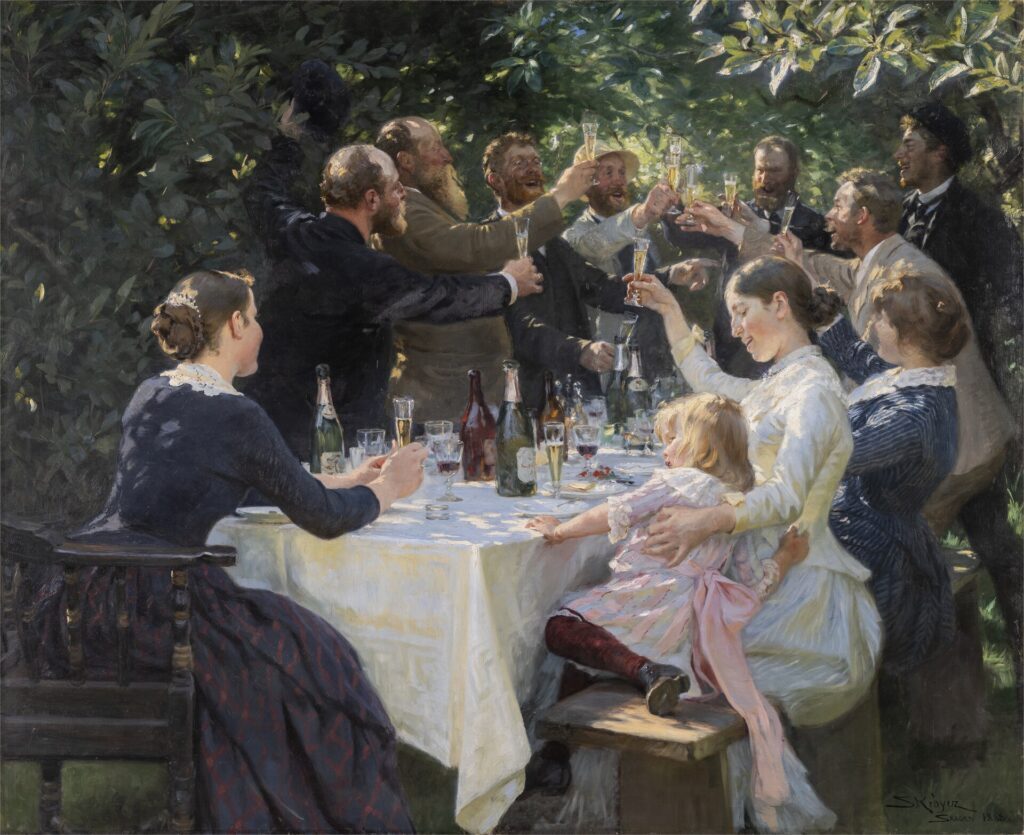
Peder Severin Krøyer, Hip, Hip, Hurrah! Artists’ Party, Skagen, 1887–1888, Gothenburg Museum of Art, Gothenburg, Sweden.
Peder Krøyer’s Hip, Hip, Hurrah! is one of the great celebration paintings. The painter and other members of the Skagen artist community, including Anna and Michael Ancher, are all raising a toast with plenty of champagne in a leafy garden. Dappled sunlight and pinkish highlights suggest warmth in the air and you can almost hear the glasses clink. It looks like they are having a great time, even if little Helga Ancher is getting restless. Happy Birthday and Hip, Hip, Hurrah to DailyArt Magazine!
Candy Bedworth, Author
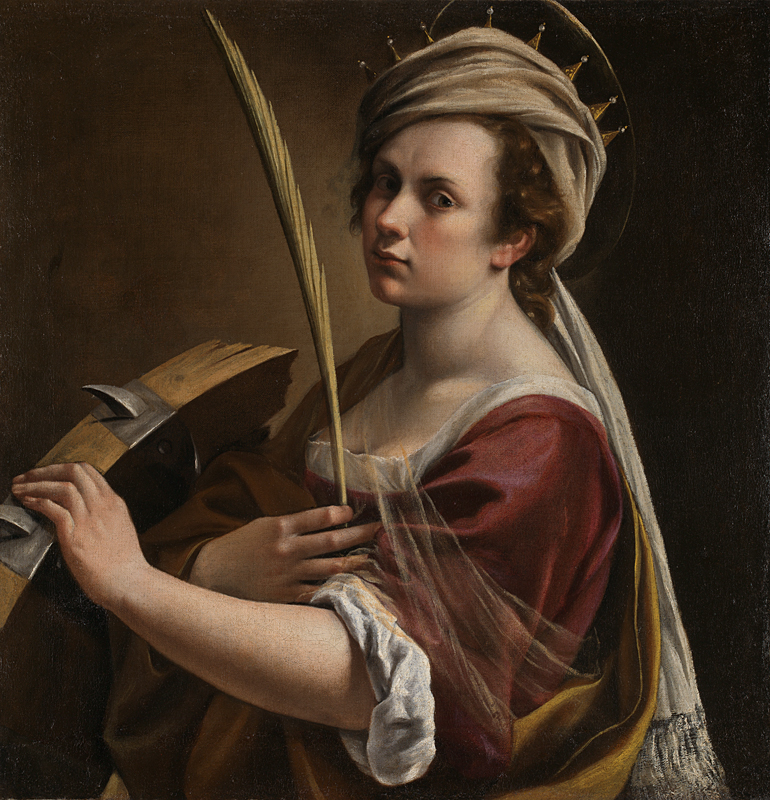
Artemisia Gentileschi, Self Portrait as Saint Catherine of Alexandria, ca. 1615–1617, National Gallery, London, UK.
With art, time travel is possible—we can connect to other times, places and people. A couple of years ago, I saw this Artemisia Gentileschi self-portrait at Ikon Gallery in Birmingham, England, as part of a National Gallery tour. It was curated by contemporary Irish artist Jesse Jones, and it was astonishing! I felt an immense emotional charge as I sat gazing at the canvas, connecting with Gentileschi, a pioneering and powerful artist from 17th century Italy. Amazing!
Sam Malone, Author
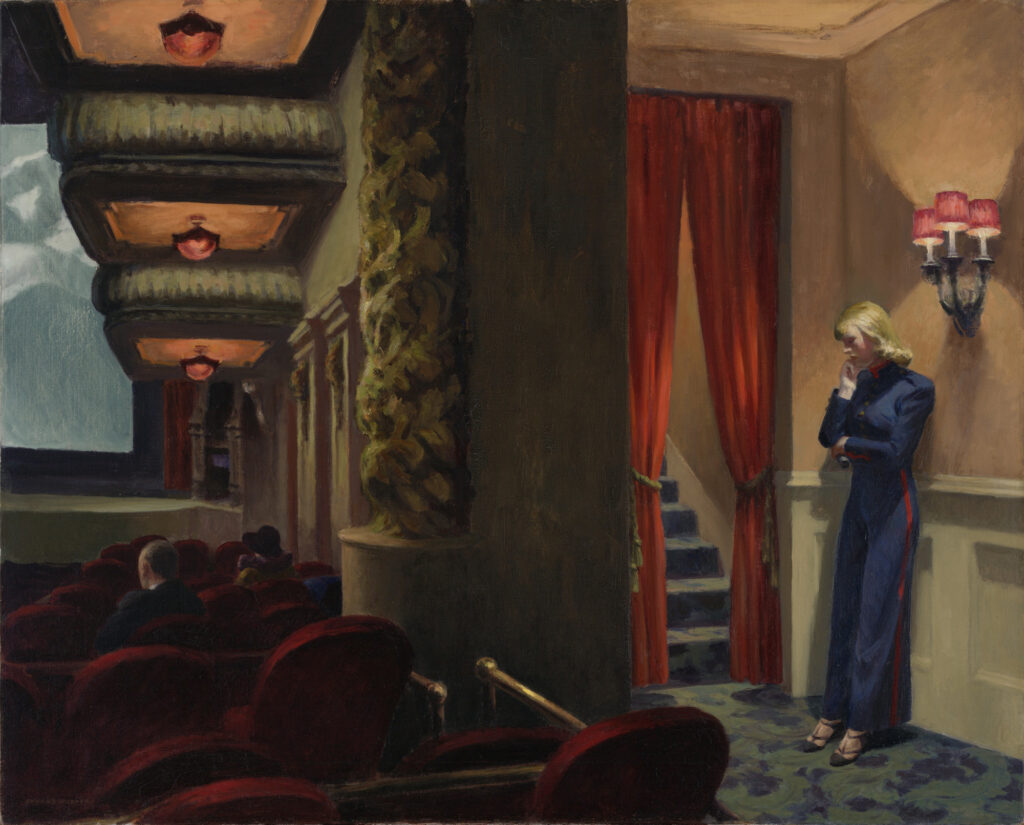
Edward Hopper, New York Movie, 1939, Museum of Modern Art, New York City, NY, USA.
As someone who is both passionate about art and cinema history, Edward Hopper’s New York Movie is very meaningful to me. Seeing this painting in person was an indelible experience. Like all of Hopper’s paintings it mystifies in its melancholy and ability to imbue reflection with light and color. The quiet leaning repose of the woman to the right (based on Josephine Hopper), perhaps contemplating the movie on screen, reveals the sacredness of the space she occupies. In his own subtle way, Hopper demonstrates the power of cinema and moviegoing.
Edoardo Cesarino, Author
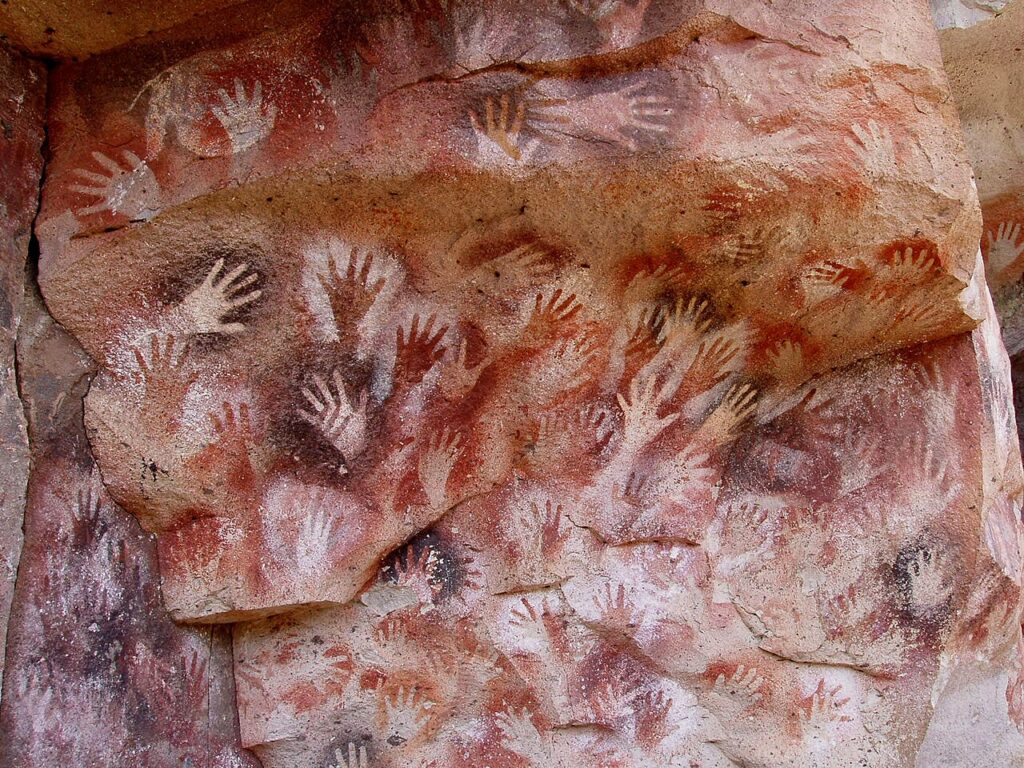
Painting at Cueva de las Manos, 7300 BCE–700 CE, Santa Cruz, Argentina. Photograph by Mariano via Wikimedia Commons (public domain).
The very first article I wrote for DailyArt Magazine was about artworks to lift your mood. In it, I included Cueva de las Manos, in Argentina. As the name suggests, it’s a cave whose walls are covered in stencils of handprints made by our ancestors between 13,000 and 9,500 years ago. Ultimately, this is what I think art is all about—expressing ourselves, saying we were here, and having a bit of fun (I could also say DailyArt is made of a lot of hands working together making something special, but that would be very soppy!).
James W Singer, Author

François Boucher, Madame de Pompadour, 1759, Wallace Collection, London, UK.
Madame de Pompadour is the front cover image of the first great biography that I ever read. I truly judged a book by its cover, and it successfully began a lifelong passion for French art and royal history. Over two decades later, on January 4, 2026, I finally visited the Wallace Collection and admired Madame de Pompadour. I felt like I was reuniting with an old friend after a long separation. I’ll admit, I shed a tear, but I was deeply happy. I finally met Madame face to face.
Errika Gerakiti, Author
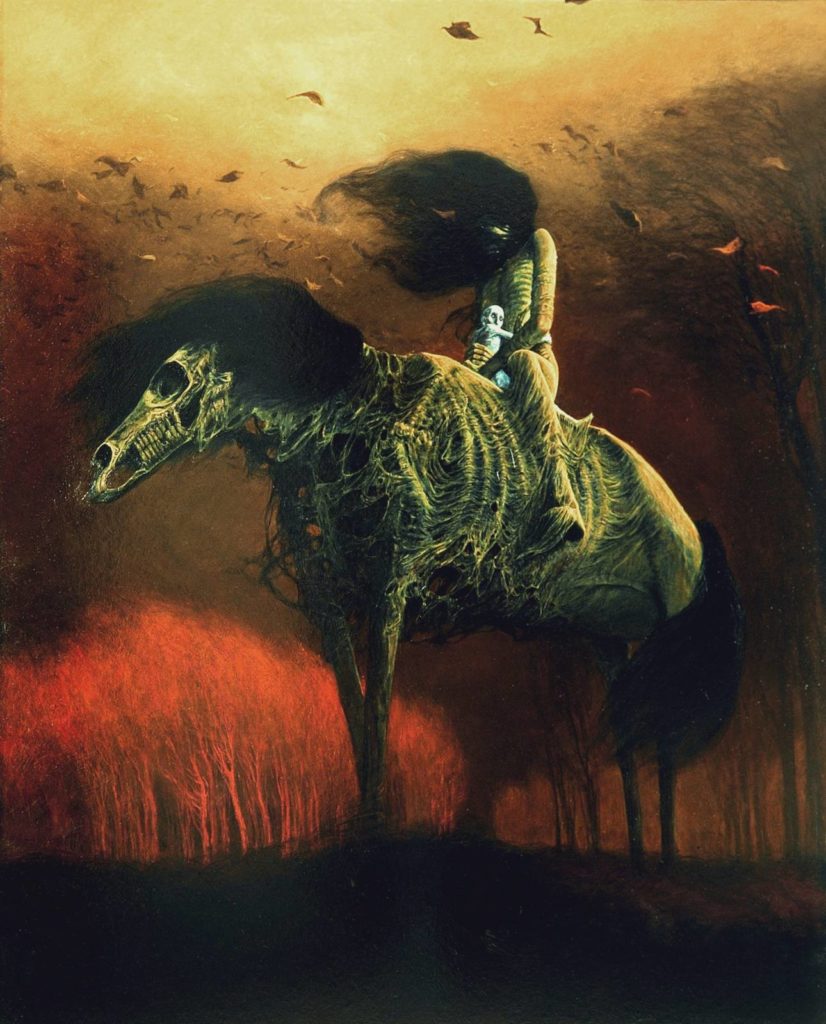
Zdzisław Beksiński, Untitled, 1976, The Historical Museum in Sanok, Sanok, Poland. © Gallery of Zdzisław Beksiński.
I discovered Zdzisław Beksiński in 2018, through the DailyArt app, with this exact painting. My love for gothic imagery, body horror, and dark surrealism had always been there, quietly waiting for something to move me. Then I saw this, and it stopped me. I returned to it for days, certain I was reading (my own) psychological torment into it. A haunting figure rides her skeletal horse, cradling a small child, shielding it from the world beyond: trees aflame, the air thick and toxic, everything eerie and smoldering. I imagine that child is the girl she once was, carried through the nightmare before reaching safety.
Maya M. Tola
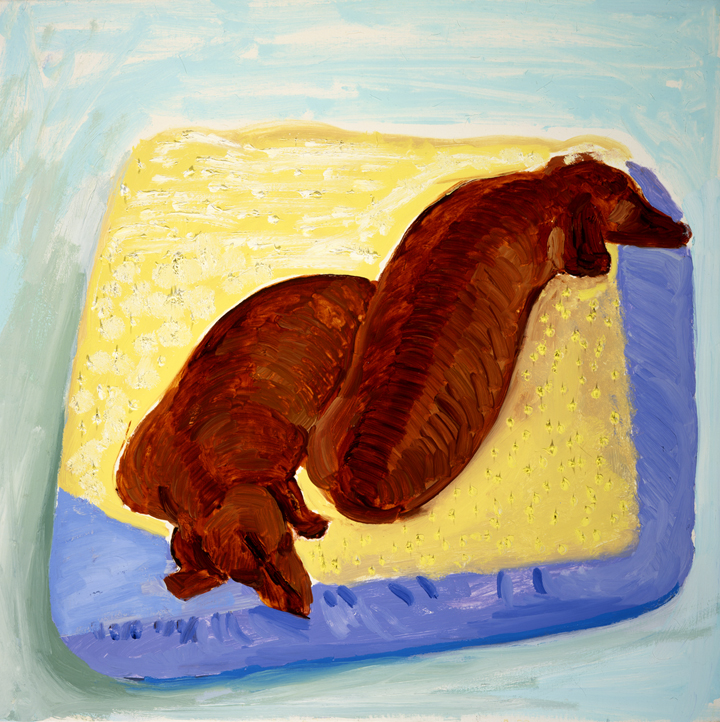
David Hockney, Dog Painting 4, ca. 1994. © Estate of David Hockney. The David Hockney Foundation.
My artistic tastes tend to wander through history, loyal to no single theme. Yet when asked to think about a beloved artwork these days, David Hockney’s vibrant paintings of his dachshunds come to mind, most likely with his recent passing keeping him so prominently in my thoughts.
Although Hockney is probably best known for his swimming pools, his depictions of his pets, mostly napping, show a recognizable appreciation that only a fellow dachshund wrangler could truly understand. Most of these prints capture the dogs curled up or sleeping on cushions, which in a lot of ways reminds me fondly of my own camera roll. Hockney died on June 11, 2026, at the age of 88, and I hope he has crossed the rainbow bridge to be reunited with Stanley and Boodgie.
Lisa Scalone, Author
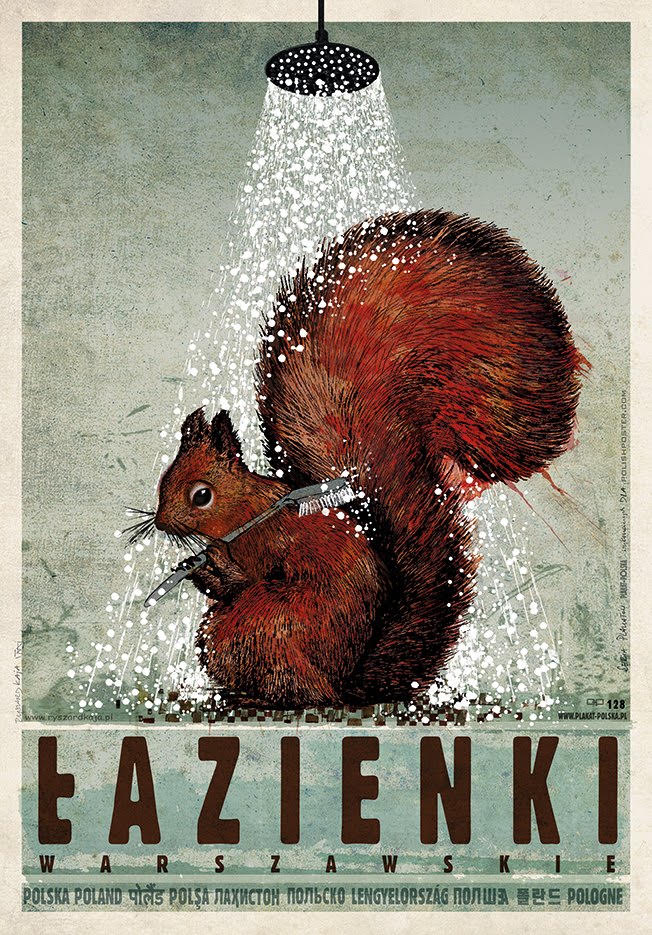
Ryszard Kaja, Warsaw’s Royal Baths Park (Łazienki Warszawskie), 2017. Polish Poster Gallery.
The Warsaw Poster Museum celebrates the unique art of illustration and graphic design. Before its recent renovation, it hosted an exhibition dedicated to the great Ryszard Kaja. Through posters depicting Poland’s landscapes, traditions, and cuisine, Kaja created witty yet deeply insightful portraits of his homeland. A heartfelt tribute to its culture and identity.
Anyone visiting or living in Warsaw cannot miss a stroll through the magnificent Łazienki Park (which translates to Baths Park), home to countless beautiful and inquisitive squirrels. This poster perfectly captures their charm and, in the midst of this summer heat, we can all relate to the delightful little creature depicted by this remarkable artist as it finds a refreshing way to cool down.
Theodore Carter, Author
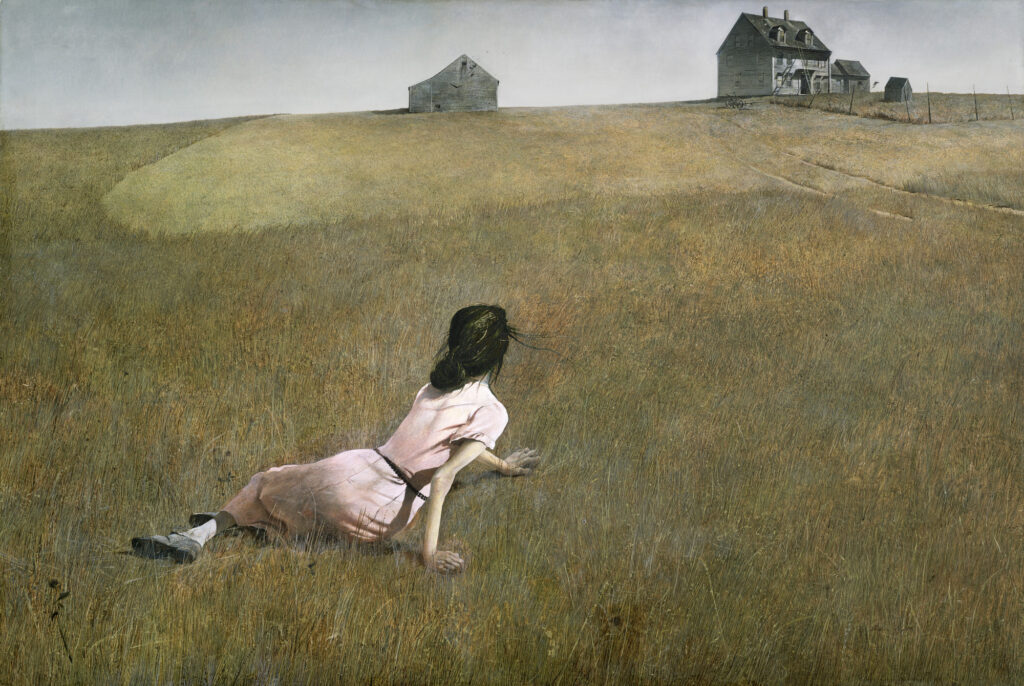
Andrew Wyeth, Christina’s World, 1948, Museum of Modern Art, New York City, NY, USA.
In high school, I had an assignment to pair a short story with a work of art. I paired Joyce Carol Oates’s Where Are You Going, Where Have You Been with Andrew Wyeth’s Christina’s World. Oates also dedicated this story to Bob Dylan and references his song It’s All Over Now Baby Blue in the text. Now, in my mind, all three works of art are connected and speak to a youthful longing, a sad hopefulness. Christina’s World helped me fall in love with narrative, and it remains one of my favorite works of art.
Nicole Ganbold, Author and Former Editor
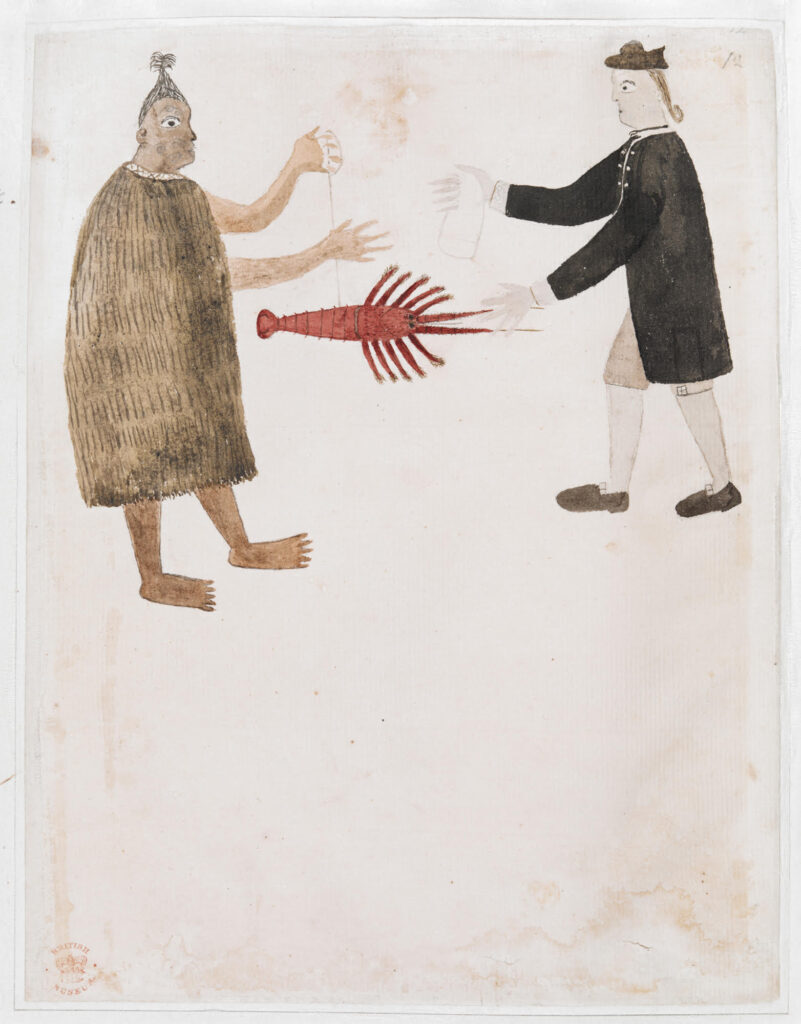
Caption: Tupaia (previously Artist of the Chief Mourner), A Māori Bartering a Crayfish with Joseph Banks, 1769, British Library, London, UK.
I am proud to have worked with the wonderful team of the DailyArt Magazine for several years and it would be no exaggeration to admit that this experience has shaped my current life situation!
Almost no one knows this wonderfully humble drawing, yet it tells a powerful story. It was made by Tupaia (c. 1725–1770), a multi-talented high priest and navigator from the island of Raʻiātea (French Polynesia) who decided to join James Cook’s circumnavigation of the South Pacific from Tahiti and acted as the British crew’s mediator of Pacific ways of living and knowing. In 1769, when Cook made landfall on the shores of Aotearoa New Zealand, Tupaia made this drawing depicting an Englishman bartering crayfish with a Māori man. It is likely the first drawing of a European by a Pacific hand. Tupaia sadly passed away in 1770 when the homebound crew anchored in Batavia (Jakarta).
Coleman Richards, Author
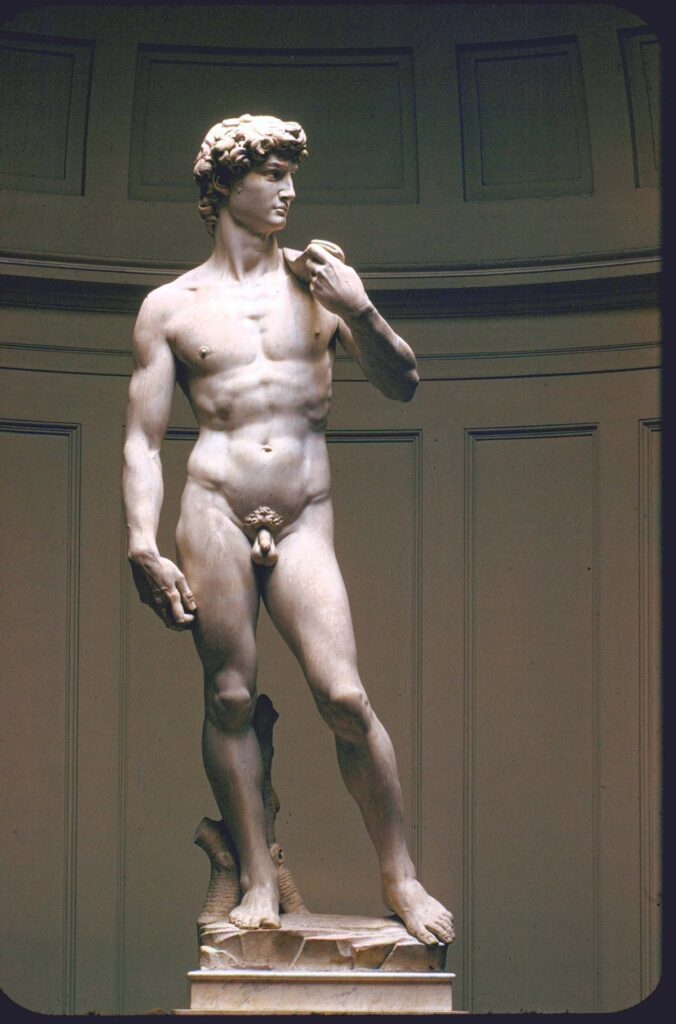
Michelangelo, David, 1501–1504, Galleria dell’Accademia di Firenze, Florence, Italy. Photogaph by Gjon Mili, © Time Inc. Google Arts & Culture.
David is Michelangelo’s masterwork. It is a peak that every artist looks to: its inspiration and superiority tremors through us. I am invigorated and uplifted by it. Simultaneously simple in color and posture but with great complexity in expression and design, the statue itself has an identity apart from its subject. In a great irony, biblical David is known for his moral failings that make him a tragic hero, but Michelangelo’s David became a symbol of purity and flawlessness and of art itself. When considering the greatest art of humankind, David is more than another statue; it is a mountain.
Shivani Gupta, Author
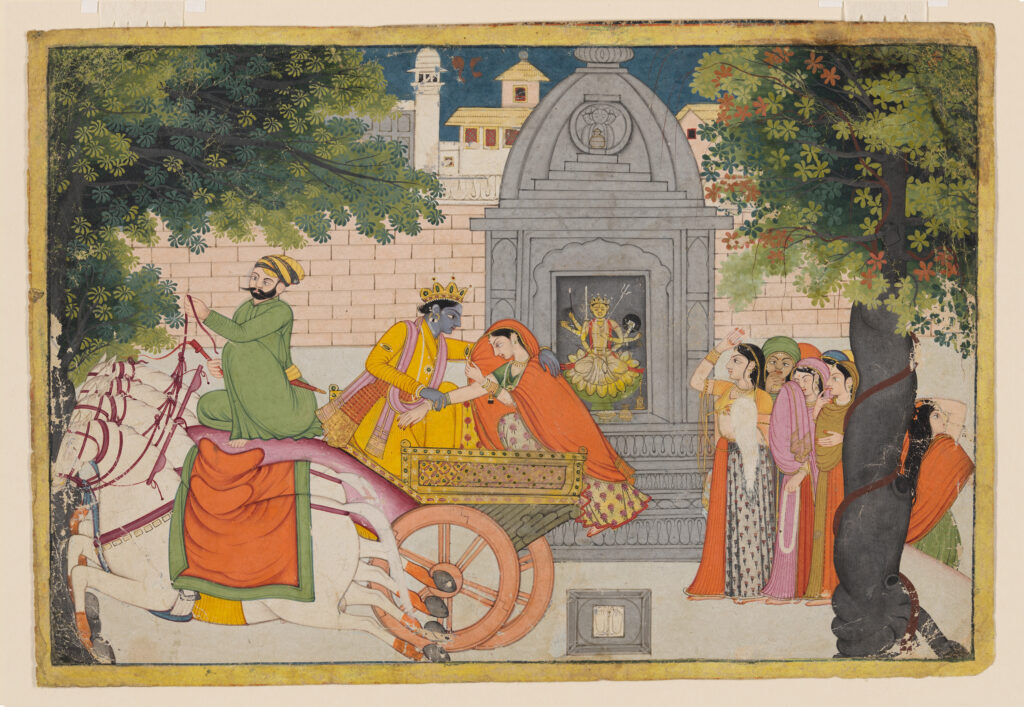
Rukmini Elopes with Krishna, folio from a Bhagavata Purana, India, ca. 1780, National Museum of Asian Art, Washington, DC, USA.
Growing up, I listened to stories from the Mahabharata, Ramayana, and Bhagavata Purana. These epics connected generations through storytelling long before I encountered them as paintings. This folio reminds me how court painters transformed familiar narratives into vivid visual worlds. Their imagination gave these stories new life through color, space, and emotion. As an art historian studying Indian miniature painting, I continue to find inspiration in how these artists turned timeless tales into images that still speak across centuries.
Catherine Razafindralambo, Author
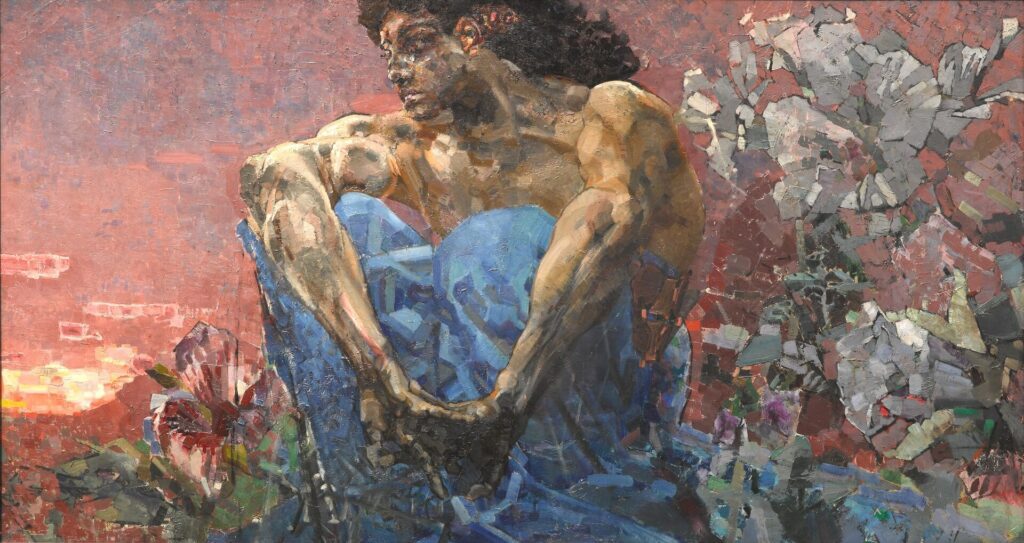
Mikhail Vrubel, The Seated Demon, 1890, Tretyakov Gallery, Moscow, Russia.
Mikhail Vrubel’s The Seated Demon has fascinated me ever since I first encountered it. Inspired by Mikhail Lermontov’s poem, the figure is neither a straightforward villain nor a tragic hero, but a lonely, restless spirit suspended between heaven and earth, whose melancholic gaze conveys extraordinary psychological depth. It is difficult not to see echoes of Vrubel himself in the Demon’s solitude as the artist’s later life would be overshadowed by mental illness and personal tragedy. More broadly speaking, Vrubel’s Demon marked a turning point in Russian art, ushering in Modernism and foreshadowing the avant-garde’s enduring quest to express the spiritual through art.
Bec Brownstone, Author
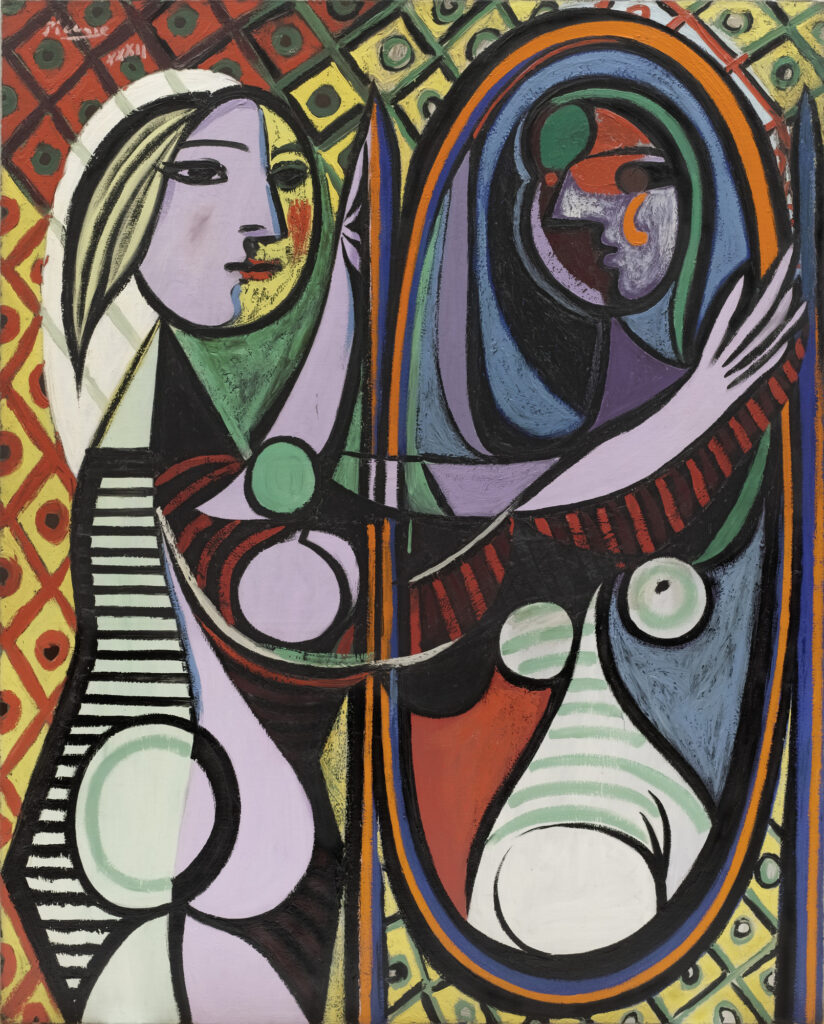
Pablo Picasso, Girl Before a Mirror, 1932, Museum of Modern Art, New York City, NY, USA.
This painting was a favorite of my grandmother’s, a talented artist in her own right and making art was often a part of visiting with her. She also gave me cards and a mobile featuring this image on various occasions when I was a kid. It wasn’t until years after her passing that I noticed the tear on the sitter’s mirrored face; she’s doing fine on the outside but carries a sadness unseen by others.
Justin Fenech, Author
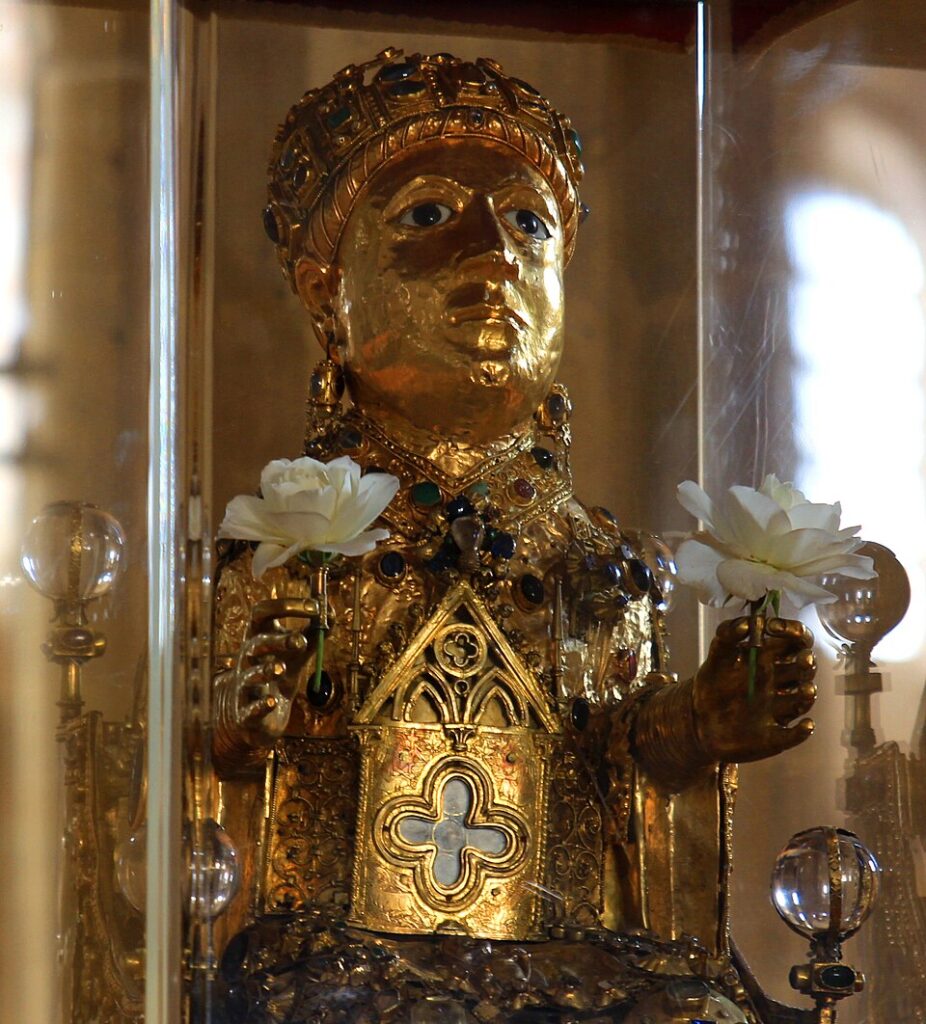
The reliquary of Sainte Foy, 9th century with a 5th-century Roman head, Abbey Church of Sainte-Foy, Conques, France. Photograph by ZiYouXunLu via Wikimedia. Commons (CC BY-SA 3.0).
The reliquary of Sainte Foy in the abbey church of Conques is a mind-boggling artwork that combines the bizarre with the sublime. This small reliquary (made of gold, silver gilt, jewels, and cameos over a wooden core) containing the remains, encapsulates the wonders of the Middle Ages. Inside is contained the skull of a 12-year-old girl who was martyred by Romans in the 3rd century. Its arrival in Conques put the small town on the map, as it remains an important stop on the Camino de Santiago.
Tunacan Tuna, Author

Stanisław Chlebowski, Entry of Sultan Mehmed II in Constantinople, 1874–1884, National Museum in Kraków, Kraków, Poland.
For DailyArt Magazine’s 10th anniversary, I have chosen Stanisław Chlebowski’s monumental Entry of Sultan Mehmed II into Constantinople. The Polish court painter of Sultan Abdülaziz devoted years to this vast canvas but died before completing it. The unfinished painting later entered the collection of the National Museum in Kraków. In 1945, Turkish painter Burhan Agah Özak encountered the work while it was being exhibited in Ankara. Inspired by it, he produced his own painted version, completing the section Chlebowski had left unfinished. A Polish painter began the story; a Turkish painter continued it. Today, writing for a Polish-founded magazine from Istanbul, I see in this remarkable journey a reminder that art can complete what history leaves unfinished.
Frank Schildiner, Author

Diego Velázquez, Mars, ca. 1638, Museo del Prado, Madrid, Spain.
Mars by Diego Velázquez is a work of art that changed my world. In my 25 years as a martial arts student and instructor, I recognized the look in Mars’ eyes immediately. It was not one of fierceness or bravado, but of endurance. Velázquez understood that after years of struggle, when the armor is set aside and the battle is over, the warrior still remains. Mars sits exhausted, his weapons and armor resting at his feet, but he endures regardless of the challenge before him. I see that look every day when I look in the mirror, and when I look into the eyes of Mars.
Gabriela Boryszewska, Social Media Manager / Junior Editor
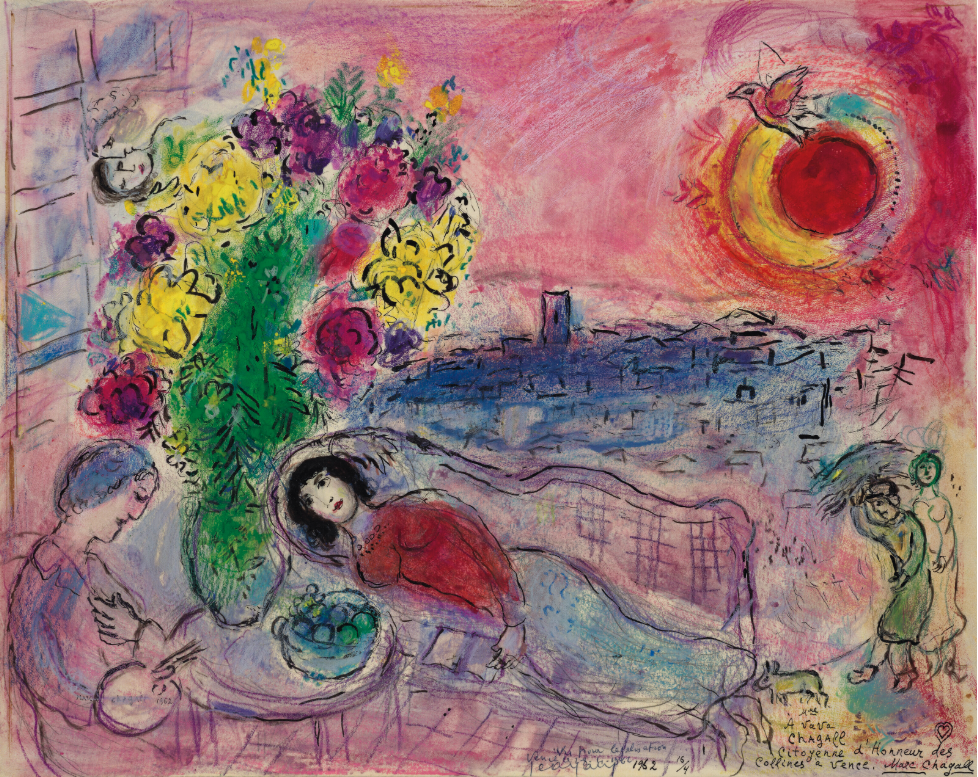
Marc Chagall, A Vava Chagall, citoyenne d’honneur des Collines à Vence, 1962, private collection. Christie’s.
In my family home, two large copies of Marc Chagall’s paintings, which my mother painted, hung on the walls for as long as I can remember. Because of this, Chagall was one of the very first artists whose work I came to know and love. To this day, I am moved by the dreamlike way he transformed memories and moments from his personal life into art. This is beautifully reflected in A Vava Chagall, citoyenne d’honneur des Collines à Vence, where the artist pays tribute to the life he shared with his wife and celebrates the enduring power of love.
Szymon Jocek, Senior Editor
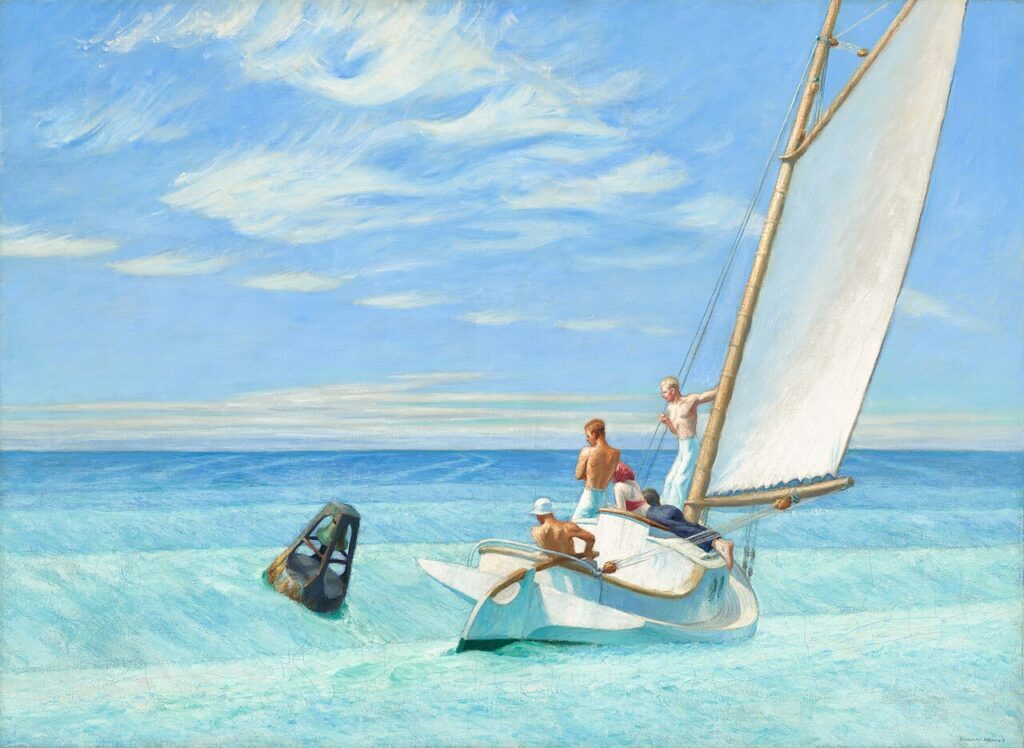
Edward Hopper, Ground Swell, 1939, National Gallery of Art, Washington, DC, USA. Detail.
Growing up on the coast, I have a soft spot for seascapes. Combined with my admiration for the unique mood of Hopper’s paintings, it’s obvious why this masterpiece is one of my favorites. I first saw it at the exhibition in Paris and was instantly captivated by it. It has a powerful summer vibe; you can almost feel the sea breeze. The young people stare into the unknown, trying to grasp what’s ahead of them. They’re caught between carefree adolescence and impending adulthood. But not only that. Painted in the summer of 1939, the buoy is often interpreted as a looming danger of war.
Kate Wojtczak, Editor-in-Chief
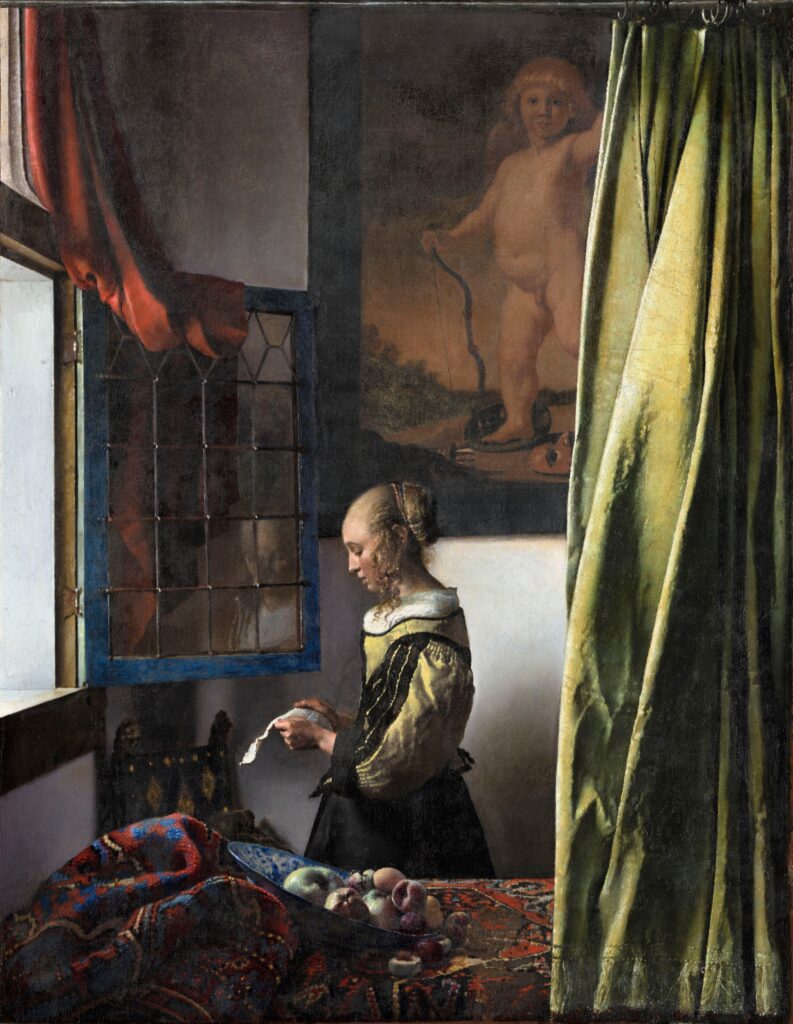
Johannes Vermeer, Girl Reading a Letter at an Open Window, c. 1657–1659, Gemäldegalerie Alte Meister, Staatliche Kunstsammlungen Dresden, Germany.
When I was growing up, I remember being fascinated with a painting hanging in my grandmother’s flat. It was a framed reproduction she brought from a trip to Dresden. It depicted a girl at a window, reading. It fed my imagination. I was making up stories: what does she read, what’s the story behind this scene? Over and over again. Many years later, I went to the Gemäldegalerie myself to see the painting after restoration, and I was absolutely amazed by the luminous layers of glaze. It’s still one of my favorite artworks, and I still think about the story behind it.
DailyArt Magazine needs your support. Every contribution, however big or small, is very valuable for our future. Thanks to it, we will be able to sustain and grow the Magazine. Thank you for your help!

DailyArt Magazine Editor-in-Chief holding a PhD in art history; editor, writer, stylist, and adamant traveler almost constantly on the move.

Architecture nerd, art historian, museum professional, fascinated by pre- and post-WWII modernism in Central/Eastern Europe.

The Japanese proverb says Nanakorobi yaoki, meaning “fall seven times, get up eight.” No matter how much you stumble, the essential is to...
Guest Author 13 August 2026
In a world filled with happy couples and dating apps, it’s easy to feel down about being single. However, it’s time to change your perspective!...
Katerina Papouliou 11 November 2025
Vincent van Gogh is probably the first artist you think of when the Starry Night painting is mentioned. But he shouldn’t be the only one! Let...
Marta Wiktoria Bryll 30 June 2026
Madness and art have long shared a profound and powerful connection, where the boundaries between genius and instability often blur. Many acclaimed...
Maya M. Tola 28 October 2024



.jpg)