Summary
13 hidden gems as an entry point to explore the Met on your own!
- Gallery 165 offers one of the most immersive experiences of Roman Second Style frescoes from near Pompeii.
- The New York Diptych in Gallery 605 shows one of the most gruesome depictions of the afterlife by Van Eyck.
- Gallery 620 presents two of the seven authenticated Caravaggios in American museum collections.
- Gallery 619 holds one of the earliest standalone cityscapes in Western art.
- The only securely dated and signed canvas by Frans Hals is in Gallery 637.
- Gallery 629 features one of the best-preserved intimate Rococo portraits.
- Gallery 755 exhibits one of three extant works by the only known portraitist of African origin in colonial America.
- Goya’s “Red Boy,” one of the finest 18th-century child portraits, hangs in Gallery 641.
- Discover one of the most glowing tributes to Venice in Gallery 808.
- Discover a secret painting by Van Gogh in Gallery 825.
- Gallery 819 brings together one of the finest collections of Monet paintings.
- Icons of American art, like Georgia O’Keeffe’s Cow’s Skull: Red, White, and Blue and Jacob Lawrence’s reworking of Washington Crossing the Delaware, are displayed in Gallery 757.
1. Pompeii Comes to Fifth Avenue
Gallery 165: Frescoes from the Villa of P. Fannius Synistor
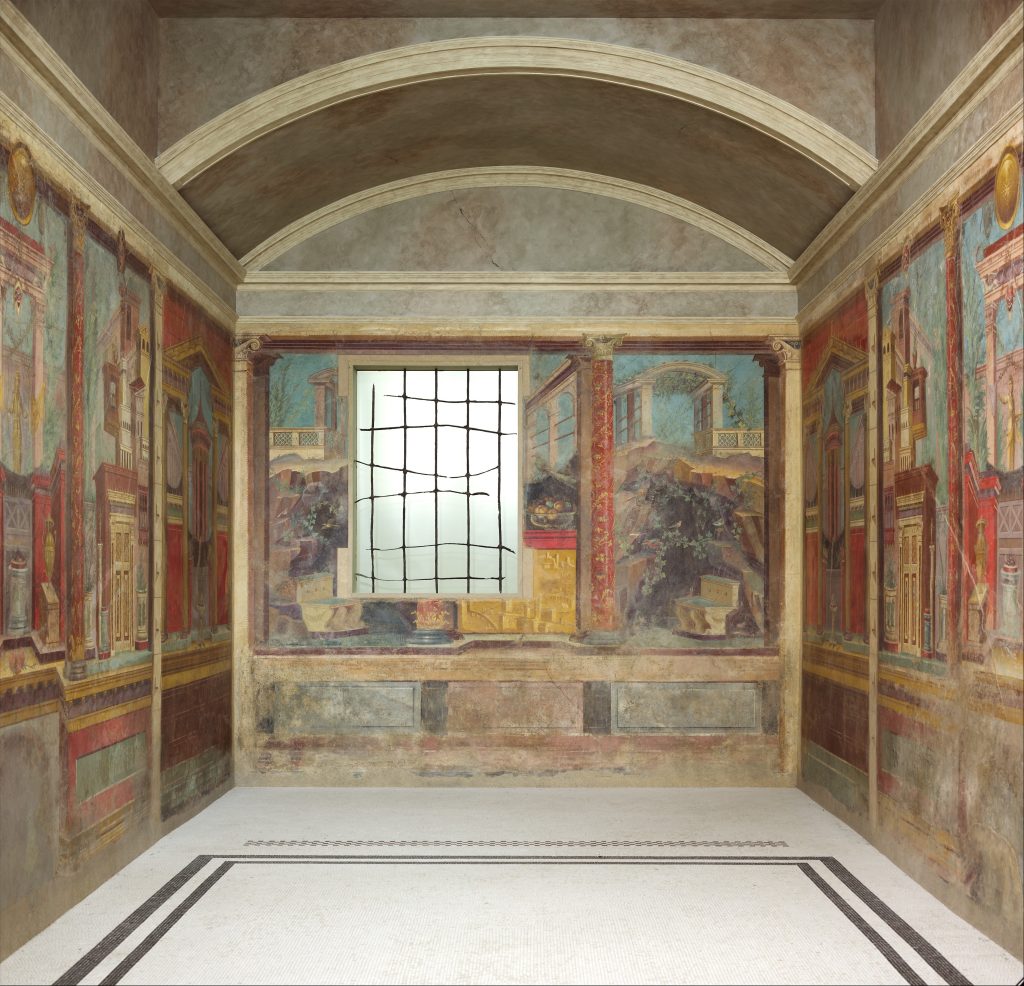
Cubiculum, Villa of P.F. Synistor at Boscoreale, ca. 50–40 BCE, Metropolitan Museum of Art, New York City, NY, USA.
These frescoes are some of the finest surviving examples of Roman Second Style wall painting, in which illusionistic architecture and remote vistas are used to transform surfaces into expansive, theatrical spaces. They were discovered after excavating the villa of an elite landowner named Publius Fannius Synistor, located in Boscoreale, a cluster of country houses about a mile north of Pompeii. The complex was buried and remarkably preserved by the eruption of Mount Vesuvius in 79 CE alongside the city.
The Met’s reconstruction offers one of the most immersive experiences of these frescoes outside of Italy, given that most classic Second Style examples remain in situ at archaeological sites. These frescoes were legally sold on the international market in the early 1900s, an opportunity no longer possible under modern cultural heritage laws.
2. A 15th-century Horror Film?
Gallery 605: The Crucifixion; The Last Judgment by Jan van Eyck
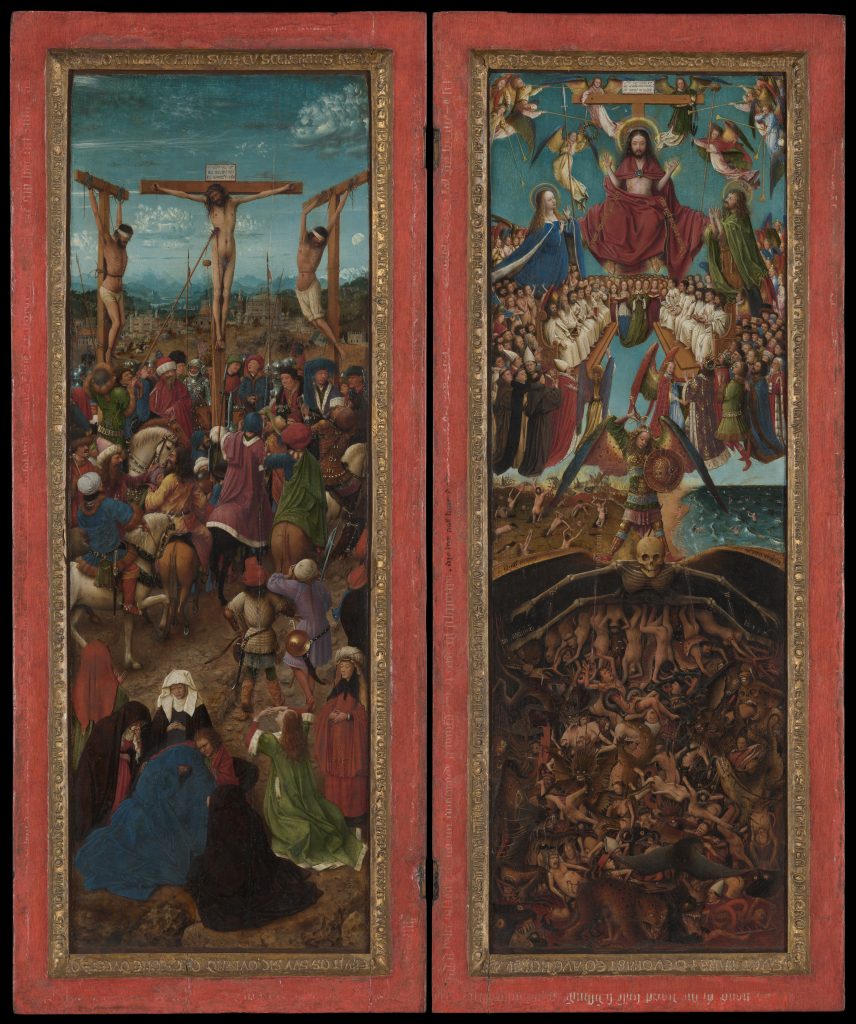
Jan van Eyck, The Crucifixion and The Last Judgment, ca. 1436–1438, Metropolitan Museum of Art, New York City, NY, USA.
Often called the “New York Diptych,” this work is a rare example of Flemish master Jan van Eyck’s mature style, marked by hyper-realistic detail and a luminous oil-glaze technique. Pay attention to the Last Judgment panel and its hauntingly graphic depiction of Hell, which has prompted debate over whether Van Eyck painted it entirely himself or with workshop assistance.
Despite its rarity and late recognition in modern scholarship, the diptych is accepted as an autograph work and ranks among the roughly 20 surviving panels confidently attributed to Van Eyck’s hand. It is one of only two works by the artist in the United States, alongside The Annunciation in Washington, D.C.
3. A Caravaggio Selfie?
Gallery 620: The Musicians by Caravaggio
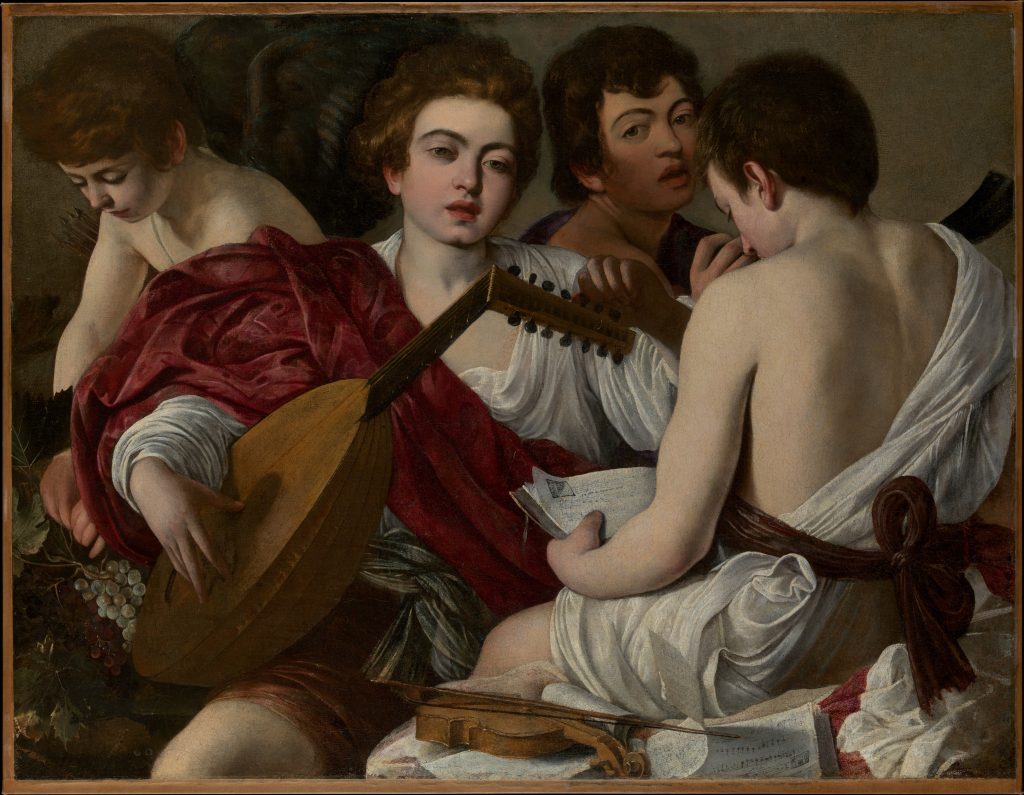
Caravaggio, The Musicians, 1597, Metropolitan Museum of Art, New York City, NY, USA.
Painted in Rome in 1597, this masterpiece is one of Caravaggio’s early genre scenes and a testament to his emerging reputation. The work exemplifies the dramatic figuration and close observation of everyday detail that would later shape his Baroque style and lasting impact on 17th-century painting. Only seven authenticated Caravaggios are held in U.S. museums, and the Met is home to two, including The Denial of Saint Peter.
The figure second-from-the-right, looking at the viewer, has been proposed as a self-portrait. Comparisons with known Caravaggio self-portraits, such as Young Sick Bacchus at the Galleria Borghese, support this interpretation, though consensus is not universal.
4. The Earliest Expressionistic Painting?
Gallery 619: View of Toledo by El Greco
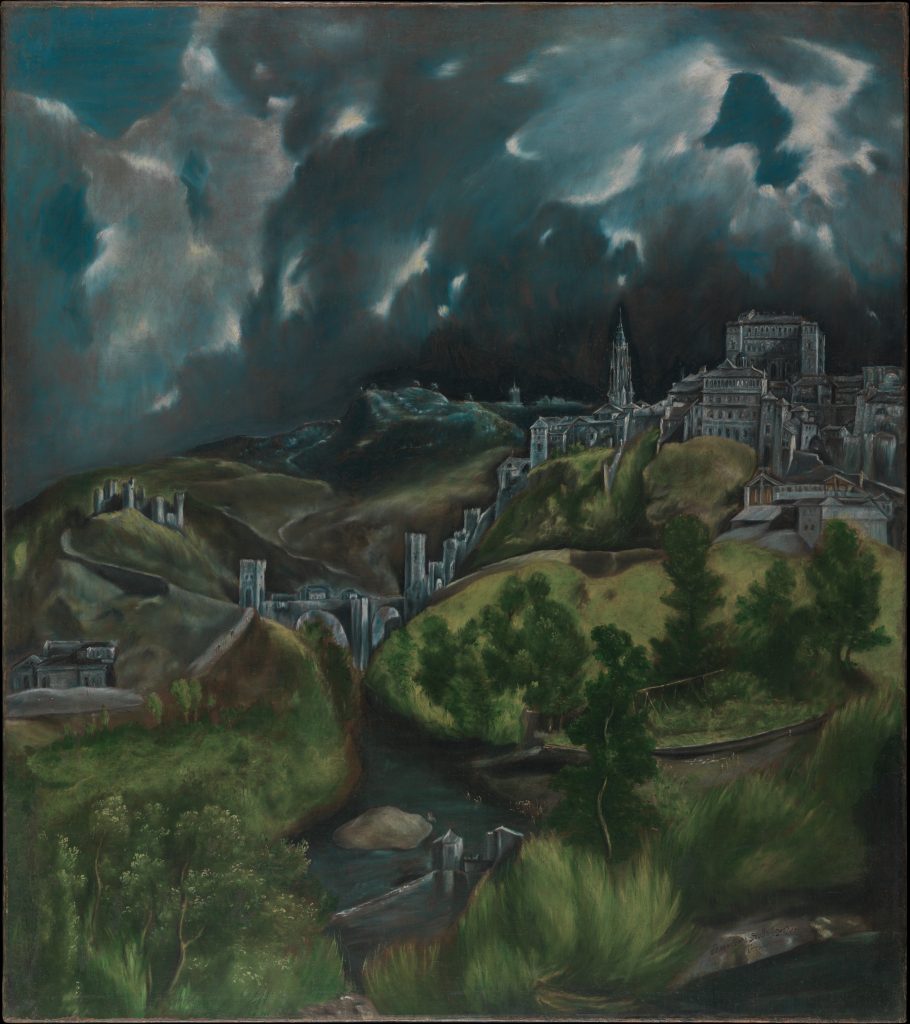
El Greco, View of Toledo, ca. 1599–1600, Metropolitan Museum of Art, New York City, NY, USA.
This is one of the earliest stand-alone cityscapes in Western art and one of only two independent landscapes by El Greco. The dramatic skies and emotive light have been described as “modern,” anticipating Expressionism in their ability to convey emotion through color and contrast, though the movement itself would emerge centuries later. El Greco rearranged Toledo’s skyline, moving the cathedral for both compositional and expressive effect, transforming it into a visionary landscape that communicates mood and symbolism rather than being true to the topographical layout.
5. Hals Was Here!
Gallery 637: Young Man and Woman in an Inn by Frans Hals
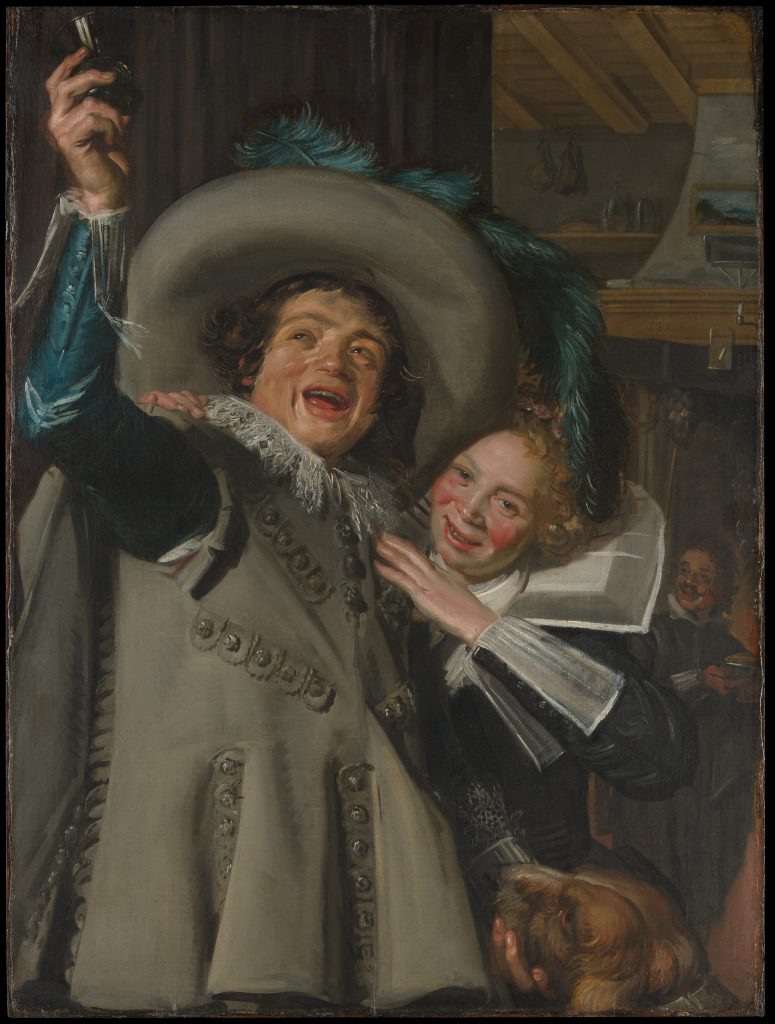
Frans Hals, Young Man and Woman in an Inn, 1623, Metropolitan Museum of Art, New York City, NY, USA.
Truly one-of-a-kind among works by Frans Hals, this large-scale painting is his only securely dated and signed canvas: “FHALS 1623”. Once viewed as a moralizing Prodigal Son story, it is now seen as a rare example of Hals’s experimentation beyond portraiture.
The painting is celebrated as a vivid 17th-century Dutch genre scene and playful depiction of social interaction, in which Hals’s signature spontaneous handling of paint brings every gesture and expression to life. The traditional title, Yonker Ramp and His Sweetheart, comes from an 18th-century misattribution. (And yes, it does look as if he might be taking a selfie!)
6. And I… Will Always Love You—Mezzetin Channels Whitney
Gallery 629: Mezzetin by Antoine Watteau
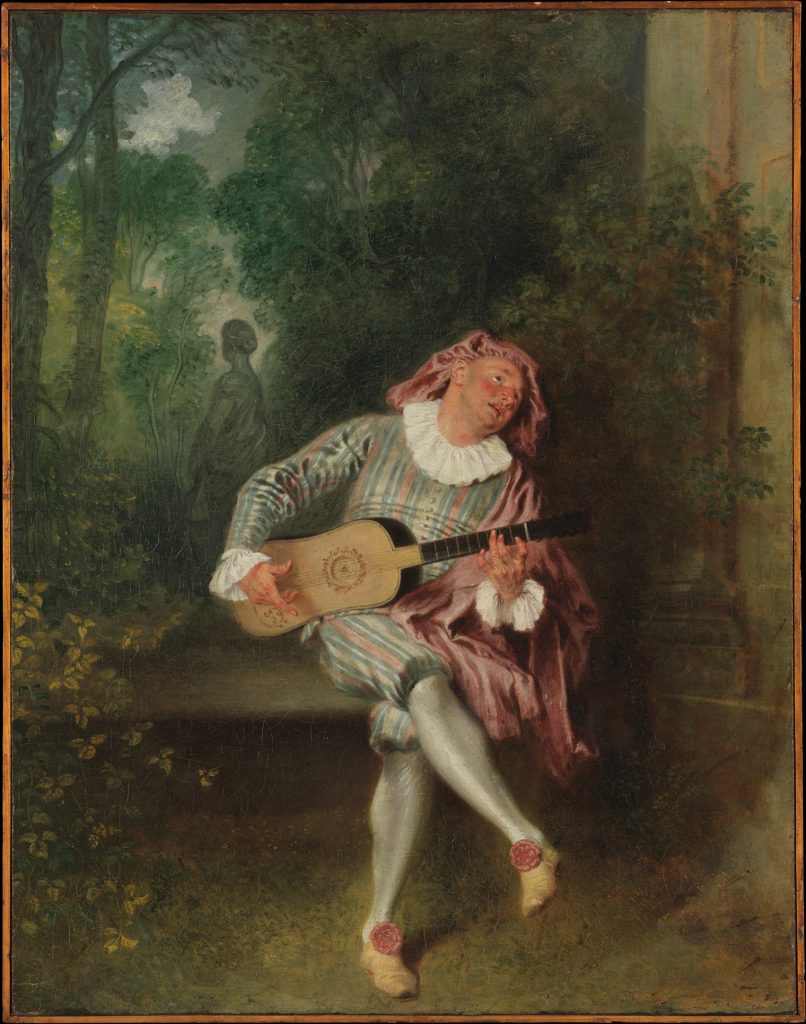
Antoine Watteau, Mezzetin, ca. 1718–1720, Metropolitan Museum of Art, New York City, NY, USA.
This immaculately preserved work is one of the few surviving intimate portraits by French Rococo painter Watteau. Set in a lush garden, we find commedia dell’arte musician Mezzetin in a contemplative moment, singing about unrequited love, as suggested by the statue in the background, his angled posture, and melancholic expression.
A characteristic mix of charm and underlying melancholy permeates many of Watteau’s extant works, a contemplative atmosphere which scholars attribute to his own fragile life (Watteau died at 36). Far from a comic figure, Mezzetin conveys a quiet longing and perhaps the fleeting nature of the decadent pleasures of Rococo Paris.
7. The O.G. of African American Artists
Gallery 755: Portrait of William Duguid by Prince Demah
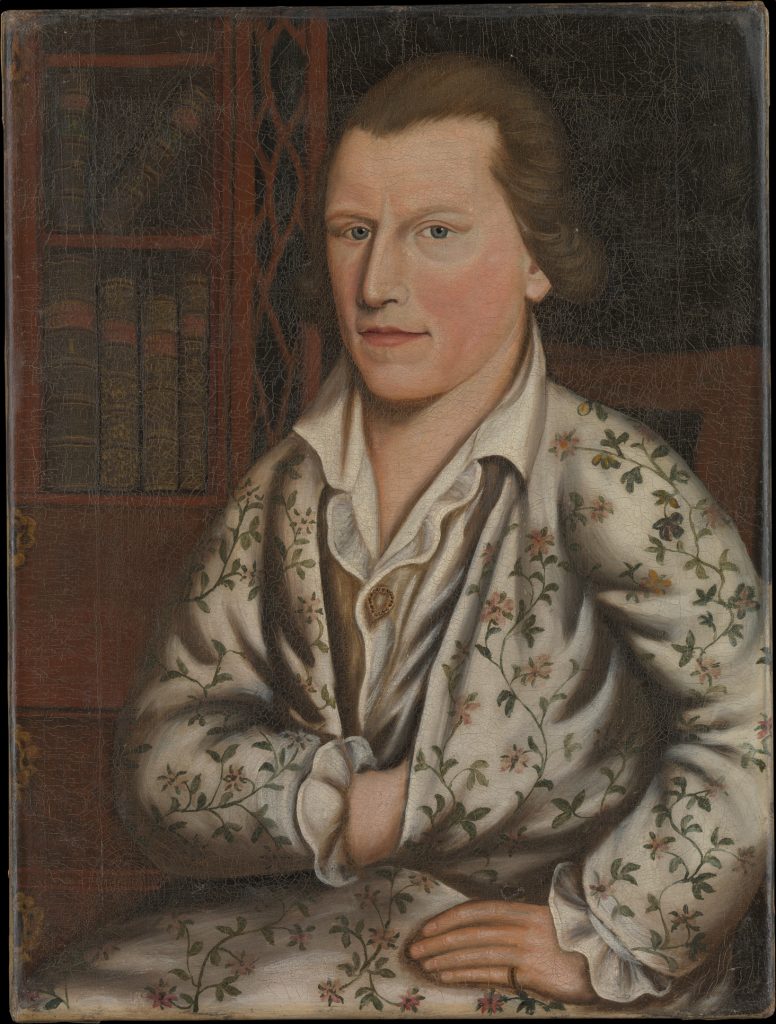
Prince Demah, Portrait of William Duguid, 1773, Metropolitan Museum of Art, New York City, NY, USA.
This painting’s significance lies not in the sitter but in its creator’s extraordinary story. This is one of just three extant works by Prince Demah Barnes, the only known portraitist of African origin in colonial America. Recognized for his talent by his enslavers, the Barnes family sent Demah to London to train with portraitist Robert Edge Pine. They later advertised him in local newspapers as a Black limner (portrait painter) of “extraordinary genius” to attract paying customers.
When the loyalist Barneses fled to England in 1775, Demah remained in Boston, enlisting in the revolutionary militia. He is now recognized for his exceptional skill and for claiming professional and personal independence before his untimely death in 1778.
8. The Ill-Fated Red Boy
Gallery 641: Manuel Osorio Manrique de Zúñiga by Francisco Goya
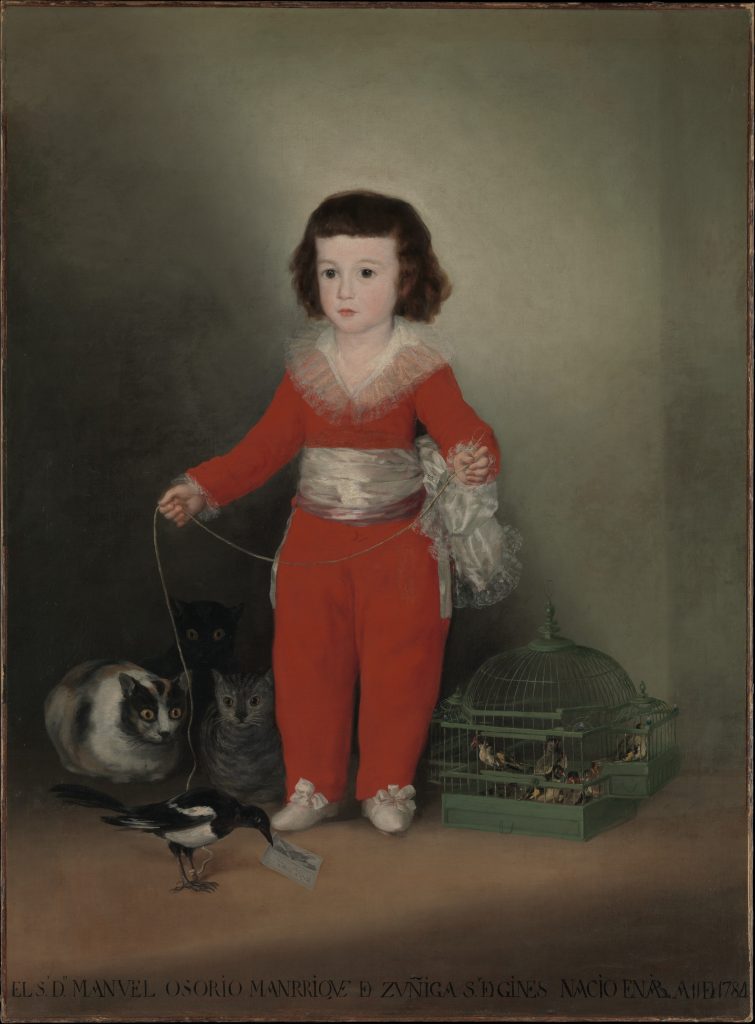
Francisco Goya, Manuel Osorio Manrique de Zúñiga (1784–1792), 1787–1788, Metropolitan Museum of Art, New York City, NY, USA.
Often called “Goya’s Red Boy,” in a nod to Thomas Gainsborough, this is one of the finest child portraits of 18th-century Europe. Goya, emerging as one of Spain’s leading court artists, depicted a child full of presence and subtle psychological depth. The boy is surrounded by a magpie holding Goya’s calling card, a cage of finches, and three watchful cats, understood as symbols of innocence and lurking danger, suggesting the delicate balance of childhood at a time when approximately 50% of children died before reaching the age of 10. Don Manuel, the son of the Count and Countess of Altamira, died just a few years later, lending the painting a quietly moving, almost haunting quality.
9. Overtourism in Venice is Not New
Gallery 808: Venice, from the Porch of Madonna della Salute by J. M. W. Turner
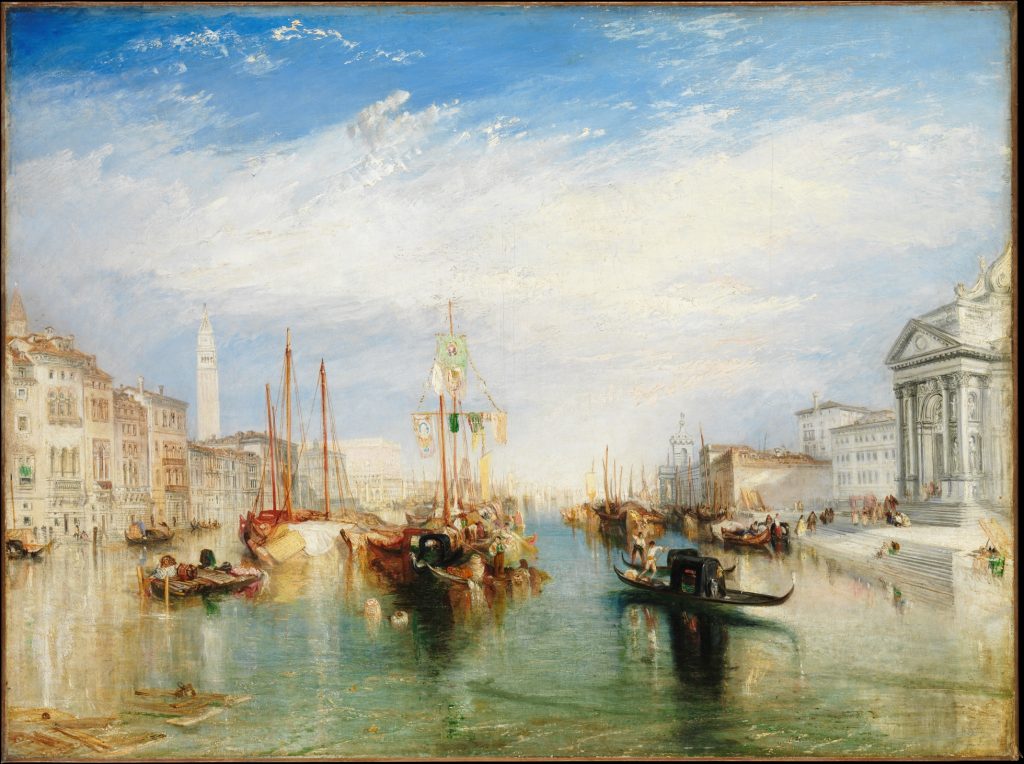
J. M. W. Turner, Venice, from the Porch of Madonna della Salute, 1835, Metropolitan Museum of Art, New York City, NY, USA
This is one of Turner’s most glowing tributes to Venice, a city that fascinated him (and countless artists) throughout his career. A masterpiece of his late Romantic style, its focus on light and expressive glow captivated critics since its debut at the Royal Academy in 1835. It became one of the most beloved Turners in the U.S. as soon as it entered the Met through Cornelius Vanderbilt’s bequest in 1899. It shows Turner at his most poetic, foreshadowing ideas that later resonated with the Impressionists and Abstract Expressionists.
American artist Mark Rothko held Turner in such high esteem that he donated nine of his own paintings to the Tate—whose Turner collection he admired—remarking, “This man Turner, he learnt a lot from me.”
10. Business in the front… Party in the back!
Gallery 825: Self-Portrait with a Straw Hat/Obverse: The Potato Peeler by Van Gogh
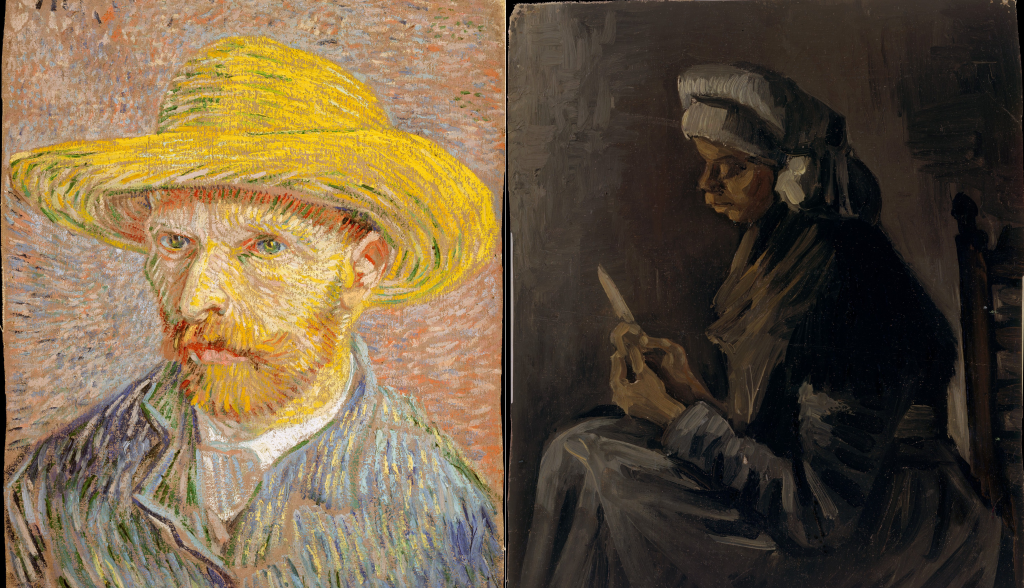
Vincent van Gogh, Self-Portrait with a Straw Hat, 1887 obverse: The Potato Peeler, 1885, Metropolitan Museum of Art, New York, NY, USA.
Certainly, labeling a Van Gogh self-portrait a “hidden gem” is like calling the Sistine Chapel “a nice ceiling.” This is one of around 35 self-portraits, only six of them in the U.S., where he used himself as a model to refine his figure-painting skills. It captures a significant moment in Van Gogh’s artistic evolution, a turn to brighter, more expressive colors. Nonetheless, for your true “business in the front, party in the back” moment, skip the line of selfies and look at the other side of the canvas. There, you will find a figure painted in his early, darker Dutch-style palette: The Potato Peeler.
The Potato Peeler is one of Van Gogh’s extensive peasant studies from 1885, which culminated in his first important painting, The Potato Eaters, at the Van Gogh Museum. Van Gogh hoped to create a powerful, truthful representation of the harsh realities of peasant life. This is an extraordinary way of comparing his artistic development, with these completely different paintings only two years apart. Van Gogh often reused canvases, painting on the reverse side when he lacked new materials.
11. Show Me the Monet!
Gallery 819: Bridge over a Pond of Water Lilies by Claude Monet
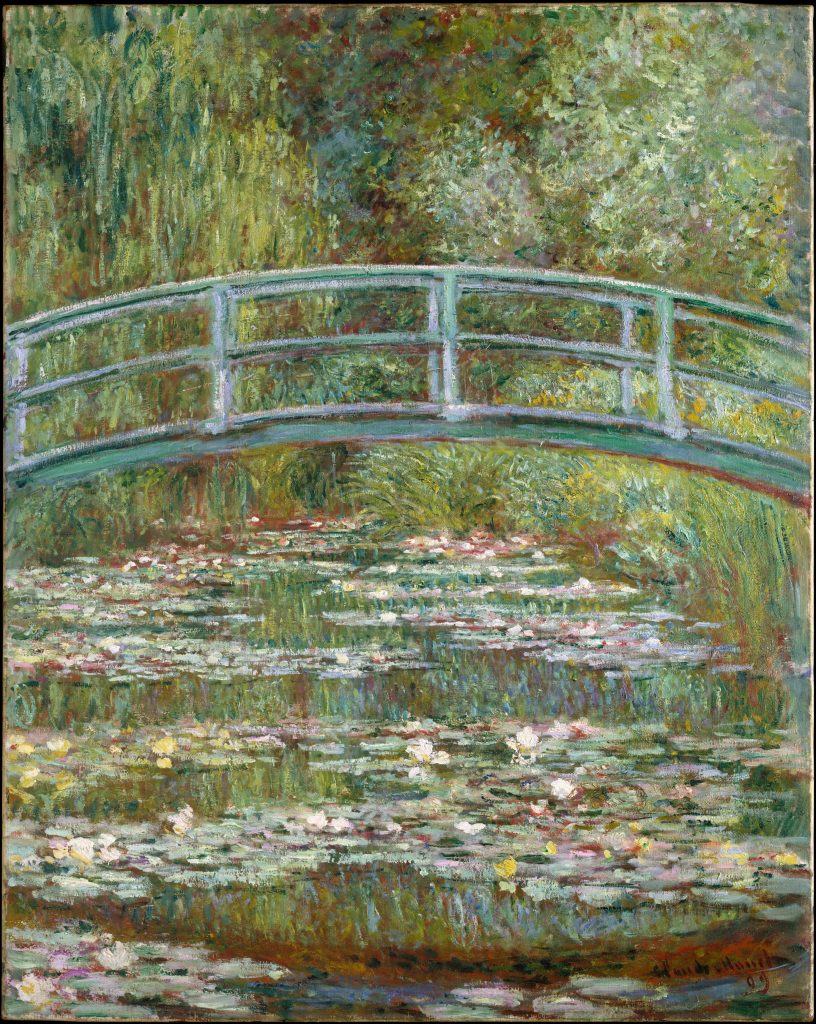
Claude Monet, Bridge over a Pond of Water Lilies, 1899, Metropolitan Museum of Art, New York City, NY, USA.
Gallery 819 has an embarrassment of riches when it comes to Monet masterpieces, yet Bridge over a Pond of Water Lilies commands attention as a cornerstone of his mature Impressionist work. This canvas is part of the very first series of Monet’s water lily and Japanese bridge compositions at Giverny, a motif he would develop extensively. The balance of meticulous detail and painterly freedom was a breakthrough in Monet’s wide exploration of light and atmosphere.
The painting’s influence extends beyond art history: contemporary street artist Banksy reimagined the scene in Show Me the Monet, transforming Monet’s utopia into an ingenious critique of consumerism and environmental damage.
12. Born in the U.S.A.
Gallery 757: Cow’s Skull: Red, White, and Blue by Georgia O’Keeffe
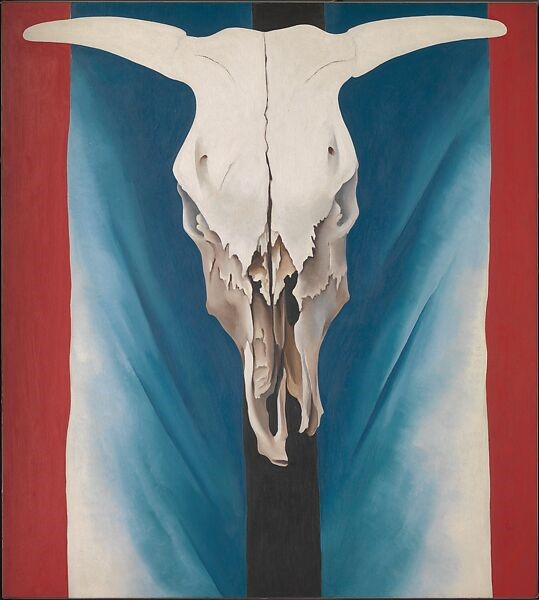
Georgia O’Keeffe, Cow’s Skull: Red, White, and Blue, 1931, Metropolitan Museum of Art, New York, NY, USA.
At a time when American artists were seeking a distinctly national style, Georgia O’Keeffe created one of her most iconic works. The bleached cow skull, set against a blue-and-white background with red stripes, merges the austere beauty of the American Southwest landscape with the clarity of modernist abstraction. O’Keeffe’s desert motifs were never about death; she described bones as “more living than the animals walking around,” and celebrated the beauty of their simplicity.
With a touch of wry humor, O’Keeffe said in a 1977 documentary that the painting was in response to “men all talking about the great American novel… play… everything. A lot of them had never been across the Hudson. So, I thought, I’ll make my picture a red, white, blue… an American painting for these people.”
13. Reframing the American Revolution
Gallery 757: Struggle Series—No. 10: Washington Crossing the Delaware by Jacob Lawrence
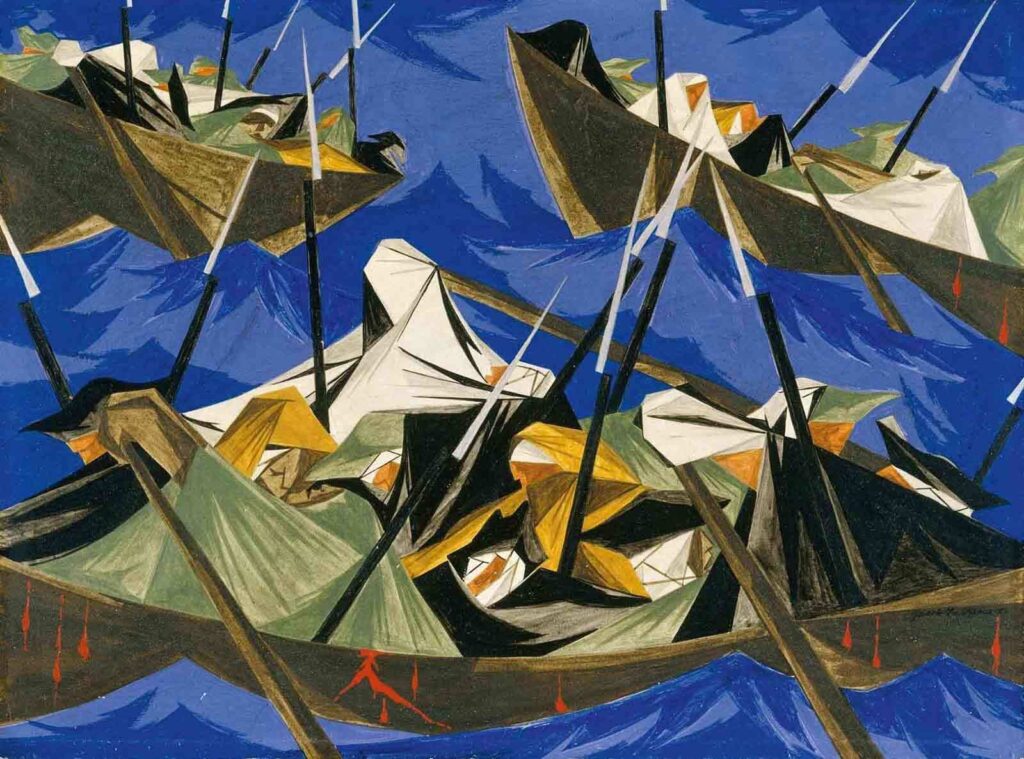
Jacob Lawrence, We crossed the River at McKonkey’s Ferry 9 miles above Trenton … the night was excessively severe … which the men bore without the least murmur…—Tench Tilghman, 27 December 1776 / Struggle Series—No. 10: Washington Crossing the Delaware, 1954, Metropolitan Museum of Art, New York City, NY, USA.
Born in Atlantic City, Jacob Lawrence (1917–2000) moved to Harlem in 1930, where he developed within the legacy of the Harlem Renaissance. His bold, narrative style led him to become one of the first African American artists to earn widespread recognition at a young age. This panel is part of Struggle: From the History of the American People (1954–56), a 30-work series tracing the nation’s founding. In his reimagining of Washington’s crossing of the Delaware River, Lawrence shifts focus from heroic leadership to the collective experience.
Drawing on Washington’s aide Tench Tilghman’s firsthand account, Lawrence depicts three crowded boats in icy, rocky waters, where tightly compressed, nearly indistinguishable figures convey strain and endurance rather than triumph. The work stands in contrast to Emmanuel Leutze’s epic canvas, also in The American Wing, repurposing a familiar myth into a story about shared sacrifice, uncertainty, and the human cost of building a nation. Lawrence’s work still resonates today as both a rethinking of history and a reflection on power, identity, and democracy.