1. Finding Her Vision in the Texas Skies
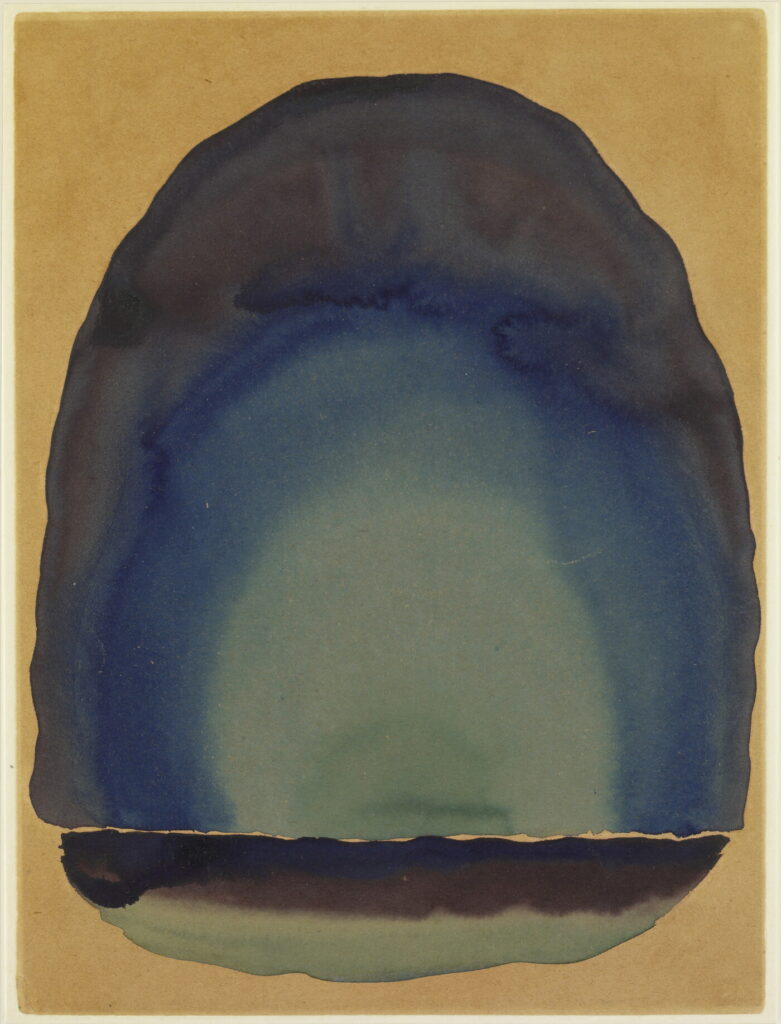
Teaching art in Canyon, Texas, Georgia O’Keeffe (1887–1986) would rise before dawn to watch the light break over the empty horizon. Those quiet mornings inspired her watercolor series Light Coming on the Plains, where soft washes of color capture the moment night becomes day.
Here, she began to abandon realism and explore abstraction, guided by her mentor Arthur Wesley Dow, who taught that art should express emotion through harmony. It was the beginning of her lifelong pursuit of the vast and the essential.
2. Painting in Sound and Color
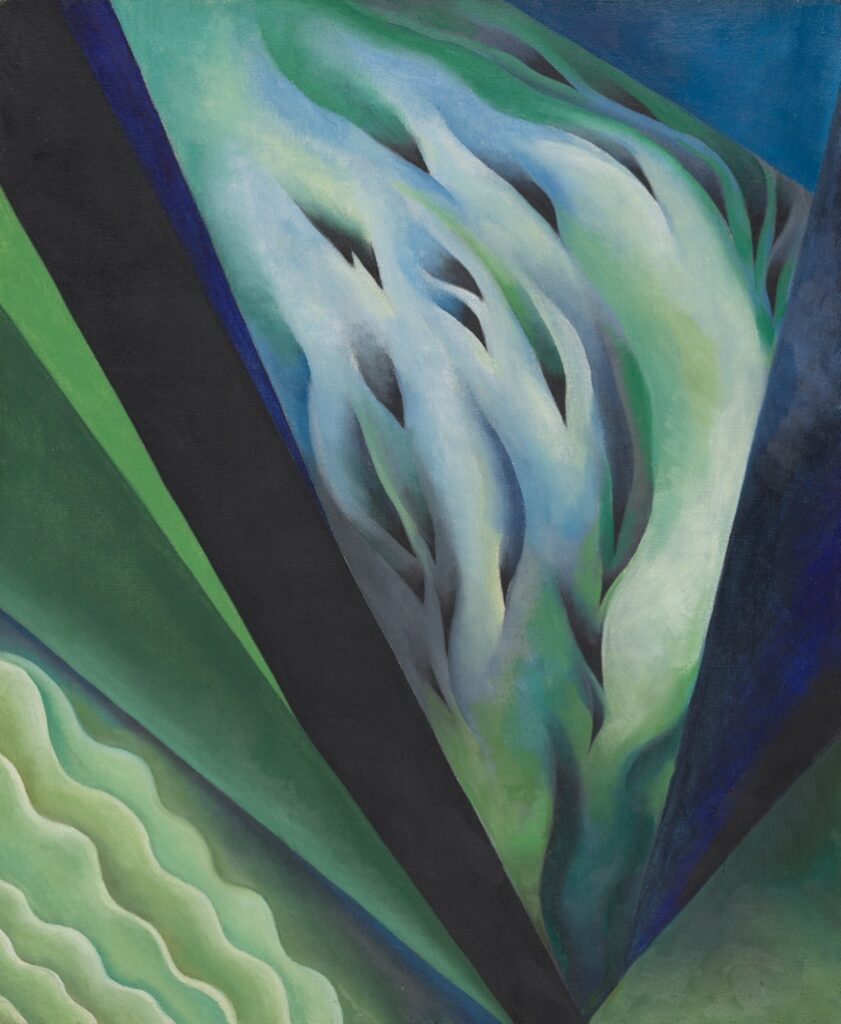
Back in New York, O’Keeffe lived amid the pulse of modernism, skyscrapers rising, jazz spilling from radios, and new ideas of abstraction everywhere. In Blue and Green Music, she translated musical rhythm into waves of color and form, visualizing sound as movement. The painting reflects both that intellectual excitement and O’Keeffe’s own independence; she was making her own kind of music.
3. The Flower That Started a Debate
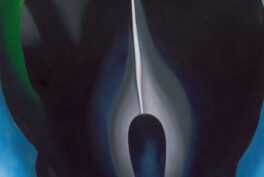
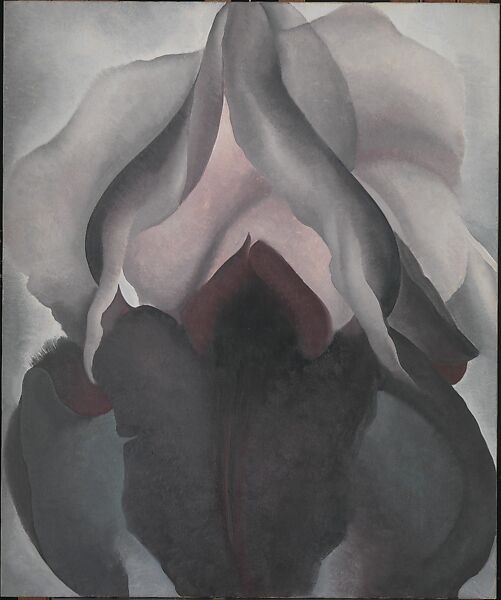
When O’Keeffe painted Black Iris (formerly called Black Iris III), she zoomed in so close to the flower that it became almost abstract, a velvety landscape of folds and shadows. She wanted viewers to really see a flower, stripped of prettiness. “Nobody sees a flower really,” she said. Critics, however, projected Freudian interpretations, seeing sexuality in her work. O’Keeffe rejected that: “When people read erotic symbols into my paintings, they’re really talking about their own affairs.” Instead, this iris represents her search for purity of form, and her refusal to let others define her art.
4. Making the Small Monumental
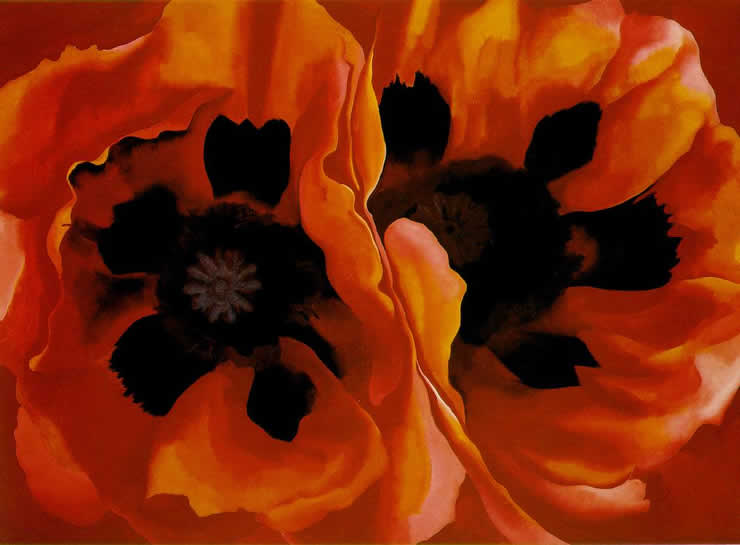
In Oriental Poppies, two brilliant red flowers fill the entire canvas, dissolving their boundaries into pulsating fields of color. It’s a daring, sensual image that made O’Keeffe famous; a still life turned into a landscape of emotion.
She wanted to slow the viewer down, to make the ordinary extraordinary. As she said, “I’ll paint it big and they will be surprised into taking time to look.” Painted at the height of her New York success, this work captures her bold confidence and her power to turn something delicate into something monumental.
5. Skyscrapers and Solitude
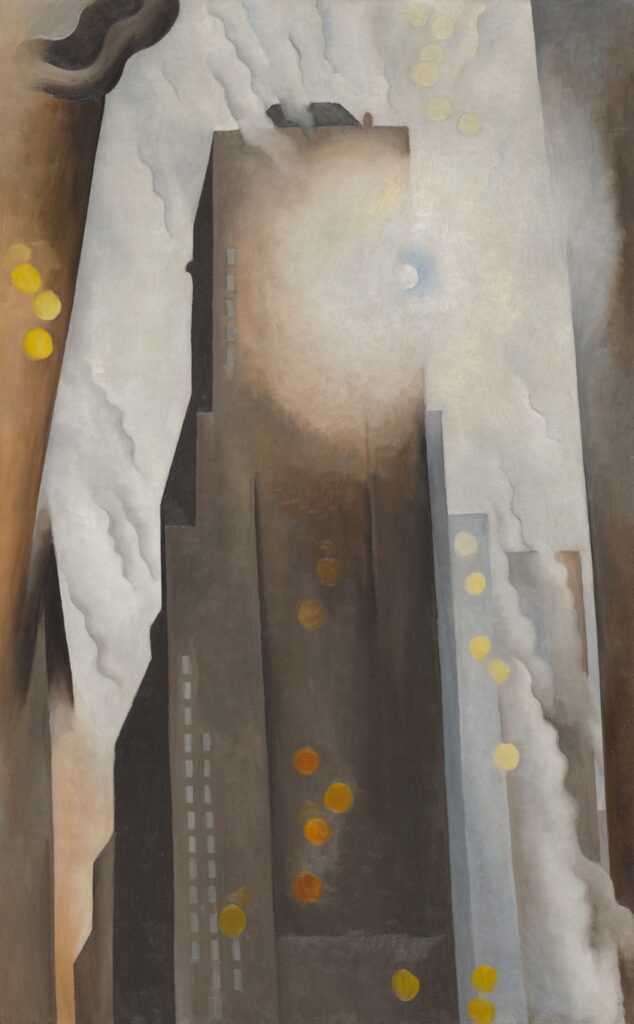
From her apartment on the 30th floor of the Shelton Hotel, O’Keeffe painted the city as pure geometry. The Shelton with Sunspots reduces New York’s skyline to glowing forms, a cathedral of modern light.
She was fascinated by urban rhythm but also uneasy with it. These paintings mark her brief love affair with the city; beautiful, structured, and already fading into abstraction as her heart turned westward.
6. Lying Beneath the Sky in Taos
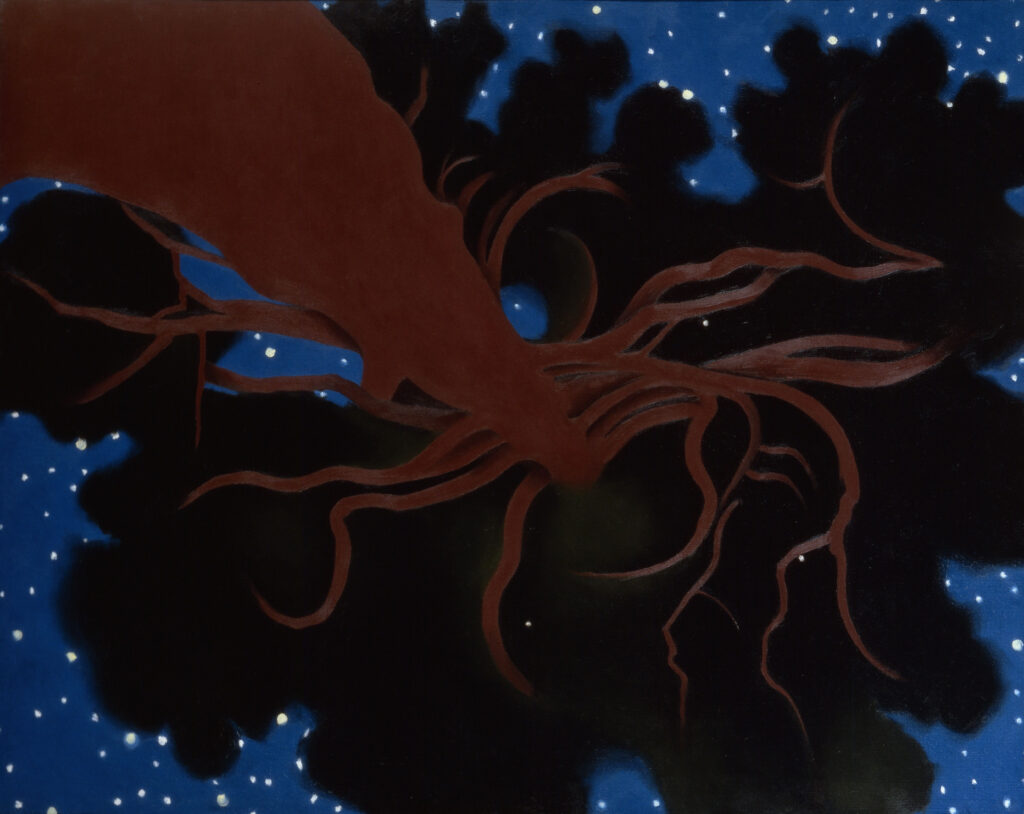
When O’Keeffe first visited New Mexico in 1929, she felt instantly at home. One night, lying on a bench beneath D.H. Lawrence’s beloved pine tree, she looked up through its branches and painted The Lawrence Tree.
The image seems to stretch toward infinity, the tree trunk growing downward, the stars above forming a canopy. This inversion of perspective mirrors her own creative shift: O’Keeffe had turned her gaze away from man-made towers toward the ancient sky. The Southwest would become her muse for life.
7. The Land Becomes the Body
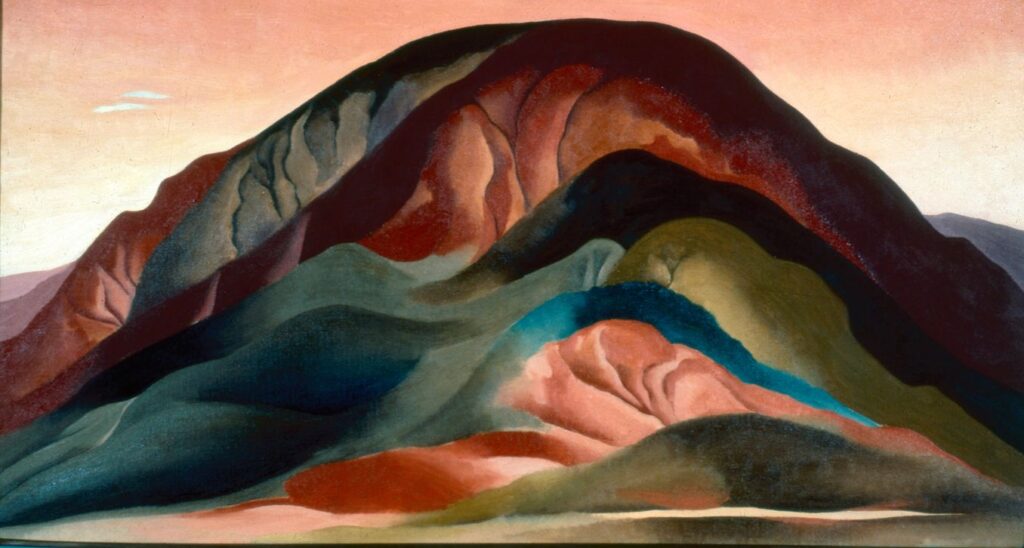
In New Mexico, O’Keeffe painted the earth as if it were alive, sensuous, and sculptural. Rust Red Hills is stripped of all detail: just bands of red and ochre rolling beneath a pale sky. The land itself becomes a body, breathing and monumental.
These works signaled her rebirth as an artist. After years in New York, she found strength in the desert. “The color up there,” she wrote, “is different. The air is wonderful. I feel at home.”
8. A New Symbol of America
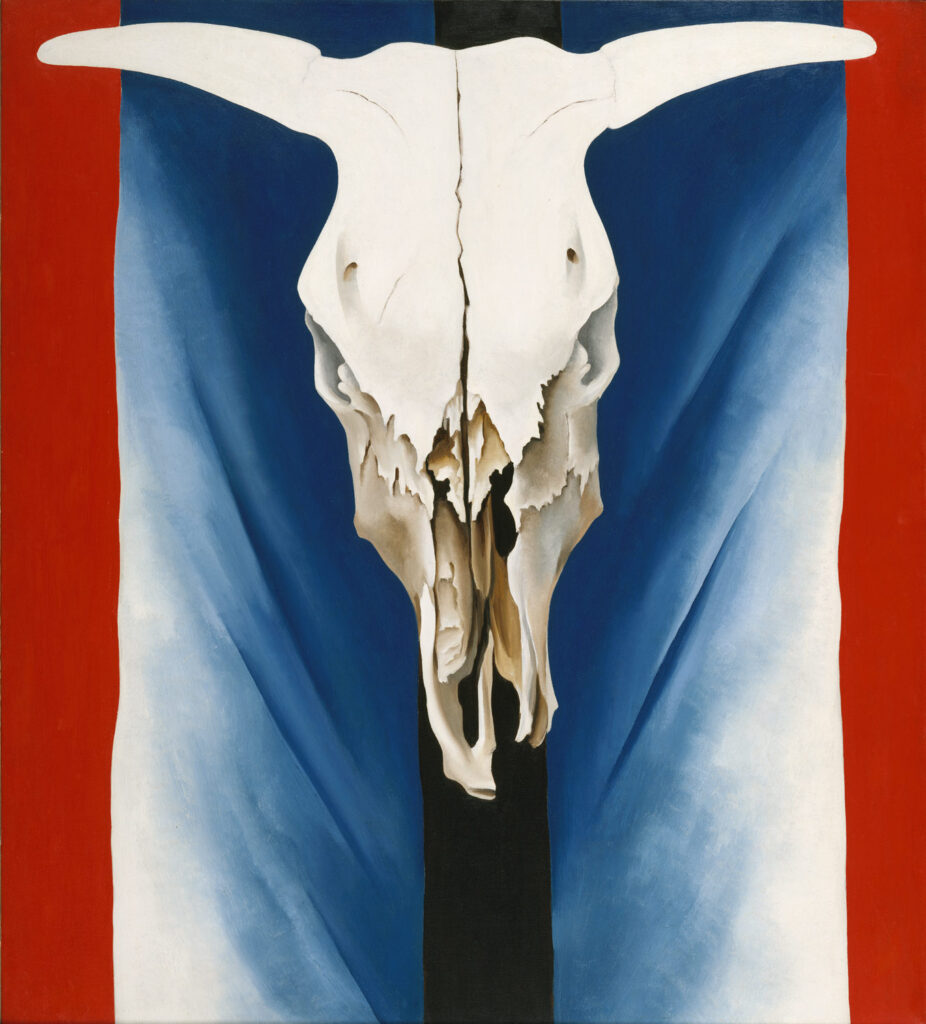
While Depression-era artists searched for “American” subjects, O’Keeffe found hers in the bleached bones of the desert. In Cow’s Skull: Red, White, and Blue, she floats a skull before bands of color, both flag and landscape, both death and endurance. To her, the bones were not macabre but full of life. “They pleased me. And I have enjoyed them very much in relation to the sky.” It’s a quietly patriotic image, a modernist’s version of the American spirit– resilient and stripped to its essence.
9. Life and Death in Balance
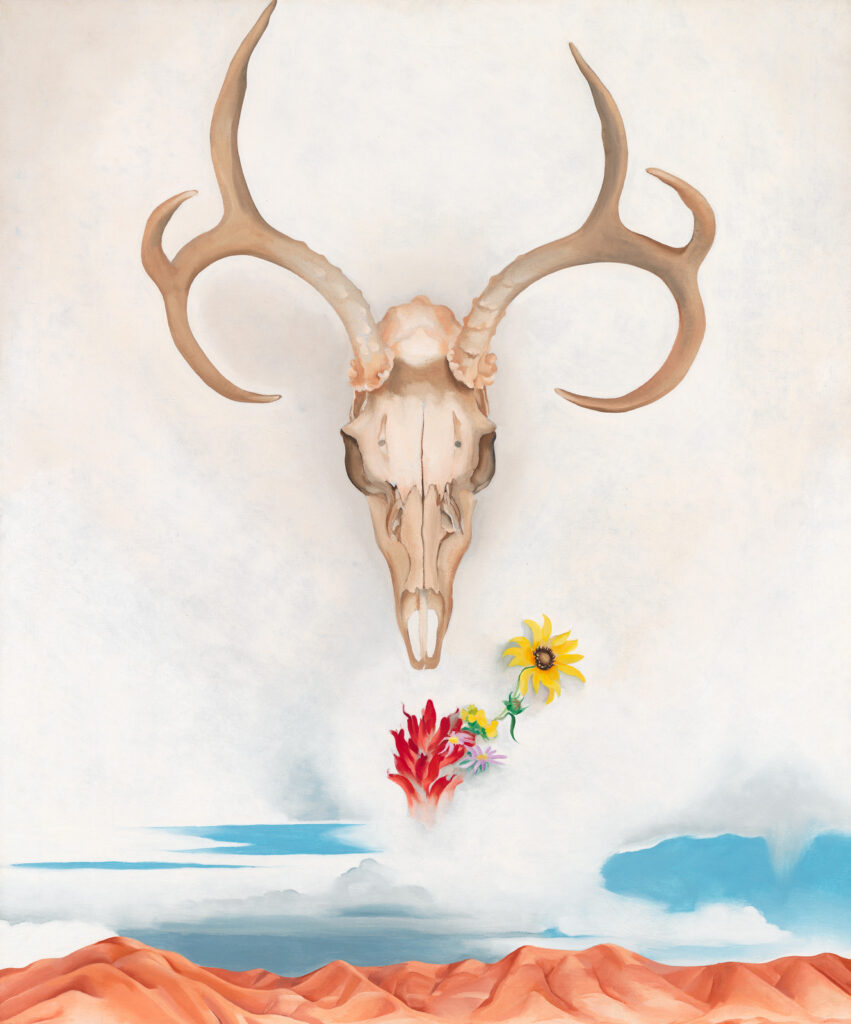
In Summer Days, Georgia O’Keeffe combines the precision of her earlier floral paintings with the vast stillness of the desert. A deer skull floats majestically against a backdrop of pale blue sky and distant red cliffs, surrounded by desert blooms that seem both fragile and eternal.
Painted after O’Keeffe had settled in New Mexico, this work distills her deep connection to the region’s landscape and symbolism. The skull, far from a memento mori, becomes a timeless emblem of nature’s resilience—a bridge between life and death, spirit and earth.
10. The World from Above
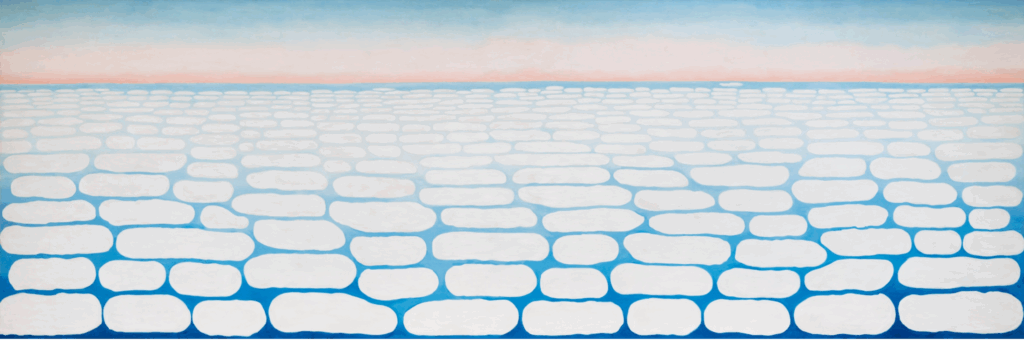
In her late 70s, O’Keeffe would fly frequently, mesmerized by the view from above. Sky Above Clouds IV, over seven meters wide (almost 23 ft), captures a horizonless expanse of pink and white. It’s as if her beloved desert had risen into the heavens. Her eyesight was failing, but her ambition soared. “I’ve been absolutely terrified every moment of my life,” she said, “and I’ve never let it keep me from a single thing that I wanted to do.” This monumental painting is her farewell to earth—and her ascension into pure space.
Georgia’s Way of Seeing
The artist’s work is a lifelong meditation on how to look and how to feel what we see. From the prairies of Texas to the skies of New Mexico, she transformed the familiar into the eternal. Georgia O’Keeffe’s paintings invite us to slow down and really see, not just with the eyes, but with attention.