Why Flowers and Bouquets?
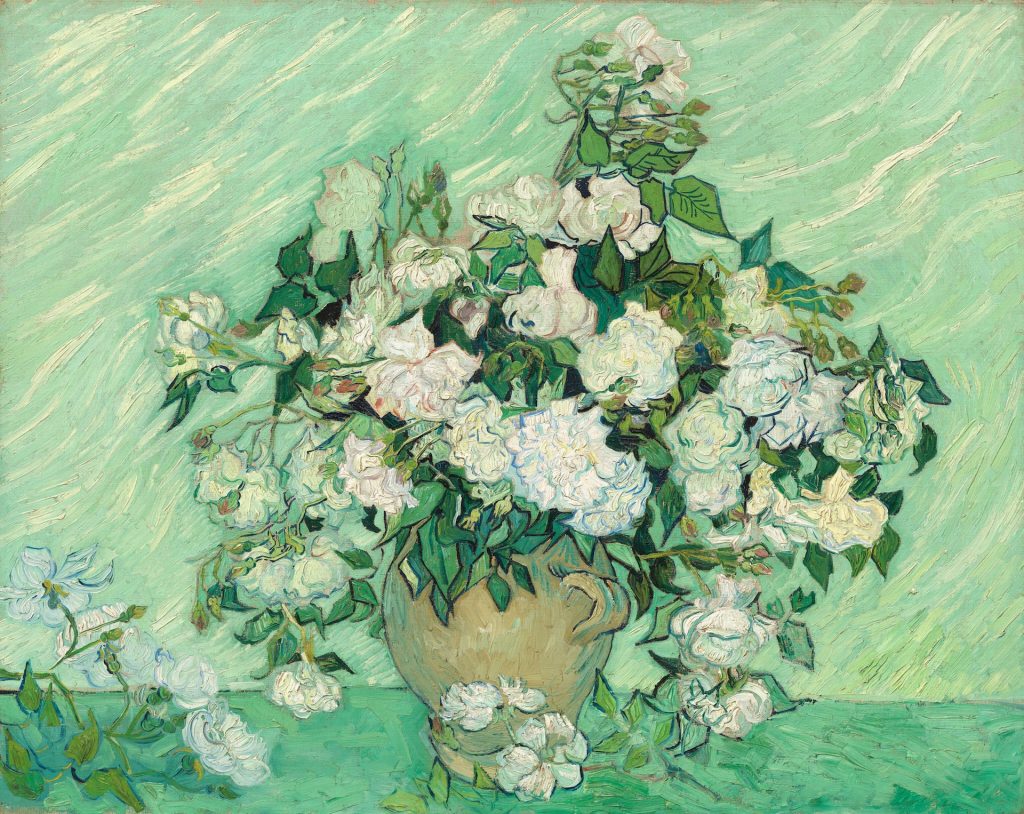
As mentioned, flowers and bouquets are among Van Gogh’s favorite subjects. It is still not clear today exactly how many floral canvases he painted. Many of the most important museums in the world exhibit at least one of Van Gogh’s flower compositions. However, we know that some of the paintings he created were destroyed (during World War II for example), others were lost, and some remain in private collections.
Flowers had many special meanings to the Dutch artist. First of all, they represented specific emotions and feelings, sunflowers symbolized passion for life, love for summer in Provence, and even gratitude. They were also a source of income. As Van Gogh tried to support himself through his art, he produced many floral canvases which were easier to sell. Furthermore, they were ideal subjects for formal experiments and thus one can say these paintings helped in Van Gogh’s art evolution. For example, they were a way for the artist to practice the concepts of color theory. Finally, painting them was like therapy, a sort of “self-art therapy” ahead of its time.
The Most Famous Series: Sunflowers
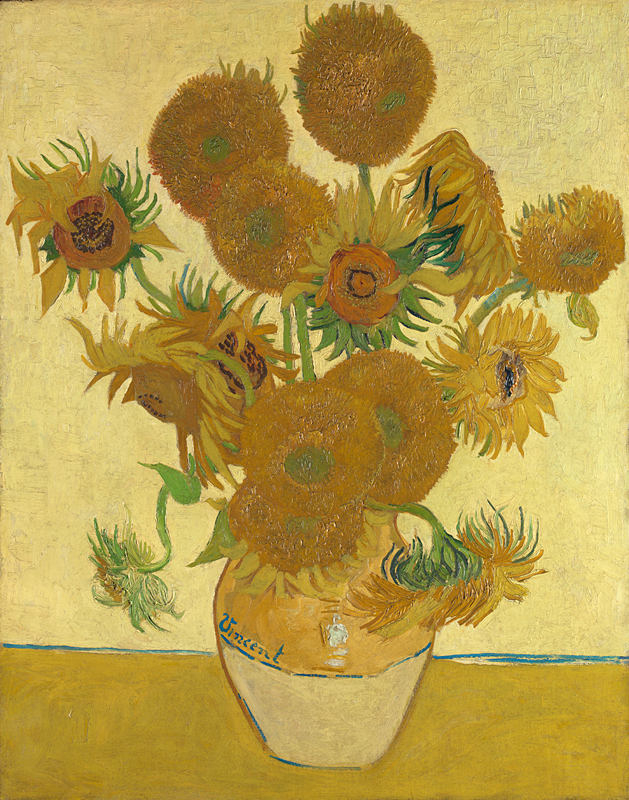
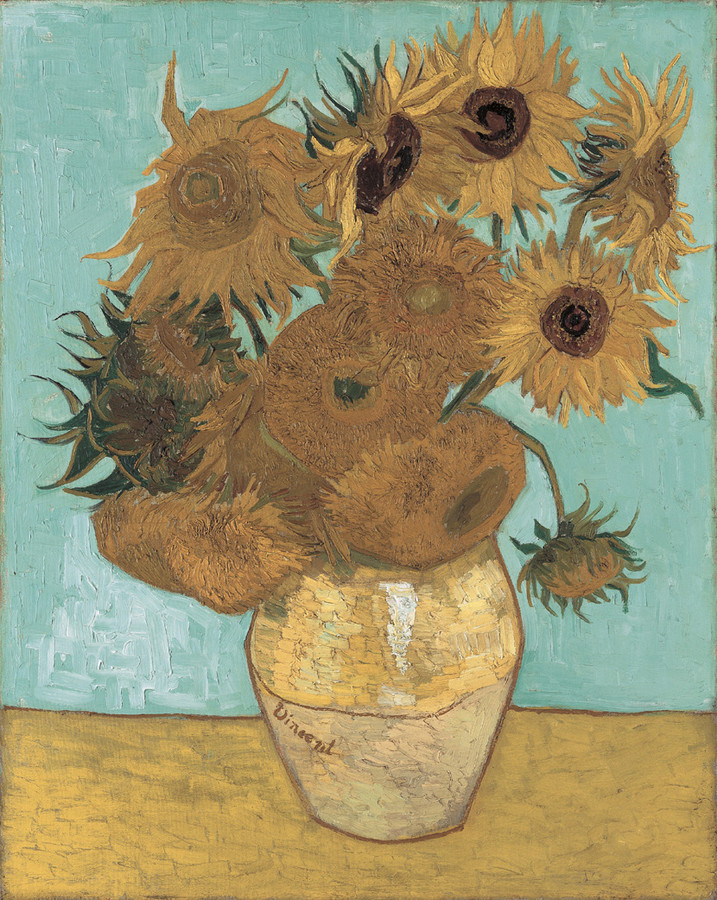
When you think of Van Gogh’s flowers, surely the first thing that comes to your mind are his iconic Sunflowers. But can you tell with absolute certainty the color of the background? Or how many sunflowers are in the vase? Probably not.
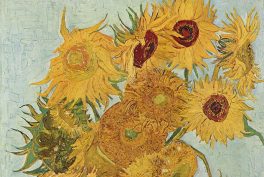
That’s because there are multiple versions, painted within two series. During his life, Van Gogh always maintained a habit of creating multiple versions on a certain theme, in particular of his dearest subjects. The second Sunflowers series is probably one of the most renowned and best-loved around the world. It consisted of seven paintings, five of which depict the same bouquet in a yellow vase. They were painted between 1888-1889, during Van Gogh’s stay in his beloved Arles, Provence. The Sunflowers were meant to decorate the guest room in his house, for the expected visit of his friend Paul Gauguin.
In Van Gogh’s mind, sunflowers evoked summer, Provence, and passion for life. For him, they were a direct reflection of the sun. They could also be interpreted as a symbol of friendship, gratitude, and the cycle of life as, in his compositions, we can often see different stages of the blooms.
Two versions are currently kept in London and Munich. They are strongly bound together and were probably meant as balanced antagonists. The Munich version has a light blue background, contrasting with the flowers. The London painting appears monochromatic as the background is also yellow, but it maintains a strong visual power.
Here you can read more about both Sunflowers series.
Paris 1886: From Inspiration to Experimentation
The year 1886 was pivotal for Van Gogh’s floral art. That year he moved to Paris and was able to start visiting the Louvre. Among the works he admired the most were those by Eugène Delacroix, including floral still lifes. Van Gogh began to realize that painting flowers as subjects could be very attractive to buyers, so he started his adventure with colorful bouquets.
Unfortunately, he did not have much luck in selling his floral artworks at the time. On the other hand, flowers allowed his art to evolve. In fact, they became an excuse to experiment with new concepts and ideas, in particular color theory and complementary colors. Van Gogh not only admired Delacroix’s paintings, but also his style and theory about colors. He tried to put all these elements into practice. For example, he began to use more rapid, looser brushstrokes.
It is believed that during the summer of 1886, Van Gogh produced over 35 floral paintings. His brother Theo wrote that people who knew Vincent were donating him flowers every week.
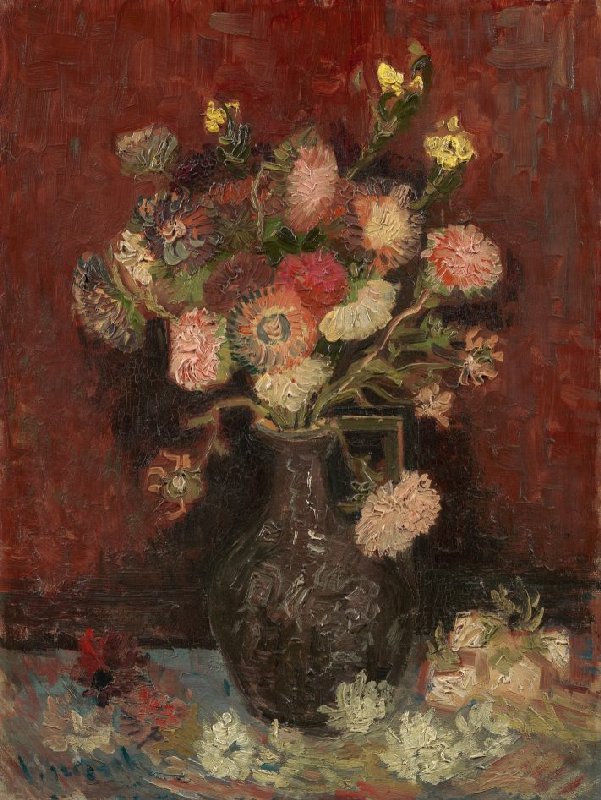
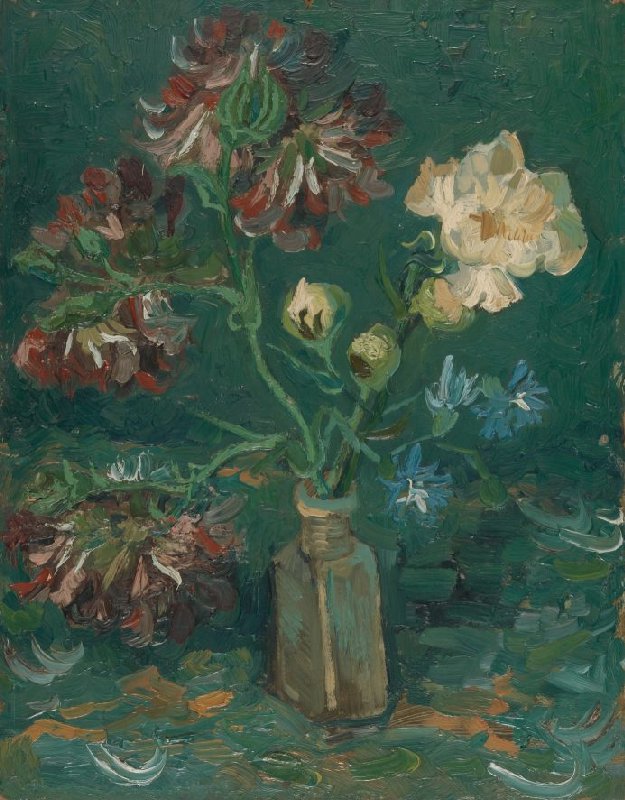
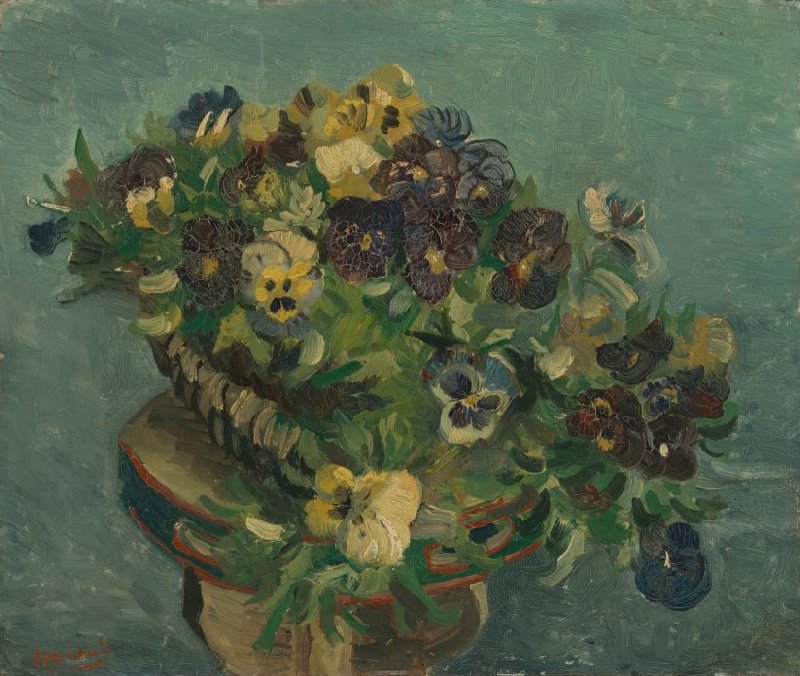
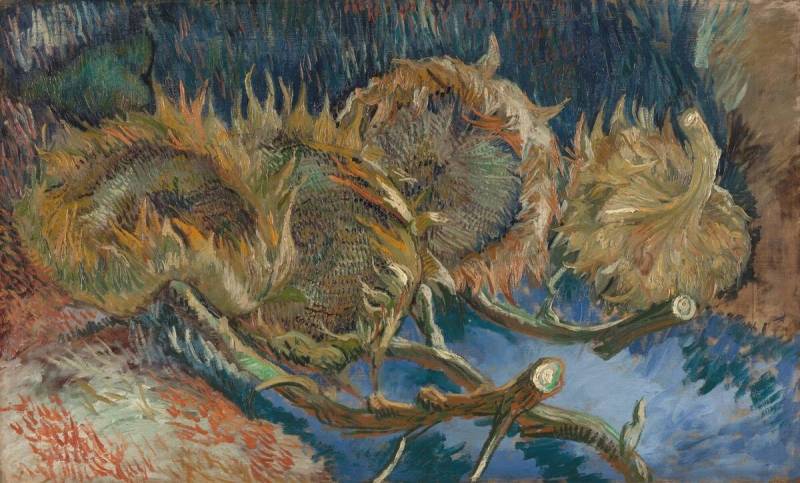
In Vase with Chinese Asters and Gladioli and Small Bottle with Peonies and Blue Delphiniums Van Gogh juxtaposed two complementary colors, red and green. In the first one, red is prevalent, in the second painting green is the main character. Another still life, Basket of Pansies, is based on the contrast of yellow and violet. Another example of how important of complementary colors were to Van Gogh’s art is Four Sunflowers Gone to Seed, created the following year. This time, the contrast is created through use of orange and blue.