Summary
- Artists often hid self-portraits among crowds, creating a paradox between remaining unnoticed and looking directly at the viewer. While Raphael, Rembrandt, Botticelli, and El Greco made eye contact with the viewer, Goya and Jacques-Louis David chose more discreet positions in the background.
- Reflective surfaces allowed artists to conceal their self-portraits in unexpected places. Clara Peeters hid tiny likenesses in a golden cup, Jan van Eyck may appear in a convex mirror, and Pieter Claesz captured his reflection in a glass ball.
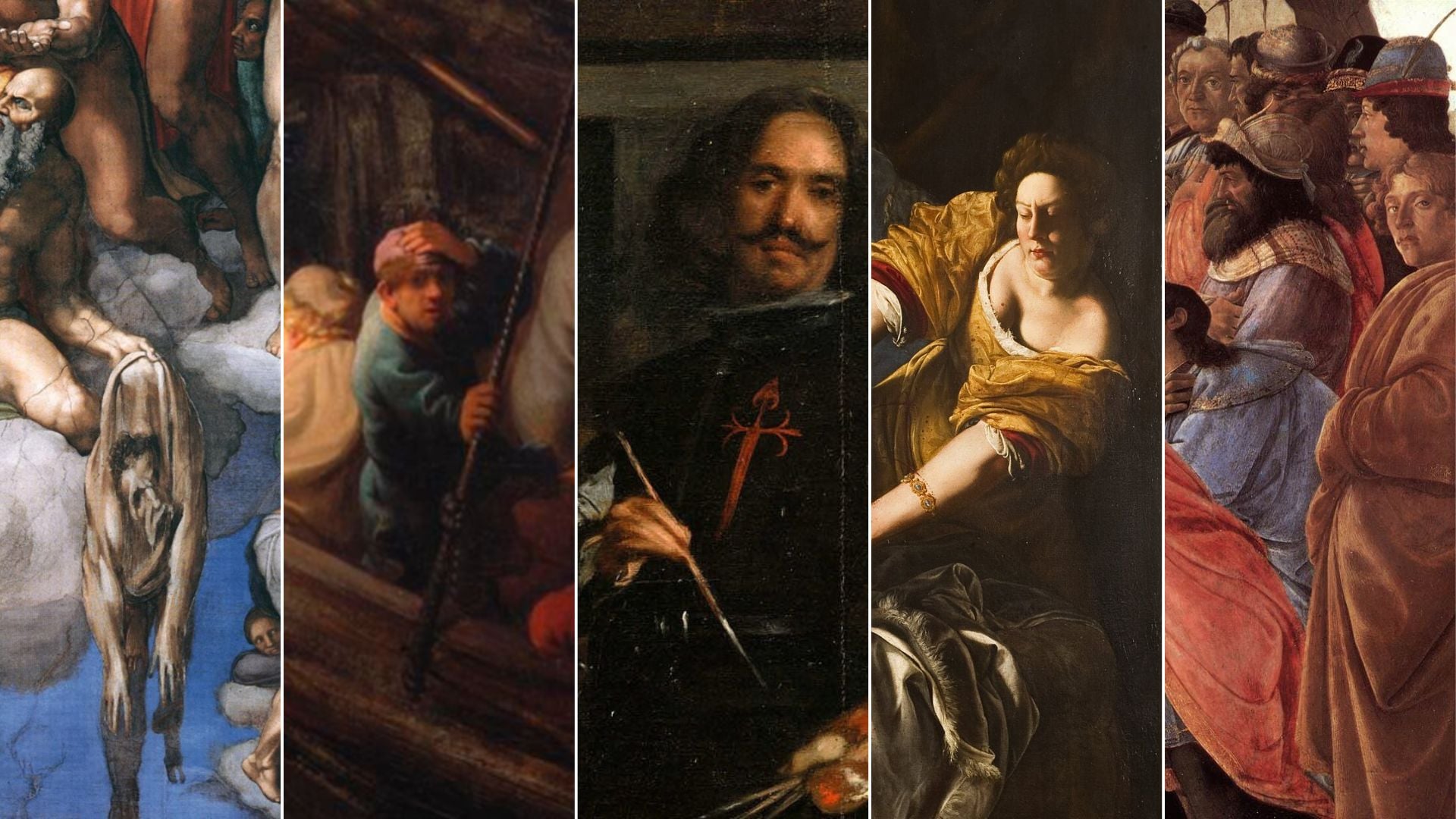
- Rather than hiding in their paintings, Michelangelo, Artemisia Gentileschi, and Caravaggio used their own faces to portray biblical figures, linking their art to personal struggles, revenge, or a plea for forgiveness. Rogier van der Weyden took a different approach, portraying himself as Saint Luke to emphasize the elevated status of painting.
- In Las Meninas, Velázquez uses his direct gaze and the reflection of King Philip IV and Mariana of Austria in the background mirror to assert the artist’s role as the painting’s true protagonist.
Hidden in the Crowd: Self-Portraits Among the Multitude
Hiding among the crowd has been one of the most common techniques. Yet many of these “hiding places” are not really that secret. The artist often looks out of the painting, directly at the viewer; the paradox of hiding while trying to be seen.
Raphael, The School of Athens
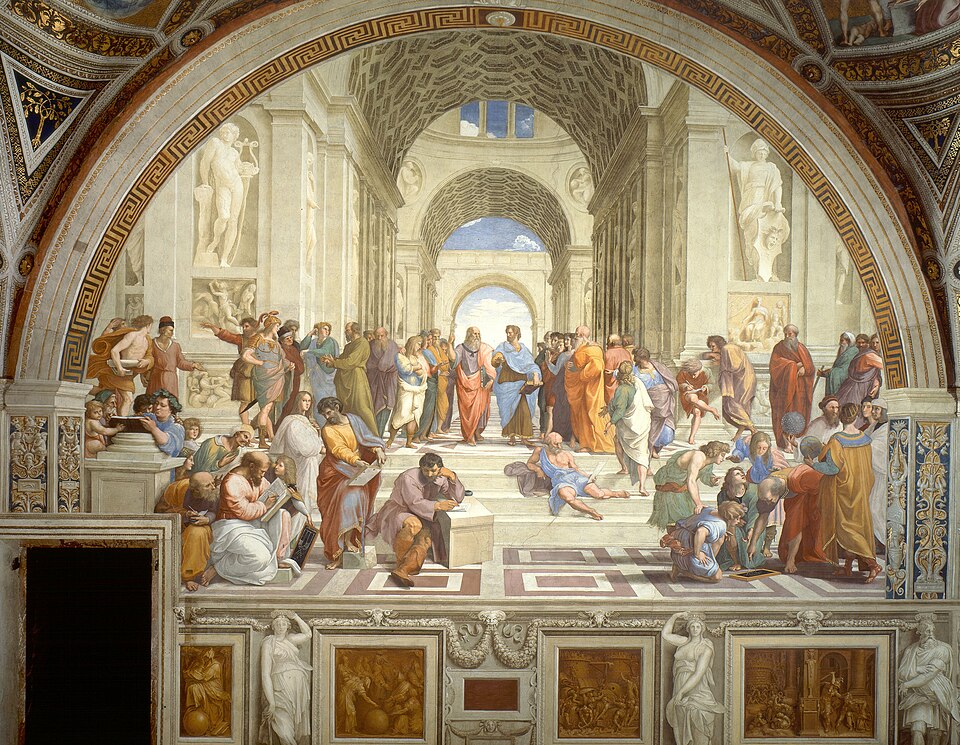
Raphael, The School of Athens, 1509–1511, Vatican Museums, Vatican City.
On the right-hand side of the fresco, peeking out from among the crowd of scholars, is Raphael himself, traditionally identified as the Greek painter Apelles. He appears as a young man with brown hair, wearing a dark cap, looking directly at the viewer.
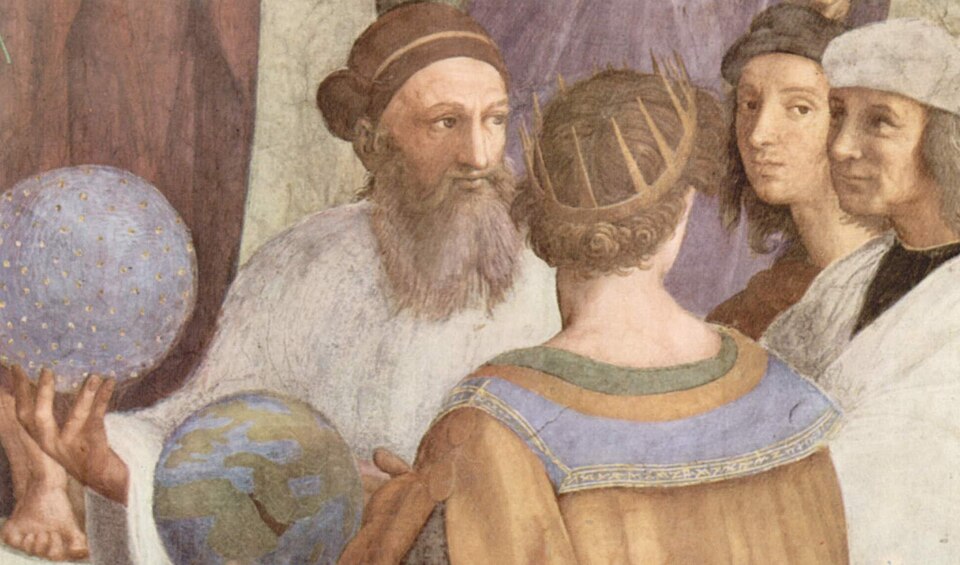
Raphael, The School of Athens, 1509–1511, Vatican Museums, Vatican City. Detail.
Rembrandt, Christ in the Storm on the Sea of Galilee
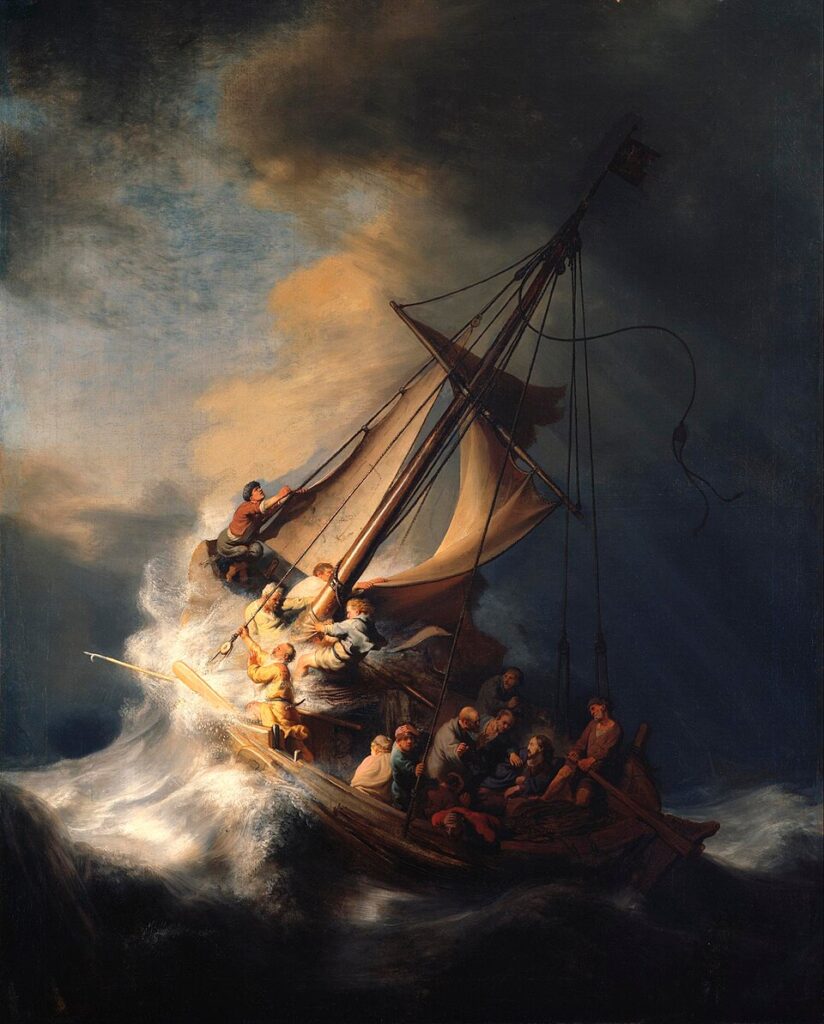
Rembrandt, Christ in the Storm on the Sea of Galilee, 1633, previously Isabella Stewart Gardner Museum, Boston, MA, USA, current location unknown.
Christ in the Storm on the Sea of Galilee is not only one of the world’s most famous stolen artworks, missing from the Isabella Stewart Gardner Museum since 1990, but also the only seascape Rembrandt ever painted. It hides something else, too. In the middle of the storm, while disciples struggle against the rough sea, there stands a man who is looking at us. That face is Rembrandt’s, holding the mast’s rope with one hand and his cap with the other.
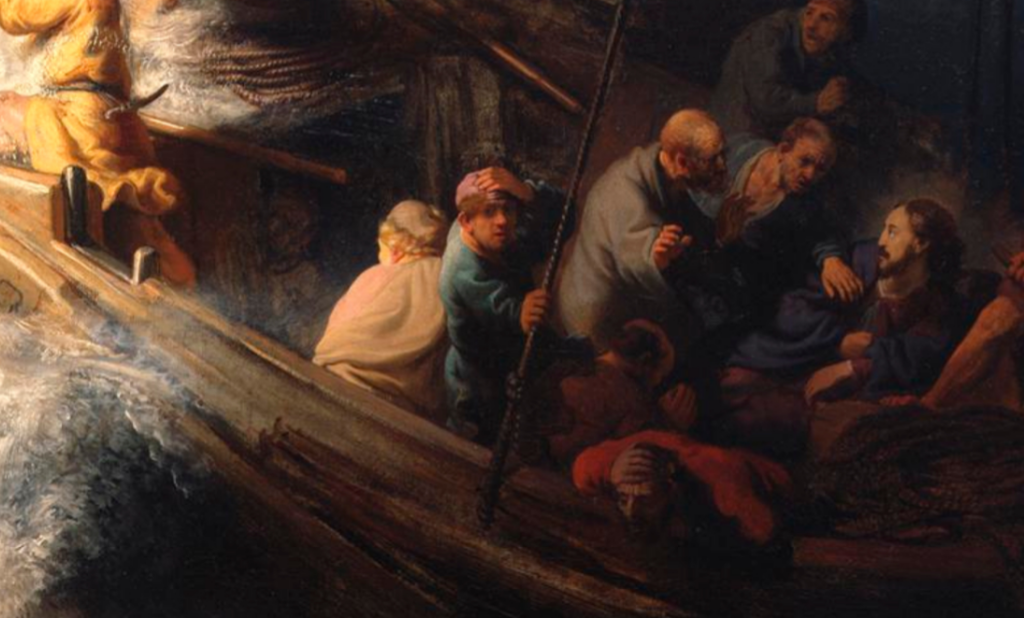
Rembrandt, Christ in the Storm on the Sea of Galilee, 1633, previously Isabella Stewart Gardner Museum, Boston, MA, USA, current location unknown. Detail.
Sandro Botticelli, Adoration of the Magi
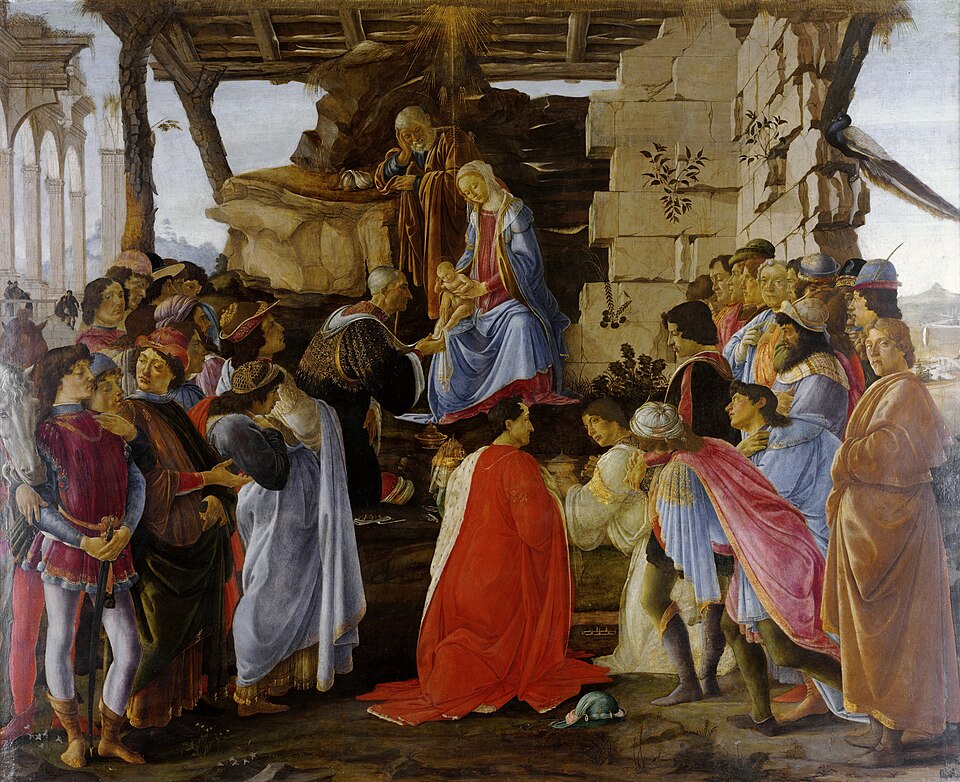
Sandro Botticelli, Adoration of the Magi, 1470–1475, Uffizi, Florence, Italy.
On the far right of the scene, dressed in a yellow and golden cloak, a young man—unlike the rest of the crowd, completely absorbed in the adoration of the Child—breaks from the scene to look directly at us. Most scholars identify him as Botticelli himself.
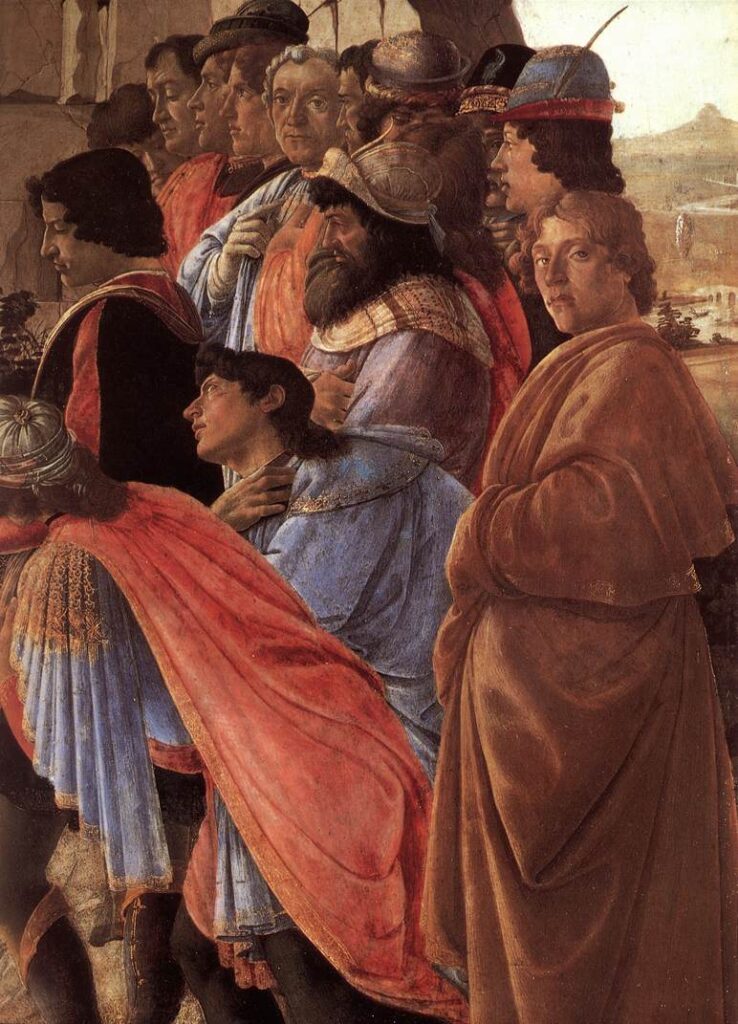
Sandro Botticelli, Adoration of the Magi, 1470–1475, Uffizi, Florence, Italy. Detail.
Francisco Goya, Charles IV of Spain and His Family
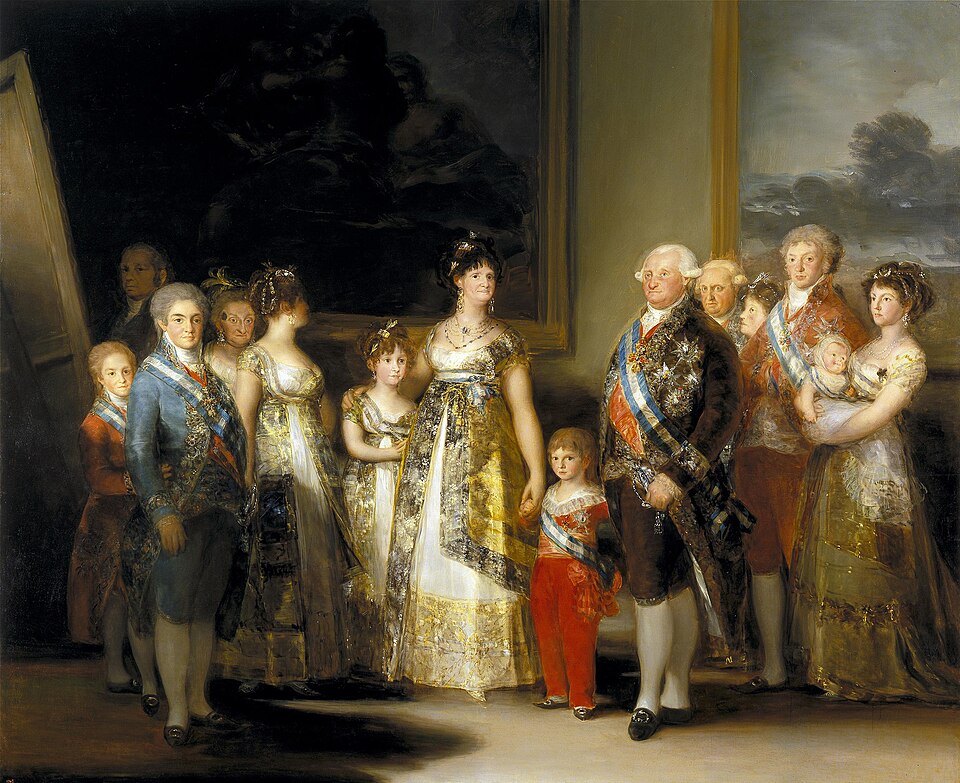
Francisco Goya, Charles IV of Spain and His Family, 1800, Museo del Prado, Madrid, Spain.
A century and a half after Las Meninas, Francisco Goya paid tribute to Velázquez in Charles IV of Spain and His Family. Just as the earlier Spanish master had done, Goya also included himself in the painting behind a huge canvas, although in a much more discreet way, half-hidden in the shadows on the far left.
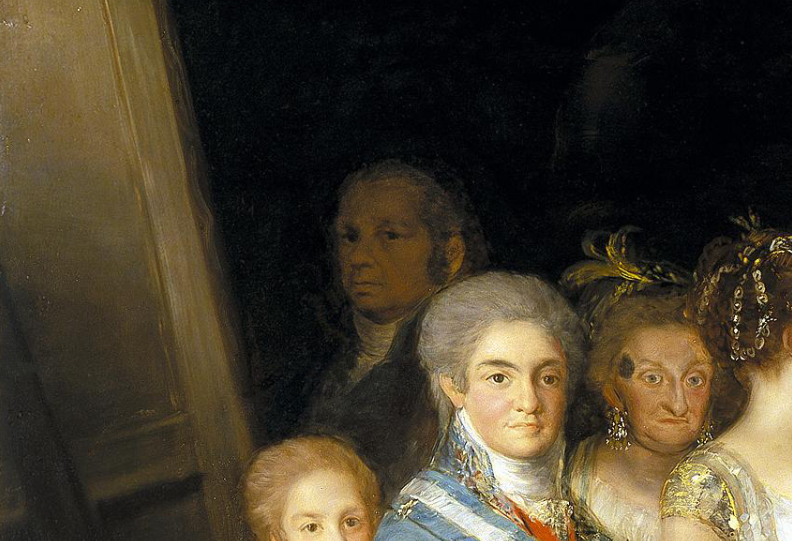
Francisco Goya, Charles IV of Spain and His Family, 1800, Museo del Prado, Madrid, Spain. Detail.
El Greco, The Burial of the Count of Orgaz
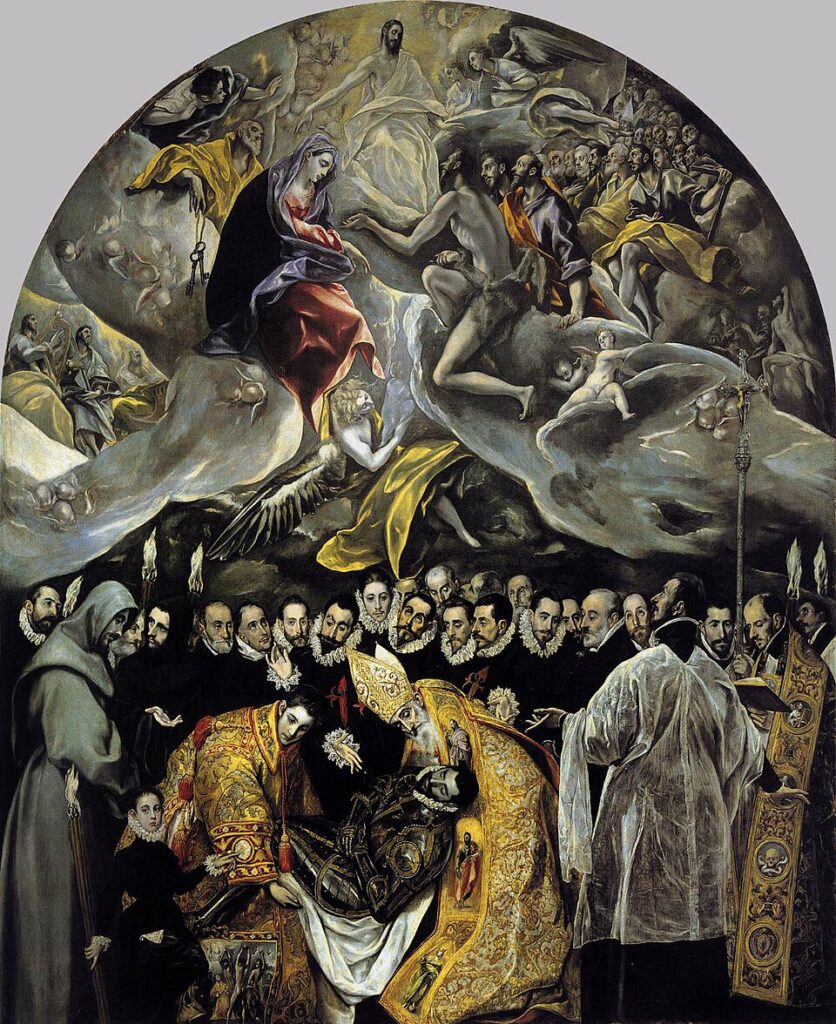
El Greco, The Burial of the Count of Orgaz, 1586, Church of Santo Tomé, Toledo, Spain.
Considered one of El Greco’s masterpieces, The Burial of the Count of Orgaz hides its creator among the knights witnessing the miracle. With an elongated face, dark beard, and pale complexion, we see a man who does not lower his gaze but stares directly at the viewer, without hesitation.
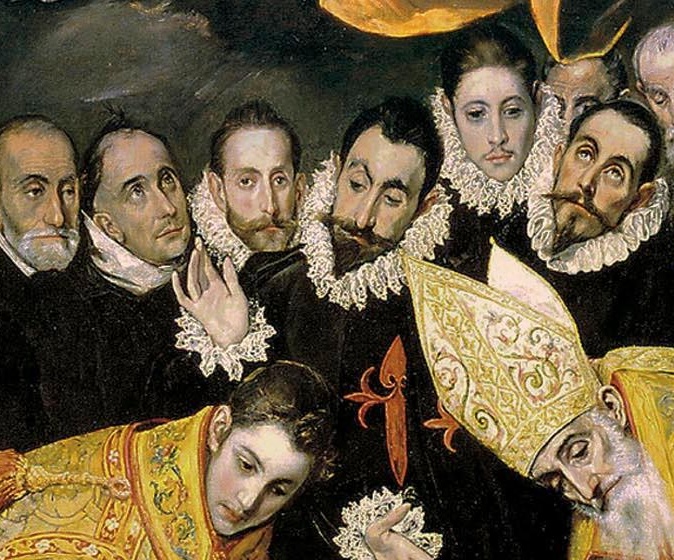
El Greco, The Burial of the Count of Orgaz, 1586, Church of Santo Tomé, Toledo, Spain. Detail.
Jacques-Louis David, The Coronation of Napoleon
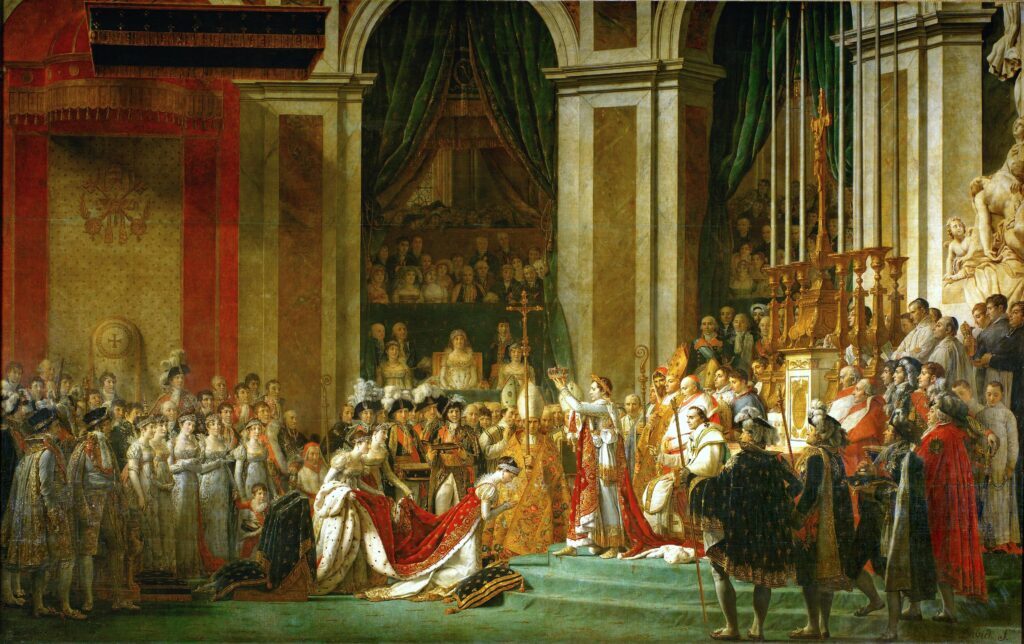
Jacques-Louis David, The Consecration of the Emperor Napoleon and the Coronation of the Empress Joséphine in Notre-Dame Cathedral on 2 December, 1804 (The Coronation of Napoleon), 1807, Louvre, Paris, France.
In this monumental painting, David could not resist the temptation to include himself among the witnesses to the ceremony. Seated on the steps of the gallery in the background, almost lost among the crowd of distinguished figures, he appears with paper and pencil in hand, as if taking notes on the very scene he was immortalising.
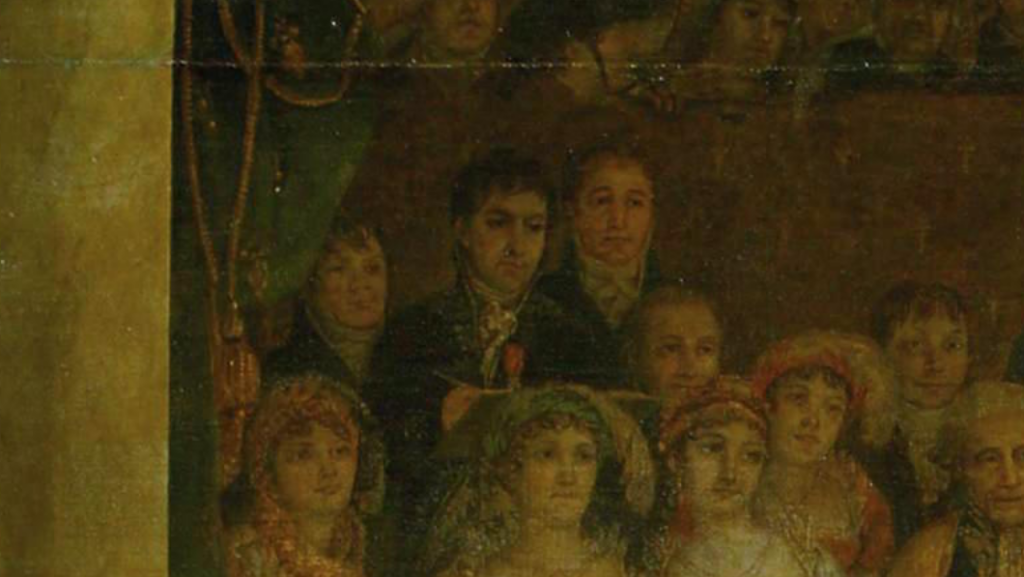
Jacques-Louis David, The Consecration of the Emperor Napoleon and the Coronation of the Empress Joséphine in Notre-Dame Cathedral on 2 December, 1804 (The Coronation of Napoleon), 1807, Louvre, Paris, France. Detail.
Reflections and Mirrors: The Artist in Disguise
Sometimes, however, artists hid themselves better. Instead of blending into the crowd, looking out at the viewer, they concealed themselves in the reflection of a mirror, a polished suit of armour, or a glass surface. Finding them was reserved for those who stopped and looked closely. It was no longer about being seen, but about being discovered.
Clara Peeters, Still Life with Flowers, and Gold Cups of Honour
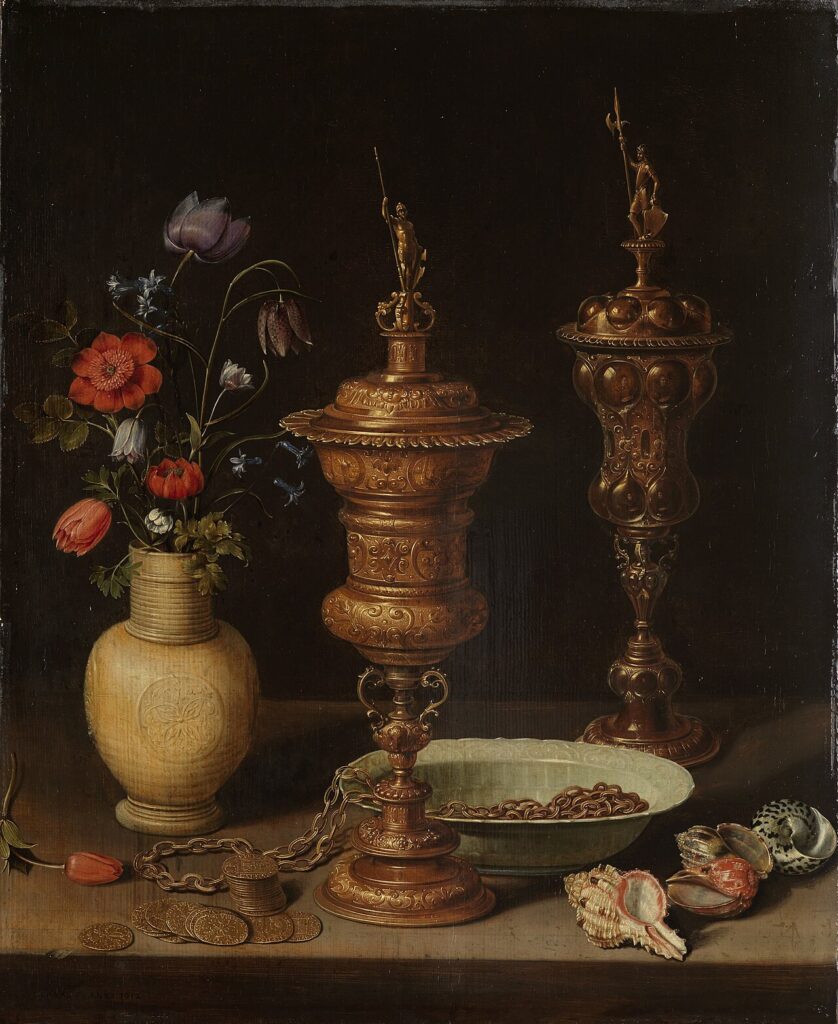
Clara Peeters, Still Life with Flowers, and Gold Cups of Honour, 1612, Staatliche Kunsthalle Karlsruhe, Karlsruhe, Germany.
In Still Life with Flowers and Gold Cups of Honour, Clara Peeters renders the textures of every object on the table with almost photographic precision. But the most fascinating detail is hidden in the golden cup on the right. Look closely enough and you can make out several tiny self-portraits of Peeters herself. It was not an isolated gesture. In a profession almost entirely dominated by men, this way of signing her work was also a way of claiming her place within it.
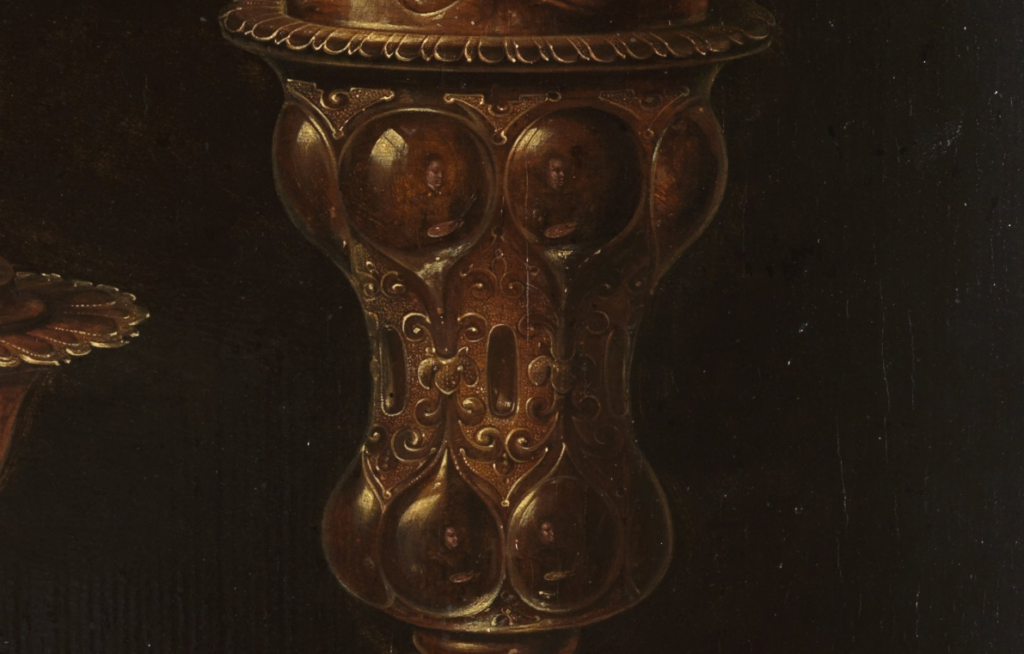
Clara Peeters, Still Life with Flowers, and Gold Cups of Honour, 1612, Staatliche Kunsthalle Karlsruhe, Karlsruhe, Germany. Detail.
Jan van Eyck, The Arnolfini Portrait
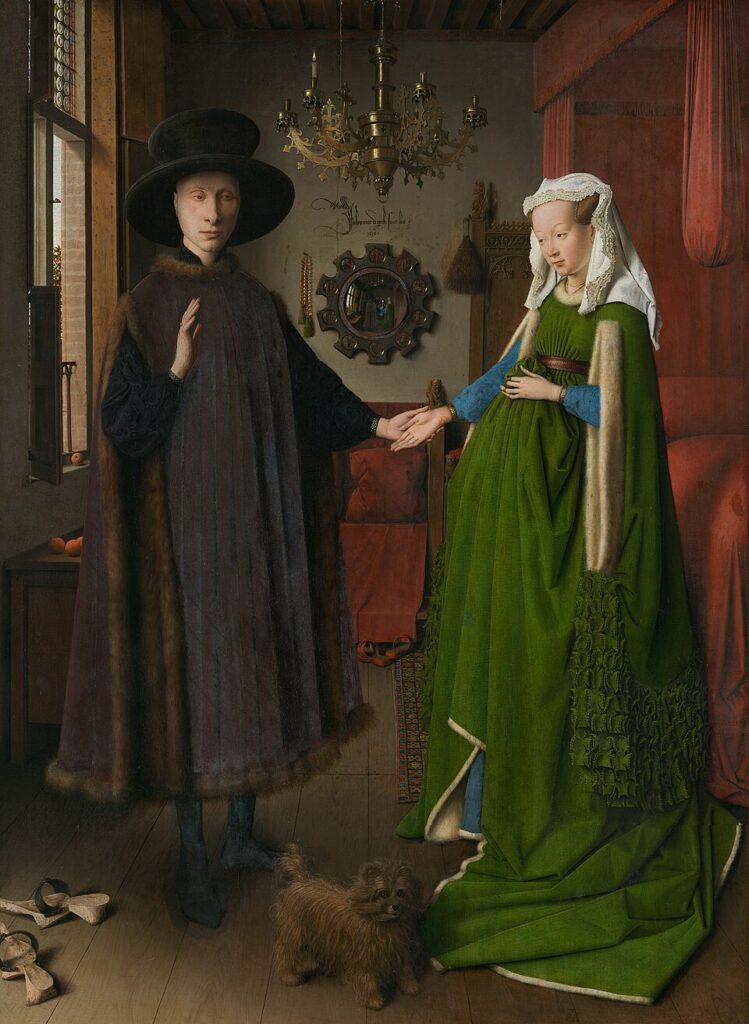
Jan van Eyck, The Arnolfini Portrait, 1434, National Gallery, London, UK.
The Arnolfini Portrait is full of enigmatic details, but the most fascinating one is hidden in the convex mirror hanging on the back wall. Above it, Van Eyck left a message, almost like a notarial seal, stating that he himself was there. But that is not all.
In its distorted reflection, the entire room appears in reverse: the backs of the couple and, barely visible, two tiny figures entering through the doorway, one dressed in red and the other in blue. One of the most widely accepted theories is that the figure in red is Van Eyck himself, recognisable by the same chaperon he wears in his 1433 self-portrait.
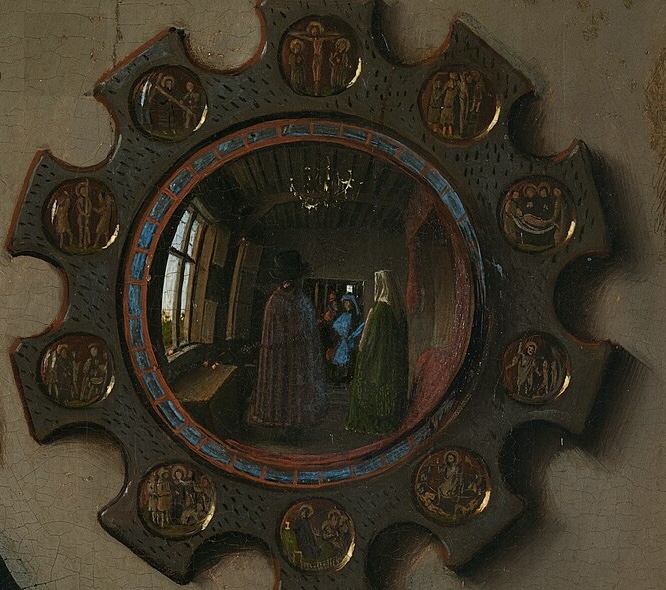
Jan van Eyck, The Arnolfini Portrait, 1434, National Gallery, London, UK. Detail.
Pieter Claesz, Vanitas with Violin and Glass Ball
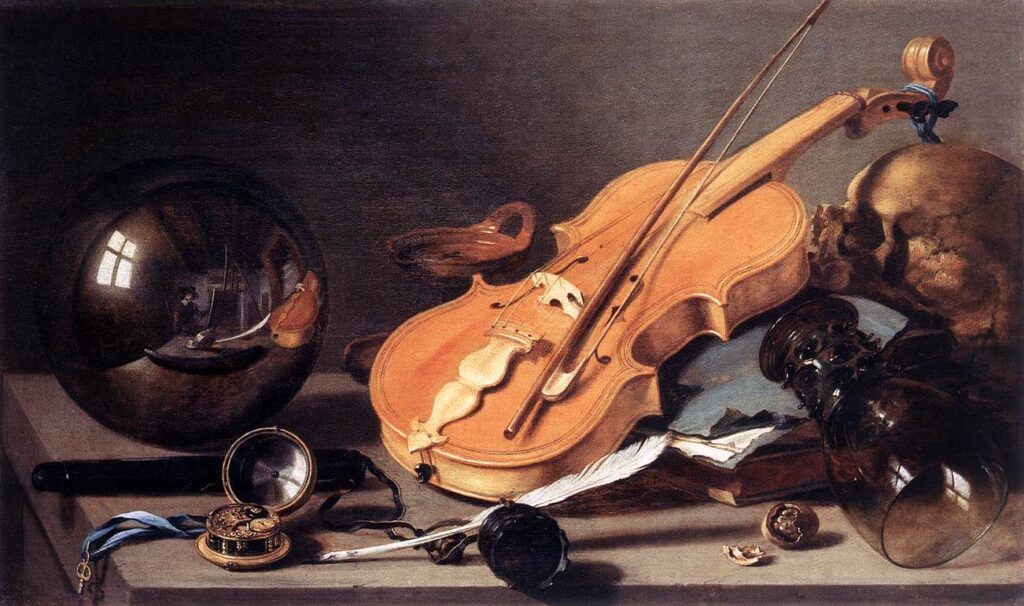
Pieter Claesz, Vanitas with Violin and Glass Ball, 1628, Germanisches Nationalmuseum, Nuremberg, Germany.
One particularly original hidden self-portrait can be found in Pieter Claesz’s Vanitas with Violin and Glass Ball. In the glass ball resting on the table, among the other symbolic objects of the vanitas, we can make out the distorted reflection of the painter himself, brush in hand, capturing himself in the very act of painting the still life.
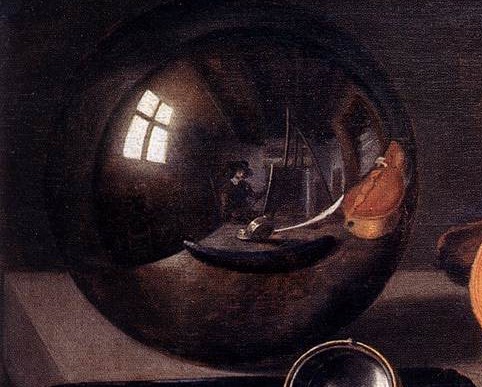
Pieter Claesz, Vanitas with Violin and Glass Ball, 1628, Germanisches Nationalmuseum, Nuremberg, Germany. Detail.
Becoming the Subject: When the Artist Borrows Another Face
Some artists were more daring when it came to portraying themselves. They did not hide among the crowd or camouflage themselves in a reflection. Instead, they borrowed someone else’s face. The artist gave their own features to a character in the scene—a hero, a saint, a martyr—turning the painting itself into a mirror of their biography, their fears, or their ambitions. It was no longer enough simply to be present in the scene; the artist became the protagonist.
Michelangelo, The Last Judgement
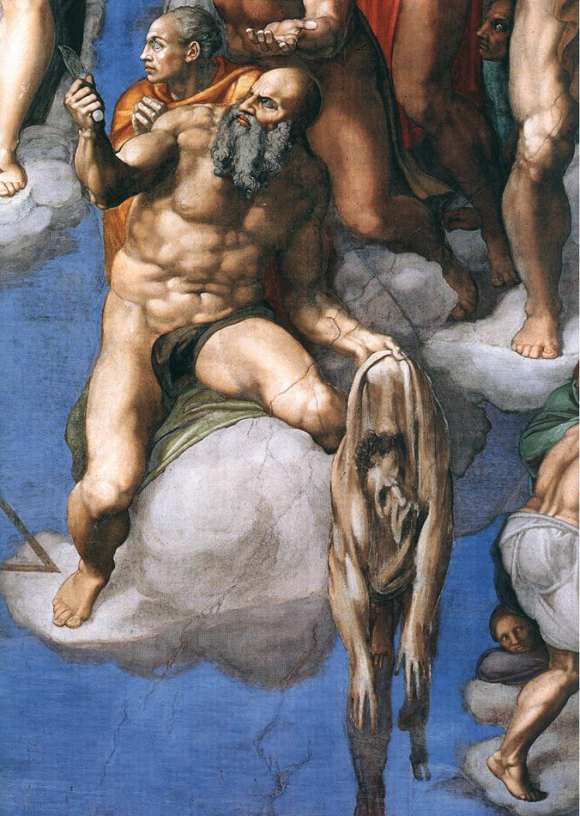
Michelangelo, The Last Judgement, 1536–1541, Sistine Chapel, Vatican City. Detail.
25 years after finishing the ceiling of the Sistine Chapel, Michelangelo still had the strength to return and paint another masterpiece: The Last Judgment. Leaving aside the criticism he received, which could fill an article of its own, the artist chose a surprisingly humble way to portray himself. He gave his face to the flayed skin of Saint Bartholomew. He was already in his sixties, exhausted by the commission and at odds with the Vatican. It is perhaps the least flattering self-portrait in the history of art.
Artemisia Gentileschi, Judith Beheading Holofernes
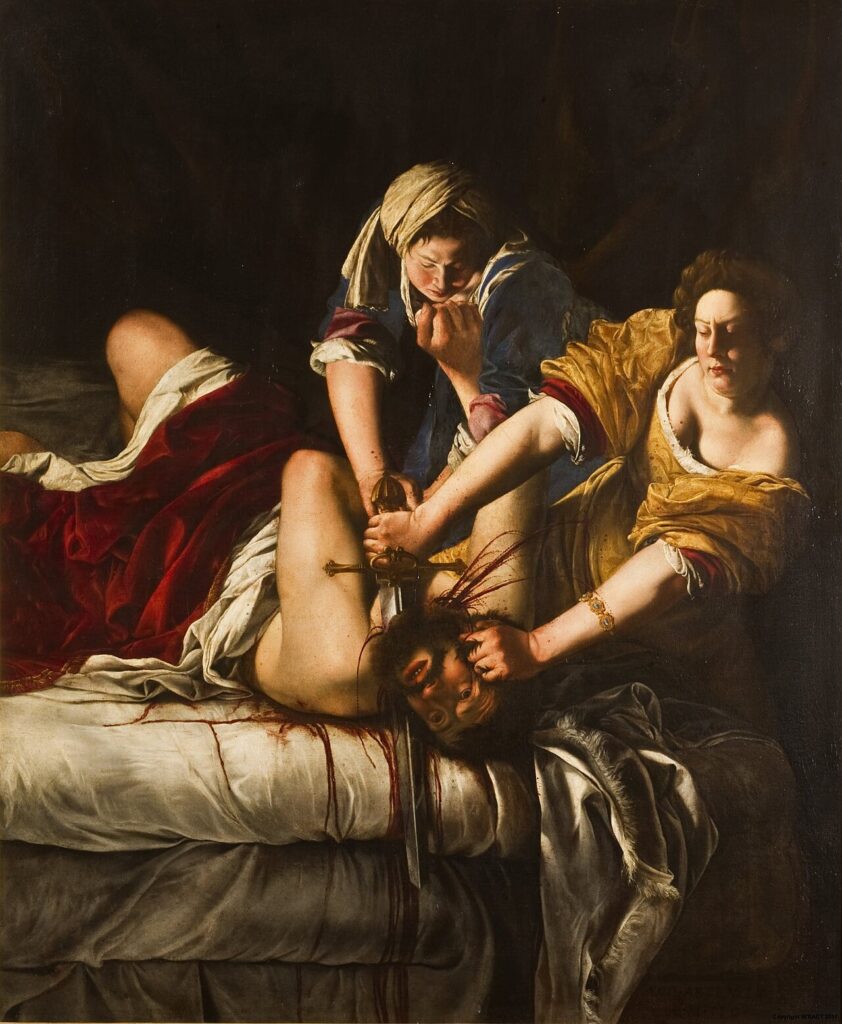
Artemisia Gentileschi, Judith Beheading Holofernes, c. 1613, Uffizi, Florence, Italy. Detail.
In Judith Beheading Holofernes, Artemisia Gentileschi portrayed herself as the biblical heroine beheading the Assyrian general. Just months before painting it, she had been raped by her teacher, the painter Agostino Tassi. Many scholars believe she gave Holofernes Tassi’s face, turning the canvas into a kind of painted revenge: the strength of a humiliated woman, executed with a brush in her hand.
Caravaggio, David with the Head of Goliath
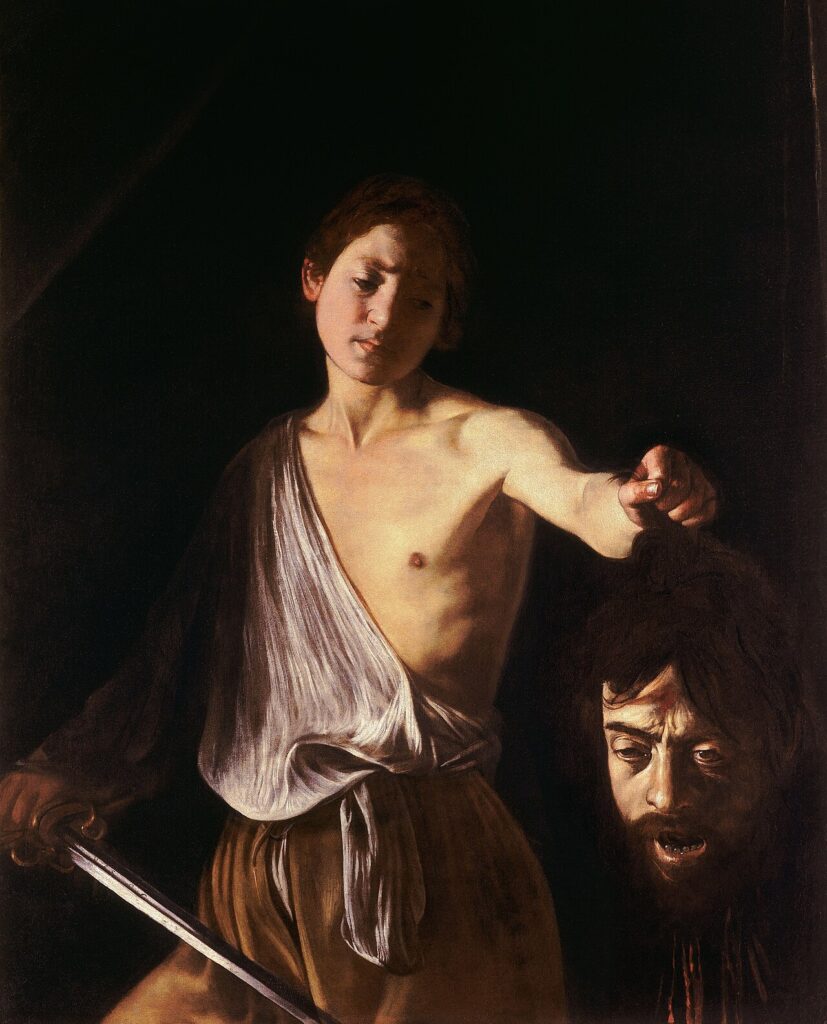
Caravaggio, David with the Head of Goliath, c. 1605, Galleria Borghese, Rome, Italy.
By the time he painted David with the Head of Goliath, around 1605, Caravaggio was a man with a price on his head. Four years earlier, he had killed Ranuccio Tomassoni in a brawl in Rome. The authorities had sentenced him to bando capitale—anyone could legally kill him and claim a reward for his severed head. Fleeing from city to city, he painted the same subject several times, eventually giving the decapitated giant his own face. It was no coincidence: he sent the painting to Cardinal Scipione Borghese as a plea for a pardon.
Rogier van der Weyden, Saint Luke Drawing the Virgin
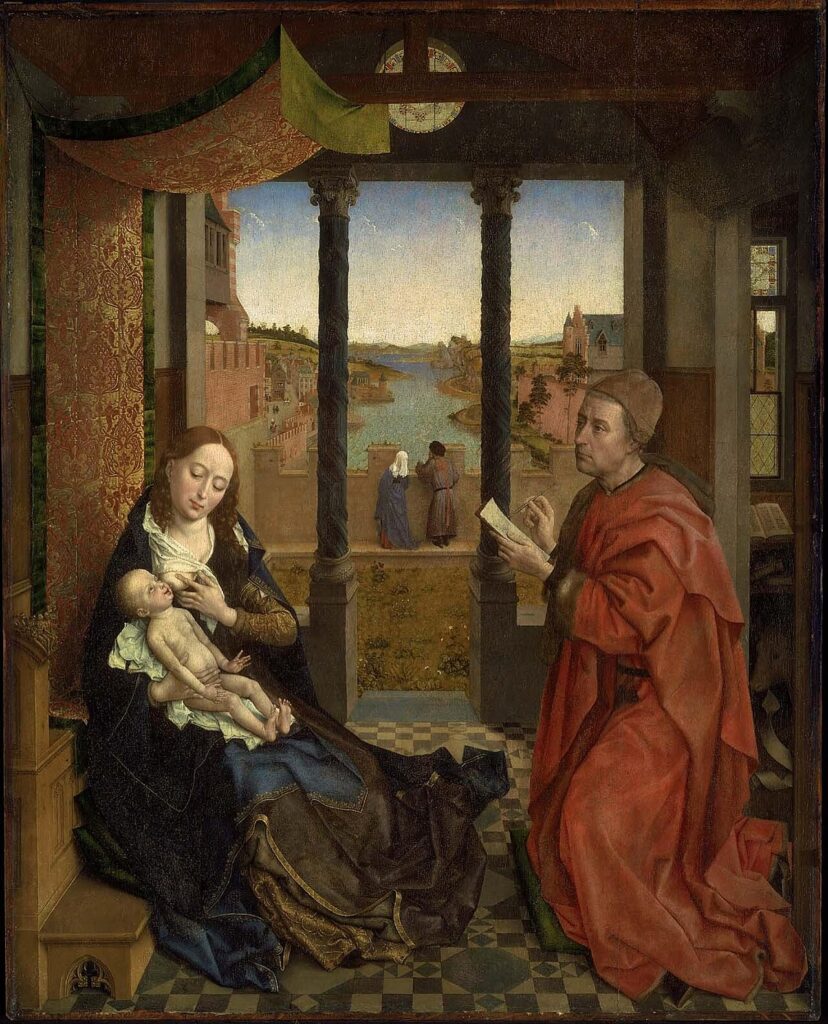
Rogier van der Weyden, Saint Luke Drawing the Virgin, c. 1435–1440, Museum of Fine Arts, Boston, MA, USA.
In the mid-15th century, Rogier van der Weyden found his own way of asserting the importance of his craft: he gave his own face to Saint Luke, the patron saint of painters, as he draws the Virgin with a silverpoint, a technique that required considerable skill. By identifying himself with the saint who, according to tradition, painted the first portrait of Mary, Van der Weyden elevated his own craft into an almost divine act of inspiration.
Velázquez and Las Meninas: The Artist as True Protagonist
One self-portrait deserves a section of its own: Las Meninas. Velázquez used every technique at his disposal to make it clear that the person behind the painting is its true protagonist. He depicts himself standing in front of a huge canvas, palette and brush in hand. He no longer disappears into a crowd, like Raphael or Botticelli. And yet he doesn’t quite step into the center of the scene either. He stands slightly off to the side, half in shadow, and still manages to command as much presence as the royal family he serves. Like them, he looks straight at us, turning the viewer into a witness to his work.
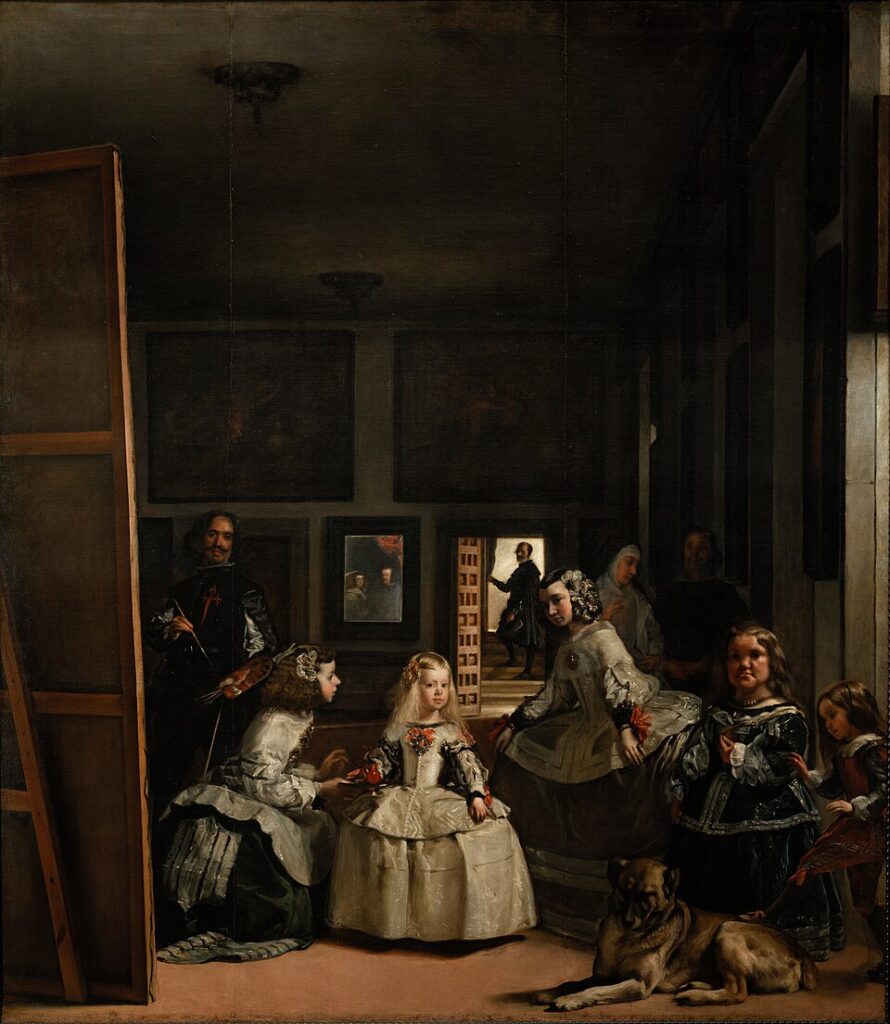
Diego Velázquez, Las Meninas, 1656, Museo del Prado, Madrid, Spain.
Even the mirror in the background serves a purpose similar to the one we saw in Van Eyck—bringing characters into the composition who are not actually present in the scene. But here, the mirror does not reflect a discreet witness. It reflects the protagonists of the painting Velázquez is working on: King Philip IV and Mariana of Austria. Velázquez dared to push them into the background, reducing them to a blurred reflection at the far end of the room, while making himself the real protagonist of this masterpiece.
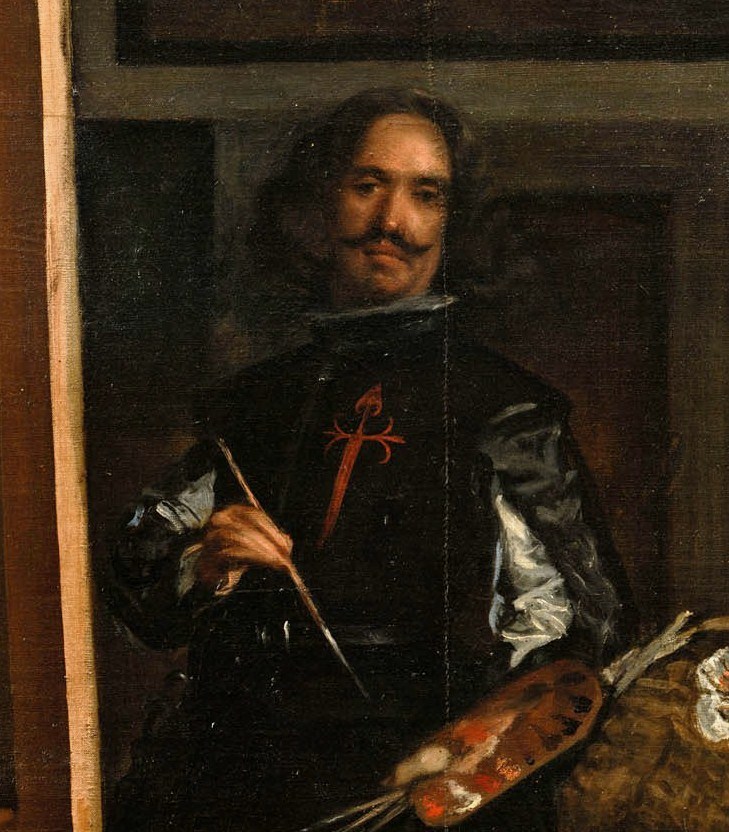
Diego Velázquez, Las Meninas, 1656, Museo del Prado, Madrid, Spain. Detail.
In the end, all these artists shared the same contradiction: they hid themselves, yes, but only so that someone, someday, would find them. Each left behind their own signature without a signature. Velázquez was perhaps the one who understood this paradox best. He did not need to hide at all. He simply stood at the center of the painting, brush in hand, and waited for us, centuries later, to wonder who, exactly, is looking at us from the other side of the canvas.