


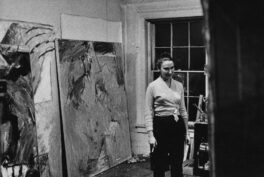
Pat Passlof: Painting, Community, and the Work of Making Space
Pat Passlof (1928–2011) occupies a distinctive place in the history of postwar American painting. A member of the downtown New York art world that...
Natalia Iacobelli 29 October 2026

Leonardo da Vinci, The Last Supper, c. 1495–1498, Santa Maria delle Grazie, Milan, Italy.
For nearly two thousand years, the life of Christ has inspired more paintings than any other subject in Western art. So getting to a list of just 10—choosing between portrait or group painting, birth or death, modern or ancient—has been quite a feat! The most famous painting in the world, The Last Supper by Leonardo da Vinci, may have pulled you into this article. Now let’s explore others!
Here we are taking a broad view—who were the great painters who chose to paint Jesus Christ, and how did they do it? No single artist has covered the whole life of Christ, but a handful of the great names defined how certain scenes would be painted forever after. Or they painted so far out of the accepted canon that they made a mark that will last centuries.
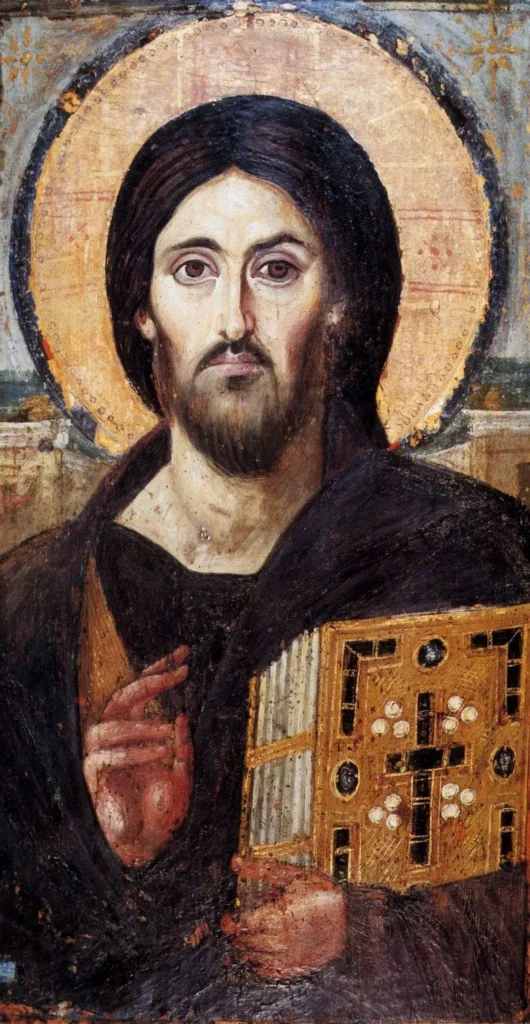
Christ Pantocrator, 6th century, Saint Catherine’s Monastery, Sinai, Egypt.
Let us begin with the the oldest surviving portrait of Christ: Christ Pantocrator, from St. Catherine’s Monastery in Sinai, painted around the 6th century. Pantocrator mean “ruler of all.” This Byzantine panel icon, painted with pigments mixed into hot wax, depicts Christ with a split expression, symbolizing his dual divine and human nature. Use a piece of card to hide one side and then the other—they really do offer different expressions. Held in a remote desert region, it is one of the few icons to survive Byzantine iconoclasm, movements that led to the destruction of huge numbers of images.
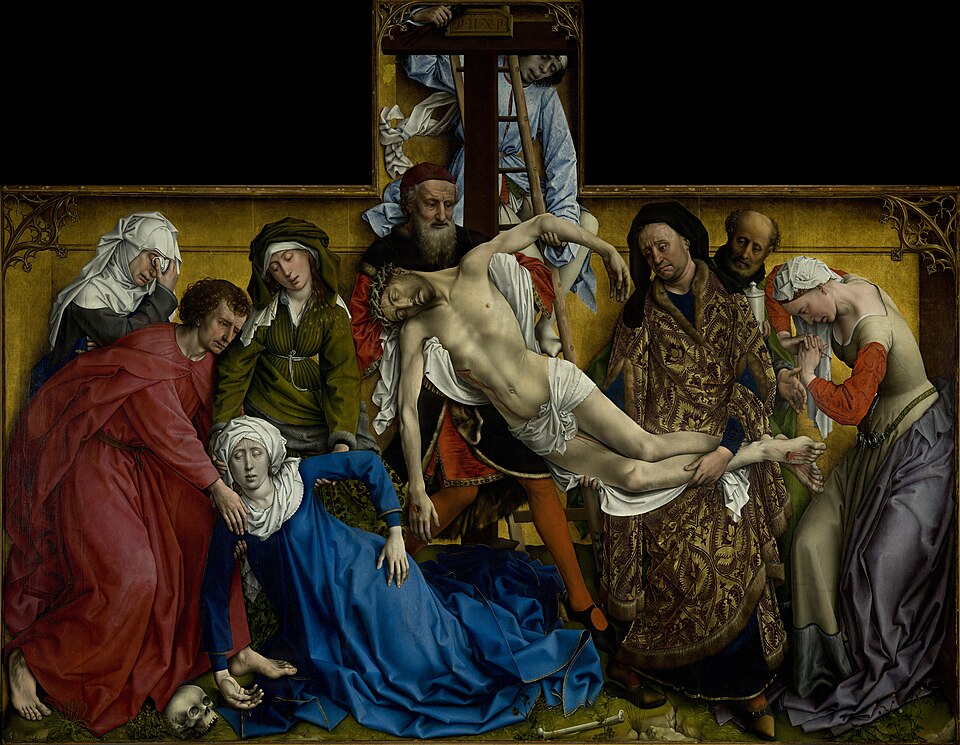
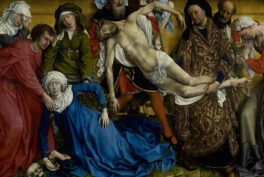
Rogier van der Weyden, Descent from the Cross, before 1443, Museo del Prado, Milan Italy.
This is one of the most celebrated paintings of the 15th century. The emotional charge of looking into this image packed with suffering is immense. The Virgin Mary collapses, mirroring the shape of the lifeless body of her son. Figures packed into the golden box of the wooden panel give the viewer a claustrophobic feeling of being right in there. This was an early career work for Van der Weyden, cementing his reputation as one of the finest painters of his age. This hugely influential style and staging has been copied by artists for centuries.

Leonardo da Vinci, Salvator Mundi, c.1500, private collection. Wikimedia Commons (public domain).
Although The Last Supper by Leonardo da Vinci (shown in our headline) is one of the most famous paintings in the world, for this article, we’ve chosen Salvator Mundi, meaning Saviour of the World. Commissioned around 1500, it was an object intended for personal devotion, providing a spiritual connection between the viewer and Christ. Look at the precise detail in the ringlets of hair and the lifelike fingers. Sadly this astonishing work has not been on display since 2017 when it was acquired by the Saudi Arabian royal family for 450 million US dollars. The most expensive painting in the world has languished in storage ever since.
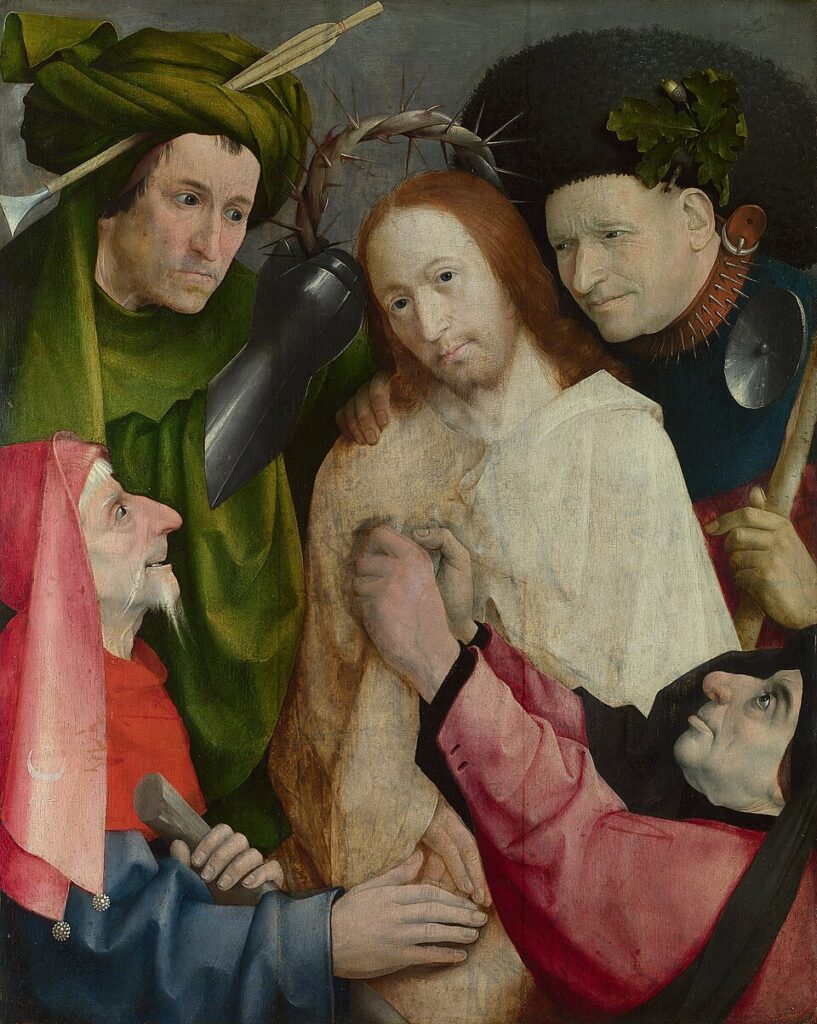
Hieronymous Bosch, The Crowning with Thorns, (Christ Mocked), c. 1510, National Gallery, London, UK.
This gothic nightmare shows a sorrowful Christ seemingly reconciled to the torture inflicted by his fellow man. The faces pressing into him are grotesque and tormenting. The tight, vertical canvas heightens the effect. Bosch is known for his haunting, hellish scenes, packed full of detail. Almost 900 years before this, Pope Gregory the Great said that images were “the Bible of the illiterate”—meaning that, as most people could not read, they looked to the Church for visual interpretation of the Bible. Images painted as murals onto church walls, scribed into illuminated manuscripts, set in stained glass, or painted on wood and canvas were the “story” that could be examined again and again for clues and guidance and inspiration.
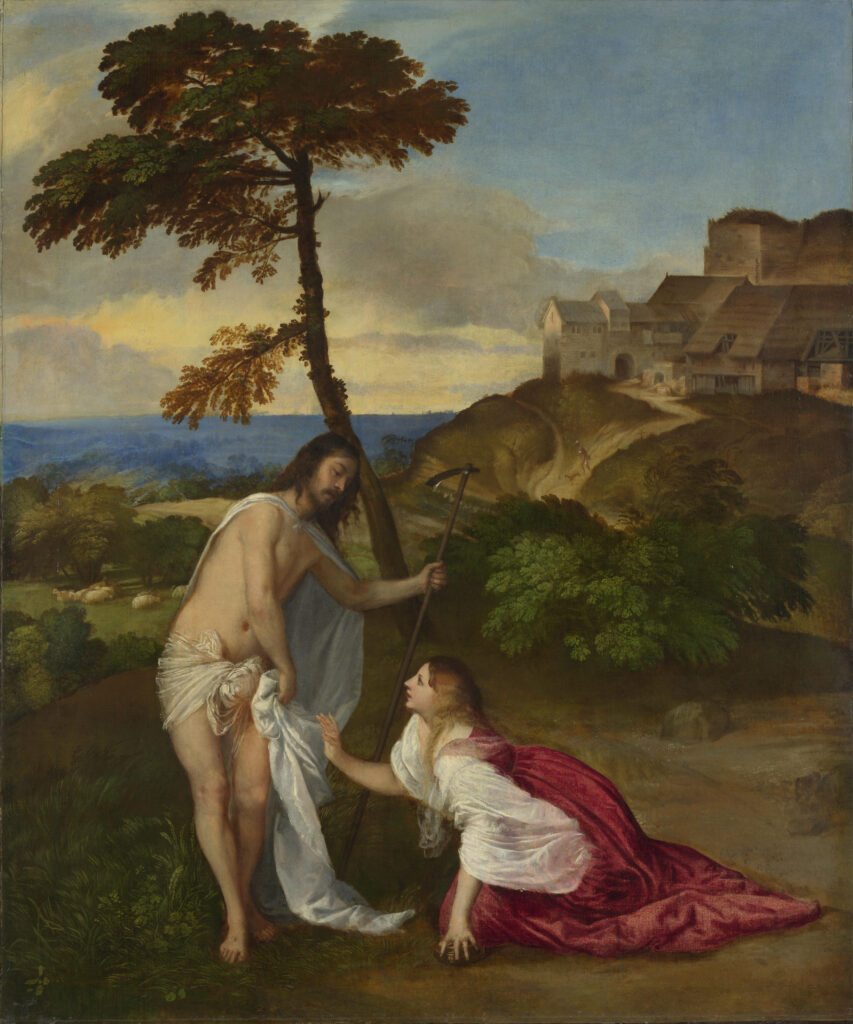
Titian, Noli Me Tangere, c. 1514, National Gallery, London, UK.
This is the moment the resurrected Christ appears to Mary Magdalene. It’s an early career work by Titian, but just look at the gorgeous glowing colors of Mary’s dress and the lush garden of Gethsemane. Interestingly, Titian chooses the fertile Northern Italian landscape as his backdrop, and entirely leaves out the empty tomb and crucifixion site that other artists would normally include. The title translates as “do not touch me,” a reference to his physical body transitioning to a divine state. A moment of great sadness and great joy for Mary.
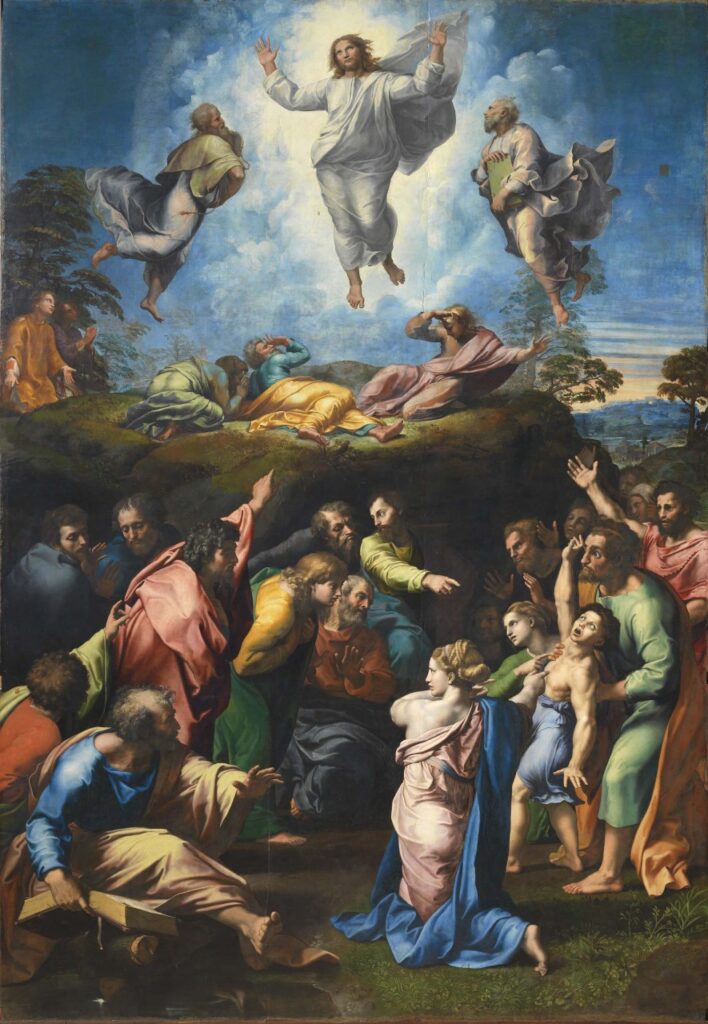
Raphael, The Transfiguration, 1516–1520, Vatican Museums, Vatican City.
Raphael’s Transfiguration was his final painting—he died unexpectedly aged 37 on Good Friday in 1520. In fact, two of his apprentices had to finish it off. From that date until the mid-19th century, many believed it the most famous oil painting in the world. Jesus is shown rising into heaven, while his apostles shield their eyes in awe below. At the very bottom of the painting, note the young boy possessed by a devil—human suffering continuing, or another miracle being performed? There is plenty in here to reflect on. Originally commissioned for the Cathedral in Narbonne, France, it remained in Italy—Cardinal Giulio de’ Medici (the future pope Clement VII) could not bear to be parted from it.

Hans Holbein the Younger, The Dead Christ in the Tomb, 1521–1522, Kunstmuseum Basel, Switzerland.
This is an unusual depiction. We are up close and personal with a dead Christ in a long and narrow, shallow stone tomb. The profile is side-on, and we look at the exact size and shape of a corpse. The body is emaciated; the mouth gapes open and dried blood is caked around a spear wound with post-mortem discoloration. Hans Holbein the Younger does not give us any comfort, there is no halo or sign of resurrection. Realistic and unsettling, it forces the viewer to face the physical reality of death and grief.
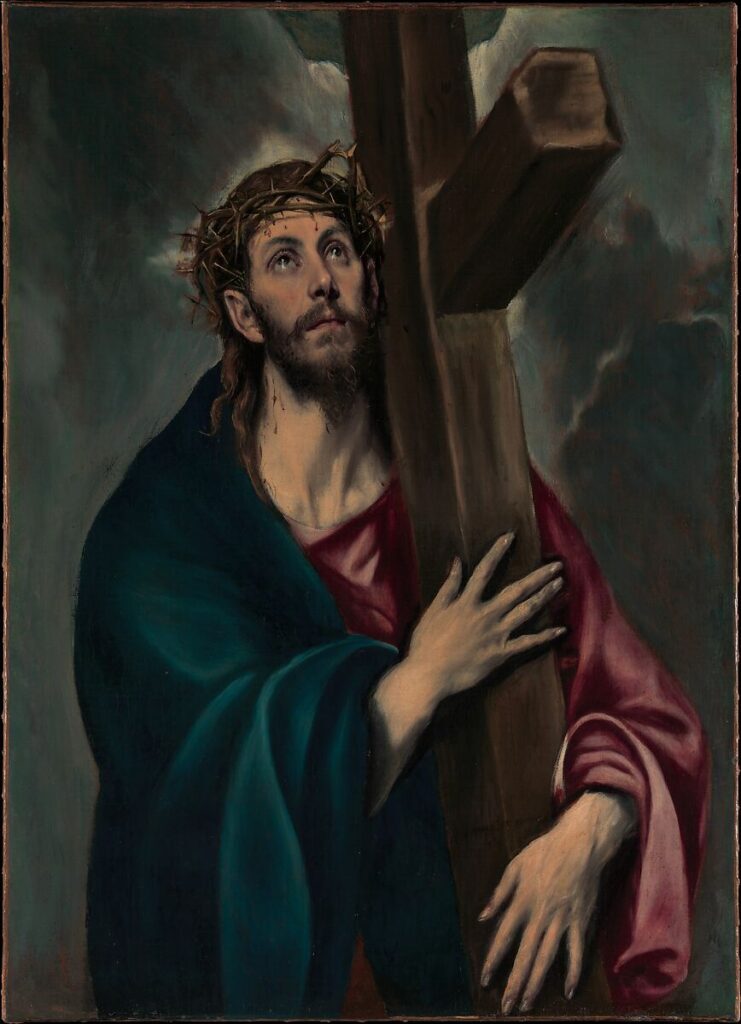
El Greco, Christ Carrying the Cross, c. 1577–1587, Metropolitan Museum of Art, New York City, NY, USA.
El Greco’s technique and style were unique, with fluid, elongated bodies in deep, rich colors and strong emotional appeal. In this painting, Christ carries his own cross to his death. This feels like a personal moment; Christ’s tear-filled eyes show an aching sadness, but also an acceptance. This is a human journey—an isolated mortal who knows the end is near, as a storm gathers behind him. The mocking placement of the torturous thorn of crowns shows real, human blood emerging. Created during the Counter-Reformation, El Greco meant this image to inspire contemplation.
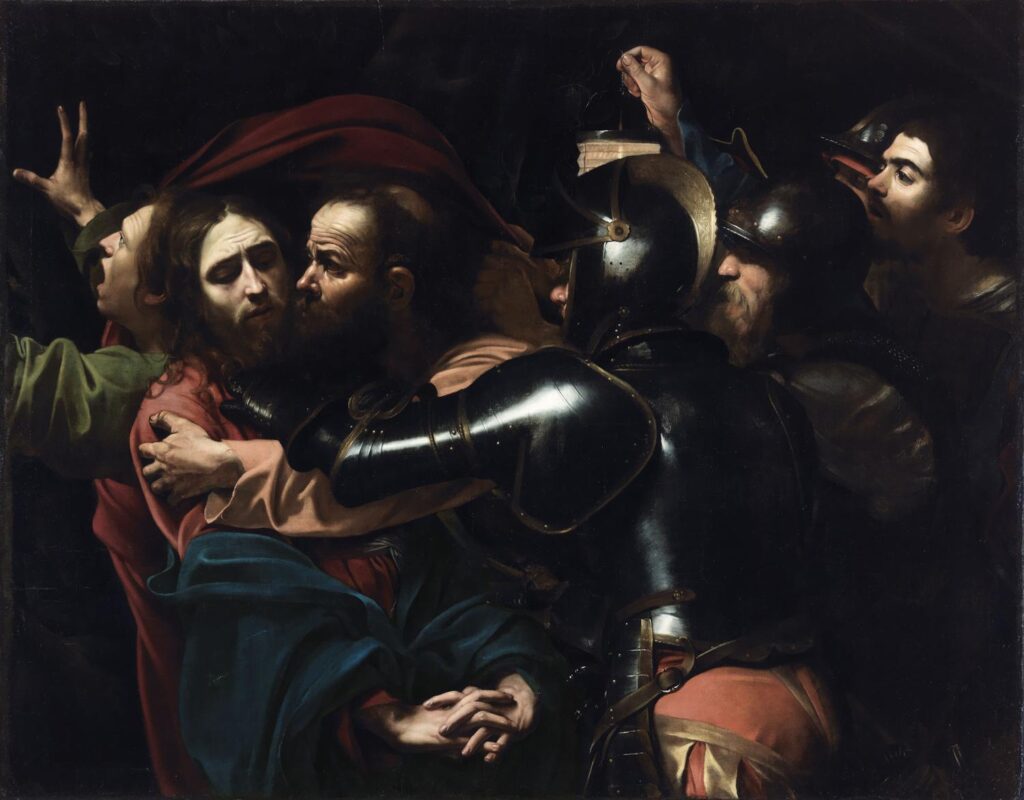
Caravaggio, The Taking of Christ, 1602, National Gallery of Ireland, Dublin, Ireland.
Caravaggio transformed the events of Christ’s life into Baroque dramas. His canvases are packed with people and activity. Here we see Judas kissing Jesus, betraying him to the authorities. Cowardly postle John flees the scene in terror. Christ is pushed to the side of the canvas. It is the armor of the soldiers that fills the canvas: dark helmets and metal-clad arms. Dramatic light and dark contrast (called chiarscuro) create a scene full of threat and violence and tragedy. Christ offers no resistance; his eyes are downcast in anguish and he holds his hands softly together. Check out the quiet witness on the right, holding the lantern—it is believed to be a self-portrait by Caravaggio himself.
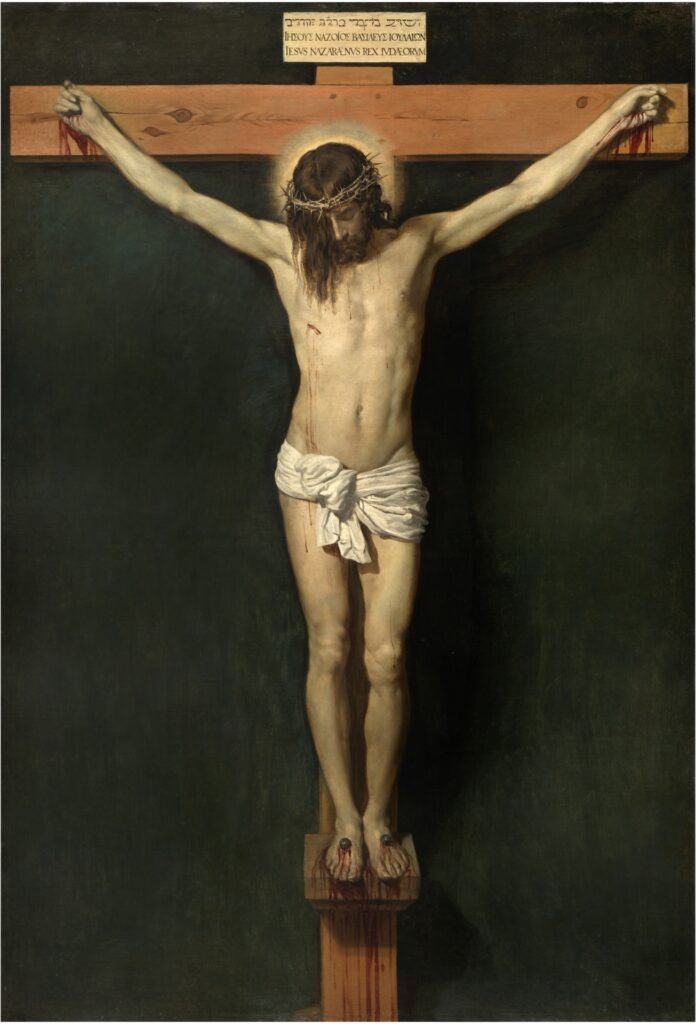
Diego Velázquez, Christ Crucified, c. 1632, Museo del Prado, Madrid, Spain.
Velázquez gave the Crucifixion its most solemn form. A simple composition on a dark background, the life-sized Christ seems almost calm. This is the accepted iconography for painting a crucifixion—a beautiful body and a quiet dignity to the form. No crowds, no drama. This image is so beloved by Spanish Christians that it has continually inspired poems and devotions since it was first painted in 1632.
Even if you are not a Christian (and I am not), the story of the life of Christ offers a narrative rich in drama, passion, and emotion. For most of European history, the Church was the richest patron of the arts, and scenes from the life of Christ were the central subject of so many paintings. There is no escaping them! Their part in art history is fascinating, whether you love God, or simply love great art.
DailyArt Magazine needs your support. Every contribution, however big or small, is very valuable for our future. Thanks to it, we will be able to sustain and grow the Magazine. Thank you for your help!

Candy's remote, rain-soaked farmhouse clings to a steep-sided valley in rural Wales. She raises cats, chickens, and children with varying degrees of success. Art, literature, and Lakrids licorice save her sanity on a daily basis.

Melanie is a freelance editor, proofreader, and writer within humanities fields. Follow her on Twitter @melaniesdemmer.
Pat Passlof (1928–2011) occupies a distinctive place in the history of postwar American painting. A member of the downtown New York art world that...
Natalia Iacobelli 29 October 2026
American artist James Abbott McNeill Whistler trained in Paris, lived in London, and fled to Venice after his infamous libel trial. He is much less...
Catriona Miller 23 November 2026
The gavel falls, and the Sotheby’s auction room in New York explodes into applause. Gustav Klimt’s Portrait of Elisabeth Lederer has just shaken...
Javier Abel Miguel 11 June 2026
Three figures hover in the air, their bodies angled downward as they descend upon a limp man below. His arms stretch outward, his body slack, as if...
Frank Schildiner 28 May 2026