



Does My Bum Look Big in This? The Female Body in Art
Explore the representation of the female body and buttocks in art, celebrating diversity and beauty across history and modern culture.
Candy Bedworth 29 January 2026
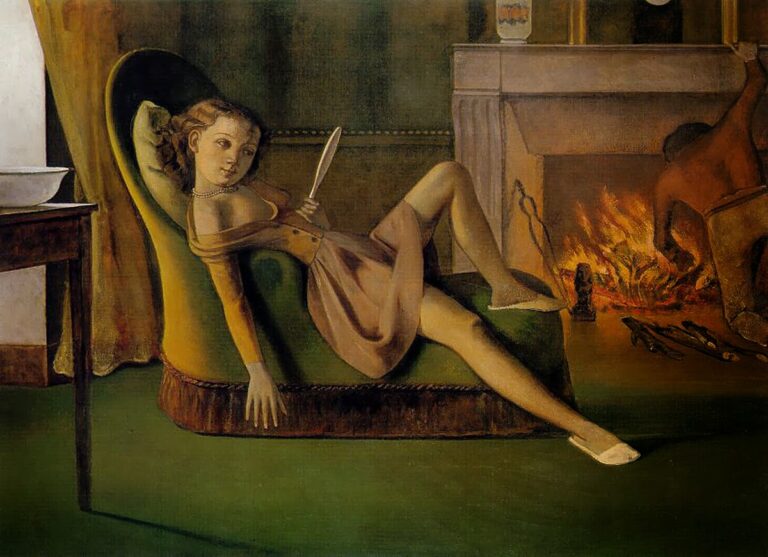
Balthus, Golden Days, 1944–1946, Hirshhorn Museum and Sculpture Garden, Washington, DC, USA.
Nudity in art is not inherently sexual. Let’s face it, it has been the bread and butter of art history for centuries. Gorgeous celebrations of voluptuous flesh line gallery walls. But what about when the nudes are teens and children? And what if it feels a bit creepy? Before you cry “prude” or “censor,” let’s have a frank (and slightly uncomfortable) chat about the complicated issue of portraying naked children in art.
Trigger warning: This article discusses child sexual abuse.
Throughout history, attitudes toward nudity in art have been shaped by the societies and cultures in which they exist. So, for most of Western art history, that means works that are deeply rooted in patriarchy and heterosexual desire. So, naked women and plenty of them, please! Throw in a few girls and boys too, while you’re at it. Preferably gorgeous, sexually available, and young. But how young?
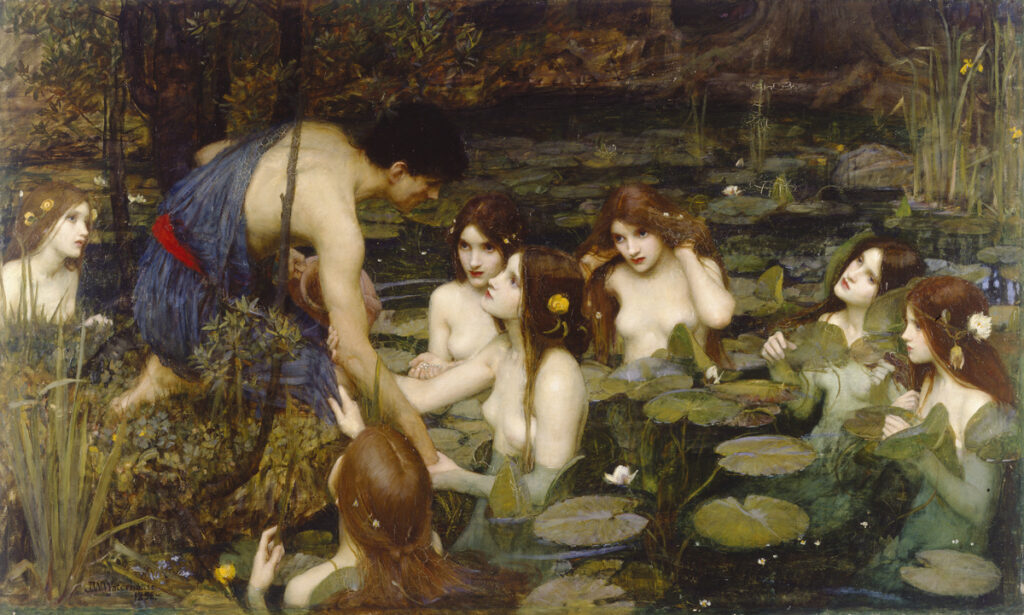
John William Waterhouse, Hylas and the Nymphs, 1896, Manchester Art Galleries, Manchester, UK.
Look at this gorgeous canvas. Do you know the Greek myth of Hylas? Because if not, you are just gazing at a gaggle of teen girls with pubescent breasts. In 2018, artist Sonia Boyce very publicly (but temporarily) removed this John William Waterhouse painting from the walls of Manchester Art Gallery. This act was a piece of feminist performance art that questioned how artworks are chosen for gallery walls and how they are labeled and presented. Meant to provoke a healthy discussion, Boyce instead faced vile harassment and a furious media storm. The lesson here is never come between a middle-aged male art critic and his boobies.

Mary Cassatt, Child’s Bath, 1893, Art Institute of Chicago, Chicago, IL, USA.
Within the same time period as Waterhouse, Mary Cassatt was producing nuanced and intimate portraits of children. In Child’s Bath, everyday routines are charged with psychological and spiritual meaning. This domestic scene is blissfully intimate, but at no point do we feel we are intruding. Our voyeuristic gaze is gentle. Many of her paintings include naked children; the feeling is sensual, but not sexual.
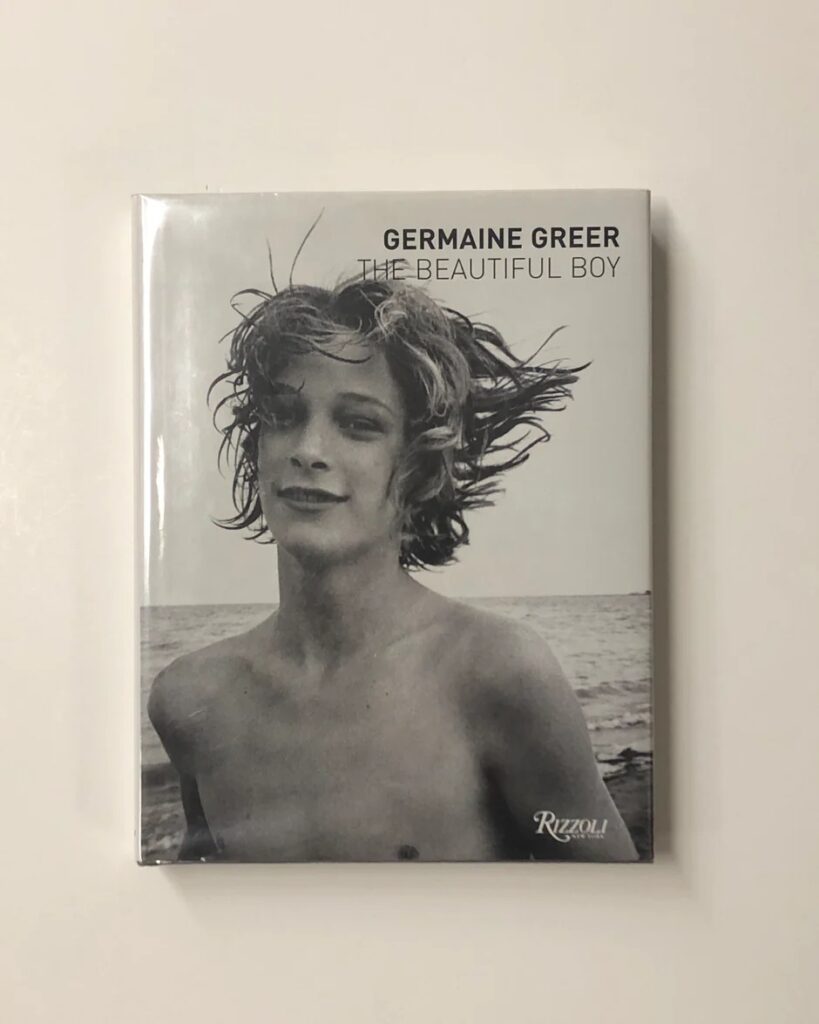
Cover of Germaine Greer, The Beautiful Boy, New York: Rizzoli, 2003. D&E Lake Ltd.
A very modern take on the child’s body was explored by Germaine Greer in her book The Beautiful Boy, a coffee-table tome featuring photographs of boys, in which Greer argues for a woman’s right to visual pleasure. Some called this an affectionate enjoyment of the youthful male body and its narcissistic pursuit of pleasure. Others called it voyeuristic smut. What do you think?
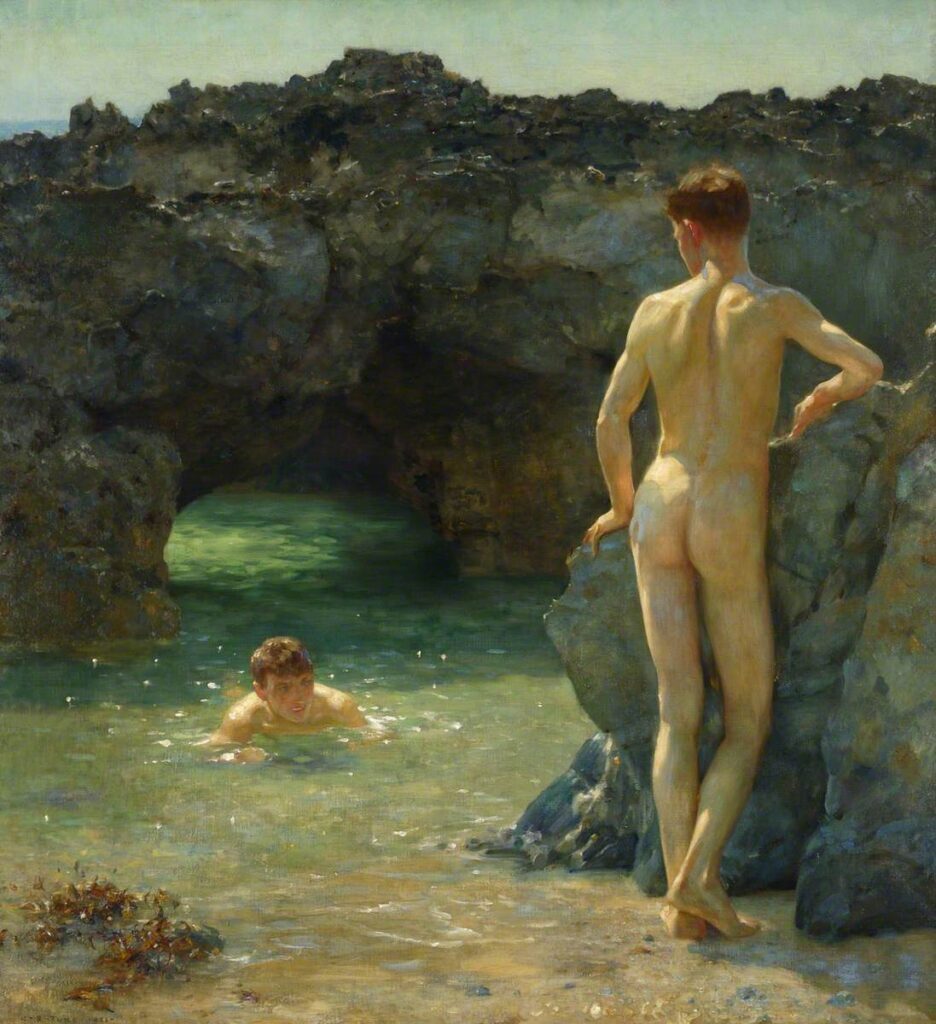
Henry Scott Tuke, The Green Waterways, 1926, Grundy Art Gallery, Blackpool, UK.
Perhaps a softer look at boys can be found in the paintings of Henry Scott Tuke. This painting is a sumptuous study of light and water. The look between the boys seems innocent, or is it? Henry Scott Tuke spent much of his career exploring the homoerotic gaze and the working-class body. This painting is not explicitly sexual, but Tuke gently invites us to consider the gay male gaze.
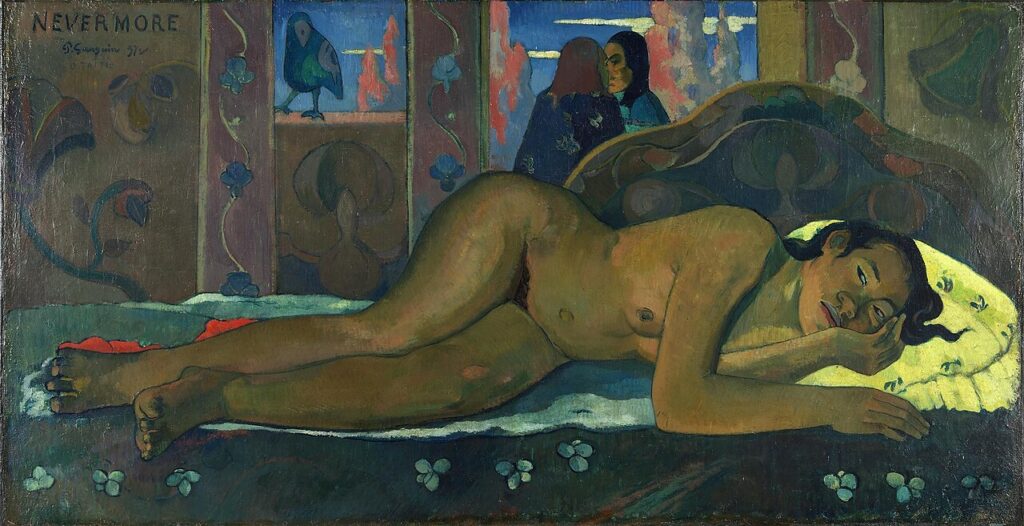
Paul Gauguin, Nevermore, 1897, Courtauld Gallery, London, UK.
A world away from Tuke, both geographically and ideologically, is Paul Gauguin. The dynamic between older male artists and young female models is one of art history’s most famous and heavily romanticized clichés. Gauguin, a French Post-Impressionist genius and sex tourist, took several child brides. The colonial racist fantasy that black and brown girls are sexually precocious and freely available has never quite disappeared. Nevermore was painted for a white, male European audience. The sensual reclining nude—his wife Pahura—was just 15 years old.
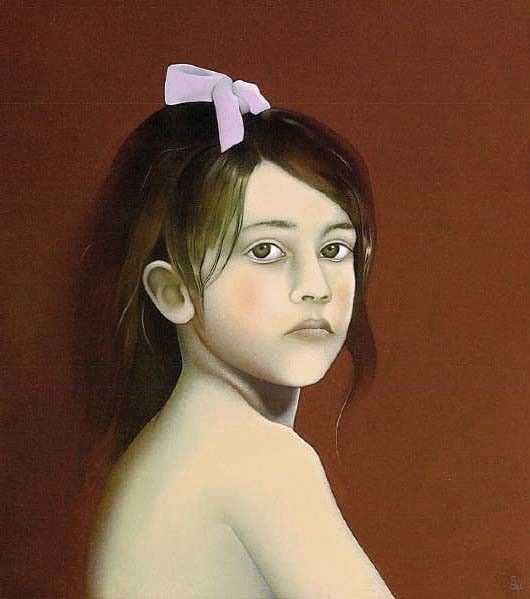
Graham Ovendon, Maud, 1984, Peter Nahum at the Leicester Galleries, London, UK.
Sometimes we feel like the past is another country, too far away to worry about and too different—the age of consent was so much lower then, wasn’t it? So let’s look at a modern painting—an incredibly beautiful image of a child, from 1984, by British artist Graham Ovenden. But do we respond to it differently when we know that many of Ovenden’s paintings and photographs are of naked or semi-naked children? How about if I also tell you that he is a convicted pedophile who was imprisoned for molesting his young models? While some images in art might encourage us to consider the complex, burgeoning sexual awakening of the adolescent, others are just a parade of pedophilia. Can we tell the difference?
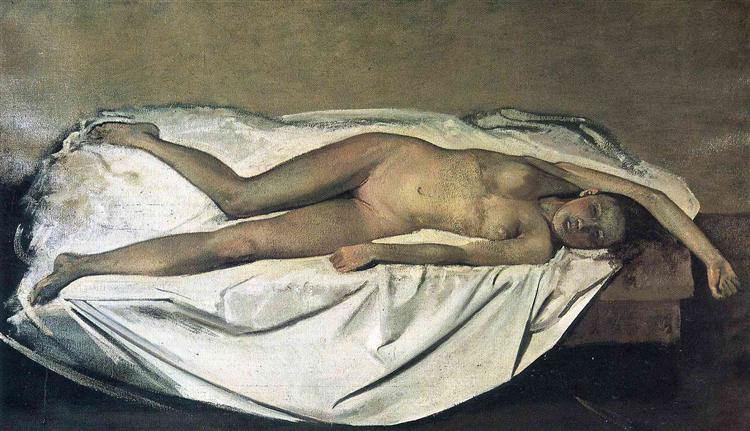
Balthus, The Victim, 1938. WikiArt.
In 1934, the French painter Balthasar Klossowski, usually known as Balthus, opened his first one-man show in Paris, with five erotic and sexually violent scenes involving adolescents and children. Art historians and art critics have called his art morally problematic. But if that is the case, why is his work so successful? Why do so many people want to gaze upon his images of childlike naked bodies with budding breasts and hairless genitals in scenarios that feel both uncomfortable and predatory?
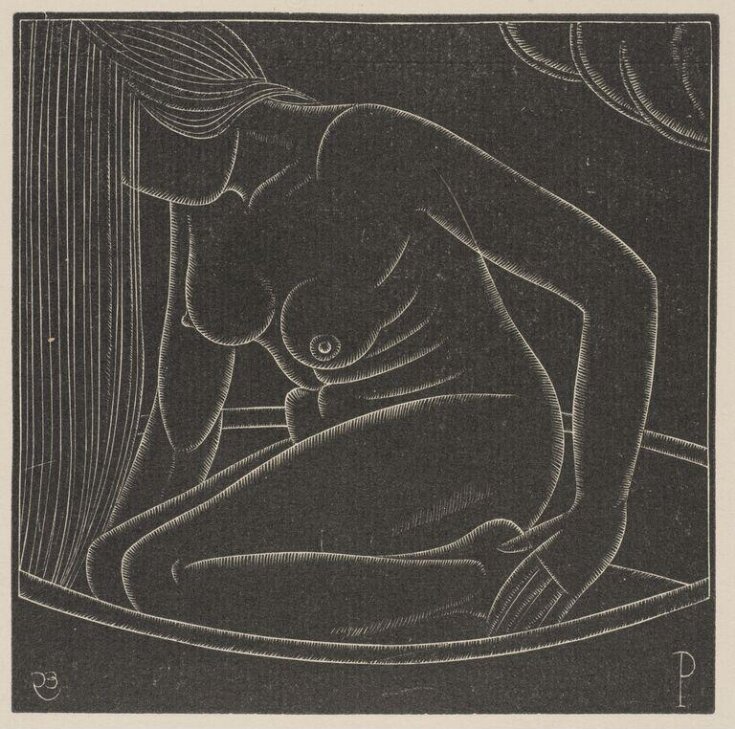
Eric Gill, Girl in Bath (No. 2), 1923, Victoria and Albert Museum, London, UK.
Eric Gill used his daughters Petra and Elizabeth as models. He also sexually abused them. This image shows Petra, curled in on herself, turned away, hiding behind a curtain of hair. If an artist abuses children, then draws and paints those children, do we want to exhibit and celebrate that? Many believe you can separate the artist from the abuser. Dig deep and think about those moments when you have felt discomfort looking at an artwork. Then dig deeper and consider when you felt titillated or aroused. What exactly do you enjoy in an artwork? And what do you object to?
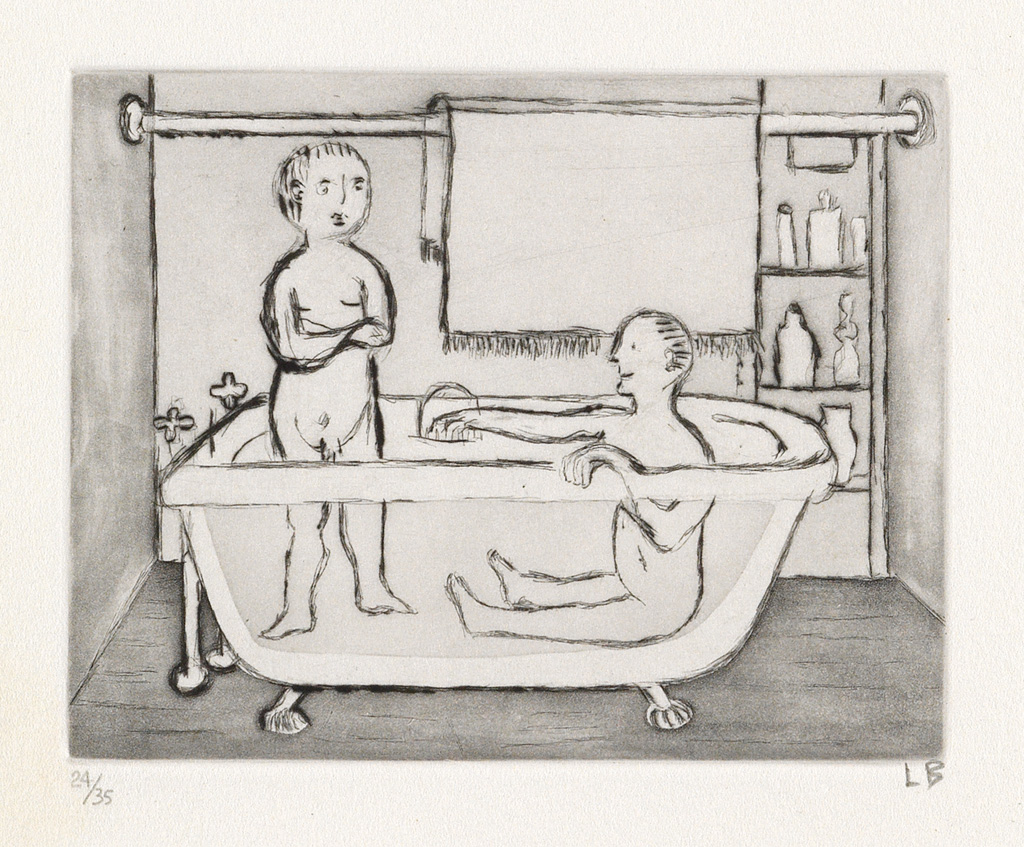
Louise Bourgeois, Children in Tub, 1994. Swann Galleries, New York City, NY, USA.
A very different parental sketch is shown here by Louise Bourgeois. Children in Tub is a delightfully naive sketch of her own two sons, in their apartment at bath time. Bourgeois is best known for her monumental spider sculptures, but her printmaking is very accessible and utterly charming. Very simple strokes show one child sitting, smiling, seeming relaxed. The other stands, arms folded, almost confrontational. There is space for us to imagine the scene—squabbling siblings, post-play cleanup, or bedtime preparation.
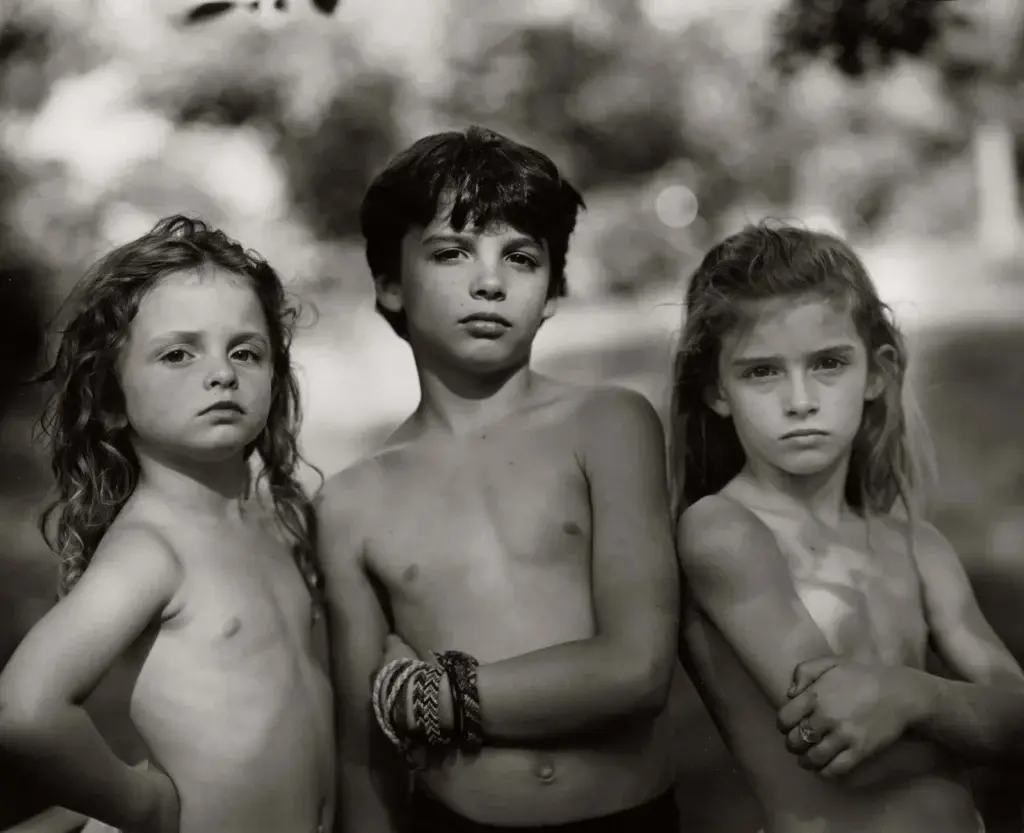
Sally Mann, Emmett, Jessie, and Virginia, 1989, Edwynn Houk Gallery, New York City, NY, USA.
Not exactly the standard family album, Sally Mann’s 1992 Immediate Family photo series sparked both critical acclaim and accusations of exploitation. But wasn’t Mann, like Mary Cassatt, capturing the ordinary, everyday moments of childhood? Like Bourgeois, Mann saw nothing but love and tenderness in her work. Her children actively collaborated with her, and they say they were never coerced. How much can a child know about where their images may end up, though? Mann says that she would not release such a book today because the internet has changed the landscape.
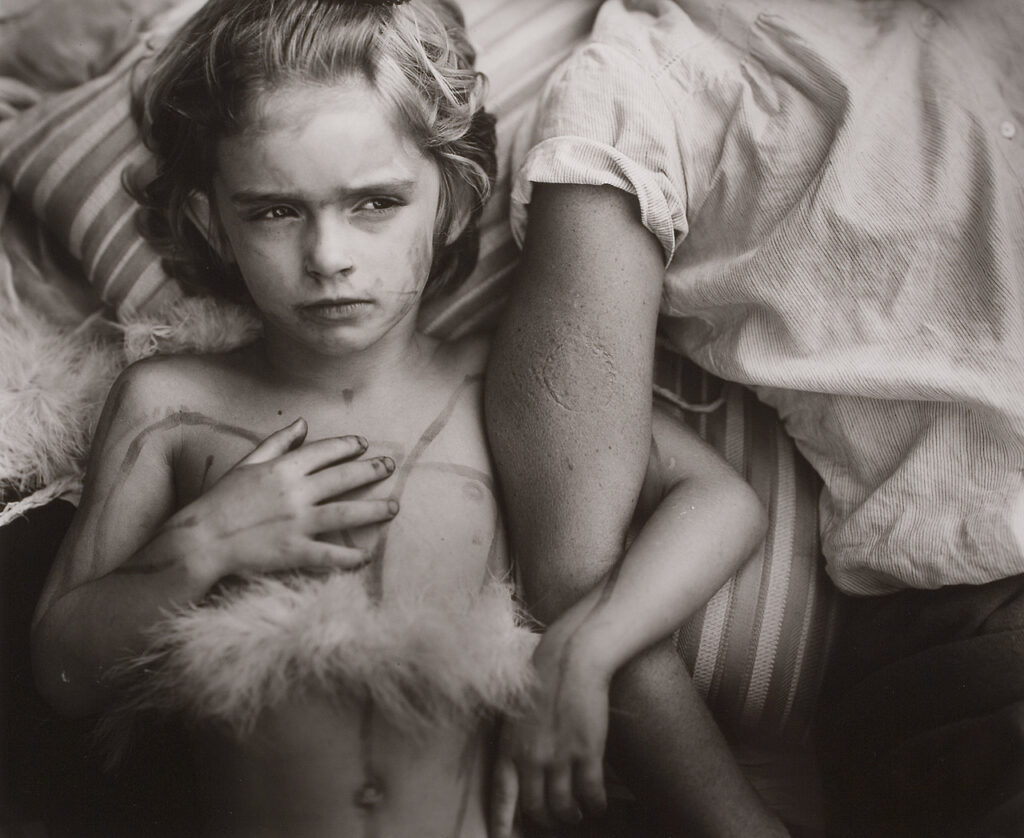
Sally Mann, Jessie Bites, 1985, Solomon R. Guggenheim Museum, New York Gift, The Bohen Foundation, 2001. © Sally Mann.
Of course, this discussion can never be boiled down to just innocence versus corruption. Or art versus pornography. Every painting or photograph of a child is intrusive; it is adults who create the image, and adults who look at it. We have to be ready to sit with uncomfortable feelings and interrogate our own views and beliefs. Images of child nudity can be full of transcendental joy. Or they can explore the ambiguity and complexity of a growing body. Or they can be traumatically invasive. Deciding what is “indecent” is a thorny dilemma.
Given the dominance of the heterosexual male gaze, how can we look at children in art with fresh eyes? Can we find other perspectives, perhaps? Can we center the female gaze, the queer gaze, or the parental gaze, and finally leave the “child as erotic prey” gaze behind? Because then we get to enjoy some surprising, nuanced, and astonishing art.
DailyArt Magazine needs your support. Every contribution, however big or small, is very valuable for our future. Thanks to it, we will be able to sustain and grow the Magazine. Thank you for your help!

Candy's remote, rain-soaked farmhouse clings to a steep-sided valley in rural Wales. She raises cats, chickens, and children with varying degrees of success. Art, literature, and Lakrids licorice save her sanity on a daily basis.

Coffee-fueled writer, artist, and daydreamer.
Explore the representation of the female body and buttocks in art, celebrating diversity and beauty across history and modern culture.
Candy Bedworth 29 January 2026
Erotic, playful, and unexpectedly sophisticated, shunga holds a unique place in Japanese visual culture. But there is often far more than mere...
Katerina Papouliou 5 March 2026
Nudity started being an important subject in art in ancient Greece. The male body was celebrated at sports competitions or religious festivals, it...
Anuradha Sroha 14 May 2026
Hidden underground for hundreds of years, depictions of sex, love, and erotica in Andean pre-Columbian art are now proudly displayed in the Erotic...
Bruno Guerra 24 September 2026