
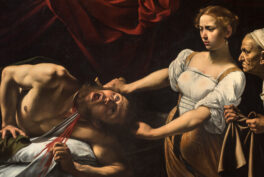
Masterpiece Story: Judith and Holofernes by Caravaggio
Judith and Holofernes is a Caravaggio masterpiece that captures Biblical murder and drama. Rarely has death been captured so intensely and violently...
James W Singer 13 September 2026
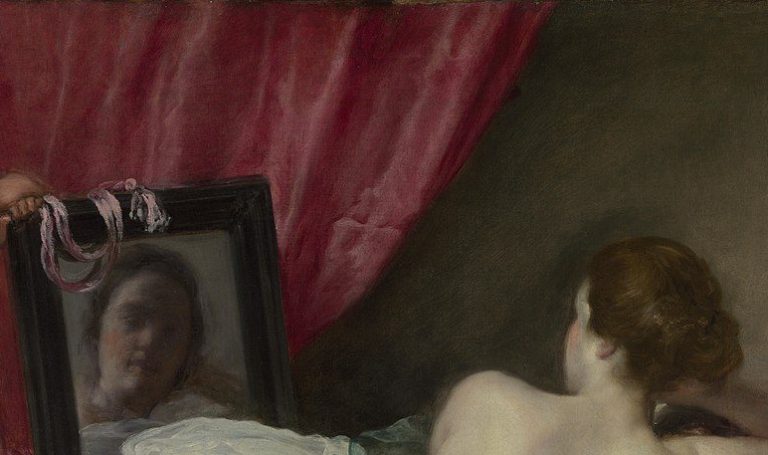
Diego Velázquez, The Rokeby Venus, 1644, National Gallery, London, UK. Detail.
Diego Rodríguez de Silva y Velázquez (1599–1660) was the leading artist in the court of King Philip IV and one of the most important painters of the Spanish Golden Age and European Baroque. The Rokeby Venus is his only surviving nude; three others are mentioned in Spanish inventories and are now sadly lost.
In the period of the Spanish Inquisition, it was bold to paint nudes, and the fact that Velázquez could get away with it certifies his high position in society as a court painter. Thankfully, we can still enjoy this one, so let’s do so (and don’t take it for granted either; it had a close brush with destruction).
Velázquez’s most famous painting is without a doubt Las Meninas. On the surface, it is just another group court portrait. But if you just scratch this surface, a thousand other meanings come through. To mention just a few, it is also a Velázquez self-portrait, as we can see the reflection of the royal couple in the mirror (were they standing where we are standing?), who are the people in the background? For that matter, who are the people in the foreground, too? What’s with the dog?
Today, though, we are going to look at a lot calmer and less crowded painting, yet no less revolutionary and full of meaning. Again, on the surface, it is yet another depiction of Venus. There is a long tradition of depicting the love goddess reclining or looking in the mirror. Here, Velázquez combines those two motives and adds to that a portrayal of Venus turned away from the viewer. All those things have been done before in art, but Velázquez was the first painter to bring them together.
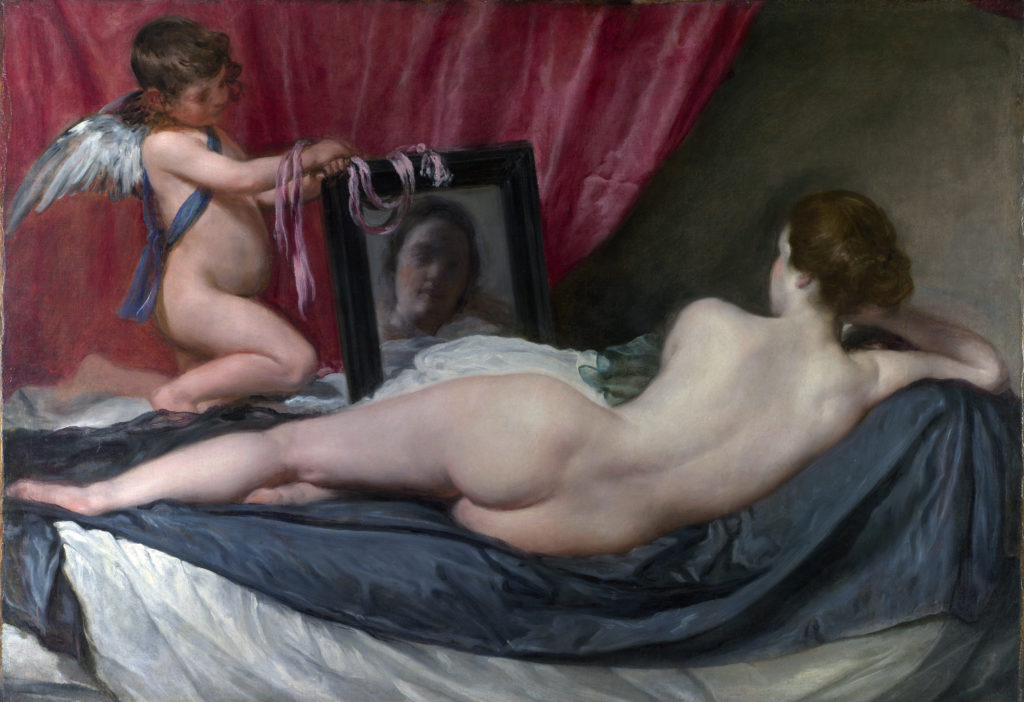
The folds of the bedsheets accentuate the gentle arch of Venus’ body. The silkiness of her skin is echoed by them and even more pronounced by the color contrast. The use of color is sparing but masterful. The painting plays out between large areas of nuanced and contrasting colors: dark steel of the bedsheet, red curtain, and beige wall provide a perfect background to enhance Venus’ pale, almost translucent body. Also, in my personal opinion, it is one of the most beautiful hips in art, if not the best bum.
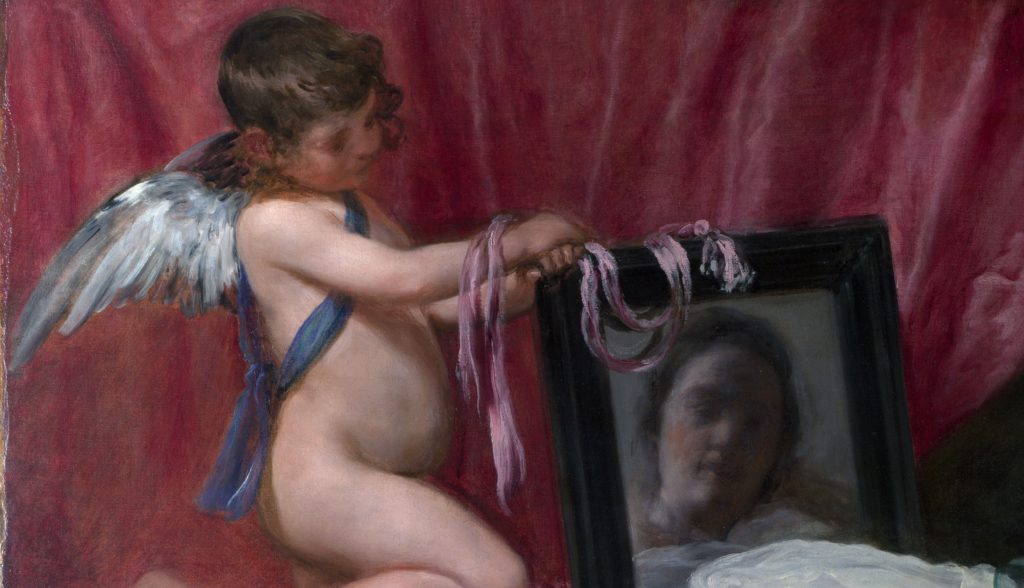
You can see that Cupid focuses on the angle of the mirror. It is for a reason, do not be fooled that Venus is looking at herself and Cupid looks at her reflection…They are both looking at you! Cupid is making sure the angle is perfect for Venus to see who is watching her. This trick is actually known as the Venus effect. It subverts the traditional nude, in which the model is the object of the viewer’s gaze, often unknowingly. Here we are being secretly watched while watching. So, who is the object now?
DailyArt Magazine needs your support. Every contribution, however big or small, is very valuable for our future. Thanks to it, we will be able to sustain and grow the Magazine. Thank you for your help!

Art historian by education, data geek by trade, art and book lover by passion, based in London in love with Europe and traveling around it. You can visit my book blog here: https://bookskeptic.com/
Judith and Holofernes is a Caravaggio masterpiece that captures Biblical murder and drama. Rarely has death been captured so intensely and violently...
James W Singer 13 September 2026
Explore an astonishing 1915 nude self portrait by American modernist painter Florine Stettheimer.
Candy Bedworth 21 September 2026
Winslow Homer (1836–1910) was one of the leading American Realist painters. His painting The Veteran in a New Field is a masterpiece of late...
James W Singer 30 August 2026
At first glance, A Goldsmith in His Shop (1449) appears to depict an ordinary visit to a jeweller. Yet Petrus Christus transformed an ordinary...
Shivani Gupta 23 August 2026