The Artist Behind Star Wars—How Ralph McQuarrie Created the Iconic Galaxy
Most people recognize the look of Star Wars instantly. Few, however, know the name of the artist who built it. Ralph McQuarrie’s concept art...
Errika Gerakiti 4 May 2026
4 May 2026 min Read
Few franchises have looked history this directly in the face. George Lucas did not invent the Galactic Empire’s visual identity from scratch. He borrowed it, deliberately and precisely, from the aesthetics of real totalitarian regimes. Understanding Star Wars propaganda art means understanding Nuremberg, Leni Riefenstahl, and Albert Speer first.
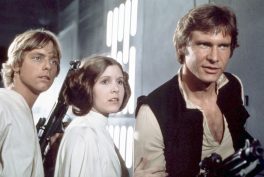
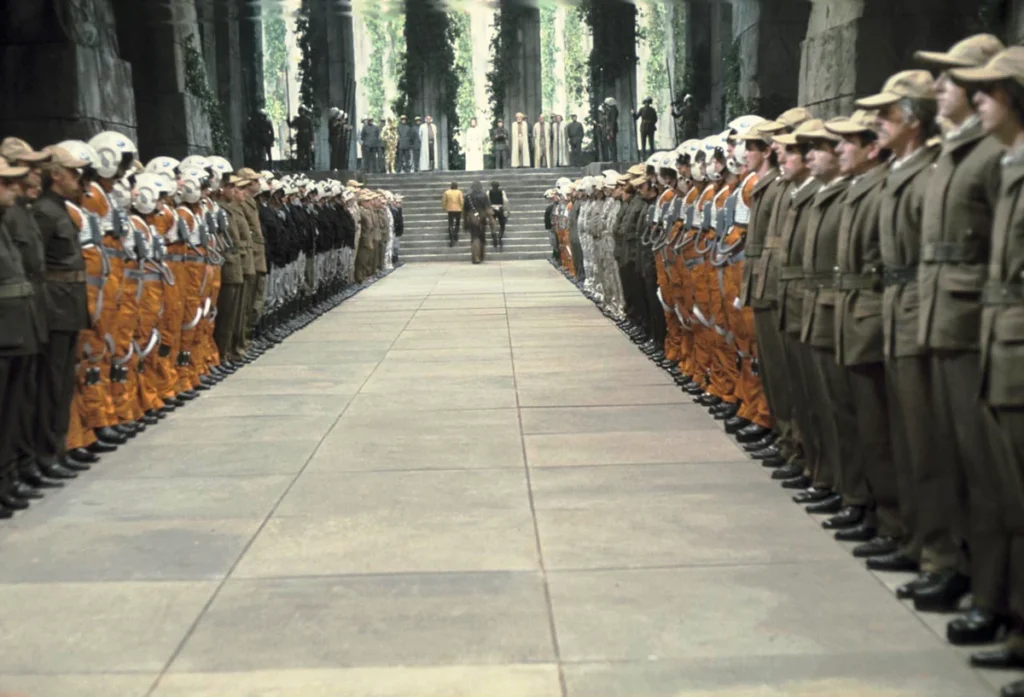
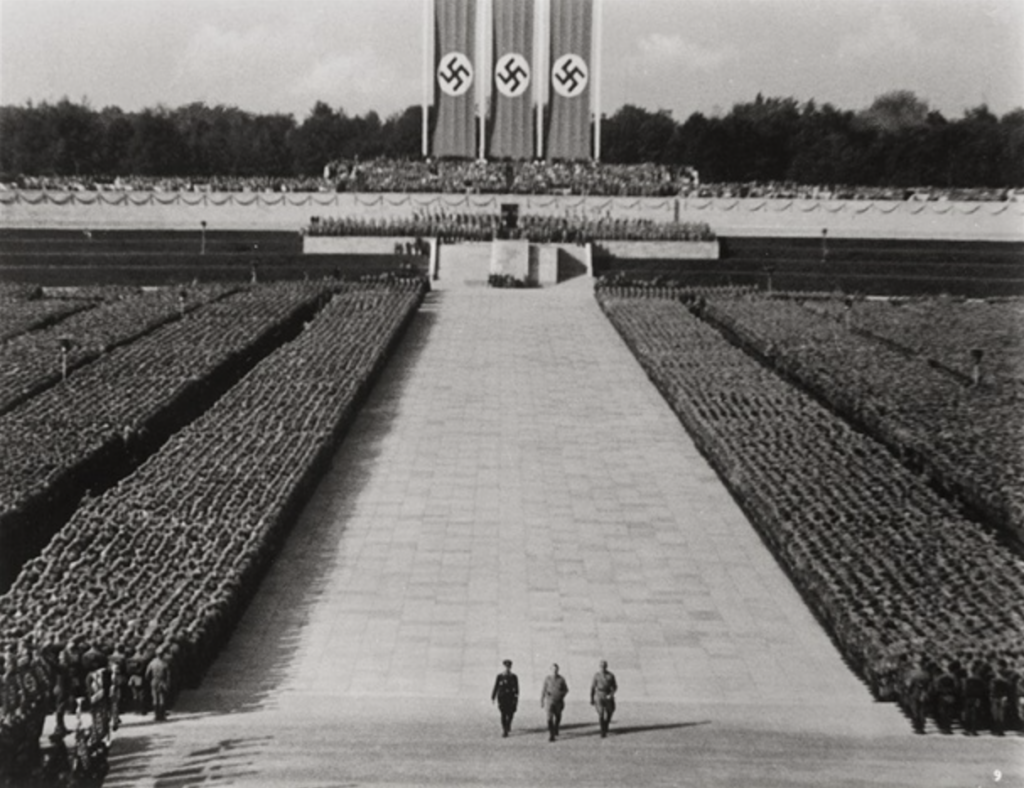
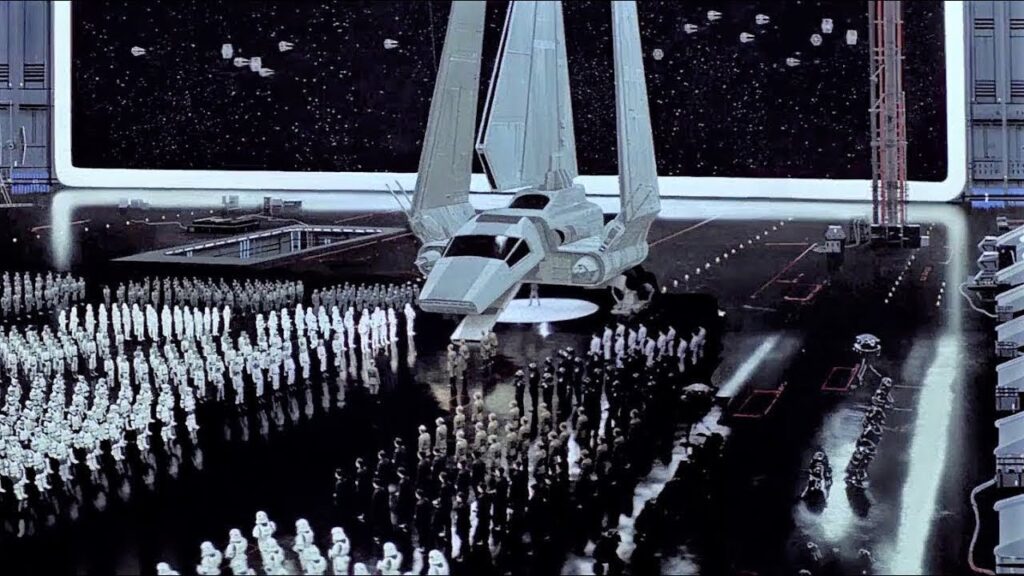
The final scene of Star Wars: Episode IV—A New Hope (1977) stops many viewers cold (see below), though not for its heroism. Luke Skywalker and Han Solo walk toward a crowd of assembled Rebel soldiers. The camera angles low. Rows of uniformed figures stretch into the distance. Princess Leia presents medals in a ceremony of rigid, geometric grandeur.
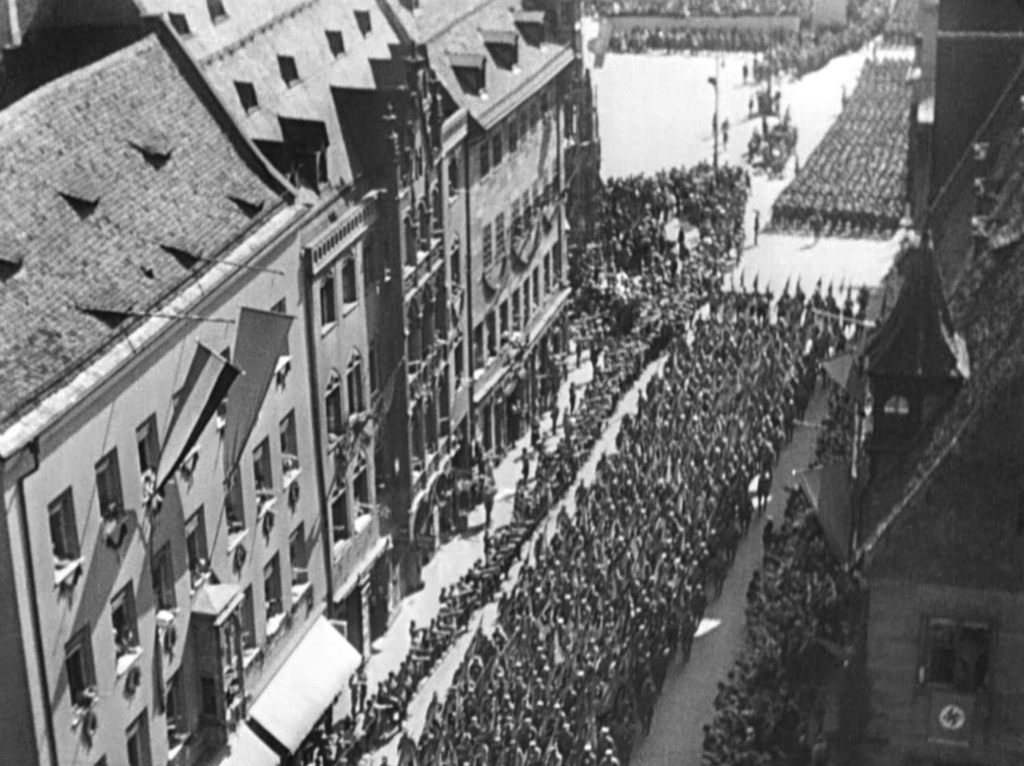
The composition borrows almost directly from Leni Riefenstahl’s Triumph of the Will (1935). Riefenstahl filmed the 1934 Nuremberg Rally using precisely those low-angle shots and perfect formations. She built a rhetoric of collective awe out of a camera and a crowd. Lucas knew exactly what he was doing. The question worth asking is not whether these references are there. They obviously are. The question is what they mean, where they come from, and why a galaxy far, far away looks so much like the worst of our own history.
The visual language of the Galactic Empire did not emerge by accident. Lucas was explicit about his sources across multiple interviews from the 1970s onward. He described the Empire as a deliberate echo of Nazi Germany and Soviet authoritarianism. The stormtroopers, he noted, took their name directly from the Nazi Sturmabteilung. The Empire’s military choreography mirrored the mass formations of the Nuremberg Rallies.
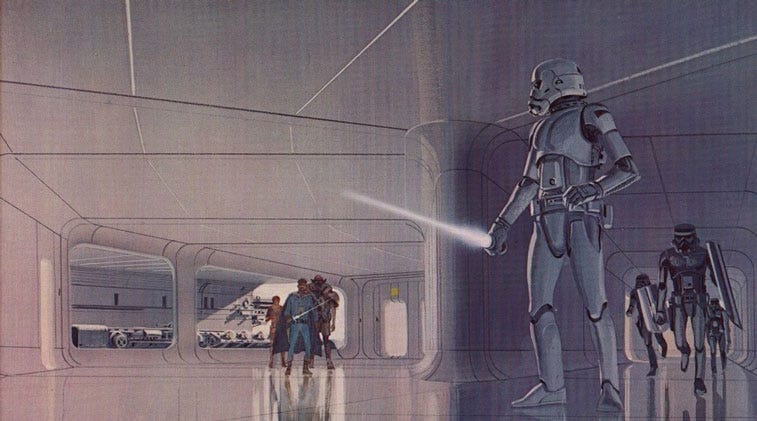
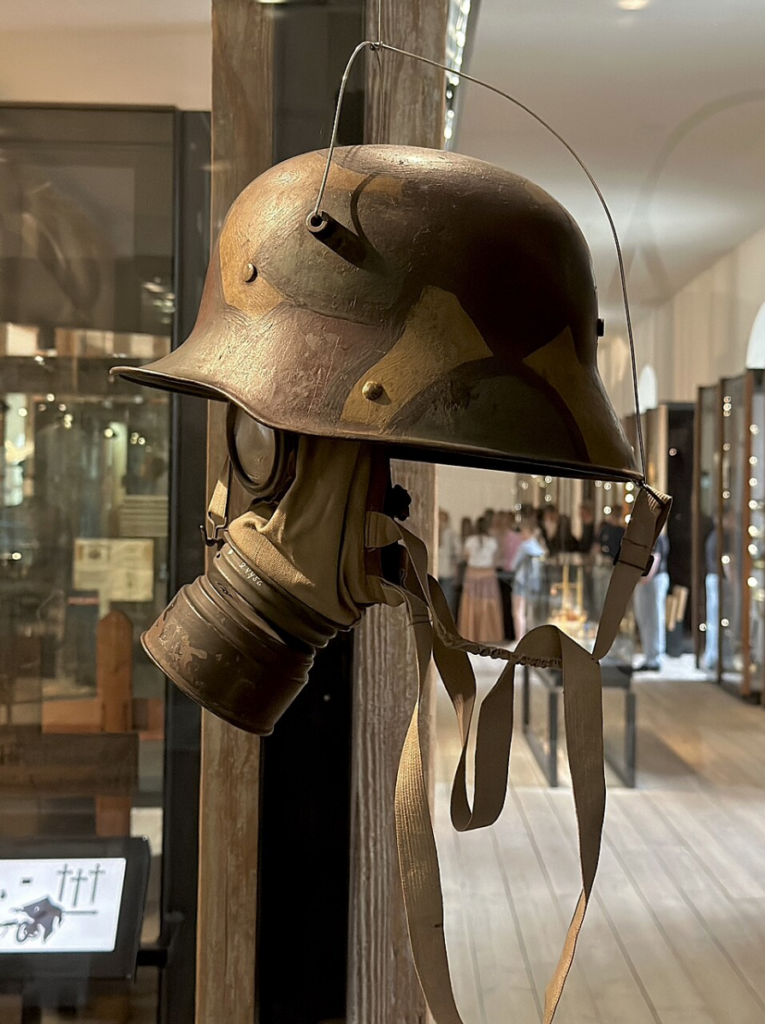
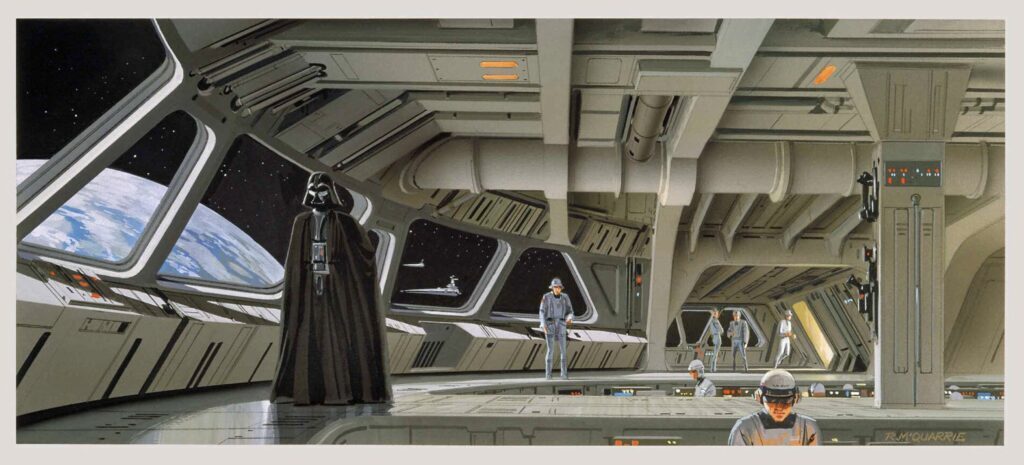
Ralph McQuarrie translated this vision into concept art. His designs established the Empire’s vocabulary early: cold geometry, monochrome severity, and the erasure of individual identity beneath uniform armor. Costume designer John Mollo, who won the Academy Award for Best Costume Design for A New Hope, solidified these references further. The Imperial officers’ grey-green uniforms echo Wehrmacht dress. The stormtrooper helmet’s angular visor recalls the Stahlhelm—the distinctive German steel helmet used from World War I through the Nazi era.
This was not unconscious borrowing. It was a deliberate choice to make villainy visually legible. And to make it legible, Lucas reached for the most recognizable totalitarian visual archive in modern history.
Three distinct traditions of totalitarian visual culture converge in the Empire’s design, each deserving a closer inspection.
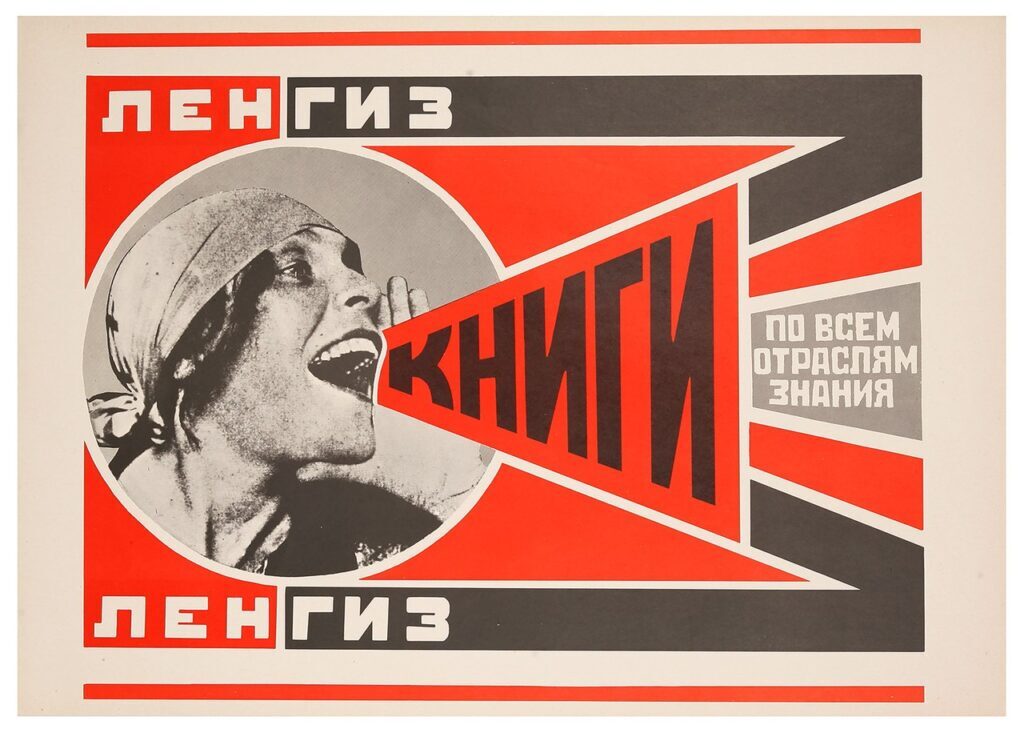
Soviet Constructivism emerged in the early 1920s as a radically utilitarian art movement. Artists like Alexander Rodchenko and El Lissitzky used bold geometry, stark diagonals, and flat planes of color to carry ideological messages. The aesthetic was clean, powerful, and deliberately inhuman in its precision. Later, Socialist Realism replaced it as the Soviet state’s official doctrine. It demanded heroic depictions of the collective body: the noble worker, the triumphant soldier, the adoring crowd.
Alexander Rodchenko, Books (Please)! In All Branches of Knowledge, 1924, Frye Art Museum, Seattle, WA, USA.
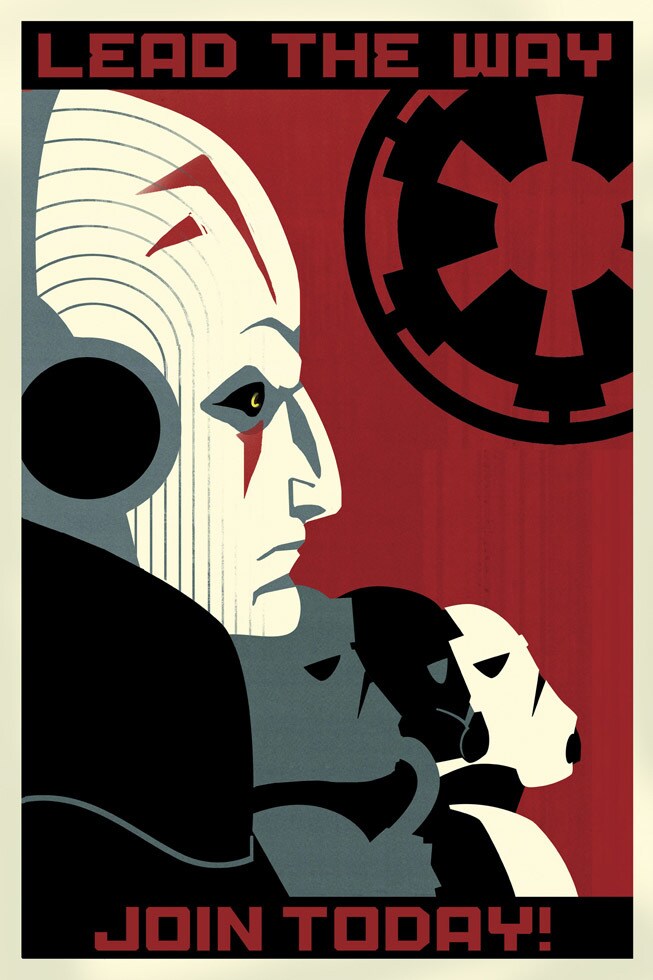
Both traditions echo throughout Star Wars. The in-universe Imperial propaganda posters, developed most fully in Star Wars Rebels and Andor, replicate Constructivist and Socialist Realist conventions directly. Bold diagonals, stylized figures, declarative typography—the Empire communicates to its citizens in the exact visual language of Soviet mass persuasion. Even the scale of Star Destroyers, those vast geometric wedges cutting through space, carries Constructivist logic. Form follows function, and both serve power.
Propaganda poster for the Galactic Empire from the Star Wars Rebels series. Star Wars.
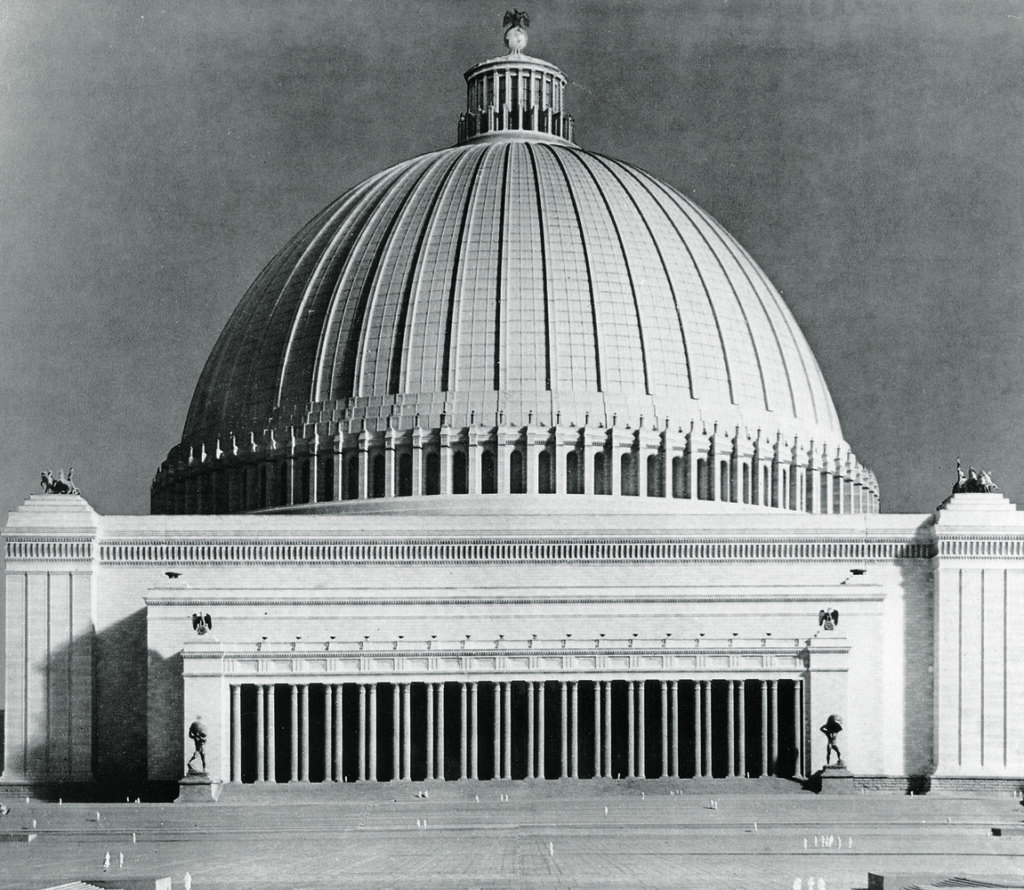
Albert Speer was Hitler‘s chief architect and one of the principal designers of Nazi spectacle. His work at the Nuremberg Rally grounds defined what totalitarian architecture looked like in practice. Specifically, he used colossal scale, rigid symmetry, and the deliberate dwarfing of the human figure to communicate state supremacy. His unrealized Volkshalle for Berlin would have been a domed structure so enormous that clouds would have formed inside it.
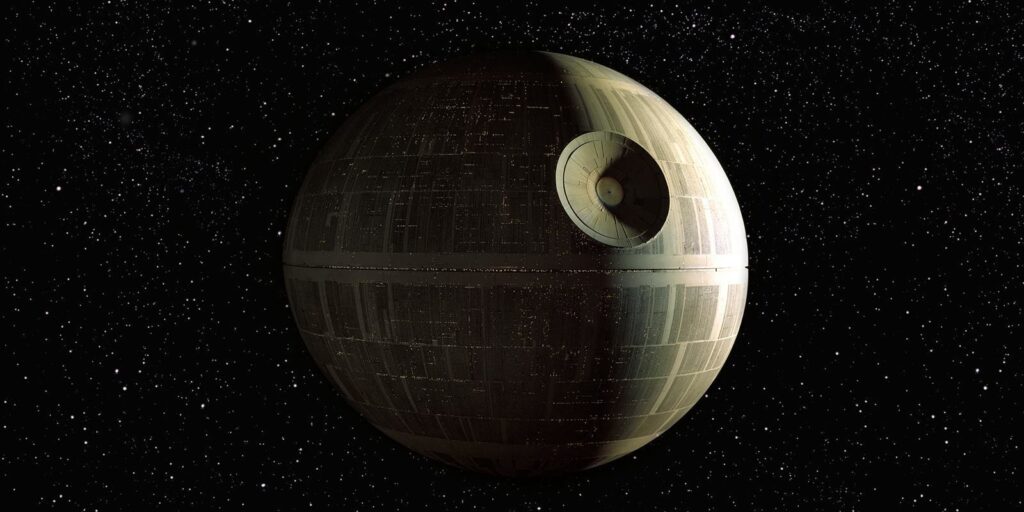
The Death Star shares this logic. A sphere 160 kilometres in diameter serves no purpose that a smaller weapon could not serve more efficiently. Its scale is the message. So is its blankness—a perfectly smooth surface devoid of ornament, indifferent to the human lives it destroys. Speer described his architecture as a form of petrified power. The Death Star is that idea taken to its most literal extreme.
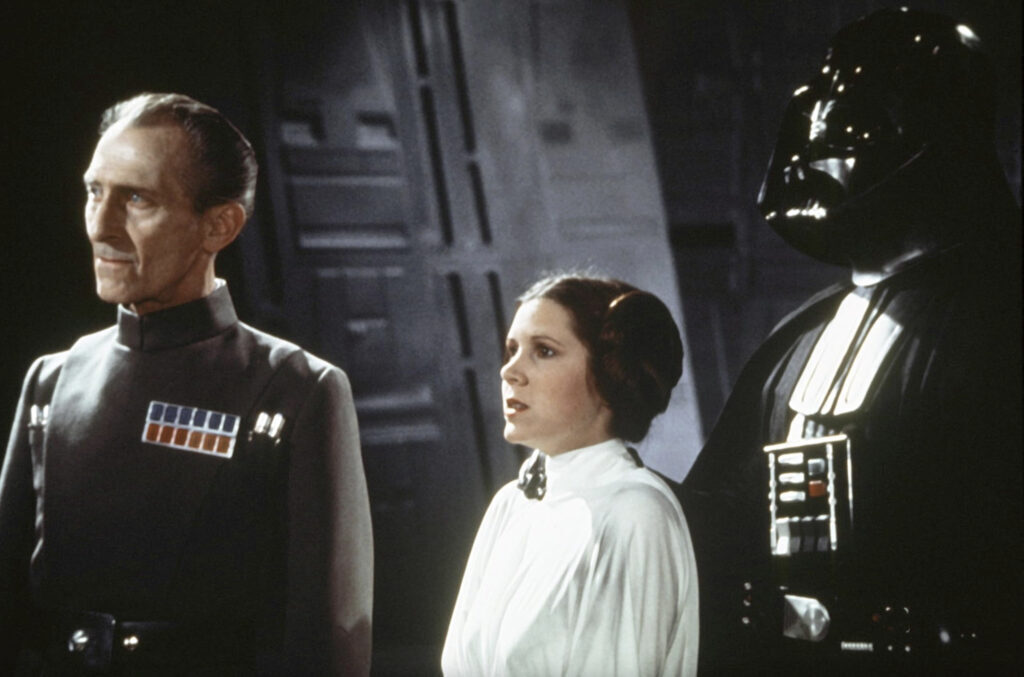
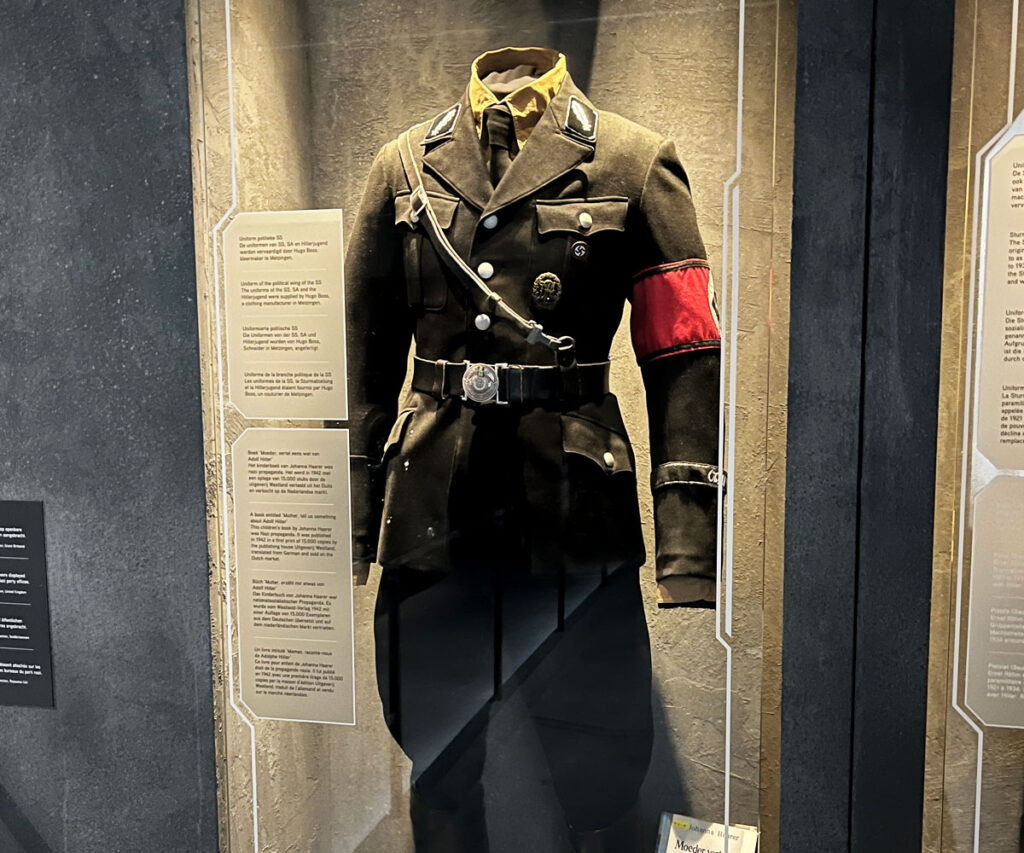
The Imperial officers’ uniforms reinforce the connection further. Hugo Boss produced SS and Wehrmacht uniforms during the Nazi era, a history the company has formally acknowledged. The grey-green tunics, the sharp tailoring, the rigid rank insignia of the Imperial officer corps translate this lineage almost directly into science fiction.
Riefenstahl’s Triumph of the Will created the visual syntax of totalitarian spectacle. Her techniques were innovative and profoundly influential: low-angle shots that made figures appear godlike, aerial photography that transformed crowds into geometric patterns, and rhythmic editing that induced near-hypnotic states in the viewer.
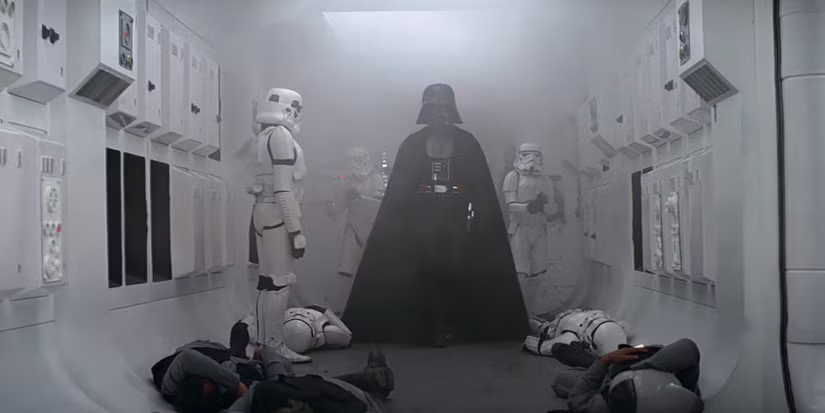
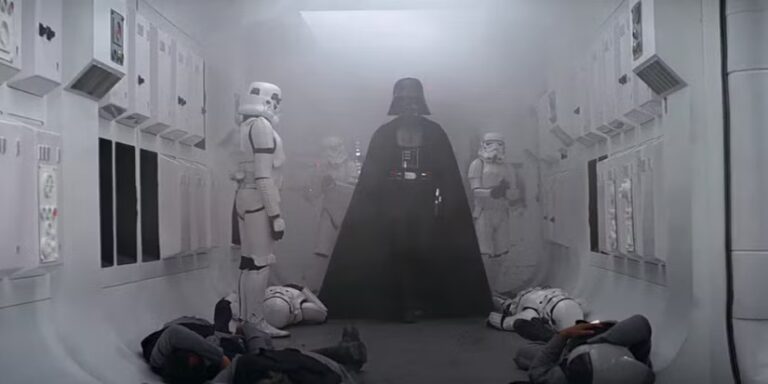
Star Wars reproduces this grammar with striking fidelity. Imperial officers are almost always shot from below, their gaze directed upward or outward. The Emperor’s arrival in Star Wars: Episode VI—Return of the Jedi (1983) uses slow movement, massed formation, and absolute silence before collective sound erupts, a technique Riefenstahl used to build tension during Hitler’s approach at Nuremberg. Darth Vader’s first appearance in A New Hope, filmed from floor level looking up into a doorway filled with smoke and stormtroopers, is Riefenstahl translated into science fiction.
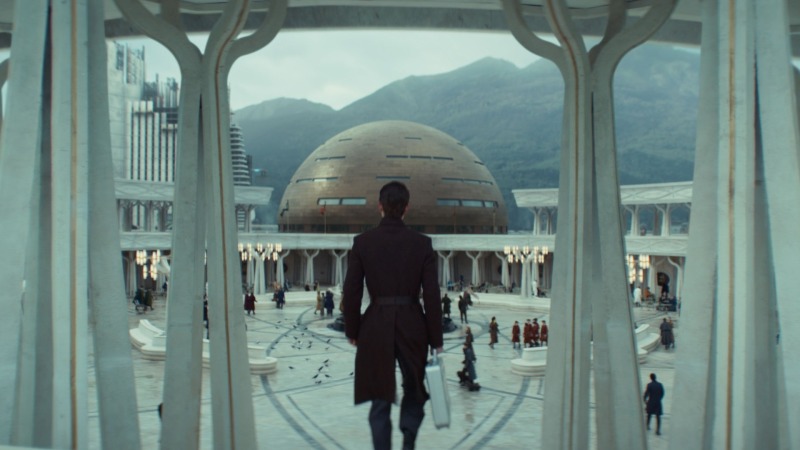
For decades, the Empire’s totalitarian references functioned as atmosphere. Andor (2022) changed that entirely. Showrunner Tony Gilroy stated in interviews that he designed the series to make the political machinery of fascism visible and legible. The ISB (Imperial Security Bureau) boardroom scenes were modeled explicitly on the structure and culture of the Gestapo. The architecture of Coruscant’s Imperial facilities echoed Speer’s monumentalism with greater precision than any previous Star Wars property.
Still from Andor, S02E04. IMDb.
Most strikingly, the graduation ceremony on Scarif reproduced the spatial composition of Nazi rallies almost exactly. The massed officers in identical uniforms, the elevated podium, the speaker addressing a faceless collective: Gilroy cited the Nuremberg rallies as a direct visual reference for this scene.
Moreover, he framed the ISB sequences through Hannah Arendt’s concept of the “banality of evil,” the idea that atrocity operates not through monsters but through bureaucrats. The fact that a Disney+ production reached for Arendt as its guiding framework is, in itself, a remarkable cultural moment. It signals a shift in how the franchise understands its own visual history, and how seriously it takes the responsibility that comes with it.
In 1975, Susan Sontag published her landmark essay “Fascinating Fascism.” She argued that the aesthetics of fascism were not simply propaganda tools. They were genuinely beautiful objects that carried seductive power. Thus, beauty, Sontag wrote, did not neutralize ideology, but amplified it.
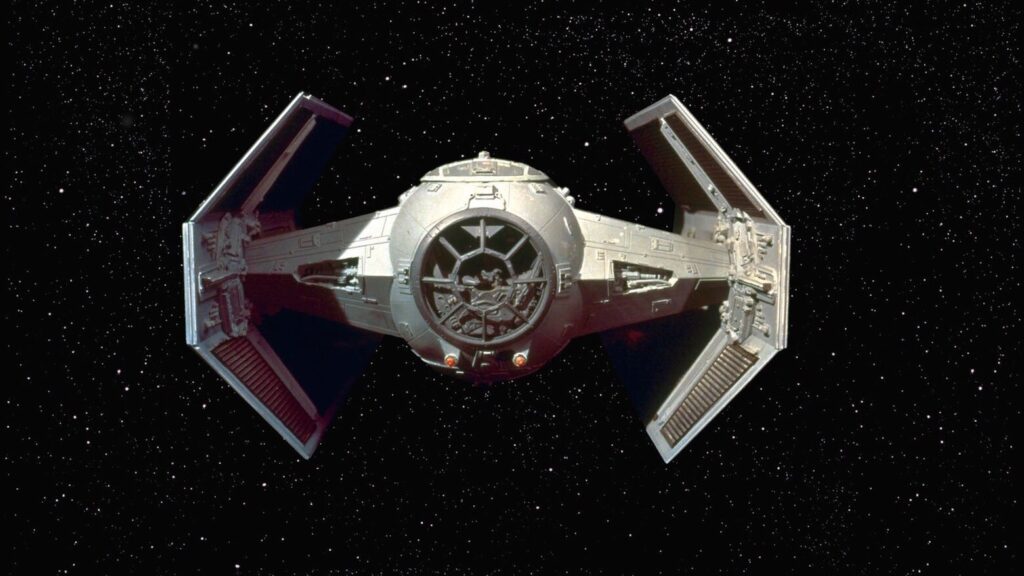
This argument applies directly to Star Wars. The Empire looks extraordinary, Star Destroyers are elegant machines and the Imperial officers wear beautifully tailored uniforms. The Death Star, for all its horror, has the geometric perfection of a Minimalist sculpture, while the TIE fighter’s circular cockpit and twin hexagonal panels produce a silhouette of genuine aesthetic force.
Darth Vader’s Tie Fighter. Star Wars.
Yet the reproduction of totalitarian aesthetics in Star Wars does not constitute an ode to fascism. It constitutes a map of it. Lucas did not borrow these visual languages to celebrate them. He borrowed them to make the enemy unmistakable. The Empire looks like history’s worst regimes because the audience needs to recognize it as such. A villain designed without reference to real atrocity risks becoming abstract, making them easy to ignore. On the contrary, the Galactic Empire, with its Nuremberg formations and Speer-scale architecture, is not abstract at all.
Star Wars also insists, at every turn, that this evil is defeated. The Battle of Yavin destroys the Death Star. whereas the Battle of Endor dismantles the Emperor. The good wins, not through spectacle, but through individual courage, solidarity, and moral clarity. These are precisely the values that totalitarian aesthetics, with their erasure of the individual into the collective, exist to destroy. The franchise borrows the aesthetic precisely to invert its ideology.
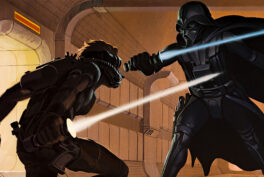
Ralph McQuarrie, Darth Vader in the Death Squadron concept art. Star Wars.
The visual language of authoritarianism is learnable. Constructivist diagonals, Socialist Realist heroism, Speerian scale, Riefenstahl’s angles: these are not historical curiosities. They are a recurring vocabulary that power reaches for whenever it needs to overwhelm individual judgment through spectacle.
George Lucas and his team embedded this vocabulary inside one of the most widely consumed popular narratives in cinema. Every viewer who recognized the Riefenstahl compositions understood, perhaps without realizing it, something about how beauty and power have always collaborated. Andor pushed this further, insisting that fascism is banal, bureaucratic, and dressed in clean lines. Gilroy’s ISB officers are not monsters. They eat lunch at their desks and follow procedure. They look, in Arendt’s term, perfectly ordinary. That is, of course, precisely the point.
Art history is not separate from politics. The visual legacy of the 20th century’s worst regimes lives in propaganda posters, in architectural ruins, in documentary film, and in a galaxy far, far away.
DailyArt Magazine needs your support. Every contribution, however big or small, is very valuable for our future. Thanks to it, we will be able to sustain and grow the Magazine. Thank you for your help!