The Empire’s Visual Language: A History of Star Wars Propaganda Art
Few franchises have looked history this directly in the face. George Lucas did not invent the Galactic Empire’s visual identity from scratch.
Errika Gerakiti 4 May 2026
4 May 2026 min Read
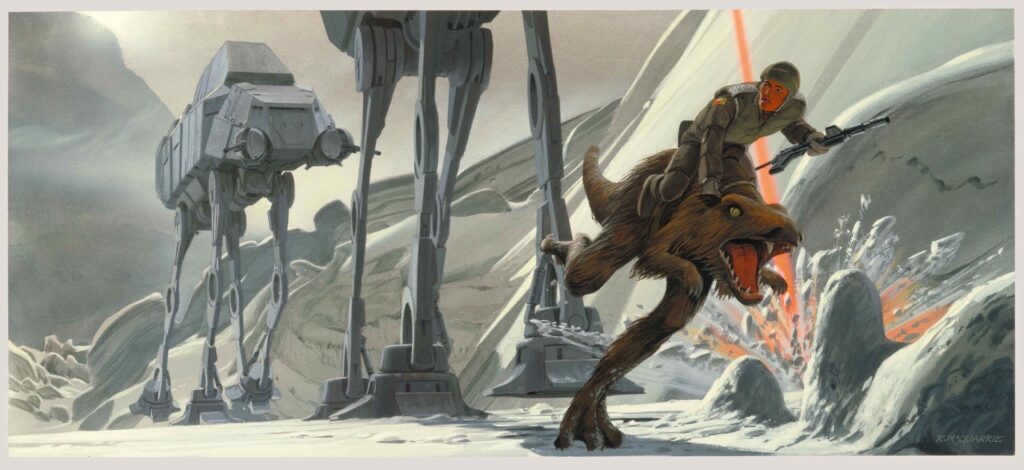
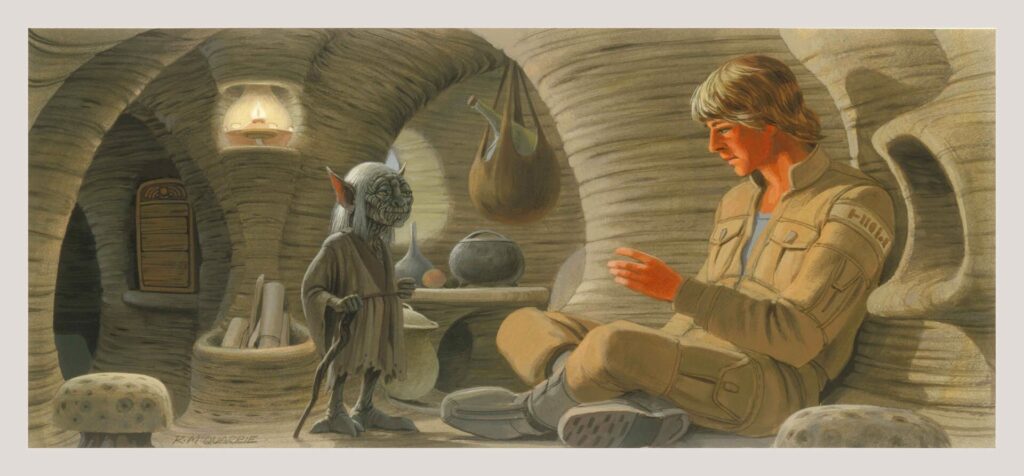
Most people recognize the look of Star Wars instantly. Few, however, know the name of the artist who built it. Ralph McQuarrie’s concept art defined the visual language of one of cinema’s greatest franchises. And, in doing so, changed what illustration can do.
The year is 1975. George Lucas walks into a 20th Century Fox pitch meeting. He carries not a polished screenplay, but a set of paintings. They show a vast desert planet, a towering black-armored villain, and gleaming droids crossing an alien landscape. Fox executives lean forward. These images do what no script can: they make the impossible feel real. Lucas gets his funding. Star Wars gets its chance.
Ralph McQuarrie grew up near Billings, Montana, and served in the U.S. Army during the Korean War. After returning, he studied at the Art Center School in Los Angeles. He then worked as a technical illustrator for Boeing, drafting sections of the 747 Jumbo Jet manual. He also animated CBS News’s coverage of the Apollo space program. This background matters enormously.
McQuarrie approached science fiction not as a fantasist, but as a draftsman who understood how things work. That rigor gave his images a material believability that purely imaginative illustration rarely achieves. His spaceships look functional. His droids suggest real internal mechanics. When Lucas approached him in 1975, McQuarrie brought that precision to a galaxy that existed only in a script.
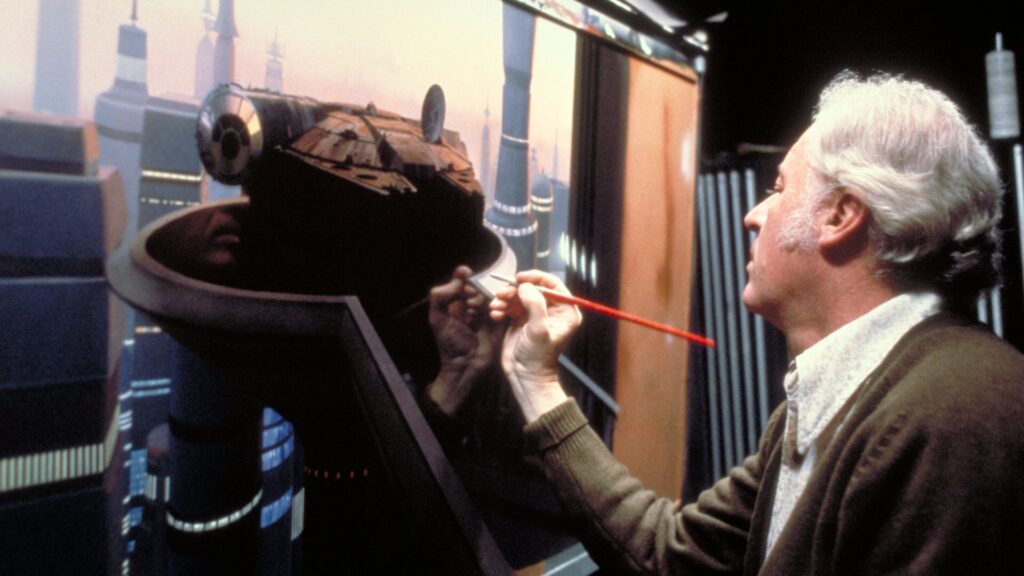
Ralph McQuarrie working on an illustration for Star Wars: Episode V—The Empire Strikes Back (1980). Star Wars.
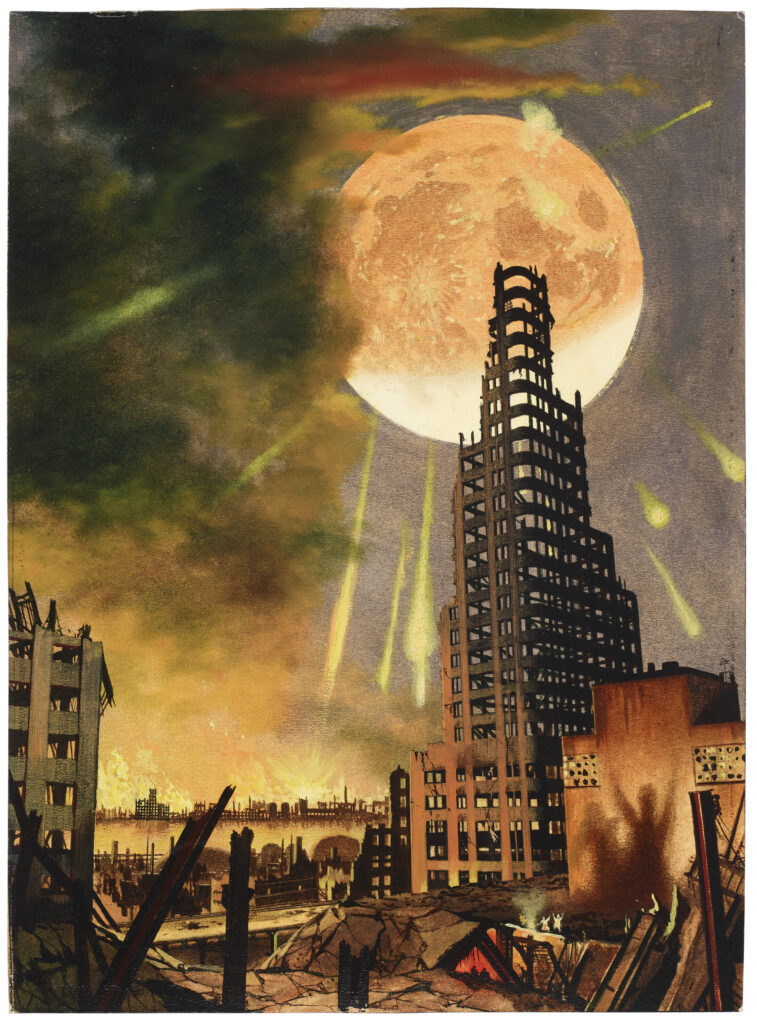
McQuarrie’s visual imagination drew on several distinct traditions in art and illustration history. His work belongs to a lineage of astronomical art that Chesley Bonestell helped define. Bonestell painted imaginary planets and space vistas with scientific precision and a romantic painter’s eye. McQuarrie brought that same quality to Star Wars–his alien worlds feel grounded even as they pulse with wonder. Similarly, the epic luminosity of golden age American illustration, such as N.C. Wyeth and Maxfield Parrish, runs through his paintings. Those illustrators mastered the art of making light carry emotional weight. McQuarrie applied that skill to binary sunsets and chrome droids.
Chesley Bonestell, The Moon Falls Back on the Earth, c. 1947. Christie’s.
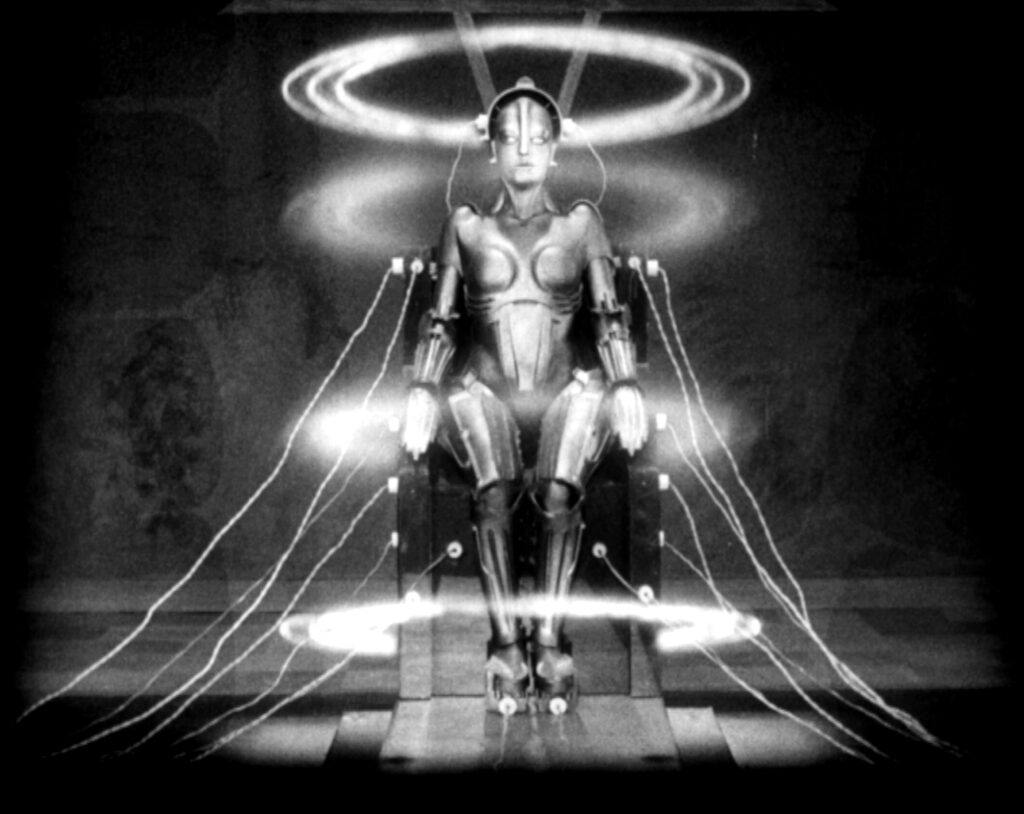
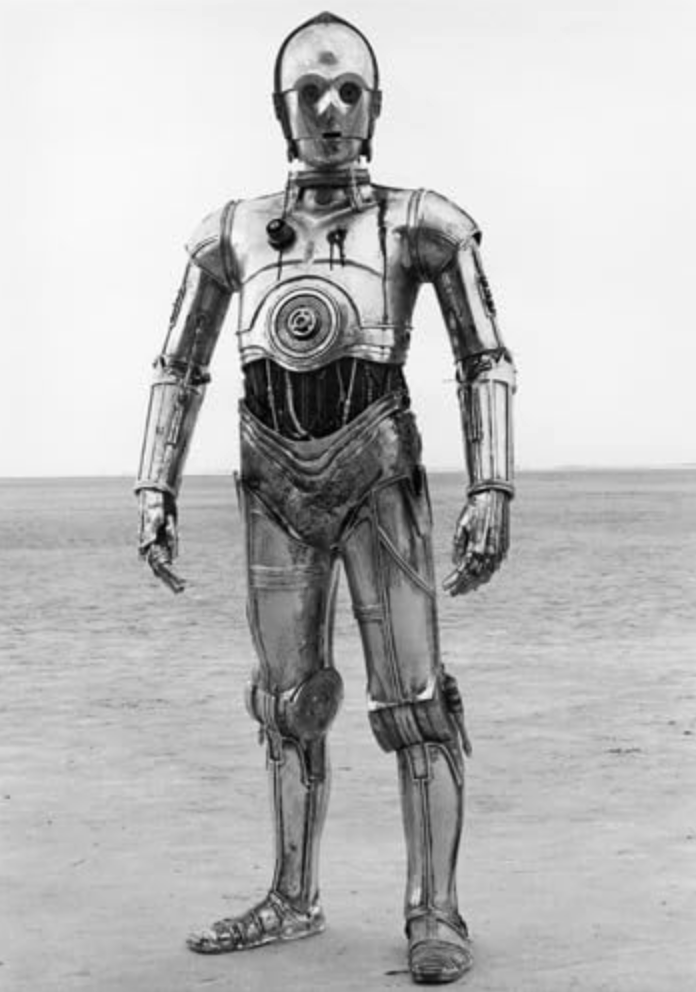
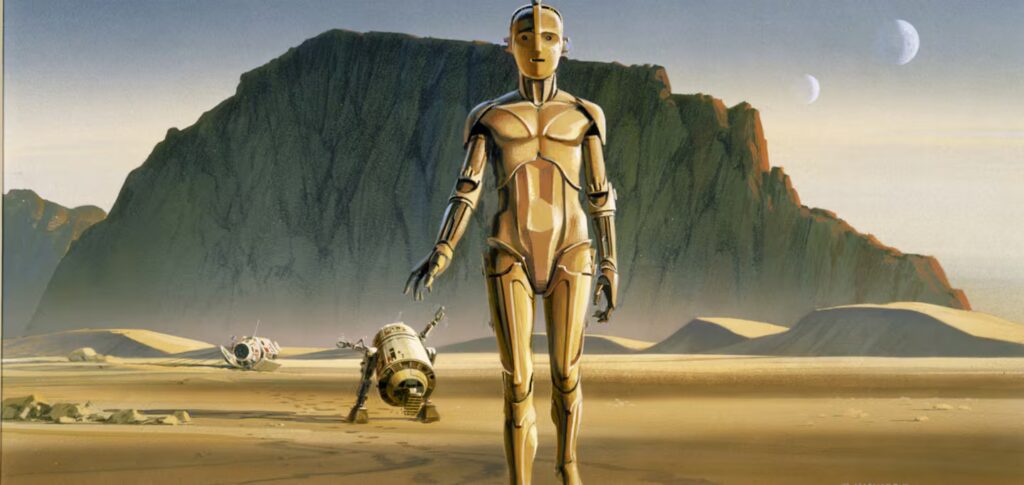
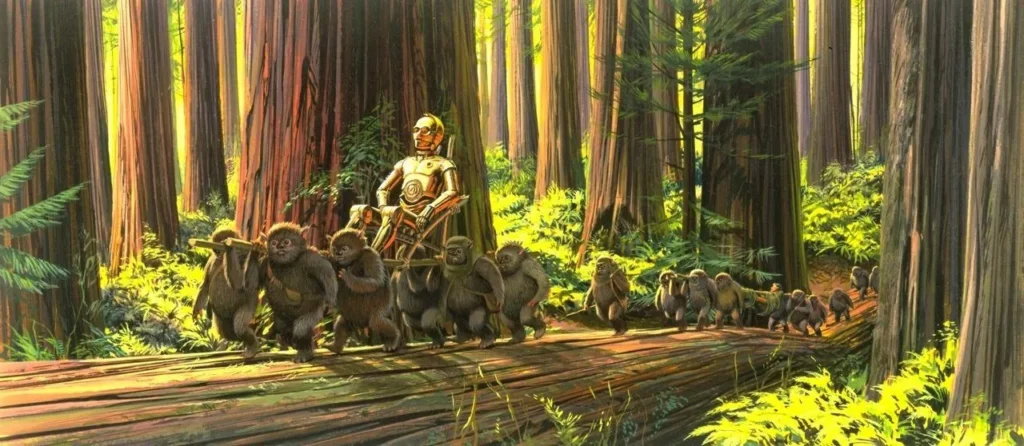
The sharpest art historical thread in his work, however, runs through C-3PO. McQuarrie’s original design directly echoes the Maschinenmensch from Fritz Lang’s Metropolis (1927). That Art Deco robot—sleek, humanoid, unsettlingly graceful—already held enormous cultural weight when McQuarrie encountered it. He drew that lineage forward into a new medium and a new era. The result was a character that felt simultaneously ancient and futuristic. The design even shaped casting. Anthony Daniels had already decided to turn down the role of C-3PO. Then he saw McQuarrie’s painting. He described the figure as wistful and yearning, and that image alone persuaded him to accept.
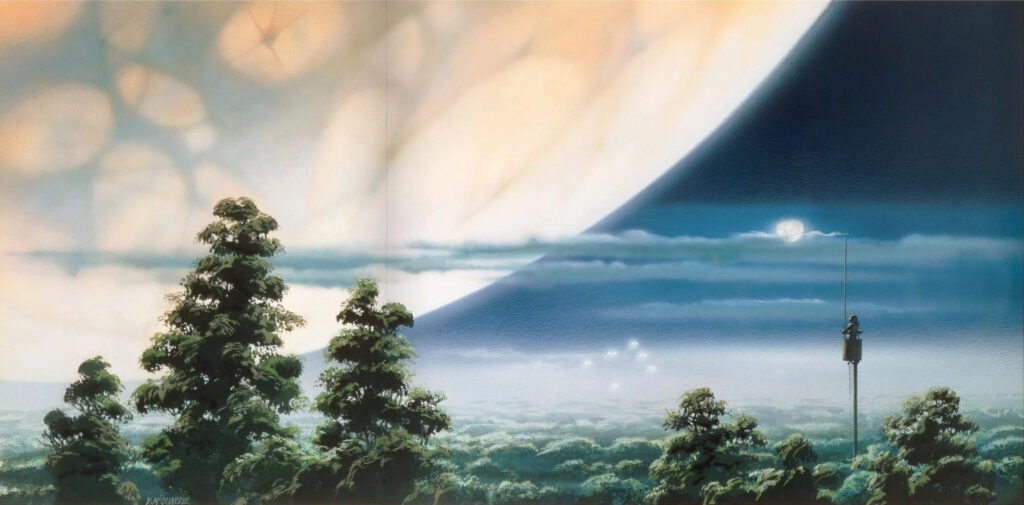
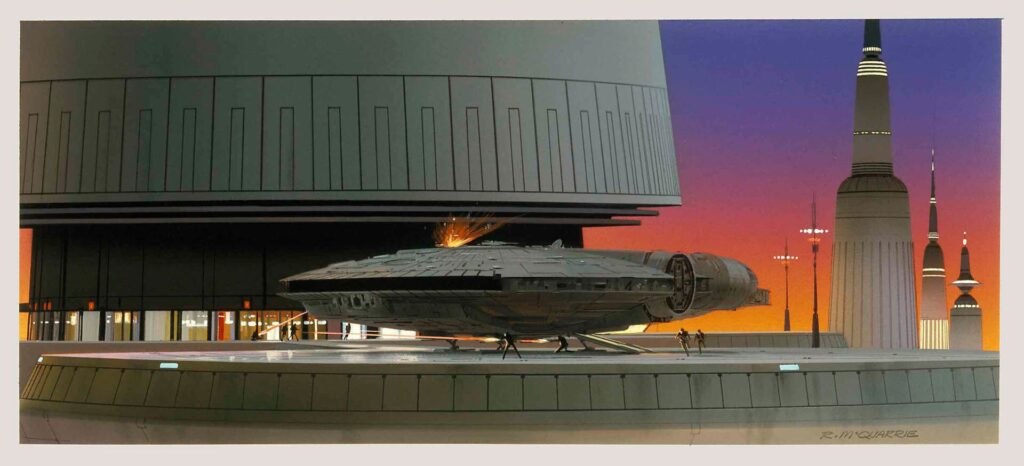
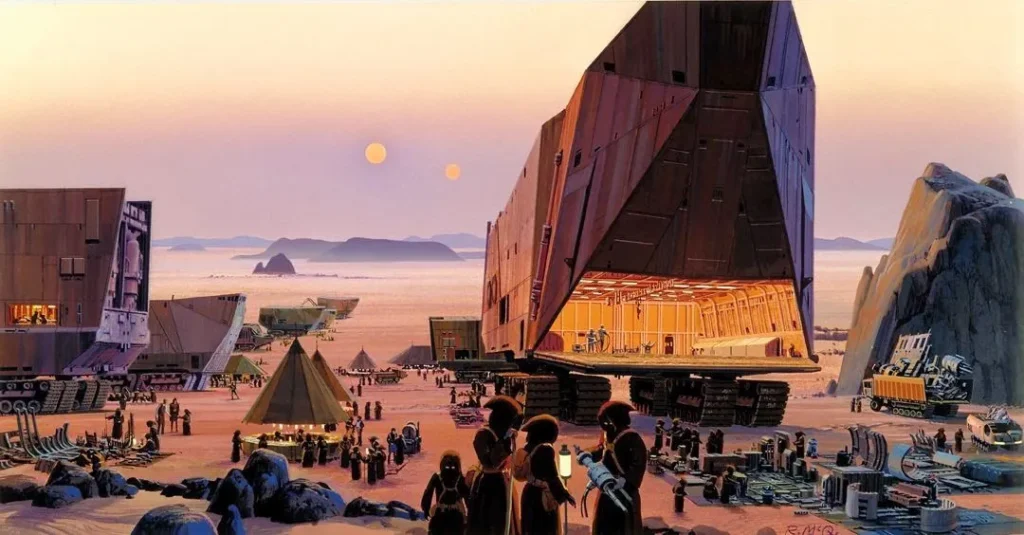
By 1975, Lucas had a script but no images. He commissioned McQuarrie to paint several key scenes from the film. The resulting paintings covered Tatooine, the Mos Eisley cantina, the Death Star interior, and the forest moon of Yavin. Each image gave visible form to something that had only existed as words. Lucas described the process plainly: when words failed him, he pointed to a McQuarrie painting. His instruction to the crew was always the same: do it like this.
Ralph McQuarrie, Rebel Base Lookout on Fourth Moon of Yavin in Star Wars Art: Ralph McQuarrie, ed. by Brandon Alinger et al., Abrams Books, 2016, p.122-123. Liam Flanagan.
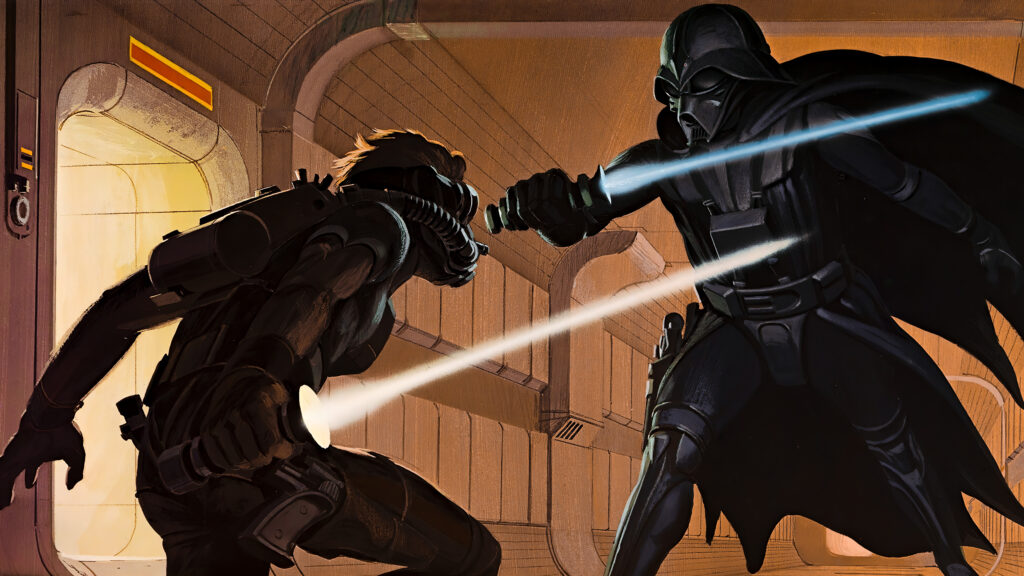
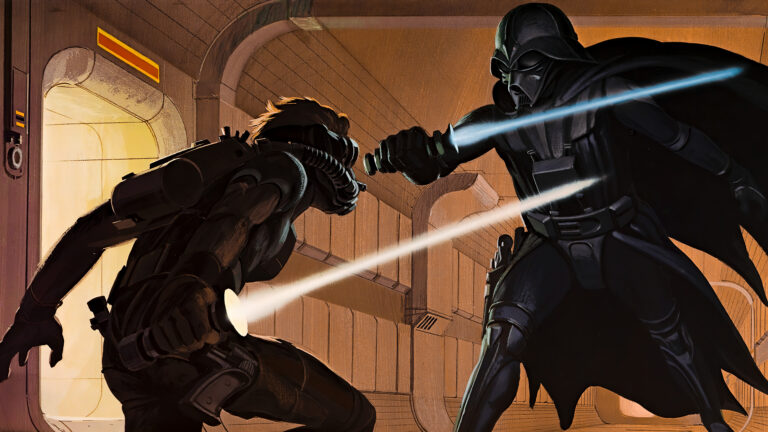
The characters McQuarrie designed became the most recognizable silhouettes in cinema. For Darth Vader, Lucas offered a single direction. He wanted a tall, dark figure that drifted in on the wind like a wraith. McQuarrie developed that image into samurai-influenced armor and, crucially, a breathing mask. The mask came from a practical problem: the script required Vader to travel between ships through open space. McQuarrie’s respirator solved that problem. In doing so, it also transformed Vader from a villain into something closer to a dark god.
Ralph McQuarrie, Deak Starkiller Duels Darth Vader (Laser Duel). 1975, in Star Wars Art: Ralph McQuarrie, ed. by Brandon Alinger et al., Abrams Books, 2016. Arthur.
Chewbacca, R2-D2, and C-3PO also emerged from McQuarrie’s brush. His very first completed painting for the project showed R2-D2 and C-3PO wandering across a Tatooine desert. During production, Lucas insisted that camera operators reproduce several of McQuarrie’s compositions exactly. The images were not merely inspiration, but instructions. Ralph McQuarrie’s concept art for the original trilogy remains the clearest example of one artist’s vision shaping an entire franchise.
Ralph McQuarrie, Concept art for C-3PO and R2-D2 walking in the desert of Tatooine. The Boston Globe.
McQuarrie died on March 3, 2012. The wider art world largely overlooked his passing. Yet his visual grammar had grown so woven into global culture that separating it from the films proved nearly impossible. Lucasfilm still mines his unused concept sketches from the 1970s for new Star Wars productions. Rian Johnson revisited McQuarrie’s paintings directly when designing key sequences in The Last Jedi. The animated series Star Wars Rebels drew heavily from his unused designs. It functions, in effect, as a McQuarrie retrospective in motion.
In 1985, the Academy awarded him an Oscar for Visual Effects on Cocoon, acknowledging his technical contribution. But that award missed the deeper point. McQuarrie did not merely design visual effects. He established the visual grammar of science fiction cinema for the following half-century. Moreover, he transformed concept art itself. Before McQuarrie, studios used concept art as a functional planning tool. After him, it became something a director could point to and say: this is the film.
McQuarrie never courted fame or commercial visibility. He made his work for the films, not for posterity. George Lucas once said that McQuarrie’s work propelled and inspired every member of the original trilogy’s cast and crew. That is not the language of a technical department, but the language of true art.
DailyArt Magazine needs your support. Every contribution, however big or small, is very valuable for our future. Thanks to it, we will be able to sustain and grow the Magazine. Thank you for your help!