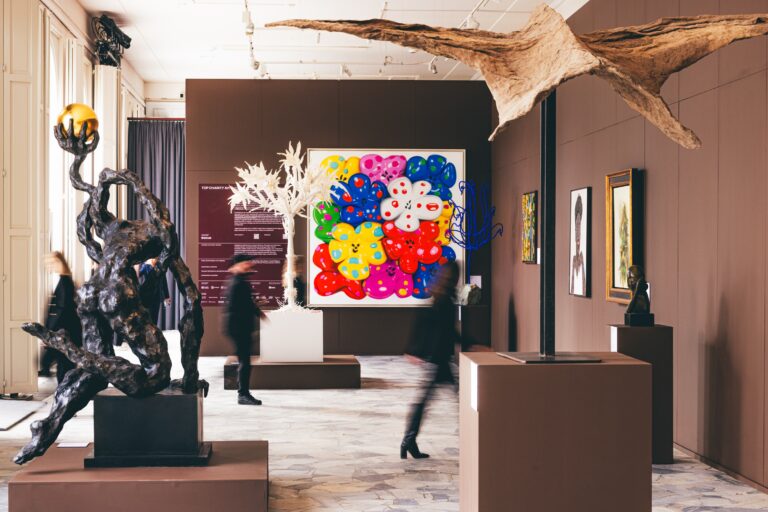
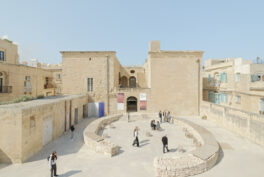
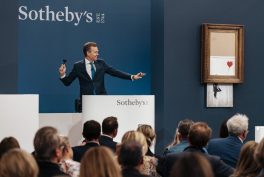
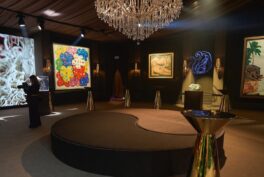
The TOP CHARITY Art 2026 exhibition and auction are organized by a philanthropic initiative founded by the Polish entrepreneurs and philanthropists Omenaa Mensah and Rafał Brzoska, which uses art as a catalyst for social impact. Proceeds support educational, cultural, and humanitarian projects in Poland, Ghana, and beyond.
Here are 14 artworks from TOP CHARITY Art 2026 that deserve a closer look not only for their market value or prestige but also for the stories they tell.
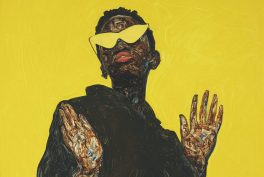
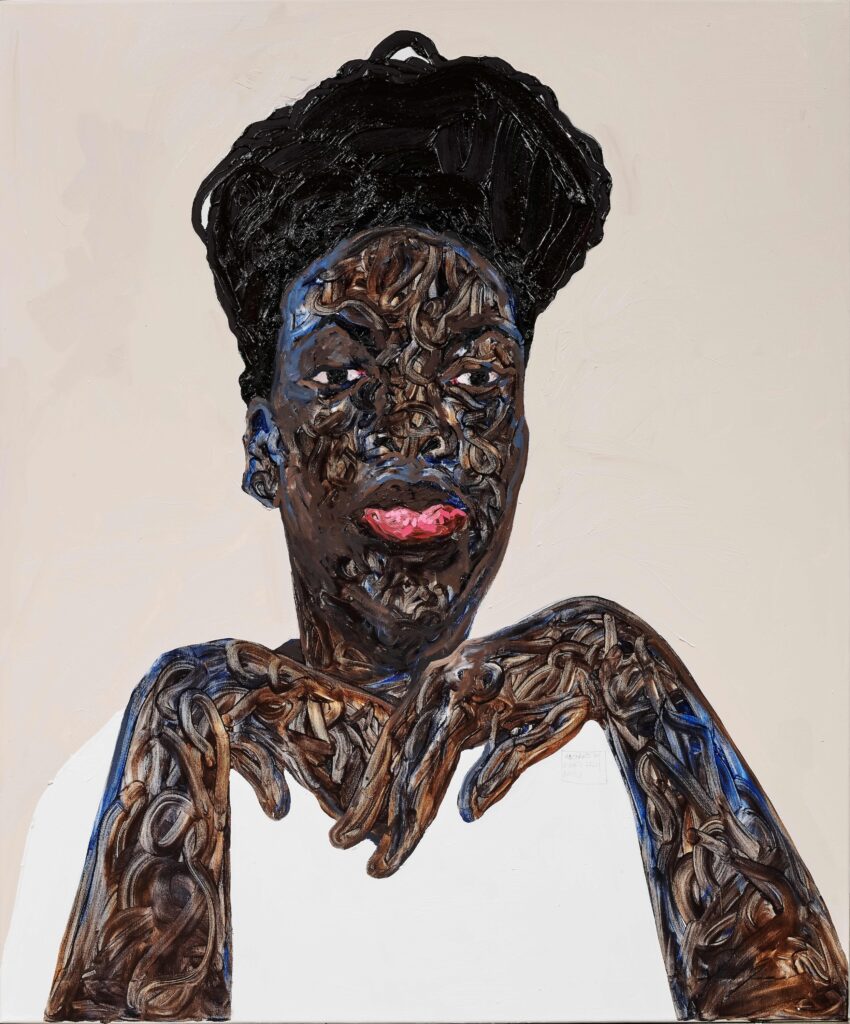
1. Amoako Boafo, Laced Fingers
Amoako Boafo studied painting in Accra and later in Vienna, two cities that became central to the development of his art. Having experienced marginalization in Austria because of his skin color, Boafo decided to focus on portraits of Black subjects, who remain underrepresented in international contemporary art. His intimate portraits are now considered some of the most significant representations of Africa and the African diaspora in contemporary art. Boafo draws inspiration from a wide range of sources, from the spontaneity of children’s drawings to the decorative elegance of Viennese Secession artists such as Egon Schiele, whose impact is clearly visible in this work.
In Laced Fingers, Boafo creates an image that is both deeply modern and historically aware, establishing himself as one of the most original contemporary figurative painters. Boafo doesn’t use a paintbrush; he applies paint directly with his fingers, creating amazing textured surfaces. He has described the process as instinctive and organic, allowing him to create forms that feel sculptural and alive. The figure stands against an empty background, looking directly toward the viewer. With loosely folded hands and a calm, self-contained posture, the subject resists traditional expectations of portraiture. Instead of performing for the viewer, they seem to exist entirely on their own terms.
Amoako Boafo is currently the highest-selling African artist. In 2021, his work Hands Up was auctioned for a record sum of approximately €3,100,000 at Christie’s in Hong Kong.
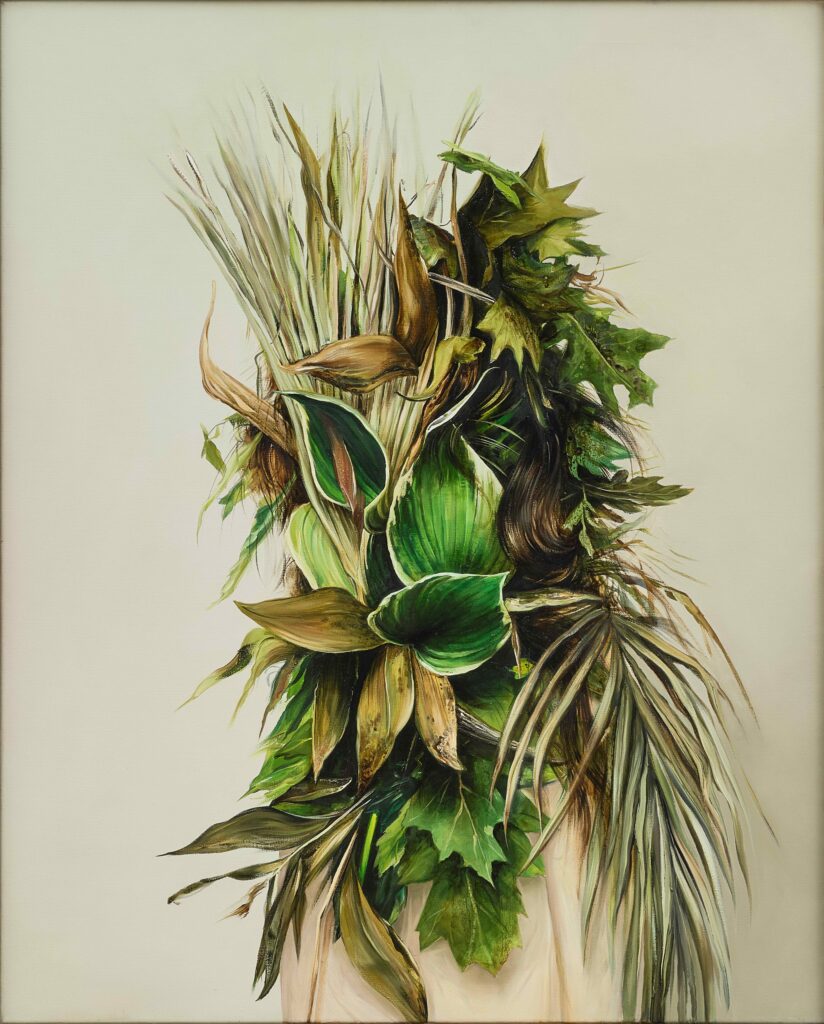
2. Ewa Juszkiewicz, Grove
Ewa Juszkiewicz is an internationally recognized artist who has built an oeuvre around the reinvention of historical female portraiture. Drawing inspiration from Old Master paintings, particularly those of the Renaissance, Baroque, and Flemish traditions, she recreates familiar compositions while radically transforming their central element: the face. In place of recognizable features, her subjects appear concealed beneath elaborate arrangements of flowers, fungi, fabrics, insects, tribal masks, or dense vegetation.
Rather than simply appropriating art-historical imagery, Juszkiewicz uses these transformations to question how women have been represented throughout centuries of Western painting. Her work examines the mechanisms through which ideals of beauty were constructed and reinforced, often reducing women to objects of admiration or symbols of social status.
Grove exemplifies this approach. The figure’s dress merges almost seamlessly with the background, while a dense mass of vegetation replaces the sitter’s face.
Juszkiewicz’s paintings have entered major museum collections worldwide, and in 2026, the Thyssen-Bornemisza Museum in Madrid will present her first solo museum exhibition.
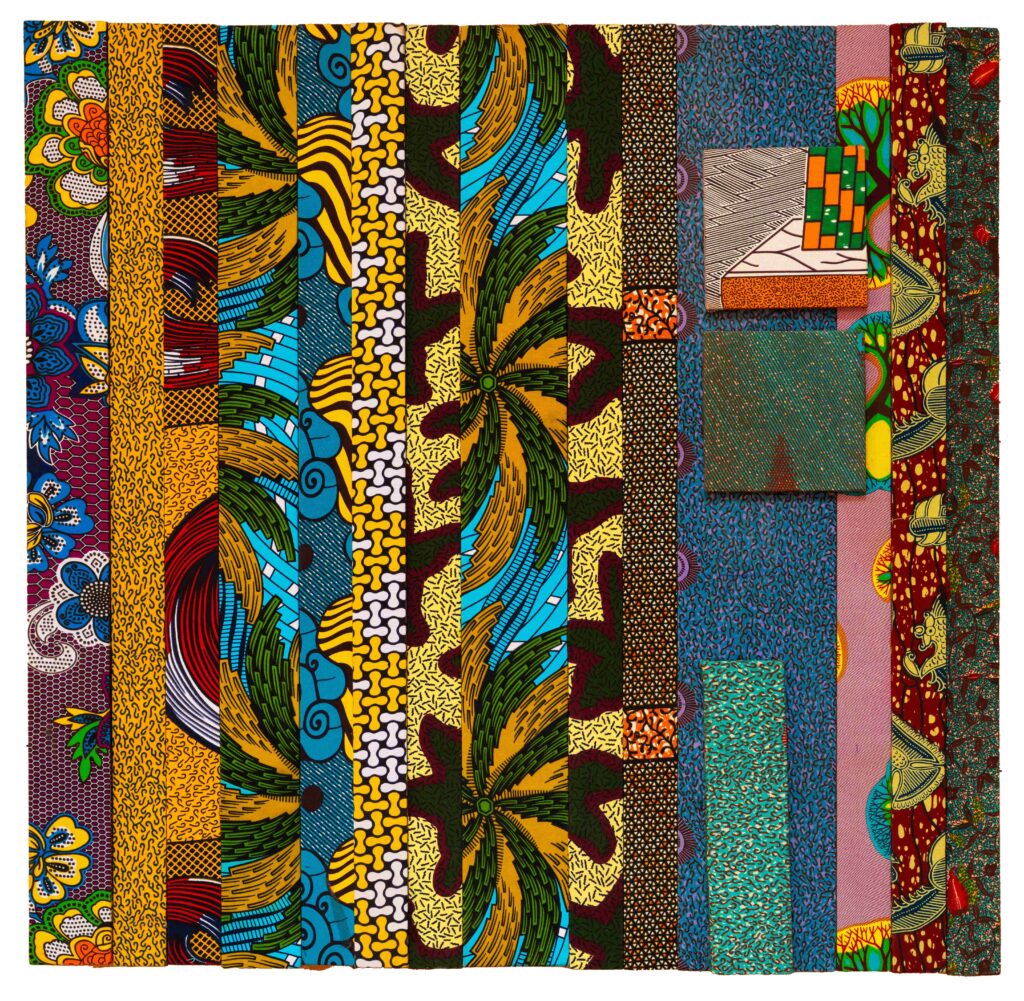
3. Ibrahim Mahama, HYMNS FOR THE REBEL SOUL
Few artists have done more to reshape the conversation around contemporary African art than Ibrahim Mahama. Born in Tamale, Ghana, in 1987, Mahama gained international attention through his monumental installations made from repurposed jute sacks, industrial remnants, and other discarded materials. Transforming objects associated with labor, trade, and migration, he examines the complex legacies of colonialism and globalization.
In HYMNS FOR THE REBEL SOUL, Mahama continues his exploration of material as a carrier of memory and collective experience. Constructed from fragments of wax-print fabrics gathered in Ghana, the work takes the form of a painted textile whose layered surface reflects the movement of people, goods, and cultural narratives across continents. As in much of his work, material becomes both medium and archive.
Mahama is considered one of the most influential artists of his generation. He has participated in documenta 14 and the Venice Biennale, and his work has been exhibited at many institutions, including the Barbican Centre and Whitechapel Gallery in London. In 2025–2026, the Fondation Cartier in Paris devoted a major exhibition to him. Since 2019, he has established a network of artist-run cultural institutions in northern Ghana, including Nkrumah Volini and Red Clay Studio, creating educational and creative opportunities for local communities while contributing to the development of independent cultural infrastructure across Africa.
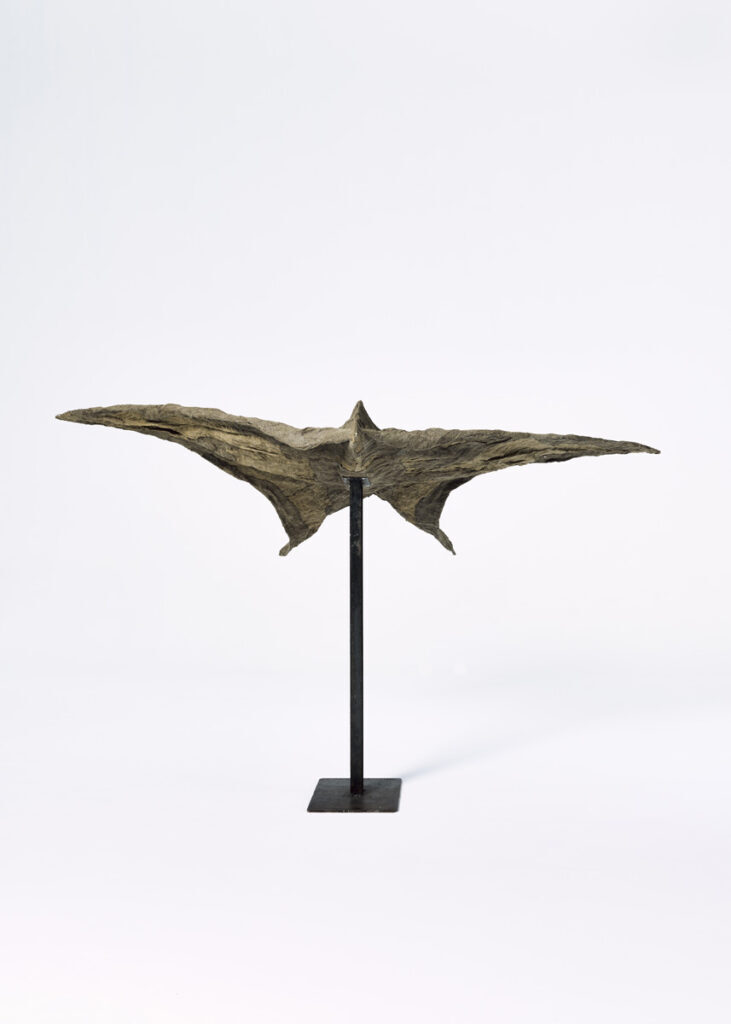
4. Magdalena Abakanowicz, Bird II
Few artists have had as profound an impact on postwar sculpture as Magdalena Abakanowicz. Widely celebrated as the “godmother of installation art,” the Polish artist transformed the possibilities of sculpture through monumental works that challenged conventional distinctions between textile, object, and environment. Her groundbreaking Abakans—large-scale organic forms woven from sisal and suspended in space—revolutionized contemporary art in the 1960s and earned her international acclaim.
Created during the final chapter of her career, Bird II belongs to a body of work in which Abakanowicz increasingly turned toward animal forms. Yet, as throughout her oeuvre, these creatures are less representations of nature than metaphors for the human condition.
Abakanowicz’s influence on contemporary art remains enormous. Her works are held in major collections including the Metropolitan Museum of Art, Centre Pompidou, Tate, and the Stedelijk Museum, while her monumental public sculpture Agora has become one of Chicago’s most recognizable artworks. Interest in her work has continued to grow in recent years, culminating in the landmark retrospective at Tate Modern in 2022.
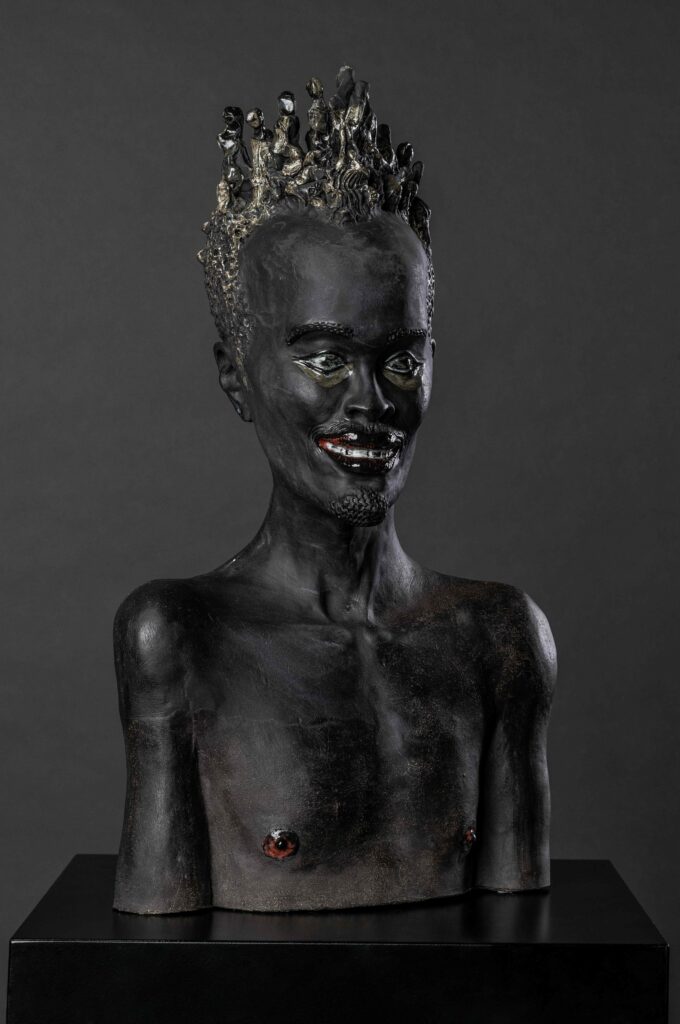
5. Paweł Althamer, Erico
Paweł Althamer is one of the most internationally acclaimed Polish artists, having spent more than three decades expanding the boundaries of contemporary sculpture and performance. He is known for works that blur the line between art and life, often inviting communities, friends, neighbors, and strangers to become active participants in the creative process.
Created after the artist’s encounter with Eric Shieni in Kenya, the ceramic portrait Erico depicts the young Kenyan volunteer, finance student, and member of the Journey Through the Savannah Foundation community, whose life was tragically cut short during protests in Nairobi in 2024.
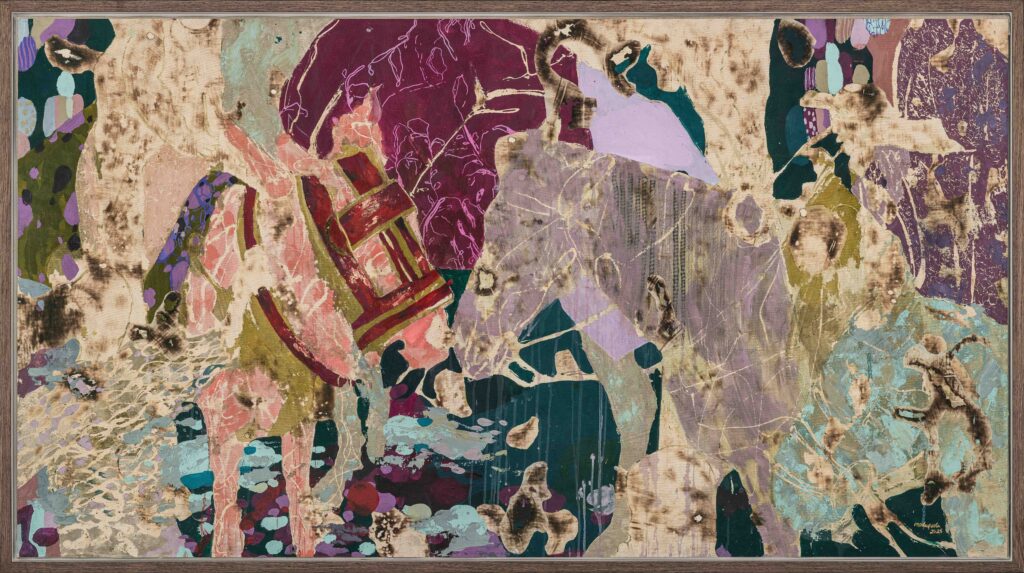
6. Modupeola Fadugba, The Kiss
Nigerian artist Modupeola Fadugba belongs to a generation of African artists redefining how contemporary art engages with questions of identity, community, and social change. Trained in engineering and economics before turning to art, she brings an analytical sensibility to her art, often drawing on concepts such as game theory, collective behavior, and cultural memory.
In The Kiss, from the series Ojude Oba, Fadugba presents an intimate encounter between two horses leaning toward one another in a gesture that feels tender yet powerful. The work belongs to a body of paintings inspired by the annual Ojude Oba festival in southwestern Nigeria, a vibrant celebration of Yoruba culture.
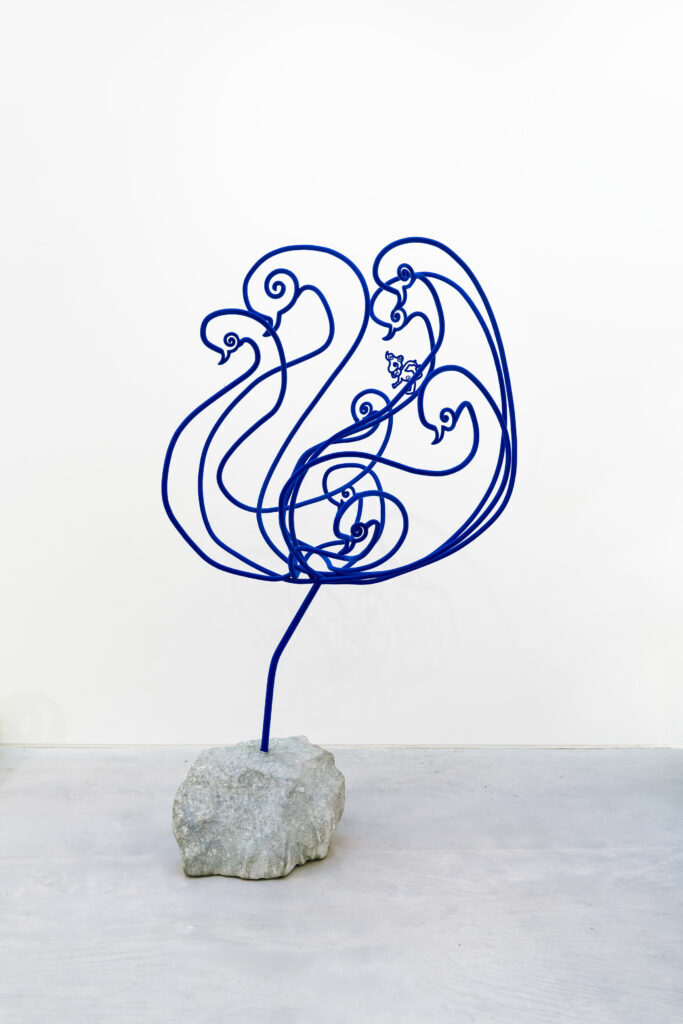
7. Charlotte Colbert, Out with Lanterns
Charlotte Colbert is a British interdisciplinary artist who moves fluidly between sculpture, photography, installation, and cinema. Often described as a contemporary Surrealist, she creates dreamlike worlds in which reality and imagination intertwine. Her work has been compared to the traditions of André Breton and Salvador Dalí.
Out with Lanterns takes its title from a line by Emily Dickinson: “I am out with lanterns looking for myself.” The sculpture transforms this search for identity into a poetic visual allegory. A small angelic heroine confronts immense waves that appear to morph into swan-like creatures, evoking fairy tales, myths, and the archetypal journeys that shape our understanding of ourselves. Simultaneously playful and unsettling, the work inhabits the liminal space between dreams and waking life.
Colbert is considered one of the most distinctive voices working at the intersection of contemporary art and cinema. Her works have been exhibited internationally, including at the Victoria and Albert Museum in London, MO.CO. Montpellier Contemporain, Frieze, Art Basel, Christie’s, and Sotheby’s.
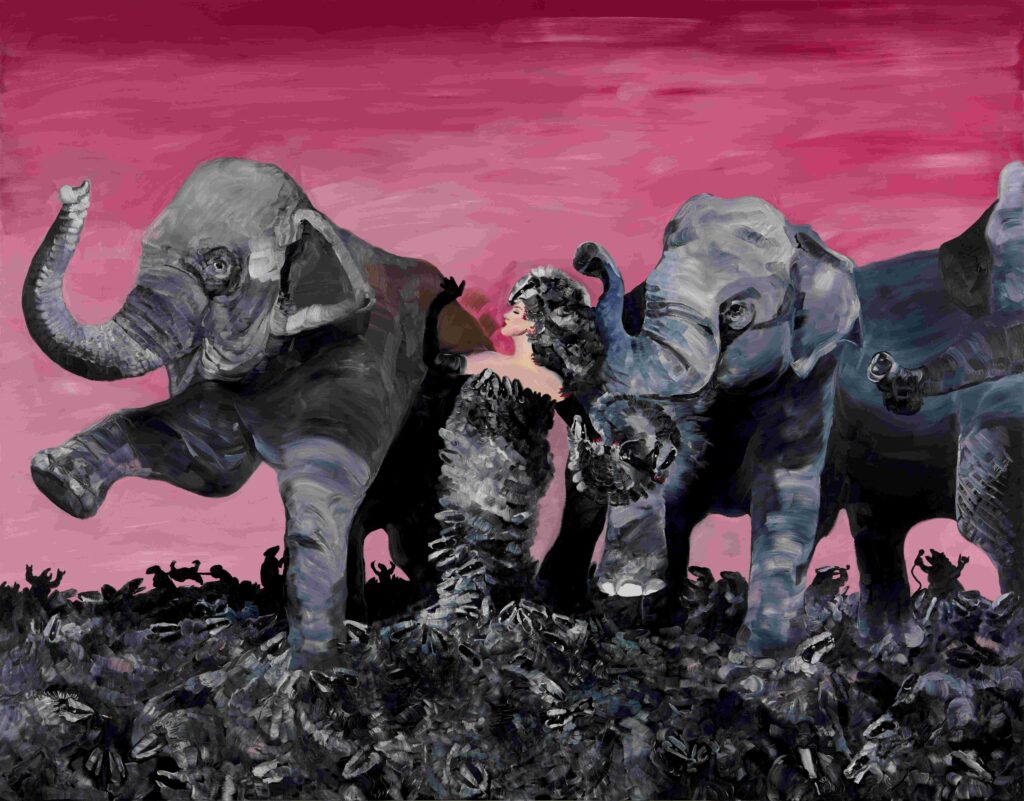
8. Pola Dwurnik, New Choreography of Alcina: Chapter Three, Dance with Elephants (after Richard Avedon)
New Choreography of Alcina: Chapter Three, Dance with Elephants (after Richard Avedon) belongs to Pola Dwurnik’s ongoing series Alcina’s Island, inspired by the enchantress Alcina from Ludovico Ariosto’s 16th-century epic poem Orlando Furioso. In the original story, Alcina seduces her lovers before transforming them into animals and ultimately losing her power. Dwurnik reimagines the character through a contemporary lens, presenting her not as a defeated sorceress but as a powerful ruler fully integrated into the natural world and its creatures.
The monumental composition also references Richard Avedon’s iconic 1955 photograph Dovima with Elephants, one of the most celebrated fashion images of the 20th century. Dwurnik reinterprets this famous photograph within the mythological framework of Alcina’s Island, inviting viewers into a world where humans and animals are in constant transformation. Animals occupy a central place in Dwurnik’s artistic universe. Throughout her paintings, they appear as companions, alter egos, symbols of desire, fear, and freedom.
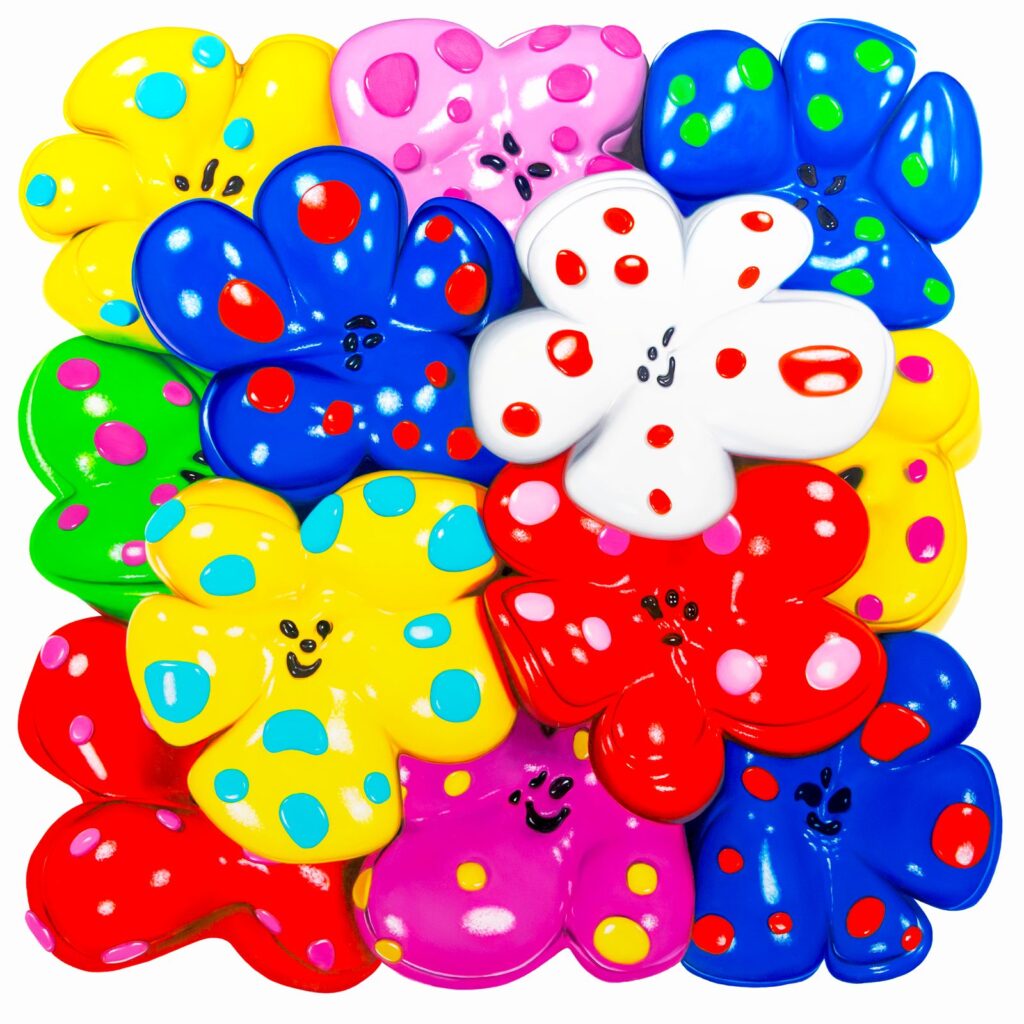
9. Philip Colbert, Flower III (with Dots)
Philip Colbert has become one of the most recognizable figures of contemporary Pop Art. Born in Scotland and based in London, he draws inspiration from artists such as Richard Hamilton, Roy Lichtenstein, and Andy Warhol, while translating their ideas into the language of the internet age. His paintings, sculptures, and digital projects combine art-historical references with the visual noise of contemporary culture, creating a universe populated by his alter ego: a cartoon lobster.
Flower III (with Dots) belongs to the artist’s Flower Studies series, a direct conversation with Warhol’s famous Flowers. Colbert takes one of the most iconic images in Pop Art and reimagines it within Lobsteropolis—his sprawling fictional world spanning paintings, sculptures, public installations, and digital environments. Familiar motifs are transformed into something playful and excessive.
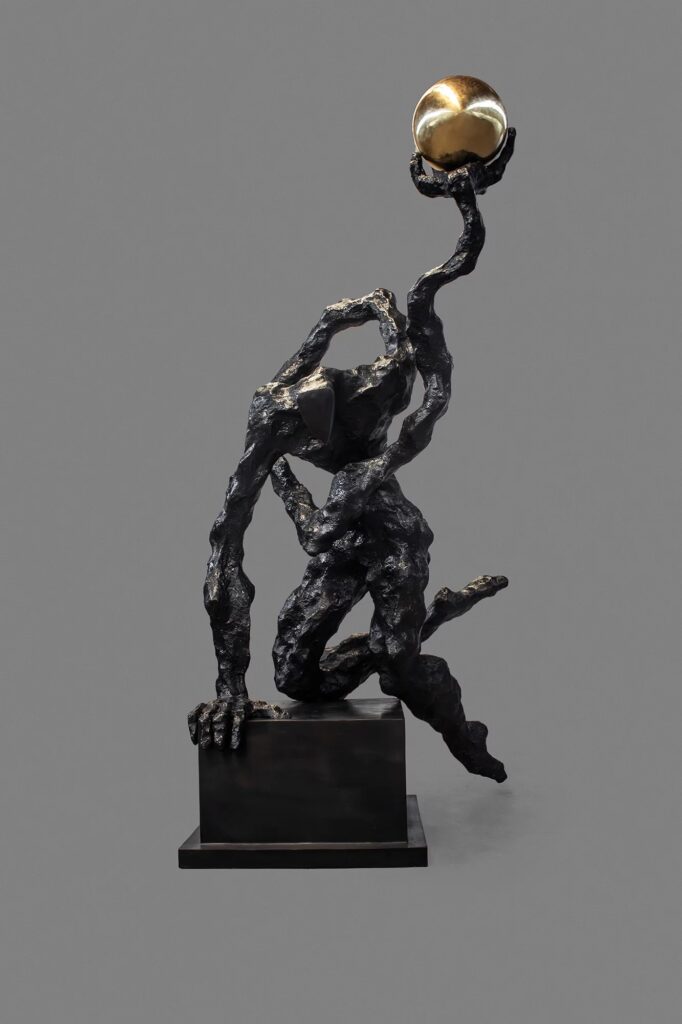
10. Tomasz Koclęga, Lux Mentis (Light of the Mind)
The Polish artist Tomasz Koclęga is best known for sculptures that place the human figure at the center of attention. Whether monumental public commissions or smaller-scale works, his sculptures are united by a fascination with what it means to be human.
In Lux Mentis (Light of the Mind), a figure appears to strain under the weight of a radiant golden sphere. The contrast between the imperfect, expressive body and the flawless geometry above it drives the sculpture’s meaning. For Koclęga, the sphere represents an idea—something intangible that emerges through effort and perseverance. The work suggests that growth, knowledge, and understanding are often born from struggle.
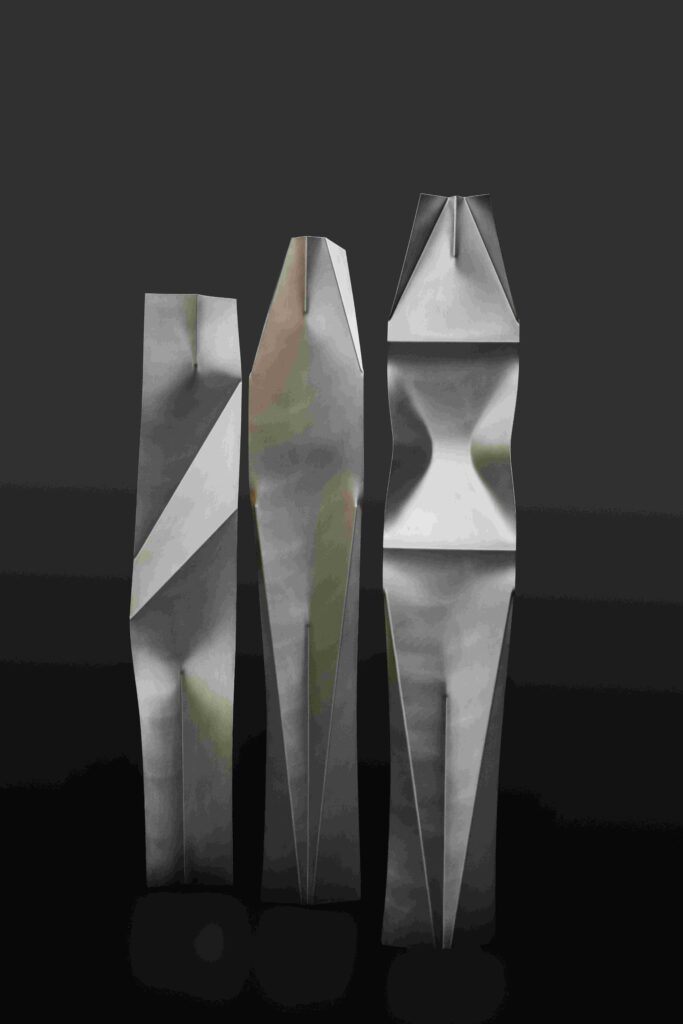
11. Krzysztof Renes, On, Venus, Youth
Krzysztof Renes approaches sculpture with unusual economy. Rather than carving, modeling, or assembling complex structures, he often begins with a single flat sheet of material, such as paper, copper, or aluminum, and transforms it with a minimal gesture. A bend, a fold, or a subtle shift in angle is enough to turn a two-dimensional surface into a three-dimensional form.
This idea lies at the core of Universale 4000×5, a series Renes has been developing since 2015. The works occupy a space between object and image, presence and absence. Reduced to their simplest forms, they evoke the human figure without fully describing it, allowing the viewer to complete the image through perception and association. In On, Venus, Youth, the body becomes less a physical presence than a sign.
12. Karolina Żądło, The Fleeting Taste of a Strawberry or a Wild Strawberry
At just 26, Karolina Żądło has already shown herself as an intriguing voice among a new generation of Polish painters. In her art, she engages in a critical dialogue with the traditional image of women. Drawing from the aesthetics of the past, she creates works that bear traces of bygone eras while opening a space for discussion about contemporary tensions surrounding gender and identity.
The painting The Fleeting Taste of a Strawberry or a Wild Strawberry references Hieronymus Bosch’s The Garden of Earthly Delights. The title evokes the symbolism of fruit as fleeting delight existing only as a trace of experience. Pleasure does not lead to catastrophe here—it simply disappears.
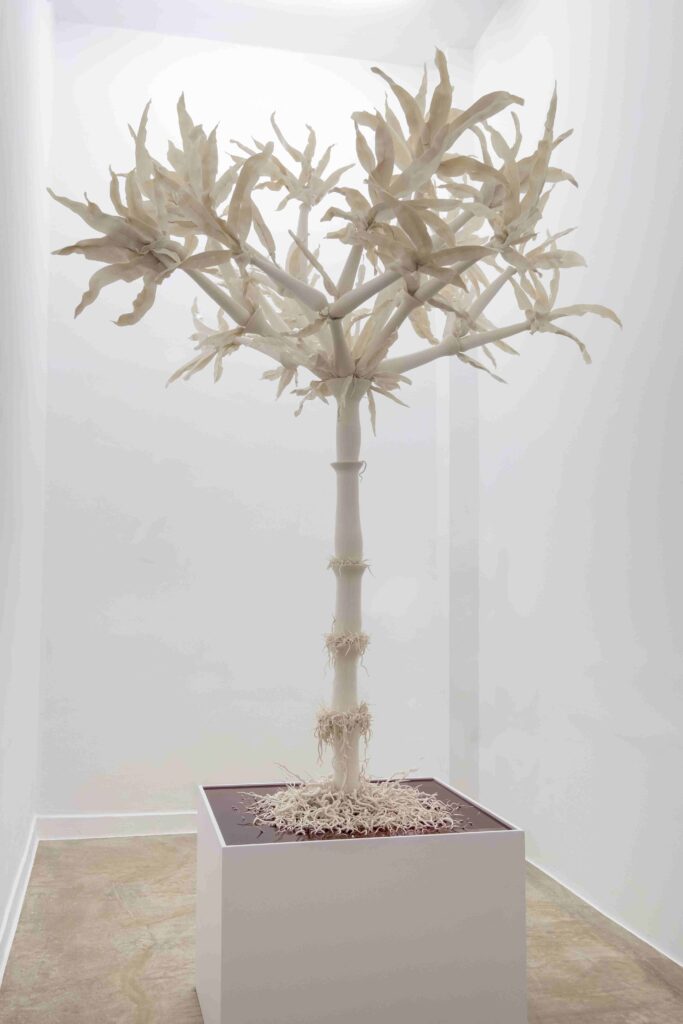
13. Wojciech Ireneusz Sobczyk, Tree
Wojciech Ireneusz Sobczyk moves fluidly between sculpture, installation, animation, music, and printmaking, creating works that combine technical precision with a fascination for symbolism, mythology, and the darker corners of the imagination. His projects often draw on literary, religious, and art-historical references.
Like Karolina Żądło’s work, Tree belongs to a series inspired also by Hieronymus Bosch’s The Garden of Earthly Delights. More specifically, the sculpture refers to the left panel of the triptych, where Bosch depicts the creation of Eve and the Garden of Eden. Crafted from white glazed porcelain, Sobczyk’s tree recalls the biblical Tree of Life, whose fruits promised immortality. Yet those fruits are conspicuously absent here.
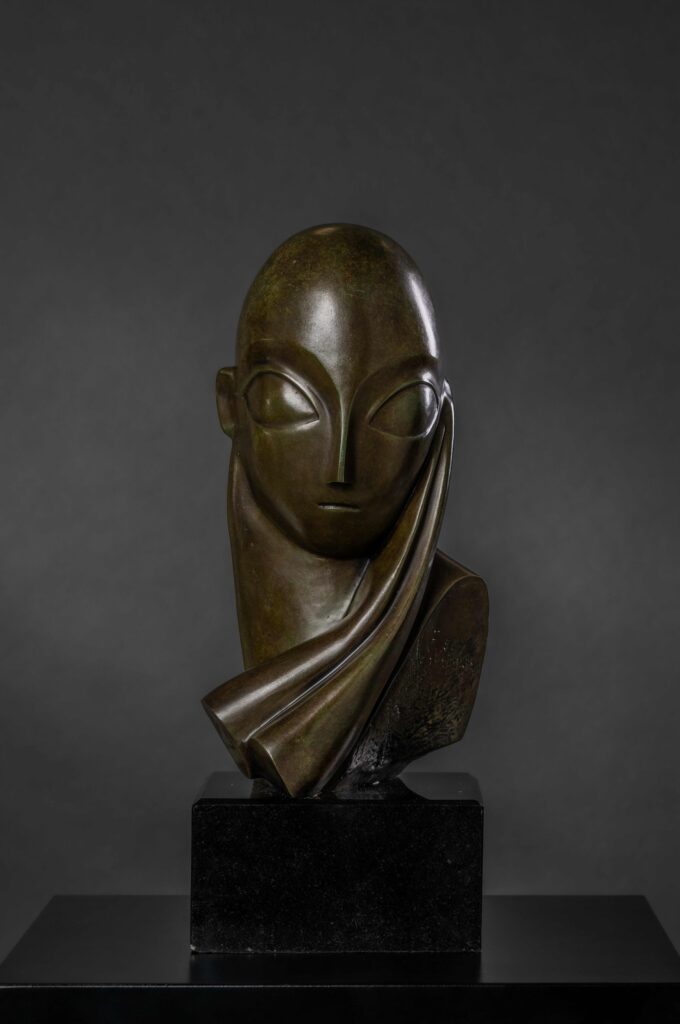
14. Constantin Brâncuși (after), Mademoiselle Pogany
Although Mademoiselle Pogany is among Constantin Brâncuși’s most celebrated works, it began with a real encounter. In 1910, the Romanian sculptor met Margit Pogany, a young Hungarian artist studying in Paris. She sat for him several times before returning home, leaving Brâncuși to complete the sculpture from memory. Out of it, the artist captured the essence of a person rather than their physical likeness. Brâncuși abandoned naturalistic depiction in favor of reduction and synthesis, distilling the human face into a series of essential forms. The result was revolutionary.
Today, Brâncuși is widely regarded as one of the founding figures of modern sculpture. His influence can be traced through generations of artists, from minimalism and abstraction to contemporary installation art.
TOP CHARITY Art 2026 is open to the public until June 16, 2026, at the Orangery of Wilanów Palace in Warsaw, Poland. The exhibition can be visited daily between 10:00 a.m. and 6:00 p.m.