


Everything You Need to Know About the Vienna Secession
The Vienna Secession rebelled against the established order of art in Austria in the 19th century. Art Nouveau and other movements across Europe...
Bec Brownstone 1 October 2026
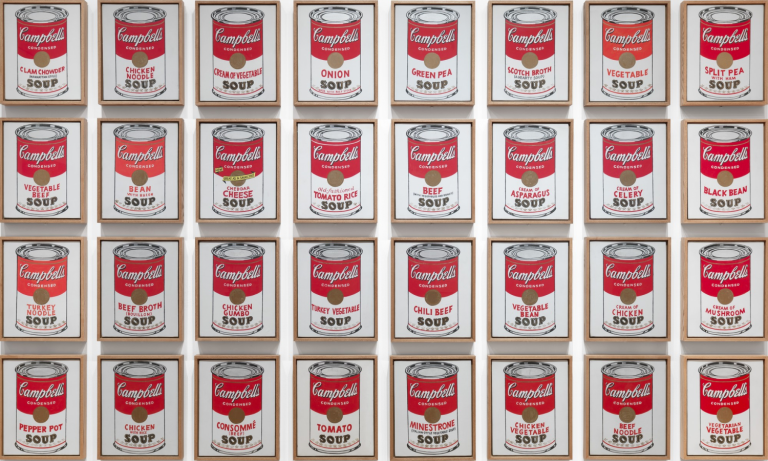
Andy Warhol, Campbell’s Soup Cans, 1962, Museum of Modern Art, New York City, NY, USA.
Everyone is familiar with Pop Art, and everyone can recognize its most iconic artists and artworks. Cartoon characters, food, everyday products are only a few of Pop Art’s subjects. However, most of us tend to believe that Pop Art is only the colorful images we see and that there is nothing more to it. Well, we couldn’t be more wrong. Pop Art has a whole philosophy behind it. Its artists read, observed, and discussed society and its issues. Each artist found his own way to reflect on the contemporary world. So, let’s dive into Pop Art 101 to clear everything up!
Pop Art originated c. 1955, both in Europe and the USA. In the USA, it found its most classic expression. At first, Pop Art was all about plastic arts. However, it penetrated music, literature, fashion, cinema, graphic arts, and advertising very soon after. It embraced everything “popular”—from which the term Pop Art originated.
In the UK, the Independent Group (IG) founded the movement. Its members were artists, art critics, and architects of the Institute of Contemporary Arts (ICA) in London. The Institute was a meeting place for intellectuals and artists in London, in the same way that cafés were in Paris and exhibition openings were in New York. Lawrence Alloway, an art critic and member of ICA, was the first to use the term “Pop Art” in his essay from 1958. He talked about popular culture, understated by intellectuals, which included advertising, television, cinema, popular idols, science fiction, magazines, and pop music. So, the IG referred to Pop Art in the same way as any art.
In 1956, the IG organized an exhibition, This Is Tomorrow, at the Whitechapel Art Gallery in London. It was then that Richard Hamilton presented his very famous collage, Just what is it that makes today’s homes so different, so appealing?
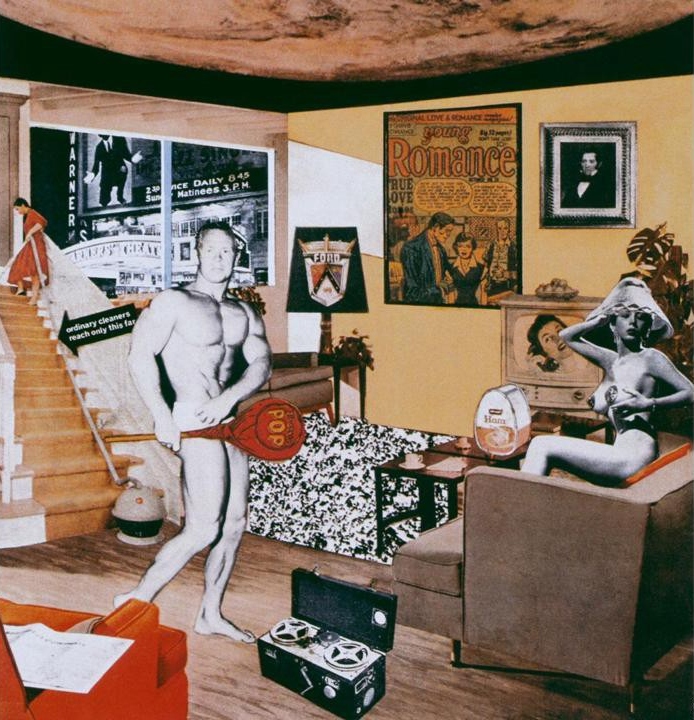
While looking at it, we see a “Mister Cosmos” kind of guy, holding a lollipop that says “Pop” on it. Pop as popular but also as it is used in comic books to signify an explosion or a loud noise. Also there is a naked young woman, like a call girl, posing provocatively on the couch. The room is filled with all the objects that were considered necessities for the modern household: a TV with a smiling woman talking on the phone, a recorder, an electric vacuum, a big can of ham used as a decoration in the living room, a Ford advertisement, a big photo-romance on the wall. Moreover, outside the window is the luminous entrance to a movie theater.
This piece became one of the defining points of Pop Art, combining modern consumerism, mass culture, media, advertising, comics, and photo-romances.
In the beginning, American Pop Art was associated with the underground scene. It was a reaction to the globalizing, capitalist reality. Apart from contemporary culture, it was strongly influenced by Dada. The first two artists who started Pop Art were Robert Rauschenberg and Jasper Johns. But others helped elevate its status in the art world: Andy Warhol, Roy Lichtenstein, Tom Wesselmann, James Rosenquist, Claes Oldenburg, Robert Indiana, and others. A series of exhibitions in 1960–1962 established Pop Art as a legitimate art movement.
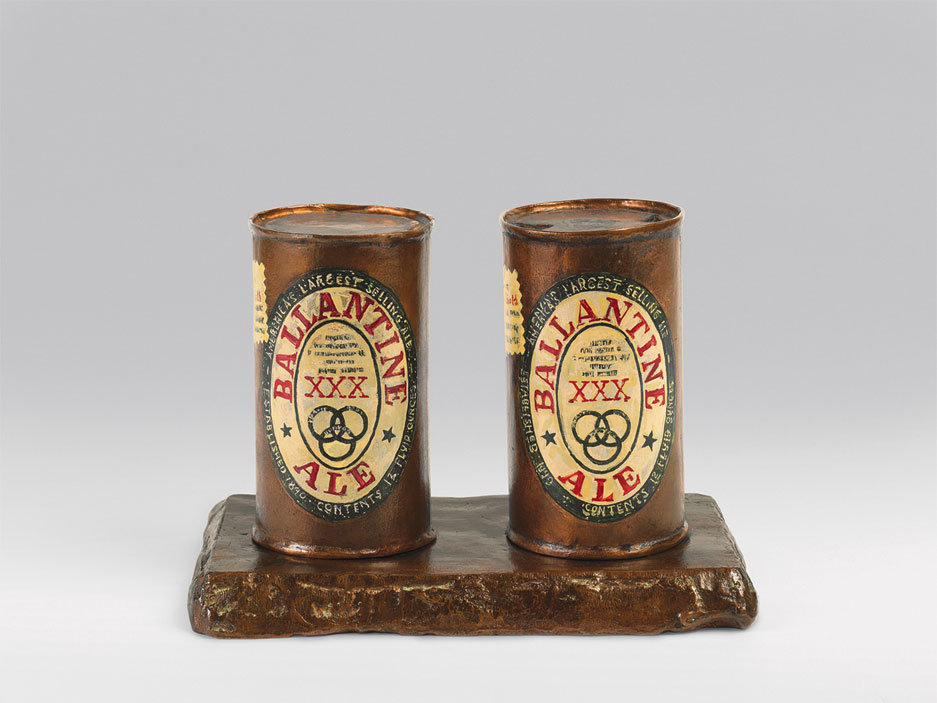
Besides the aforementioned subjects, new ones appeared in American artworks, such as food. Cans, hamburgers, ice cream, pies, etc. became the central objects of the artworks. The artists used vibrant colors and huge canvases. However, the approach to the subject was cold and detached. There was no emotion in this celebration of colors and fun-looking art pieces.
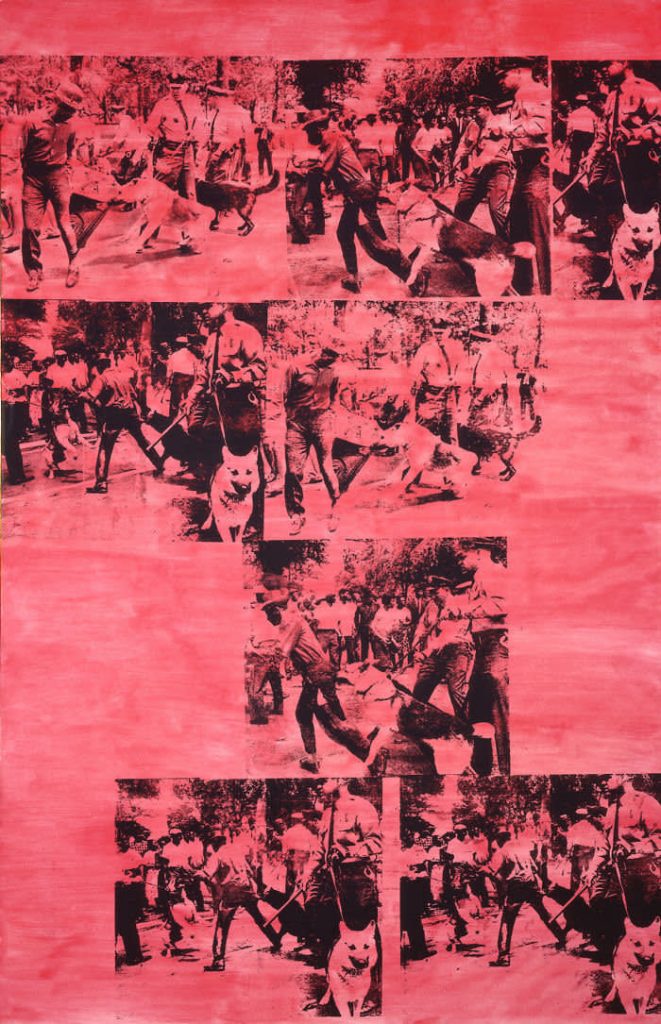
Andy Warhol is the most famous artist of Pop Art. He not only created art but was also a movie director and a nightclub manager. He mostly used graphic arts and silkscreen prints. Warhol became the most famous artist of the 20th century who portrayed consumerism and advertisement. He also depicted the dark side of life too: death, accidents, executions. There was a bit of darkness in what was generally considered a happy side of art.
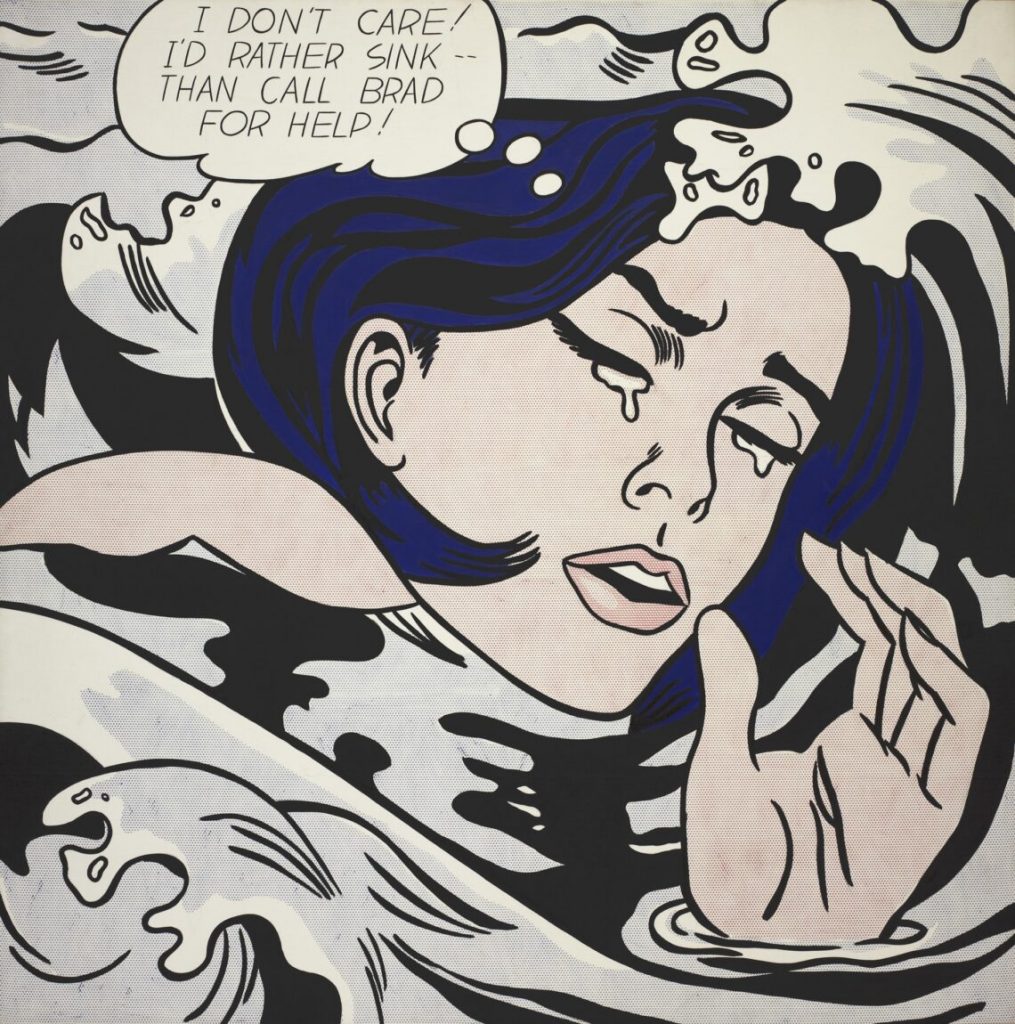
Contrary to Warhol, Roy Lichtenstein painted only the bright side of life. His most characteristic works are his comic strips. He also used pop figures of the time, though, such as Mickey Mouse, Donald Duck, and Bugs Bunny.
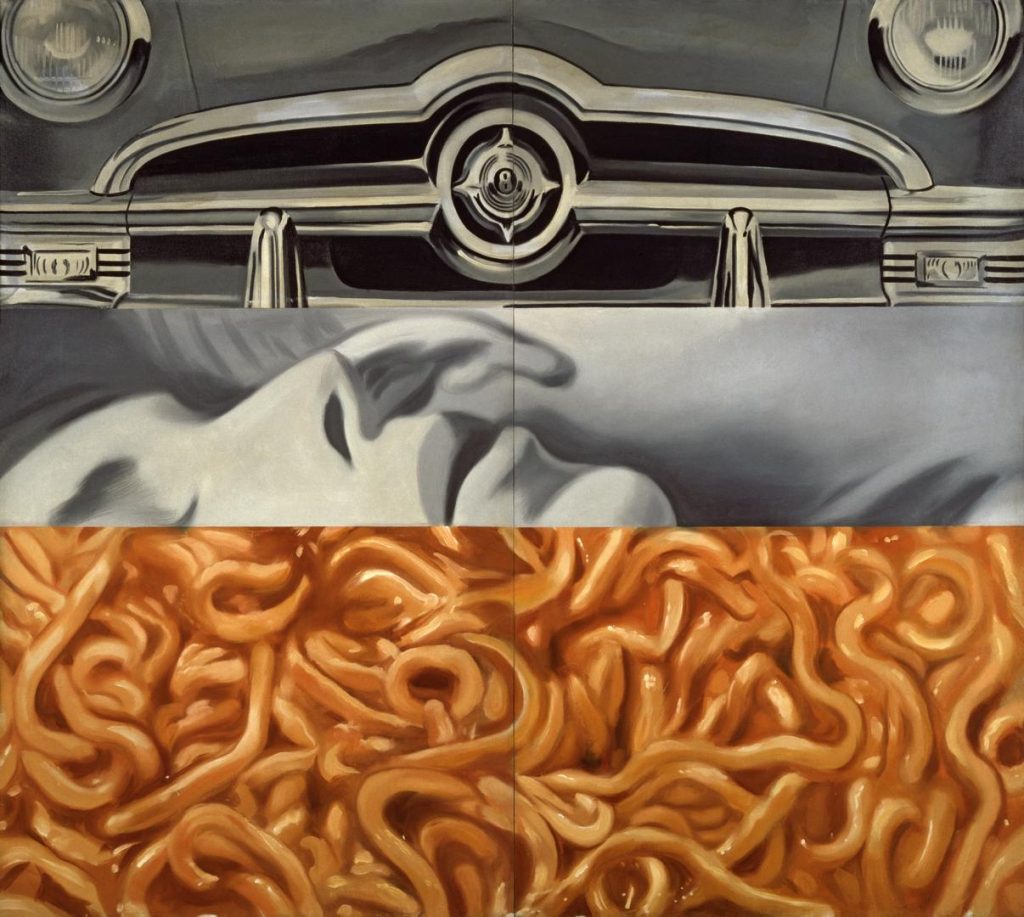
Rosenquist had a background in advertising, which strongly influenced his approach to Pop Art. He brought something new to the movement by painting enormous faces of glamorous women inspired by advertisements. His most famous work, I Love You with My Ford, was deliberately painted to resemble an advertisement.
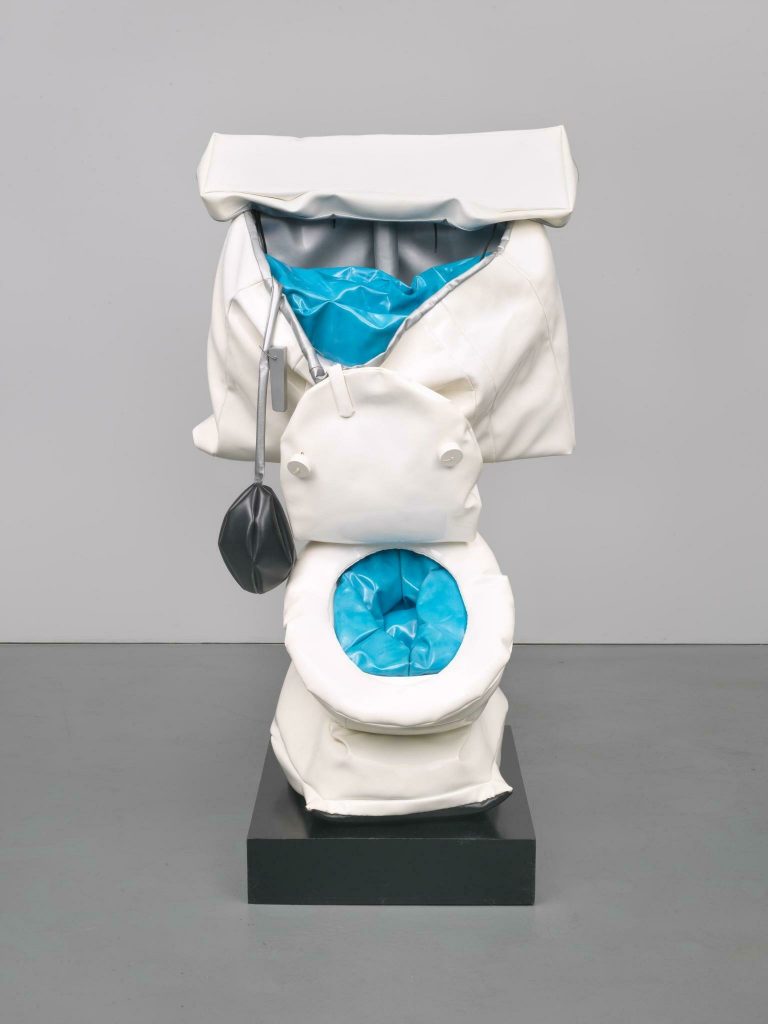
During the 1960s, Claes Oldenburg started working on some of his most famous pieces, the soft objects. They remind one of Dali‘s soft watches and Magritte‘s transformations. Oldenburg’s soft sculptures quickly became part of Pop Art’s early international successes. However, they were not his only well-known works. The artist also created gigantic sculptures, often using them to satirize consumerism, the Vietnam War, and other aspects of contemporary society.
Pop Art in Europe, much like in the USA, had little interest in stylization. Instead, it reflected on popular culture. Although these works can sometimes appear critical of the contemporary world, this was not necessarily the intention. More often, the artists simply offered an observation or commentary rather than a moral judgment.
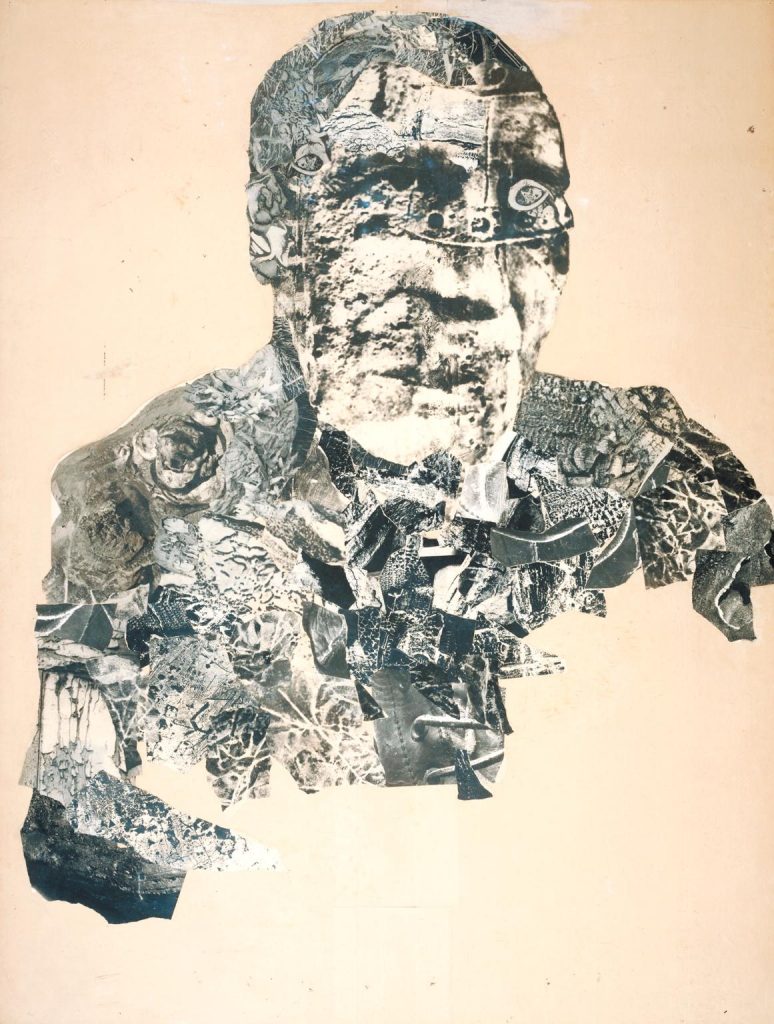
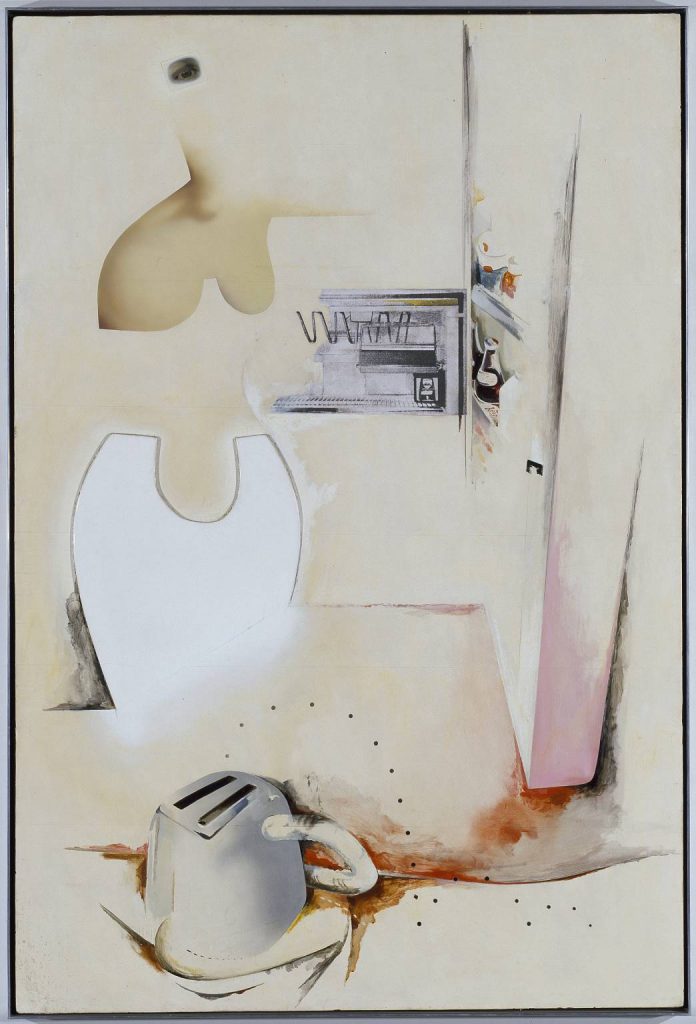
In his famous work, $he, Richard Hamilton used tiny images to portray the modern American housewife. A small plastic object that is stuck high on the surface symbolizes the female curves and glance. The white curvy shape below is her apron. The red color on the floor signifies blood. The toaster mixed with the electric vacuum tube and the black spots are a reference to Marcel Duchamp.
Eduardo Paolozzi’s style is more industrial and geometric. His artworks, even though they are Pop, are also melancholic. They depict the impact of technology on human life from a pessimistic point of view.
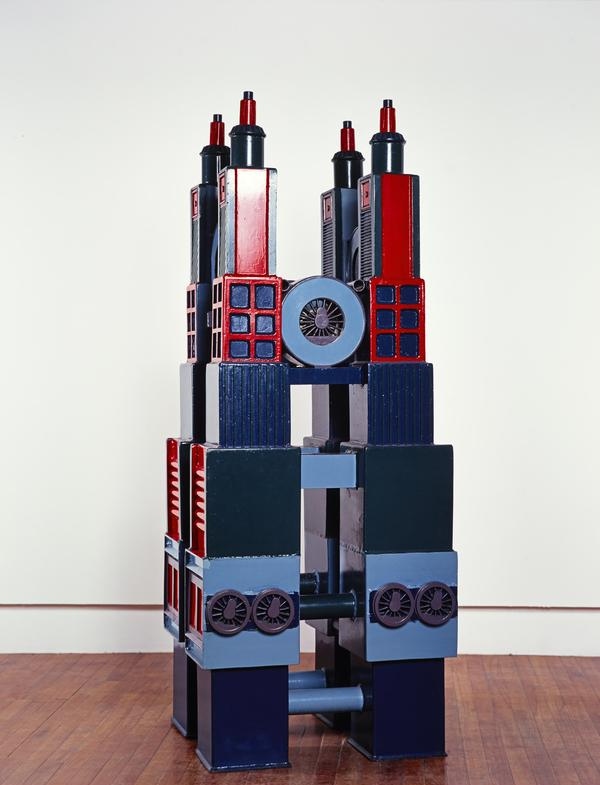
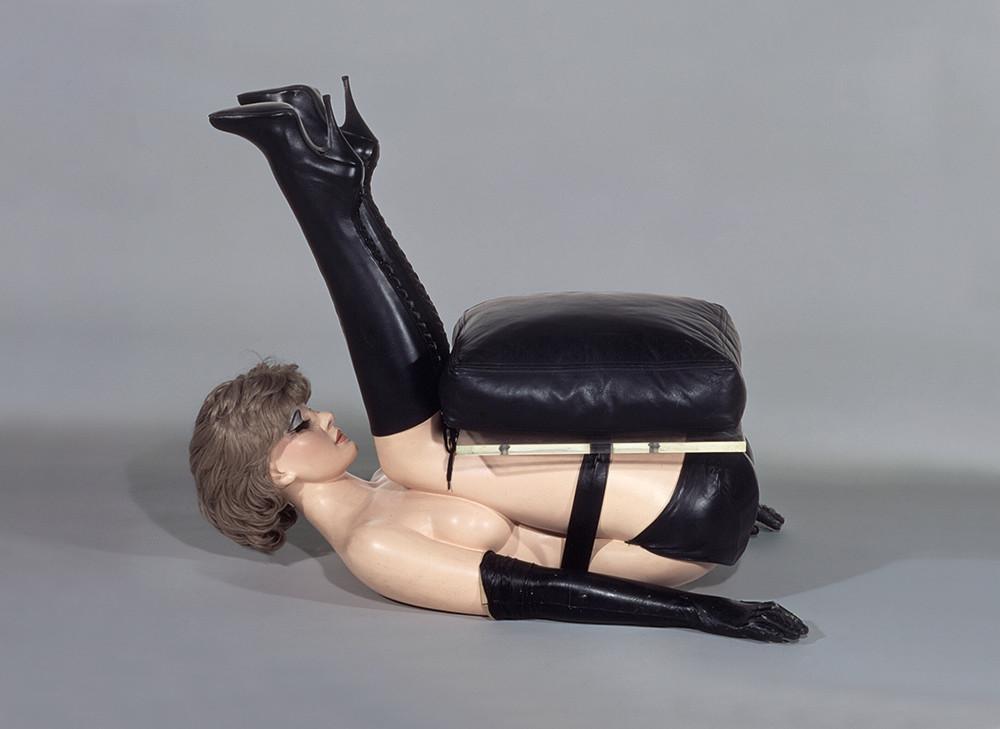
By using vibrant colors, Allen Jones transformed the image in a way that resembled Surrealism. He mostly made erotic syntheses by mixing couples, hermaphrodites or not, thighs with stockings, etc.
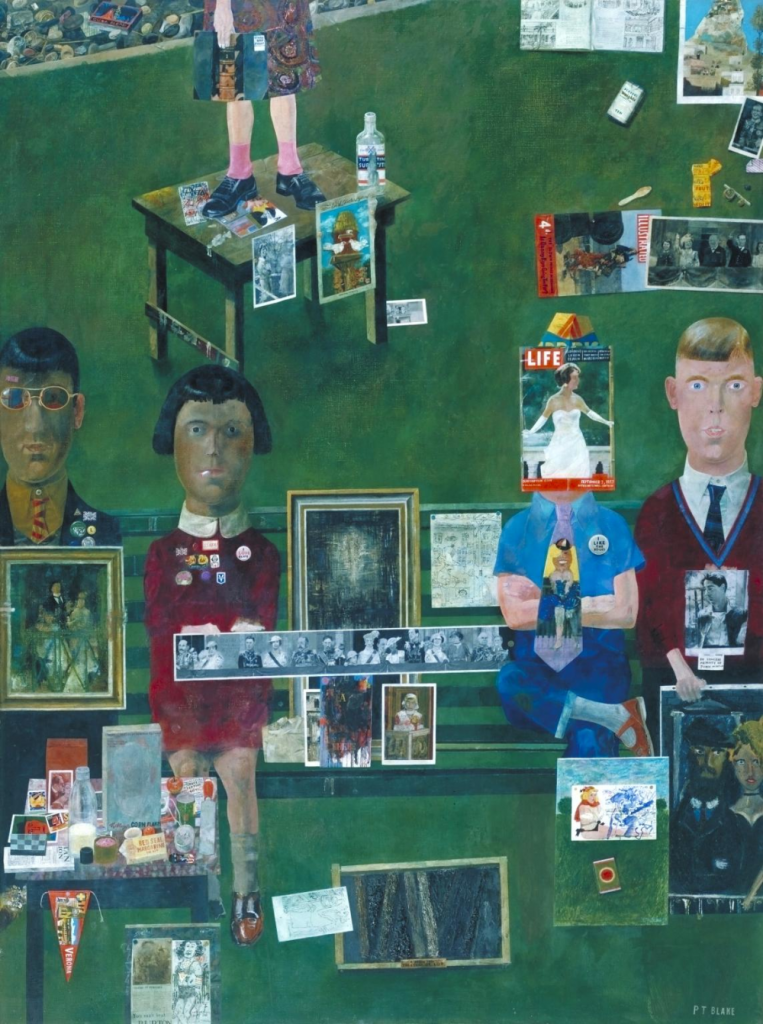
Peter Blake is one of the most famous artists of British Pop Art. He enriched his works with symbolism or elements of the past. One of his most famous pieces, On the Balcony, consists of old family photos, old artworks, magazine covers, and objects from everyday life.
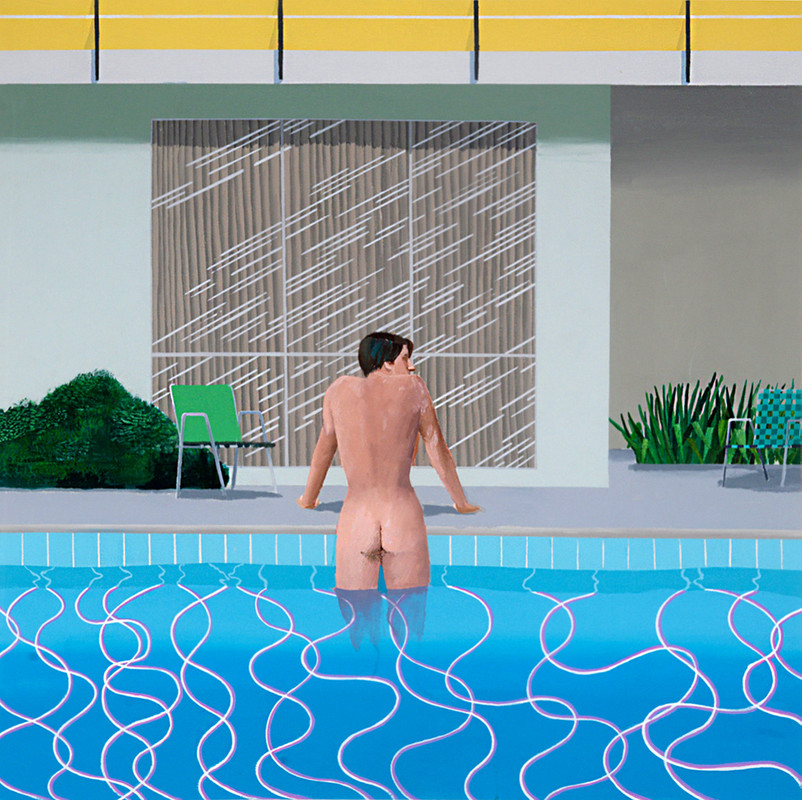
No one can talk about European Pop Art without mentioning David Hockney. He is its most prominent representative, even though he later moved to the US. He had an eccentric appearance and was associated with The Beatles. While Hockney’s first paintings were influenced by Francis Bacon, he later found his distinctive style. Hockney painted in strong and intense color combinations on big, flat surfaces. His works were related to his own relationships and sexual experiences. By 1964, he was already living in California, where he made references to the luxurious lifestyle of the Hollywood elite.
Whether a reflection of the modern way of living, or a denial of abstract trends, and especially of Abstract Expressionism, Pop Art flourished for many years in Europe and the USA. It became one of the most important artistic expressions of the second half of the 20th century. Even though the core movement dates back to the 1970s, it never actually decayed. In fact, it reinvents itself constantly, as popular culture keeps forever changing. Pop Art will probably never die. Especially nowadays, when the internet has made access to almost everything so easy. We keep on creating new idols and icons, products, ideas, using the new media.
DailyArt Magazine needs your support. Every contribution, however big or small, is very valuable for our future. Thanks to it, we will be able to sustain and grow the Magazine. Thank you for your help!

I'm Errika Gerakiti, an art writer and curator based in Athens. I write about modern and contemporary art, fashion, and cinema — with a particular interest in the overlooked, the uncomfortable, and the underrepresented. When I'm not writing, I'm curating exhibitions, reading, painting, sculpting, or reading. For longer reads, personal essays, and an occasional science-fiction or horror story, find me on Substack.
The Vienna Secession rebelled against the established order of art in Austria in the 19th century. Art Nouveau and other movements across Europe...
Bec Brownstone 1 October 2026
Icons are among the oldest image traditions, yet they often remain misunderstood, especially in the West. They belong to a visual culture that...
Catherine Razafindralambo 27 April 2026
As one of the most enduring symbols in world mythology, the sphinx embodies a fascination with mystery, power, and transformation. From its origins...
Martha Teverson 10 November 2025
Color theory has played a central role in art throughout history, shaping how viewers respond to images even before they consciously think about the...
Jimena Aullet 12 January 2026