


5 Spots Not to Miss in Upper Silesia with German-Polish Heritage
Upper Silesia in Poland is a beautiful and extremely interesting off-the-beaten-track region to visit for its historic, natural, and cultural values.
Kate Wojtczak 9 July 2026
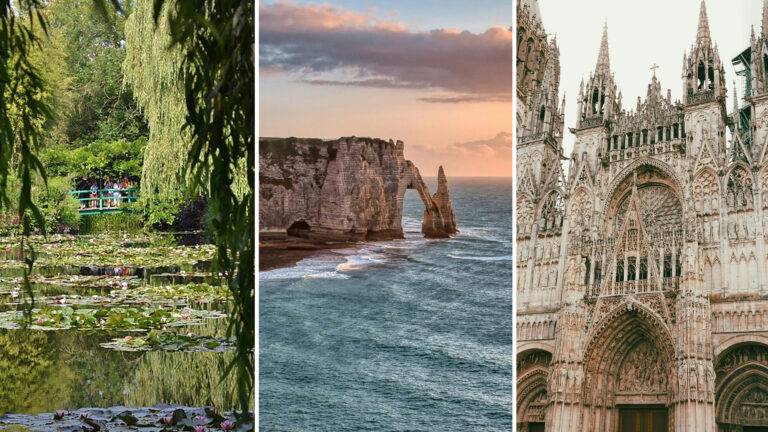
From left to right: Claude Monet’s garden, Giverny, France. Photograph by Júlia Barbon via Wikimedia Commons (CC BY-SA 3.0). Detail; Étretat, France. Photograph by Allyson Beaucourt via Unsplash. Detail; Rouen Cathedral, France. Photograph by Charlie Houston via Unsplash. Detail.
Visiting museums is great, but how about seeing places from iconic paintings in real life? France is one of the most depicted countries in the history of art. Artists such as Claude Monet, Vincent van Gogh, and Pierre-Auguste Renoir captured France in hundreds of paintings—from the lively streets of Paris and the northern coast of Normandy to the idyllic towns of Provence. Here are 10 places straight from iconic paintings to visit in France, starting in the north and traveling all the way to the southern coast.
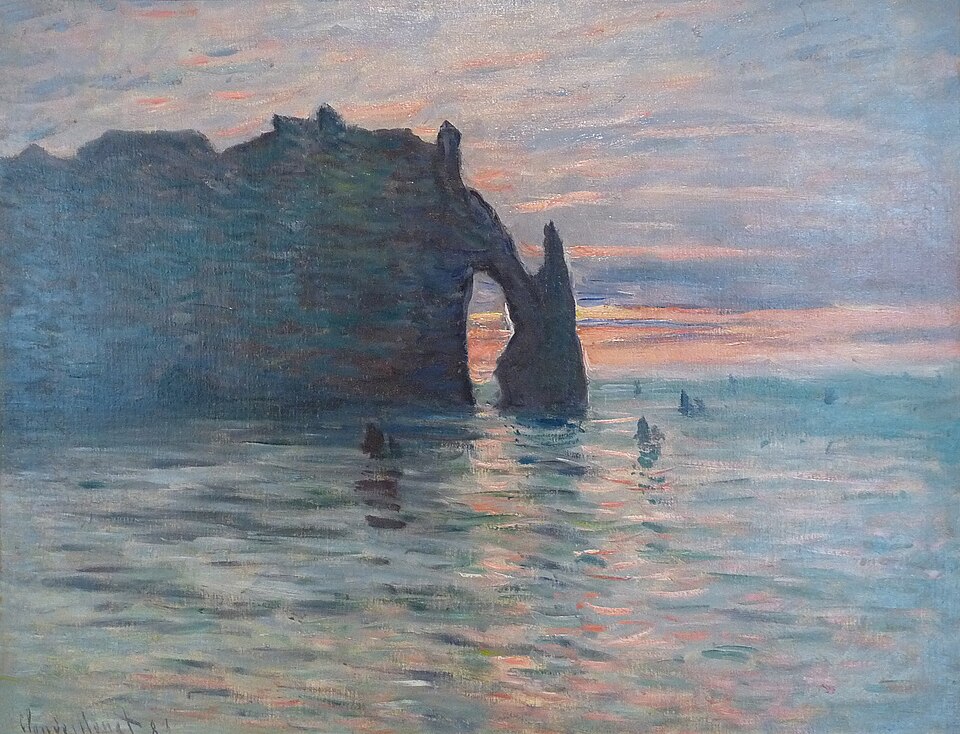
Claude Monet, Sunset at Étretat, 1883, Museum of Fine Arts of Nancy, Nancy, France.
Nature was the first artist here, carving the dramatic chalk formations in Étretat, Normandy. Later, the area attracted artists, including Claude Monet, who painted the coastline many times. Now, more and more people travel to places that inspired artists, and during warmer months many choose to visit this picturesque spot. Étretat is known for its white cliffs, natural arches, and scenic paths. It is especially striking on sunny days, when the water turns shades of turquoise.
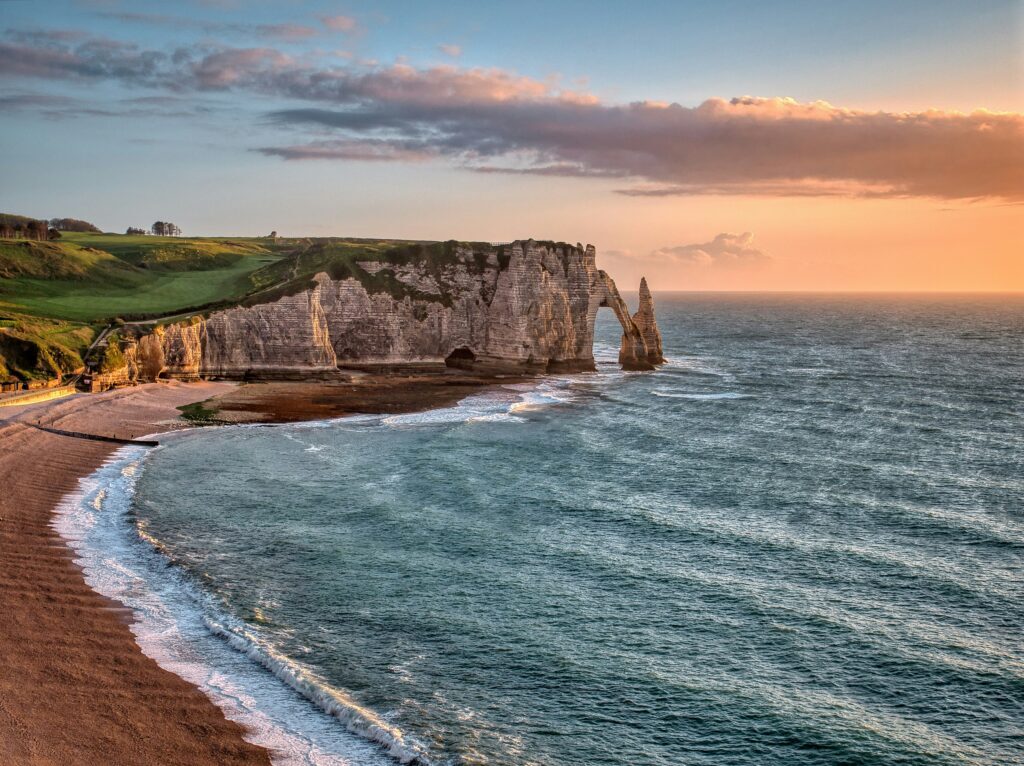
Étretat, France. Photograph by Allyson Beaucourt via Unsplash.
Claude Monet was so captivated by this coast that he returned many times between the 1860s and 1880s, creating more than 50 paintings of the area. He always traveled in search of light and color, and this coastline seemed made for both—the changing light gave the cliffs and sea a completely different character throughout the day.
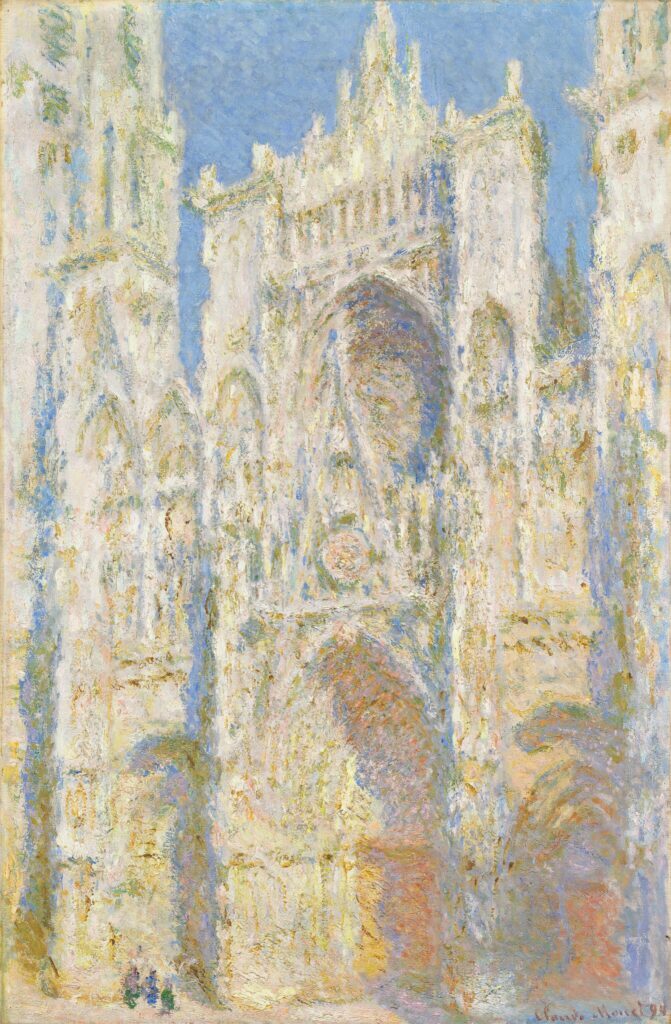
Claude Monet, Rouen Cathedral, West Façade, Sunlight, 1894, National Gallery of Art, Washington, DC, USA.
In Normandy, there is another place where Monet painted a single motif many times over. Rouen, the capital of the region, is a city with medieval architecture and charming streets, but one building in particular drew Monet there: Rouen Cathedral. It stands as the tallest church in France at 151 m (over 495 ft.) , built in Gothic style with soaring arches.
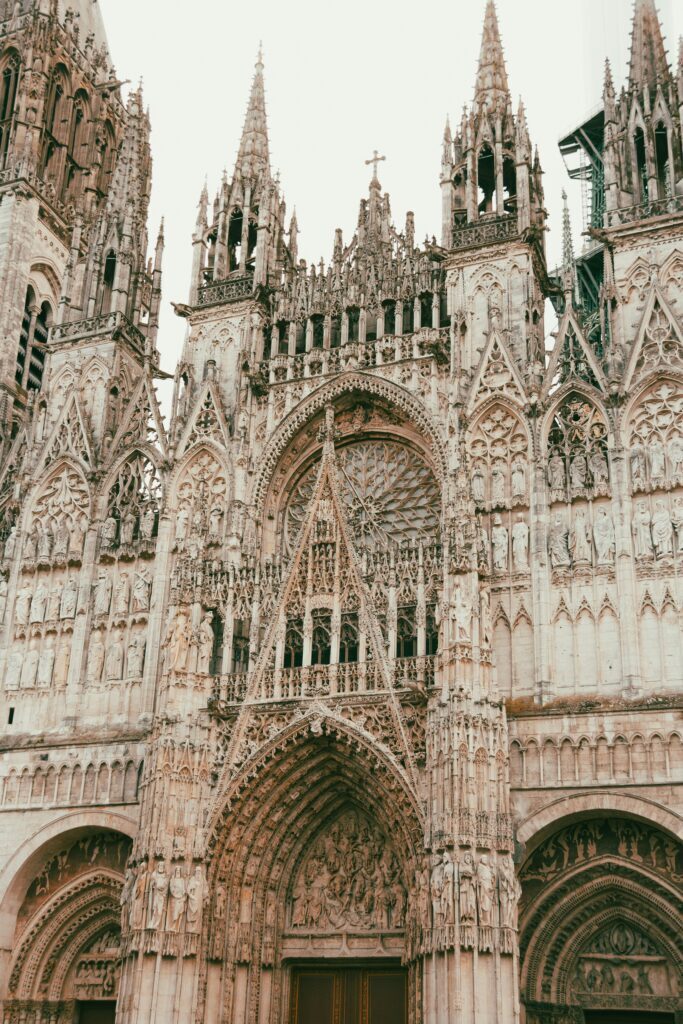
Rouen Cathedral, France. Photograph by Charlie Houston via Unsplash.
The artist painted it over 30 times, often at different hours of the day to study the changing light—through fog, in sunlight, in dull weather, and in the early mornings—mostly focusing on the cathedral’s west façade. To keep an eye on the cathedral, Monet rented a studio directly across from it.
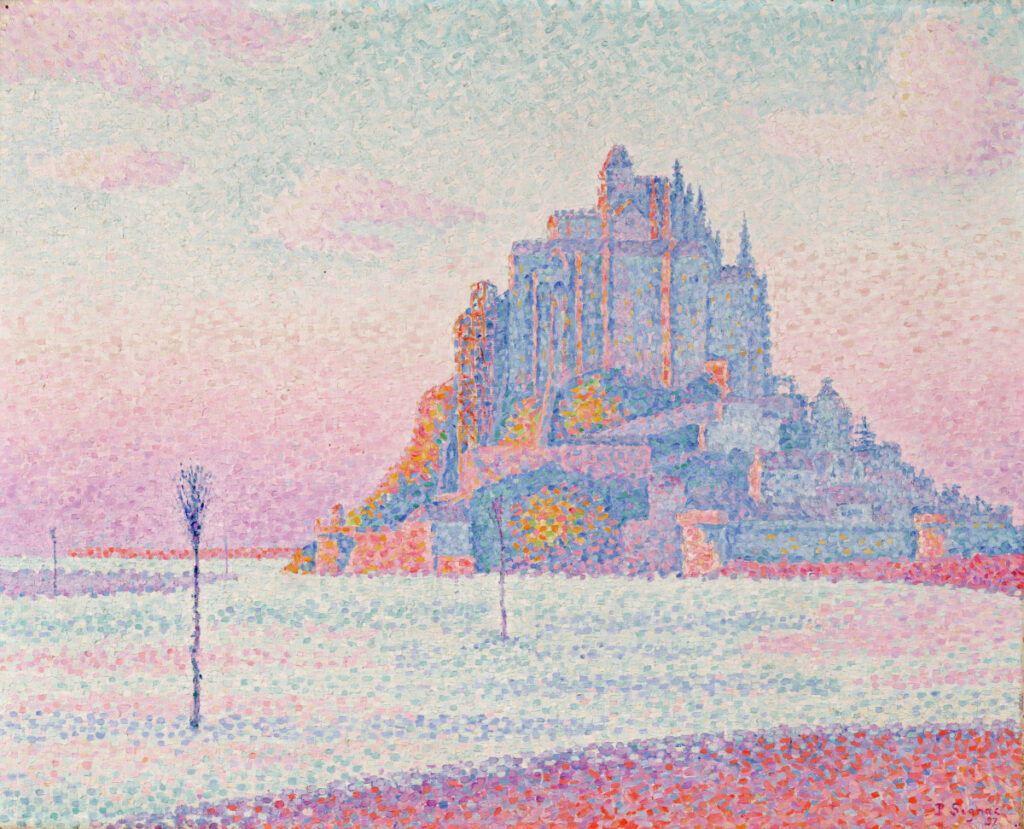
Paul Signac, Mont Saint-Michel, Setting Sun, 1897, Dallas Museum of Art, Dallas, TX, USA.
Staying in Normandy just for a moment longer, it’s time for France’s most magical island—Mont-Saint-Michel. It’s a small village on a rocky island, with a Romanesque-Gothic abbey on top of it. Because of its location in the bay, the area is known for the tides. At the highest tides, the water rises enough to entirely surround the island, cutting it off from the mainland. It doesn’t happen often, but when it does, the view is really spectacular.
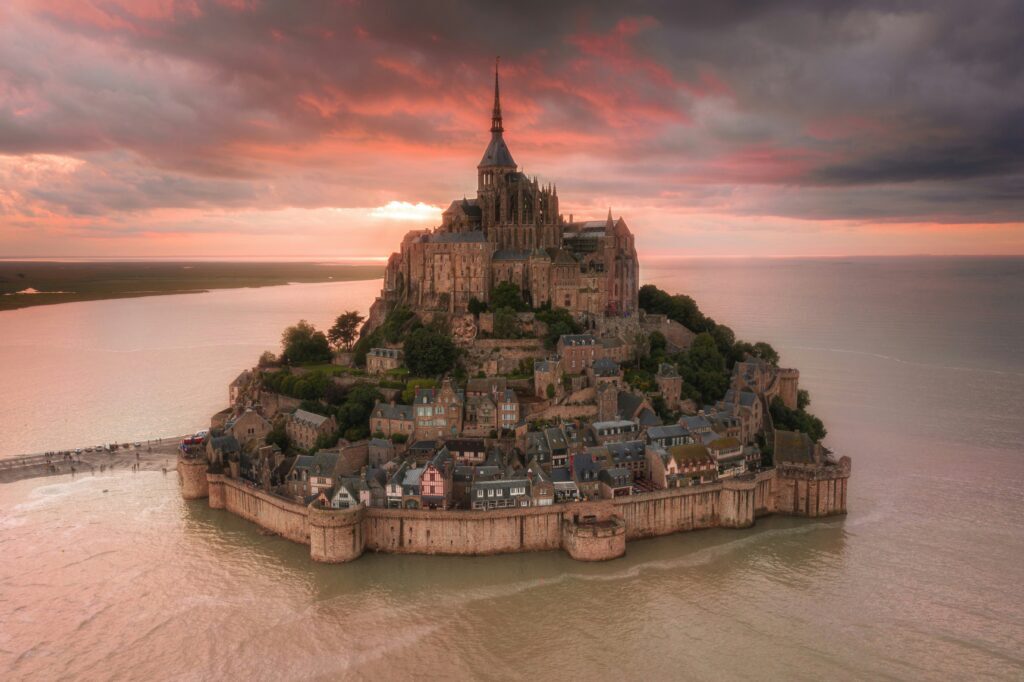
Mont-Saint-Michel, France. Photograph by Customerly via Unsplash.
Mont Saint-Michel, Setting Sun, painted in 1897, is part of a series of seven paintings by Paul Signac, showing the island during high tide. Although Signac is associated with Pointillism, this series was a step towards experimenting with a different technique, using small patches of color that resemble a mosaic of bright tiles.
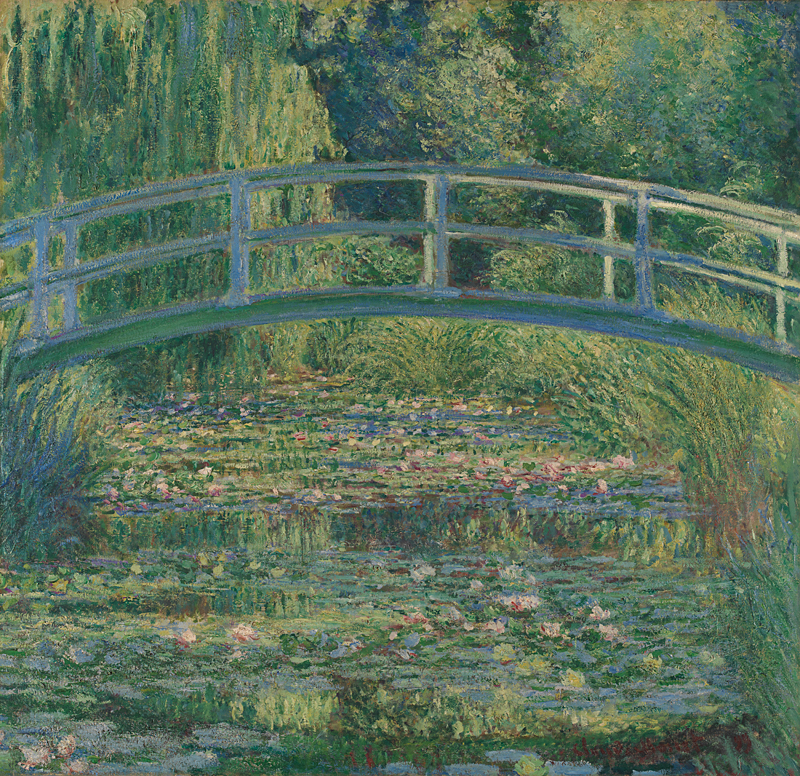
Claude Monet, The Water-Lily Pond, 1899, National Gallery, London, UK.
Whether you’re a fan of Claude Monet or the flowers, the artist’s garden in Giverny is truly enchanting. Rumor has it that Monet noticed Giverny from the window of a train and found it so splendid that he decided to move there in 1883. Around his new home, he created an ethereal garden, filled with flower alleys, and expanded it with a water garden and a Japanese bridge over the water lilies. Time in nature felt calming and inspiring to Monet, and he spent years painting there.
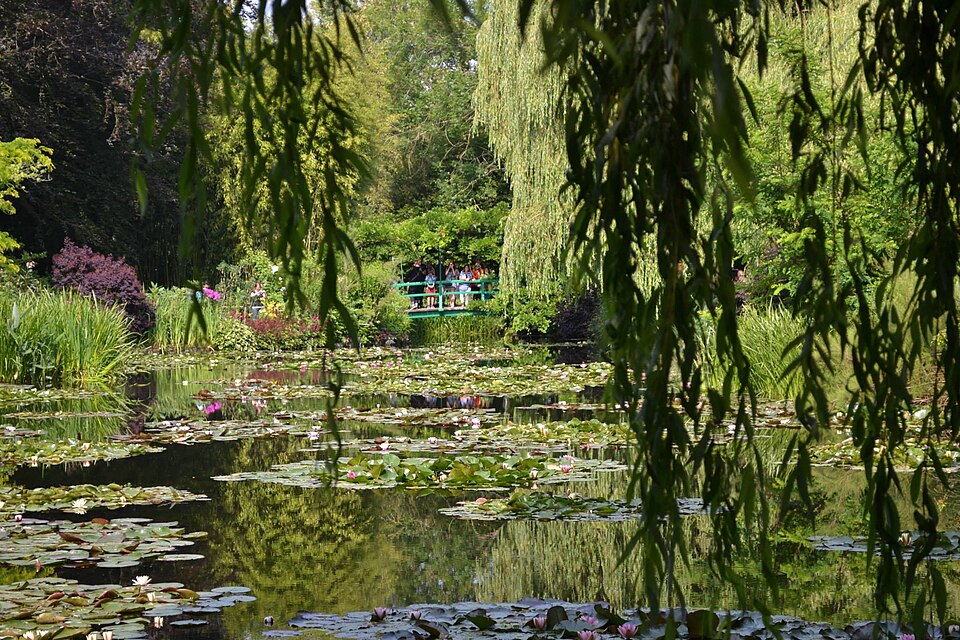
Claude Monet’s garden, Giverny, France. Photograph by Júlia Barbon via Wikimedia Commons (CC BY-SA 3.0).
Today, the garden and artist’s home are open to visitors from April to November, making it one of art lovers’ favorite day trips from Paris. You can explore them here.
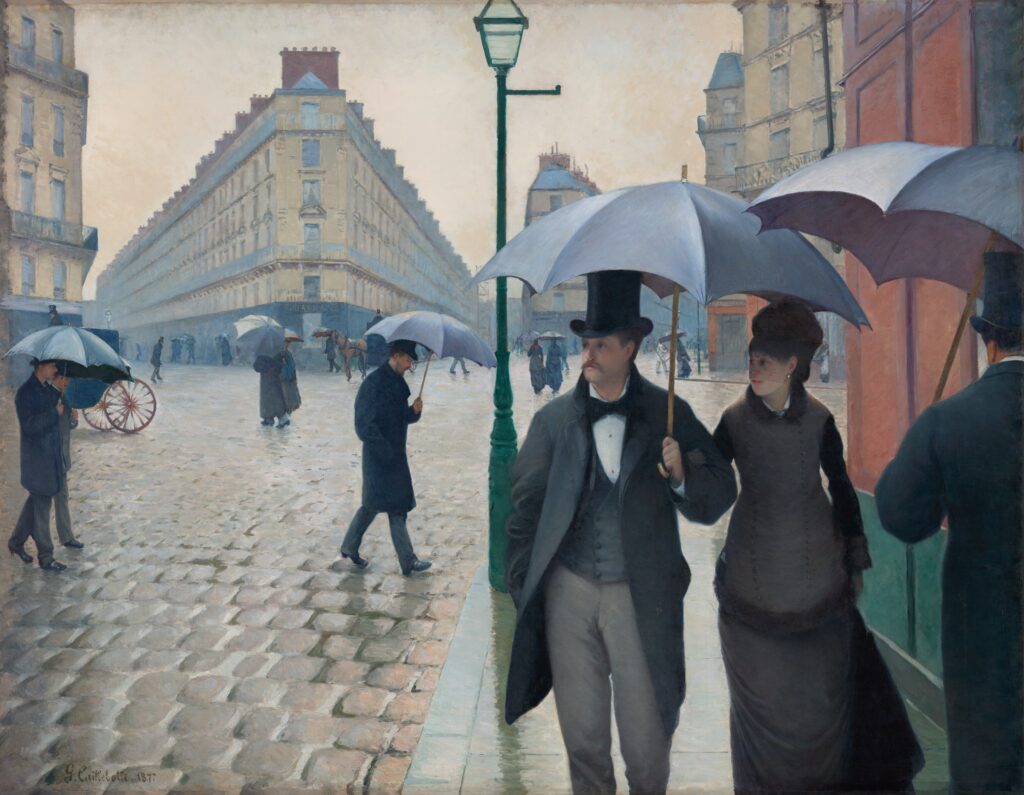
Gustave Caillebotte, Paris Street; Rainy Day, 1877, Art Institute of Chicago, Chicago, IL, USA.
There is no other city like Paris—especially in autumn‘s charm. Just imagine wandering along the city’s boulevards and then spending long evenings in cozy cafés and museums. A glimpse of such a day is captured in Paris Street; Rainy Day, Gustave Caillebotte’s masterpiece. The artist was part of the Parisian bourgeoisie and often painted the world he knew – the city’s architecture, social life, and everyday urban scenes.
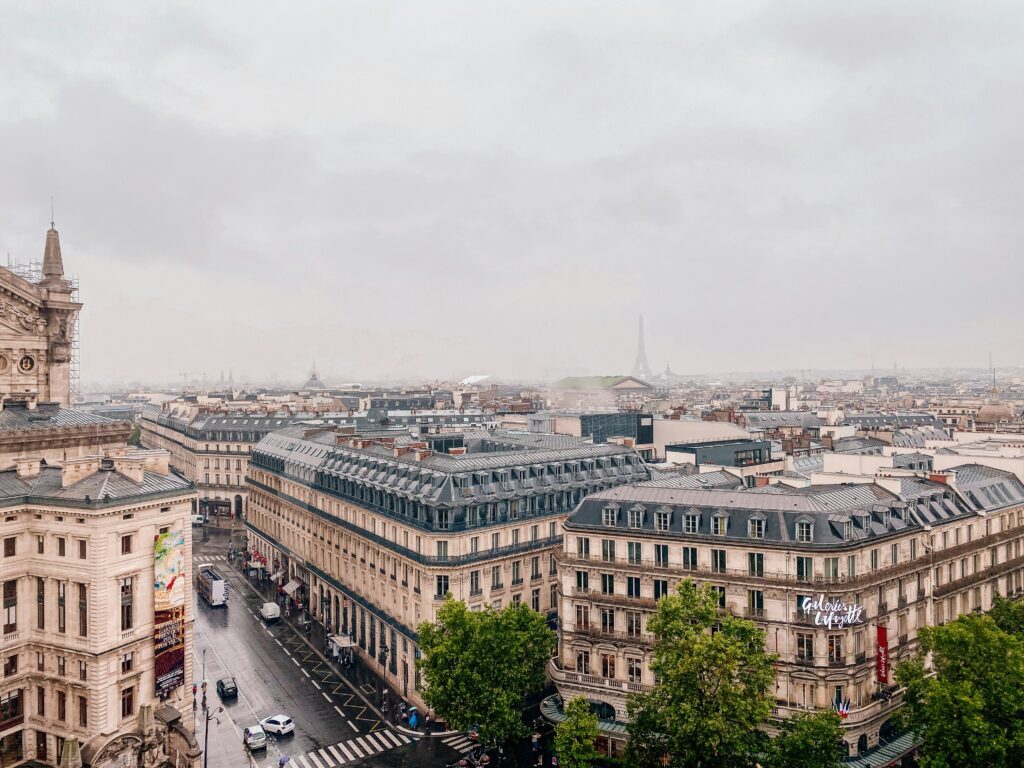
The rooftop view from Galeries Lafayette, Paris, France. Photograph by Michelle Williams via Unsplash.
Gustave Caillebotte was one of the first artists to paint the new, modern Paris. Between 1853 and 1870, the city went through a complete transformation under Baron Haussmann’s leadership. The idea was to turn Paris into the greatest capital of the time. More modern buildings were built, as well as new parks, churches, and theatres—including Opéra Garnier, considered by many to be one of the most impressive theaters in the world.
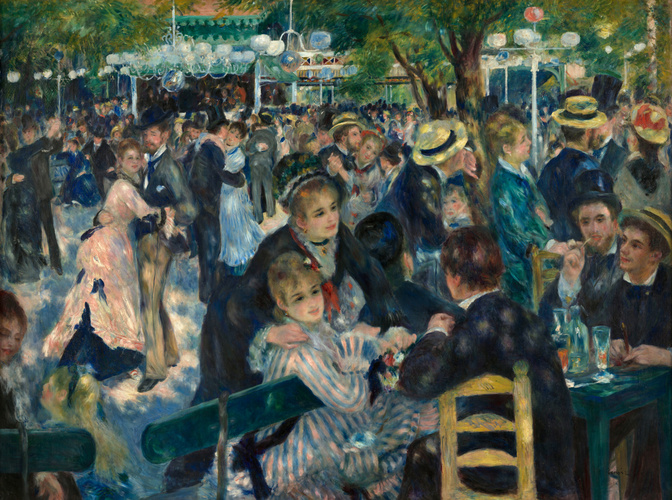
Pierre-Auguste Renoir, Bal du moulin de la Galette (Dance at Le Moulin de la Galette), 1876, Musée d’Orsay, Paris, France.
If Pierre-Auguste Renoir walked the streets today, he would definitely paint an evening scene from the steps in front of the Sacré-Cœur Basilica in Montmartre, Paris. This area has kept its artistic spirit since the late 19th century, when many painters crossed paths here, including Vincent van Gogh, Pablo Picasso, and Edgar Degas. Today, it is full of lively cafés and bars, and it is still an artists’ enclave.
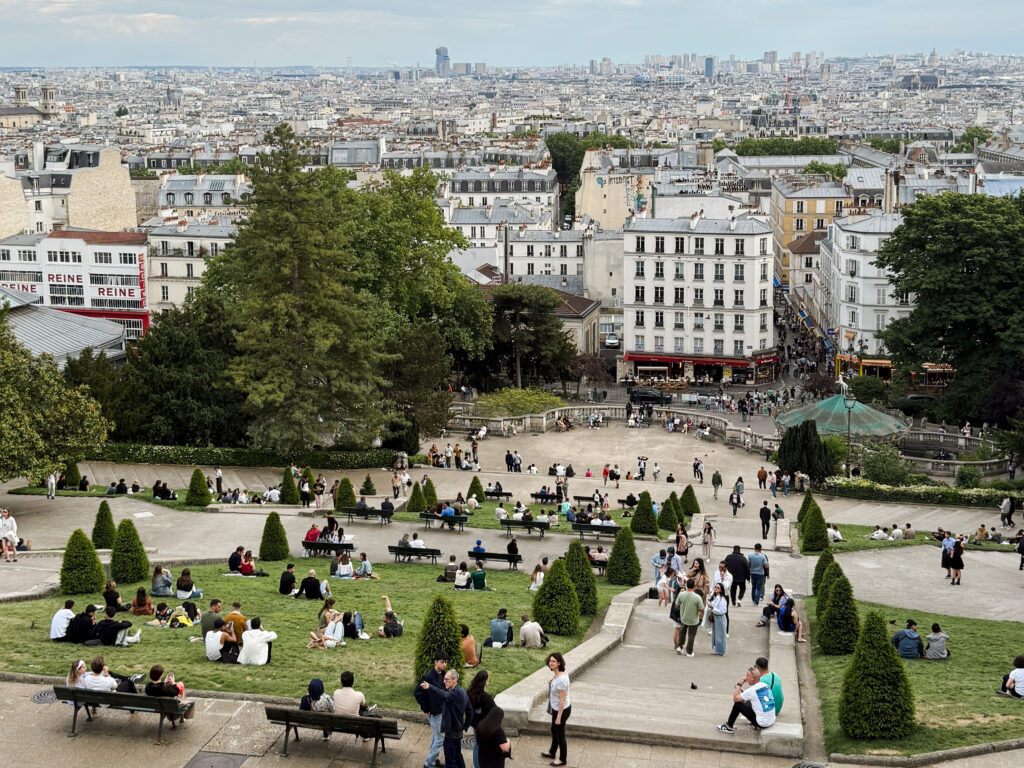
Steps below the Sacré-Cœur Basilica in Montmartre, Paris. Photograph by the author.
From the steps below the basilica, there is a great panorama over Paris, and in the evenings, the steps become a lively meeting point for travelers and locals with street musicians always entertaining the crowds.
Renoir captured such a lively atmosphere in Dance at Le Moulin de la Galette, in which he portrayed Parisians dancing, chatting and spending an afternoon at one of Montmartre’s famous open-air cafés. The scene takes place at the Moulin de la Galette, a popular 19th-century dance hall. Today, this historic place is a restaurant.
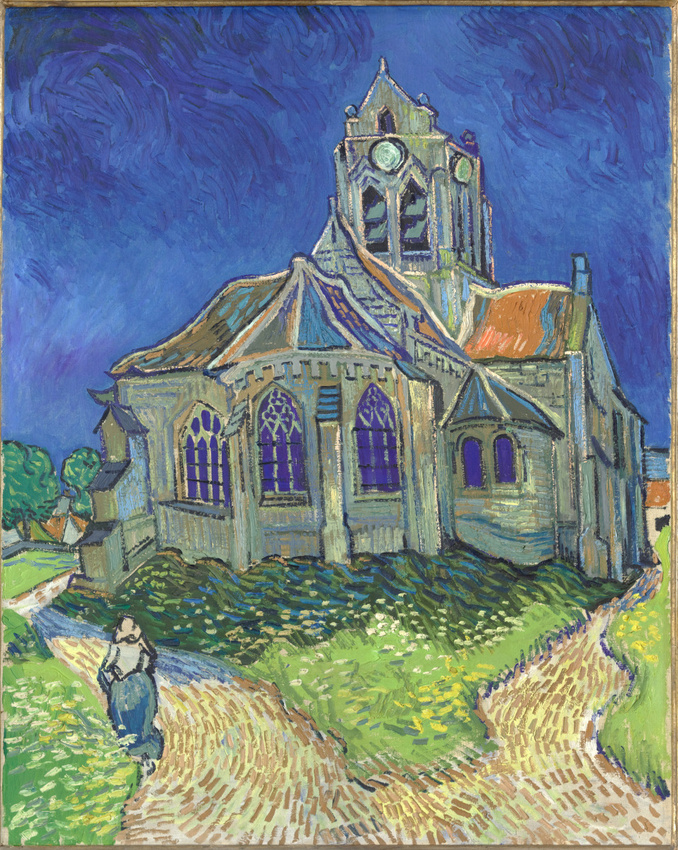
Vincent van Gogh, The Church in Auvers-sur-Oise, View from the Chevet, 1890, Musée d’Orsay, Paris, France.
Auvers-sur-Oise is a small village just outside Paris, closely associated with Vincent van Gogh, who spent the final two months of his life there and is buried with his brother Theo. Van Gogh moved there to continue painting and stay under Dr. Gachet’s care after leaving the psychiatric hospital in Saint-Rémy. During his time in Auvers, he painted over 70 works, capturing different corners of the village, including its 13th-century church. Even though Van Gogh found the village peaceful and easy to settle into, he quickly started feeling lonely and missing his brother Theo, who lived in Paris.
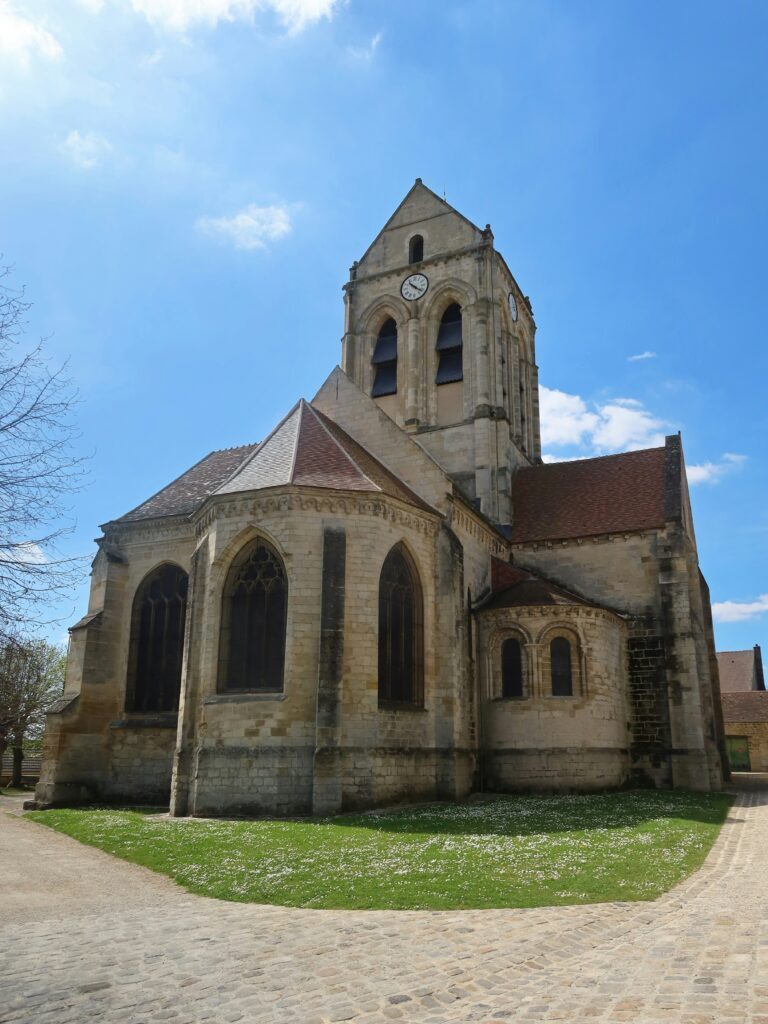
Church Notre-Dame-de-l’Assomption, Auvers-sur-Oise, France. Photograph by Chris Linnett via Unsplash.
The sadness and confusion can be seen in some of his late works, where he painted darker skies and tree roots. During the 70 days he spent there, he painted mostly outdoors, and since the village is small, there is a good chance of walking through the very same places Van Gogh once walked.
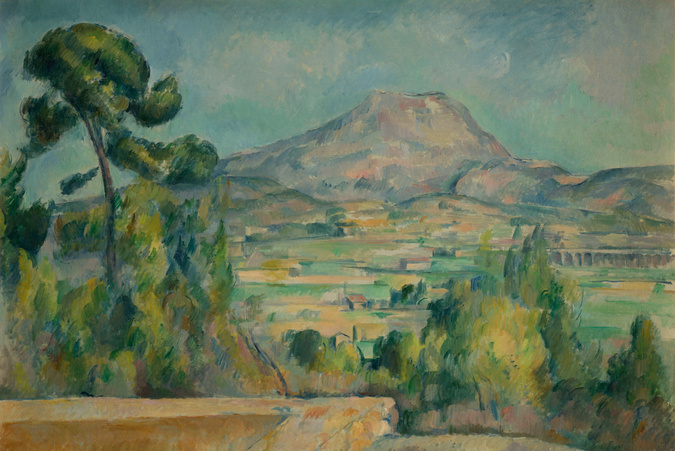
Paul Cézanne, Montagne Sainte-Victoire, 1890, Musée d’Orsay, Paris, France.
Who knew Provence better than Paul Cézanne, who was born and raised in the region? Provence is located in the southeast of France, close to the French Riviera, and is known for mountainous landscapes, lavender fields, and idyllic villages. Paul Cézanne spent some time studying in Paris and kept moving back and forth between the capital and his hometown. He eventually settled in Aix-en-Provence in 1886, at the age of 47.
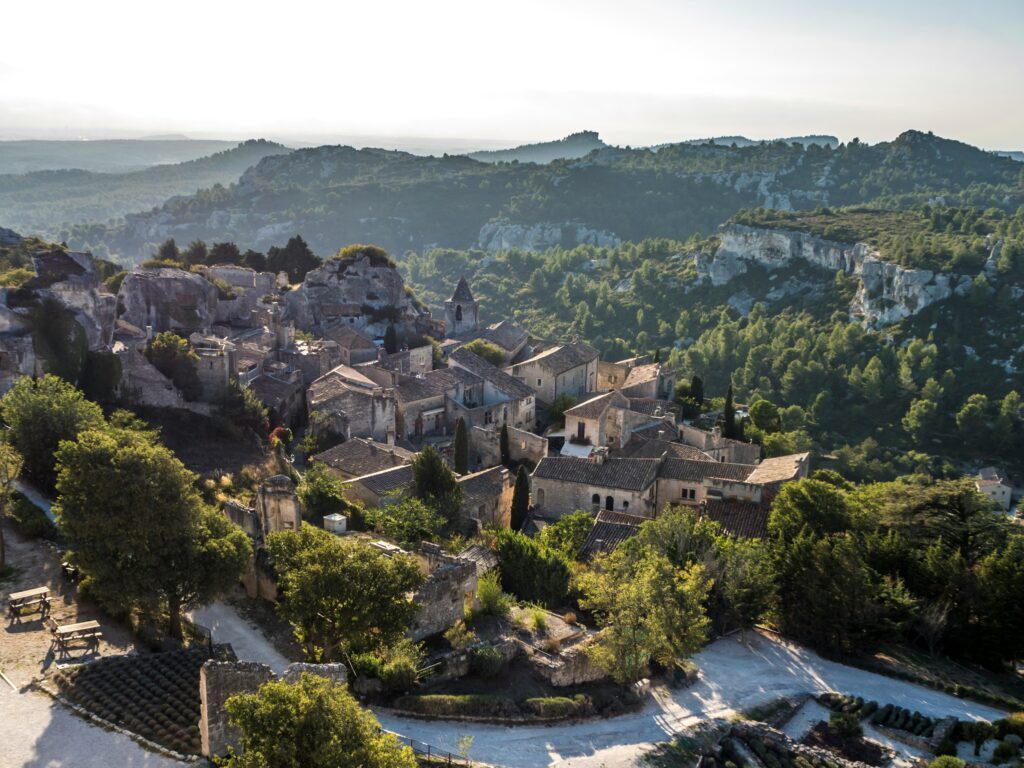
Les Baux-de-Provence, a town in Provence, France. Photograph by Jaakko Kemppainen via Unsplash.
Among the reasons for his return to the south, such as his father’s death and repeated rejections by the Paris Salon, were also the landscapes of Provence, which became one of the favorite subjects for his paintings. He often depicted the same mountain—Mont Sainte-Victoire—the limestone peak just a few kilometers from his home. What drew him so strongly to this particular mountain was its shape. Cézanne loved to study geometry in art, using forms and perspective in ways that would later influence Cubism, which developed around 1907.
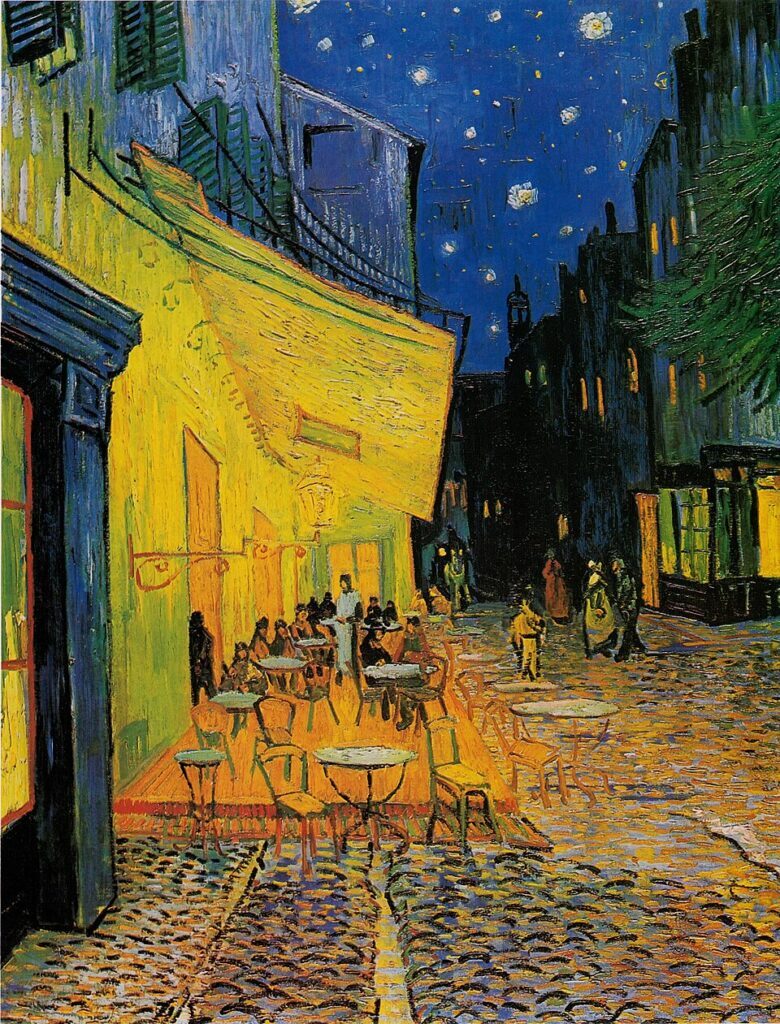
Vincent van Gogh, Terrace of a Café at Night (Place du Forum), 1888, Kröller-Müller Museum, Otterlo, Netherlands.
Arles, a city in Provence, has a long history dating back to ancient times. It was a Roman colony under Julius Caesar, and many monuments have survived to this day, including the Roman amphitheater. When it comes to art, Arles is closely associated with one color: yellow.
Vincent van Gogh arrived in the city in 1888, drawn by the warmth of southern France. He spent over a year there, and Arles became a source of inspiration for some of the artist’s major works, including three yellow classics: Terrace of a Café at Night, The Yellow House, and Sunflowers.
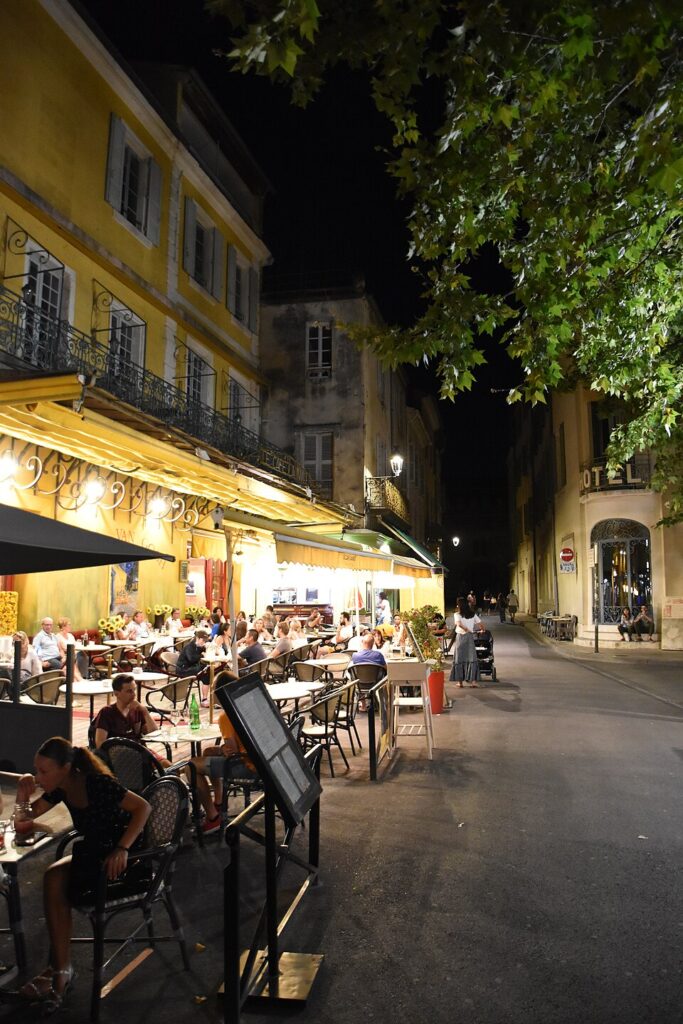
Place du Forum, Arles, France. Photograph by Pieter van Everdingen via Wikimedia Commons (CC BY-SA 4.0).
The time in Arles was significant in his life. At first, Van Gogh was captivated by his new surroundings and dreamed of turning the city into a community for artists, calling it the “Studio of the South”. The plan did not go as he had hoped, as the artists didn’t have the same vision, but later Paul Gauguin joined him. The two artists soon found it difficult to get along, and in the meantime, Van Gogh’s mental health got worse. This led to a serious breakdown, during which he cut off part of his left ear. Eventually, Van Gogh left Arles and moved to Saint-Rémy-de-Provence, around 20 kilometers away, where he stayed in a psychiatric hospital.
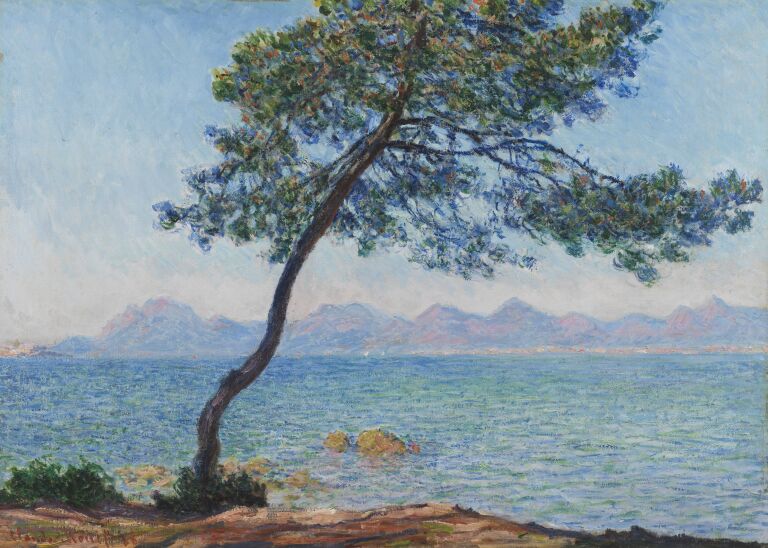
Claude Monet, Antibes, 1888, Courtauld Gallery, London, UK.
The last stop of the journey is Antibes—a city between Cannes and Nice on the French Riviera. The Côte d’Azur is known for its elegance, picturesque bays, and exceptionally blue waters.
Claude Monet first traveled to the south of France in 1883 with Pierre-Auguste Renoir and returned twice in the following years. The colors of the Mediterranean were much richer and warmer than those of the northern coast, and capturing them was quite challenging for Monet.
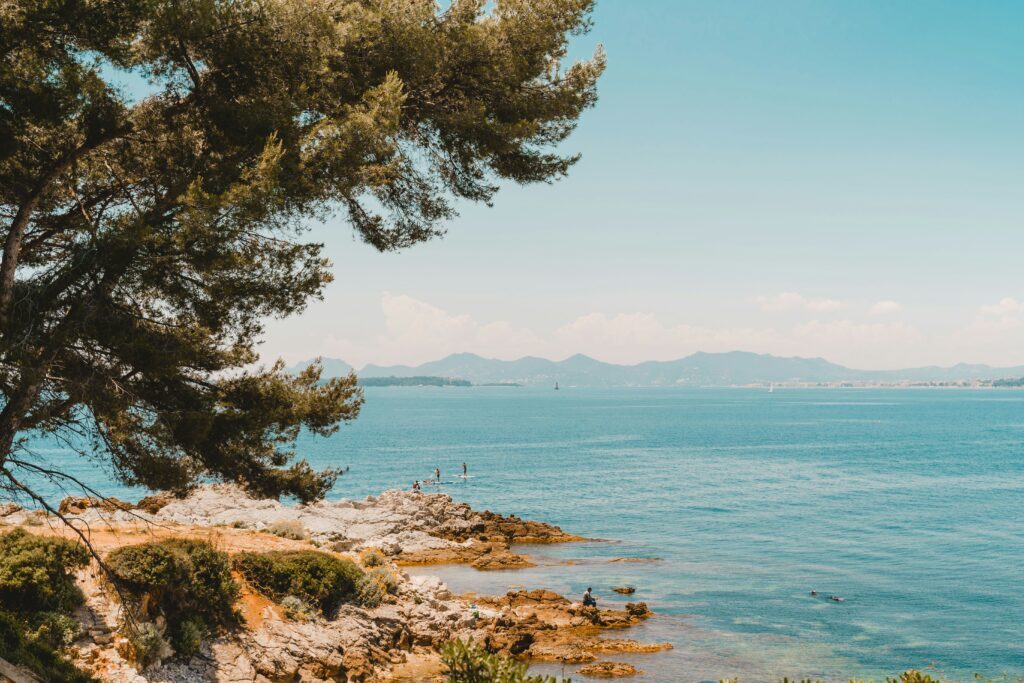
Antibes, France. Photograph by Anthony Salerno via Unsplash.
Although the French Riviera is not the first place that comes to mind when thinking about Monet, it made him more confident in using a more intense color palette. In Antibes, Monet focused on painting the coastline, with the Alps visible in the background. This makes the city a great destination for those who love both the sea and the mountains, especially as the Alps are covered in snow.
We hope you enjoyed our list of places that inspired iconic paintings and that it has encouraged you to visit some of them yourself.
DailyArt Magazine needs your support. Every contribution, however big or small, is very valuable for our future. Thanks to it, we will be able to sustain and grow the Magazine. Thank you for your help!

Kinga is an art enthusiast, mainly interested in 19th-century art, especially Impressionism and Romanticism. She also appreciates classical art and architecture.

Chris Dobson was born in Preston, UK. He likes to play chess, visit museums and model for art classes in Amsterdam. He can be followed on Instagram @litterarum_magister.
Upper Silesia in Poland is a beautiful and extremely interesting off-the-beaten-track region to visit for its historic, natural, and cultural values.
Kate Wojtczak 9 July 2026
From Titian to Monet, London is packed with art by the world’s most beloved artists. If your goal is to see famous artworks, you probably have...
Sandra Juszczyk 2 September 2025
If you are planning to visit the International Art Exhibition or the Biennale of Architecture in Venice, this is a must-see. Built in 1932, the...
Zacheta 7 August 2025
The Dutch graphic artist M.C. Escher is well known for his mathematically inspired art. For nearly 30 years, he lived in the small town of Baarn, in...
Guest Author 26 May 2025



.jpg#/media/File:Arles_-_Place_du_Forum_in_the_evening_(Q109606553).jpg/2)