
Masterpiece Story: Judith and Holofernes by Caravaggio
Judith and Holofernes is a Caravaggio masterpiece that captures Biblical murder and drama. Rarely has death been captured so intensely and violently...
James W Singer 13 September 2026
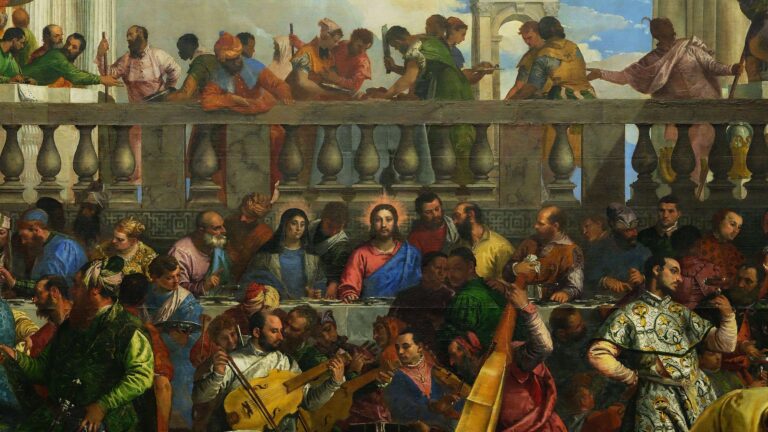
Paolo Veronese, The Wedding at Cana, 1562–1563, Louvre, Paris, France. Detail.
The Wedding at Cana by Paolo Veronese is a masterpiece of Venetian Renaissance art, elaborating a simple biblical story into epic proportions. The modest miracle unfolds as a vast banquet scene shaped by monumental architecture and Veronese’s famously opulent use of color.
Paolo Veronese (1528–1588) was one of the leading Venetian painters of the late Renaissance. He specialized in huge-format scenes depicting banquets and pageants with crowds of people, platters of food, and backdrops of columns. His images are massive and complex while maintaining compositional harmony and formal balance.
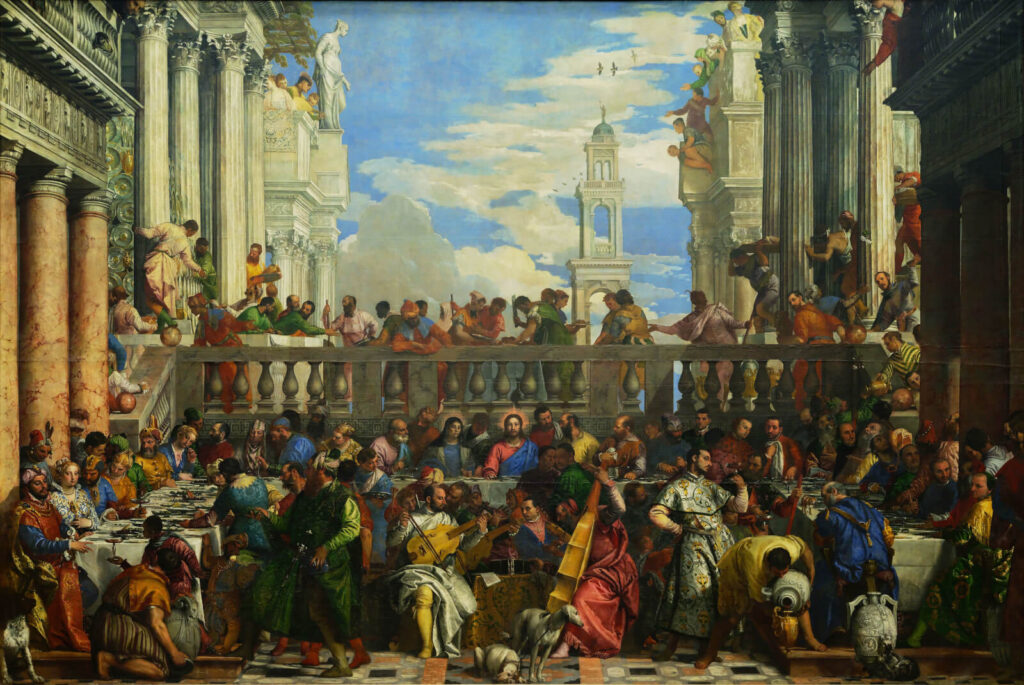
Paolo Veronese, The Wedding at Cana, 1562–1563, Louvre, Paris, France.
Veronese loved to use historical events and biblical passages as his subjects because of their lofty themes and epic scale. There is a wide range of literary freedom that Veronese could seize and explore in giving substance to his visual interpretations. For example, most historical records and biblical passages do not specify how many people were present. The literary accounts will state the lead character and perhaps a few directly relevant supporting roles, but not necessarily the “extras” who stood by, looked, perhaps gave looks, but did not directly interact.
Veronese could appropriate this loophole, this flexibility, and create wildly dynamic and populated scenes without losing the main original narrative. A perfect example is his The Wedding at Cana with more than 130 people, six dogs, one cat, and one green parrot! Like an epic contemporary film, such as Cleopatra (1963) and Titanic (1997), the painting has countless unnamed extras who add compositional interest.
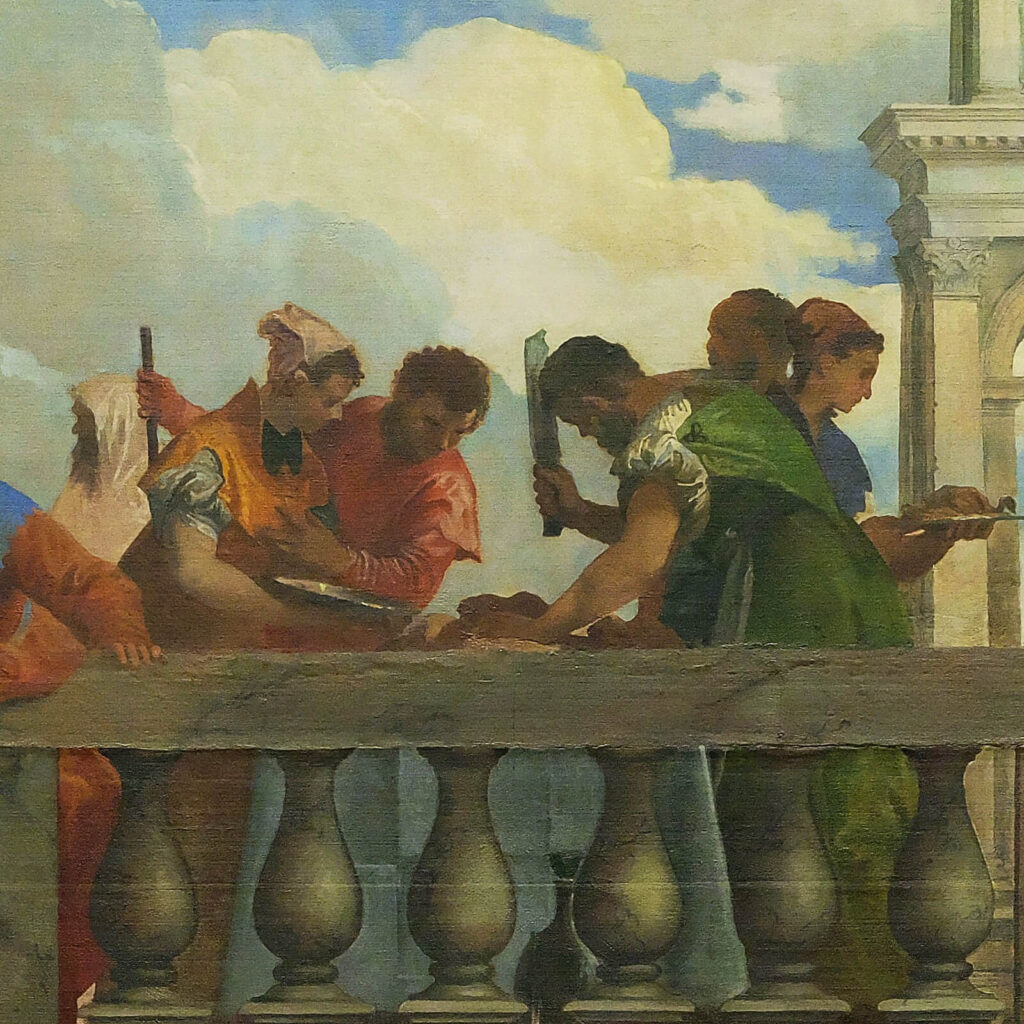
Paolo Veronese, The Wedding at Cana, 1562–1563, Louvre, Paris, France. Detail.
The Wedding at Cana was painted in 1562–1563 and is easily and widely considered one of Veronese’s masterpieces. It is a colossal oil on canvas measuring 6.77 m x 9.94 m (22.2 ft. x 32.6 ft.). In fact, it is the largest and most expansive painting in the collection of the Louvre. The subject is the Wedding at Cana, a biblical event described in the New Testament, Book of John, passages 2:1–11. It is the story of the first miracle of Jesus, and probably one of his most famous, when he turned water into wine. Wine enthusiasts, even today, jokingly say, as they sip a glass of wine, if it is good enough for Jesus, it is good enough for me!
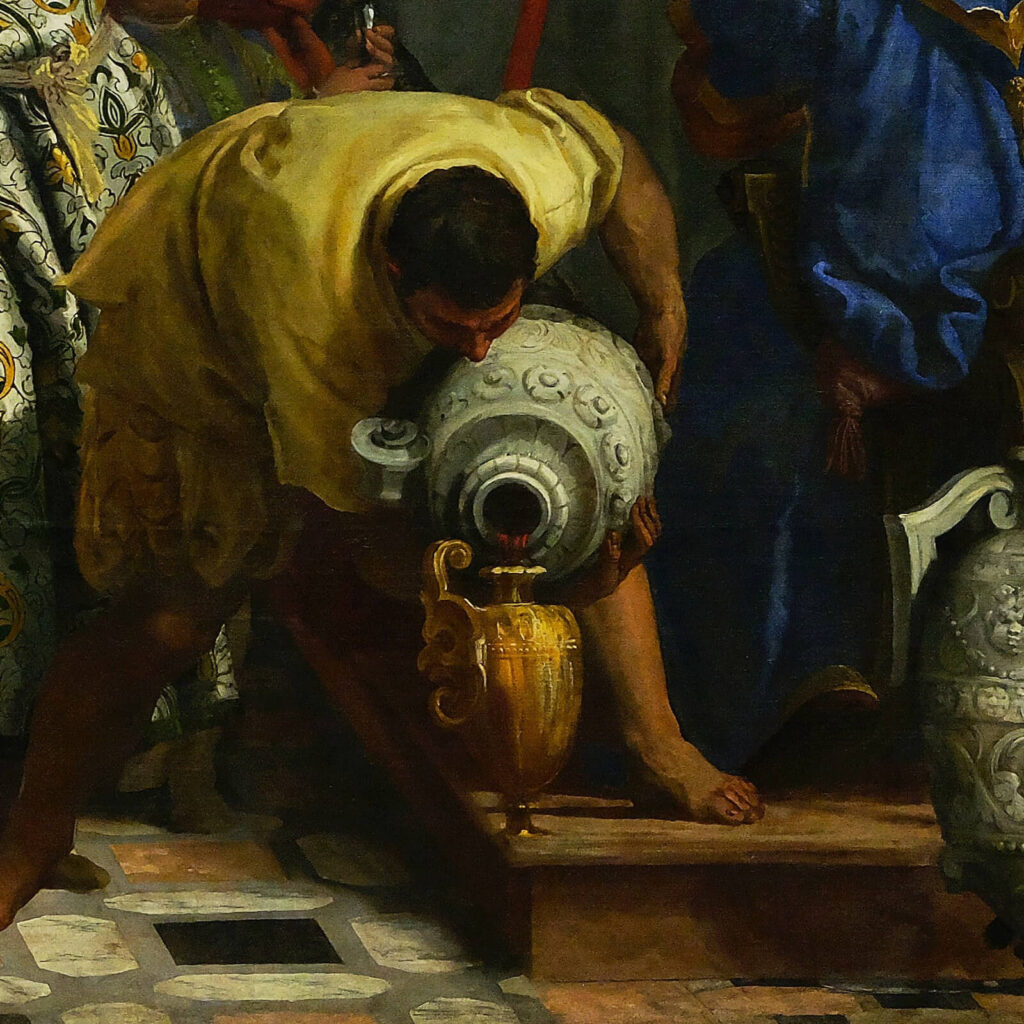
Paolo Veronese, The Wedding at Cana, 1562–1563, Louvre, Paris, France. Detail.
The King James Version (KJV) of the Bible records the first miracle and the Wedding at Cana as such:
“¹And the third day there was a marriage in Cana of Galilee; and the mother of Jesus was there: ²And both Jesus was called, and his disciples, to the marriage. ³And when they wanted wine, the mother of Jesus saith unto him, They have no wine. ⁴Jesus saith unto her, Woman, what have I to do with thee? Mine hour is not yet come. ⁵His mother saith unto the servants, Whatsoever he saith unto you, do it. ⁶And there were set there six waterpots of stone, after the manner of the purifying of the Jews, containing two or three firkins apiece. ⁷Jesus saith unto them, Fill the waterpots with water. And they filled them up to the brim. ⁸And he saith unto them, Draw out now, and bear unto the governor of the feast. And they bare it. ⁹When the ruler of the feast had tasted the water that was made wine, and knew not whence it was: (but the servants which drew the water knew;) the governor of the feast called the bridegroom, ¹⁰And saith unto him, Every man at the beginning doth set forth good wine; and when men have well drunk, then that which is worse: but thou hast kept the good wine until now. ¹¹This beginning of miracles did Jesus in Cana of Galilee, and manifested forth his glory; and his disciples believed on him.”
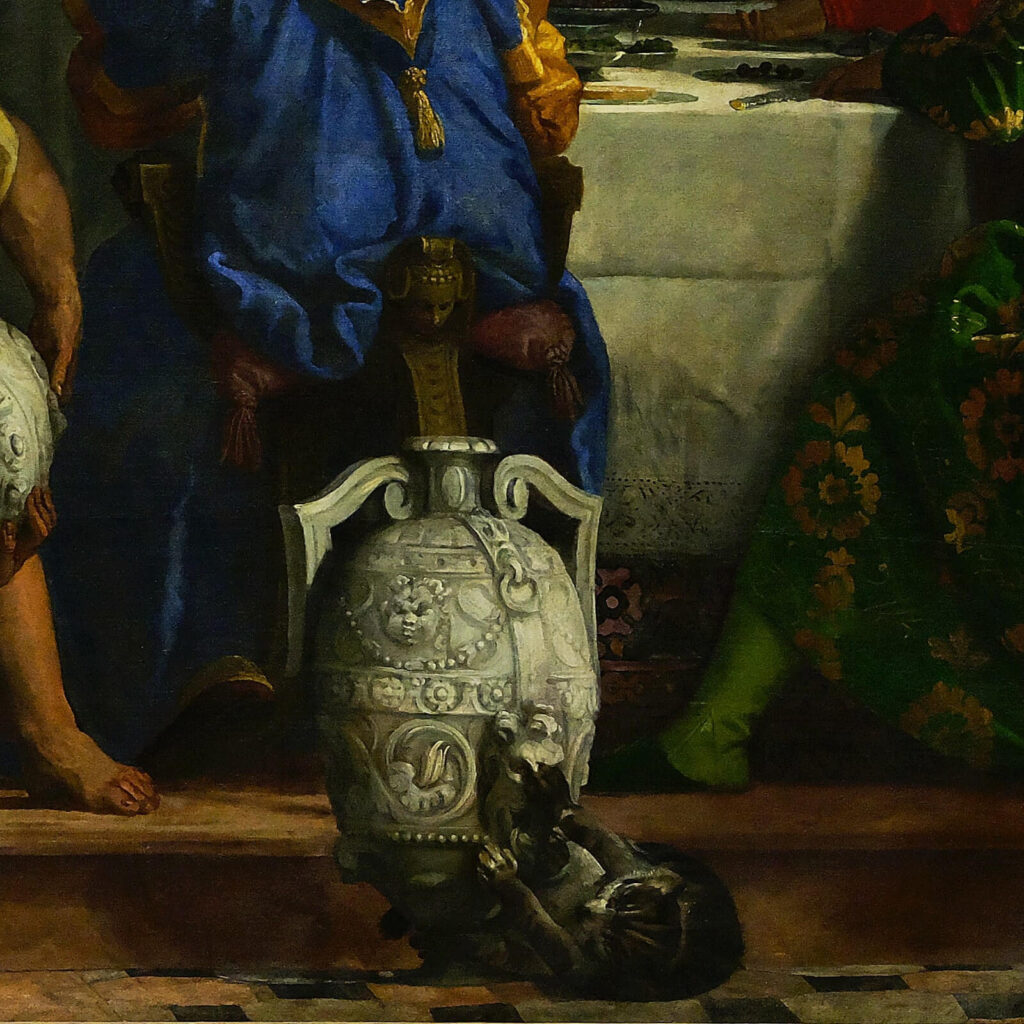
Paolo Veronese, The Wedding at Cana, 1562–1563, Louvre, Paris, France. Detail.
Veronese places Jesus in the center of the banquet table, a faint golden halo surrounds his head indicating his holiness and highlighting his identity amongst the crowd. He wears a red tunic with a blue cloak. Sitting to his right (viewer’s left) is his mother, the Virgin Mary, appropriately depicted as a mature woman in a blue tunic and head shroud. A faint halo also surrounds her head. Only Jesus and Mary have halos within the populous scene, therefore identifying them as the only two sacred figures among the profane crowd.
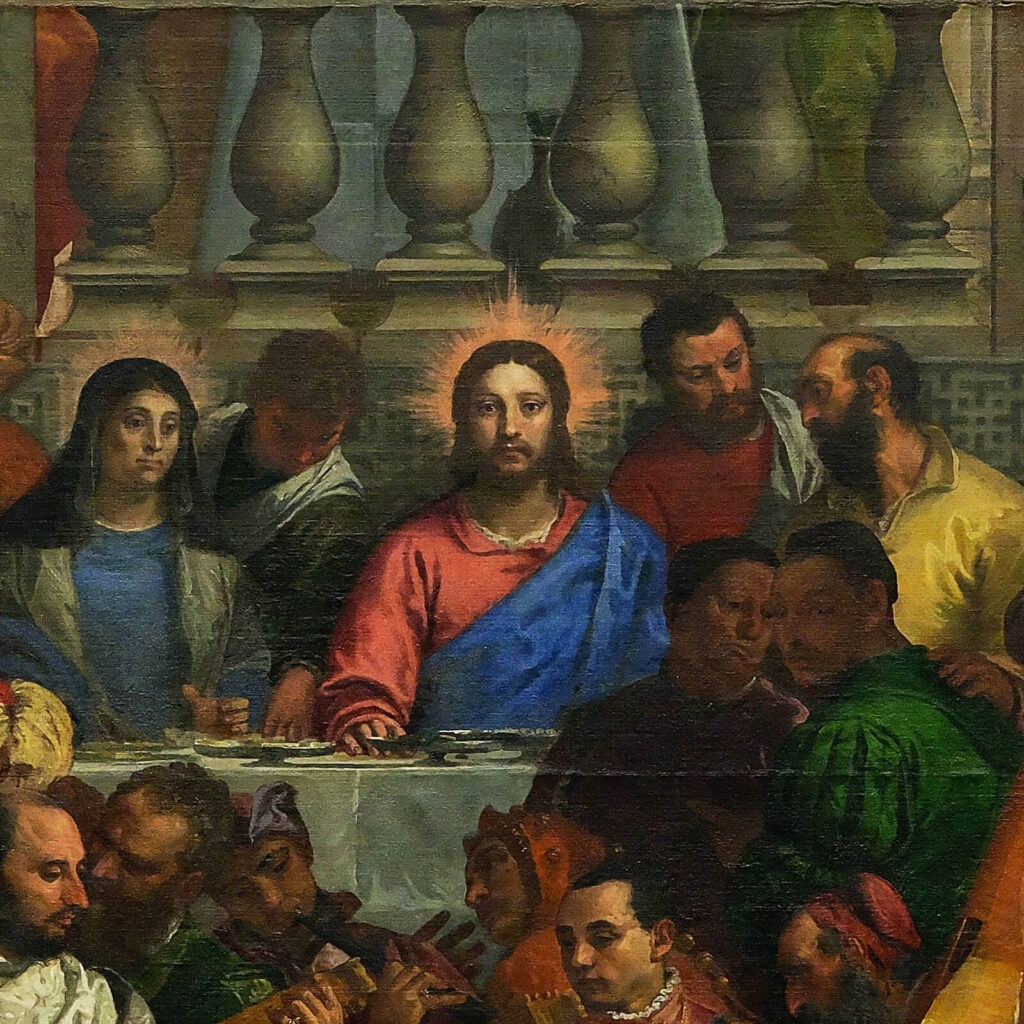
Paolo Veronese, The Wedding at Cana, 1562–1563, Louvre, Paris, France. Detail.
A wedding scene would naturally include the bride and groom. However, if Jesus and Mary are sitting in the middle of the composition, where are the newlyweds seated? With so many people crowding the space, it is a bit difficult to identify the happy couple. After an extensive, inquisitive look at all the seated figures, the newlyweds are found placed to the far left of the banquet table. Why so far?
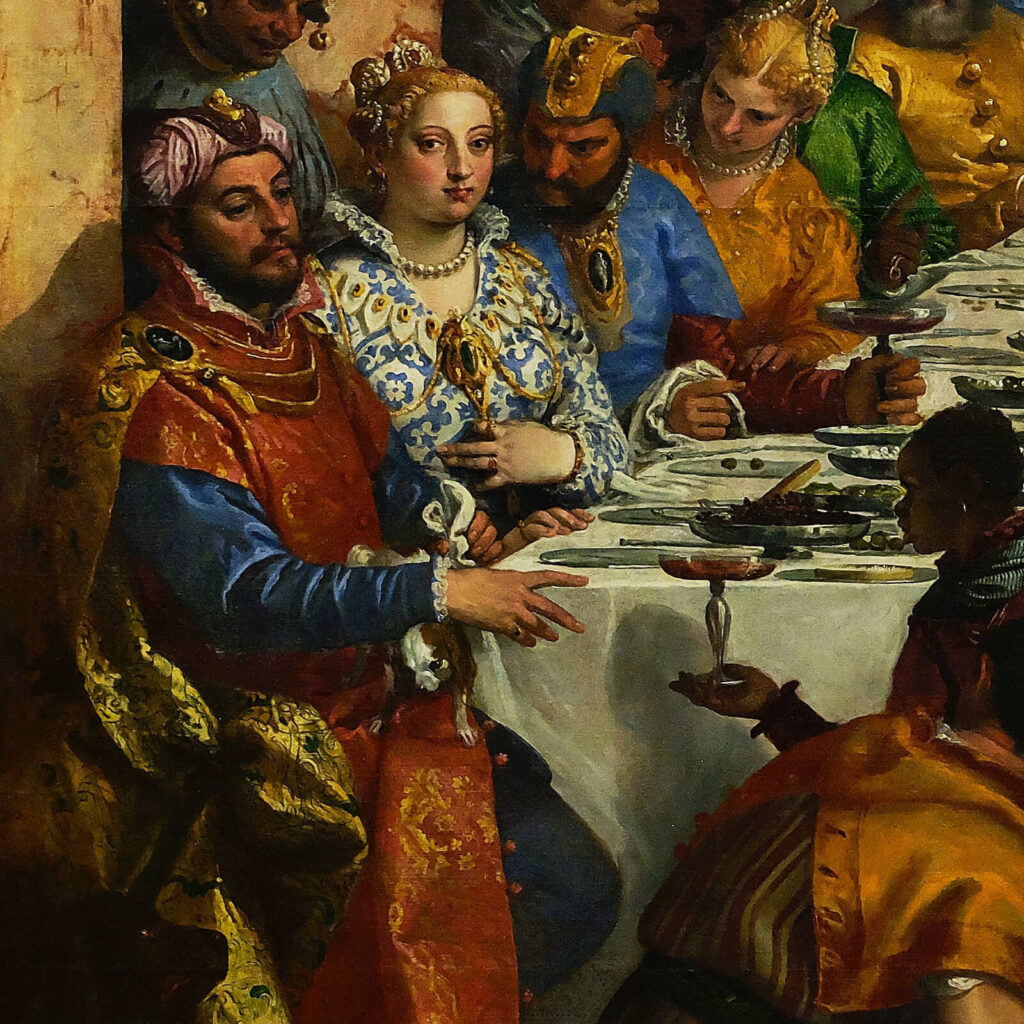
Paolo Veronese, The Wedding at Cana, 1562–1563, Louvre, Paris, France. Detail.
Compositionally, it makes sense. With Jesus and Mary taking the central seats, the bride and groom cannot logistically be placed in the center without splitting them apart. Placing one to the left of Mary and one to the right of Jesus would be ideologically against the unity of marriage. Separate dining does not imply a unified life. Therefore, what is the other option?
Perhaps the couple could be placed together to the left of Mary or together to the right of Jesus? However, this would not work because it would create a significant compositional imbalance of the central focus. Like a seesaw, the center would visually tilt to the left or to the right.
Therefore, placing the newlyweds to the far left, blending among the guests, produces the most compositional harmony. They are formally balanced by the other groupings of guests on the far right of the banquet table facing them. Sometimes, the bride is not the center of attention at a wedding, especially if Jesus is a wedding guest; the shift of attention is duly expected.
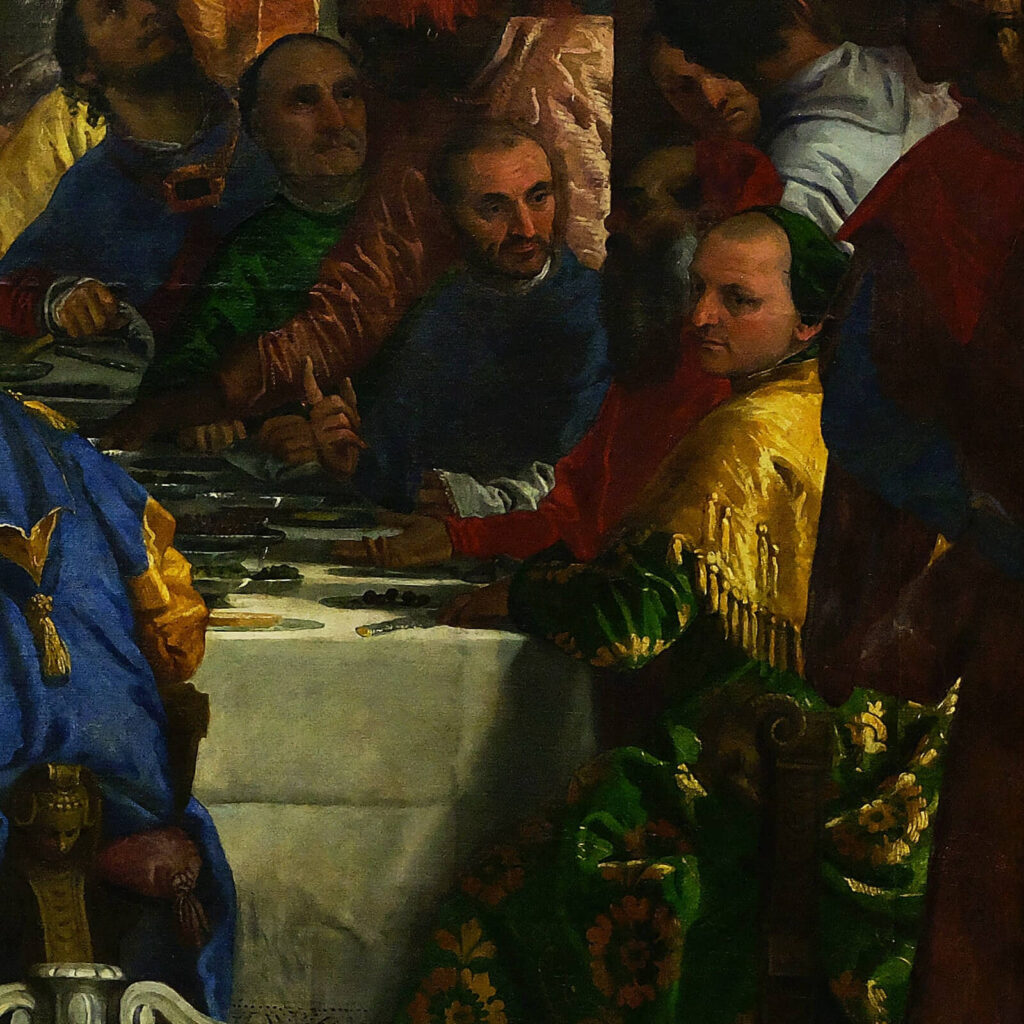
Paolo Veronese, The Wedding at Cana, 1562–1563, Louvre, Paris, France. Detail.
In the foreground below Jesus a collection of musicians play their instruments. Paolo Veronese includes his image as the musician in white playing the viola da braccio.
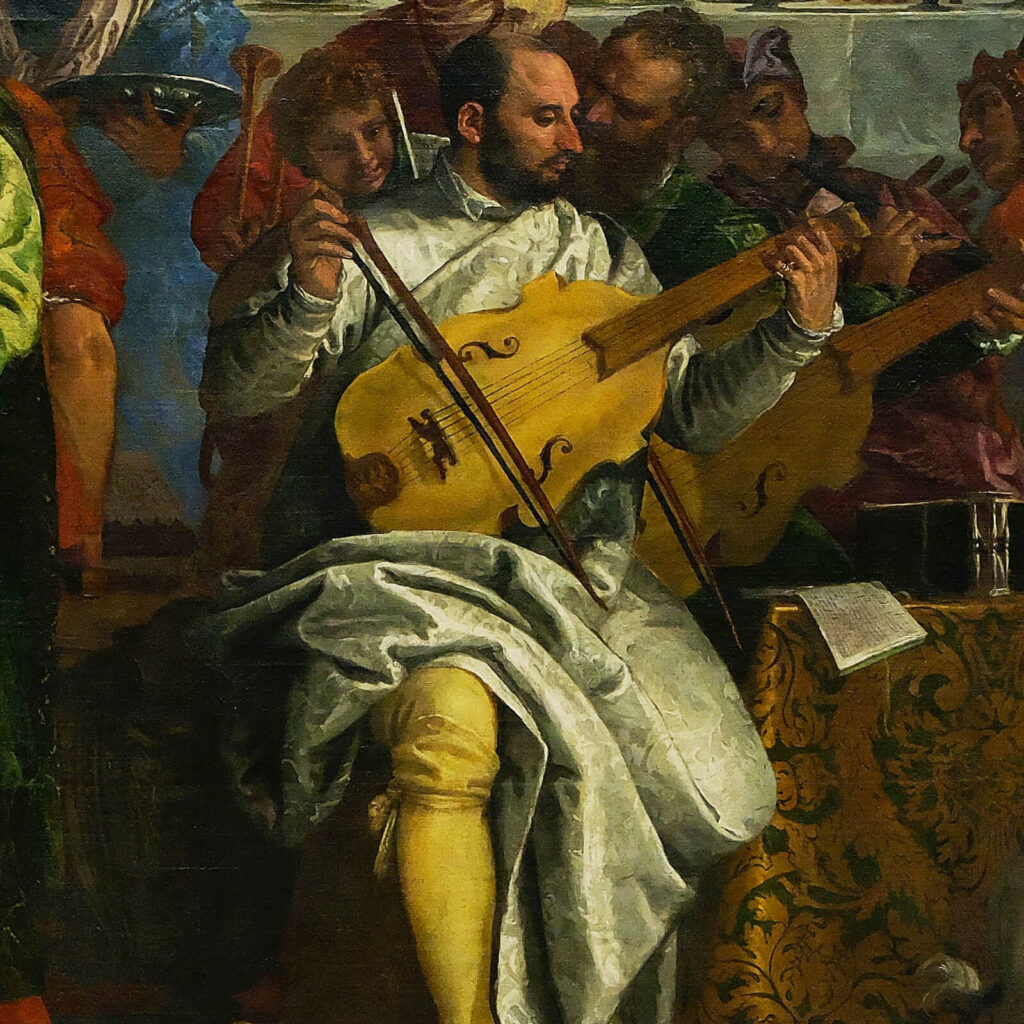
Paolo Veronese, The Wedding at Cana, 1562–1563, Louvre, Paris, France. Detail.
To the viewer’s right is another figure clad in red playing the violone. He is Titian, the famous painter and contemporary of Veronese. Two additional musicians join the painters and add the lute and viola da gamba to complete the musical quartet.
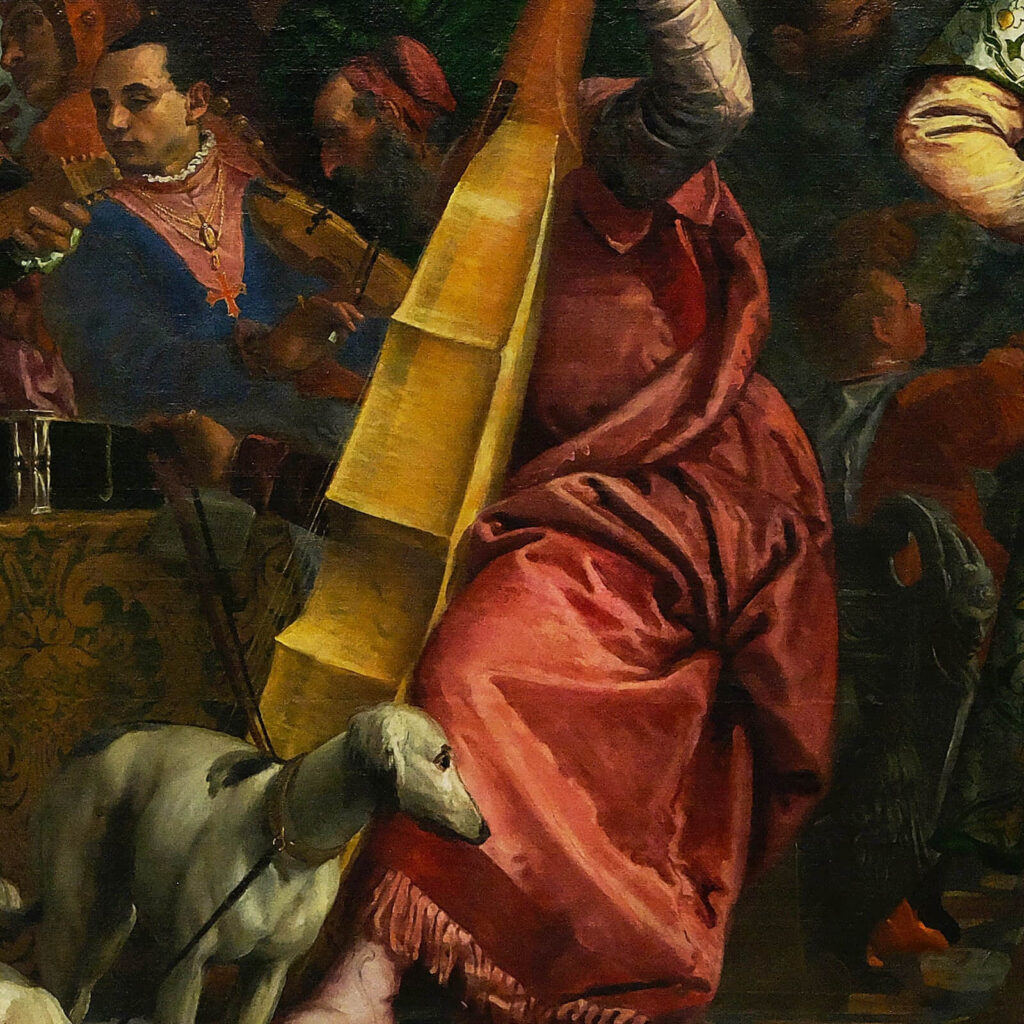
Paolo Veronese, The Wedding at Cana, 1562–1563, Louvre, Paris, France. Detail.
To the right of the musicians is a male figure wearing white and gold who stands and admires a glass of red wine. His face is the likeness of Pietro Aretino, a poet, author, and playwright. He was one of the most influential writers of his time. His presence expands beyond the artistry of painting and music by adding literature to the arts represented within the scene.
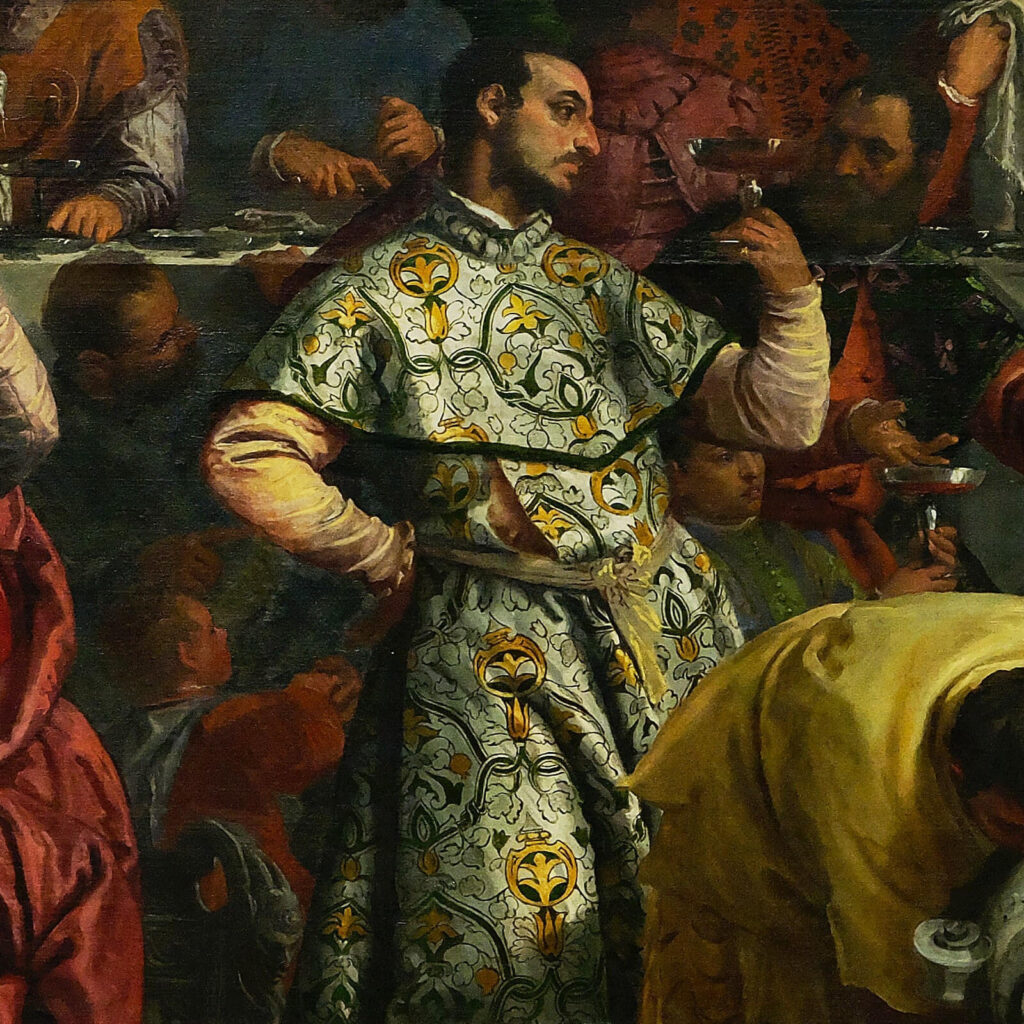
Paolo Veronese, The Wedding at Cana, 1562–1563, Louvre, Paris, France. Detail.
To the left of the musicians in the foreground is a male figure standing in front of the banquet table and facing the newlyweds. He is wearing an embroidered costume of green silk with an elaborate turban. He is the household steward to the couple and he is overseeing the operations of the festivities. Currently, the banquet is enjoying the dessert course which includes fruits, nuts, quince paste, and miraculously, now wine. Therefore, the steward would have quickly noted the sudden appearance of wine and would perhaps have been one of the first people to recognize the miracle of Jesus.
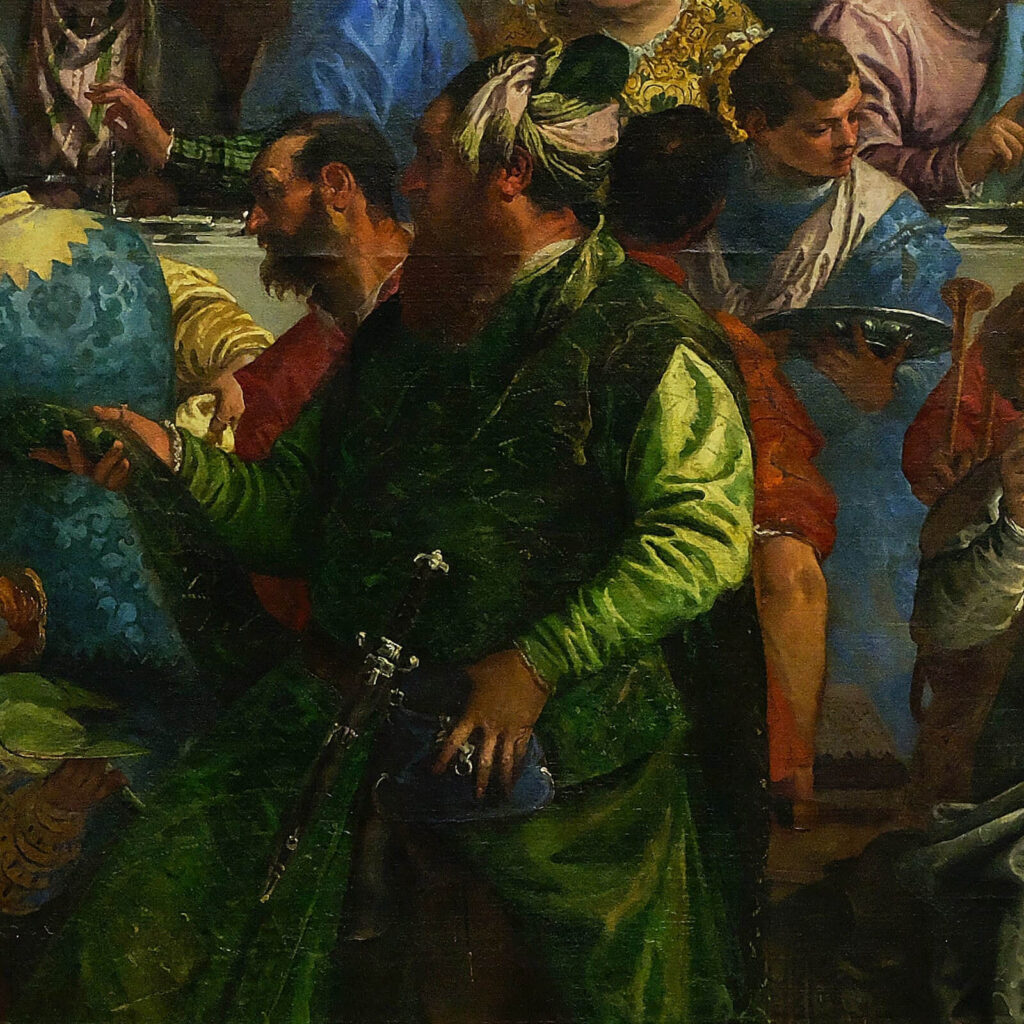
Paolo Veronese, The Wedding at Cana, 1562–1563, Louvre, Paris, France. Detail.
Paolo Veronese painted The Wedding at Cana as a commissioned piece to adorn the Monastery of San Giorgio Maggiore in Venice, Italy. It was painted to adorn one entire wall of the refectory (dining room) of the monastery as a visual spatial extension of the room. It was designed to reflect and compliment the beautiful neoclassical architecture of Andrea Palladio, who designed the church and monastery.
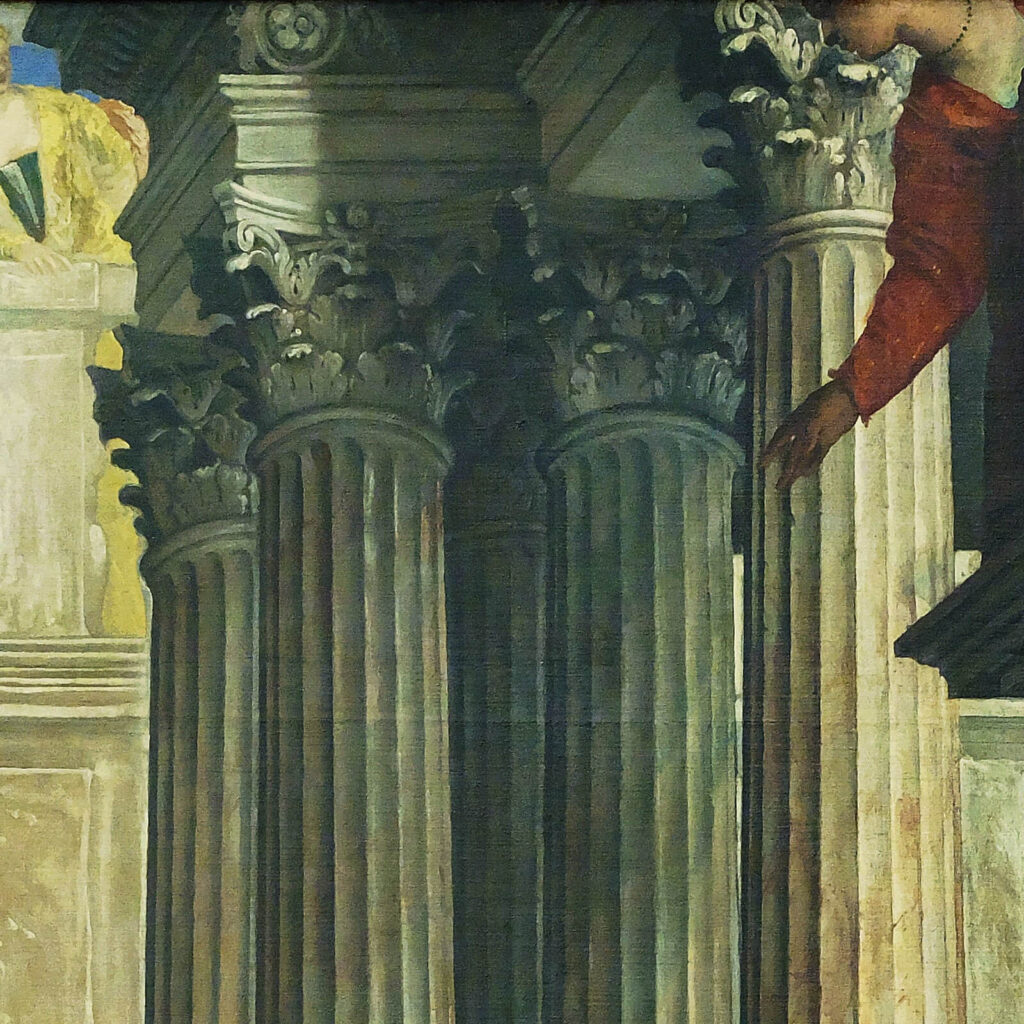
Paolo Veronese, The Wedding at Cana, 1562–1563, Louvre, Paris, France. Detail.
Veronese was therefore instructed to use only the optimi colori (best colors), including the wildly expensive ultramarine. This deep, rich blue color is created from the ground powder of lapis lazuli, an expensive imported stone from the Middle East, primarily from the region of modern Afghanistan. Paolo Veronese would have only assigned his most trusted assistants, such as his brother Benedetto Caliari, to handle such a rare and precious paint component.
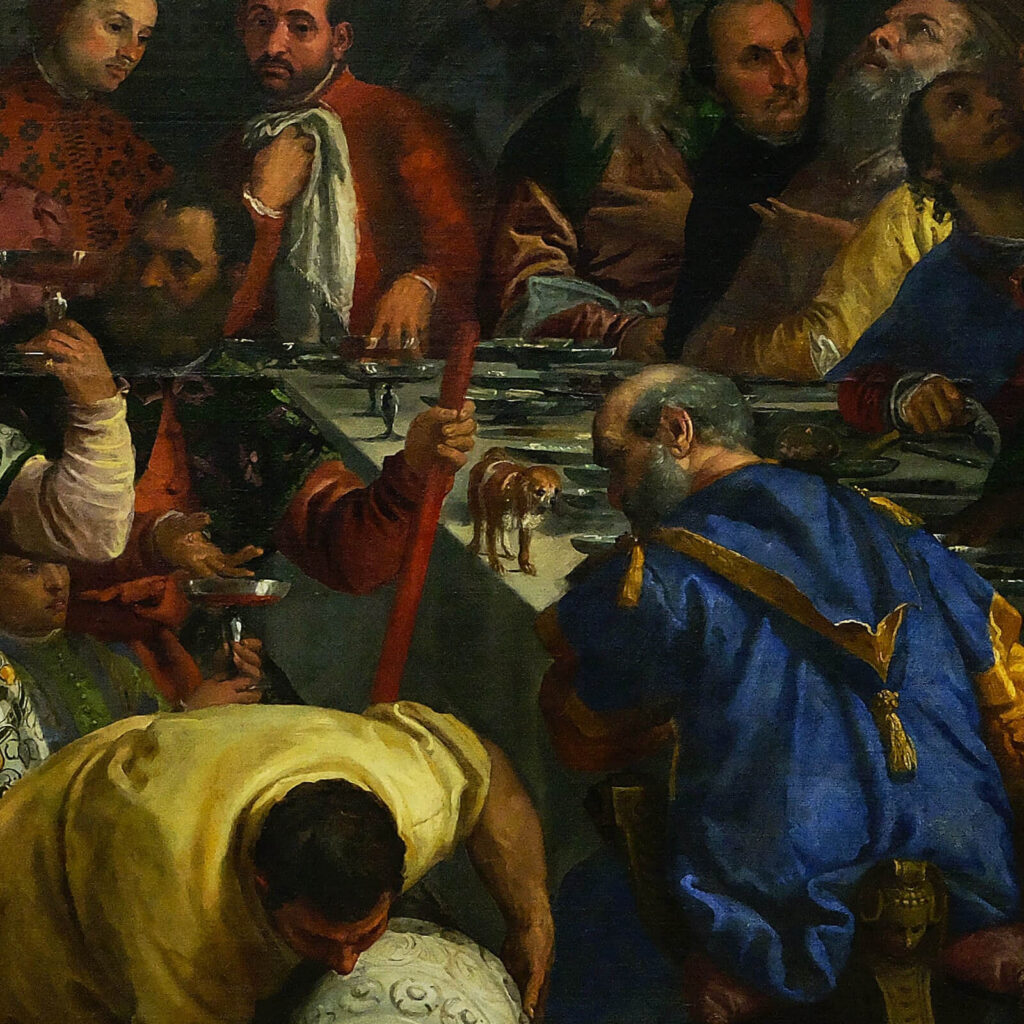
Paolo Veronese, The Wedding at Cana, 1562–1563, Louvre, Paris, France. Detail.
Veronese definitely followed the Benedictine contract as he placed the importance of color over design, a subject of painterly philosophical debate since the early Renaissance. Aiming to represent the optimi colori, he eschewed primary colors and embraced the jewel-like and flower-like tones so popular in the late Renaissance and early Mannerist periods.
The Wedding at Cana is highlighted by shades of light blue, sea green, lemon yellow, rose, and violet. They shimmer and gleam like a jewel box, with the lightness and delicacy of a flower bed.
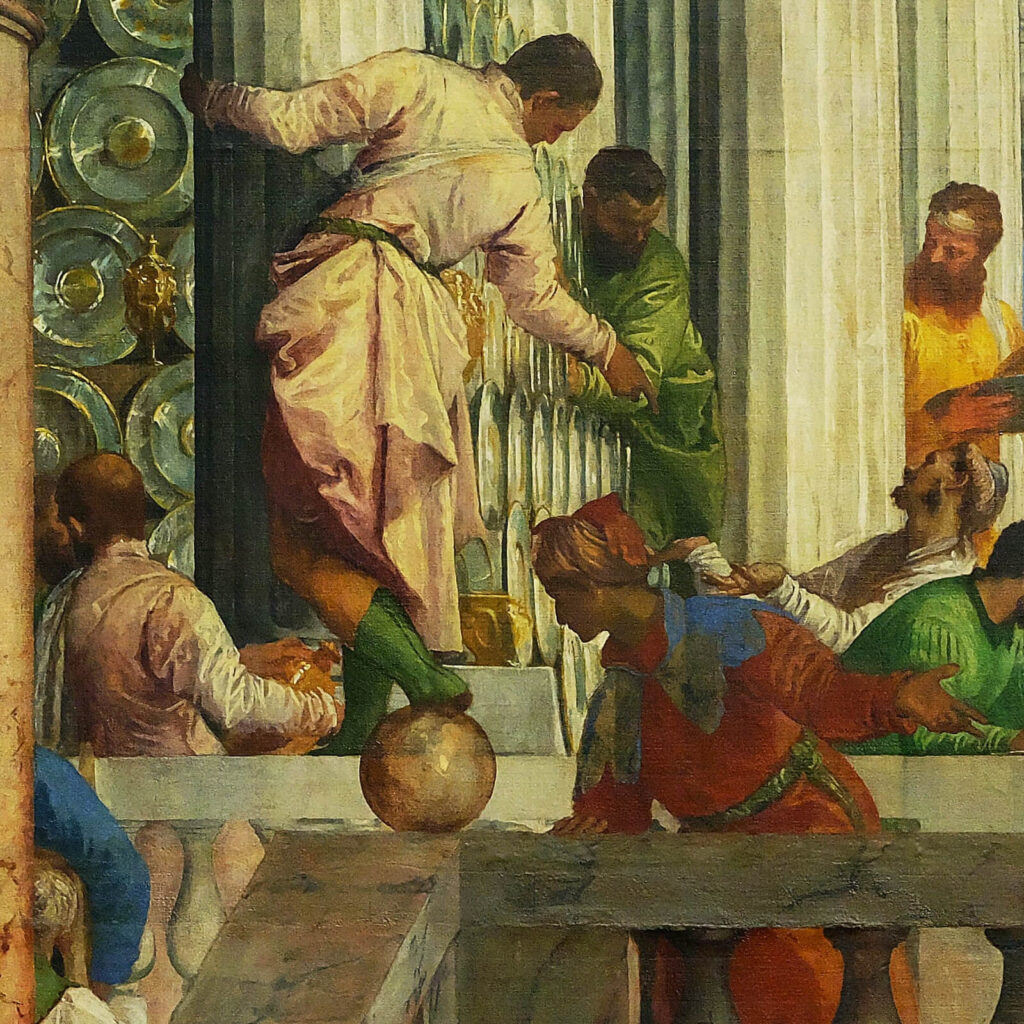
Paolo Veronese, The Wedding at Cana, 1562–1563, Louvre, Paris, France. Detail.
The contract between Paolo Veronese and the Monastery of San Giorgio Maggiore was signed on June 6, 1562. It further stipulated that Veronese would receive 324 Venetian ducats as payment for the painting, plus covered housing expenses and free meals until completion.
To put into perspective the generosity of 324 Venetian ducats, some inflationary market adjustments are required. One Venetian ducat was 3.545 g (0.125 oz) of pure gold; therefore, 324 ducats are equal to 1,148.58 g (40.515 oz) of gold. In the modern gold market, the payment was approximately 130,000 EUR (148,000 USD) in today’s currency! Wow! The Wedding at Cana was an expensive painting!
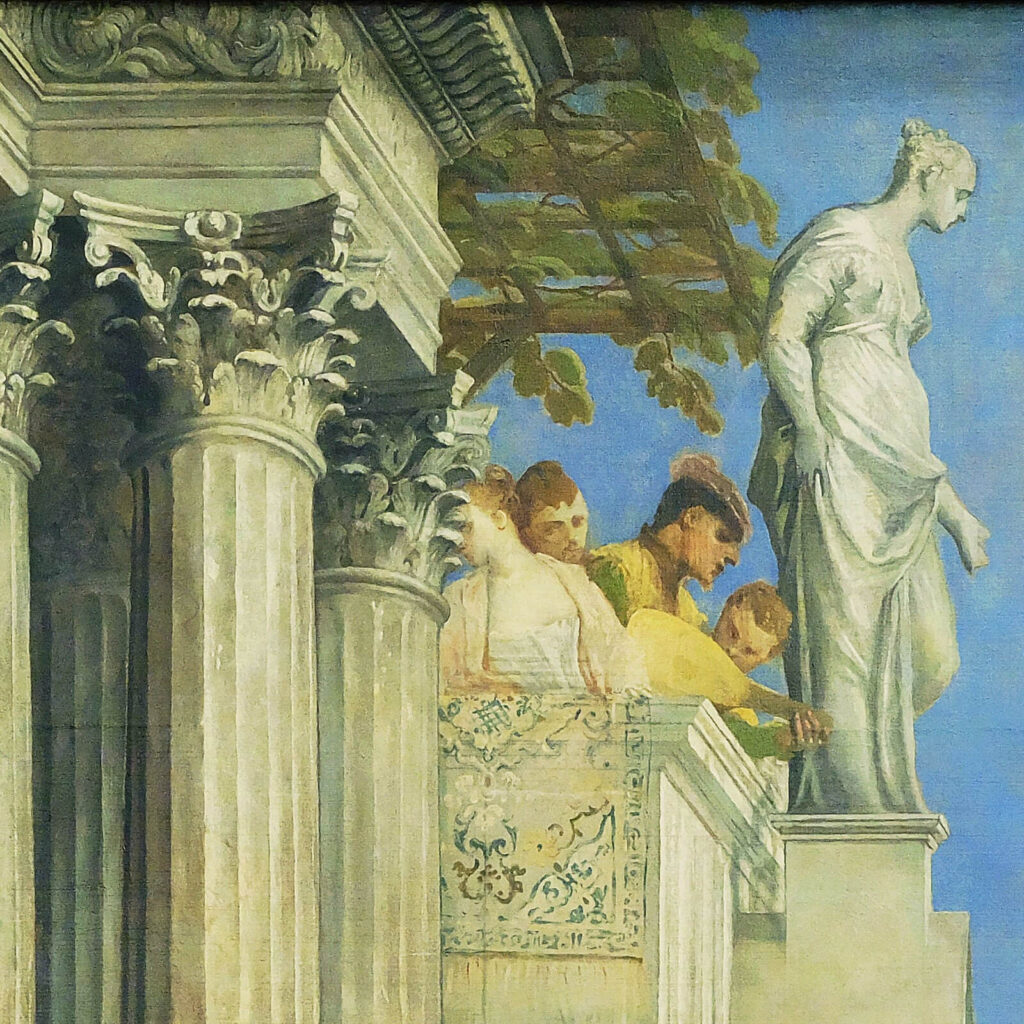
Paolo Veronese, The Wedding at Cana, 1562–1563, Louvre, Paris, France. Detail.
The large canvas remained on site for 235 years until it was dismantled and seized in 1797 during the Italian campaigns of the French Revolutionary Wars (1792–1802). It was then deposited in 1798 in the Louvre as war booty. Later, in the first decade of the 19th century, when repatriation of looted works was under discussion, The Wedding at Cana was requested for return. Vivant Denon, the director-general of the Louvre at the time, outright lied and stated the canvas was too fragile to return to Venice. He claimed it would deteriorate beyond repair. Lies!
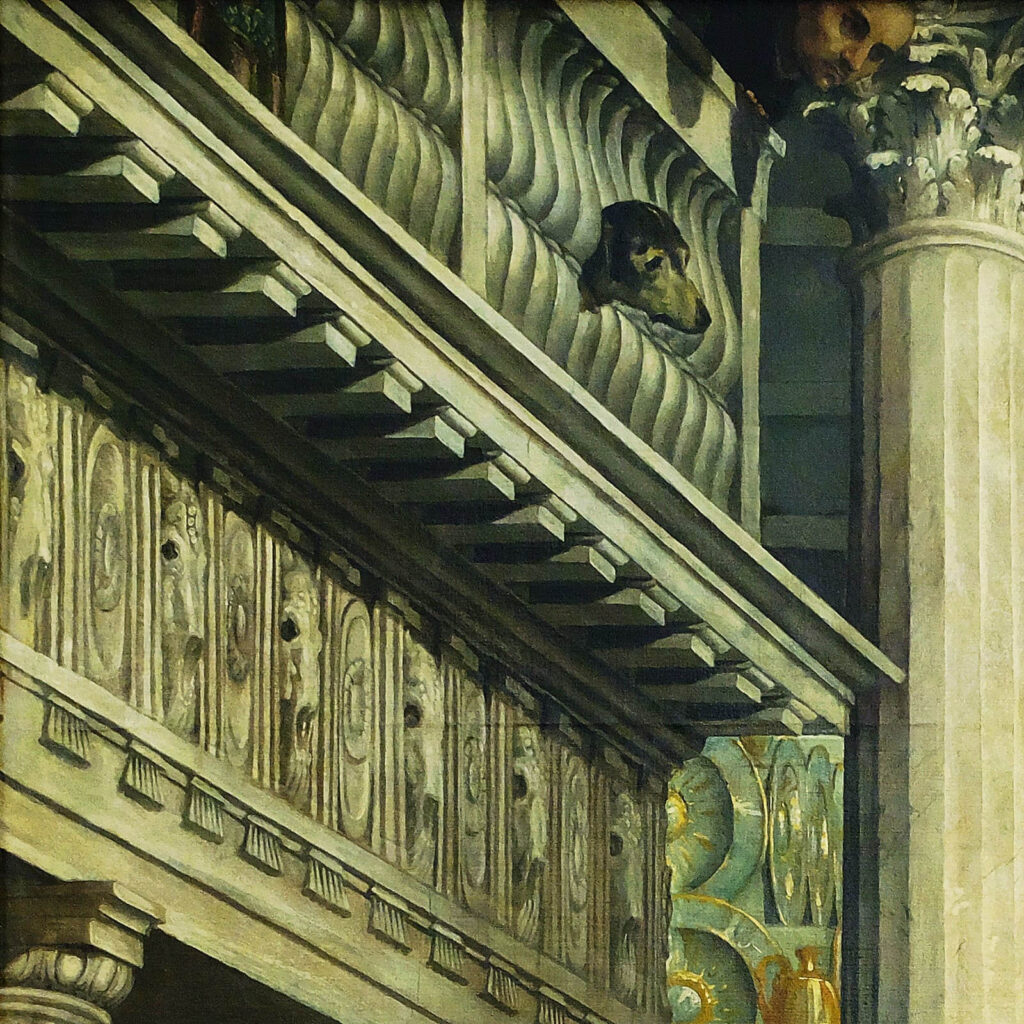
Paolo Veronese, The Wedding at Cana, 1562–1563, Louvre, Paris, France. Detail.
Hence, The Wedding at Cana by Veronese became excluded from the request list and remained in Paris. It still hangs in the same room, now organized as Salle 711, facing the world’s most famous painting: the Mona Lisa. Therefore, it is likely the most ignored masterpiece in the world. Countless faces enter the room, but never stop to admire it. She, Mona, takes most of the attention. Turn around. Turn your back to Mona, at least for a minute, and give Veronese’s canvas the appreciation that it deserves.
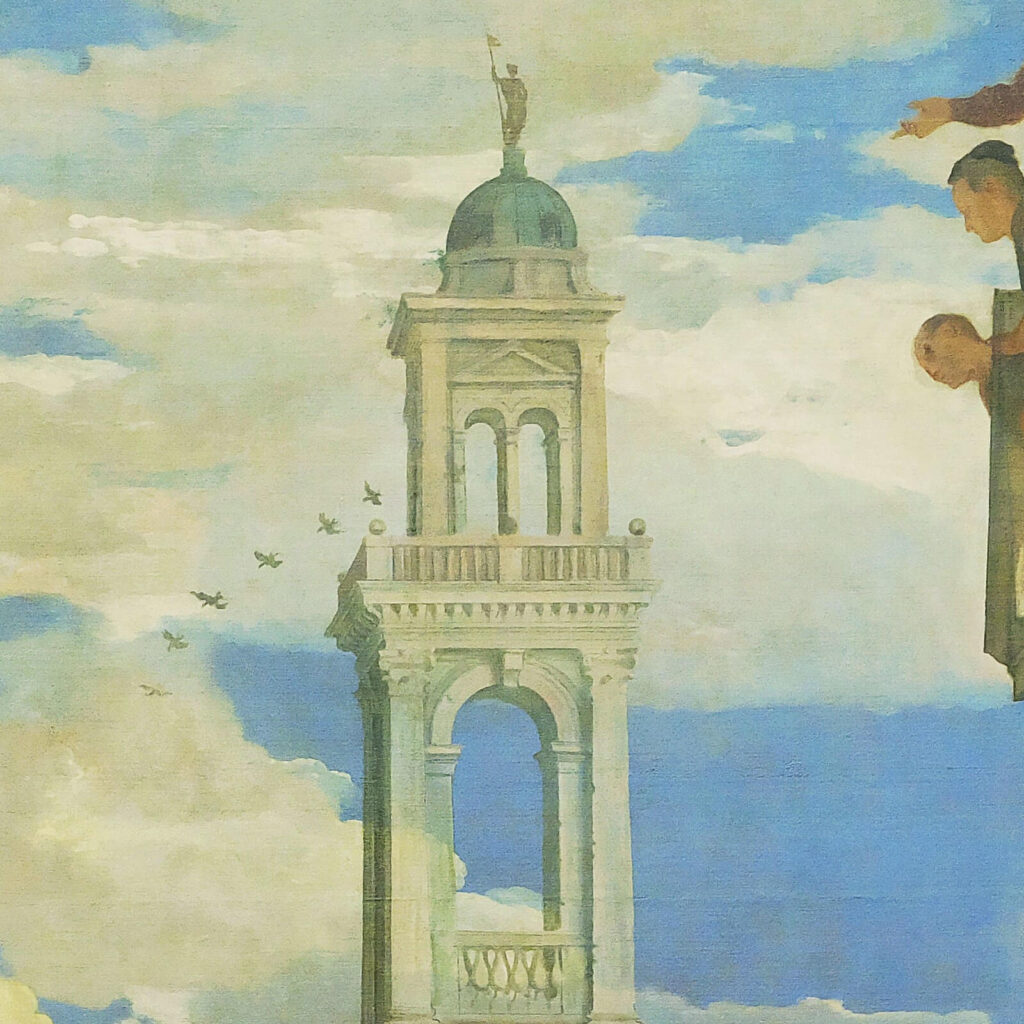
Paolo Veronese, The Wedding at Cana, 1562–1563, Louvre, Paris, France. Detail.
DailyArt Magazine needs your support. Every contribution, however big or small, is very valuable for our future. Thanks to it, we will be able to sustain and grow the Magazine. Thank you for your help!

James W. Singer is an art historian and fine art photographer. He earned a Bachelor of Arts in Art History from the University of Florida. He later moved to Paris, France. He currently writes “Masterpiece” articles for DailyArt Magazine.
Judith and Holofernes is a Caravaggio masterpiece that captures Biblical murder and drama. Rarely has death been captured so intensely and violently...
James W Singer 13 September 2026
Explore an astonishing 1915 nude self portrait by American modernist painter Florine Stettheimer.
Candy Bedworth 21 September 2026
Winslow Homer (1836–1910) was one of the leading American Realist painters. His painting The Veteran in a New Field is a masterpiece of late...
James W Singer 30 August 2026
At first glance, A Goldsmith in His Shop (1449) appears to depict an ordinary visit to a jeweller. Yet Petrus Christus transformed an ordinary...
Shivani Gupta 23 August 2026