
Donatello in 10 Sculptures: Innovation and Emotion
If you ask people to name the greatest sculptor, the 15th-century Florentine, Donatello, will not be near the top of the list. Yet throughout a long...
Catriona Miller 28 September 2026
19 November 2026 min Read
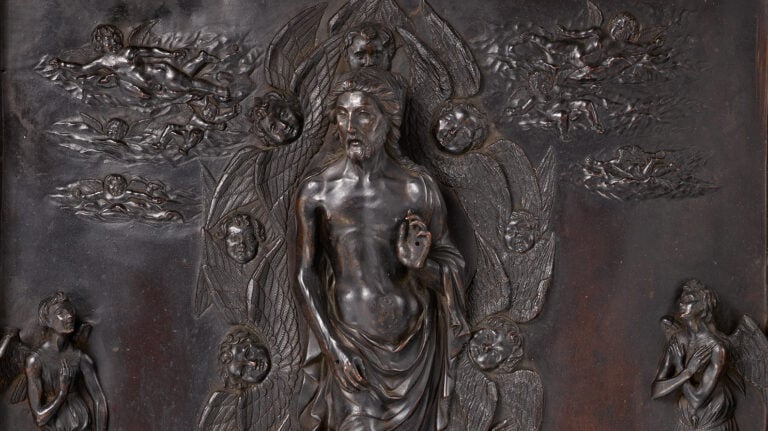
Vecchietta, Resurrection of Christ, 1472, Frick Collection, New York City, NY, USA. Detail.
Art history has given Siena a narrow job description: magnificent medieval paintings with lots of gold ground. Its sculptors made some of the Renaissance’s most inventive bronzes, but Florence wrote its rivals out of the narrative. That might be why we know Michelangelo and Donatello (they are even Ninja Turtles!), while Vecchietta and Francesco di Giorgio have been largely forgotten. The Frick has set out to correct that.
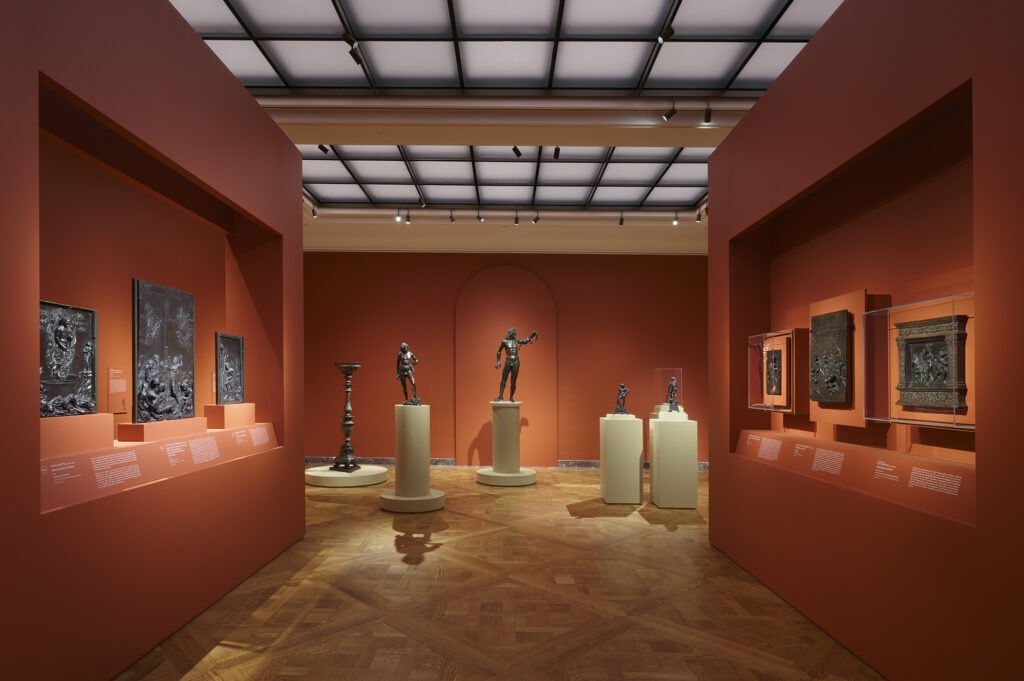
Gallery view of Siena: The Art of Bronze, 1450–1500 at The Frick Collection, New York City, NY, USA. Photo: Joseph Coscia Jr.
Almost every surviving Sienese 15th-century bronze that can safely travel is currently in New York City. Even Donatello‘s bishop has left Siena Cathedral to spend the winter in exclusive company. In Siena: The Art of Bronze, 1450–1500, the Frick Collection has assembled nearly 40 works for the first exhibition ever devoted to Siena’s Renaissance bronzes, including major loans never exhibited outside Italy.
Bronze was expensive, difficult to cast and, unfortunately for history, endlessly recyclable. In times of war, a sculpture could become artillery, helping explain why there are so few extant examples.
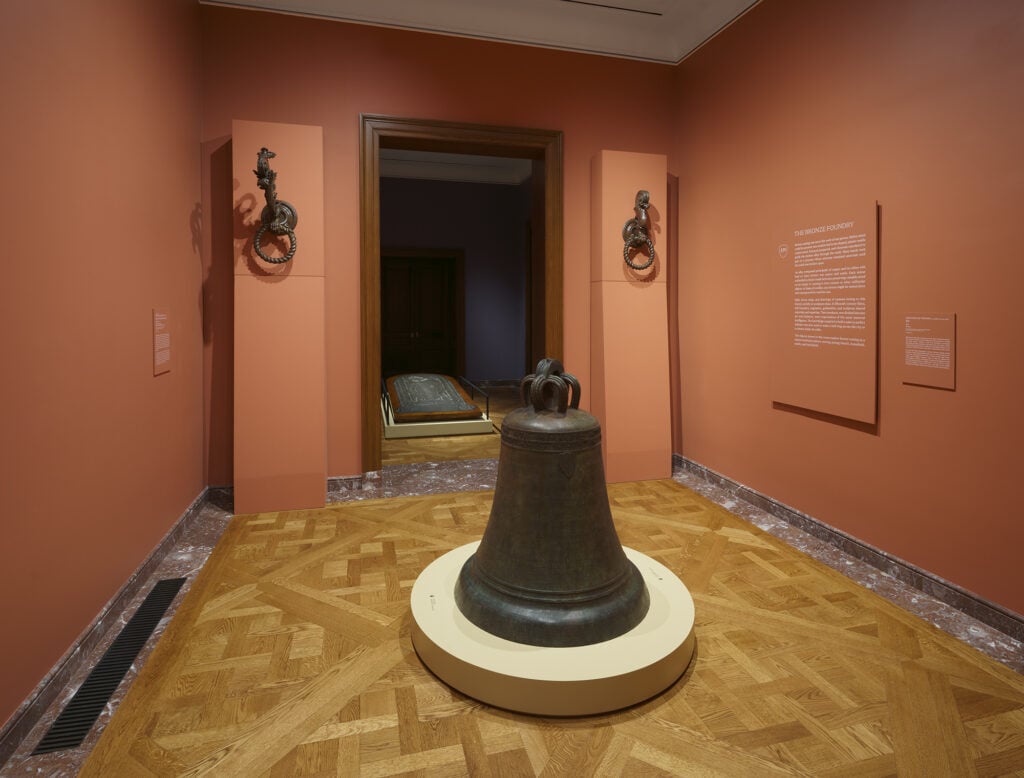
Gallery view of Siena: The Art of Bronze, 1450–1500 at The Frick Collection, New York City, NY, USA. Photo: Joseph Coscia Jr.
During the second half of the 15th century, bronze became central to Siena’s artistic production, supported by workshops that employed sculptors, goldsmiths, engineers, and metalworkers. The same workshops producing sculpture could churn out church bells and cannons. In that spirit, the show opens with a magnificent 1,344-pound-bell (610 kg) cast in 1454, an elaborate flagpole-torch holder, and an ornate ring used to tether horses outside a Sienese palace.
The ancient lost-wax process made it technically demanding to work in bronze. First, a sculpture was made in wax and surrounded by a mold. The wax was then melted and drained away, leaving an empty space in the exact shape of the sculpture. Molten metal was poured into that space and left to harden. Months of work could be wasted if the liquified metal cooled too quickly or if it failed to fill the mold entirely. Once a successful cast emerged, often with imperfections, then the business of finishing it began.
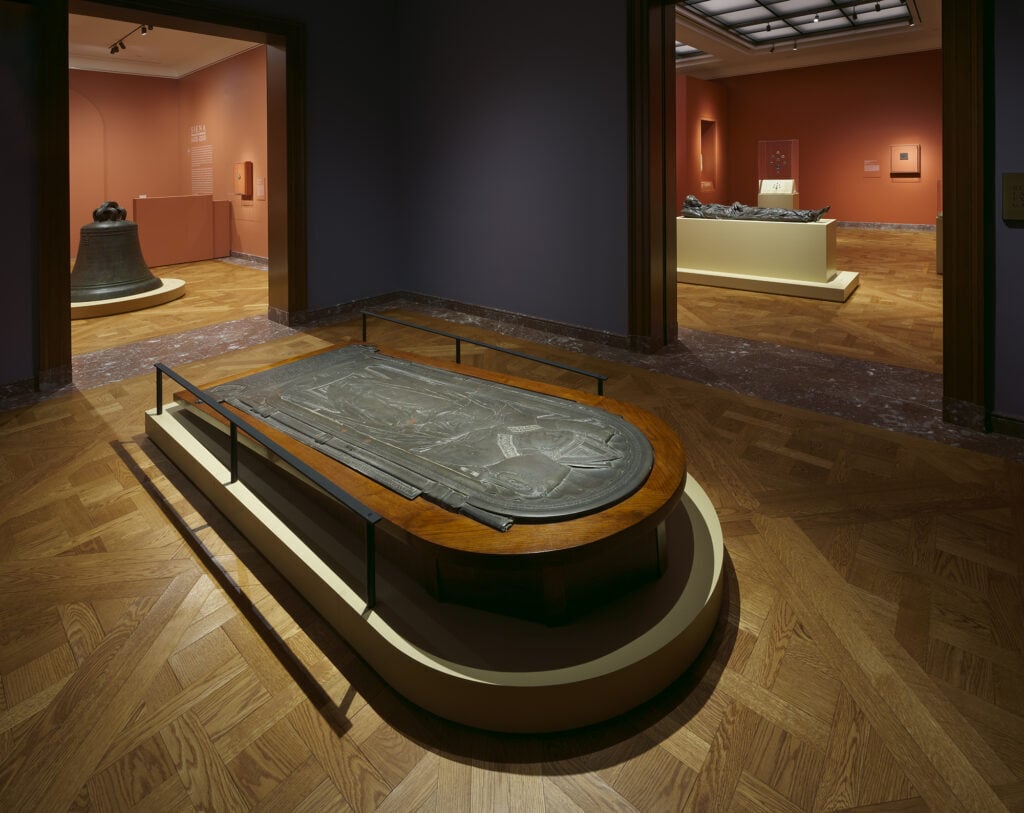
Gallery view of Siena: The Art of Bronze, 1450–1500 at The Frick Collection, New York City, NY, USA. Photo: Joseph Coscia Jr.
Florence and Siena were political rivals, although artists and ideas moved regularly between the two cities. By the mid-15th century, the Florentine Donatello was already the most celebrated sculptor of his age, renowned for innovations that had transformed Renaissance sculpture, particularly his ability to suggest depth in shallow relief.
Donatello’s Tomb Slab of Giovanni di Bartolomeo Pecci, cast around 1452, approximately 25 years after the bishop’s death, is a superb example. Barely an inch thick, the bronze creates the illusion of a body resting inside a deep recess. Pecci’s head lies on a pillow, his ceremonial vestments falling around him with remarkable naturalism. At his feet, two angels unfurl a scroll identifying him, which was designed to be viewed from the foot of the monument in its position in Siena Cathedral.
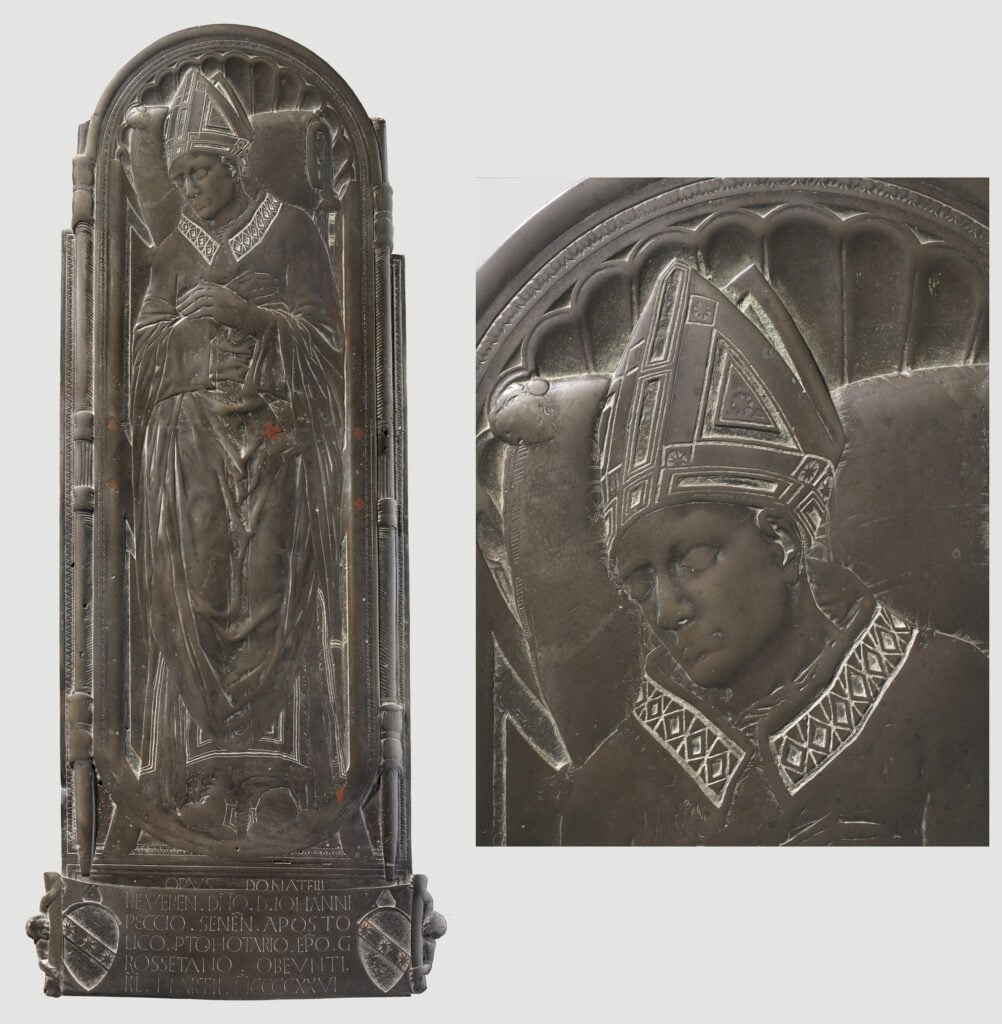
Donatello, Tomb Slab of Giovanni di Bartolomeo Pecci, Bishop of Grosseto and Istia d’Ombrone, ca. 1452, Cathedral of Santa Maria Assunta, Siena, Italy.
When Donatello was invited to Siena in October 1457, the government hoped he would train local artists and undertake major commissions, including the cathedral’s bronze doors. Political tensions complicated those ambitions, and while the artist’s workshop received wax for models, he was never provided with enough of the pricey casting metal to execute the doors.
By June 1459, Donatello was back in Florence, although his formal association with Siena continued until 1461. None of the planned new bronzes were completed.
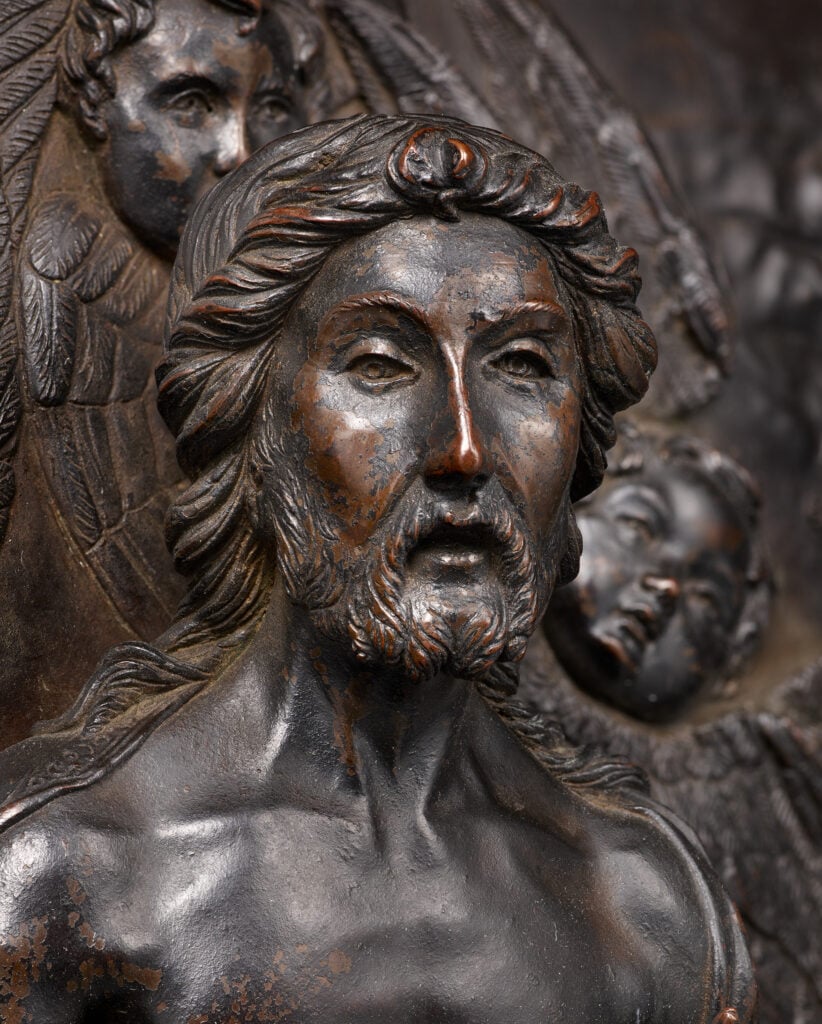
Vecchietta, Resurrection of Christ, 1472, The Frick Collection, New York City, NY, USA. Detail.
Siena’s sculptors were developing their own style, and the exhibition challenges measuring their achievements against those of their famous Florentine counterparts. Lorenzo di Pietro, known as Vecchietta, was already an established Sienese painter and sculptor, whose career, like so many Renaissance artists, extended into architecture and military fortifications.
In his Flagellation, on loan from the Victoria and Albert Museum, the shallow relief creates an impression of depth that draws on Donatello’s innovations without simply reproducing them. In the Resurrection of Christ of 1472, the sleeping soldiers display armor that has been worked with the exceptional precision of an artist particularly interested in finish and detail. Vecchietta signed the relief as a painter, an indication of how naturally his work moved between the two disciplines.
The artist’s nickname, Il Vecchietta, is usually translated as “the little old one.” Research by the Frick’s curator, Giulio Dalvit, confirmed that he was using the moniker by 1442, but why di Pietro acquired the unusual nickname remains unknown.
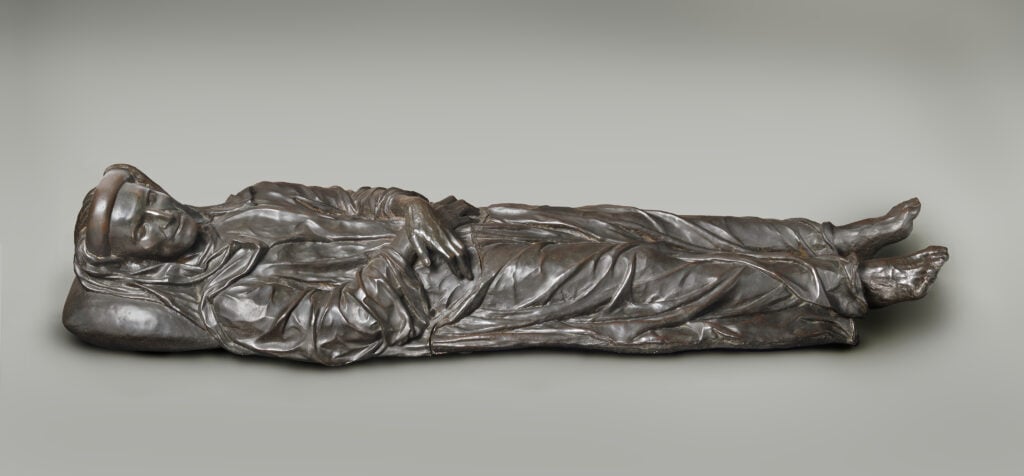
Vecchietta or Francesco di Giorgio, Gisant of Mariano Sozzini the Elder, late 1460s or early 1490s, Museo Nazionale del Bargello, Florence, Italy.
Mariano Sozzini, a celebrated Sienese lawyer and close friend of Pope Pius II, died in 1467; his bronze sculpture is exceptionally rare. It is the only known surviving 15th-century Italian bronze effigy made for someone outside the clergy.
Casting a tomb in bronze could cost as much as five times more than carving one in marble, which is why elaborate bronze tombs were mostly reserved for high-ranking clergy and other privileged figures.
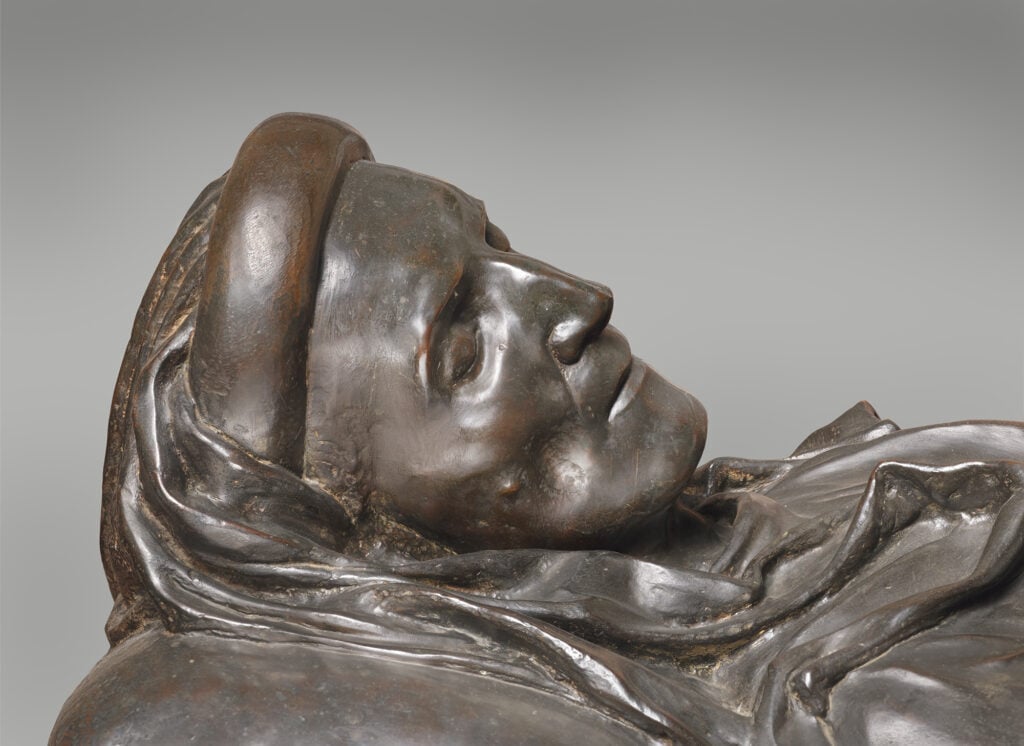
Vecchietta or Francesco di Giorgio, Gisant of Mariano Sozzini the Elder, late 1460s or early 1490s, Museo Nazionale del Bargello, Florence, Italy. Detail.
Sozzini wears the robes and distinctive headpiece of a legal scholar. His face is so individualized that curators think it may have been based on a death mask, a cast taken from someone’s face after they die, while his hands and feet may also have been molded from his body.
The effigy was meant for a larger tomb that was never completed, and the bronze remained with the family. Its exceptionally refined finish has led to attributions to either Vecchietta or Francesco di Giorgio, a Sienese painter and sculptor who trained under Vecchietta.
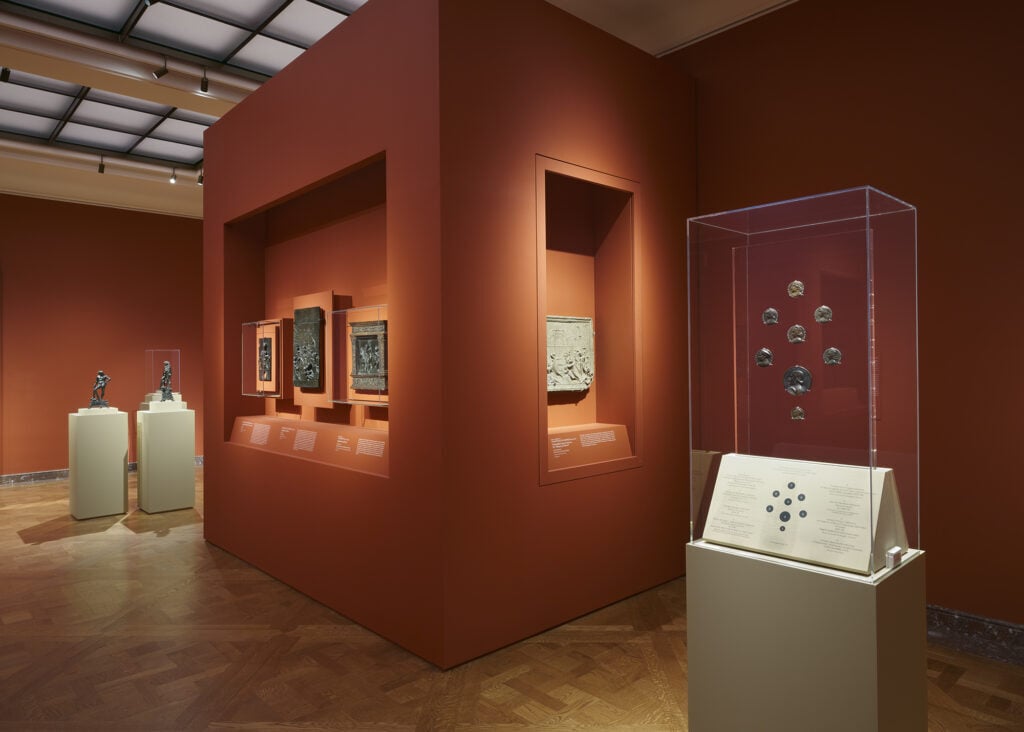
Gallery view of Siena: The Art of Bronze, 1450–1500 at The Frick Collection, New York City, NY, USA. Photo: Joseph Coscia Jr.
Portrait medals gave powerful people a way to shape how they were seen, pairing carefully constructed likenesses with mythological or allegorical imagery. Unlike coins, they were never meant to be spent.
Di Giorgio was also an architect and military engineer, with patrons that included Federico da Montefeltro, Duke of Urbino and one of the era’s most celebrated military commanders and art patrons. Eight medals made by or attributed to him are on display.
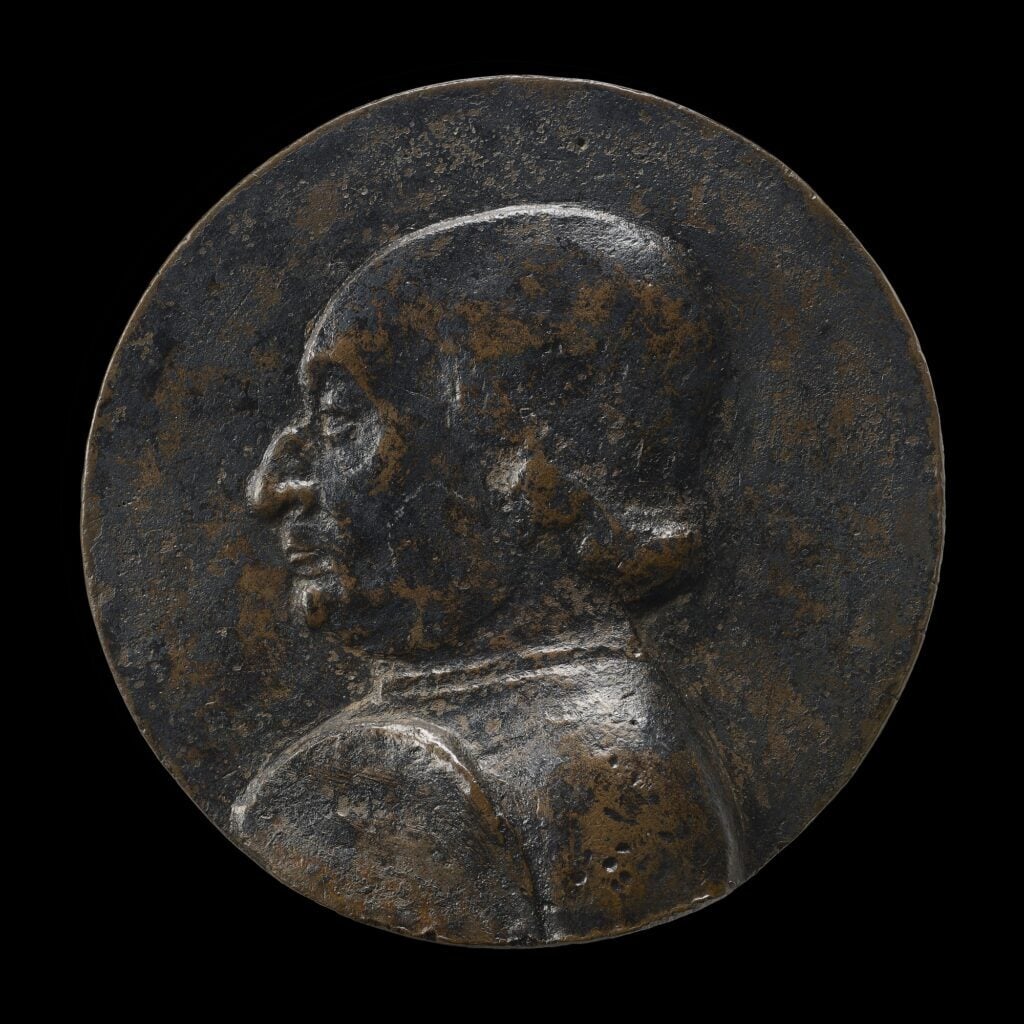
Francesco di Giorgio, Federico da Montefeltro (obverse); Bellerophon and the Chimera (reverse), ca. 1474–1479, British Museum, London, UK.
One unusually large medal, nearly four inches in diameter, features Federico’s instantly recognizable profile. Made famous by Piero della Francesca’s iconic portrait at the Uffizi Galleries, the left-facing view hides the injury that cost Federico sight in his right eye. Greek mythological figures appear on the reverse. The political meaning remains debated, but the care taken in shaping the Duke’s public image is clear.
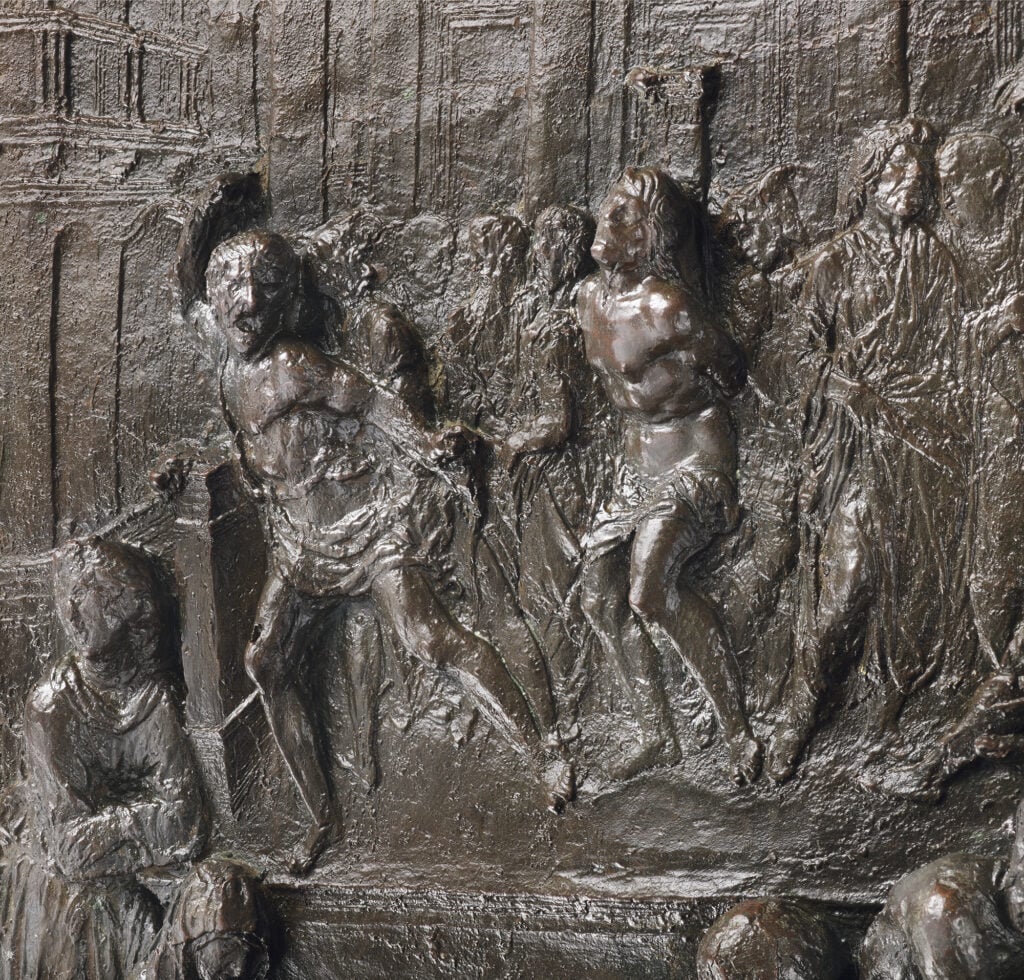
Francesco di Giorgio, Flagellation of Christ, 1480s/1490s, Galleria Nazionale dell’Umbria, Perugia, Italy. Detail.
The exhibition also includes bronze panels in which figures rise from flat backgrounds, almost like three-dimensional paintings. Unlike sculptures built into cathedral doors, chapels, or tombs, these works could be displayed anywhere.
Di Giorgio’s panels make his different approach to bronze clear. Rather than polishing every surface as highly as Vecchietta, he sometimes left areas deliberately rough, allowing reflected light to create atmospheric effects. His sculpture could be so painterly that some of his works were once attributed to Leonardo da Vinci.
The possibilities of bronze extend beyond relief. Freestanding sculptures are also presented to demonstrate what the material allowed, including its strength to support bodies and limbs in poses that would require additional support if made in stone.
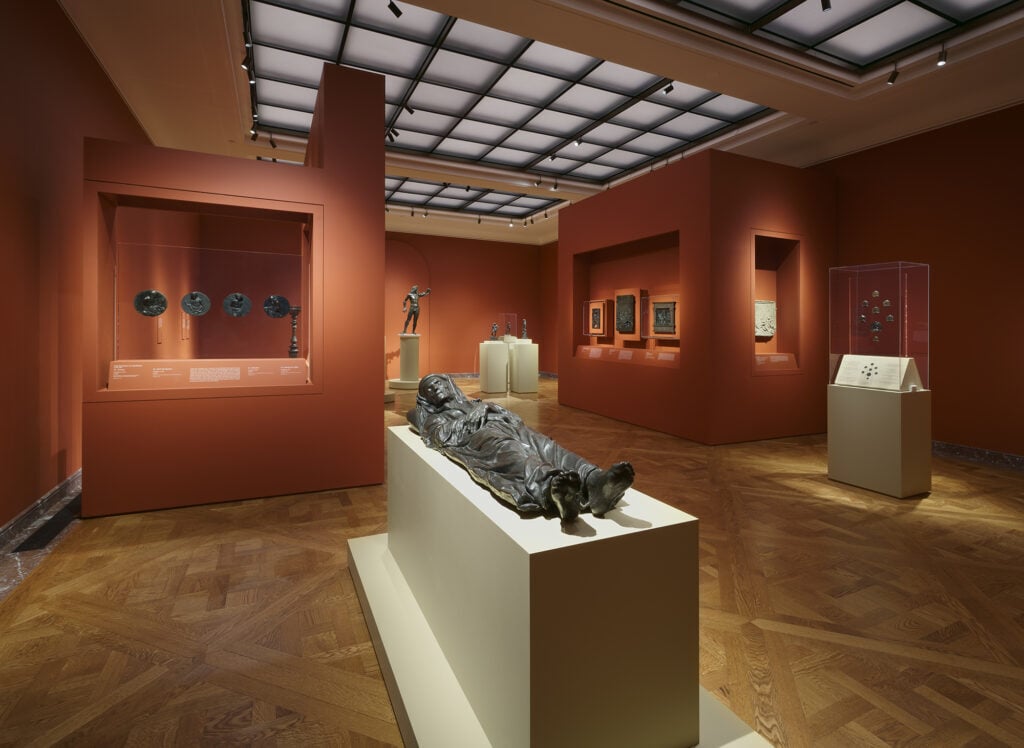
Gallery view of Siena: The Art of Bronze, 1450–1500 at The Frick Collection, New York City, NY, USA. Photo: Joseph Coscia Jr.
What makes the gathering at the Frick exceptional is the opportunity to examine an artistic tradition through works that have been separated for centuries and see how much has been overlooked in Siena’s Renaissance history.
The opportunity to see Donatello’s bishop on its first trip outside Italy is exceptional enough; to encounter the work alongside a much broader story and the artists, techniques, and objects that defined an overlooked chapter of the Renaissance is something even rarer.
Siena: The Art of Bronze, 1450–1500 is on view at the Frick Collection in New York through January 18, 2027.
DailyArt Magazine needs your support. Every contribution, however big or small, is very valuable for our future. Thanks to it, we will be able to sustain and grow the Magazine. Thank you for your help!
Rivera is a New York City–based journalist with more than two decades of experience, well-known for thriving in a media capital that tests endurance as much as talent. Reporting has taken her from the World Cup to the Louvre. Her wide-ranging interests in art history have been shaped by years of extensive study and research in major museums in New York, London, Paris, and many leading art institutions around the world.
If you ask people to name the greatest sculptor, the 15th-century Florentine, Donatello, will not be near the top of the list. Yet throughout a long...
Catriona Miller 28 September 2026
Venetian color often feels immediate: a blue robe, a crimson sleeve, a flash of yellow, a shadow beneath living skin. Yet before these colors became...
Wen Gu 3 September 2026
Few artists have shaped the history of Western art as profoundly as Michelangelo Buonarroti (1475–1564). Sculptor, painter, architect, and poet, he...
Catherine Razafindralambo 29 June 2026
While researching 17th-century portraiture, especially those by Lavinia Fontana, I started noticing the children bedecked in jewelry like miniature...
Kitty Perring 20 April 2026