


The Art of Falling in 10 Paintings
The Japanese proverb says Nanakorobi yaoki, meaning “fall seven times, get up eight.” No matter how much you stumble, the essential is to...
Guest Author 13 August 2026
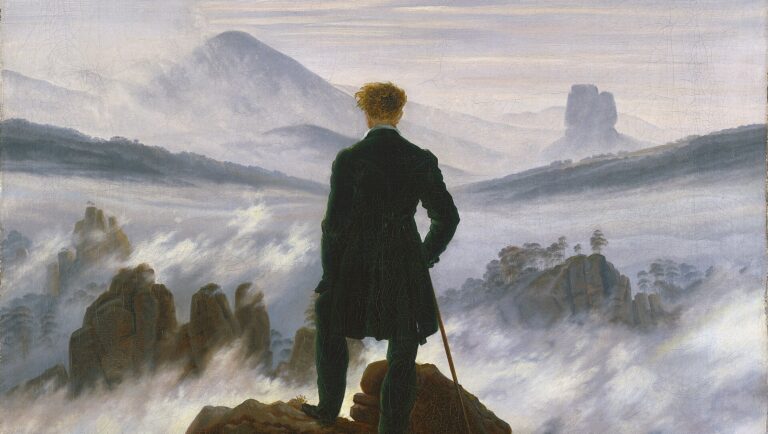
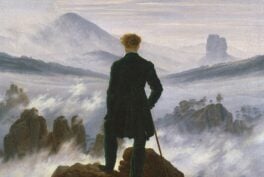
Caspar David Friedrich, Wanderer Above the Sea of Fog, 1818, Hamburger Kunsthalle, Hamburg, Germany. Detail.
What does it mean to be alone? And why have artists so often found beauty and inspiration in it? From quiet moments of contemplation to vast, awe-inspiring landscapes, these paintings reveal the many faces of solitude. But solitude is more than a subject for painting; it can also be the very condition that allows art to emerge.
In 1972, writer May Sarton wrote in her journal on the necessity of solitude: “I am here alone for the first time in weeks, to take up my ‘real’ life again at last. That is what is strange—that friends, even passionate love, are not my real life unless there is time alone in which to explore and to discover what is happening or has happened. Without the interruptions, nourishing and maddening, this life would become arid. Yet I taste it fully only when I am alone…”
Indeed, solitude is this restorative act of being alone. It is finding peace in repose and pleasure in contemplation. In our digital age and world of information overload, it requires a distance from the languishing of scrolling on screens; to be truly with our inner selves, enjoying tangible objects, and finding meaning in both remembering and forgetting. The ability to pay active attention, engage in worthwhile work, and resist comfort are also traits of solitary action we must rekindle. Solitude is also, usually, when the artist is at their most creative. Of course, the indispensable act of solitude has been portrayed in all its beauty by many artists and their works.
Between 1480 and 1490, Leonardo da Vinci painted Saint Jerome during his time living as a hermit in the Syrian desert. While incomplete, the artwork is a wonderful depiction of the saint in old age, performing penance in front of a crucifix. Da Vinci’s signature renderings of anatomy can be seen in Jerome’s muscles on the neck and shoulder. His expression is meditative and remorseful. Solitude here is represented as a secluded act of faith.
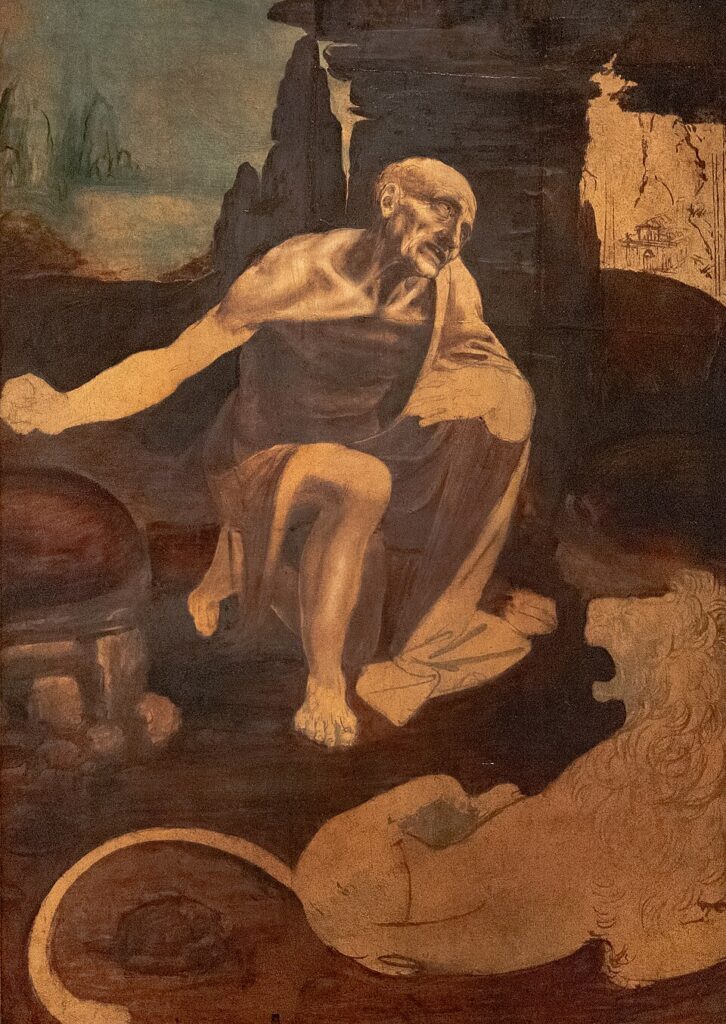
Leonardo da Vinci, Saint Jerome, c. 1482, Vatican Museums, Vatican City.
In 1888, Vincent van Gogh, who knew a thing or two about solitude, wrote to Émile Bernard, “Do you know a painter Vermeer, who… painted a very beautiful Dutch lady pregnant?” He’s talking about the Dutch Golden Age master Johannes Vermeer, of course. However, it’s not known whether the woman in blue is pregnant. Despite the ambiguity of the woman’s round figure, one thing is for certain: she is standing alone and reading a letter. Reading (perhaps the updates of a traveling husband) warrants a moment of quiet solitude. Vermeer painted a variety of women, most of them in profile, each performing a different act in solitude.
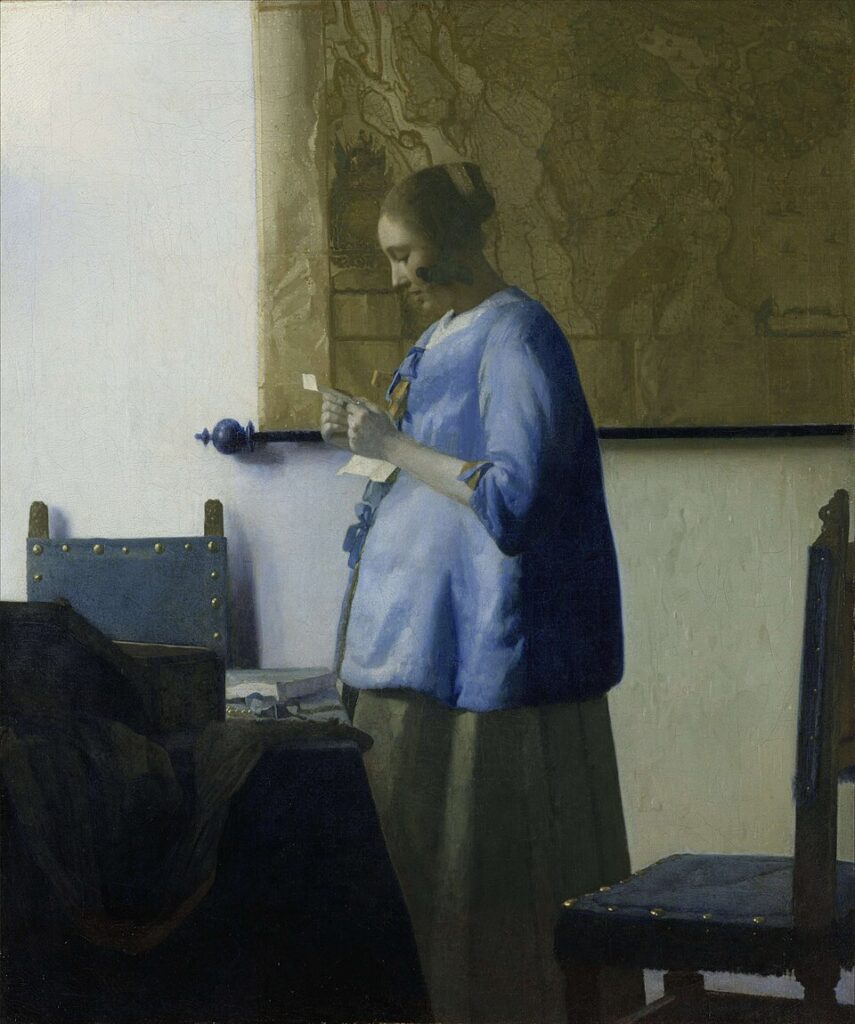
Johannes Vermeer, Woman Reading a Letter, c. 1663, Rijksmuseum, Amsterdam, Netherlands.
One of these paintings inspired an ekphrastic poem by Wisława Szymborska:
So long as that woman from the Rijksmuseum
in painted quiet and concentration
keeps pouring milk day after day
from the pitcher to the bowl
the World hasn’t earned
the world’s end.
Only in solitude can one be alone with a work of art and write something so brilliant.
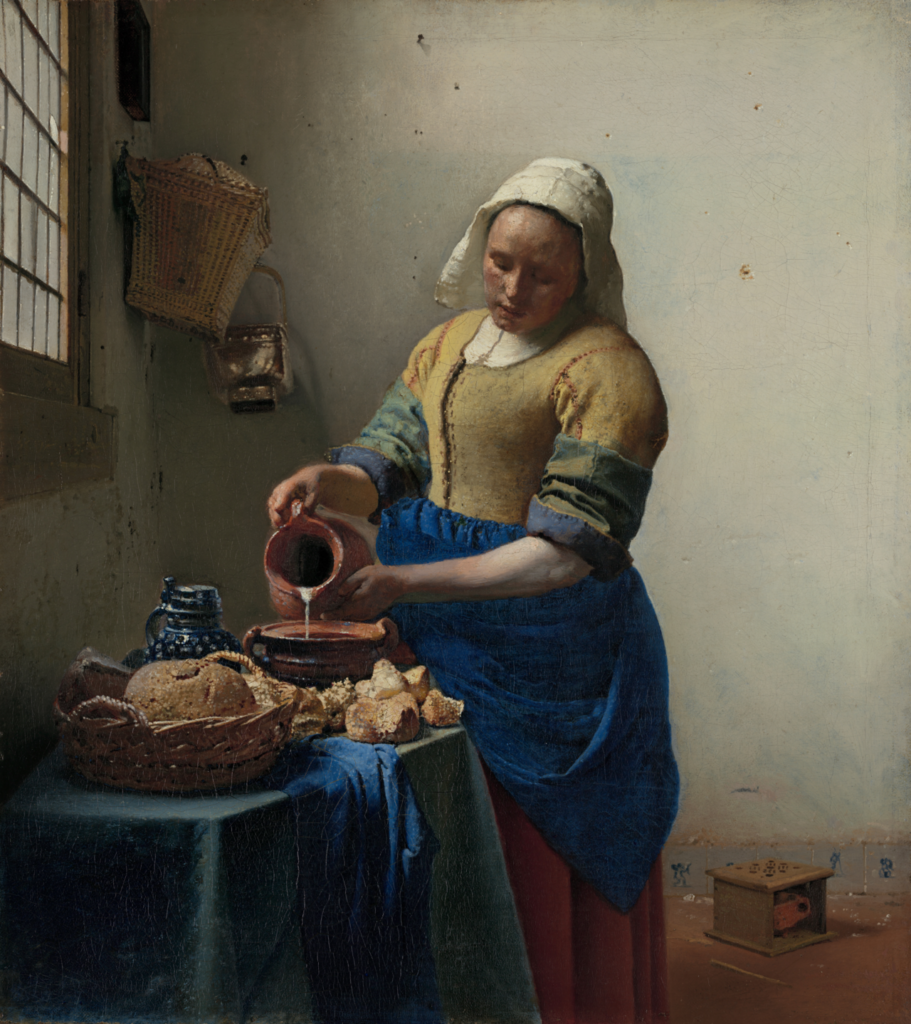
Johannes Vermeer, The Milkmaid, 1657-58, Rijksmuseum, Amsterdam, the Netherlands
There’s a little more context to Dante Gabriel Rossetti’s The Day Dream. The Pre-Raphaelite founder portrayed his lover, Jane Morris, daydreaming while sitting in a sycamore tree. She idles with a branch in one hand, a book in her lap, and a honeysuckle in the other hand as an emblem of love. The affair between artist and subject was clandestine, adding further affect to her longing gaze. This is an apt example of how love’s force is more acutely felt when one is solitary.
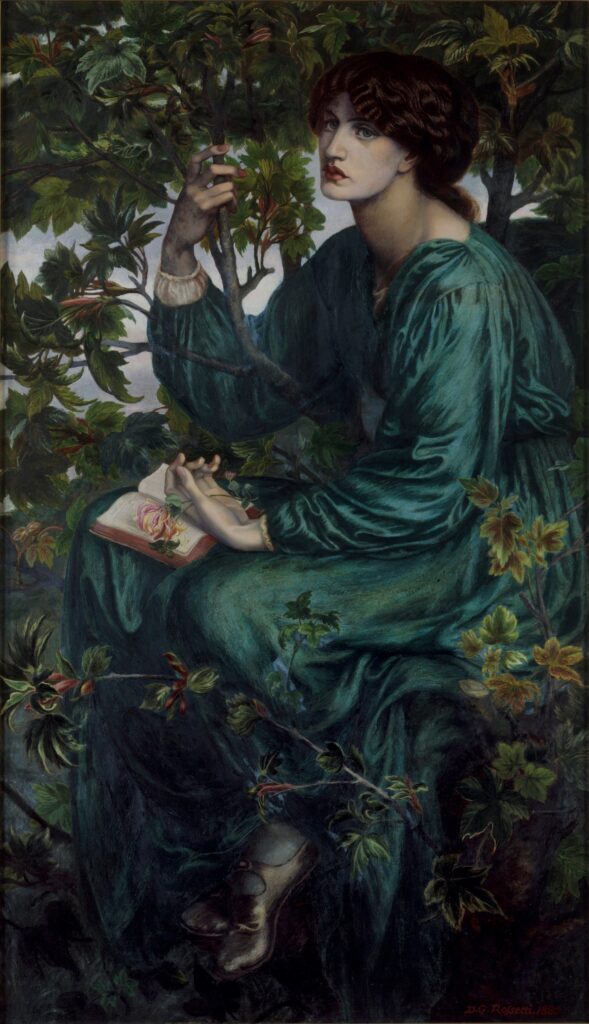
Dante Gabriel Rossetti, The Day Dream, 1880, Victoria and Albert Museum, London, UK.
Perhaps none understood the splendor of solitude better than the Romanticists. Caspar David Friedrich captured the sublimity of both solitude and nature in one painting. We gaze at both the view and the wanderer’s back. He is the lone hero, the awestruck individual overlooking the sea of fog after conquering the earth’s heights. Solitude depends on independence and self-sufficiency, two values the Romanticists held dear.
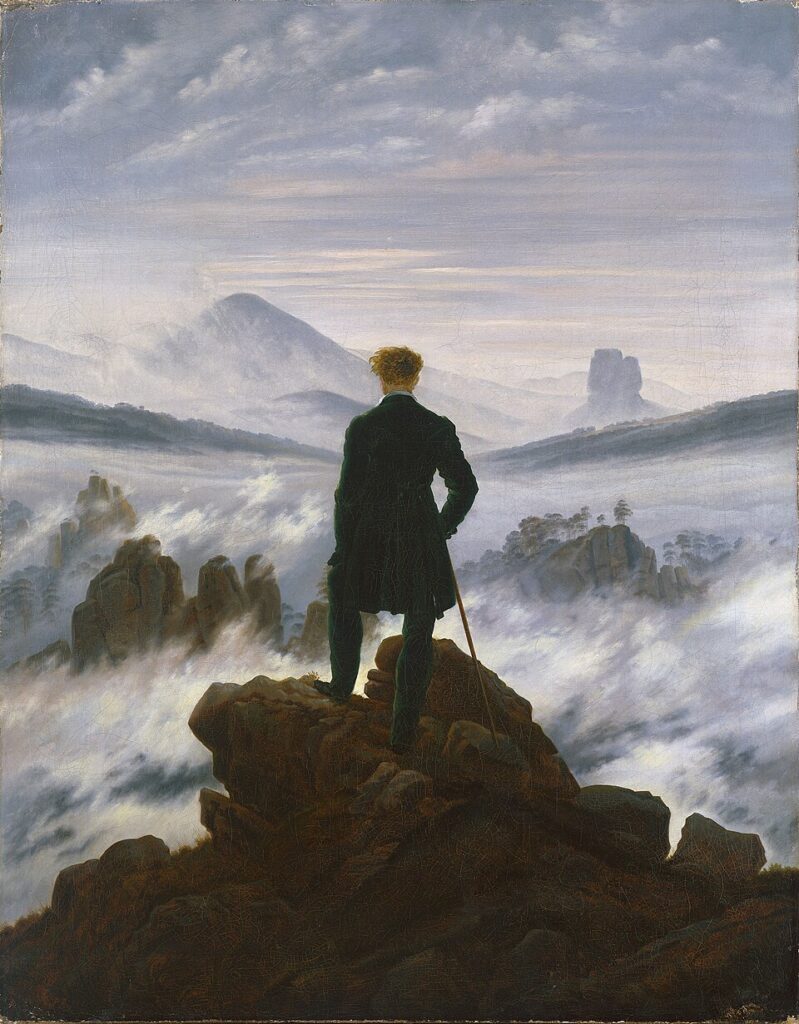
Caspar David Friedrich, Wanderer Above the Sea of Fog, 1818, Hamburger Kunsthalle, Hamburg, Germany.
American Romanticist Joshua Shaw also captured great landscapes. This time a figure without a shirt can be seen lying in repose under a tree. In this composition, nature takes precedence over the individual. Solitude, in this idyllic scene, is most appreciated when one is overwhelmed by the wonder and beauty of natural surroundings. As the poet Rainer Maria Rilke said, “We have been put into life as into the element we most accord with, and we have, moreover, through thousands of years of adaptation, come to resemble this life so greatly that when we hold still, through a fortunate mimicry we can hardly be differentiated from everything around us.”
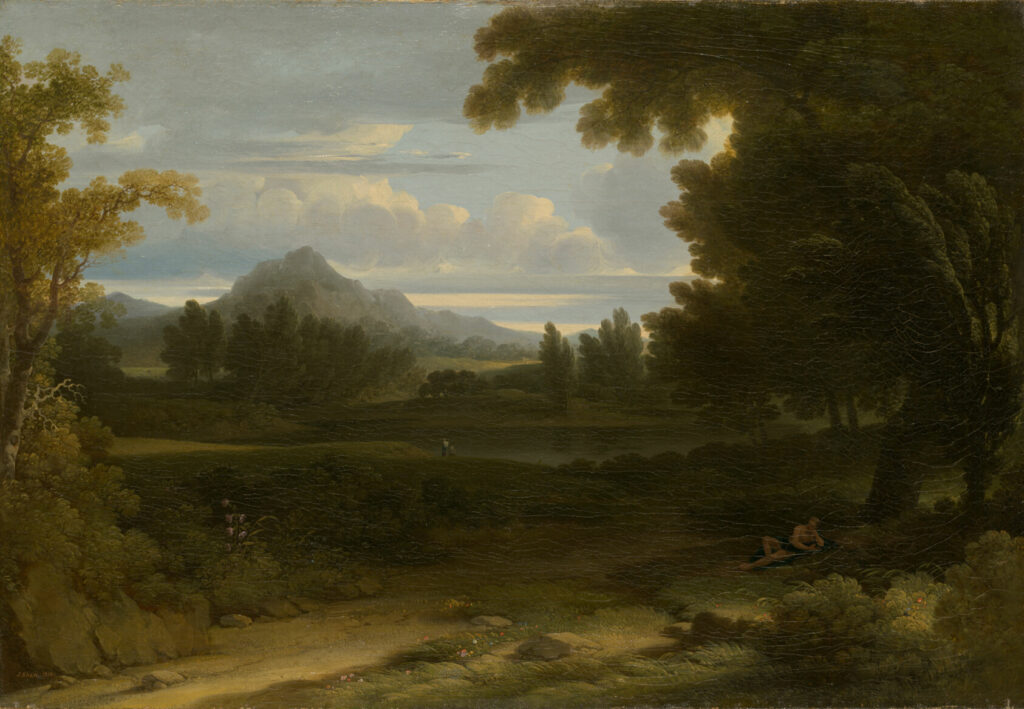
Joshua Shaw, Solitude, 1818, Art Institute of Chicago, Chicago, IL, USA.
Rilke keenly articulated the idea of solitude in words just as well as any great painter could. His friend, the Expressionist Paula Modersohn-Becker, painted his portrait in 1906. This piece elegantly captures Rilke with a pensive expression, his mouth slightly open. It is grounded in texture and muted colors, indicating an intelligent, introspective poet. Rilke was an artist who suffered yet recognized the benefits of solitude: “We know little, but that we must trust in what is difficult is a certainty that will never abandon us; it is good to be solitary, for solitude is difficult; that something is difficult must be one more reason for us to do it.”
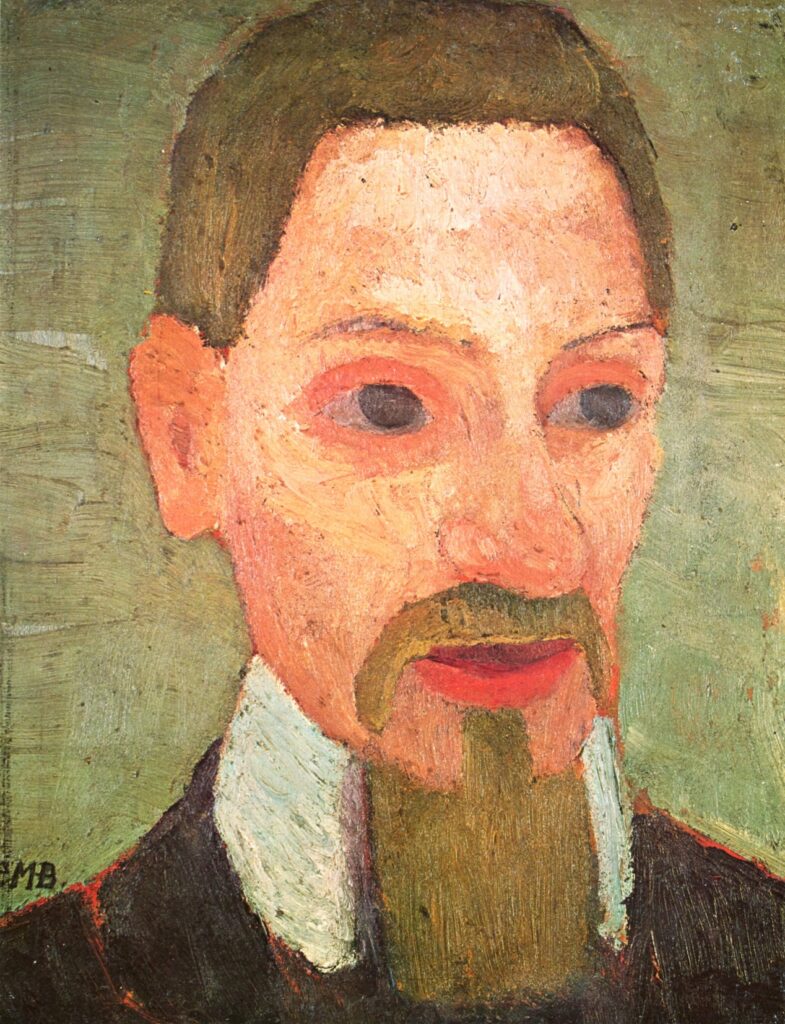
Paula Modersohn-Becker, Portrait of Rainer Maria Rilke, 1906, Ludwig Roselius Museum, Bremen, Germany.
…it is good to be solitary, for solitude is difficult; that something is difficult must be one more reason for us to do it.
Letter from May 14, 1904 in: Letters to a Young Poet
Edward Hopper insisted his works were not representations of loneliness. However, the people in his paintings, whether suffering or not, are certainly figures of solitude. The gas station attendant in Hopper’s Gas symbolizes a particular American endeavor: isolation on the road. Driving can be a useful form of solitude, whether it’s enjoying the sights on a cross-country road trip or decompressing on the drive home from work.
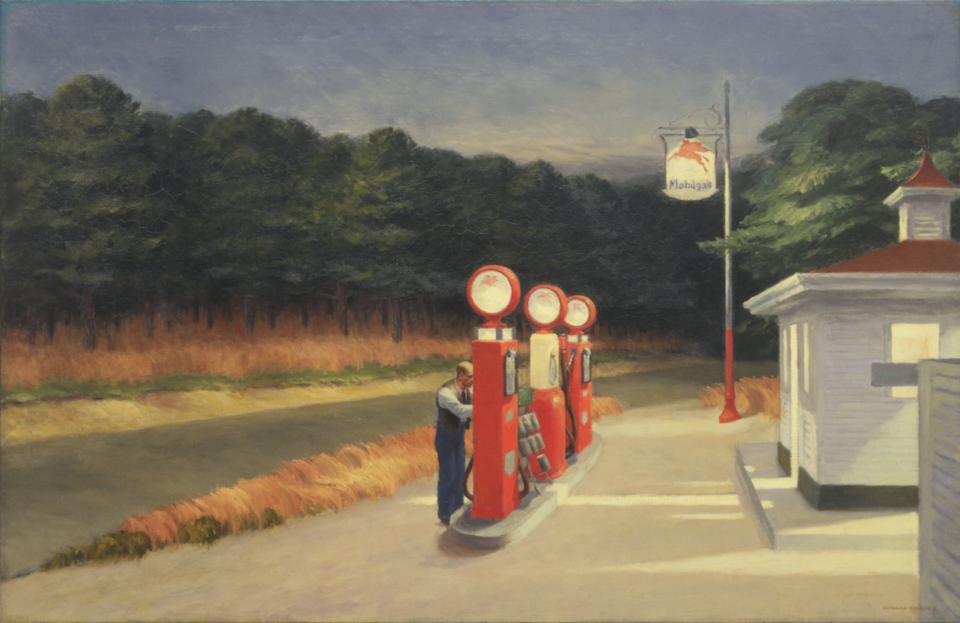
Edward Hopper, Gas, 1940, Museum of Modern Art, New York, NY, USA.
Even in dreams solitude can be found. Though dreams can also occur in the act of solitude. Salvador Dalí perceived this in his Surrealist work and life.
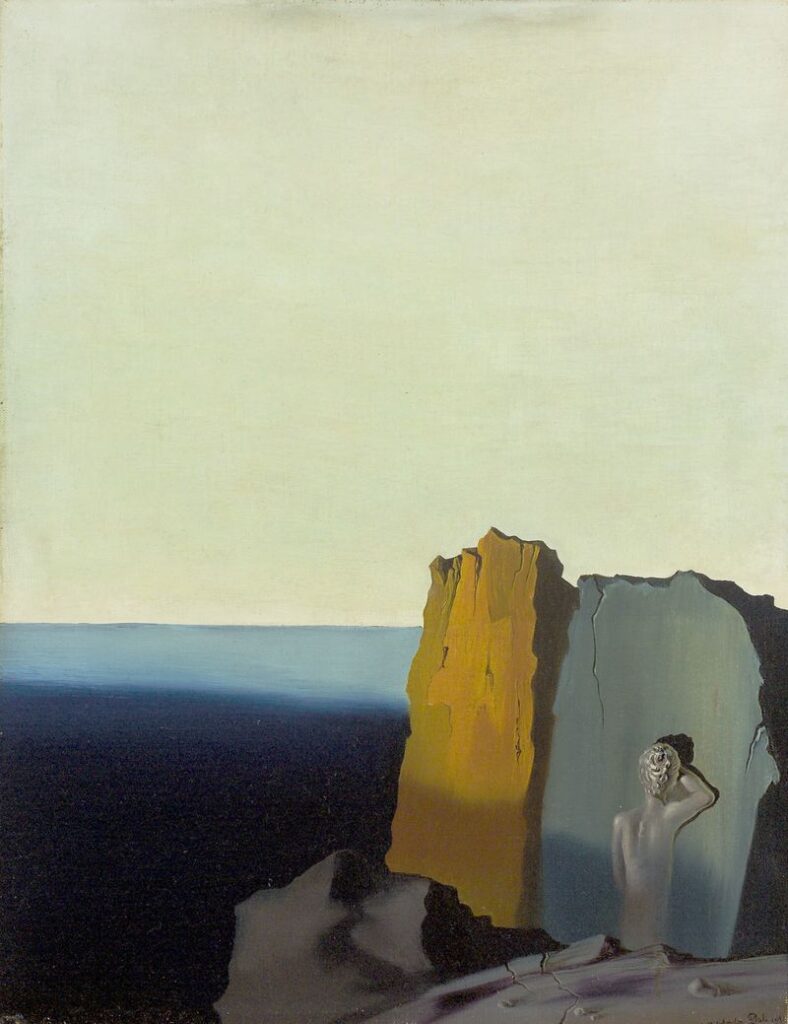
Salvador Dalí, La solitude (Solitude), 1931, Wadsworth Atheneum, Hartford, CT, USA.
Abstract Expressionism can also be a powerful account of solitude and a revelation when viewed in solitude. Consider the color field paintings of Mark Rothko. His artworks inspire deep reflection and invoke spiritual transcendence, hallmarks of true solitude. His artworks are pure colors and structures of intense feeling. The essence, in a way, of our inner lives that can only be realized in solitude.
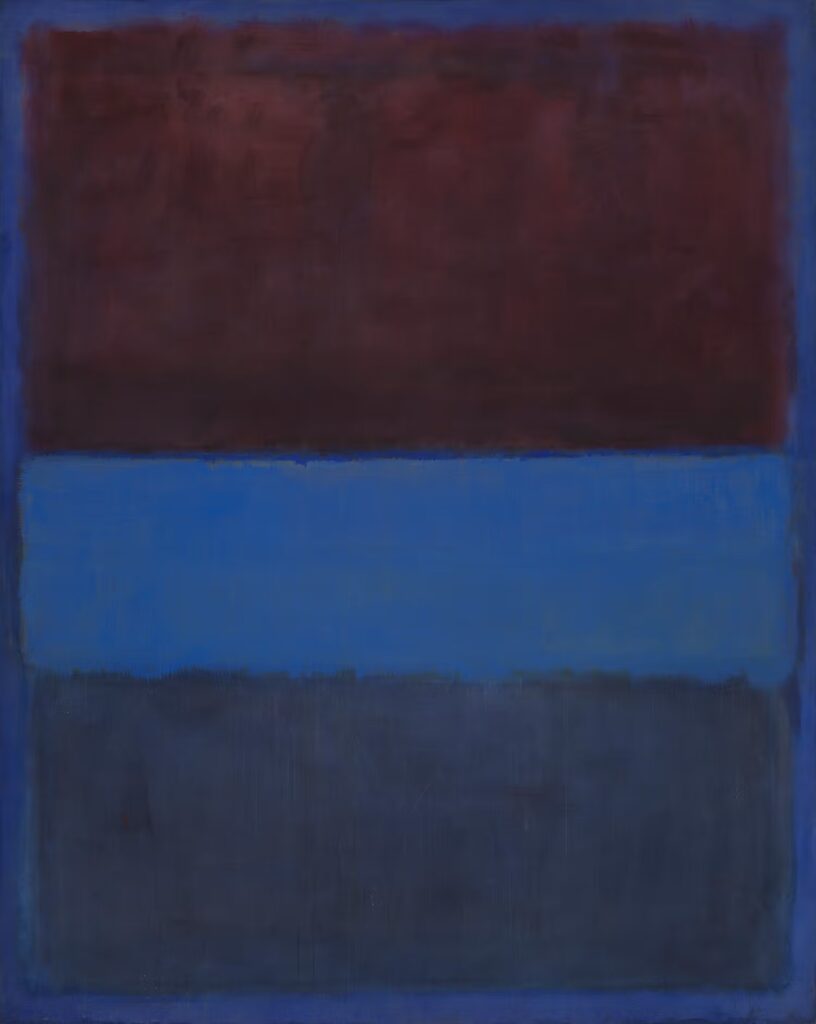
Mark Rothko, No. 61 (Rust and Blue), Museum of Contemporary Art, Los Angeles, CA, USA.
The act of solitude is, perhaps now more than ever, crucial. To make good art, one must be able to rest, observe, and be still. Artists understand the power of being solitary intuitively. They know that to be alone with their own minds and hearts is to discover more about themselves, the world, and their work. Without solitude, they would not have made their masterpieces.
I leave here, again, the words of May Sarton: “The value of solitude—one of its values—is, of course, that there is nothing to cushion against attacks from within, just as there is nothing to help balance at times of particular stress or depression. A few moments of desultory conversation… may calm an inner storm. But the storm, painful as it is, might have had some truth in it.”
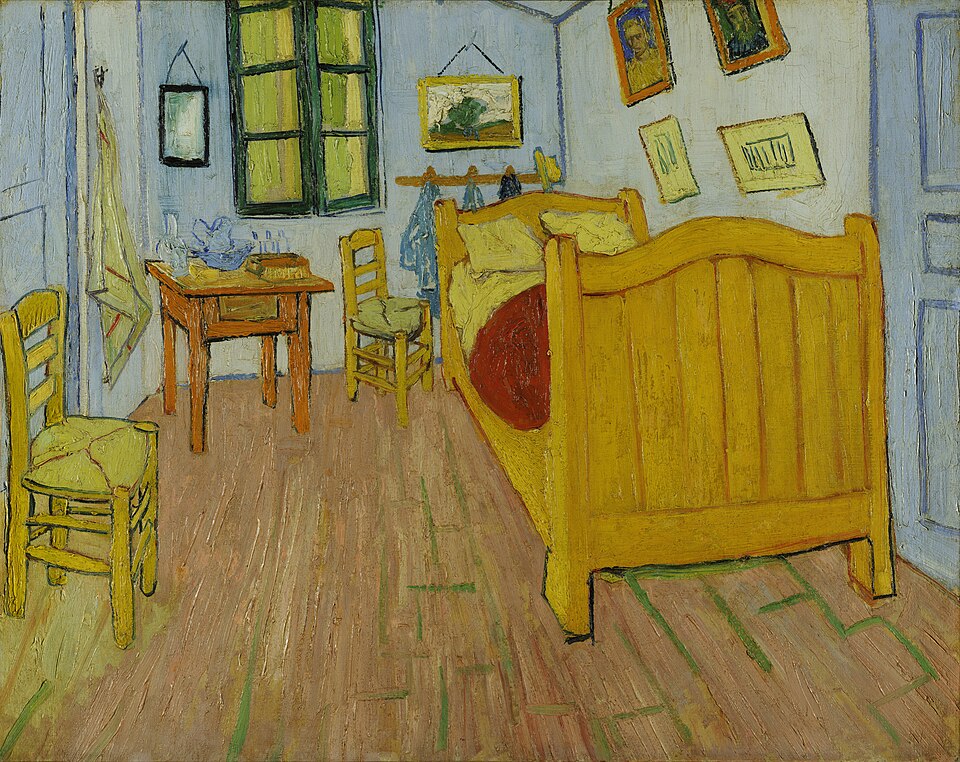
Vincent van Gogh, Bedroom in Arles, 1888, Van Gogh Museum, Amsterdam, Netherlands.
Journal of a Solitude, May Sarton, published 1992
Rainer Maria Rilke, Letters to a Young Poet
Vermeer, poem by Wisława Szymborska, translated from the Polish by Clare Cavanagh and Stanisław Barańczak, New York Review of Books August 19, 2010 issue
DailyArt Magazine needs your support. Every contribution, however big or small, is very valuable for our future. Thanks to it, we will be able to sustain and grow the Magazine. Thank you for your help!

A writer devoted to the arts with a Master's degree in English and a specialization in film studies/history. Ars longa, vita brevis.

The Japanese proverb says Nanakorobi yaoki, meaning “fall seven times, get up eight.” No matter how much you stumble, the essential is to...
Guest Author 13 August 2026
This July, DailyArt Magazine turns 10. On this occasion, we asked people who create it for symbolic artistic gifts. We asked for artworks that are...
Kate Wojtczak, Szymon Jocek 21 July 2026
In a world filled with happy couples and dating apps, it’s easy to feel down about being single. However, it’s time to change your perspective!...
Katerina Papouliou 11 November 2025
Vincent van Gogh is probably the first artist you think of when the Starry Night painting is mentioned. But he shouldn’t be the only one! Let...
Marta Wiktoria Bryll 30 June 2026