One remarkable example is Properzia de’ Rossi, whose marble relief Joseph and Potiphar’s Wife still survives as one of the earliest sculptures by a woman in Europe. Her success opened the door for later generations: Lavinia Fontana, Elisabetta Sirani, and Ginevra Cantofoli among them, whose paintings still hang quietly in Bologna’s churches and museums. This guided walk follows their traces across the city, through chapels, museums, and unexpected corners where their work endures.
1. San Girolamo: Where Elisabetta Sirani’s Career Began
Let’s start our journey through Bologna with Elisabetta Sirani. Despite social barriers that kept women from life drawing or travel, Sirani—who trained at her father’s studio and school—was able to develop her own distinct, intimate manner. She opened what is often described as Europe’s first school for women artists, training both female and male pupils, and completed over 100 paintings before her death at 27. You can find Sirani’s birthplace at 7 Via Urbana. A modest building with a small plaque marking the artist is one of my favorite places to begin the art history walk through Bologna.
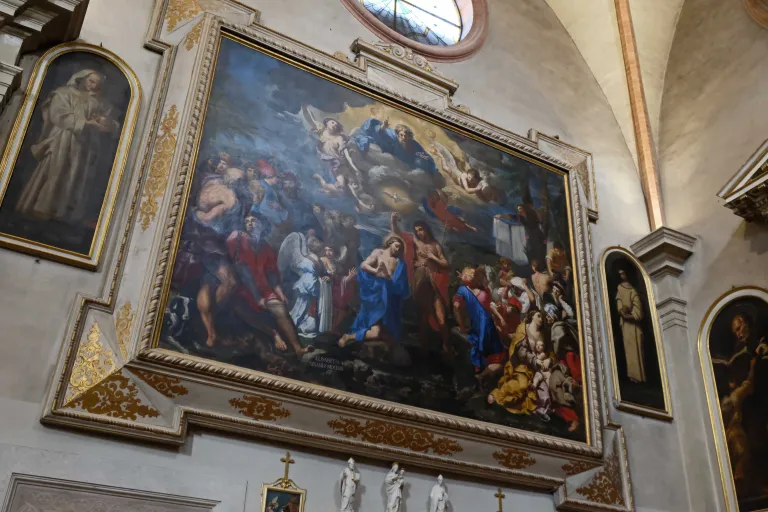
A short bus ride west leads to the Certosa di Bologna, once a Carthusian monastery and now a monumental cemetery. In the former church of San Girolamo hangs Sirani’s early Baptism of Christ, painted when she was 19; once inside, go to the left aisle and look up. You will see this work there. It was part of a series of scenes from the life of Jesus that also included work by her father. Her painting’s success marked the beginning of her professional career.
The Certosa is one of Bologna’s most fascinating places. Its long porticoes and cypress-lined cloisters hold countless sculptures and tombs, many belonging to the city’s artists. Visiting Sirani’s first major commission here, and then wandering through the cemetery, gives a sense of how deeply art and remembrance are woven into Bologna’s life.
2. San Giacomo Maggiore: Where Women Artists Found Recognition
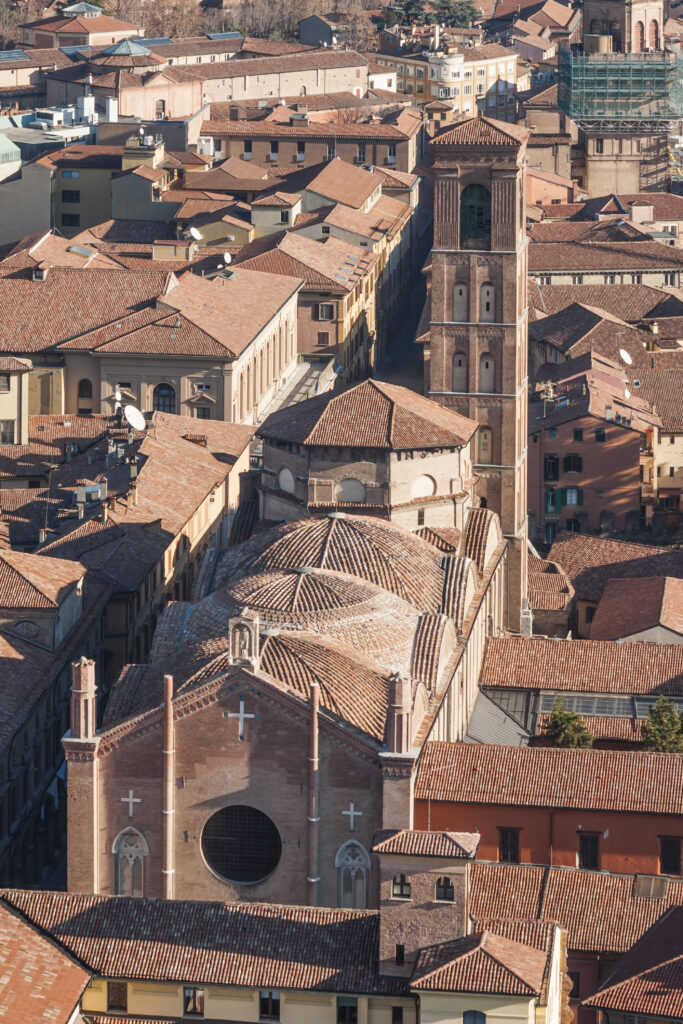
Back in the university quarter stands San Giacomo Maggiore, one of Bologna’s most important churches. Ginevra Cantofoli, a student and friend of Sirani, received a rare commission here for an altarpiece of San Tommaso da Villanova. Contemporary accounts describe how the finished painting was carried through the streets of Bologna in a solemn procession before being installed in the church and blessed by the clergy. For a woman in the 17th century, such recognition was almost unheard of.
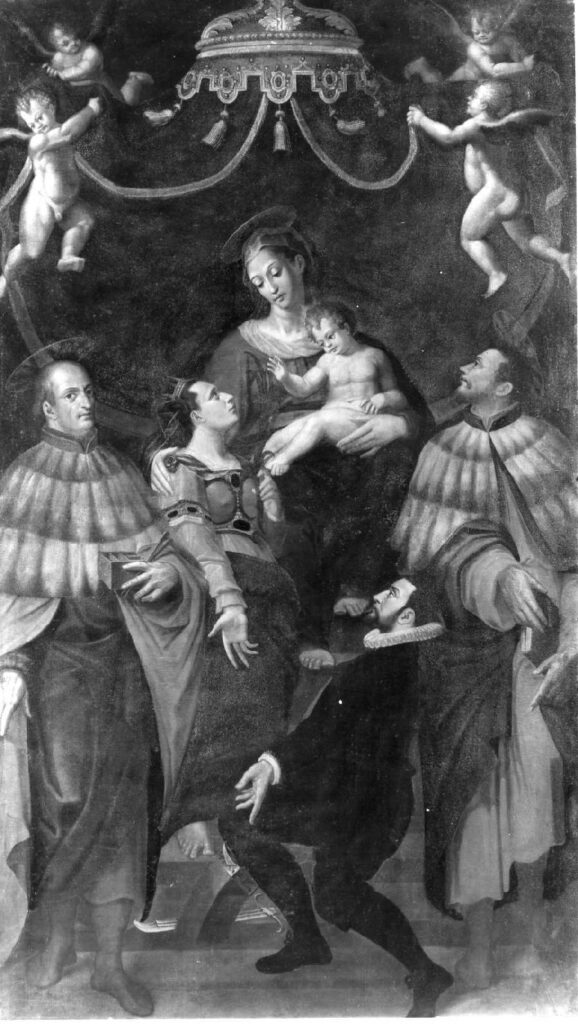
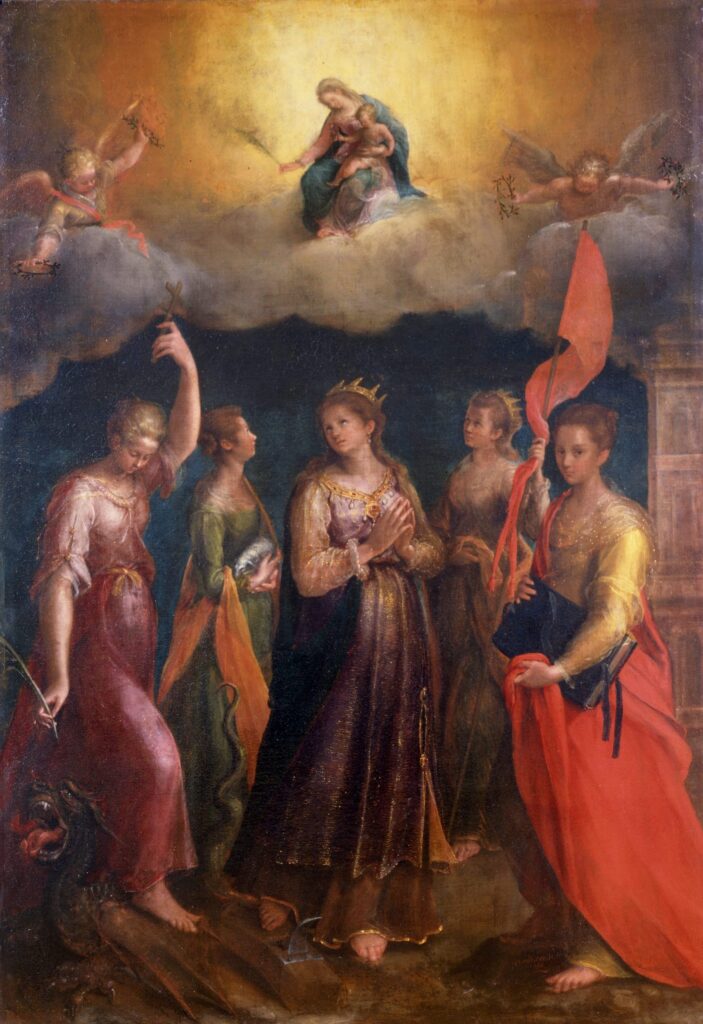
Although the painting is now lost, archives confirm its existence and note that Cantofoli was later buried within the basilica. The magnificent church is still worth visiting for its quiet grandeur and its many paintings and treasures. Among its remarkable works is a piece by Lavinia Fontana, tucked away in one of the niches before the Bentivoglio Chapel: her Madonna Enthroned with Child, Saint Catherine of Alexandria, Saint Cosmas, Saint Damian, and the Patron Scipione Calcina. The light is dim, but if you take a moment or use the torch on your phone, the details and colors will reveal themselves.
3. Pinacoteca Nazionale: Women in Conversation
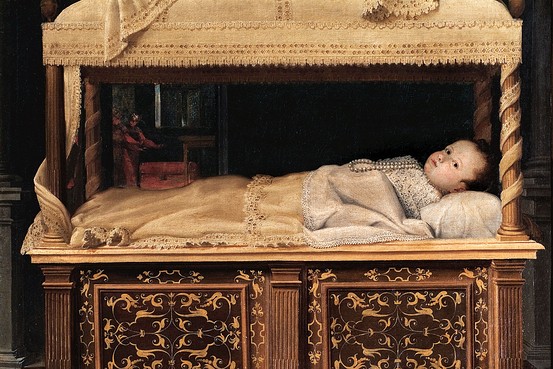
A few minutes’ walk from the San Giacomo Maggiore brings you to the Pinacoteca Nazionale, Bologna’s main museum for local art. The displays here change regularly, so each visit can feel like discovering a new side of the collection. In Room 22, one of my favorites is Lavinia Fontana’s Portrait of a Newborn in a Cradle. It’s a tender image of a wealthy infant swaddled in fine linen, captured with extraordinary care.
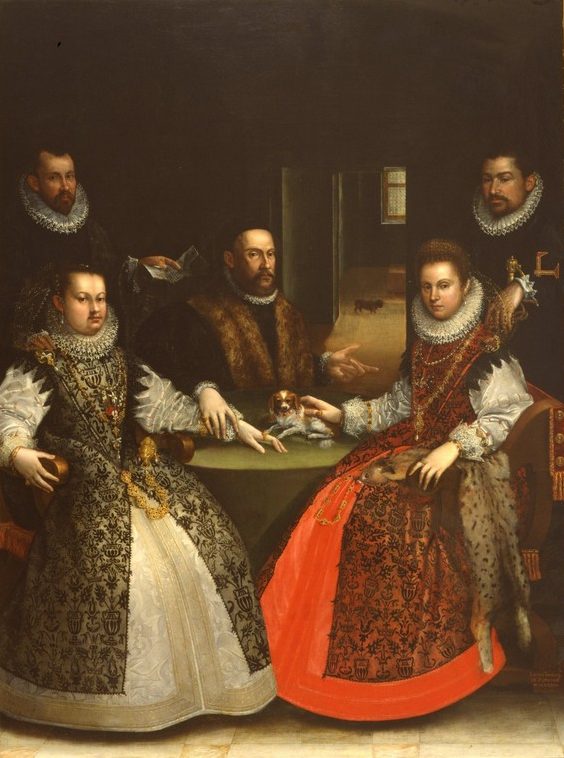
Nearby hangs her Gozzadini Family, a powerful portrait that radiates both family pride and social status. Seeing these works together gives a real sense of Fontana’s versatility, from intimate domestic scenes to grand formal compositions.
In Room 30, women artists continue to stand out. Artemisia Gentileschi’s Susanna and the Elders was on display when I visited, a mature, confident work that shows her skill at combining narrative drama with subtle psychological insight. Elisabetta Sirani’s Madonna and Child with the Infant, Saint John the Baptist and Saint Anthony of Padua Adoring the Child wasn’t on view at the time, but if you’re lucky, you might catch it. It’s one of her most graceful works, and deeply elegant but also showing her dialogue with Guido Reni’s classicism.
Seeing Fontana alongside Gentileschi and Sirani makes something really clear: Bologna genuinely supported women artists. These painters weren’t just exceptional; they were part of a community and a city that valued their professional lives. Standing in these rooms, you can sense the encouragement, the skill, confidence, and creativity of women working in a time when that was far from guaranteed.
4. The Archiginnasio: Teresa Muratori’s Memorial
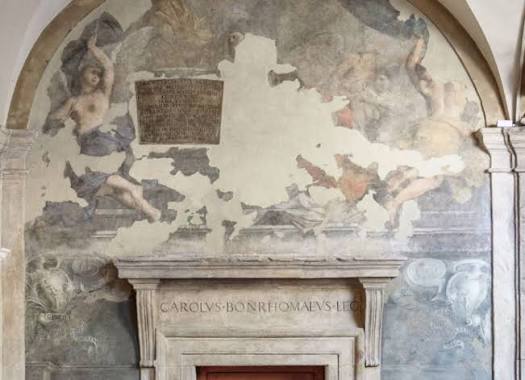
Just a few steps away stands the Archiginnasio, once the heart of the University of Bologna and still among its most beautiful structures. Along the southern wall of the upper arcade, one encounters the only monument attributed to a woman: Teresa Muratori’s memorial, painted in 1707 on commission from her father, Roberto. It replaced or updated an earlier commemoration of their ancestors, the philosophers and physicians Francesco and Achille Muratori.
In her fresco, Fame stands to the left and Mercury to the right, each pulling back drapery to frame a central scene in which Aesculapius (the god of healing) dominates the composition. This work is especially remarkable because, in early modern Italy, very few women managed to secure and complete large-scale public frescoes; such projects typically involved a male-dominated workshop to handle pigment preparation and plastering.
Unfortunately, the memorial was heavily damaged in the Second World War during bombing on January 29, 1944, and further harm occurred during restoration efforts. Despite that, faint traces of Muratori’s original design still endure, offering a quiet but powerful testament to her skill, ambition, and place within Bologna’s artistic tradition. Many of her other works survive, often in ecclesiastical settings, but they remain less visible and less documented, such as her Miracle of Saint Mauro Abbot in the Basilica of Santo Stefano.
5. Santa Maria della Vita: Women Reunited
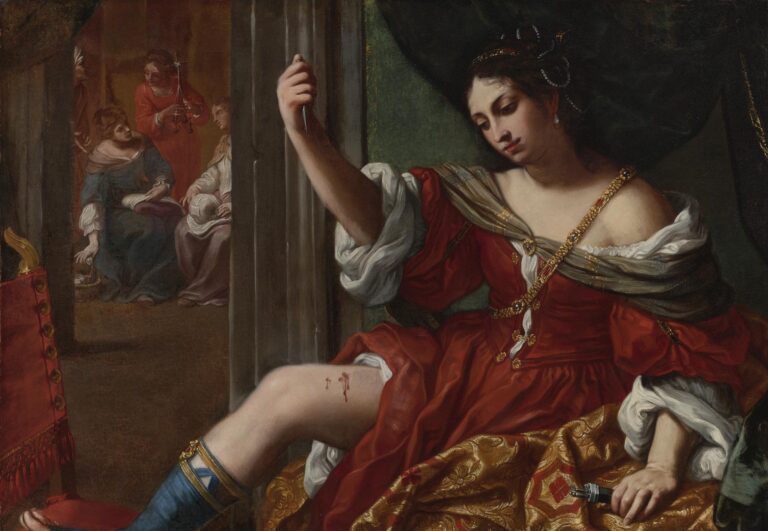
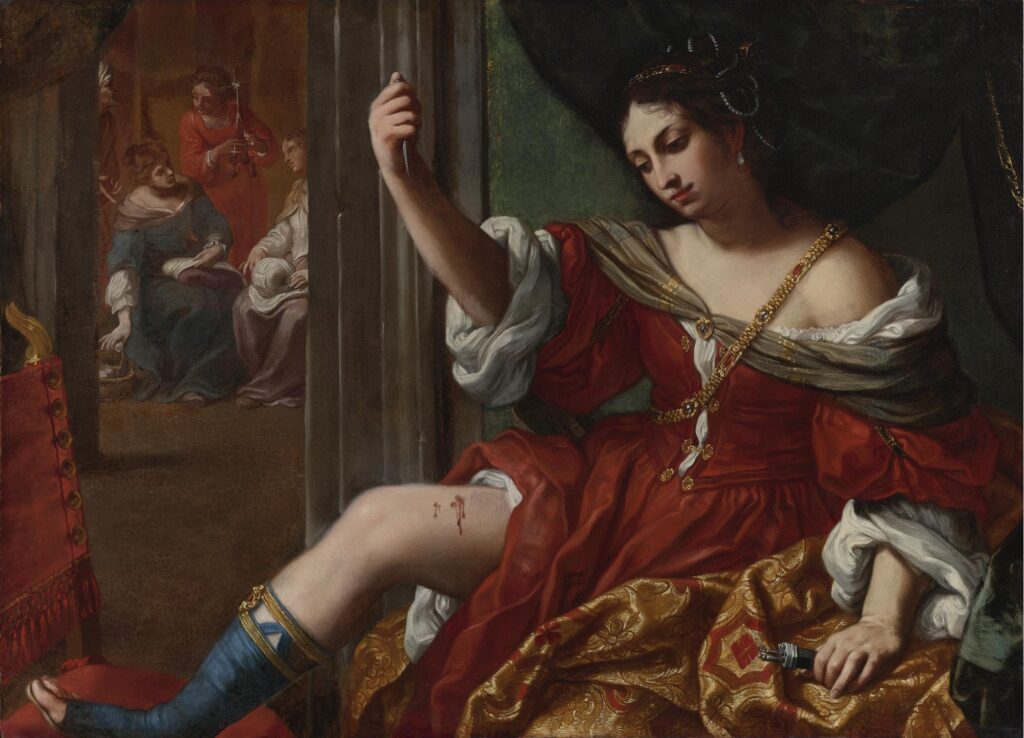
From Piazza Maggiore, a short walk south through the bustling market streets brings you to Santa Maria della Vita. The museum here has recently had several works from the Carisbo collection moved into its galleries. Among them is Elisabetta Sirani’s Portia Wounding Her Thigh, displayed alongside works by Ginevra Cantofoli and other artists from their shared circle, highlighting the vibrant community of women painters active in Bologna during the 17th century.
The re-hanging restores the sense of connection between these women who worked side by side. Sirani’s Portia, painted in the year before her death, is full of restraint and moral strength. Standing before it, you can feel the quiet confidence that distinguished Bologna’s female artistic community.
6. Museo Davia Bargellini: Fontana’s and Cantofoli’s Overlooked Masterpieces
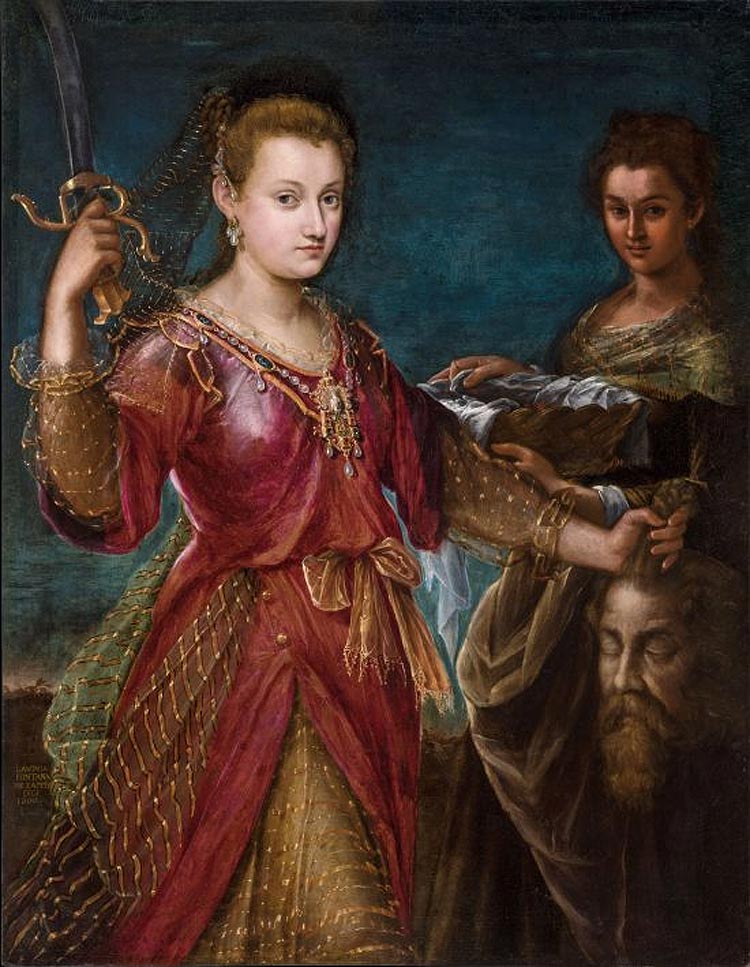
A short walk east, near Piazza Santo Stefano, the Museo Davia Bargellini offers a more intimate experience. Among its paintings is Lavinia Fontana’s beheading of Holofernes, where Judith’s composure and intelligence are more striking than the act itself. It’s quite easy to miss this painting, as the rooms are filled with an eclectic mix of fascinating works that constantly draw the eye in different directions. Nearby, don’t miss Ginevra Cantofoli’s Shepherdess or Saint Agnes, a soft and contemplative portrait.
7. San Domenico: Elisabetta Sirani’s Final Resting Place
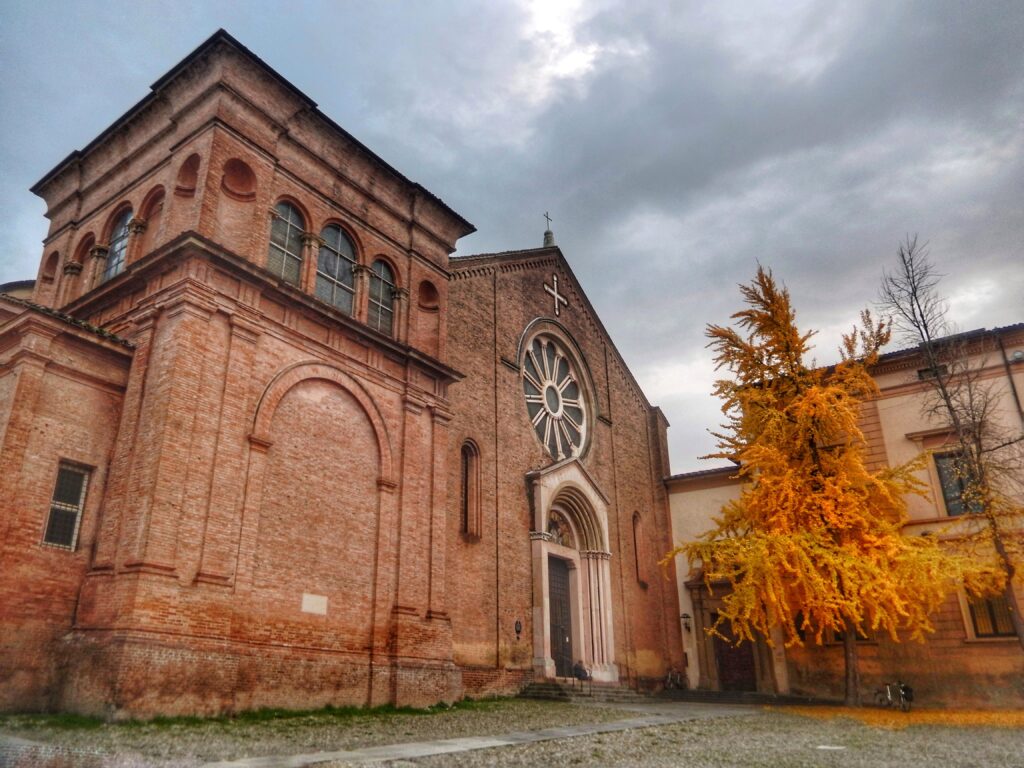
Back in the centre, the Basilica di San Domenico gathers centuries of faith and art beneath its white arches. Here, in the Rosary Chapel on the left wall, lies Elisabetta Sirani, buried beside her teacher and inspiration, Guido Reni. Her funeral was extraordinary for its time, with a vast marble-like catafalque shaped as the Temple of Fame and a life-sized figure of the artist. Standing here, it is easy to imagine the young painter whose brief life changed the course of Bolognese art. Across from her tomb lies that of Saint Dominic, with sculptures by a young Michelangelo. The symmetry feels fitting: masters and students, generations of artists connected through stone and legacy.
A Living Archive
The bustling city of Bologna still feels much like it did when these artists lived and worked here. Even the paintings that remain give a sense of the city’s energy—a melting pot of culture, creativity, and community. Exploring Bologna through its women artists makes the streets feel like pathways of rediscovery. Many works are still in place; some have moved, some have disappeared, but their stories definitely linger. Beyond the familiar names of Fontana, Sirani, and Cantofoli, there are others, like Maria Teresa Muratori Moneta, whose work reminds us that Bologna has long been a meeting point of ideas, culture, and artistic ambition. The city itself still shows the bustling culture and strong sense of community that made these artistic achievements possible and continues to keep them alive today.
Bologna has over 50 churches, many with undocumented or overlooked artworks. Just wandering into one can lead to unexpected treasures. I’m always surprised by what I stumble upon. These works give a real sense of Bologna as a living, breathing city shaped by art, culture, and the women who contributed so much to it.





.jpg)