


A Decade of Change: The 90s at Tate Britain
A new exhibition at Tate Britain, London, aims to show the transformative change that the UK underwent in the 1990s. With a strong focus on...
Edoardo Cesarino 26 October 2026
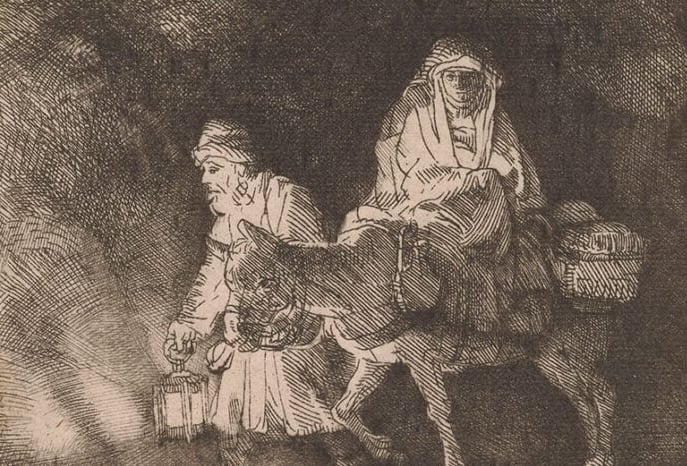
Rembrandt van Rijn, The Flight into Egypt: A Night Piece, ca. 1651, etching and drypoint on paper, The Morgan Library & Museum, New York, NY, USA. The Morgan Library & Museum (RvR 82). Photography by Graham S. Haber, 2014. Detail.
A remarkable exhibition opens at the Morgan Library & Museum, New York, bringing together for the first time a group of works on paper by Rembrandt van Rijn that will tell a story of how influential the presence of migrants and motif of migration were in the art of this European old master. The show Rembrandt’s Lions: Art and Exile in the Dutch Republic is on view through January 31, 2027.
Rembrandt Harmenszoon van Rijn (1606–1669) is considered one of the most famous artists in Dutch history. Next to Johannes Vermeer, they form the pantheon of quintessentially Dutch art which you will see in the greatest museums of fine arts in the Western world, such as the Rijksmuseum, the Louvre, the National Gallery, and the Metropolitan Museum of Art. Besides his captivating oil paintings, such as the Night Watch, Rembrandt is famous for his drawings and prints which are continuously appreciated for their incredibly raw lifelikeness and technological innovation.
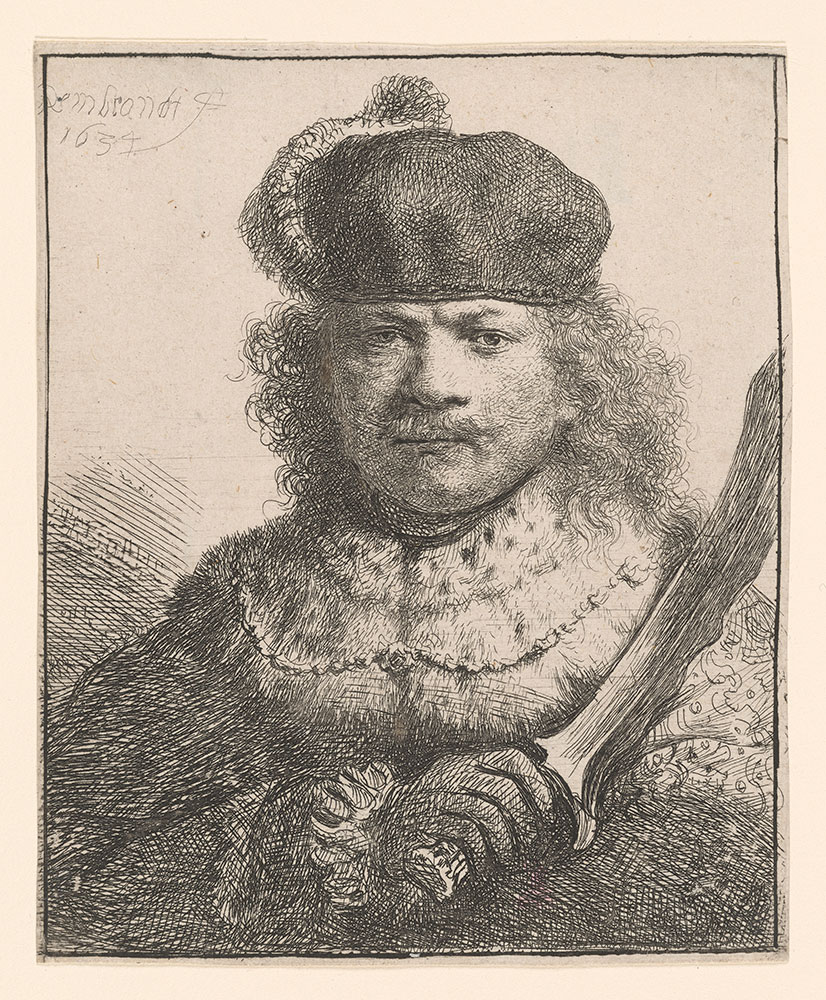
Rembrandt van Rijn, Self Portrait with Raised Sabre, ca. 1634, etching with burin on paper, The Morgan Library & Museum, New York, NY, USA. Purchased by J. Pierpont Morgan in 1905. The Morgan Library & Museum (RvR 22). Photography by Janny Chiu, 2020.
Rembrandt famously lived on Jodenbreestraat 4 in Amsterdam, in the house which is turned today into the Rembrandt House Museum, and often portrayed everyday life figures he saw in his neighborhood. As archival research showed, his neighbours were often foreigners: economic migrants and political refugees from as far as Africa. In the 17th century, up to 60% of residents in Amsterdam were foreigners. They hailed from all around the world, escaping numerous religious and political wars raging on their continents.
The exhibition Rembrandt’s Lions: Art and Exile in the Dutch Republic reflects on the effects of Rembrandt’s diverse surroundings on his art. Ultimately, the show brings to light what Rembrandt witnessed and represented in his works during a transformative era in Dutch Republic’s history in which the questions of what it meant to be Dutch were continuously being shaped and redefined.
A pivotal moment in Dutch history compelled Rembrandt to make art, and this exhibition gives visitors the opportunity to consider the parallels between Rembrandt’s Amsterdam, New Amsterdam, and New York City […]. By recognizing and foregrounding the stories of migrants, immigrants, exiles, and refugees depicted in Rembrandt’s etchings, the exhibition brings greater attention to the histories and enduring legacies of marginalized communities that played a central role in shaping some of the artist’s most innovative and important works.
The Morgan Library & Museum press release.
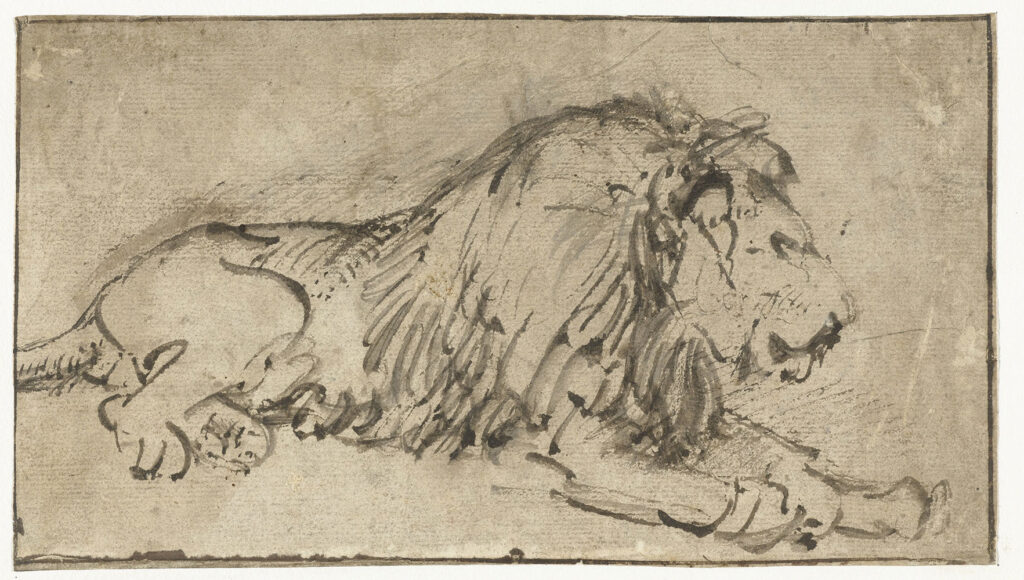
Rembrandt van Rijn, Recumbent Lion 1660, reed pen, brown ink, and brown wash on paper, Rijksmuseum, Amsterdam, Netherlands. Purchased with the support of the Vereniging Rembrandt.
The show’s title makes a reference to the lion, a symbol of resilience, strength, and authority for the 17th-century Dutch people. Although, the animal was considered exotic and non-native to northern Europe, it appears extensively on medieval heraldry and was later recontextualized by many European countries as a symbol of statehood and civic identity.
The lion recurs in Rembrandt’s oeuvre, often in portrayals of Saint Jerome who encountered a wounded lion while wandering the Syrian desert. According to the legend, the saint tamed the dangerous animal by pulling a thorn from its paw and the lion remained with him thereafter. The curator of the exhibition, Sarah Mallory, understands this motif as a representation of compassion, loyalty, and acceptance amid difficulties of exile.
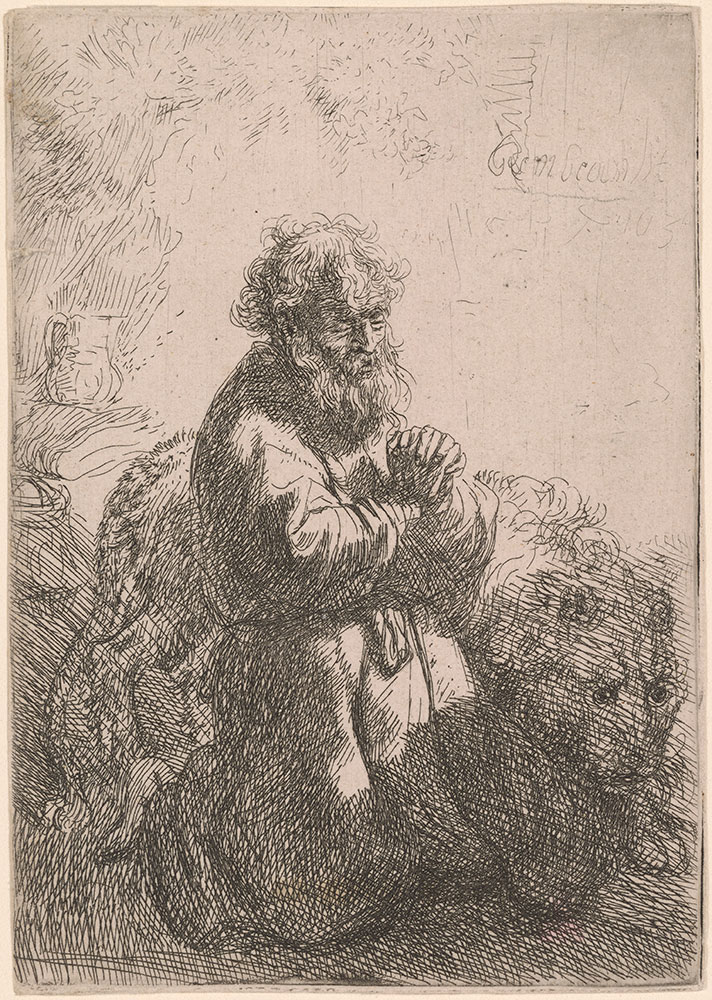
Rembrandt van Rijn, St. Jerome Kneeling in Prayer, Looking Down, 1635, etching on paper, The Morgan Library & Museum, New York, NY, USA. The Morgan Library & Museum (RvR 161). Photography by Graham S. Haber.
Other works tell a story of individuals such as Manasseh Ben Israel (or Manoel Dias Soeiro), a Portuguese-born Jewish scholar and rabbi who settled in Europe’s most prominent Sephardic community located in Amsterdam. Ben Israel lived around the corner from Rembrandt and the two were likely friends. His parents moved to Amsterdam in 1610 and this family represents countless life stories of those who found a safe haven in the Dutch Republic and rose to prominence as outsiders.
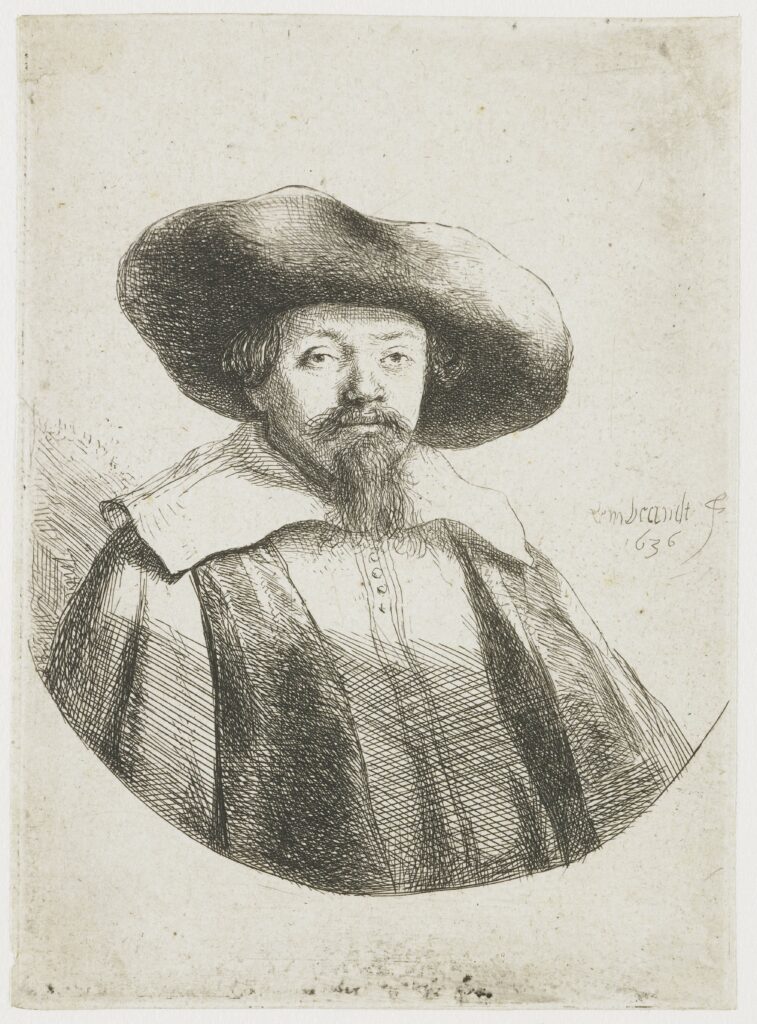
Rembrandt van Rijn, Menasseh ben Israel, 1636, etching on paper, Rijksmuseum, Amsterdam, Netherlands.
The exhibition is built around six sections:
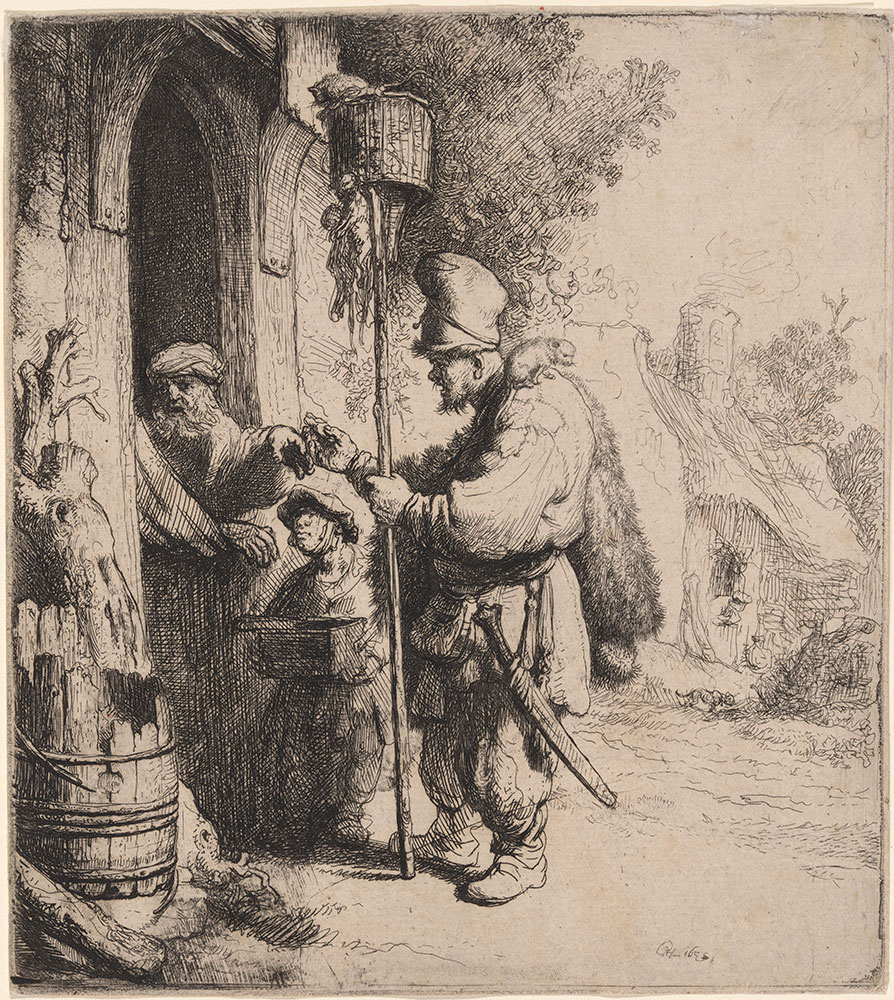
Rembrandt van Rijn, The Rat Catcher, 1632, etching on paper, The Morgan Library & Museum, New York, NY, USA. The Morgan Library & Museum (RvR 188). Photography by Janny Chiu.
Examining Rembrandt’s versatile works enables us to experience difference and otherness, social topics that are still highly relevant to our world, and how they were perceived in the 17th century. Similarly, how those who were perceived as other sought to find or create a sense of belonging, is also a fundamental human need to which we all can relate to in some way.
Rembrandt’s Lions: Art and Exile in the Dutch Republic is on view through January 31, 2027, at the Morgan Library & Museum, New York, NY, USA.
DailyArt Magazine needs your support. Every contribution, however big or small, is very valuable for our future. Thanks to it, we will be able to sustain and grow the Magazine. Thank you for your help!

Nicole worked as an Editor in the DailyArt Magazine and has MA degree in art history. She is passionate about 17th-century Dutch art and colonial history. Her life-goal is to work with art and experience its beauty on a daily basis.
A new exhibition at Tate Britain, London, aims to show the transformative change that the UK underwent in the 1990s. With a strong focus on...
Edoardo Cesarino 26 October 2026
The story of Vincent van Gogh’s turbulent and tragically short life has been told and mythologized many times, in exhibitions, books, and on...
Catriona Miller 29 October 2026
A golden figure and a dance of the dead haunt rooms of the Benaki Museum in Athens, Greece. There, Polish painter Aleksandra Waliszewska stages a...
Errika Gerakiti 23 September 2026
It is not uncommon for an artist to become known primarily through the circumstances of their life rather than through the complexity of their work.
Ania Kaczynska 6 August 2026