
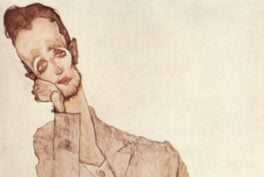
The Artist Behind Egon Schiele’s Famous Portrait
For most art lovers and historians, Karl Zakovsek is merely a name on a museum label—the introspective figure captured in Egon Schiele’s...
Guest Author 5 October 2026
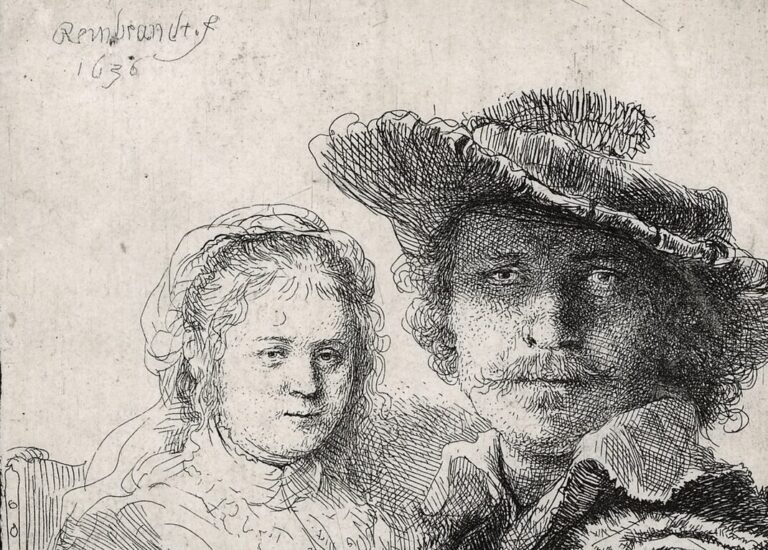
Rembrandt, Self-Portrait with Saskia, 1636, Rembrandt House Museum, Amsterdam, Netherlands. Detail.
In Rembrandt’s prints, you can see the whole of life passing you by, from the cradle to the grave. Every stage of life held something interesting for him. He had a remarkably good eye for the wonder of the ordinary, from the clenched fists of a crying baby and the mischievous glances of young lovers to the beauty of a wrinkled face. In the Rembrandt House Museum in Amsterdam—where Rembrandt lived and worked for almost 20 years—you can now walk the path of life with Rembrandt. The summer exhibition Rembrandt & Life (June 12–August 30, 2026) features 50 etchings from the museum’s collection. Here are 10 highlights you don’t want to miss.
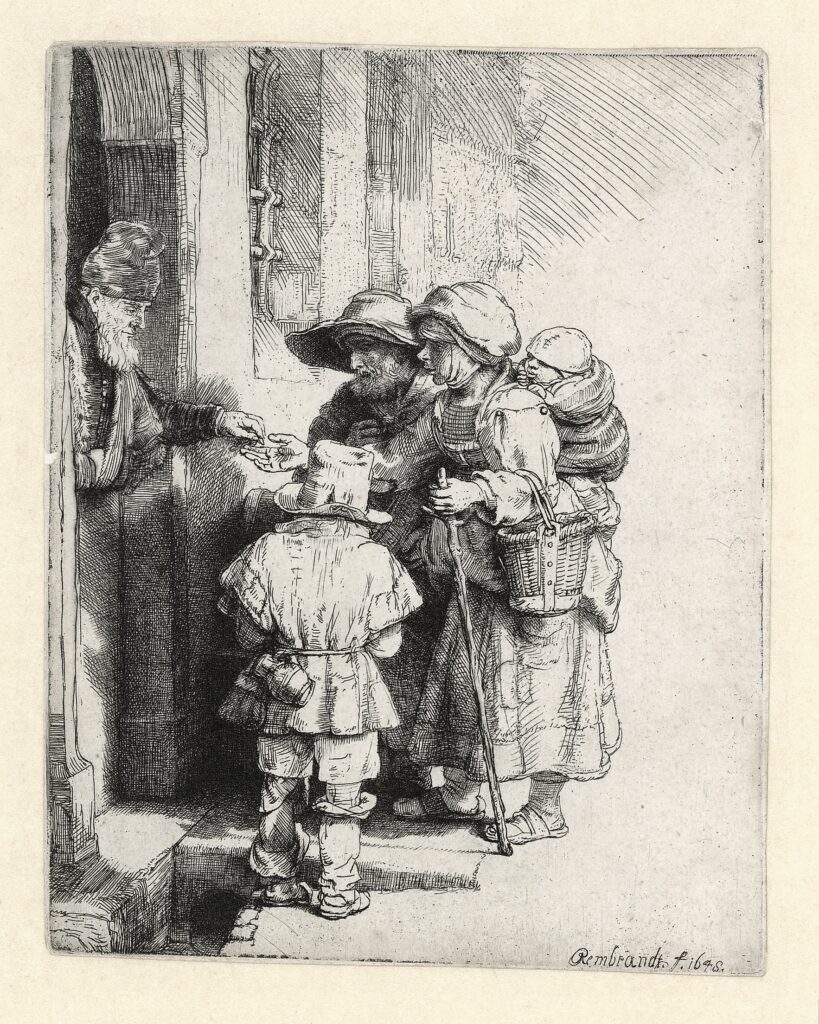
Rembrandt, Beggars Receiving Alms at the Door of a House, 1648, Rembrandt House Museum, Amsterdam, Netherlands.
This is perhaps Rembrandt’s most adorable baby. Strapped to his mother’s back and wearing a round cap, the baby resembles a koala bear. The whole family is on the move. The blind father has played a tune on his hurdy-gurdy. Mother is receiving alms. A challenging start to life for the two children.
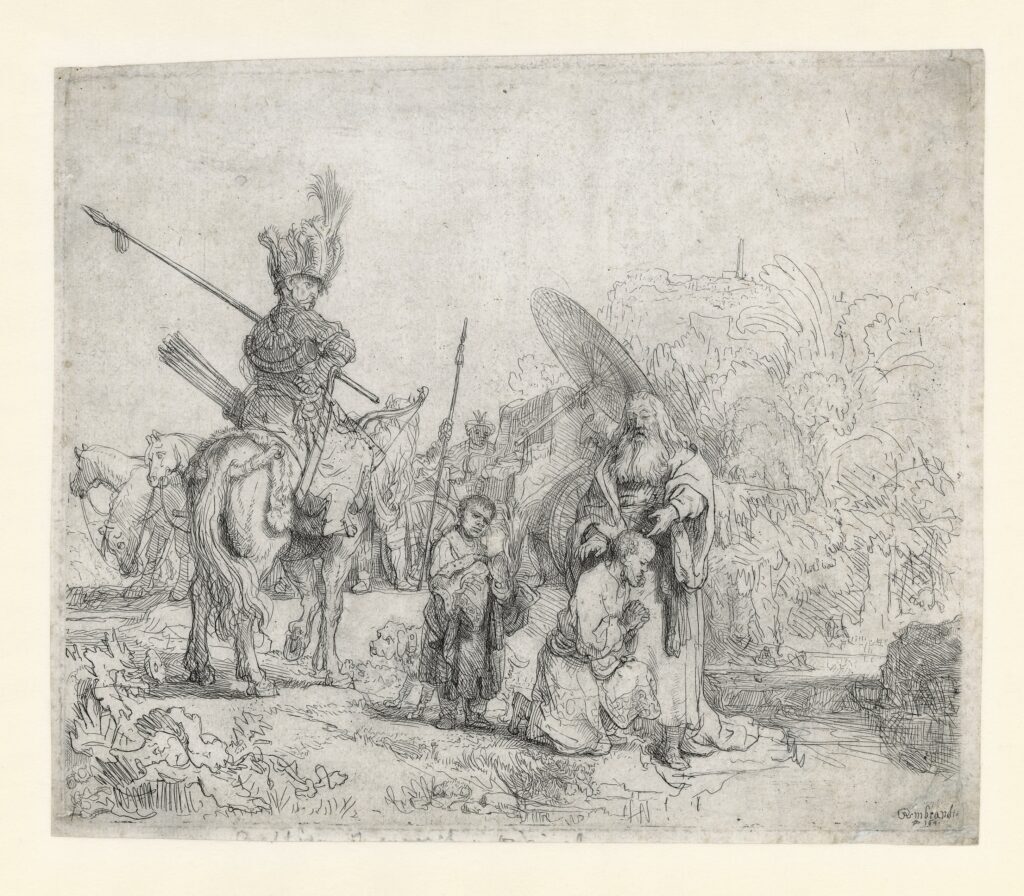
Rembrandt, The Baptism of the Eunuch, 1641, Rembrandt House Museum, Amsterdam, Netherlands.
Rembrandt enjoyed adding children to Bible scenes. The children attract the attention of a group of mostly old men. Their presence often adds a touch of poignancy or humor, like the boy in the foreground. He must hold the cloak for the man being baptized. A rather boring chore, so it seems.
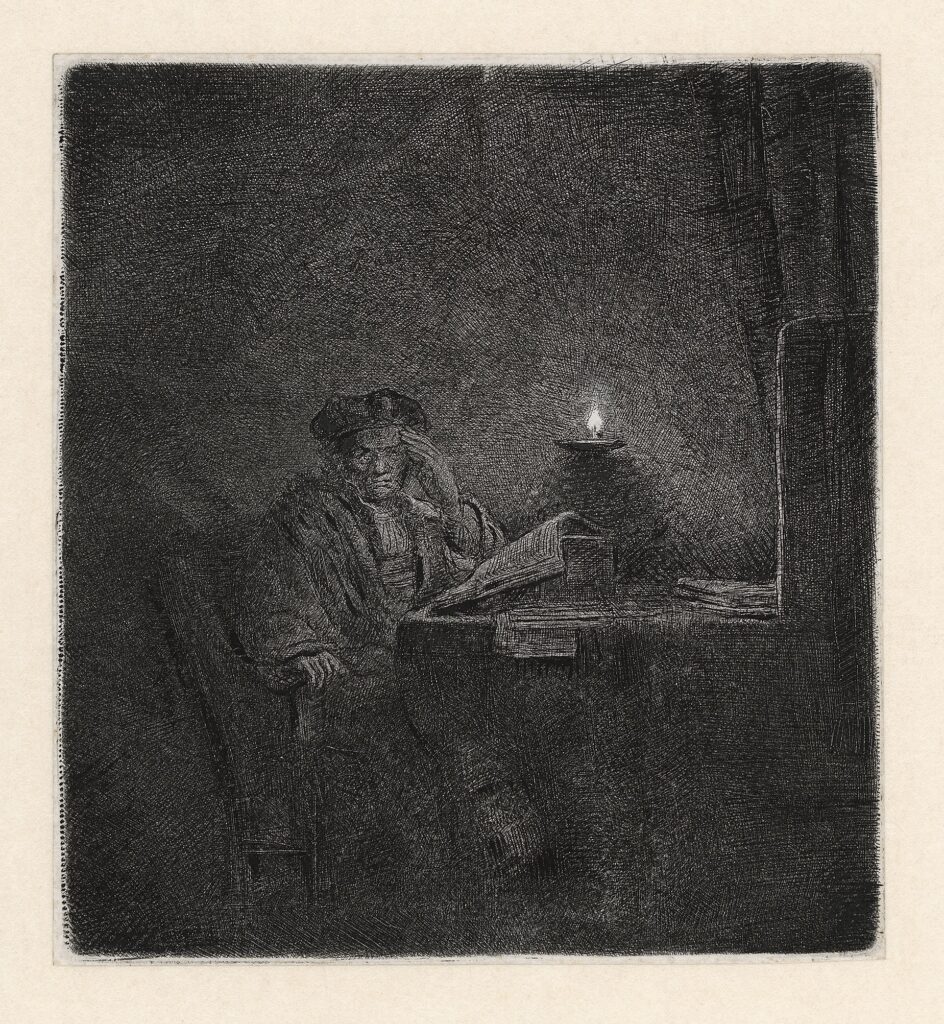
Rembrandt, Student at a Table by Candlelight, c. 1642, Rembrandt House Museum, Amsterdam, Netherlands.
Many boys had to work from the age of 12, while wealthy young men could postpone adulthood for a while by studying. Rembrandt depicts this student by candlelight: he has probably studied well into the night. As he raises his hand to his temple, he looks troubled. Studying is hard work, too.
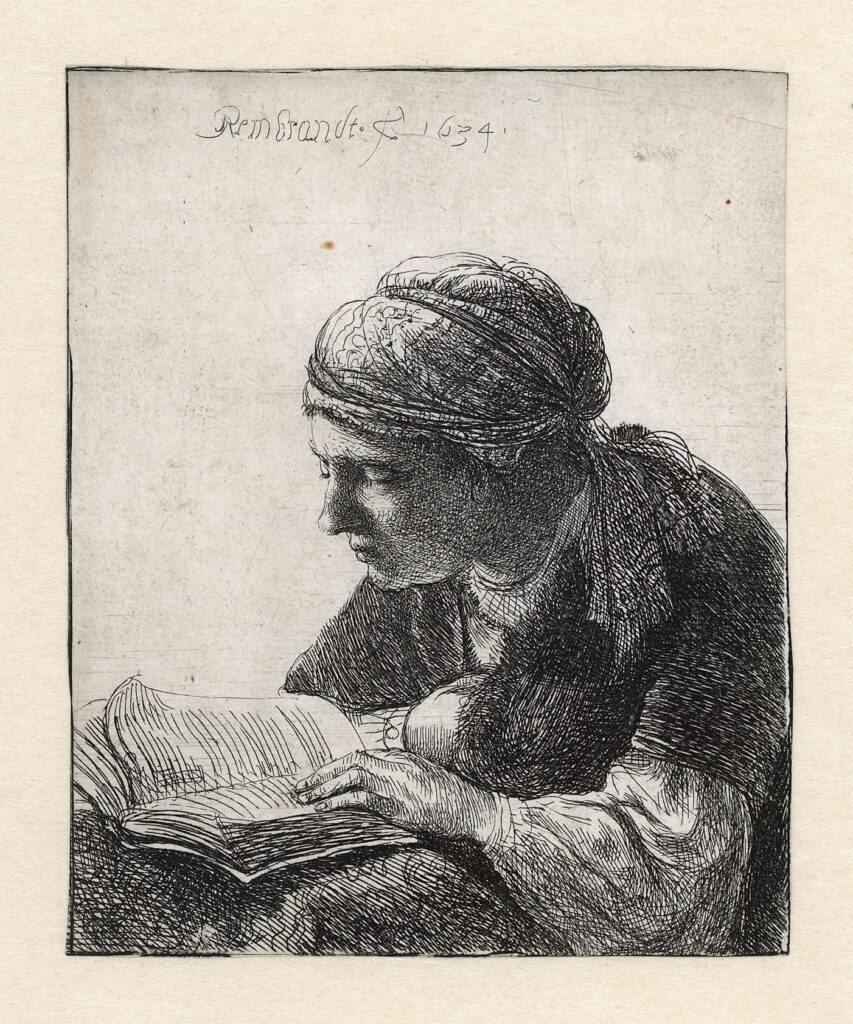
Rembrandt, Woman Reading, 1634, Rembrandt House Museum, Amsterdam, Netherlands.
It was not just boys who were occupied with intellectual pursuits. In his etching, Rembrandt shows that girls, too, immersed themselves in knowledge and beauty. The young woman in this print is completely lost in her book. She seems hardly aware of the outside world. To show that it is cold, her right hand is tucked into her jacket to keep warm.
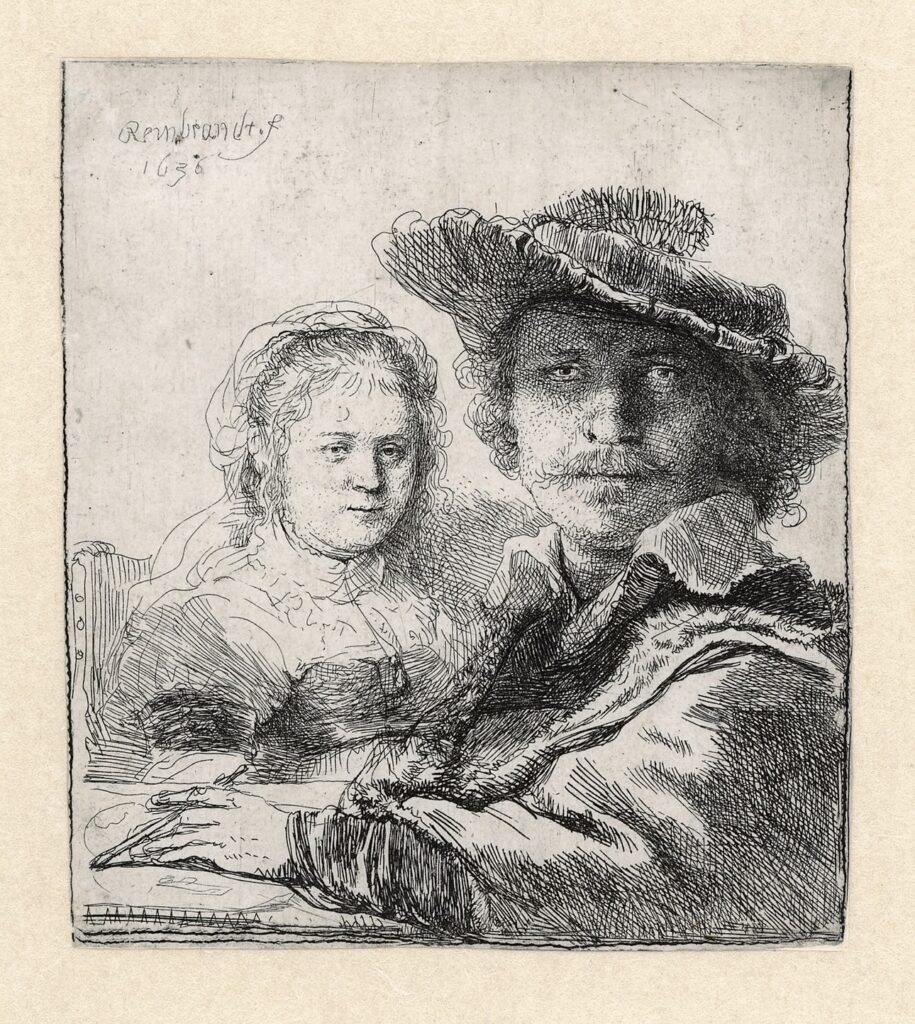
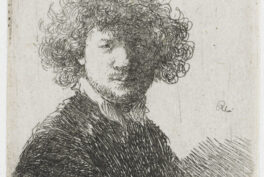
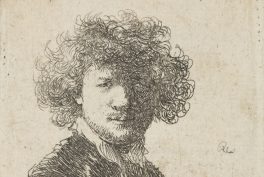
Rembrandt, Self-Portrait with Saskia, 1636, Rembrandt House Museum, Amsterdam, Netherlands.
Rembrandt painted this double portrait when he was around 30 years old. He was developing a successful career as an artist in Amsterdam, and his wife, Saskia, was helping him. She had a large network of potential clients. This print is therefore a kind of calling card for “Rembrandt Inc.”
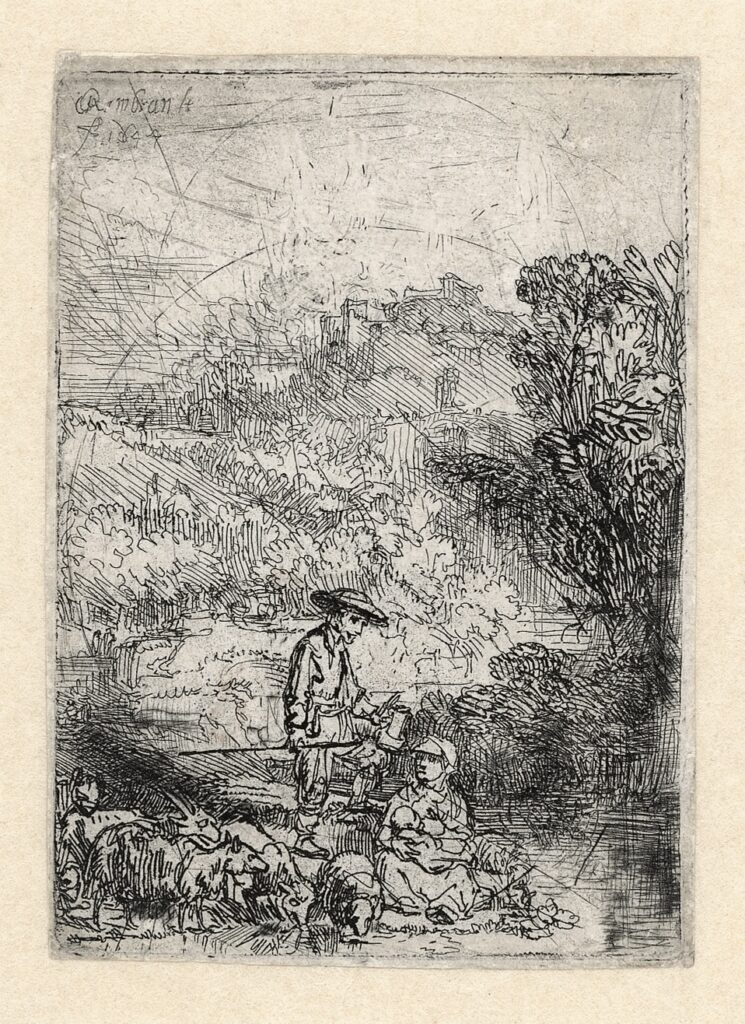
Rembrandt, The Shepherd and his Family, 1644, Rembrandt House Museum, Amsterdam, Netherlands.
A shepherd and shepherdess rest by a stream. She is holding a baby in her arms; they are young parents. For many people, having children is an important step in adult life. A new phase. Rembrandt had four children with his wife, Saskia; only Titus was to reach adulthood. With his second love, Hendrickje, he had another daughter, Cornelia.
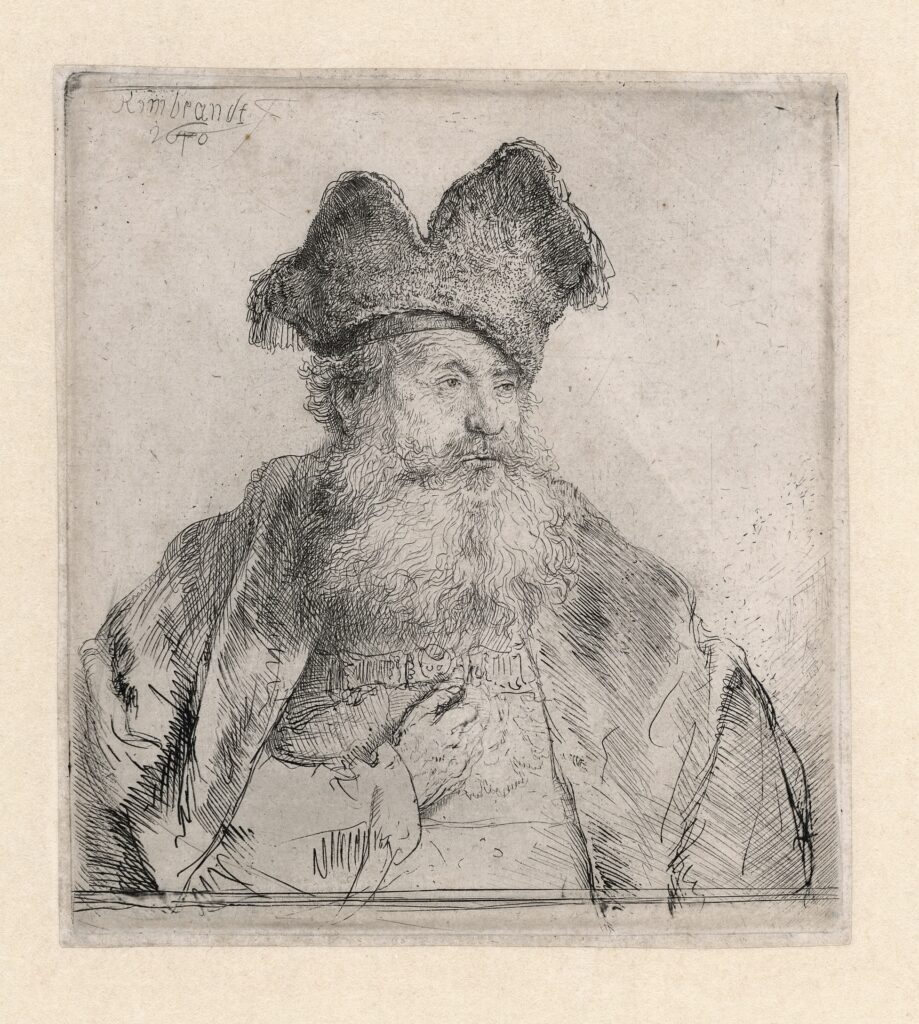
Rembrandt, Man in a Divided Fur Cap, 1640, Rembrandt House Museum, Amsterdam, Netherlands.
This man was possibly the Dutchman Nicolaes de Bye, Councillor to the Polish king. An important figure, Rembrandt therefore depicted him with a clear gaze, in beautiful clothes, and with a straight posture. You can immediately see that this is a man of status.
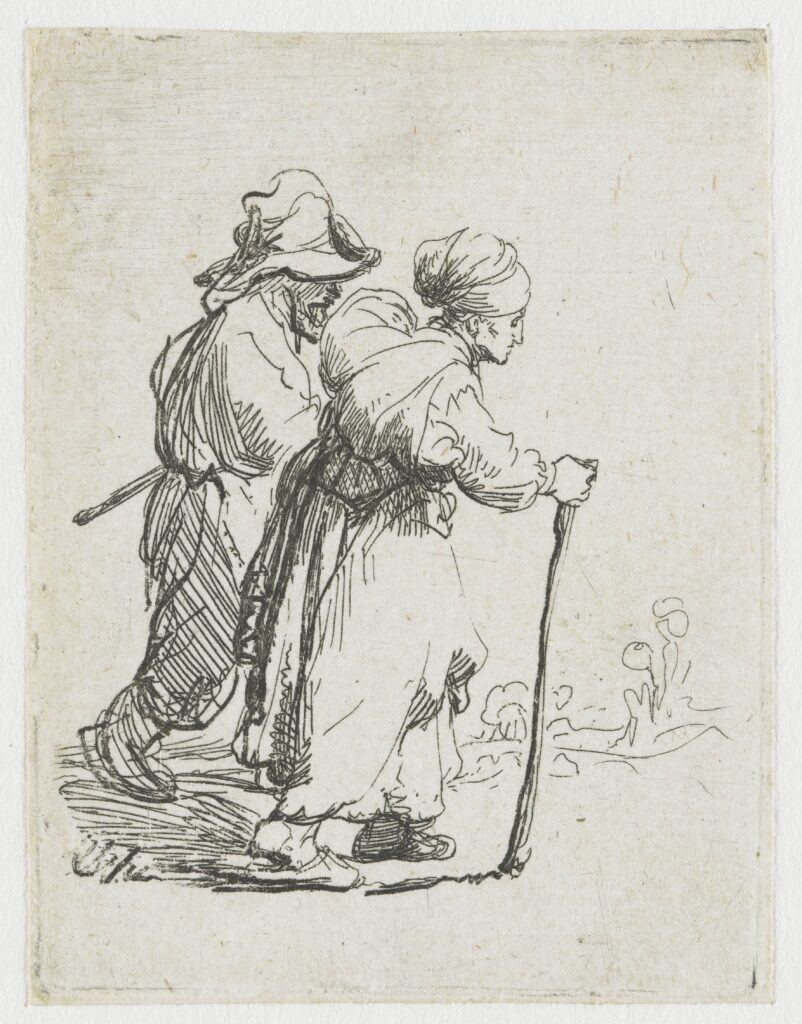
Rembrandt, Two Beggars, a Man and a Woman, c. 1634, Rembrandt House Museum, Amsterdam, Netherlands.
Growing old together is what most people hope for. But the reality is different: someone often stays behind. Especially in the 17th century, death was always looking over your shoulder, certainly in the case of vulnerable people like children and the elderly. These two prints of very old couples are rare. In most prints, Rembrandt depicts old people alone.
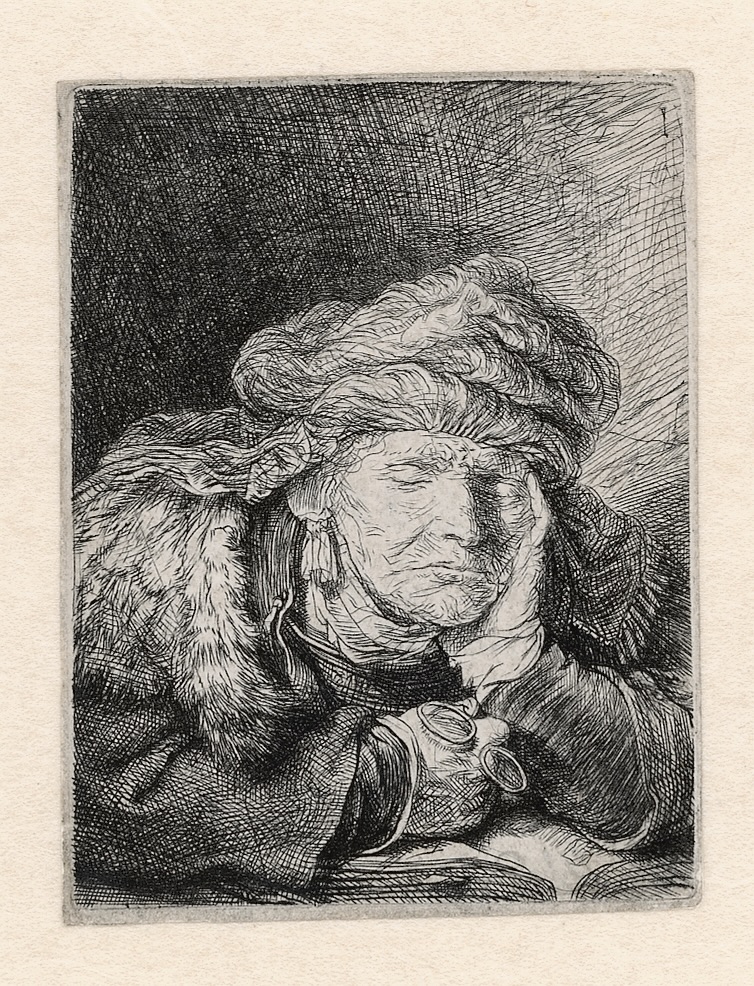
Rembrandt, Old Woman Sleeping, c. 1636, Rembrandt House Museum, Amsterdam, Netherlands.
Many of Rembrandt’s elderly subjects are asleep. It was undoubtedly difficult for models of that age to keep their eyes open while posing for long periods. It is typical: the older you get, the more often you feel the need to take a nap during the day. Rembrandt touchingly captured this characteristic of senior citizens.
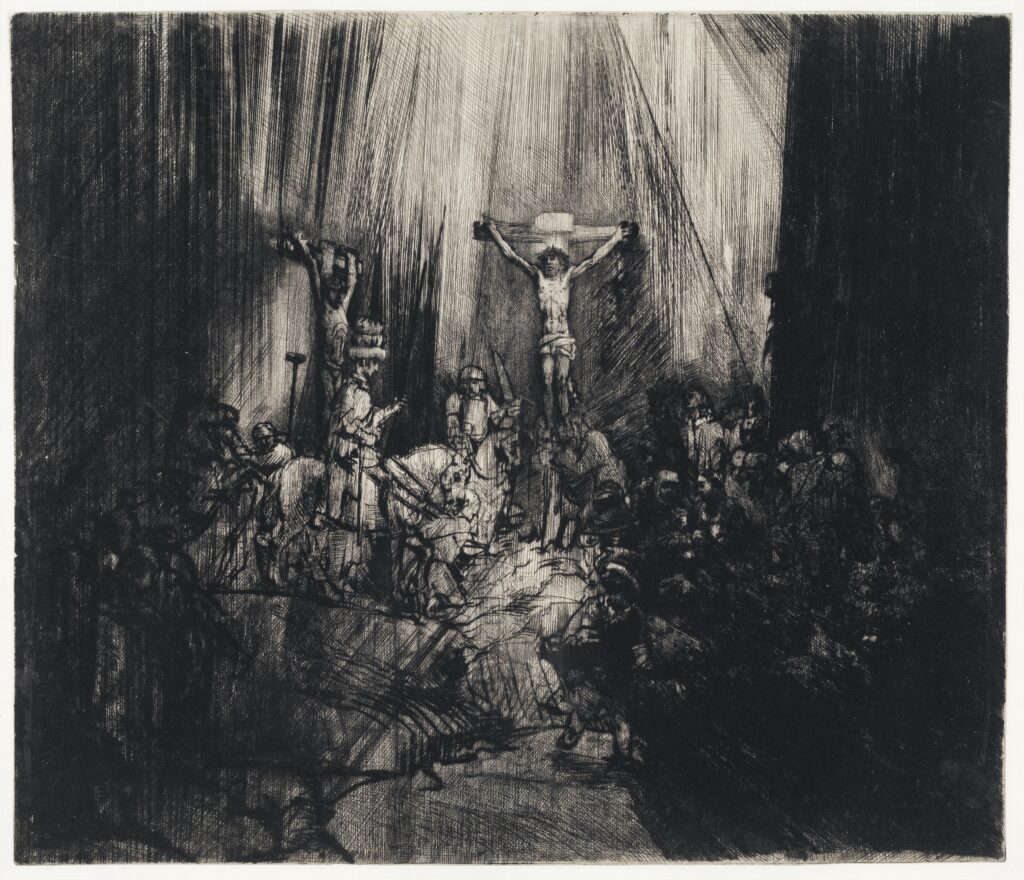
Rembrandt, The Three Crosses, 1653, Rembrandt House Museum, Amsterdam, Netherlands.
It is the most famous death in history: that of Christ. An entire world religion has been built upon it. Rembrandt makes the moment of Christ’s death poignant and ominous. The darkness is overwhelming, and the sharp lines of the drypoint lend everything a hard, angular quality. This print is one of the absolute masterpieces in the museum’s collection.
Nathalie Maciesza and Epco Runia
DailyArt Magazine needs your support. Every contribution, however big or small, is very valuable for our future. Thanks to it, we will be able to sustain and grow the Magazine. Thank you for your help!

This is our guest profile for occasional authors. If you have an interesting story about art to tell, send it to our Editor-in-chief Kate at [email protected]. You might be the next here!

For most art lovers and historians, Karl Zakovsek is merely a name on a museum label—the introspective figure captured in Egon Schiele’s...
Guest Author 5 October 2026
Despite being a Jew in a city still grappling with religious freedoms, Simeon Solomon rose to become one of London’s notable painters only to come...
Theodore Carter 28 August 2026
There is a dead man on the table. His skullcap has been removed, and someone loosens the meninges with a lancet. Not an easy sight, yet fascinating:...
Guest Author 14 May 2026
Gerhard Richter is a widely-known and revered German artist, as well as one of the world’s most expensive living artists. Several of his works...
Nikolina Konjevod 4 May 2026