
Masterpiece Story: Judith and Holofernes by Caravaggio
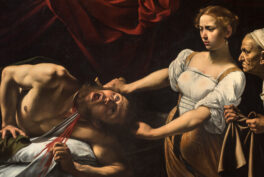
Judith and Holofernes is a Caravaggio masterpiece that captures Biblical murder and drama. Rarely has death been captured so intensely and violently...
James W Singer 13 September 2026
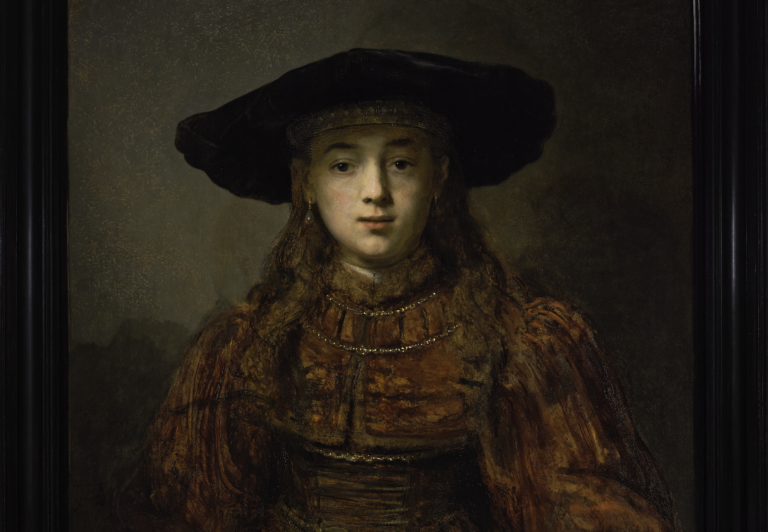
Rembrandt, Girl in a Picture Frame, 1641, Royal Castle in Warsaw, Warsaw, Poland. Detail.
The girl leans out of the painting as if she intends to cross the boundary between art and reality—she touches the frame and looks directly at the viewer, breaking the rules of illusion. Rembrandt employs an effective trompe-l’œil here, but not merely to showcase his technical virtuosity. Girl in a Picture Frame from the Royal Castle in Warsaw is a work that provokes questions about authorship, the materiality of the painting, the viewer’s relationship with the representation, and the significance of female presence in the patriarchal culture of the 17th century. It is one of those masterpieces that should be on every art lover’s must-see list.
Rembrandt depicted a young woman, in fact, a teenage girl. She wears a wide-brimmed hat, somewhat reminiscent of the one the artist painted Saskia wearing in 1633, and an outfit that does not correspond to contemporary fashion. The earring in her ear does not hang straight, and the right sleeve of her dress appears slightly in motion. The viewer, therefore, senses that she has shifted her position only moments ago. Her hands resting on the frame suggest that she is leaning forward towards us. This, of course, is an impossible feat—we are witnessing an artistic illusion. Rembrandt painted a teenager who seems aware that she is painted; after all, she is touching the frame. It is a painting that knows it is only a painting.
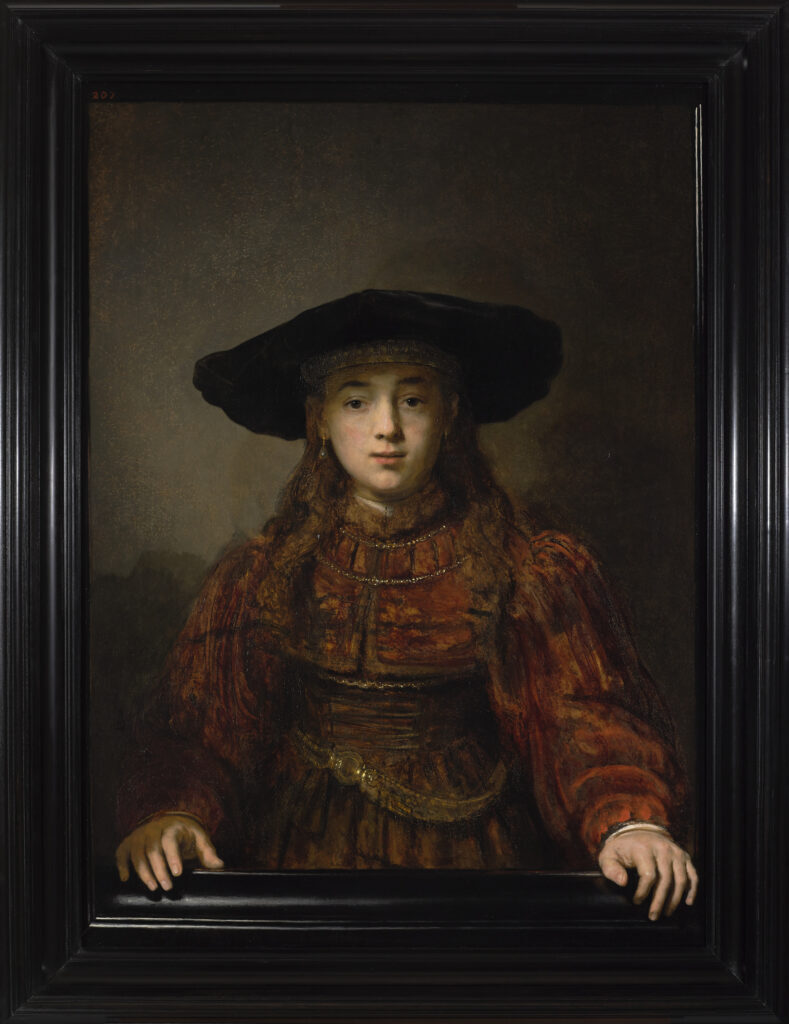
Rembrandt, Girl in a Picture Frame, 1641, Royal Castle in Warsaw, Warsaw, Poland.
Similar tricks, often referred to as trompe-l’œil (from French: “deceiving the eye”), have a long tradition in Northern art. In 15th-century Dutch panel painting, we find painted flies and window sills imitating frames. In 16th- and 17th-century compositions, there are illusory curtains inviting the viewer to dare to touch the paint. Dutch Golden Age painting also features still lifes imitating objects hung on the walls of a study, paintings depicting other paintings, and even their reverse sides (i.e., canvases simply depicting a loom with fabric stretched over it).
For several years, Rembrandt was very fond of such tricks. In 1646, he painted a red curtain in a scene with the Holy Family. In 1641, he created the portrait of Agatha Bas, in which the model rests her left hand on the frame and holds out a fan in her right hand towards the viewer. In the Rijksmuseum’s Portrait of Maria Trip from 1639, Rembrandt set the woman against an arcade background resembling a frame, and her right hand is dangerously close to the surface of the painting, practically under the viewer’s nose.
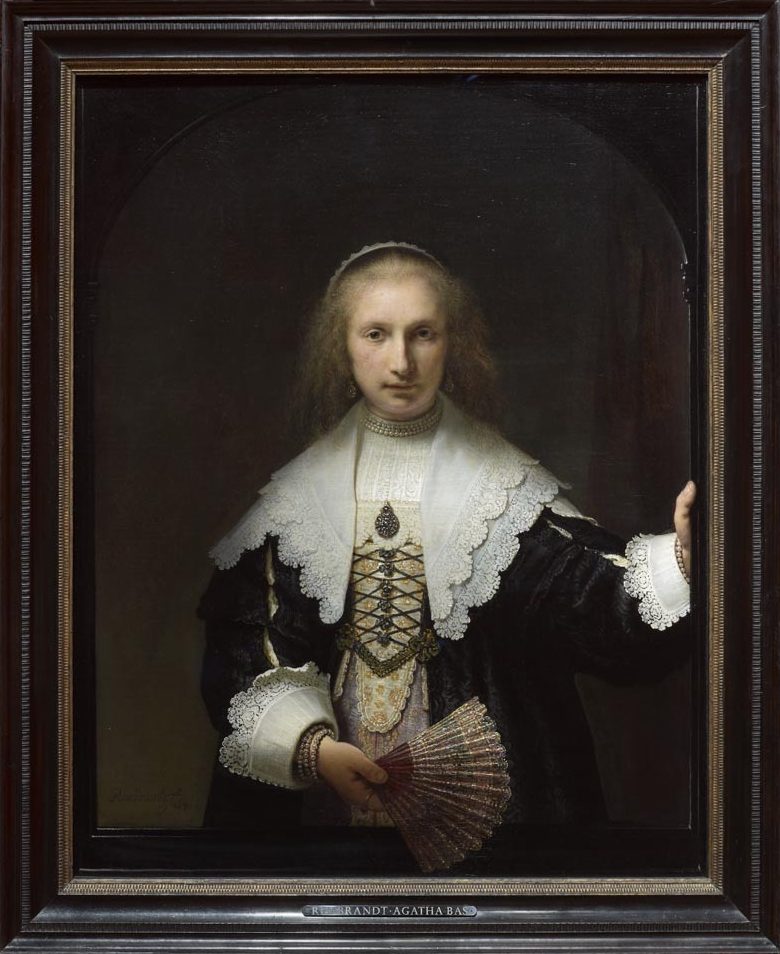
Rembrandt, Agatha Bas, 1641, Royal Collection, London, UK.
Although Warsaw’s Girl in a Picture Frame was created in the same year as the portrait of Agatha Bas, its material properties are closer to those of the Portrait of Maria Trip. Both the Warsaw and Amsterdam paintings were made on poplar panels. As we know, Rembrandt used this support very rarely (only four such cases are known).
Perhaps the nature of the substrate contributed to the controversy surrounding the painting’s attribution. In 1969, an art historian who had never seen it in person decided to comment on it and questioned Rembrandt’s authorship. Subsequently, others began to put forward their own ideas. Attempts were made to link the Girl to Samuel van Hoogstraten—who used the “stepping out of the painting” device in Young Woman at an Open Half-Door (1645)—and Ferdinand Bol. The doubts were only dispelled by research carried out by the Rembrandt Research Project at the Rijksmuseum. Today, the Girl in a Picture Frame appears in the master’s catalogues without any question marks.
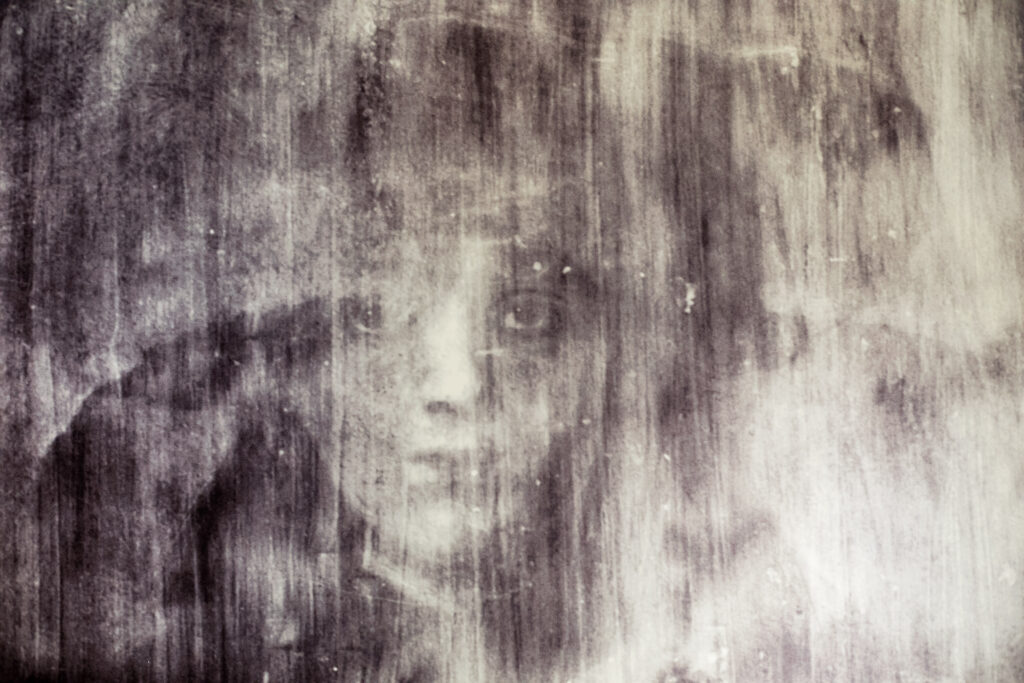
X-ray photograph of Rembrandt, Girl in a Picture Frame, 1641, Royal Castle in Warsaw, Warsaw, Poland. Detail.
However, this does not mean that we know everything about it. One of the mysteries of the painting is what lies between the layer of paint and the poplar panel. X-rays have revealed that beneath the paint, there is a sketch of another composition that Rembrandt abandoned. It depicts a seated lady wearing a ruff. Who was she? A client who did not like the sketch of the portrait she had commissioned? A figment of the painter’s imagination? A woman from his family or circle of friends?
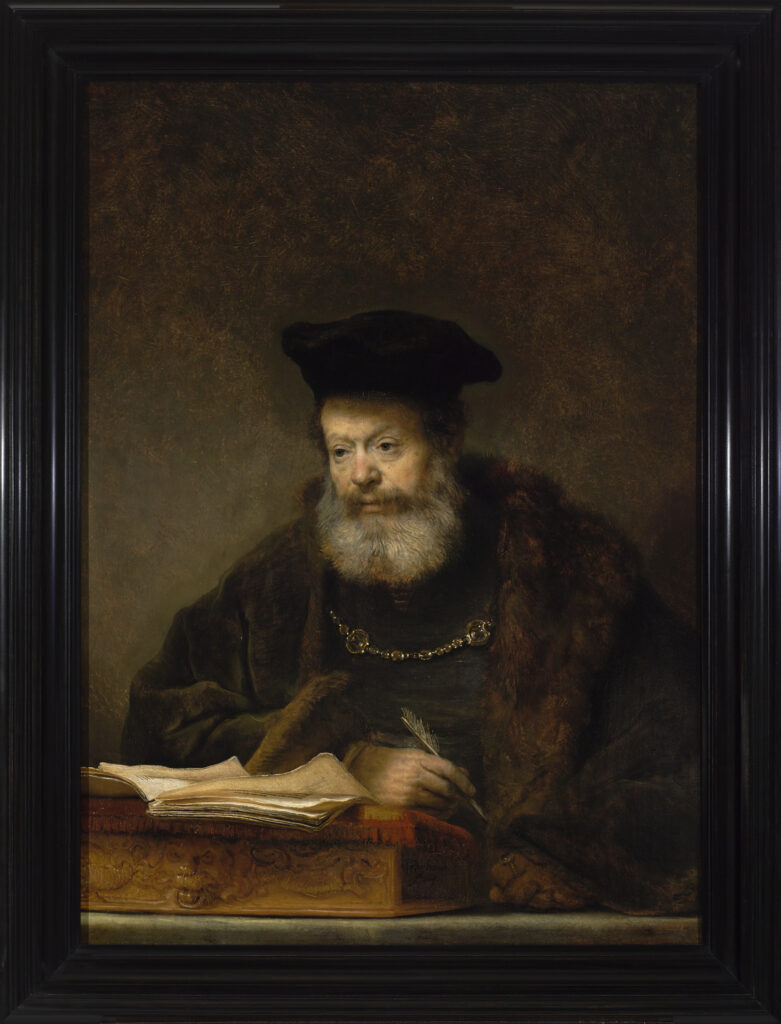
Rembrandt, Scholar at His Writing Table, 1641, Royal Castle in Warsaw, Warsaw, Poland.
The second mystery concerns the companion with whom the Girl in a Picture Frame has survived to this day. Since at least the 18th century, the painting has functioned as a pendant to Scholar at His Writing Table (also in the collection of the Royal Castle in Warsaw). The matching dimensions of the paintings and the time of their creation support this thesis.
Arguing against this, however, are the mismatched compositional arrangements. In intentionally paired portraits, the sitters’ gazes are directed symmetrically in opposite directions or towards a central point, which is not the case in the works under discussion. Was the discord between the old man and the young woman intentional, and was Rembrandt trying to break with convention? Or were the paintings paired later in the collection of a connoisseur who knew Rembrandt well enough to acquire two paintings made in the same year during his lifetime? It is impossible to know for certain.
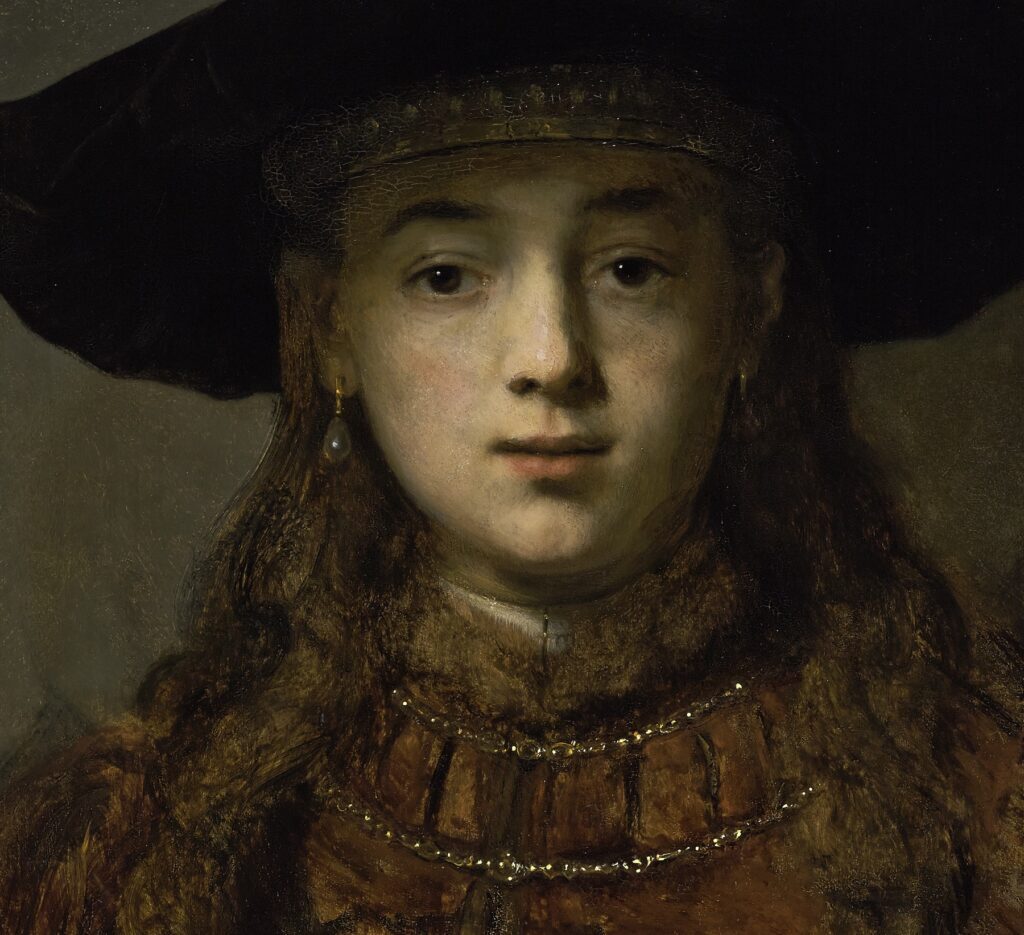
Rembrandt, Girl in a Picture Frame, 1641, Royal Castle in Warsaw, Warsaw, Poland. Detail.
The teenager and the old man have survived as a pair for at least three and a half centuries. They were once interpreted as a daughter and her father, writing her dowry. Owing to their fanciful costumes, they were occasionally identified as Jews or as figures from the Holy Scriptures, including Esther and Mordecai. The identification of the characters often changed with each new owner, and such changes occurred repeatedly.
The painting passed through the hands of several notable collectors, including the last king of Poland, Stanisław August. It eventually entered the collection of the Royal Castle as a gift from Karolina Lanckorońska, an art historian and heiress to an exceptional collection of paintings (including Saint George and the Dragon by Paolo Uccello, later acquired by the National Gallery in London). The gallery where the painting is displayed today, in honor of Lanckorońska’s gift, bears her family name.
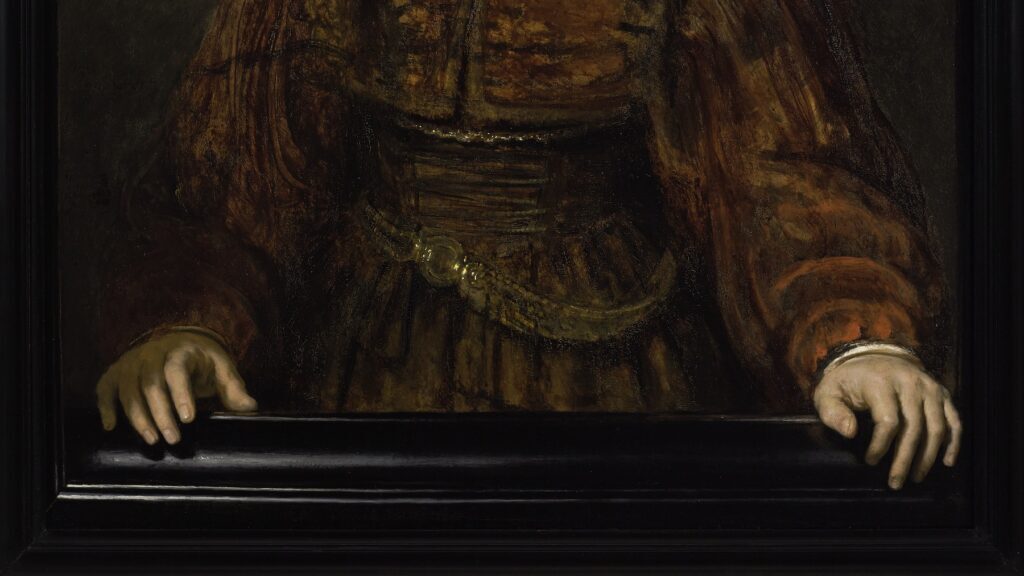
Rembrandt, Girl in a Picture Frame, 1641, Royal Castle in Warsaw, Warsaw, Poland. Detail.
The fact that the painting was donated to the Royal Castle by a woman invites us to consider the model depicted through the prism of her gender. One possible interpretation is that Rembrandt’s combination of a female figure with trompe-l’œil devices may have been deliberately provocative. In a patriarchal society, sensitive to moral rigors and fascinated by youthful beauty, a man stepping out of a painting was one thing, but a woman was quite another. Her gaze, directed straight at the viewer, and her beautiful hand gently resting on the hard wood could have stirred the emotions of more sensitive onlookers.
Moreover, contemporary audiences remain attuned to the emotional charge of the painting. The Girl is sometimes compared to iconic compositions depicting women in a trap, a theme well represented in European paintings. Young women confined within paintings were portrayed by artists such as Goya. In one of his most frequently reproduced canvases, Majas on a Balcony, two ladies sit on a balcony, leaning on its railing. The railing resembles the frame in the Warsaw painting, suggesting to the viewer that they are observing a work of the highest class—“framed,” and therefore treated with respect—while also implying that the work itself confines women, reducing them to the status of an aesthetic spectacle.
Konrad Niemira
DailyArt Magazine needs your support. Every contribution, however big or small, is very valuable for our future. Thanks to it, we will be able to sustain and grow the Magazine. Thank you for your help!

Museum. Former royal residence. House of arts and culture.

Judith and Holofernes is a Caravaggio masterpiece that captures Biblical murder and drama. Rarely has death been captured so intensely and violently...
James W Singer 13 September 2026
Explore an astonishing 1915 nude self portrait by American modernist painter Florine Stettheimer.
Candy Bedworth 21 September 2026
Winslow Homer (1836–1910) was one of the leading American Realist painters. His painting The Veteran in a New Field is a masterpiece of late...
James W Singer 30 August 2026
At first glance, A Goldsmith in His Shop (1449) appears to depict an ordinary visit to a jeweller. Yet Petrus Christus transformed an ordinary...
Shivani Gupta 23 August 2026