
Between the Body, Nature, and Image: Ana Mendieta at Tate Modern
It is not uncommon for an artist to become known primarily through the circumstances of their life rather than through the complexity of their work.
Ania Kaczynska 6 August 2026
20 November 2025 min Read
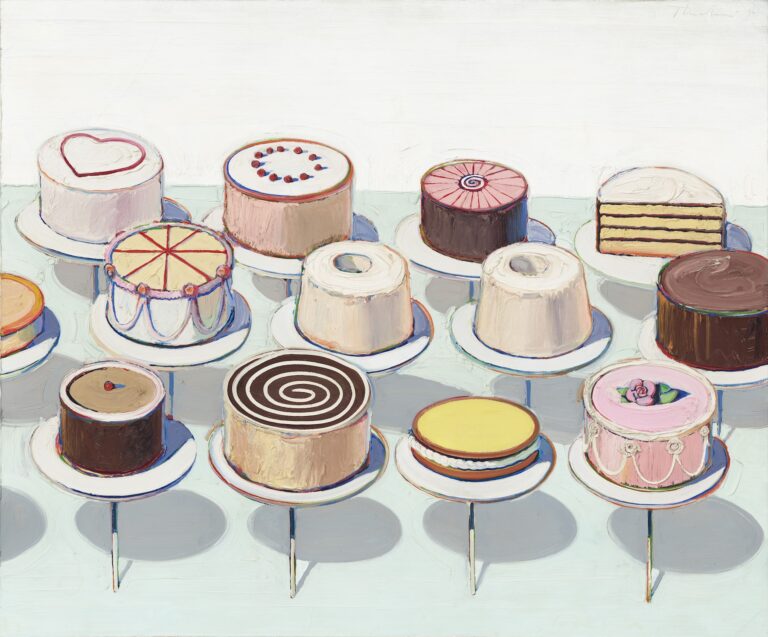
Wayne Thiebaud, Cakes, 1963, National Gallery of Art, Washington D.C., US. © Wayne Thiebaud/VAGA at ARS, NY and DACS, London 2025. Image: Courtesy National Gallery of Art, Washington.
The Courtauld Gallery is an understated gem at the heart of London. By London standards, it is quite a small gallery. Yet every room packs a punch—from Van Gogh, to Monet, and Cézanne. Until January 18th, the Courtauld is hosting the first-ever exhibition of Wayne Thiebaud in the UK, which aims to shine a light on this lesser-known, quintessentially American artist and his creations to an European audience.
Wayne Thiebaud (1920–2021) was a California-based painter who specialized in representations of everyday objects. His breakthrough came in the 1960s, when he started with objects from pinball machines to pies, from deli counters to ice creams—the ordinary that Thiebaud elevated to art.
Because of his use of bright colors and interest in popular culture, Thiebaud is often associated with the Pop Art movement. However, his intention to bring his subjects to life sets him apart from the more ironic pandering toward consumerism found in works by the likes of Andy Warhol and Roy Lichtenstein. Thiebaud, in fact, saw himself as closer to and more in tune with the long-standing tradition of European still-life art.
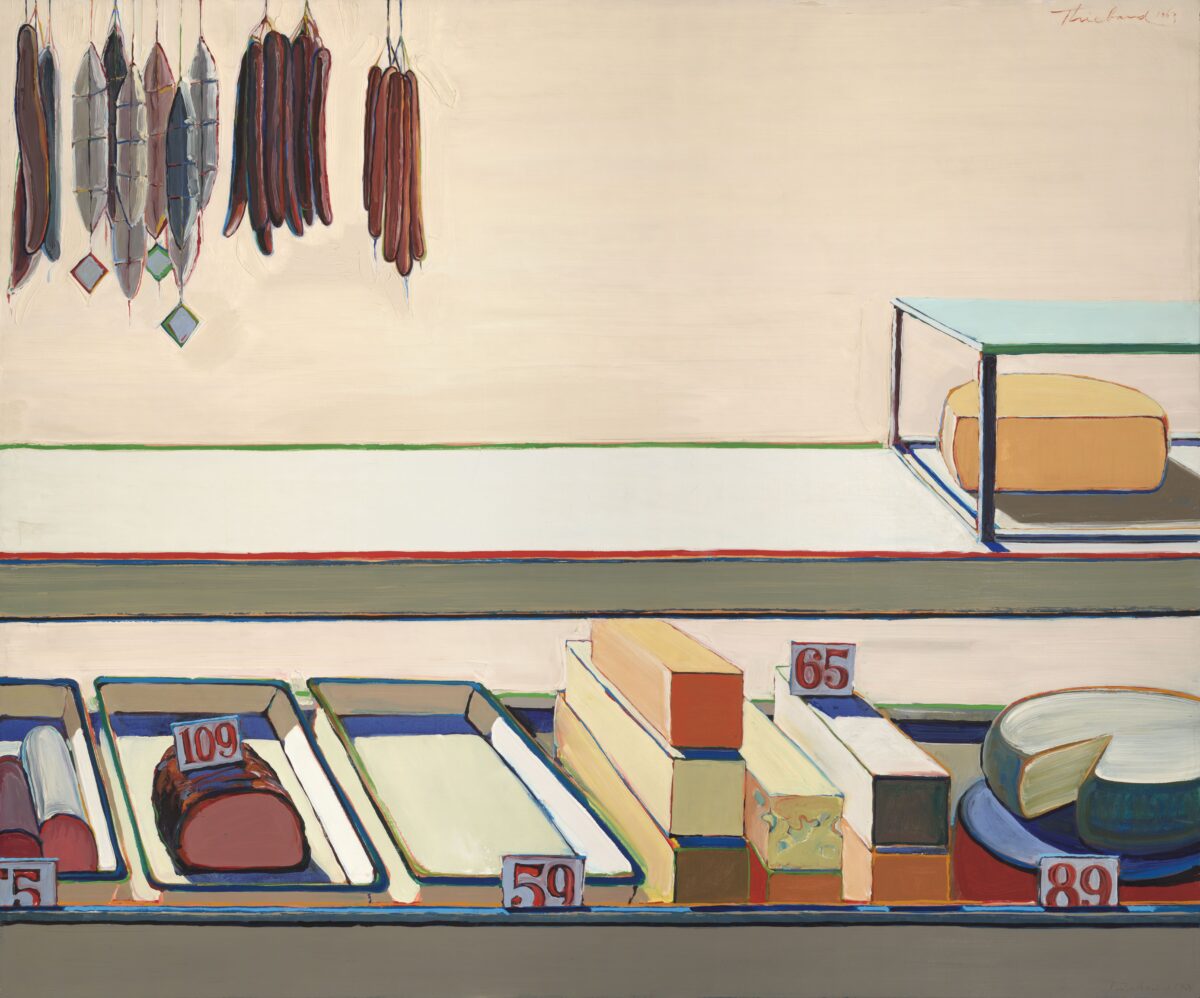
Wayne Thiebaud, Delicatessen Counter, 1963, private collection. © Wayne Thiebaud/VAGA at ARS, NY and DACS, London 2025. Image: Julia Featheringill Photo.
Artistry is what makes the two rooms of this small exhibition memorable. There is no doubt that all the artworks are united by a unique voice. Popping colors, inviting arrangements, and a clever use of light (and layers of color) to “lift” the objects from the canvas—Thiebaud had a style of his own, which he mastered and put to work.
But a sense of emptiness surrounds the space and pervades the subjects of his paintings. Sometimes they are tinted with melancholy (a decimated deli counter after a day’s trade), sometimes with anticipation (an inviting array of pies awaiting the rush of customers). Often, there’s an aura of nostalgia of times gone by. Whatever the context, people are nowhere to be seen—the items take center stage, alongside their inanimate presence and artificial patterns.
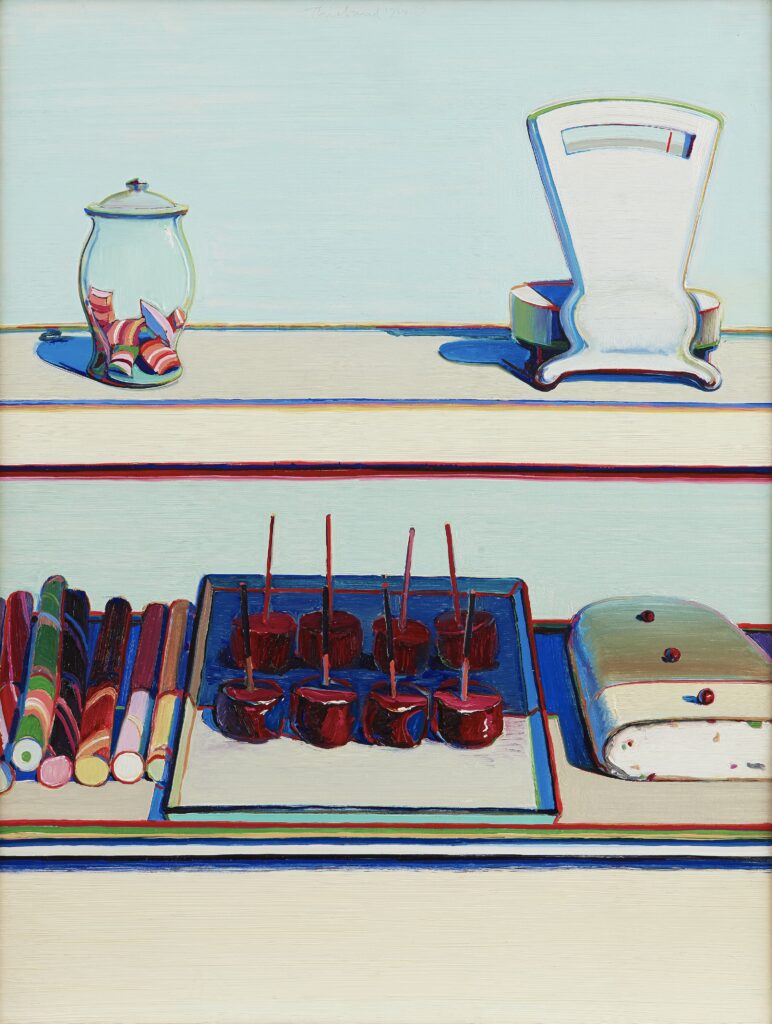
Wayne Thiebaud, Candy Counter, 1969, private collection. © Wayne Thiebaud/VAGA at ARS, NY and DACS, London 2025.
The composition is often consistent (except in the handful of early paintings, where he was clearly still experimenting and finding his voice). The pale background is designed to be as unobtrusive as possible, leaving the brightly-colored items (often food) to shine. Monotonous? Perhaps, but still fascinating.
The second thing that stands out is that the paintings on display at the Courtauld Gallery couldn’t be less American if they tried. This is perhaps what gives the exhibition an extra edge. In the European tradition, still life—particularly when involving food—tends to be a celebration of nature’s produce (think fruit and vegetables, fish and game). That’s not only true of the trailblazing Dutch still-life masters of the 1600s, but also of many more recent artists (from Impressionists to Thiebaud’s contemporaries, such as David Hockney). It is quite uncommon to see mass-produced sweets and candies getting the same recognition.
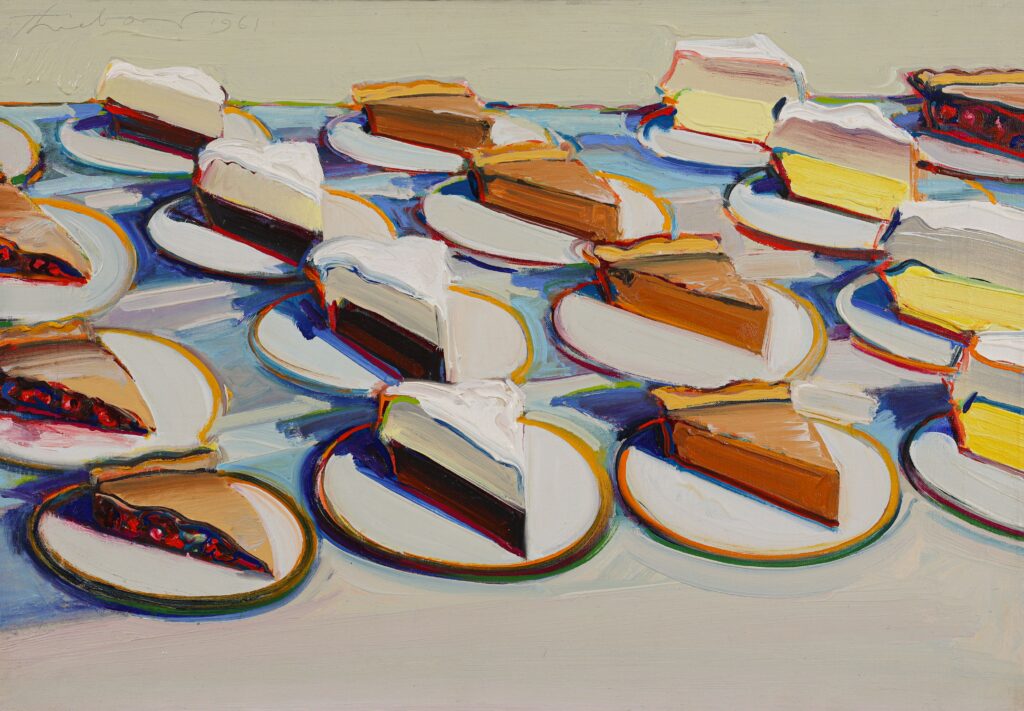
Wayne Thiebaud, Pie Rows, 1961, Collection of the Wayne Thiebaud Foundation. © Wayne Thiebaud/VAGA at ARS, NY and DACS, London 2025. Image: Wayne Thiebaud Foundation.
The colors, the shapes, the choices of subject—all quintessentially American “stuff,” all part of a celebration of the man-made and the ultra-processed. This is perhaps inevitable, as Thiebaud lived and worked in the US (and California specifically) all his life. But it would be reductive to assume this is just a by-product of Thiebaud’s surroundings. There is clearly an artistic choice at play.
Overall, this is an enjoyable exhibition that sheds light on an unusual (to Europeans) and accomplished American artist, very much a son of the 20th century who chose to make everyday modernity his artistic inspiration and subject matter. Like it or not, it is certainly out of the ordinary.
Wayne Thiebaud: An American Still Life is on at the Courtauld Gallery until January 18th, 2026.
DailyArt Magazine needs your support. Every contribution, however big or small, is very valuable for our future. Thanks to it, we will be able to sustain and grow the Magazine. Thank you for your help!

Art history fan Rome-born Edoardo lives in London, where he juggles his day job with creative writing.

It is not uncommon for an artist to become known primarily through the circumstances of their life rather than through the complexity of their work.
Ania Kaczynska 6 August 2026
Very few artists can claim to be as ubiquitous and iconic as Frida Kahlo. This hotly anticipated exhibition at Tate Modern delves into how and why...
Edoardo Cesarino 6 July 2026
Few museums can trace their origins to an act of collective generosity. Fewer still continue to build their identity around that same principle...
Zuzanna Stańska 17 August 2026
Back in 1998, the Hayward Gallery was the first to host a major exhibition of Anish Kapoor’s work in the UK. Now, in the year of the Southbank...
Edoardo Cesarino 22 June 2026