


Cathedral to Nature: The Natural History Museum in London
Looming over South Kensington like a grand cathedral or a royal residence, the Natural History Museum in London honors science and human curiosity...
Maya M. Tola 17 September 2026
28 September 2026 min Read
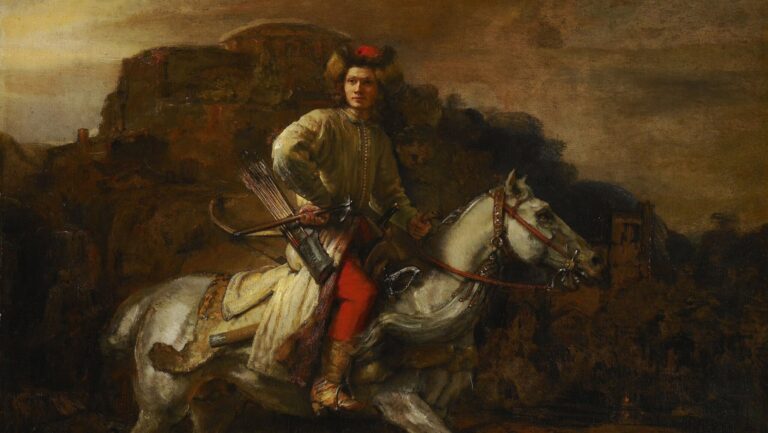
Rembrandt, The Polish Rider, c. 1655, Frick Collection, New York City, NY, USA. Detail.
Rembrandt’s The Polish Rider is now the centerpiece of New York’s Frick Collection. For many years, however, it was considered the jewel of a different art gallery. It once belonged to the collection of the last Polish king, Stanisław August Poniatowski, and adorned his residence alongside paintings by Rubens, Teniers, and Fragonard. How did The Polish Rider and other works collected by the Polish monarch leave Europe and end up in museums across the ocean? Here are the stories of seven of these works.
As early as the Renaissance, art lovers believed that the golden age of collecting was already behind them. In the 15th century, there was widespread lament over the destruction of ancient galleries of paintings and sculptures. In the following century, the sale of the Gonzaga collection from Mantua was regarded as a comparable tragedy. The sale of the art collection belonging to King Charles I of England, who was beheaded in 1649, was also mourned with great sorrow.
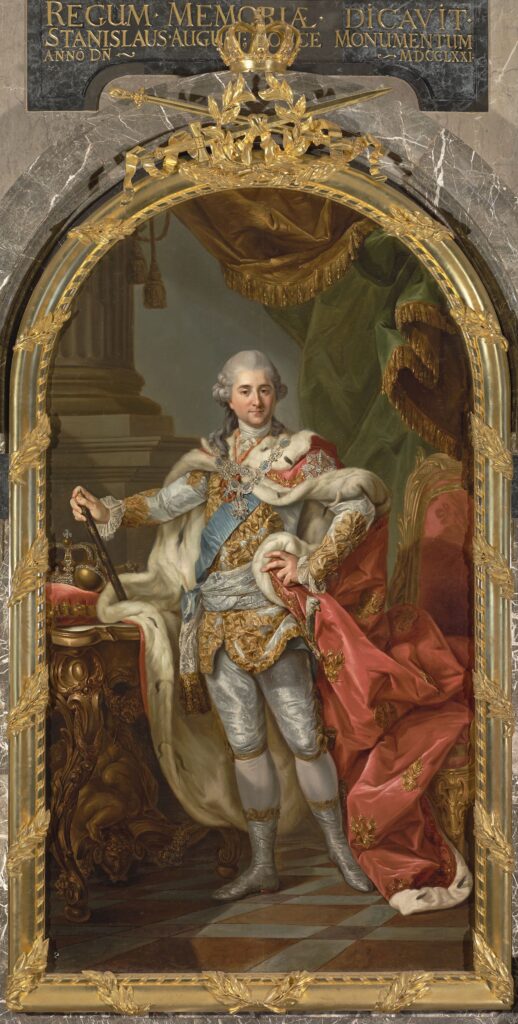
Marcello Bacciarelli, Stanisław August in Coronation Robes, 1768–1771, Royal Castle in Warsaw, Warsaw, Poland. Photograph courtesy of the Royal Castle in Warsaw.
A lesser-known tragedy in the history of collecting is the dispersal of the vast art collection of the last Polish king, Stanisław August Poniatowski. As a result of the monarch’s—and later his heirs’—millions in debt, as well as his imprisonment by the Russians in 1795, more than 2,000 paintings entered the art market over the course of a century. The king, who ascended the throne in 1764, painstakingly amassed the collection over nearly 30 years. He used the services of intermediaries and agents, purchased works at auctions, and commissioned them from famous artists (such as Jacques-Louis David). Over time, his reputation as a collector grew so strong that painters themselves began sending works to Warsaw, asking if the monarch would be willing to keep them. They took a risk, but the generous king usually sent them a suitable payment or “gift” in return.
Several works from Stanisław August Poniatowski’s former collection can now be seen in museums in St. Petersburg, Amsterdam, London, and a number of cities in the United States. Let’s take a look at the most interesting works that made their way to America.
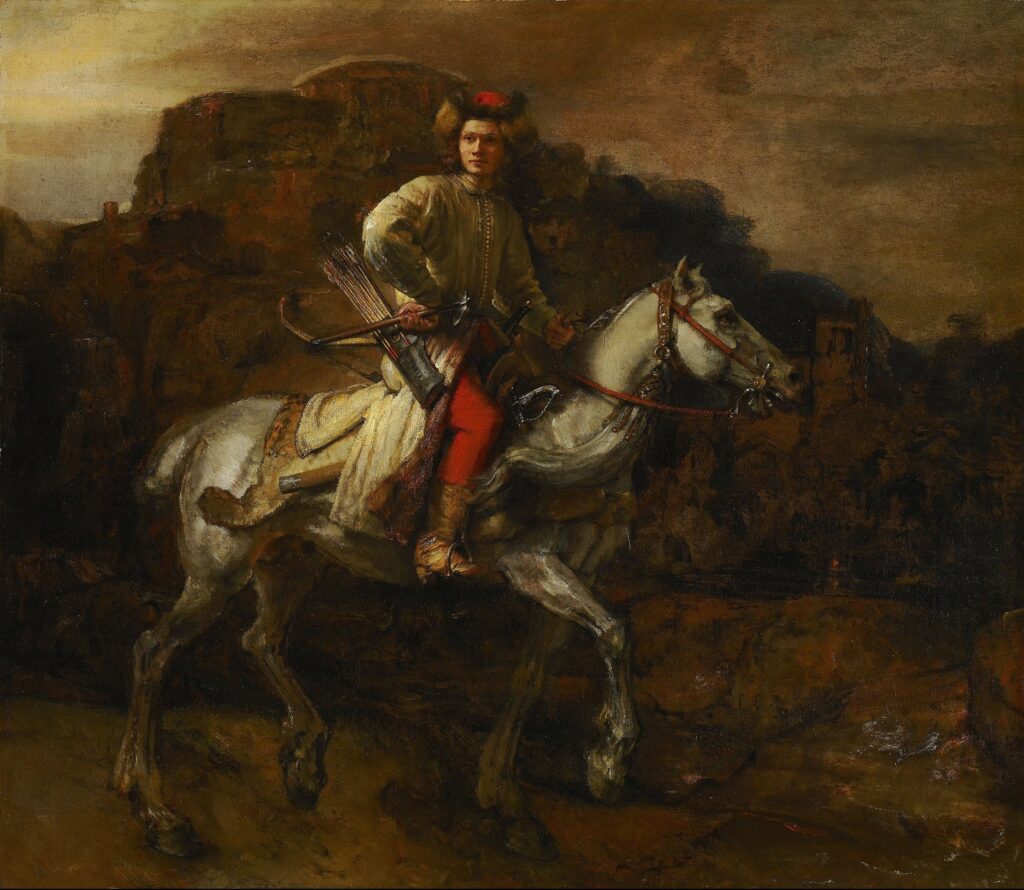
Rembrandt, The Polish Rider, c. 1655, Frick Collection, New York City, NY, USA.
The most famous painting from the former collection of the Polish king is, of course, Rembrandt’s (1606–1669) The Polish Rider from the Frick. The story of its sale is one of the most tumultuous. In the 19th century, only a few people knew of the painting’s existence. After the king’s death in 1798, Lisowczyk, as the painting is often referred to, remained in the hands of his family. They sold it, along with a group of other paintings, only in 1814. However, the work remained in the territories of former Poland and, through marriage, came into the possession of the Tarnowski family.
As luck would have it, in 1897, Abraham Bredius, the director of the Mauritshuis in The Hague, came into contact with the Tarnowski family while traveling through Europe. This occurred in Kraków, where the Dutchman was viewing Rembrandt’s Landscape with the Good Samaritan. The Tarnowskis invited Bredius to their country estate, where he viewed The Polish Rider. A year later, the painting was featured in a monographic exhibition of Rembrandt’s works in Amsterdam, where it caused quite a sensation.
Its impact was felt 12 years later, when the ultra-wealthy New York collector Henry Frick sent his agent to the Tarnowskis to purchase the painting. The agent was none other than Roger Fry, the famous art critic who had quit his job at the Metropolitan Museum of Art a few months earlier after a conflict with J.P. Morgan, a collector who rivaled Frick. In 1910, he was earning a living as a freelance curator: in London, he organized a major exhibition of Post-Impressionists—and he coined the term for the group. He also worked as an art agent. Initially, Fry hoped to arrange the sale of the painting in England, where one of Tarnowski’s relatives lived.
The Pole, however, pressed Fry to set aside the Van Gogh paintings and come pick up the Rembrandt from his castle in Poland (in a region then occupied by Austria). The gamble paid off: Frick paid Tarnowski $293,000 for the painting. Fry’s commission amounted to nearly $15,000, which, given the circumstances at the time, meant two or three years of living in luxury. The painting is one of Rembrandt’s most famous and mysterious works. Scholars still debate who the horseman, dressed in 17th-century Polish military attire, is—a specific person, a literary figure, or perhaps a biblical hero?
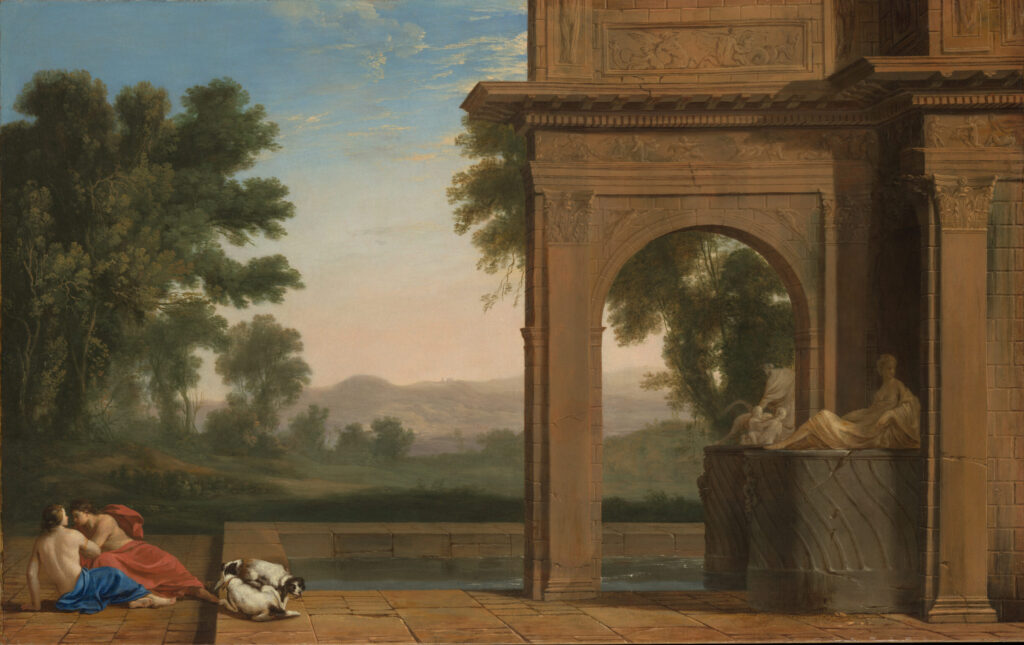
Henri Mauperché, Classical Landscape with Figures, Metropolitan Museum of Art, New York City, NY, USA.
The beautiful landscape by the French painter Henri Mauperché (1602–1686), now in the Met‘s collection in New York, also has a turbulent history. In Stanisław August Poniatowski’s collection, the painting was attributed to Laurent de La Hyre (1606–1656), a contemporary of Mauperché and, like him, a representative of the classicizing trend in 17th-century French painting.
This Arcadian landscape, bathed in soft light and featuring classical architecture and a pair of lovers by a stone pond, hung in the Picture Gallery at the Łazienki Palace, where the king displayed the most valuable works from his collection. The monarch’s heirs sold the painting in 1815. In the mid-19th century, it was in Vienna and belonged to the Lanckoroński family, who, after the fall of Poland, attempted to establish themselves in Austria.
In 1943, the landscape was confiscated by the Nazis. Its owner, Karolina Lanckorońska, was sent to the Ravensbrück concentration camp. After the war, she managed to recover part of her family’s collection, but she did not return to Poland, which was then under the influence of the Soviet Union. She decided to sell many of the works from her family’s collection and use the proceeds to support Polish culture in exile. This was the fate of Mauperché’s landscape. The work was put up for auction at Christie’s in 1967, where it was purchased by New York art dealer Harry Sperling, who bequeathed it to the Met in his will.
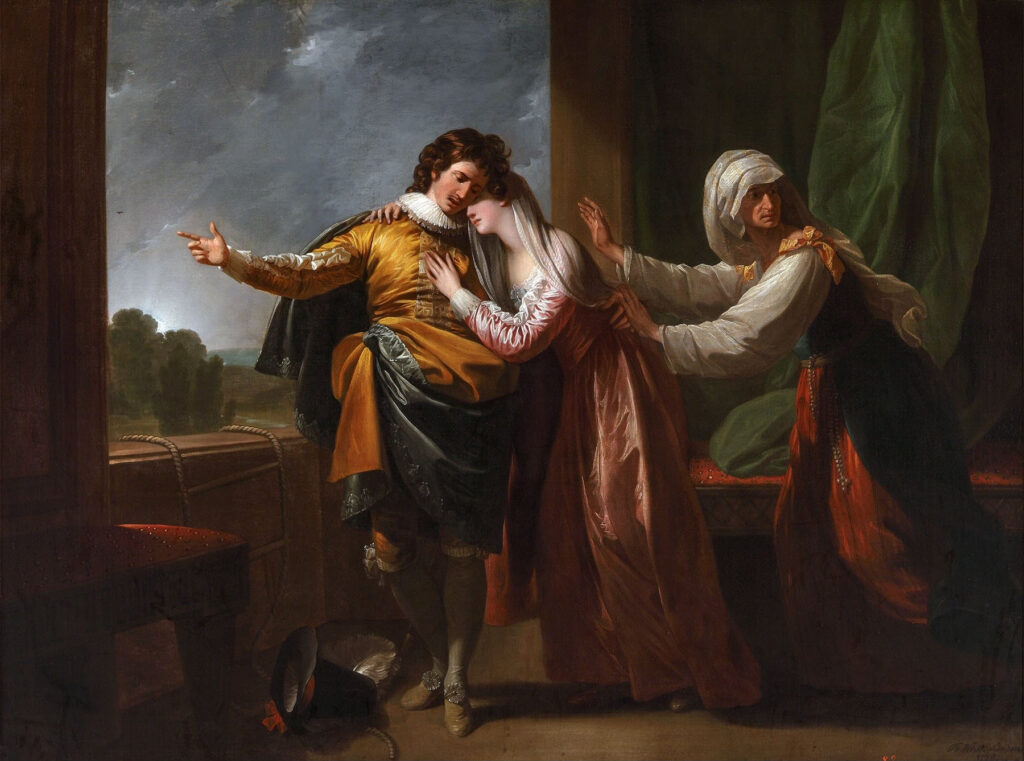
Benjamin West, Romeo and Juliet, 1778, New Orleans Museum of Art, New Orleans, LA, USA.
Another painting on display in the United States made its way from the royal gallery into the Lanckoroński family’s collection. This time, however, it has a deeper connection to America. It was painted by an artist born in Springfield, Pennsylvania—Benjamin West (1738–1820). The American worked in London for many years, where he achieved great success—he was the court painter to King George III and painted approximately 60 historical paintings for him. In London, he met Peter Biron, Prince of Courland. Biron purchased Romeo and Juliet from West for himself, but 10 years later decided to present the painting to the Polish king. Interestingly, at Stanisław August Poniatowski’s residence in Łazienki, the painting was hung as a companion piece to the famous work by Angelica Kauffman, who, like West, was active in London. The painting did not reach New Orleans until 1973, after Lanckorońska sold it to a New York gallery.
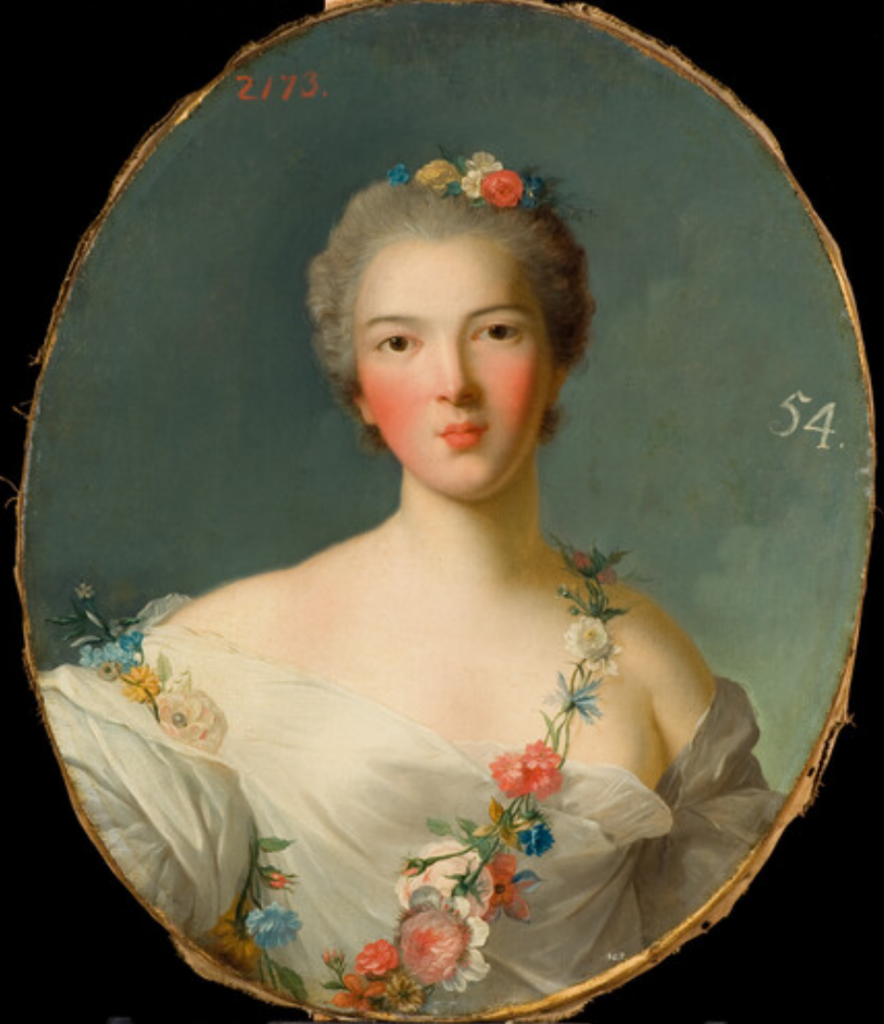
Dubois (after Jean-Marc Nattier), Portrait of Henriette, Duchess of Orleans as Hebe, 1789–1791, Hillwood Estate, Museums and Gardens, Washington, DC, USA.
Housed at the Hillwood Museum in Washington, D.C., the portrait of the Duchess of Orléans from the former collection of Stanisław August Poniatowski has two intriguing stories. The first concerns its authorship. The painting was created as part of a series of 58 portraits of French dignitaries, which the Polish king commissioned from Jacques-Louis David (1748–1825) himself.
The contract was signed shortly after the outbreak of the French Revolution and stipulated that David would locate portraits of the specified subjects in Paris, his students would produce copies, and the famous artist would personally retouch them. In 1791, after the paintings were delivered to Warsaw, it turned out that the author of The Death of Marat had not fulfilled his part of the agreement and had not retouched some of the paintings. The portraits did not meet with the king’s approval and were sent to storage.
After the king’s death, the portrait of the Duchess of Orléans remained in the hands of his heirs. In 1821, the monarch’s niece, Maria Teresa Tyszkiewicz, sold it, along with a large collection of paintings, to an Italian art dealer who was traveling to Russia. More than a century later, “America’s richest woman,” Marjorie Merriweather Post, viewed the painting in Russia. In 1935, she traveled with her third husband to the Soviet Union to view a collection of artworks that the Soviets had confiscated from the Romanovs and local aristocrats. As part of a transaction carried out two years later, Post purchased a number of paintings, including a portrait painted in David’s studio. Brought to the U.S., the was painting hung at Post’s Hillwood Estate in Washington, D.C., which was later converted into a museum following Post’s death and bequest in 1973.
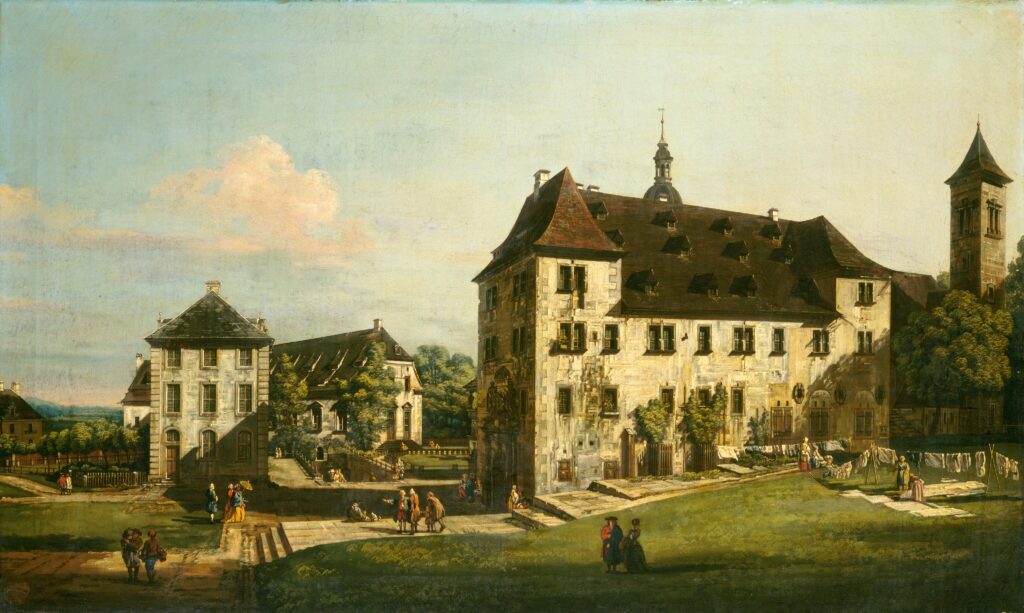
Bernardo Bellotto, The Fortress of Königstein Courtyard with the Magdalenenburg, donated by Lolo Sarnoff in memory of her grandfather, Louis Koch, National Gallery of Art, Washington, DC, USA.
The route through Russia also brought to the United States the beautiful landscape by Bernardo Bellotto (1721–1780), known as Canaletto—an outstanding Venetian veduta painter who worked at the courts of Dresden, Vienna, and Warsaw. It depicts the courtyard of Königstein Fortress near Dresden.
The painting, which today hangs in the National Gallery of Art in Washington, D.C., left Poland in 1821, in the same shipment as the Portrait of the Duchess of Orléans. However, it was taken out of Russia before the Bolshevik Revolution. In the 20th century, it was held in several collections in Germany and Switzerland. The famous banker Willy Dreyfus bequeathed it to his daughter, Lolo. Because of her marriage to an American physician (with whom she invented the electrophrenic respirator—which is used in hospitals today with minor improvements), the painting was sent across the ocean. In 1996, Lolo donated it to the National Gallery.
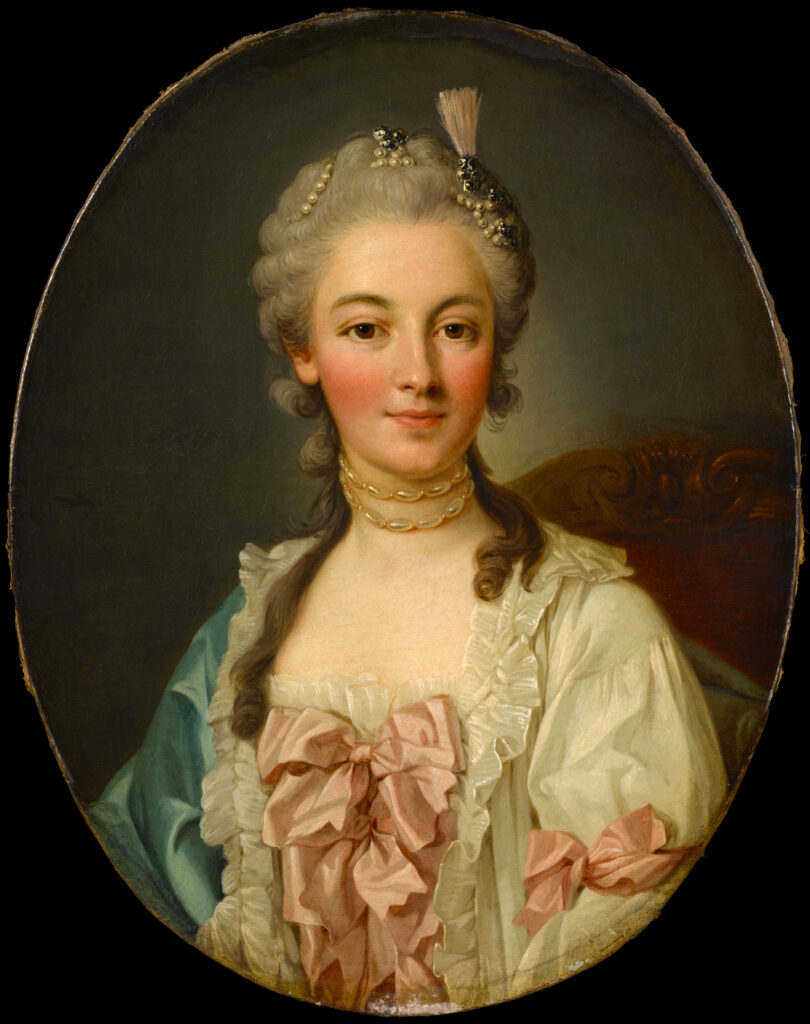
Per Krafft the Elder, Countess Teresa Kinska Poniatowska, 1765, Clark Art Institute, Williamstown, MA, USA.
A special place on the list of royal paintings currently in the U.S. is held by the Portrait of Teresa Kinska Poniatowska, painted by the Swedish artist Per Krafft the Elder (1724–1793) and housed at The Clark Museum in Williamstown. Krafft was a sought-after portraitist, and in 1767 he was working in Warsaw. He painted a series of portraits of ladies for the king—his relatives and acquaintances.
This portrait—one of Krafft’s most beautiful works—held a special place in the collection. It belonged to the monarch’s personal collection of souvenirs, as it depicted his sister-in-law, the Austrian Countess Teresa, née Kinsky, the mother of his beloved nephew, the future Polish national hero Józef Poniatowski. As a family heirloom, it was long regarded by the king’s heirs as unsuitable for sale.
This attitude did not change until the early 20th century, when Andrzej Poniatowski, who was living in Paris, came across a particularly wealthy client: Robert Sterling Clark, heir to a vast fortune made from “Singer” sewing machines. Clark had been traveling regularly to Paris since 1899 and, for a time, lived there with his wife, the actress Francine Clary, whom, incidentally, he had met and married there. Interestingly, although Francine presented herself as French and went by the surname Clary, she actually had Polish roots. She was born Francine Modzelewska and was the illegitimate child of a Polish seamstress.
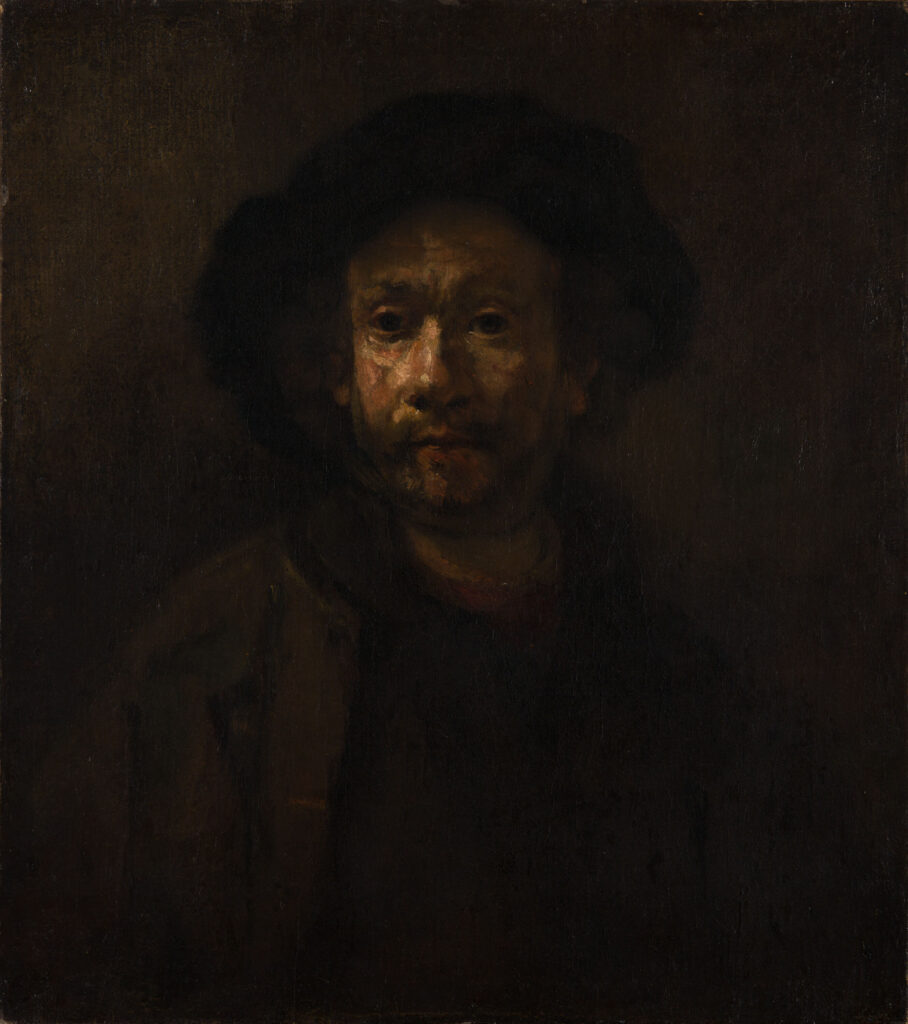
Workshop of Rembrandt, Rembrandt (Self-Portrait), c. 1635–1650, Harvard Art Museums, Cambridge, MA, USA.
The last of the paintings, Rembrandt (Self-Portrait), made its way to America twice. The first time was in 1953, when it was purchased by George Farkas, the founder of Alexander’s, a chain of department stores operating in Manhattan. His stores were notable for their scale (the largest spanned as many as seven floors) and, until the 1960s, were considered among the most iconic in New York. Farkas bought the painting at the height of his financial success, but he sold it fairly quickly through a London gallery.
The work returned to the United States in 1977 when an anonymous donor with ties to Montreal donated it to the Fogg Art Museum at Harvard. It appears that in both cases, the owners acquired the work believing it was a genuine Rembrandt, but parted with it after concluding they had been misled. In Stanisław August Poniatowski’s collection, the painting was unattributed. It was valued at a low price and hung in a small palace used as a storage facility. In the early 20th century, Roger Fry (the same man who arranged the purchase of The Polish Rider for the Frick) published the painting as a work by Rembrandt. This attribution began to be openly questioned in the 1960s and was finally revoked in 2005, thanks to research by the Rembrandt Research Project. Nevertheless, the painting is considered a high-quality work from the master’s workshop.
Individual paintings from Stanisław August Poniatowski’s collection can also be found in museums in San Francisco, Boston, and Princeton. Perhaps we will soon find out that there are even more in the United States. Experts from the Royal Castle in Warsaw are currently conducting a project dedicated to these works. It is part of “Inspiring Culture,” a program of the Polish Ministry of Culture. Researchers plan to conduct a series of study visits and archival searches, which may help us better understand the taste of Poland’s last king.
dj, Konrad Niemira
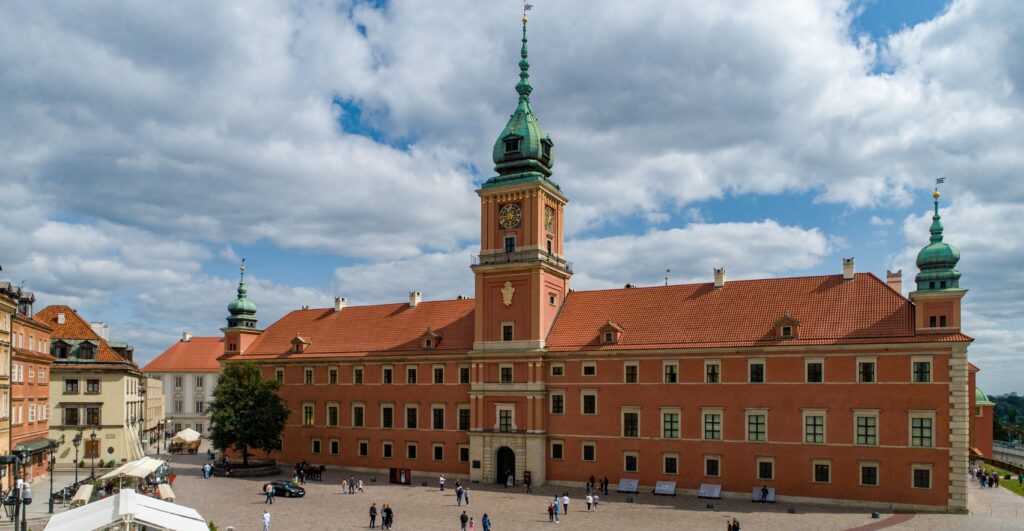
Royal Castle in Warsaw, Warsaw, Poland. Photograph courtesy of the Royal Castle in Warsaw.
DailyArt Magazine needs your support. Every contribution, however big or small, is very valuable for our future. Thanks to it, we will be able to sustain and grow the Magazine. Thank you for your help!

Museum. Former royal residence. House of arts and culture.

Coffee-fueled writer, artist, and daydreamer.
Looming over South Kensington like a grand cathedral or a royal residence, the Natural History Museum in London honors science and human curiosity...
Maya M. Tola 17 September 2026
If impressionist masterpieces make your heart beat, then you need to visit Berlin this summer. The Alte Nationalgalerie on Museum Island recently...
Kate Wojtczak 8 June 2026
With the collection spanning more than 7,000 artworks, the American Folk Art Museum, located in Manhattan, New York, celebrates some of the most...
Szymon Jocek 21 May 2026
Our first guide, presenting 15 masterpieces of European Painting, barely scratched the surface of the vast collection held at the Metropolitan Museum...
MJ Rivera 20 April 2026