Experimenting on Paper: 3 Artists Following in Rembrandt’s Footsteps
This Autumn, the Rembrandt House Museum opens up its treasure chest: more than 50 works on paper from the museum’s prized collection show how...
Guest Author 19 October 2026
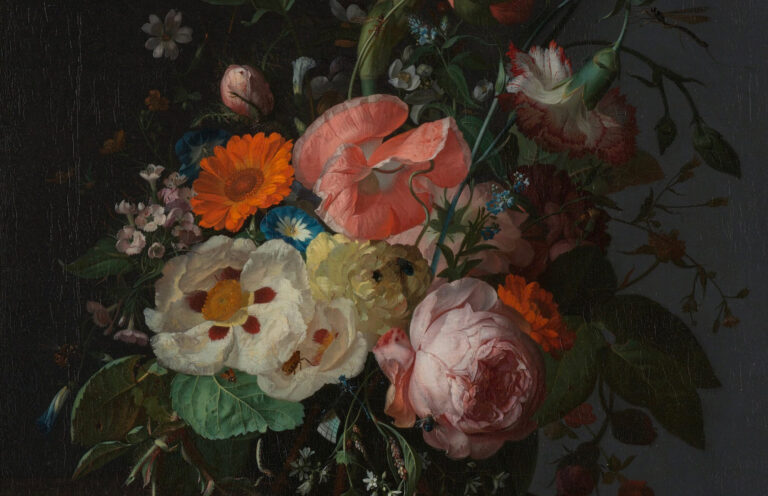
Rachel Ruysch, Still Life with Flowers on a Marble Tabletop, 1716, Rijksmuseum, Amsterdam, Netherlands. Detail.
What makes a work of art unforgettable? We asked some of the young staff members at the Rijksmuseum to share their favorite artworks from the museum’s collection and explain what makes them so special. Discover the stories behind their choices, their fresh take on the Old Masters, and find out which masterpieces have captured their hearts.
Merle van Lier, Exhibitions Project Assistant
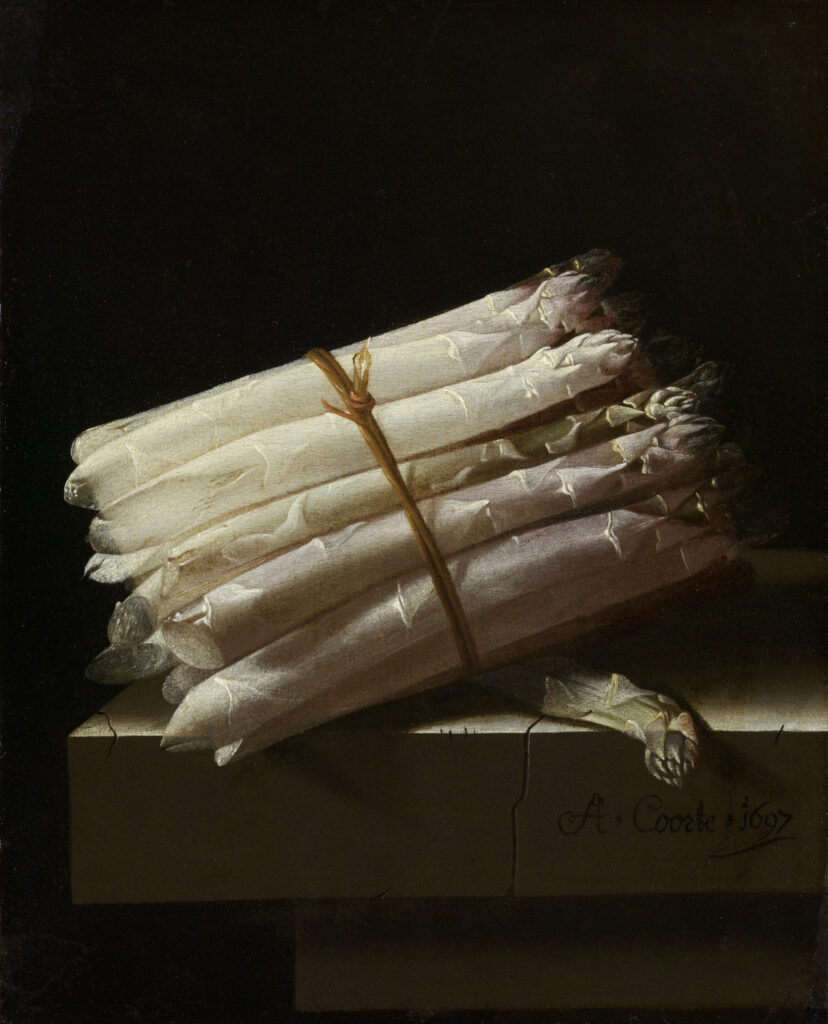
Adriaen Coorte, Still Life with Asparagus, 1697, Rijksmuseum, Amsterdam, Netherlands.
Asparagus: you either love it or it leaves you cold. Presumably, Adriaen Coorte was a big fan because he painted the white gold several times. In an intimate way, he represents them here, worked out down to the finest detail so you can almost taste them. Looking at this still life, I find myself back at the kitchen table at my parents’ house, while the steaming asparagus pan is ready next to platters of ham, baby potatoes, egg, and butter sauce.
Juliët van Doornik, Intern Textiles
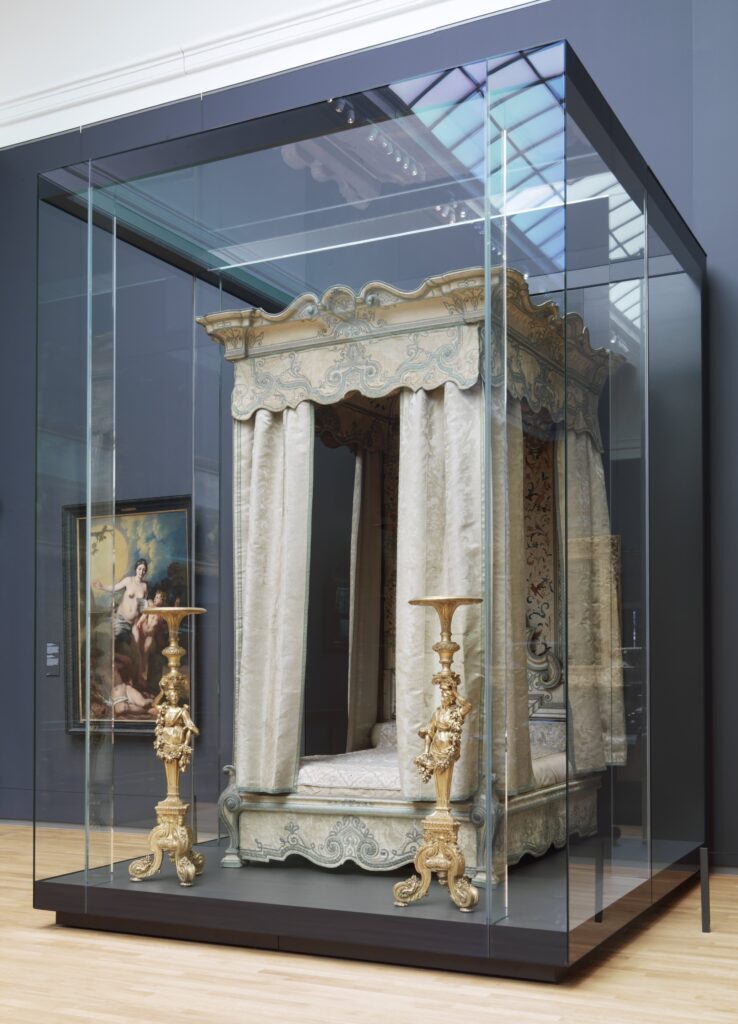
Four-Poster Bed, c. 1715–1720, Rijksmuseum, Amsterdam, Netherlands.
One of my favorite objects in our galleries is this early 18th-century four-poster bed. The textiles required for beds like these made them incredibly valuable, which meant that they had a representative function; they were made to be seen. Interesting about the textiles in this bed specifically is the combination of Chinese silk damask on the inside and European silk damask on the outside. This is the kind of object I could look at for hours without getting bored. I am very curious about the construction of the bed, as well as what it would have been like to sleep in it.
Nora Brunt, Service & Safety—Front Office
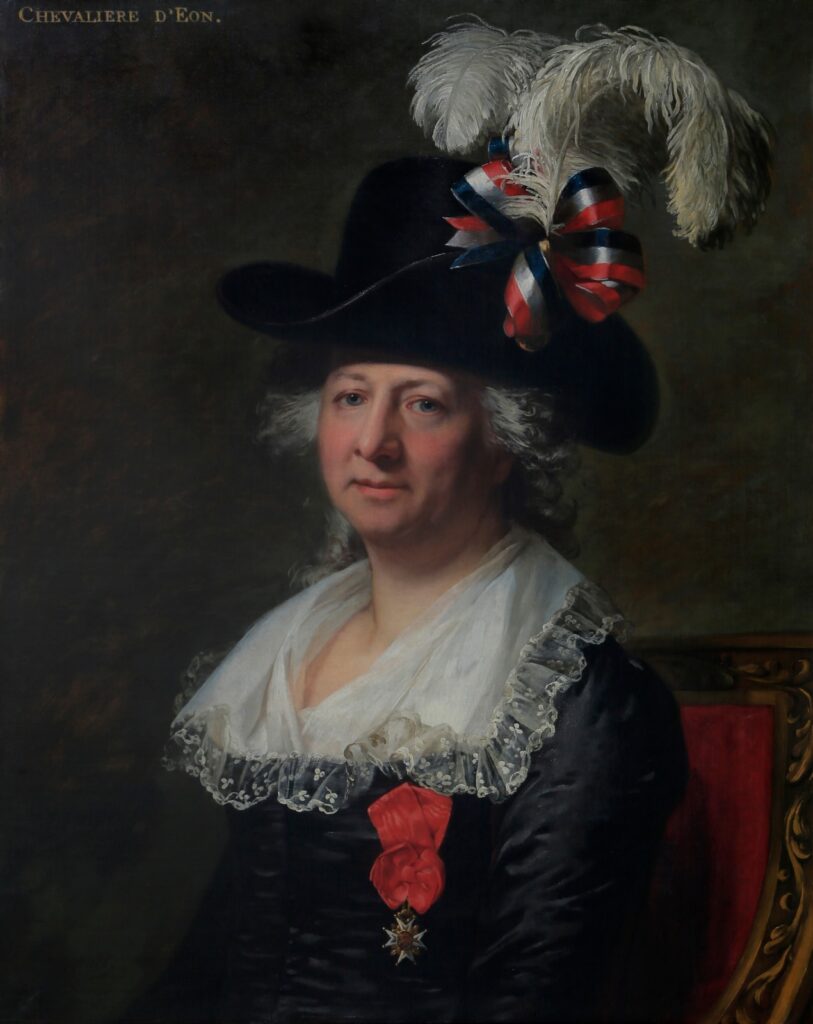
Jean-Laurent Mosnier, Portrait of Chevalier(ère) d’Éon, 1791, Rijksmuseum, Amsterdam, Netherlands.
Maybe the most surprising painting in the Rijksmuseum. It is a beautiful thing to see that gender identity isn’t just a topic now, but of all times. And that this person had the balls to solidify themselves as someone who does not conform to imposed rules, I find nothing but inspiring. I am sure that this painting has ruffled some feathers and yet created hope over the years, and hereby I would like to put the emphasis on “hope.”
Kat Mulder, Interns Content
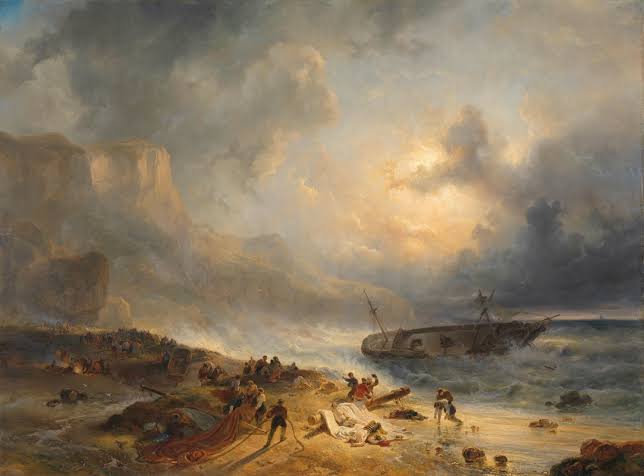
Wijnand Nuijen, Shipwreck Off a Rocky Coast, c. 1837, Rijksmuseum, Amsterdam, Netherlands.
A painting I keep returning to every time I’m in the Rijksmuseum is Nuijen’s Shipwreck Off a Rocky Coast, a true highlight of Dutch Romanticism. What gets me first is the color: dark grays and deep browns, with warm golden light pushing through the clouds. I love how that light falls on the huge cliffs and shows just how big they are. Then you spot the tiny figures on the beach, looking for survivors, almost lost against the rocks. That contrast between small human details and overwhelming nature is why I can’t ever look away from this painting.
Tessel Hopmans, Event Manager
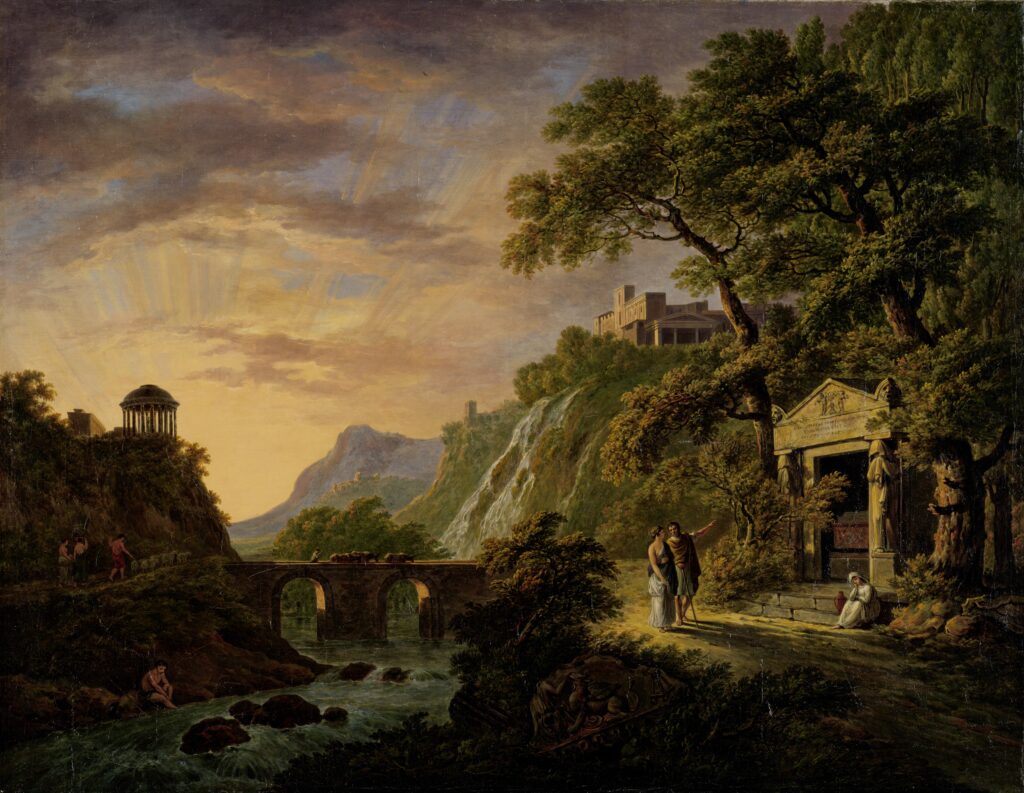
Daniel Dupré, Arcadian Landscape with Setting Sun, 1792–1809, Rijksmuseum, Amsterdam, Netherlands.
My favorite work of art in our museum is this lovely Arcadian Landscape with Setting Sun by Daniel Dupré. He was an artist from Amsterdam who, like many of his peers, went on a study trip to Italy. Upon returning, he made two works in which he demonstrated what he had learned. The golden light, the signs of antiquity, and the landscape—all so vastly different from the city he knew best. Together, they make for a spectacular display of his newly learned skills. For me, the combination of these elements is a delight to the eye, and a bit of a break from the austere Dutch style that surrounds it.
Tara Nelissen, Press & Publicity
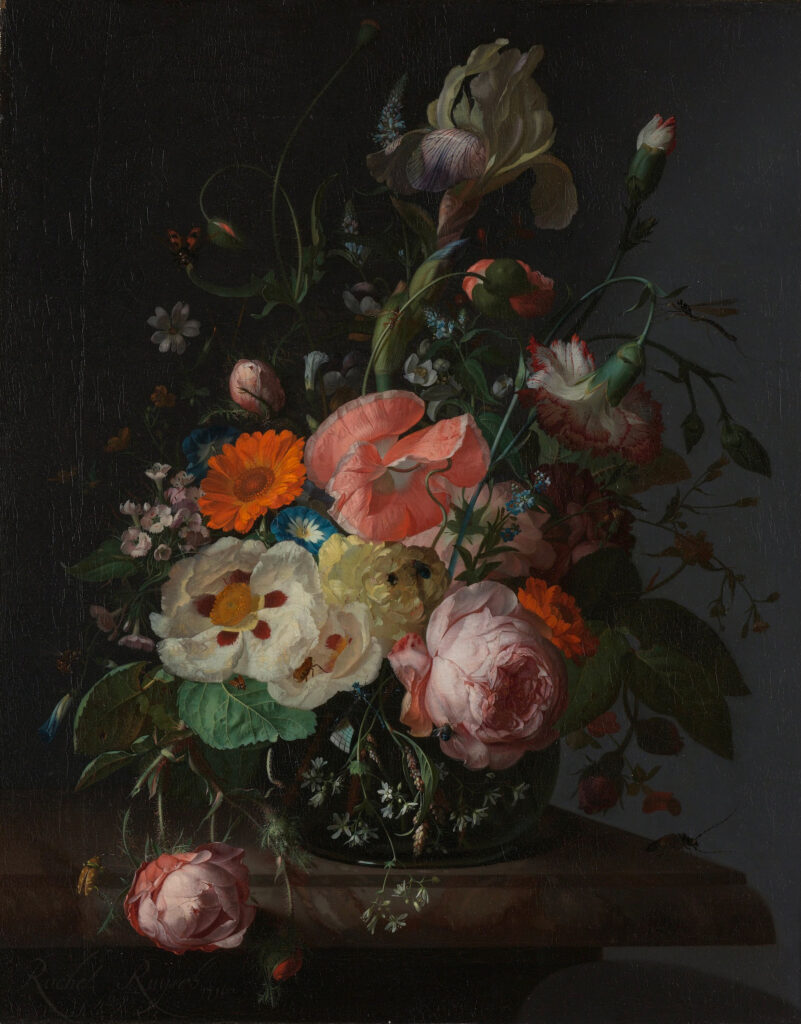
Rachel Ruysch, Still Life with Flowers on a Marble Tabletop, 1716, Rijksmuseum, Amsterdam, Netherlands.
Rachel Ruysch is one of the most successful and celebrated still life painters. I keep coming back to Still Life with Flowers on a Marble Tabletop and see new details every time. The dark background draws your attention immediately to the intricate flowers, all different species, blooming throughout the year. The reason she could paint them all at the same time is that her father taught at Amsterdam’s Hortus Botanicus. He preserved all the flowers with his own secret technique. In this way, they retained their natural color and remained lifelike.
If you look closely, you can also see highly detailed insects in between the leaves. This is truly a marvelous masterwork you cannot miss when visiting the museum. In 1701, she became the first female member of Pictura, an association of artists in The Hague. A fun fact is that in her time she earned more for her paintings than Rembrandt did. We can certainly say she was a real powerful woman.
DailyArt Magazine needs your support. Every contribution, however big or small, is very valuable for our future. Thanks to it, we will be able to sustain and grow the Magazine. Thank you for your help!

Art historian interested the most in the Polish art market, the history of art collecting and contemporary art.


Chris Dobson was born in Preston, UK. He likes to play chess, visit museums and model for art classes in Amsterdam. He can be followed on Instagram @litterarum_magister.
This Autumn, the Rembrandt House Museum opens up its treasure chest: more than 50 works on paper from the museum’s prized collection show how...
Guest Author 19 October 2026
Rembrandt’s The Polish Rider is now the centerpiece of New York’s Frick Collection. For many years, however, it was considered the jewel of a...
The Royal Castle in Warsaw 28 September 2026
Looming over South Kensington like a grand cathedral or a royal residence, the Natural History Museum in London honors science and human curiosity...
Maya M. Tola 17 September 2026
If impressionist masterpieces make your heart beat, then you need to visit Berlin this summer. The Alte Nationalgalerie on Museum Island recently...
Kate Wojtczak 8 June 2026