
Whistler in 10 Works: The Poetry of Sight
James Abbott McNeill Whistler can sometimes appear as insubstantial and vague as one of his Nocturnes. He flits across the late 19th-century art...
Catriona Miller 16 October 2026

Edvard Munch, The Sun, 1911, University of Oslo, Oslo, Norway.
Edvard Munch is defined by The Scream as an artist of angst, alienation, and agony. Yet he had a long, prolific, and varied career, producing portraits, landscapes, and decorative commissions, from late 19th-century naturalism through to the Second World War. Here are 10 paintings that prove he was much more than that single open-mouthed howl.

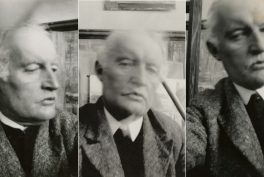
Edvard Munch, Self-Portrait with Cigarette, 1895, National Gallery, Oslo, Norway.
Edvard Munch (1863–1944) was brought up in rural Norway, his childhood dominated by his father’s strict piety and family illness. His mother and older sister both died of tuberculosis, and his younger sister suffered bouts of mental illness. Munch himself was obsessed with the fact that he, too, might suffer from mental illness and later in life would suffer a breakdown, largely brought on by his alcoholism.
This unflinching self-portrait, one of many that Munch produced during his career, leans into that sense of instability. The artist looms out of darkness, barely seeming solid, as his shoulder merges into the scuffed background. Vague, almost ghostly forms seem to hover around him, and Munch’s face is pallid and spectral. The cigarette, a contemporary symbol of decadence and Bohemianism, hangs in thin, nervous fingers. It’s smoke and the raised hand provide another barrier. Munch looks out warily as if caught by surprise in a flashbulb.

Edvard Munch, Evening, 1888, Thyssen-Bornemisza National Museum, Madrid, Spain.
Munch’s early works were landscapes and family portraits, painted in a naturalistic style. Evening shows his sister Laura sitting outside the family’s vacation home on the shores of the fjord at Vrengen. The cool, clear palette reflects the influence of his art school teacher Christian Krohg, who had in turn been inspired by French realist Jules Bastien-Lepage. The dappled blues, greens, and yellows in the grass hint at Impressionism.
With the knowledge of Laura’s illness, her isolation takes on a melancholy quality as she stares into the distance. Similarly, one can see techniques which Munch would use later in his career: the undulating shoreline setting and the cropped foreground figure. However, this painting has a soft, lyrical quality; the focus is less on symbolism and emotional expression, and more on the recreation of a remembered summer evening.

Edvard Munch, At the Roulette Table in Monte Carlo, 1892, Munch Museum, Oslo, Norway.
Munch might be Norway’s most famous artist, but in the early part of his career, he traveled widely and had contacts with creatives throughout Europe. He went to Paris to study in 1889, and although his stay was interrupted by the death of his father, it marked the beginning of a period where he lived abroad and generally only returned to Norway for the summer. His French-influenced works include scenes like Rue Lafayette, which recreates the angled street views of Claude Monet and Lucien Pissarro.
In 1892, he was invited to exhibit works in Berlin. The show shut down after only a week, although the resulting publicity did no harm to Munch’s career, and the exhibition later toured various German cities. In the German capital, Munch found kindred spirits like the Swedish playwright and artist August Strindberg. He also exhibited twenty works with the Vienna Secession in 1904.
At the Roulette Table has the claustrophobic excitement of Henri de Toulouse-Lautrec’s nightclub scenes; the flattened simplification recalls Paul Gauguin’s Synthetism. This is Munch embracing modern life and Post-Impressionist art.

Edvard Munch, The Dance of Life, 1899–1900, National Museum, Oslo, Norway.
It was in Berlin that Munch developed and exhibited what would become the Frieze of Life. In 1902, he showed 20 works, grouped into four sections: the Seed of Love, the Flowering and Passing of Love, Life Anxiety, and Death. The subjects were autobiographical, relating to Munch’s love affairs and his memories of the deaths of his sister and mother. However, they were also a determined attempt to move beyond the naturalism of his earlier work toward art that expressed inner emotion and themes of human existence.
He described the Frieze as symphonic and used titles like The Voice and The Scream to suggest sound, breaking down barriers between art forms and the senses. He used simplified forms, symbolic color, and repeated images—trees, moonlight, shorelines—to create universal representations of betrayal, passion, and mortality.
The Dance of Life shows both a journey from white, floral, youthful innocence, through red passion to black death, and a personal account of Munch’s love affairs. The central couple seems detached, but at the same time, the male figure is becoming swamped by the woman’s dress. The almost anthropomorphic I-shaped moon and reflection were a recurring presence.

Edvard Munch, Portrait of Felix Auerbach, 1906, Van Gogh Museum, Amsterdam, Netherlands.
Throughout his career, Munch painted portraits of himself, of family and friends, and as commissions. These are less well-known than his other work but exhibit many of the same characteristics. Color symbolism, flattened, sinuous-edged forms, and a sense of uneasy characterization.
Felix Auerbach was a German physicist and a patron of the arts who later supported Expressionists like Ernst Kirchner and commissioned Bauhaus architect Walter Gropius to build his home in 1924. In his commissioned portrait, Munch shows him as a successful member of the bourgeoisie with suit, watch chain, and cigar. However, there is a twinkle in his eyes, and the red, star-studded background, a clear reference to Vincent van Gogh, suggests a jaunty personality.

Edvard Munch, The Sick Child, 1907, Tate Modern, London, UK.
In 1908, Munch admitted himself to a Danish sanatorium for treatment for anxiety and hallucinations, brought on, at least in part, by his excessive consumption of alcohol. He stayed for eight months, and although it was not a complete rest cure, he continued to organize exhibitions of his work—it did represent a distinct break in his career. Afterward, he traveled less, spending time in the Norwegian countryside, first at and then after 1916 at the estate he bought near Ekely.
Illness and death were lifelong obsessions for Munch, represented by the multiple versions of The Sick Child (six oils, a chalk drawing, and three prints) he produced between 1885 and 1926. The subject was a combined memory of his sister’s death and a housecall he made with his father, a doctor. In the 1907 version, sweeping vertical brushstrokes and a broken, impastoed surface make the canvas itself seem ravaged by illness, dominated by a nauseous green. The child’s face merges into the white pillow as if she is almost a ghost already, and the mother seems to be already mourning the inevitable.

Edvard Munch, The Sun, 1911, University of Oslo, Oslo, Norway.
In 1911, Munch won a competition to design decorations for the Festival Hall, known as the Aula, at Oslo University. The committee had wanted a traditional scheme that would complement the neoclassical architecture of the building, and the competition was mired in controversy. Munch exerted considerable pressure to get his designs accepted, including showing his sketches publicly to gain popular support and pressuring the committee. Even so, in his choice of a more pastel color scheme and a style that harkens back to his earlier work, there is a sense that Munch appreciated the conservative requirements of the location.
It was a major commission, comprising 11 large canvases. Munch produced hundreds of preparatory works and created a purpose-built studio large enough to accommodate paintings nearly eight meters (26 ft) across. The themes were, in Munch’s words, “both distinctively Norwegian and universally human,” with titles like History and The Source.
The Sun, probably the most famous of the panels, depicts a stylized circle radiating light from the center of the canvas in strong diagonals which seem to spill out of the frame. The solidly linear reflection is reminiscent of the symbolic moon imagery from paintings like the Dance of Life. Yet the landscape is recognizably that of the coastline around Kragerø, with the rocks given form and shading. The sun is a source of all life, warmth, and light, but it also represents the mission of the university—education and enlightenment. Once again, as in The Dance of Life, Munch was combining the universal and the specific.

Edvard Munch, Man in a Cabbage Field, 1916, National Museum, Oslo, Norway.
Munch’s later style was more Expressionist, with less emphasis on symbolic subject matter, exaggerated color, big, scrappy brushstrokes, and a deliberate lack of finish. He was living in the countryside, on an estate that had previously been a commercial garden, and many of his works featured landscapes, often depicting farmers and rural workers. These harkened back to his childhood, but also referenced his lifelong enthusiasm for Van Gogh.
The figure here is monumentalized, his upper body reflecting the shape and color of the mountains behind him and his feet rooted into the earth. The huge cabbages he holds further tie him to the land he is cultivating. With his undefined features, scale, and the tilting perspective that propels him towards us, he has something of the threat of Jean-François Millet’s The Sower. However, there is nothing more prosaic than cabbages: he is ultimately just a man standing in a field.

Edvard Munch, The Kiss, 1897, Munch Museum, Oslo, Norway.
As The Sick Child demonstrates, Munch had an almost obsessive desire to return to subjects and motifs throughout his career. He produced a second version of the Dance of Life in 1925, and even the motif of the seated figure seen in Evening crops up again and again, for instance in numerous versions of Melancholy. This was partly a result of the ongoing personal importance of certain themes, a character trait. Munch relived his anxieties on canvas almost as if he was picking a sore.
Perhaps the most enduring obsession of all was the embracing couple, which exemplified all of Munch’s contradictory views and experiences of relationships. In the 1897 version of The Kiss, there is a passionate intimacy as the couple shut out the world with a curtain and merge into one in the darkened interior. It is a close-up distillation of an earlier 1892 version, where we see more of the room, and the figures are more differentiated. Meanwhile, in the print form of The Kiss, Munch increased the erotic intensity by showing the couple naked.
Passion slips into violence and death when the kiss becomes a vampire’s bite—another repeated motif. What initially appears to be a romantic bond becomes a parasitic attack as Munch seems to fear losing his identity, features erased, soul sucked out. The darkness, rather than intimate, instead feels threatening.

Edvard Munch, The Scream, 1893, National Museum, Oslo, Norway.
There are also multiple versions of Munch’s most iconic work, including drawings and prints. According to the artist, it was the result of an actual experience when the setting sun caused blood-red clouds, making him imagine nature itself was screaming. The heightened emotion, the symbolic use of nature and color, the sinuous lines, and exaggerated diagonal distance can all be found in Munch’s work. However, the intense, almost lurid paranoia of The Scream, with its skeletal, shuddering figure and almost featureless background, is uncharacteristically extreme.
Munch is a more subtle artist than The Scream suggests. For him, life is traumatic and fraught, but it is there to be lived. His family and friends, his love of nature and Norway, and his enthusiastic involvement in the contemporary art scene are celebrated in his work. Love can bring pain and passion. Death can be a relief as well as a sadness. There is always nuance and ambiguity in Munch’s art. And, despite often-repeated motifs, there is abundance and variety.
DailyArt Magazine needs your support. Every contribution, however big or small, is very valuable for our future. Thanks to it, we will be able to sustain and grow the Magazine. Thank you for your help!

Catriona Miller is an art historian and freelance writer on art. Having studied at Oxford and St Andrews, she is currently researching issues of nationalism and identity in British landscape painting. She has taught art history and lectures on art history and art appreciation.

Univ. of New Orleans, Fine Arts and History; Fine Artist, Professional Graphic Designer, Art Historian, Historian, Musician, worked at the New Orleans Museum of Art and MS Museum of Art; learning enthusiast!
James Abbott McNeill Whistler can sometimes appear as insubstantial and vague as one of his Nocturnes. He flits across the late 19th-century art...
Catriona Miller 16 October 2026
Think art school is the only path to greatness? Think again. These 10 artists defied convention through persistence, originality, and vision, without...
Wen Gu 14 September 2026
Bronzino was of the generation of artists who had to find a way of following the perfection of the High Renaissance. They pushed the conventions of...
Catriona Miller 28 September 2026
From early roots in rural Ontario, Canada, to New York City and back again, David Milne was an artist who rarely settled for long. His works span a...
Bec Brownstone 1 July 2026