

10 Rembrandt Etchings You Need to See This Summer in Amsterdam
In Rembrandt’s prints, you can see the whole of life passing you by, from the cradle to the grave. Every stage of life held something...
Guest Author 12 June 2026
28 August 2026 min Read
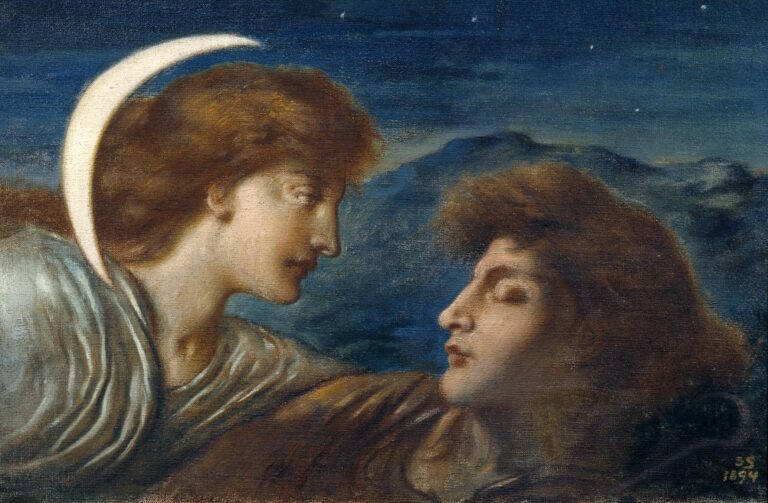
Simeon Solomon, The Moon and Sleep, 1894, Tate Britain, London, UK.
Despite being a Jew in a city still grappling with religious freedoms, Simeon Solomon rose to become one of London’s notable painters only to come tumbling down from prominence after arrests under homophobic laws. He died in poverty, outcast from his social and professional circles, but his works survive as stunning examples of the Pre-Raphaelite movement. Today, it’s clear how Solomon’s identity informed his art. He used Old Testament biblical stories to carve out space in the Christian art world and injected classical scenes with queer longing.
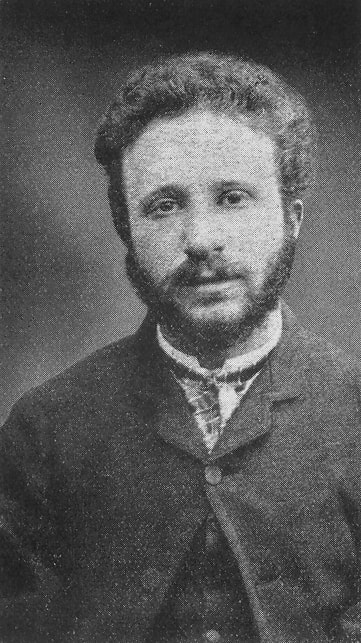
Photograph of Simeon Solomon. Simeon Solomon Research Archive.
Simeon Solomon was born in London in 1840 in the midst of the struggle for Jewish emancipation. Jews had been granted permission to practice retail trade just nine years earlier. It’d be another 18 years before the Jewish Relief Act removed the need for elected officials to take a Christian oath.
The Solomon family lived in Bishopsgate, a neighborhood straddling two worlds. One side of the neighborhood abutted the interior of London. The other side bordered the squalid crowding of East London as depicted in Dickens’s Oliver Twist. The Solomons achieved middle-class status on the brink of the mass migration of impoverished Jews to the East End that occurred in the final decades of the century.
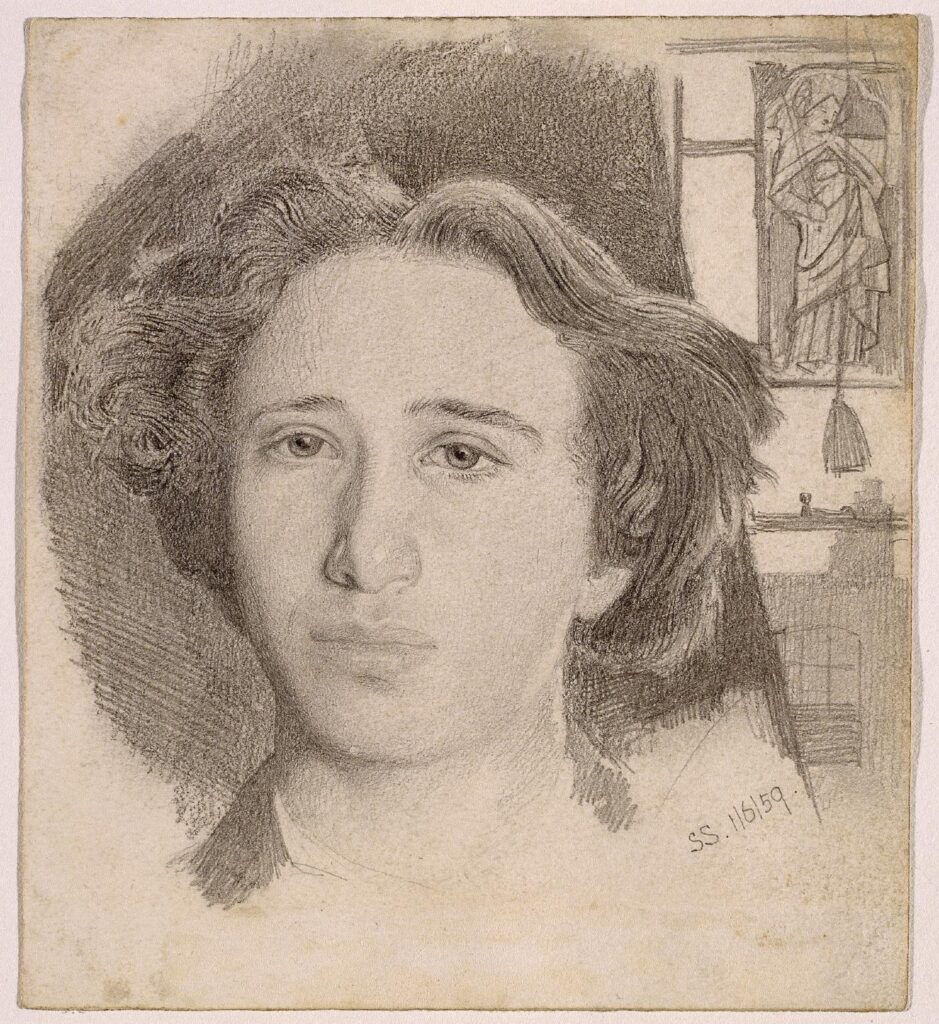
Simeon Solomon, Self-Portrait, 1859, Tate Britain, London, UK.
Simeon Solomon was the youngest of eight siblings. His brother Abraham, 17 years his senior, was admitted to the Royal Academy of Arts the year before Simeon was born. The same institution, while happy to show Simeon’s older sister Rebecca’s paintings in summer exhibitions, would not admit her, or any other woman, as a student.
Solomon earned admission to the Royal Academy at just 16, and within two years, he became one of the youngest artists to exhibit at the Academy. He has been called a prodigy, yet his early success may have had more to do with skilled mentoring than innate ability.
During Simeon Solomon’s childhood, Rebecca and Abraham were already established artists and provided him with support and instruction. From a young age, Simeon was probably working in his brother’s studio and hearing stories from his sister about her job as an assistant to John Everett Millais. Already, Simeon was entrenched in the Pre-Raphaelite movement, an aesthetic characterized by the influence of classic literature, admiration of nature, bright colors, and attention to pattern and detail.
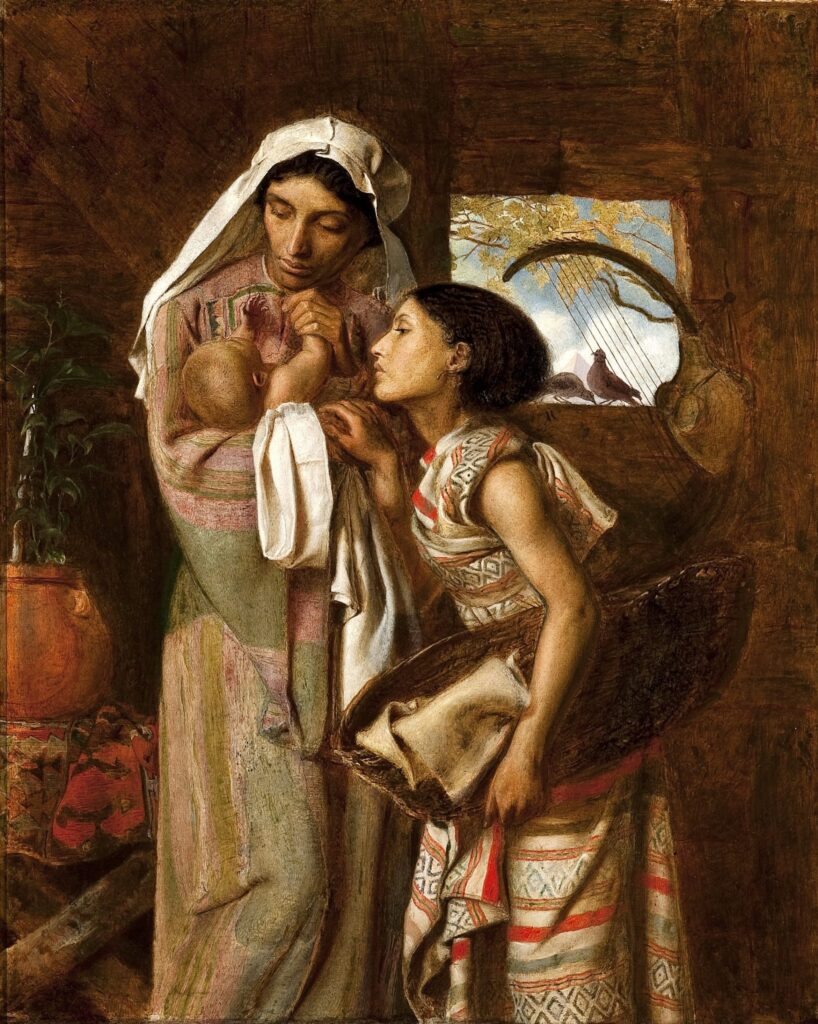
Simeon Solomon, The Mother of Moses, 1860, Delaware Art Museum, Wilmington, DE, USA.
As a Jew, Simeon found an entryway into the world of Pre-Raphaelite painting through the Old Testament. The Mother of Moses was shown at the Royal Academy when Solomon was just 19. While praised by many critics, others took issue with the painting’s central figures, particularly their dark skin color. Fanny Eaton, a Jamaican-born Black woman, had served as Solomon’s sitter. Afterward, many other Pre-Raphaelites employed her as a model as well.
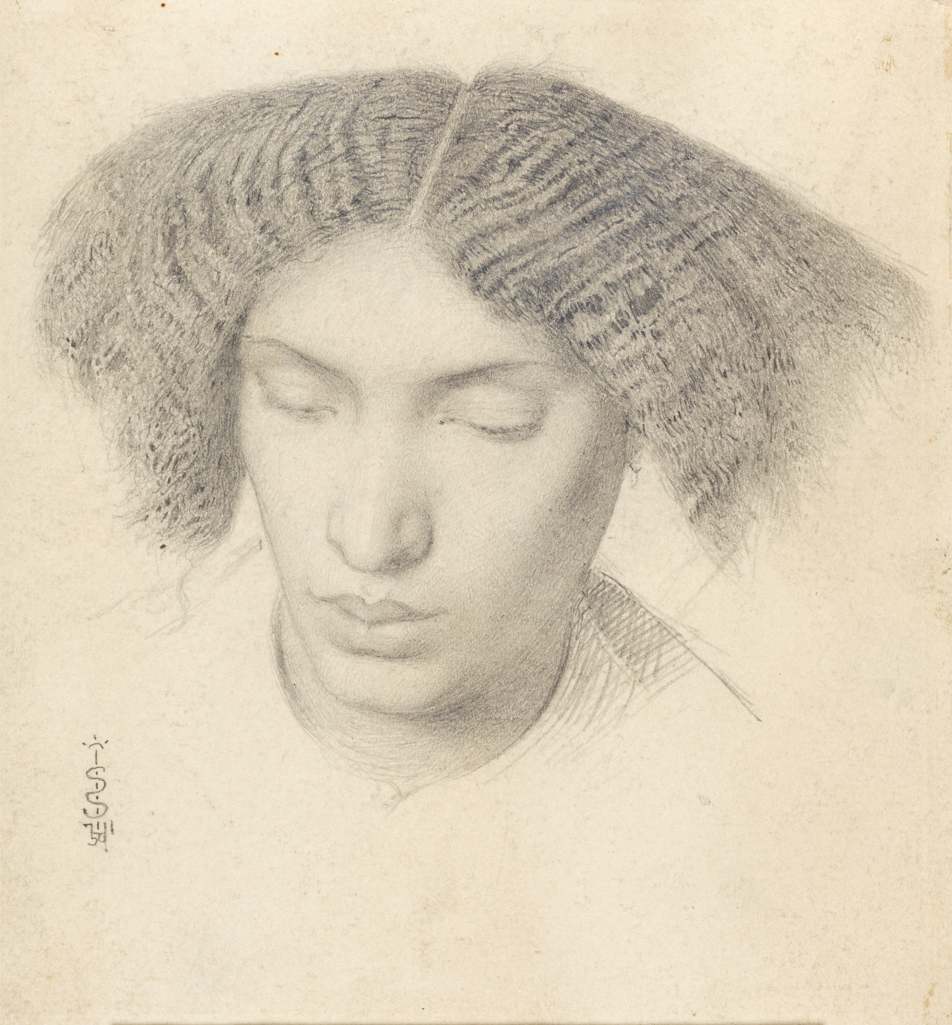
Simeon Solomon, Portrait of Mrs Fanny Eaton, 1859, Fitzwilliam Museum, Cambridge, UK.
A Young Musician Employed in the Temple Service During the Feast of Tabernacles shows a celebration of Sukkot, a Jewish holiday commemorating the Exodus from Egypt and the fall harvest.
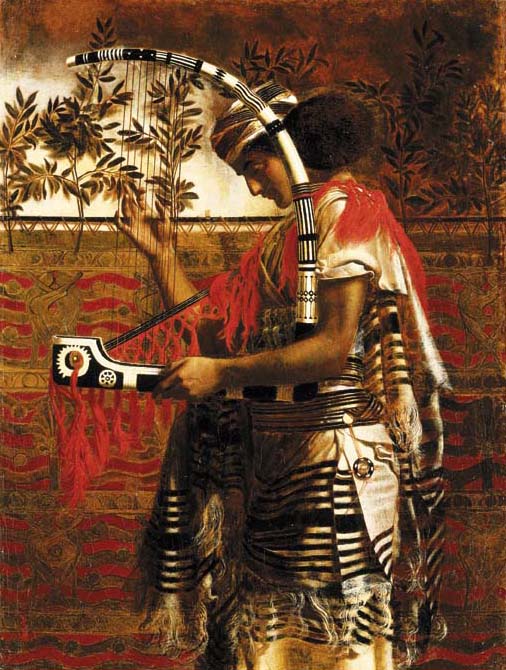
Simeon Solomon, A Young Musician Employed in the Temple Service During the Feast of Tabernacles (Hosannah!), 1861, private collection. Christie’s.
Shadrach, Meshach, and Abednego in the Fiery Furnace comes from the Book of Daniel. Three Jewish men are sentenced to burn for failing to show subservience to the king, yet are miraculously unscathed by the flames. This painting also shows another grand theme of Solomon’s: a celebration of queerness.
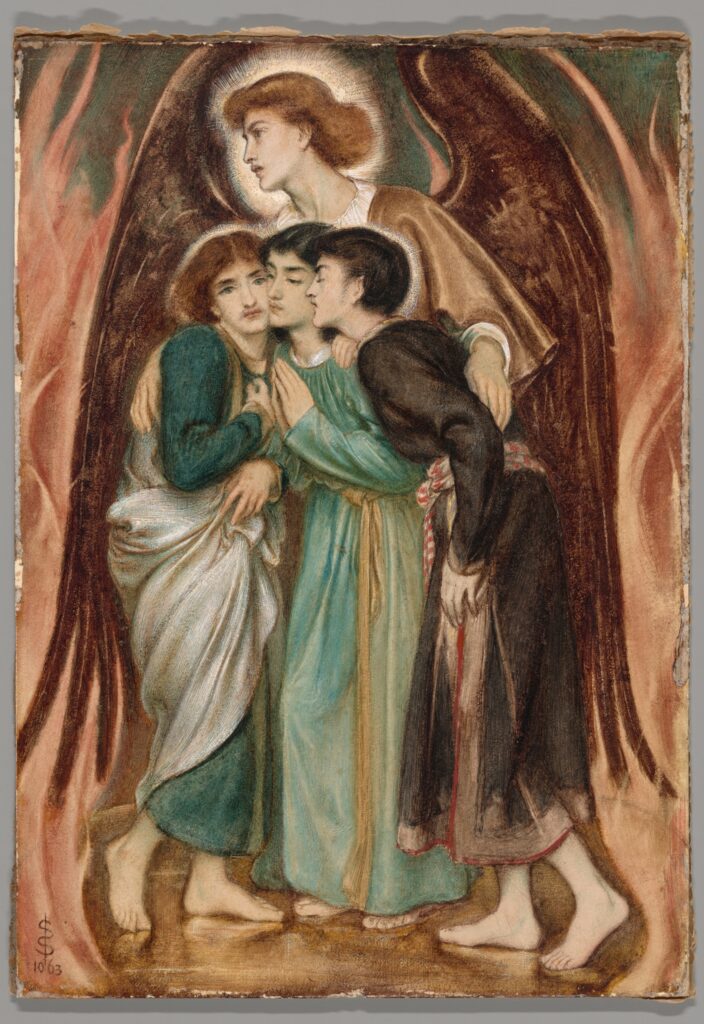
Simeon Solomon, Shadrach, Meshach, and Abednego in the Fiery Furnace, 1863, Art Institute of Chicago, Chicago, IL, USA.
From its beginning in 1848, the Pre-Raphaelite movement played with traditional depictions of gender. The original seven-member Pre-Raphaelite Brotherhood included artists William Holman Hunt, John Everett Millais, and Dante Gabriel Rossetti. Women became active figures with postures and expressions that created female-driven narratives. Strong noses and accentuated cheekbones sometimes gave female subjects a more masculine appearance.
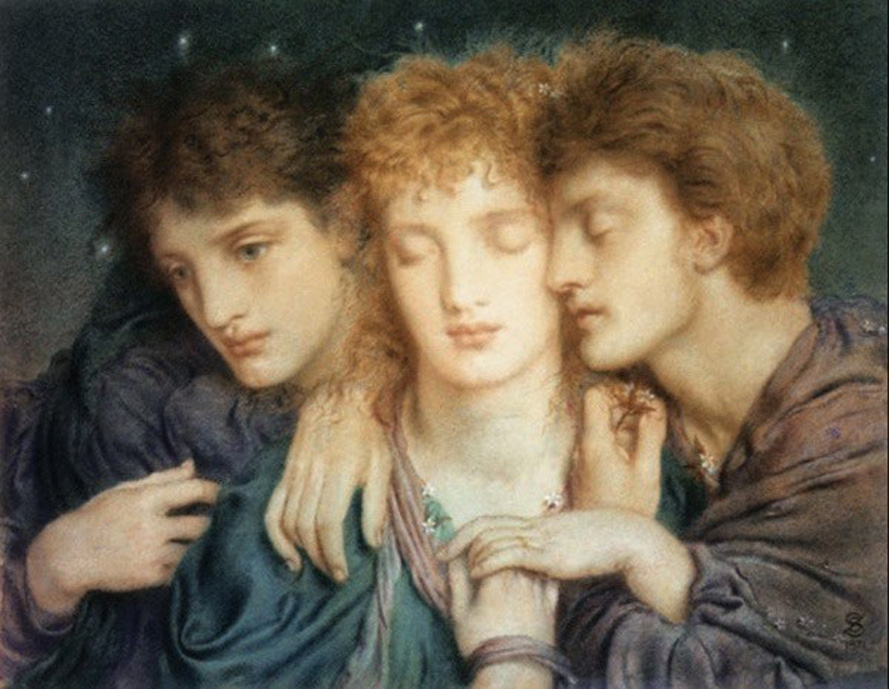
Simeon Solomon, The Sleepers and the One Who Watcheth, 1870, Leamington Spa Art Gallery and Museum, Leamington Spa, UK.
Artists inspired by the original Brotherhood pushed further. Sometimes male bodies became nearly indistinguishable from female bodies. Edward Burne-Jones, a friend and contemporary of both Rebecca and Simeon Solomon, was often criticized for the effeminate portrayal of the men in his paintings. This Pre-Raphaelite blurring of gender was extended to a pinnacle by Symbolist artists like Gustav Klimt and Aubrey Beardsley.
Simeon Solomon’s work played not only with androgyny and gender expression, but also with sexuality. Often, his scenes lurk in innuendo, a subtle homoerotic gaze or a posturing of figures inviting questions. Sappho and Erinna in a Garden at Mytilene, however, clearly shows a homosexual romance. Sappho, the Greek poet from the island of Lesbos, shown in yellow, is the origin of the modern word lesbian.
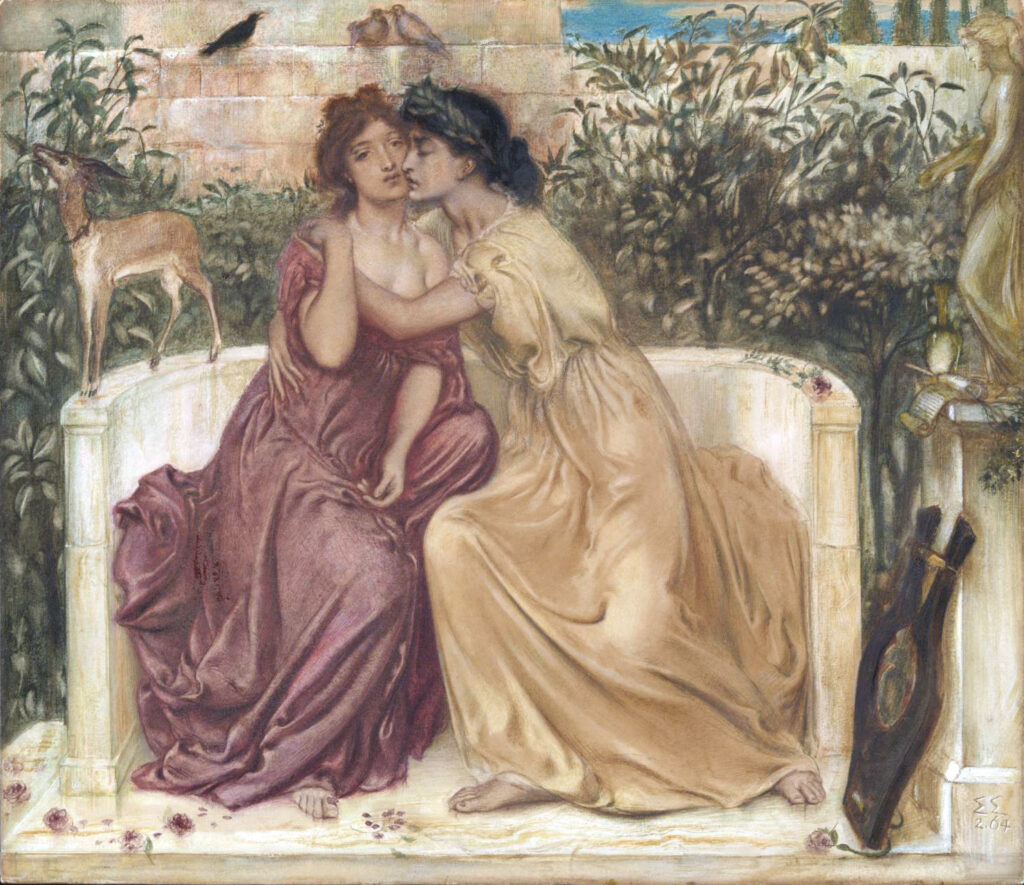
Simeon Solomon, Sappho and Erinna in a Garden at Mytilene, 1864, Tate Britain, London, UK.
The Sleepers and the One that Watcheth (above) shows three androgynous figures in a dreamy, romantic embrace. Several Solomon drawings and illustrations show homoerotic subtext during marriage ceremonies. In his drawing Illustration to the Song of Solomon, the bride appears to be the odd one out as the groom and another man share affections.
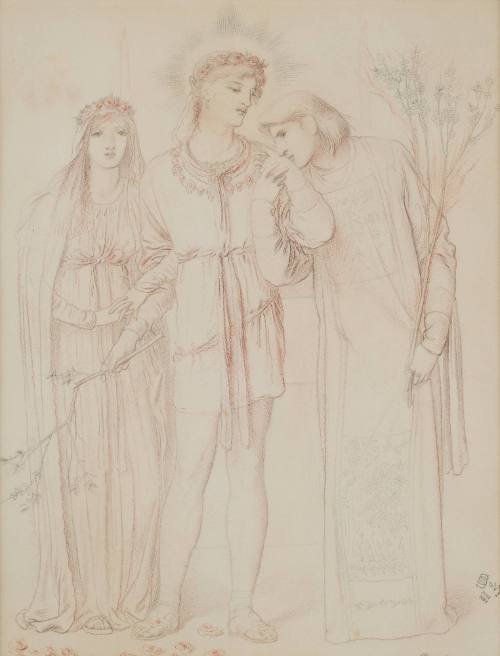
Simeon Solomon, Illustration to the Song of Solomon, 1868, Hugh Lane Gallery, Dublin, Ireland.
Abraham Solomon, who lived the most conventional life of the three artist siblings, died abruptly in 1862. No doubt his death profoundly impacted Rebecca and Simeon. Rebecca, who had previously worked closely with Abraham, began sharing studio space with Simeon. They promoted and supported each other as artists. Many believe it was the more devout Rebecca who influenced Simeon’s depictions of traditional Jewish stories and themes.
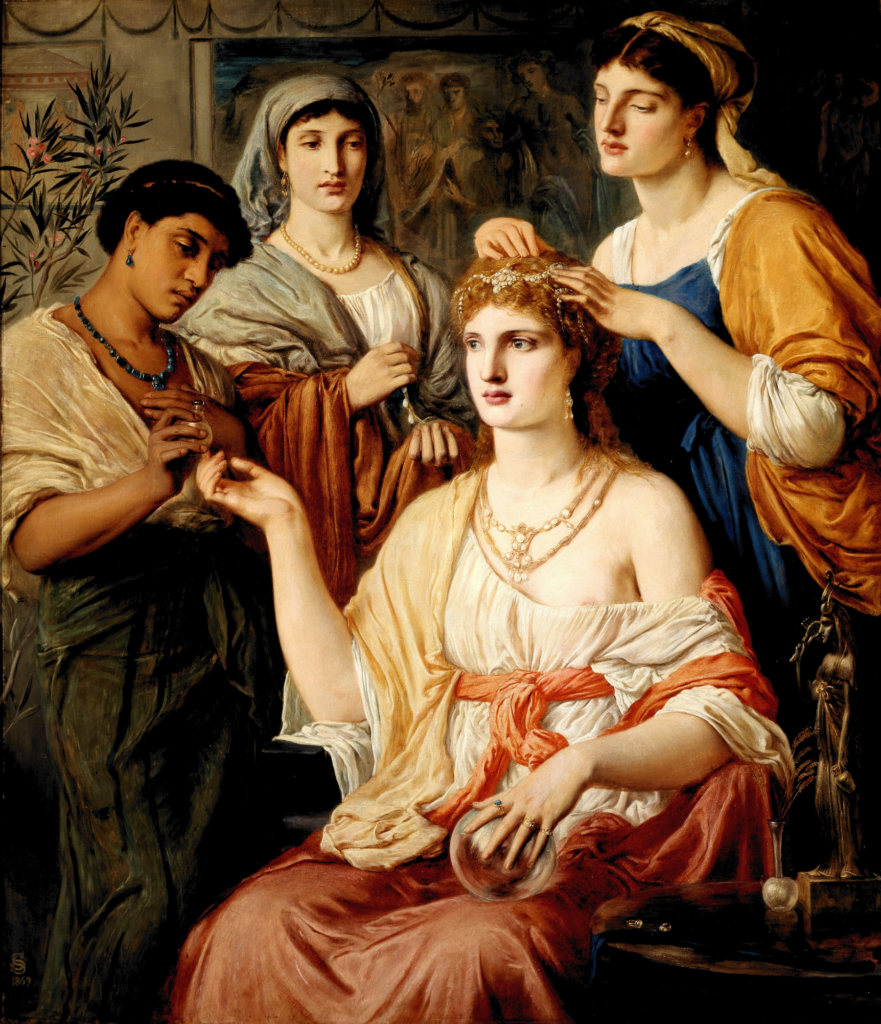
Simeon Solomon, Toilette of a Roman Lady, 1869, Delaware Art Museum, Wilmington, DE, USA.
Simeon and Rebecca also enjoyed a vibrant social life that included intellectuals like Edward Burne-Jones, Dante Gabriel Rossetti, William Holman Hunt, and the controversial poet Algernon Charles Swinburne, who became a close friend of Simeon.
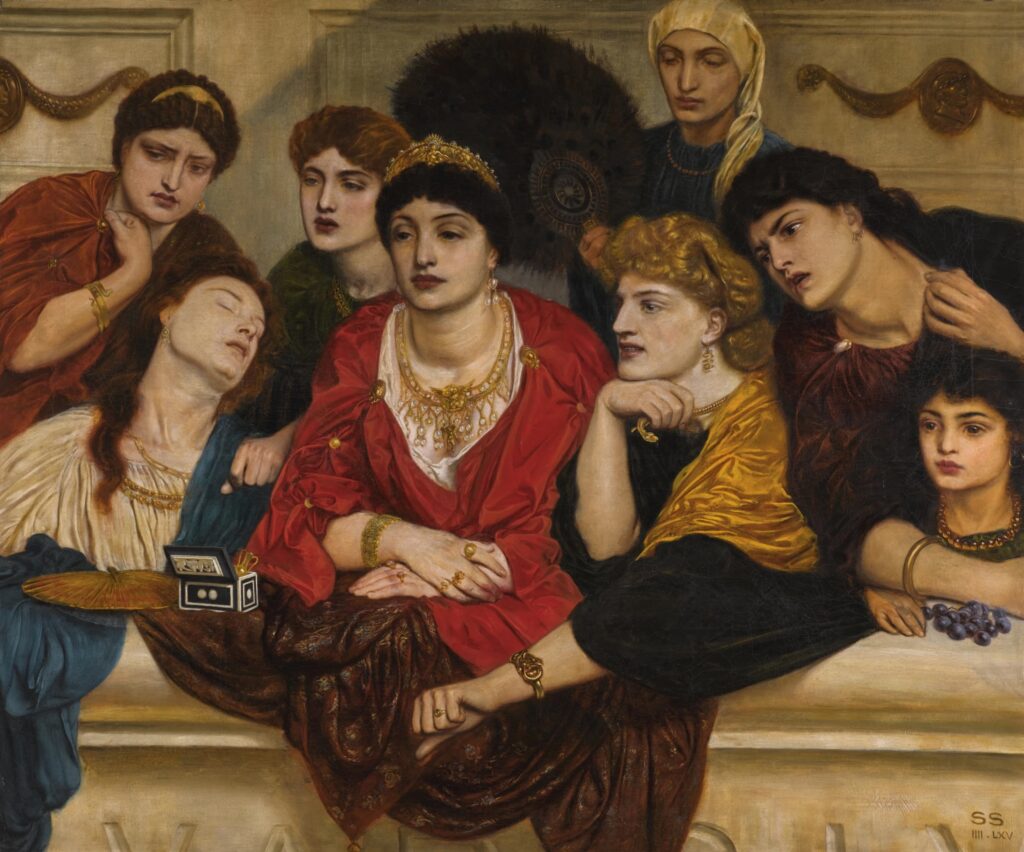
Simeon Solomon, Habet! In the Coliseum A.D.XC, 1865, private collection, Sotheby’s.
Swinburne’s 1866 book Poems and Ballads included two poems, Hermaphroditus and Sapphics, that exploded conventional ideas about sexuality and a gender binary. Off the page, Swinburne’s sexuality was varied and diverse. He was a known masochist, and Simeon illustrated his unpublished book The Flogging Block. Swinburne also contributed to The Whippingham Papers, a collection of erotic prose and poetry published in 1887.
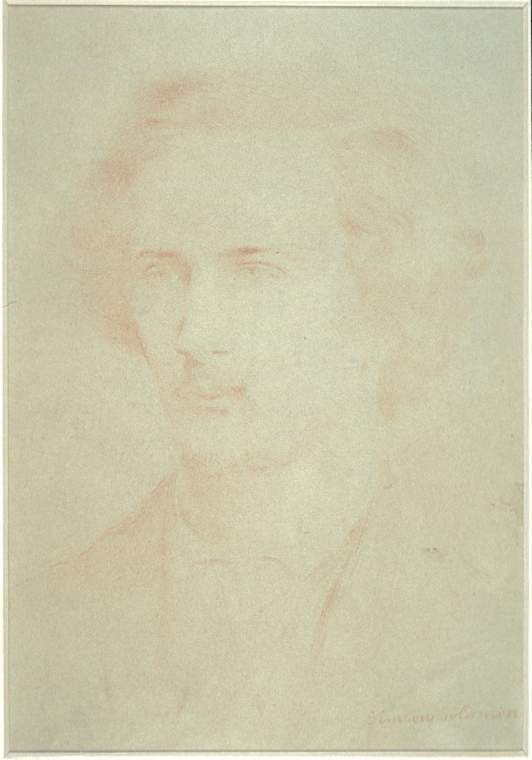
Simeon Solomon, Portrait of Algernon Charles Swinburne, 1863, Fitzwilliam Museum, Cambridge, UK.
A story survives of Swinburne sliding naked down a banister with a male friend while boarding with Rossetti, much to the chagrin of another boarder, the novelist George Meredith. While there is no conclusive evidence of Swinburne’s homosexuality or bisexuality, there remain many historical hints, his friendship with Solomon being one.
While fluid ideas about gender and sexuality may have fit within sexual practices and intellectual ideas of Simeon Solomon’s Pre-Raphaelite social set, they put him far outside the social norms of Victorian England. In 1873, Solomon was caught with stablehand George Roberts and convicted of attempted “buggery,” a serious offense. Just 12 years earlier, sodomy had been punishable by death.
Roberts served 18 months of hard labor. Solomon, on the other hand, was fined and released to his cousin. Afterward, he spent time in two different lunatic asylums before being caught and arrested again with a male sex worker in Paris.
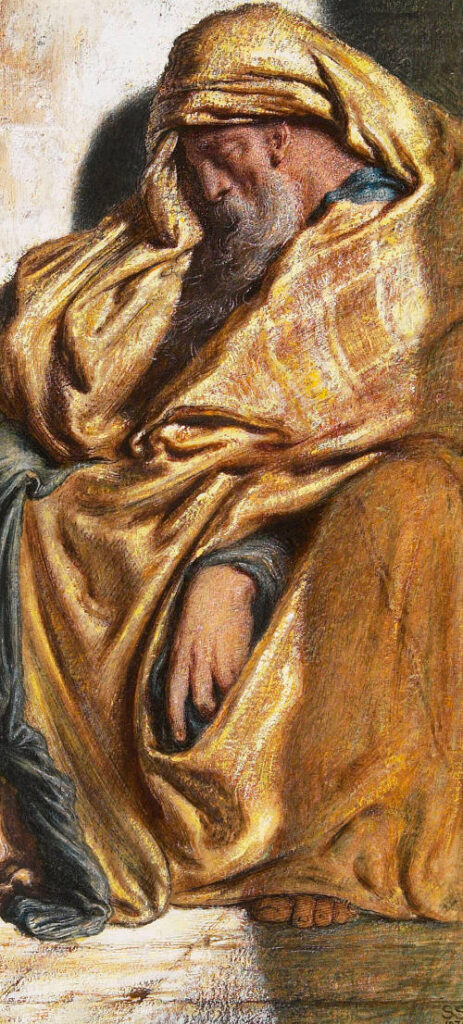
Simeon Solomon, King David Mourning Absalom, 1875, Art Gallery of Hamilton, Hamilton, Canada.
This proved the end of Simeon Solomon’s artistic relevance. His friends in the art world largely abandoned him. Public commissions were off the table, and private commissions dried up as well. Even the eccentric Swinburne turned against Solomon, calling him “a thing unmentionable alike by men or women, as equally abhorrent to either—nay, to the very beasts.”
Alcohol and poverty were Solomon’s constant companions for the rest of his life, and while he continued to produce great art, he could never restore his reputation. In his book A Hundred Years of British Painting published in 1951, Hesketh Hubbard wrote, “The story of Solomon’s remaining 33 years, of what is known of them, as unsuccessful pavement artist and shadowy vagrant, is too tragic for this chronicle.” Solomon died in 1905.
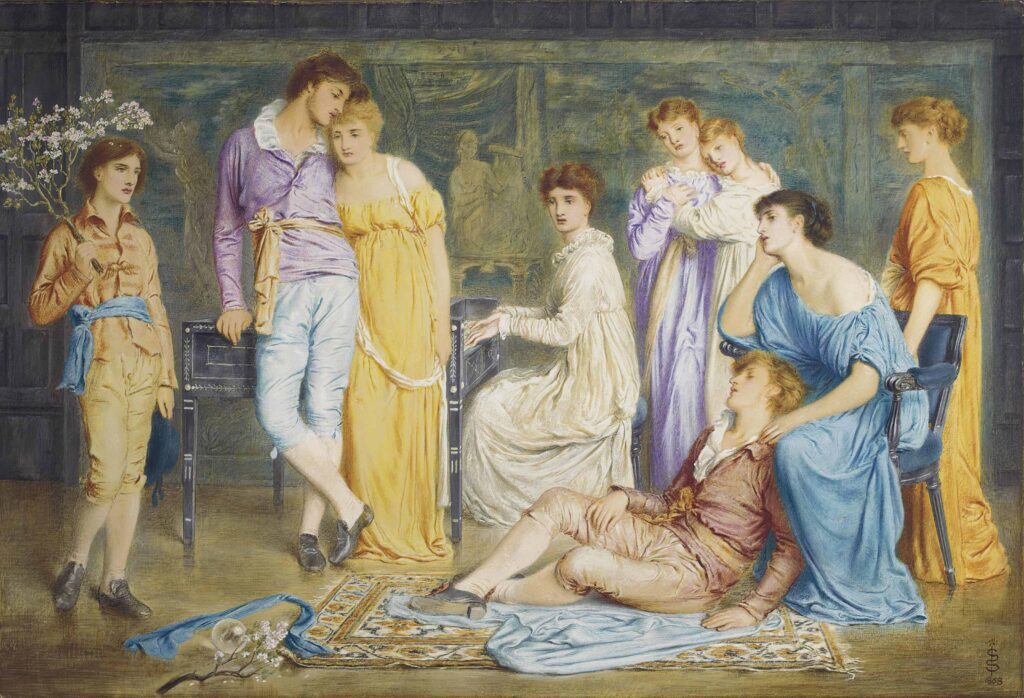
Simeon Solomon, A Prelude by Bach, 1868, private collection. Christie’s.
Today, scholars and museums recognize Simeon Solomon as an important artist of the Pre-Raphaelite movement. In 2017, Tate Britain included his work in Queer British Art 1861–1967. In 2027, the Delaware Art Museum will show 180 of his works. Solomon’s artistry holds up, and his brazen depictions of Jewishness and homosexuality in the restrictive Victorian society are now valued as courageous subversion rather than scandalous.
DailyArt Magazine needs your support. Every contribution, however big or small, is very valuable for our future. Thanks to it, we will be able to sustain and grow the Magazine. Thank you for your help!

Theodore Carter is the author of several books including "Stealing The Scream" and "Frida Sex Dreams and Other Unnerving Disruptions". You can see his art out in the streets of Washington, DC, and on his website: https://theodorecarter.com.

Univ. of New Orleans, Fine Arts and History; Fine Artist, Professional Graphic Designer, Art Historian, Historian, Musician, worked at the New Orleans Museum of Art and MS Museum of Art; learning enthusiast!
In Rembrandt’s prints, you can see the whole of life passing you by, from the cradle to the grave. Every stage of life held something...
Guest Author 12 June 2026
There is a dead man on the table. His skullcap has been removed, and someone loosens the meninges with a lancet. Not an easy sight, yet fascinating:...
Guest Author 14 May 2026
Gerhard Richter is a widely-known and revered German artist, as well as one of the world’s most expensive living artists. Several of his works...
Nikolina Konjevod 4 May 2026
Akseli Gallen‑Kallela (1865–1931), one of Finland’s most famous painters, holds a distinctive place in European art at the turn of the 20th...
Catherine Razafindralambo 19 February 2026