

Frida the Icon: Kahlo at Tate Modern in London
Very few artists can claim to be as ubiquitous and iconic as Frida Kahlo. This hotly anticipated exhibition at Tate Modern delves into how and why...
Edoardo Cesarino 6 July 2026
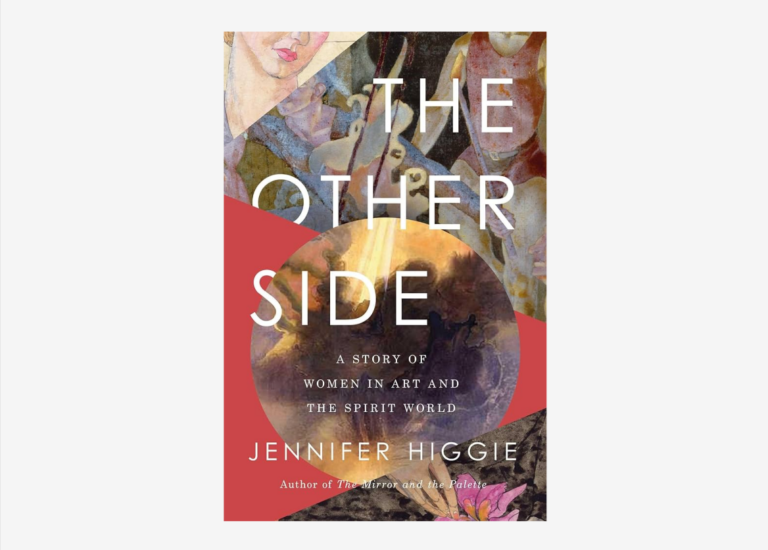
Book cover of The Other Side: A Story of Women in Art and the Spirit World by Jennifer Higgie, Pegasus Books, 2024.
The Other Side: A Story of Women in Art and the Spirit World, written by Jennifer Higgie, is a deep-dive into the world of extraordinary artists translating feeling into form, expressing spirituality and Spiritualism.
You don’t have to be a believer or a Spiritualist to enjoy The Other Side. This book cannot give us all the answers. Ideas around spirituality vary between people, countries, and cultures, even though most of us, at some time, have tuned into ideas around ghosts, spirits, witches, clairvoyance, the occult and paranormal, or communing with the Universe. But come with an open, curious mind. And be ready to appreciate women artists who embraced enchantment and mystery in the search for “the other.”
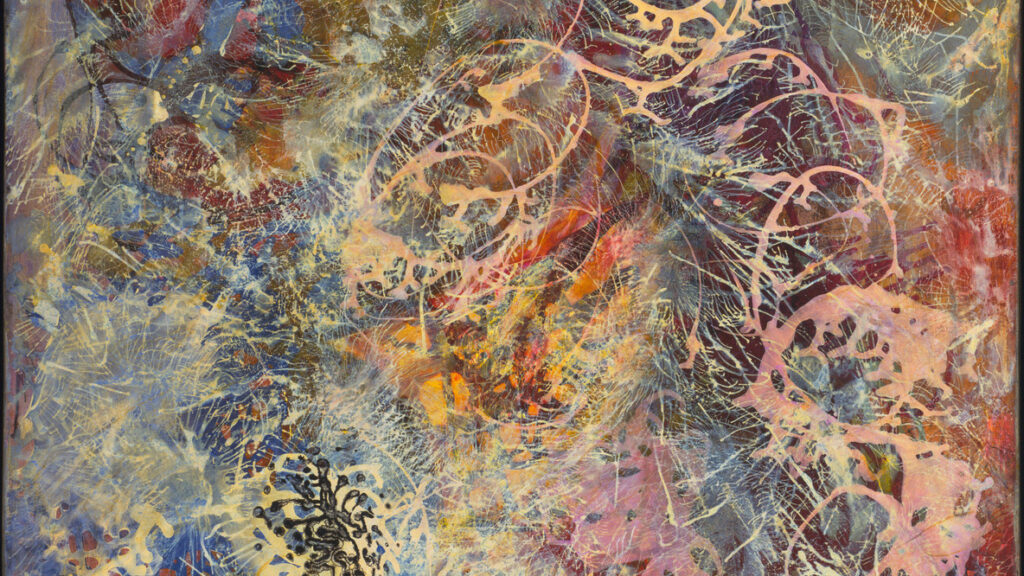
Janet Sobel, Milky Way, 1945, Museum of Modern Art, New York City, NY, USA.
With a nice bibliography and a full index, this book appeals to the researcher. It also offers a very personal narrative for the dip-in, dip-out reader. The color plates are fabulous, although the pale black and white images are sometimes too small. If something appeals, you need to get on to the internet and do some searching.
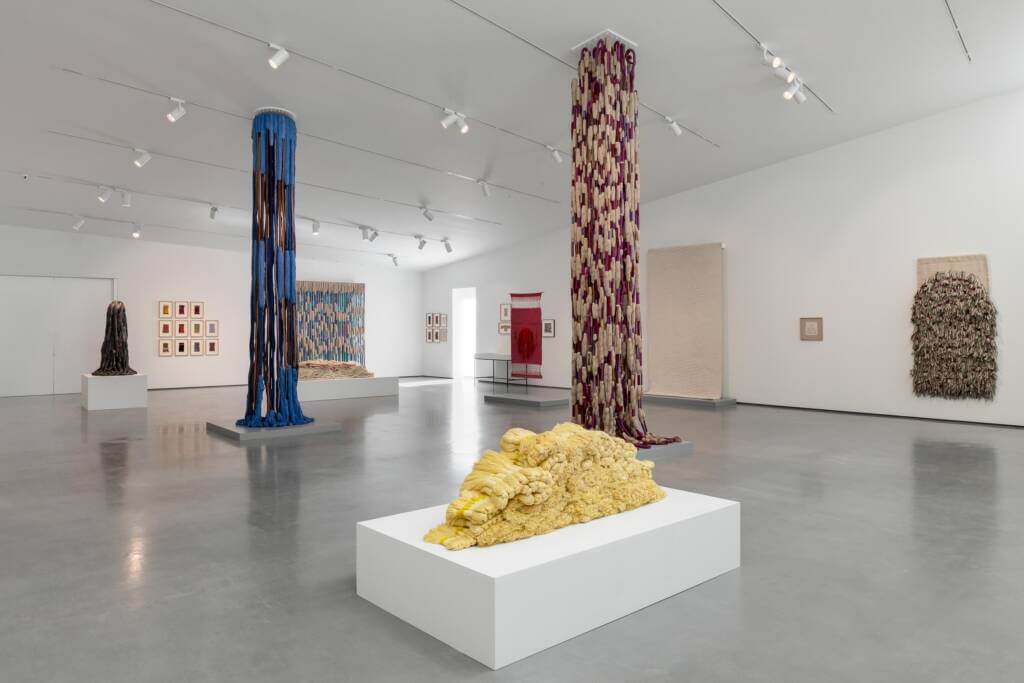
Exhibition view of Sheila Hicks: Off Grid at The Hepworth Wakefield, Wakefield, UK, 2022.
Male artists like Wassily Kandinsky, Paul Klee, and Kazimir Malevich were deemed key players in the radical non-figurative abstract art explosion. However, Jennifer Higgie demands that we look beyond those names written in the art history records to see the women who were just as important, just as vital as their male counterparts. She does do these women justice. To such an extent that when she addresses the men or includes their art in the precious few color plates, I want to call out. No, we’ve already seen them so many times before. Get back to these fascinating women!
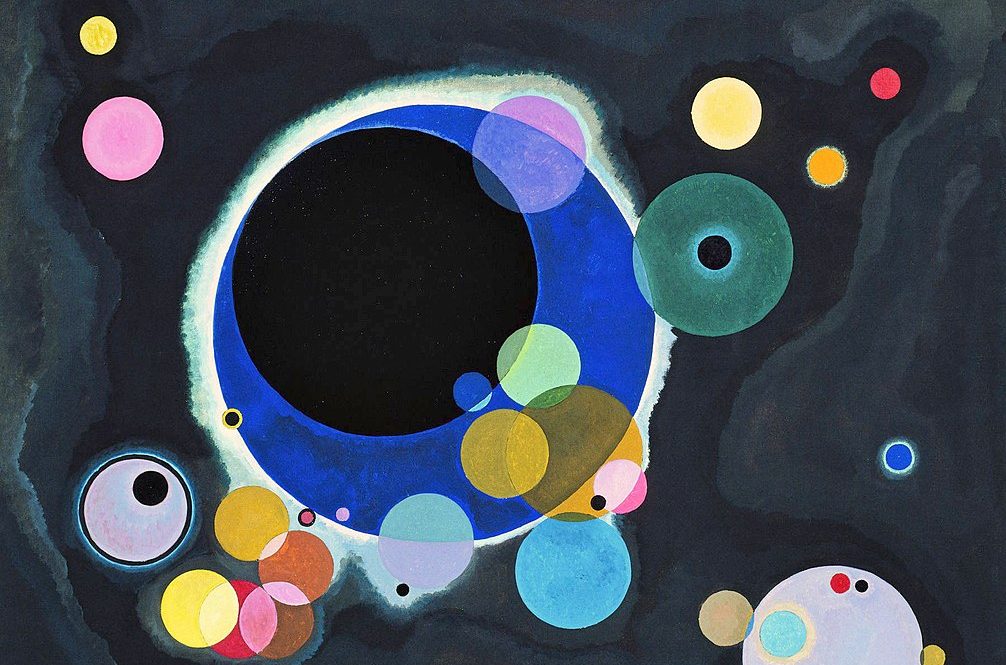
Wassily Kandinsky, Several Circles, 1926, Guggenheim Museum, New York City, NY, USA.
Contrary to how art history claims Kandinsky was the first artist to “discover” abstract art in 1911, The Other Side points out that Hilma af Klint had been producing astonishing abstract “spirit drawings” five years earlier. Finally, Klint is recognized as the astonishing pioneer that she was.
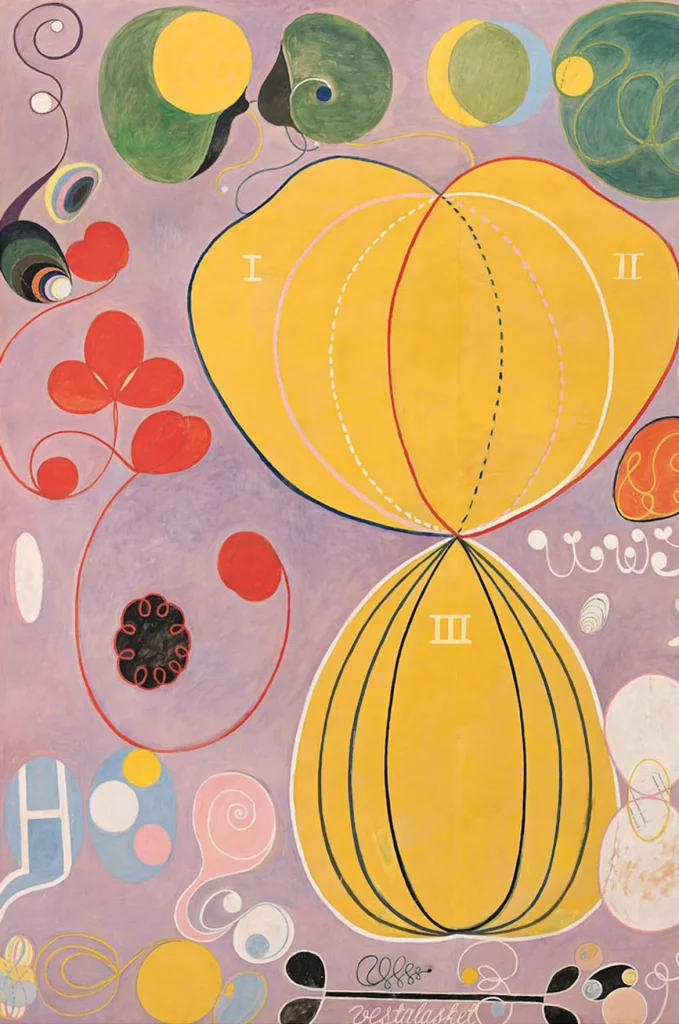
Hilma af Klint, Group IV, The Ten Largest, No. 7, Adulthood, 1907, Guggenheim Museum, New York City, NY, USA.
The statistics are chilling—Higgie tells us that, in Britain, female artists make up only 7% of art in the collections of top public museums. Innovation is still considered by many to be the preserve of individual men—the lone genius. But can we still believe this? Higgie offers an alternative view:
The evolution of any artistic language is complex, organic and unpredictable; part of a meandering, often heated, conversation that spans gender, race, borders, communities, belief systems and centuries.
The Other Side: A Story of Women in Art and the Spirit World, Pegasus Books, 2024
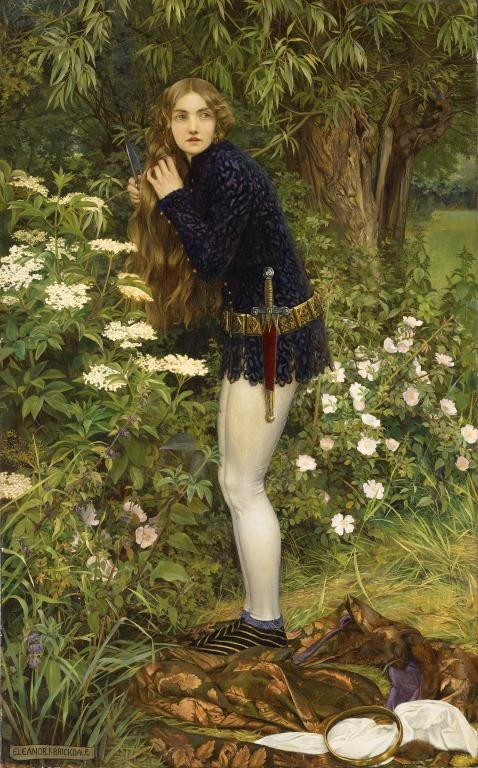
Eleanor Fortescue-Brickdale, The Little Foot Page, 1905, Walker Art Gallery, Liverpool, UK.
The book sweeps through history. We see the rapid pace of social, political, scientific, and technological change in the 19th century. In response, the art world gives us Surrealism, Symbolism, but also folklore and fairy painting, all seemingly inspired by Rosicrucianism and Theosophy. For some artists, the drug laudanum, an opiate derivative, opened the mind to another world or a previously hidden interior world. We re-visit ancient art as Higgie reminds us of the long tradition of collective community art. There, objects of magic and ritual weave ancestral stories and mythology into something that may look ‘abstract’ to the uninitiated yet turns out to be a rich, flowing narrative to their makers, as in the songlines created by Aboriginal Australians.
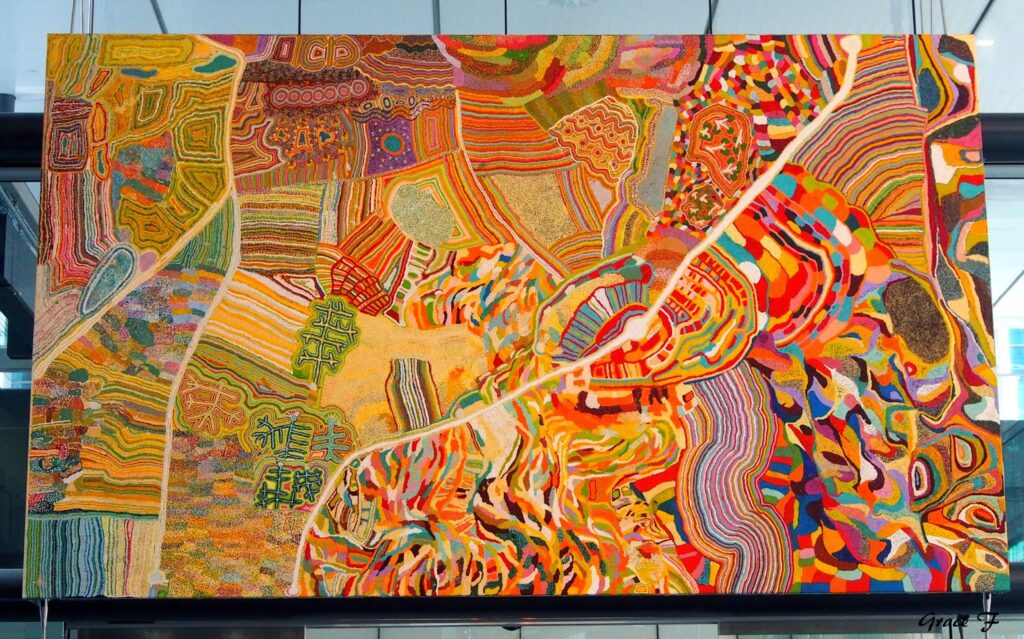
Martumili Artists, Yarkalpa, Hunting Grounds, 2013, The Box Gallery, Plymouth, UK.
Modern Spiritualism is often associated (at least in Western culture) with the female energies of instinct, intuition, and imagination. In the past, Spiritualism offered a community for women. It was a safe space to explore ideas away from the traditional art world, which had denied women artists a place. The established Church restricted women, whereas the Spiritualist Church offered a wider freedom. There were dubious activities for sure: Hoaxes, fake seances, and mediums duping the bereaved were all in a day’s work for some spiritualists. But there were also talented artists, giving shape to the collective psyche.
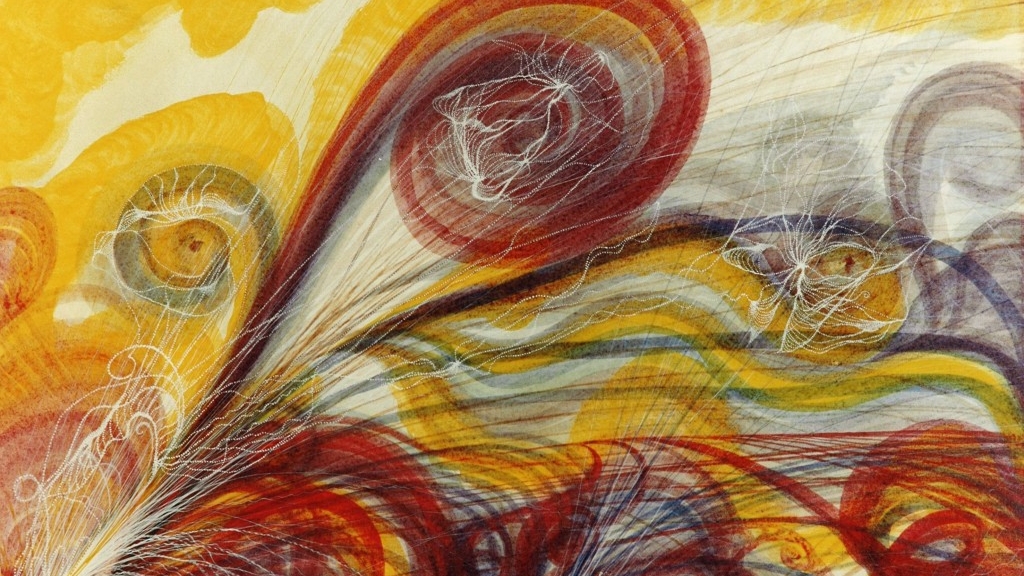
Georgiana Houghton, The Eye of God, 1862, Courtauld Institute, London, UK.
The question Higgie asks us is, could these women get messages from the universe, whether it is through communing with the dead, talking to angels, honoring their own internal, personal spirit, or all of the above? In an art world dominated by men, the public was skeptical. Male abstract painters felt complete ownership over their work, believing a man could claim to be exploring spirituality and still be a reasonable and intelligent being. The female abstract painters, by contrast, were brave enough to acknowledge that their abstract work was experimental, therapeutic, intangible, and possibly coming from outside themselves. Meanwhile, as male shamans might be respected, but not female witches, these pioneers were perceived as eccentric, even a bit mad.
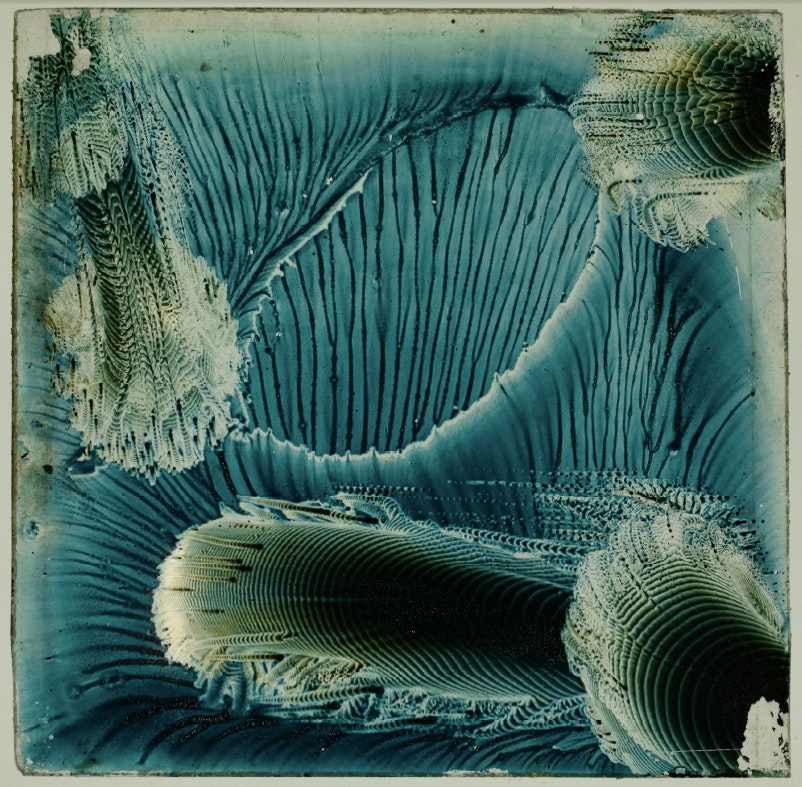
Margaret Watts Hughes, Voice Figure, undated, c1890s, Cyfarthfa Castle Museum and Art Gallery, Merthyr Tydfil, Wales, UK.
the earliest experience of art must have been that it was incantatory, magical; art was an instrument of ritual
Quoted in Jennifer Higgie, The Other Side, Pegasus Books, 2024
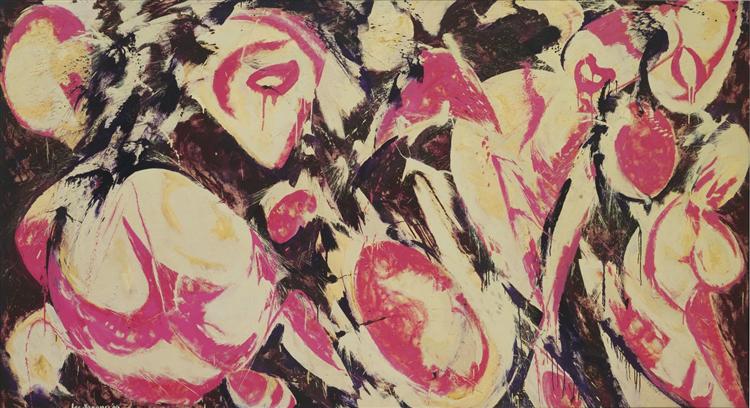
Lee Krasner, Gaea, 1966, Museum of Modern Art, New York City, NY, USA.
The life of mystic Madame Helena Petrovna Blavatsky is discussed in great detail. A controversial, larger-than-life woman and a lynchpin between Spiritualism and modernity, Blavatsky directed people to the riches of Eastern religions, which influenced many of the painters discussed by Higgie. Another shared theme was the restorative power of nature, something our modern minds are still obsessed with.
where war has torn up plants and killed animals there are empty spaces which could be filled with new figures if there were sufficient faith in human imagination and the human capacity to develop higher forms
quoted in Jennifer Higgie, The Other Side, Pegasus Books, 2024
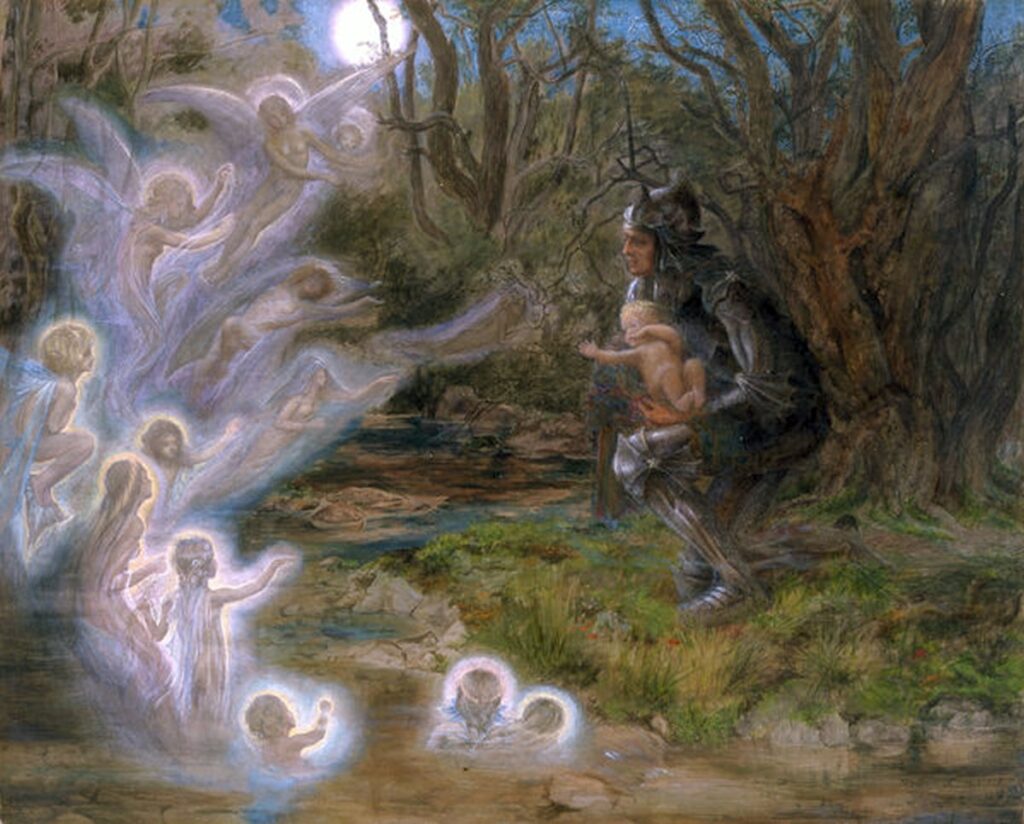
Estella Canziani, Fairies Bless the Newborn Child, 1923, Leicester Galleries, Leicester, UK.
Here at DailyArt Magazine, we have looked at the life and work of Cuban-American artist Ana Mendieta, who accredited her art to the source of life, Mother Nature. Her work was grounded in the belief in one universal energy which runs through everything.
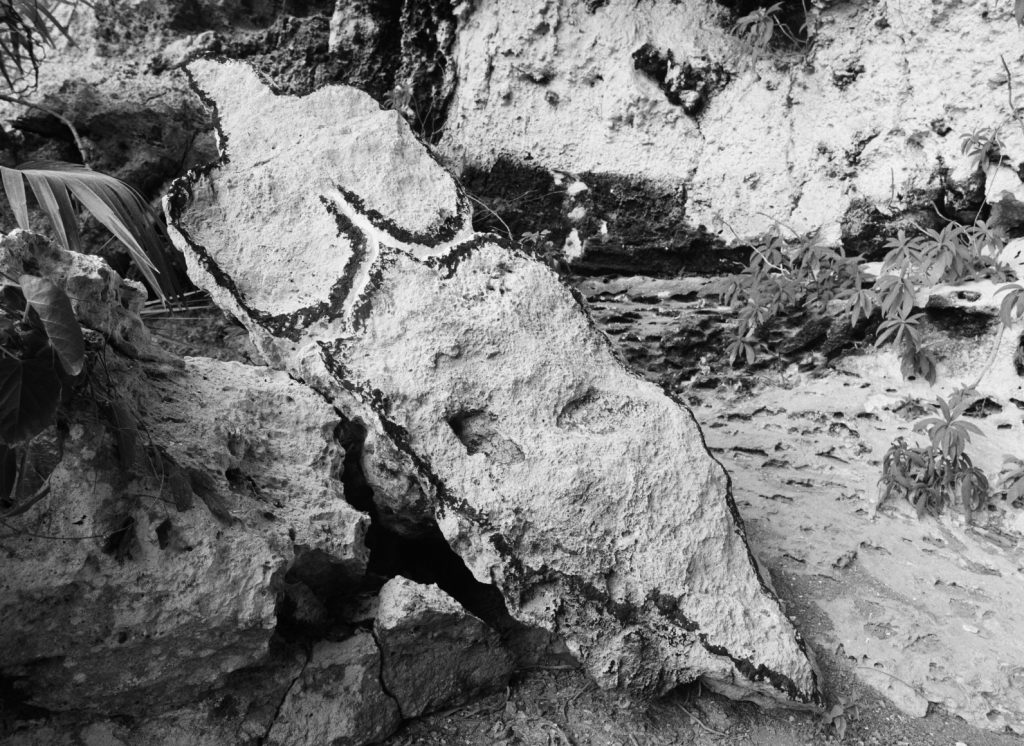
Ana Mendieta, Bacayu (Light of Day), 1981, Thomas Erben Gallery, New York City, NY, USA.
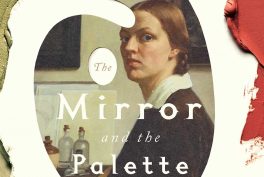
Jennifer Higgie has a wide breadth of experience in the art world and previously authored a fantastic study of women’s self-portraits called The Mirror and the Palette: Rebellion, Revolution and Resilience. Higgie is unafraid to take on the span of art history over centuries. This new study of other-worldly, spiritual art is worth a read.
Get your own copy on the publisher’s website.
DailyArt Magazine needs your support. Every contribution, however big or small, is very valuable for our future. Thanks to it, we will be able to sustain and grow the Magazine. Thank you for your help!

Candy's remote, rain-soaked farmhouse clings to a steep-sided valley in rural Wales. She raises cats, chickens, and children with varying degrees of success. Art, literature, and Lakrids licorice save her sanity on a daily basis.

Very few artists can claim to be as ubiquitous and iconic as Frida Kahlo. This hotly anticipated exhibition at Tate Modern delves into how and why...
Edoardo Cesarino 6 July 2026
Back in 1998, the Hayward Gallery was the first to host a major exhibition of Anish Kapoor’s work in the UK. Now, in the year of the Southbank...
Edoardo Cesarino 22 June 2026
A new exhibition at Kensington Palace, London, The Last Princesses of Punjab, is shedding light on the fascinating lives of three remarkable...
Edoardo Cesarino 4 June 2026
Antonio Canova had an international practice and superstar status as a sculptor during his lifetime, but his works today can often seem bland and...
Catriona Miller 1 June 2026