


Masterpiece Story: Judith and Holofernes by Caravaggio
Judith and Holofernes is a Caravaggio masterpiece that captures Biblical murder and drama. Rarely has death been captured so intensely and violently...
James W Singer 13 September 2026
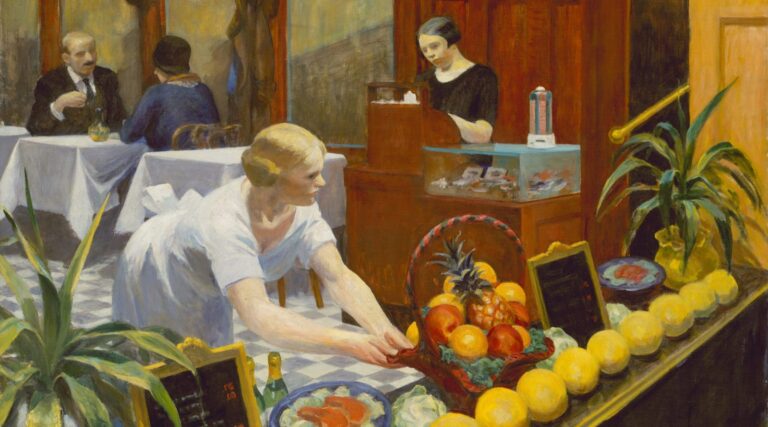
An ordinary restaurant in New York City, with a window display full of food, a waitress, a cashier, and a couple. Based on this short description, it would be very easy to guess who could paint this scene – it would be Edward Hopper, of course.
Indeed, when we look at this painting, everything is very Hopper-ish – the circulating sensation of sadness and loneliness, the weariness of peoples’ faces, and the venue itself. Edward Hopper painted Tables for Ladies in 1930, during the Great Depression. It is the mark not only of Hopper’s distinguished style but also of an era.
In the painting, we see how the waitress leans forward to adjust the vividly painted foods at the window as a couple sits quietly in the richly paneled and well-lit interior. A cashier attentively tends to business at her register. Everyone looks like they are lost in their duties and thoughts; even the eating couple doesn’t look like they are having much fun.
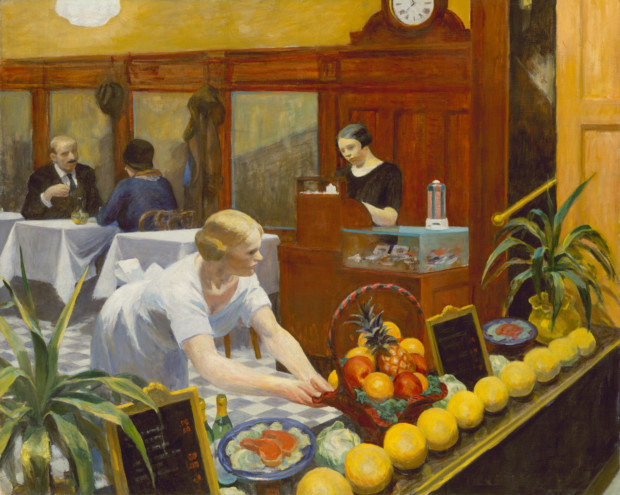
The restaurant’s interior looks quite ordinary yet decent, with polished wood, tiled floors, and wall mirrors; the waitress clearly organizes the window display to be very welcoming. The lighting is bright, the colors warm. Hopper painted this large canvas in the studio, working from sketches that he had made of local restaurants. With wife, Jo, they had given each figure a name while he was painting this piece. The couple is Max Scherer and his wife, Sadie, the cashier is Anne Popebogales, and the waitress is Olga.
There is an additional social layer to this scene. During the Great Depression, most Americans could not afford to dine out, even at such an unpretentious restaurant as this one. Maybe this is why the venue is quite empty, and we can sense a creeping feeling of inappropriateness – on one side, the invisible extreme poverty of the contemporary American society which we can sense only through some hints, and on the other, the abundance of foods in the window display. At the same time, Hopper shows the new roles that women were occupying in public; both the cashier and the waitress were women working outside the home.
Also, the title here is not accidental; in the 1930s, a restaurant with a sign that said “tables for ladies” welcomed single women diners who were finding their newfound independence. Up until that point in history, it was the assumption that any woman who was sitting alone in a restaurant was a prostitute, in search of business; now, after World War I , obtaining voting rights, and during the economic crisis, dining on their own or with other women, they would be treated respectfully.
DailyArt Magazine needs your support. Every contribution, however big or small, is very valuable for our future. Thanks to it, we will be able to sustain and grow the Magazine. Thank you for your help!

Art Historian, founder and CEO of DailyArtMagazine.com and DailyArt mobile app. But to be honest, her greatest accomplishment is being the owner of Pimpek the Cat.

Judith and Holofernes is a Caravaggio masterpiece that captures Biblical murder and drama. Rarely has death been captured so intensely and violently...
James W Singer 13 September 2026
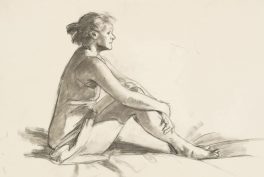
Explore an astonishing 1915 nude self portrait by American modernist painter Florine Stettheimer.
Candy Bedworth 21 September 2026
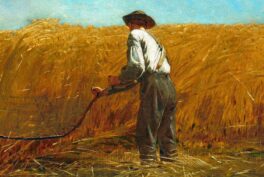
Winslow Homer (1836–1910) was one of the leading American Realist painters. His painting The Veteran in a New Field is a masterpiece of late...
James W Singer 30 August 2026
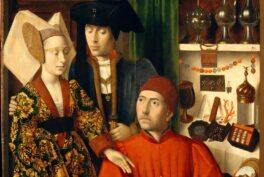
At first glance, A Goldsmith in His Shop (1449) appears to depict an ordinary visit to a jeweller. Yet Petrus Christus transformed an ordinary...
Shivani Gupta 23 August 2026