


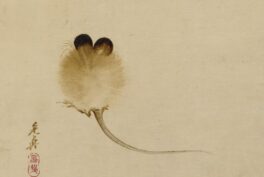
10 Japanese Artworks Where Animals Steal the Show
From playful monkeys and majestic tigers to sleepy cats and elegant egrets, animals have always held a special place in Japanese art. Let’s explore...
Lisa Scalone 10 September 2026
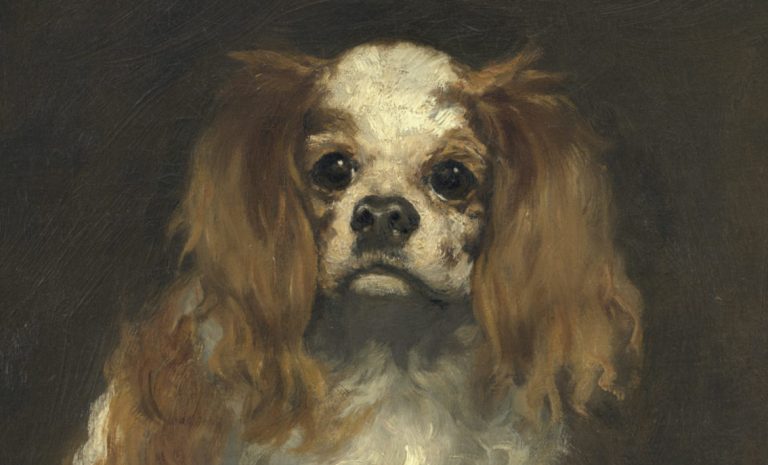
Édouard Manet, King Charles Spaniel, c. 1866, National Art Gallery, Washington, DC, USA. Detail.
Dogs are man’s best friends. And if that man happens to be a painter or a sitter for a painting, their four-legged friends must be included in them too. In the end, they are our most dedicated companions and that’s why we celebrate them with this article. Meet a few of the dogs immortalized by art history.
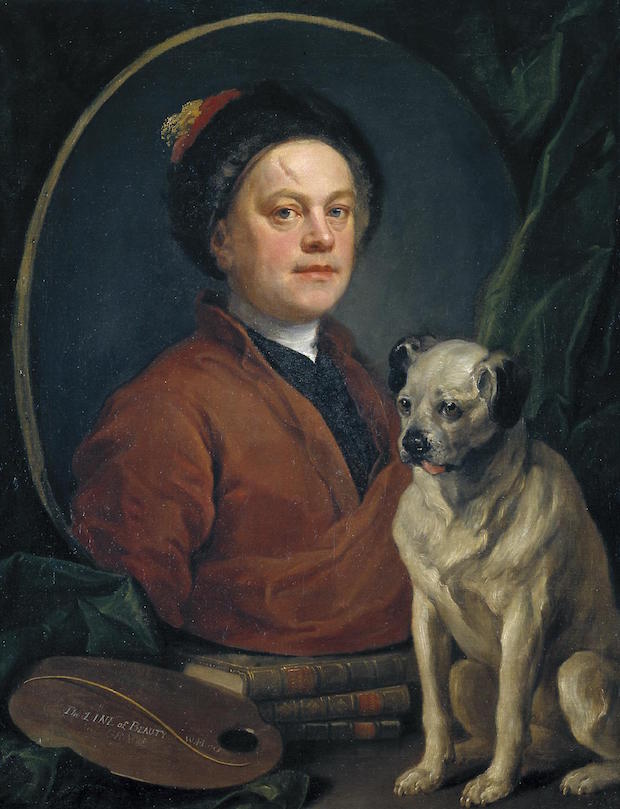
William Hogarth was truly attached to his pug. This iconic self-portrait definitely proves that. The dog is placed in the foreground in front of the image of the painter. We have to bear in mind that this was an unusual practice in the 18th century.
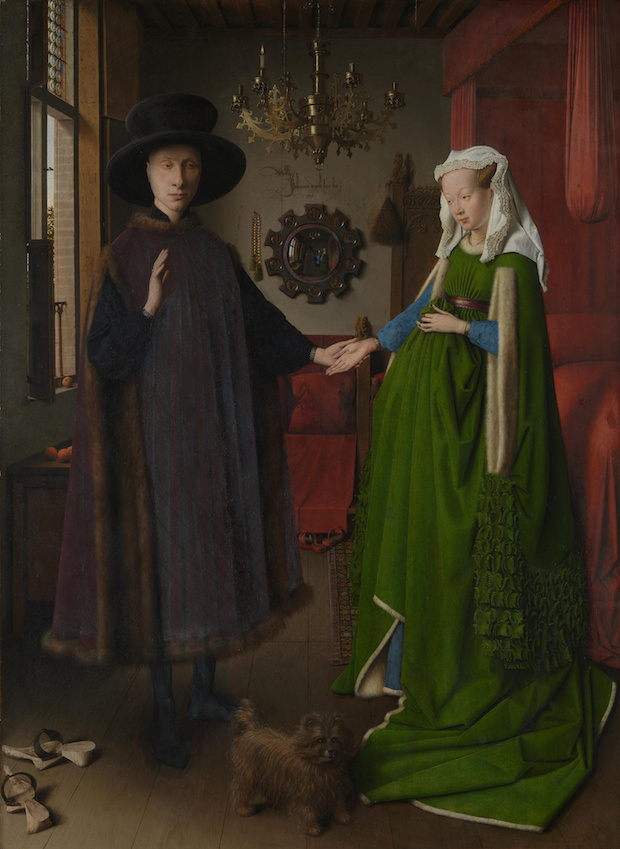
Dogs, in the symbolic language of the Netherlandish paintings, represented fidelity. We can find one in the Portrait of Giovanni Arnolfini and his Wife, one of the most mysterious paintings in art history by Jan van Eyck. The dog is one of the many symbols we can notice, there are also shoes, oranges, and a single burning candle. Furthermore, on the back wall, there is a mirror reflecting the scene with a probable self-portrait of the artist.
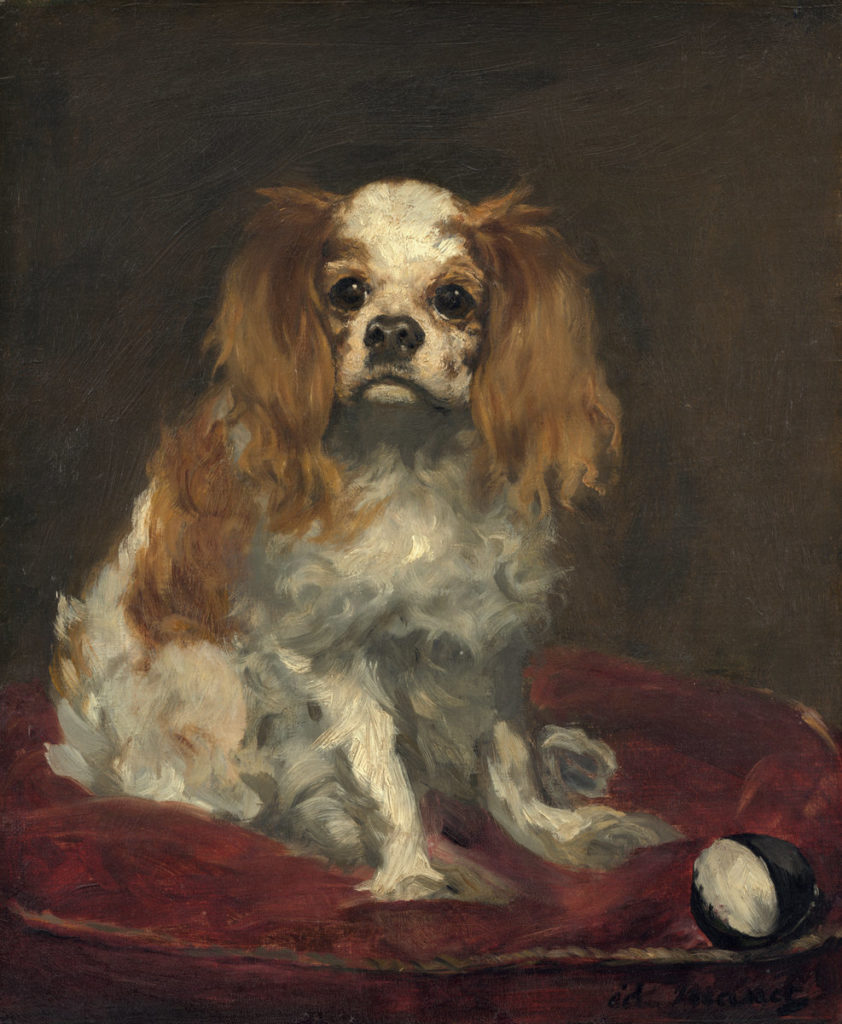
Édouard Manet is not particularly well-known for painting dogs, but this one is just so cute. It is painted in an Impressionistic style that perfectly depicts the texture of the soft and curly fur. We can almost feel how soft it is!

Hercules’ dog significantly contributed to art history because it discovered purple dye. According to the legend, while running on the beach the dog bit a sea snail and dyed his mouth purple. Clever boy.
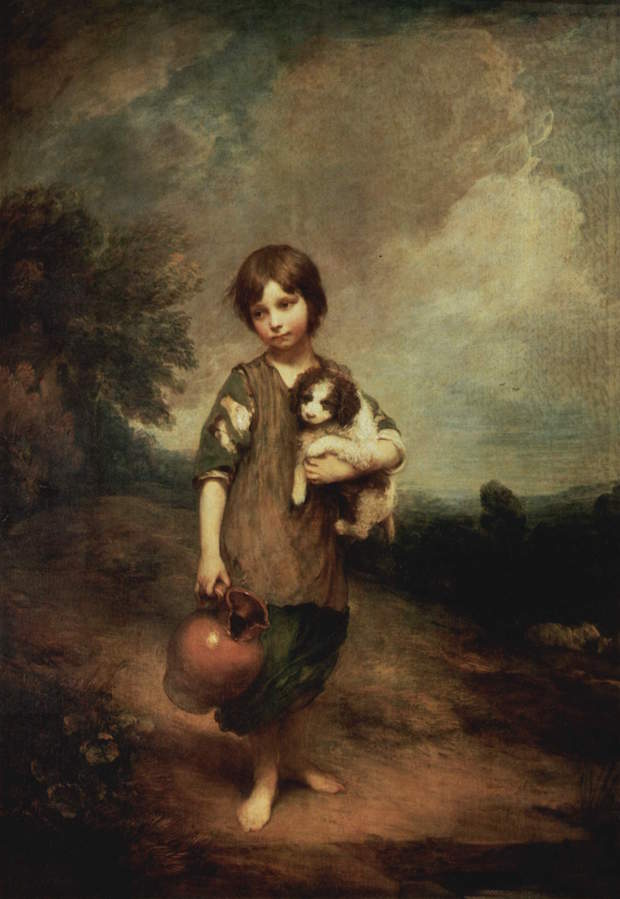
Thomas Gainsborough, was a master of English landscape and portraiture, here he pictures a cottage girl with a dog in her arm. Her torn-up clothes, the broken pitcher, and her bare feet indicate that she was probably from a poor family. It may seem to us that the dog is her only companion.
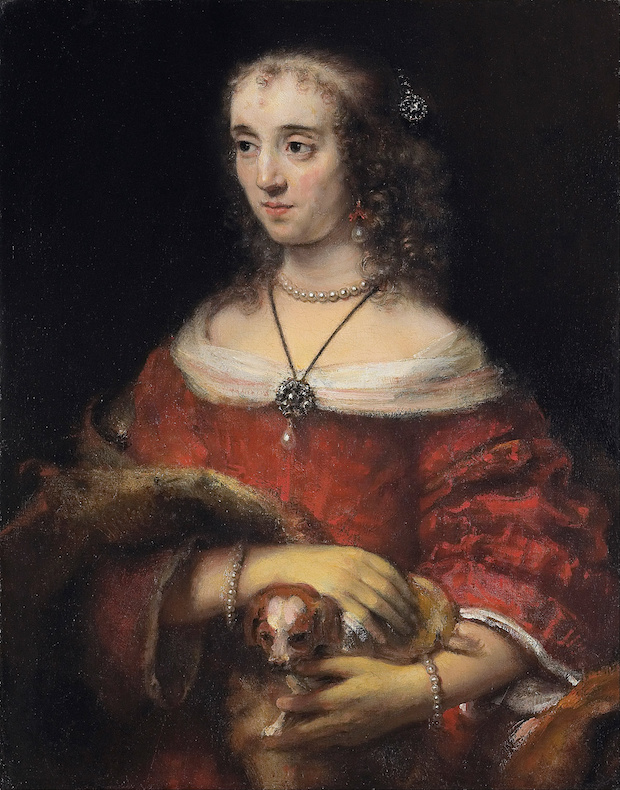
It turns out that lap dogs are not a modern invention at all! Apparently, they were already popular in the times of Rembrandt. The portrayed woman is wearing a lot of jewelry and a fur stole, so we can imagine that the dog had a very luxurious life with her.
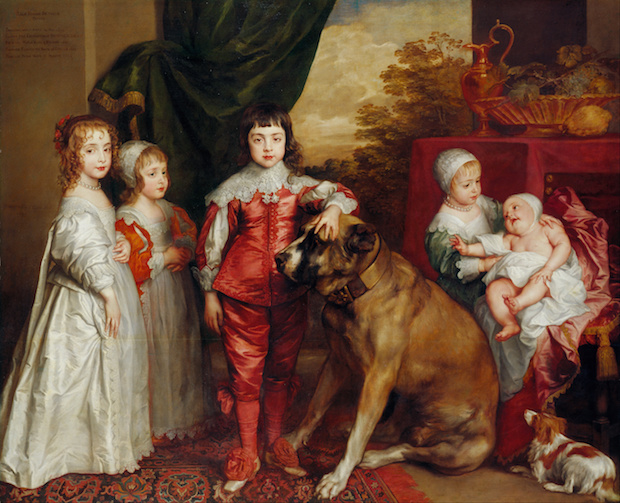
Royal families or not, they all love dogs. Even huge ones! Here the children of Charles I are portrayed with not one, but two dogs. It is a typical representation from the 17th century in which children are dressed and look as if they were adults.
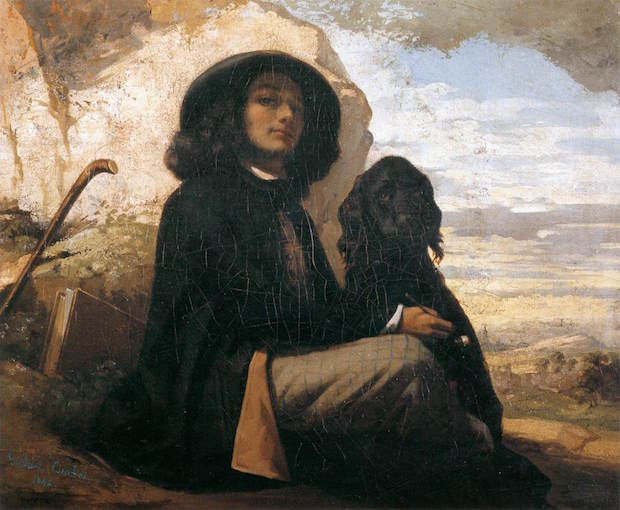
Even the biggest hipster in art history, Gustave Courbet, loved dogs. In the end, who wouldn’t? He pictured his dog right next to him, and they even look like they are wearing matching outfits!
DailyArt Magazine needs your support. Every contribution, however big or small, is very valuable for our future. Thanks to it, we will be able to sustain and grow the Magazine. Thank you for your help!

Magda, art historian and Italianist, she writes about art because she cannot make it herself. She loves committed and political artists like Ai Weiwei or the Futurists; like Joseph Beuys she believes that art can change us and we can change the world.

Bec is an art nerd, bicycle enthusiast, cat mom, artist/crafter/maker from sunny Toronto, Canada.

Art historian living in Chicago. Passionate about women artists and abstract art.
From playful monkeys and majestic tigers to sleepy cats and elegant egrets, animals have always held a special place in Japanese art. Let’s explore...
Lisa Scalone 10 September 2026
Elephants hold a profound place in art across cultures around the world, appearing as sacred creatures, symbols of power, and mysterious beings.
Guest Author 17 September 2026
The lamb serves as an enduring and multifaceted symbol that connects ancient pre-Christian ritual with the long history of Christian art. Throughout...
Maya M. Tola 4 May 2026
One cannot, while hoping to make a very valid argument, say dogs and humans are anything but almost entirely alike. After all, they share the same...
Guest Author 30 April 2026