


Between the Body, Nature, and Image: Ana Mendieta at Tate Modern
It is not uncommon for an artist to become known primarily through the circumstances of their life rather than through the complexity of their work.
Ania Kaczynska 6 August 2026
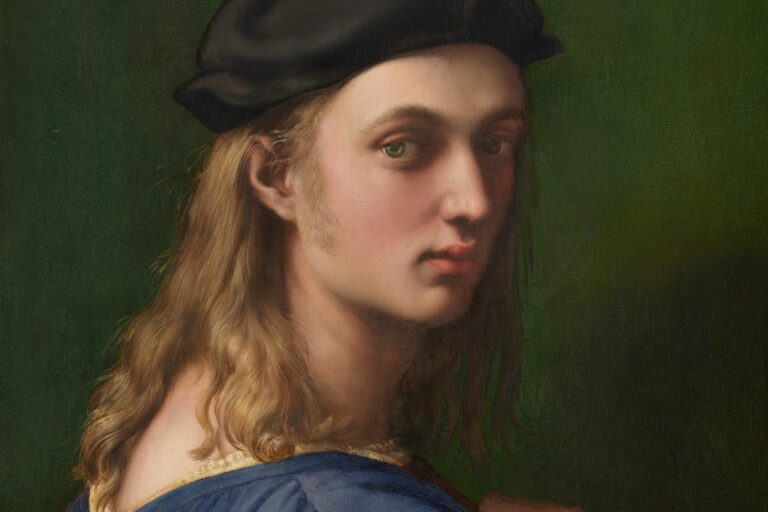
Raphael, Portrait of Bindo Altoviti, ca. 1515–1516, National Gallery of Art, Washington, DC, USA. Detail.
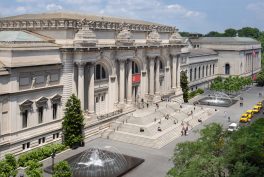
Any content creator entering the exhibition Raphael: Sublime Poetry might feel a twinge of FOMO at the opening wall text-the Metropolitan Museum of Art describes the “Prince of Painters” as “one of the greatest influencers of all time.”
The Met is translating a familiar Old Master premise into contemporary language: Raphael was not just widely admired, but an artist who shaped taste to the point of defining what counted as “good” painting for centuries. In that sense, his influence works much like Instagram feeds today, setting the terms for what beauty and perfection are supposed to look like.
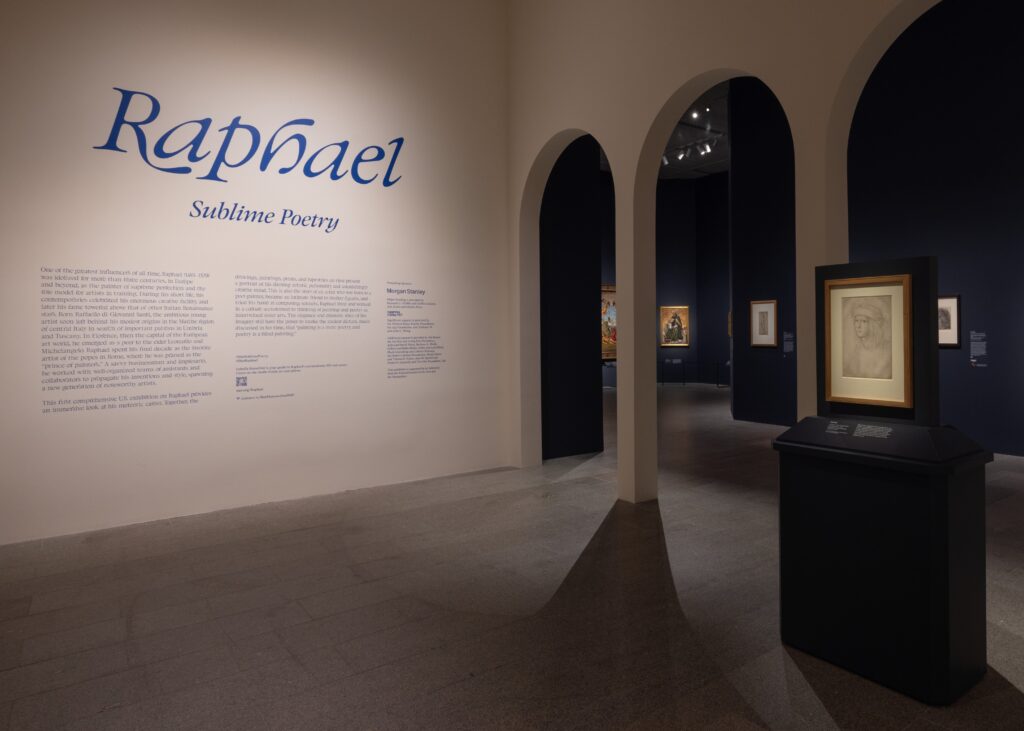
Installation view of Raphael: Sublime Poetry, 2026, Metropolitan Museum of Art, New York City, NY, USA. Photograph by Eileen Travell, courtesy of the Metropolitan Museum of Art. Detail.
That a fixed ideal of beauty exists, long defined by European models, is an increasingly uneasy position. Venerated figures like Michelangelo, Leonardo, and Raphael—once upheld as the pinnacle of artistic achievement—struggle to carry the same automatic, timeless authority.
For audiences outside art historical circles, Old Masters have been reduced to cultural shorthand, resurfacing in unexpected places, most memorably perhaps as the namesakes of the Teenage Mutant Ninja Turtles. Reverence for these canonical figures remains, but it is often difficult to explain.
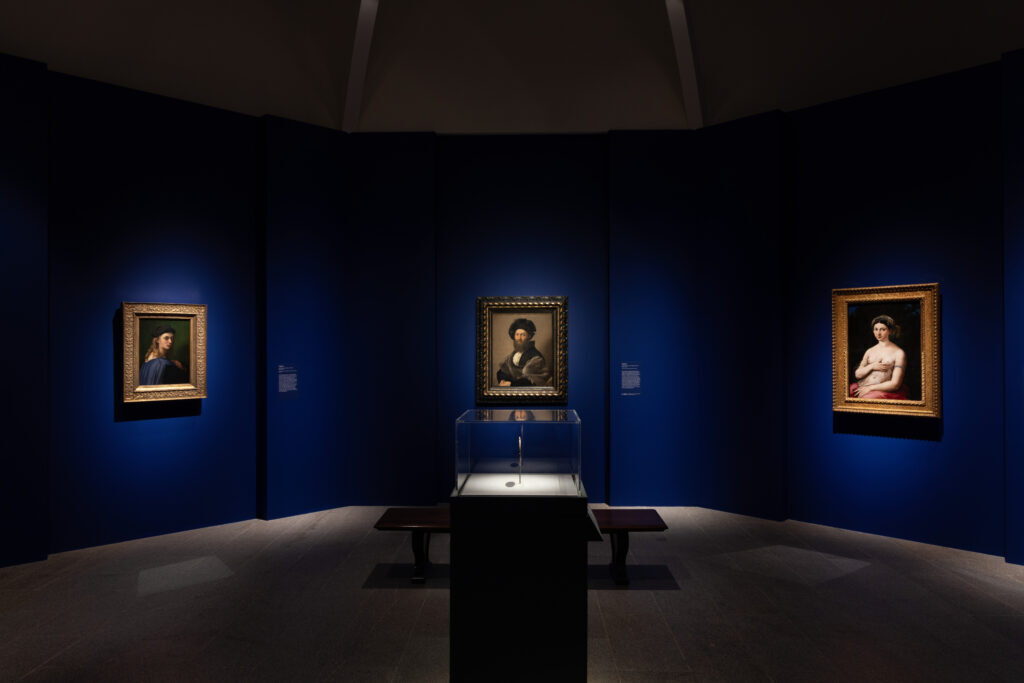
Installation view of Raphael: Sublime Poetry, 2026, Metropolitan Museum of Art, New York City, NY, USA. Photograph by Eileen Travell, courtesy of the Metropolitan Museum of Art.
The status of Old Masters as cultural superstars is due in part to the artworks themselves—intrinsically invaluable, historically foundational, and endowed with a quasi-mythic prestige. As an example, consider the “most famous painting in the world,” Leonardo’s Mona Lisa, whose distinguished neighbor in the Louvre, Baldassare Castiglione (ca. 1514–1515)—displayed at center above—is one of the many remarkable Raphael portraits currently in New York.
The prestige that earned Old Masters their label feels far removed from the unflinching reality of the 21st century. The question is not whether they matter, but how to make Old Masters matter again in a way that feels essential rather than obligatory.

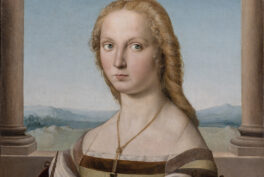
Raphael, Portrait of a Young Woman with a Unicorn, 1505–1506, Galleria Borghese, Rome, Italy.
Raphael: Sublime Poetry tackles the problem head-on, situating an Old Master not as modern, but within a modern framework. However, the exhibition—almost eight years in the making—faced an inherent challenge: no self-respecting serious Raphael survey would fail to include his famous fresco cycles in the Vatican, notably the celebrated School of Athens.
“Asking for Raphael loans is like asking for the firstborn heir of the royal family,” said curator Carmen Bambach in addressing the challenge of acquiring the masterpieces on show.
Described by the Met as the most comprehensive full-scale exhibition of Raphael’s artistic practice ever held in the United States, it includes major loans like Baldassare Castiglione on a rare visit from Paris, and Bindo Altoviti and the Alba Madonna from the National Gallery in Washington, D.C. It also features Portrait of a Young Woman with a Unicorn from the Galleria Borghese and La Fornarina from the Palazzo Barberini, both exceptional loans from Rome. But frescoes fixed within four rooms 4,000 miles away in the world’s smallest sovereign state and seat of the Pope? No matter how nicely the renowned Renaissance scholar asked, that was an impossibility.
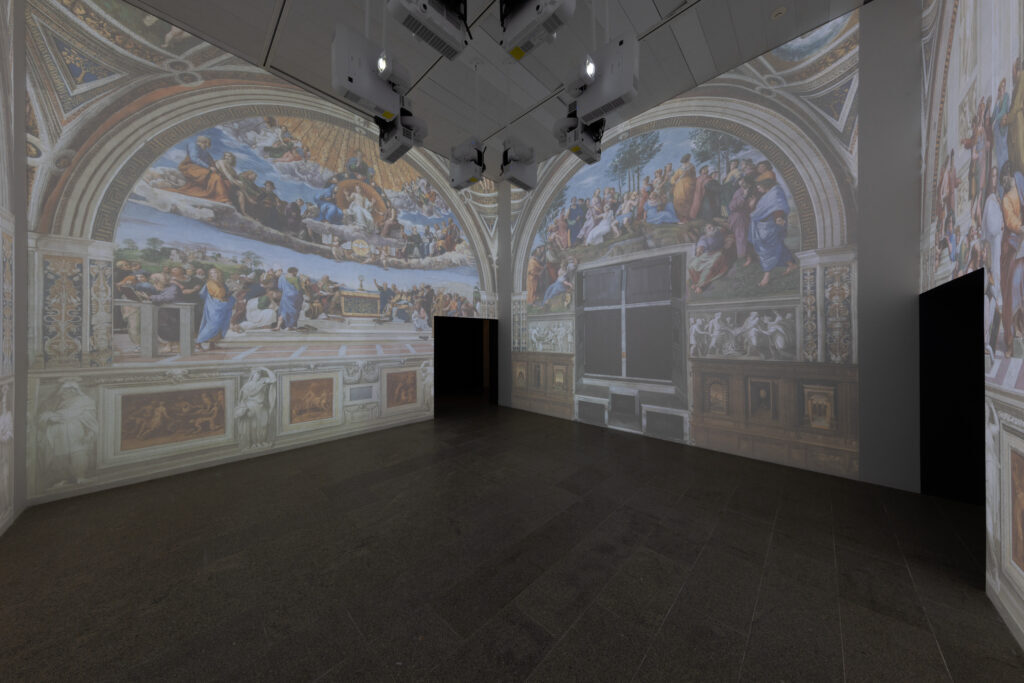
Installation view of Raphael: Sublime Poetry, 2026, Metropolitan Museum of Art, New York City, NY, USA. Photograph by Eileen Travell, courtesy of the Metropolitan Museum of Art. Detail.
The research-driven, often academic show, focuses on drawing as the foundation of artistic practice. Clarity of presentation is critical for Bambach, but the delivery is neither predictable nor lackluster.
Bambach’s overarching thesis is that Raphael’s art is best understood through process rather than finished masterpieces; drawings are where invention and problem-solving occur. Across the exhibition, the emphasis is on ideas developing from exploratory marks on paper to fully realized works.
The preparatory sketches related to the Vatican rooms demonstrate this process at its most ambitious scale. Raphael experiments with compositions that translate into monumental execution. But the show only achieves its aim of presenting an artist thinking in a unified, architectural environment by employing high-resolution digital video to bring the Vatican fresco cycles into the exhibition.
Installed in a dedicated gallery, the projections give a clear sense of how Raphael structured his narrative programs within the architecture of the Vatican Apostolic Palace.
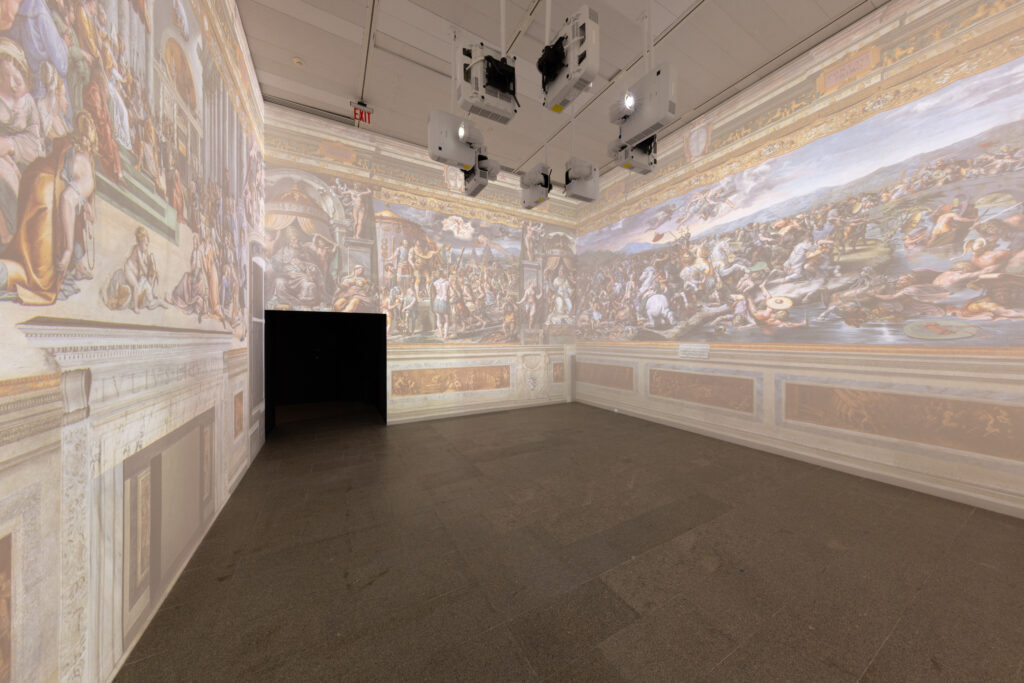
Installation view of Raphael: Sublime Poetry, 2026, Metropolitan Museum of Art, New York City, NY, USA. Photograph by Eileen Travell, courtesy of the Metropolitan Museum of Art.
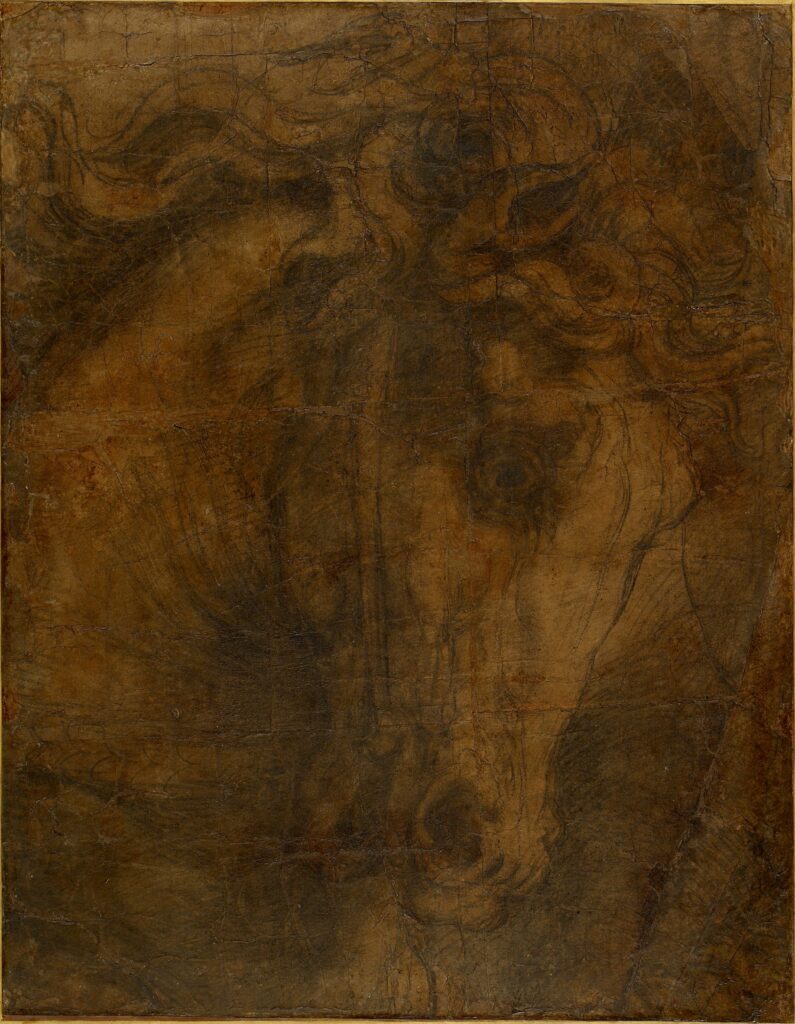
Raphael, The Head of a Horse, cartoon fragment for the Expulsion of Heliodorus from the Stanza di Eliodoro, ca. 1512, Ashmolean Museum, University of Oxford, Oxford, UK.
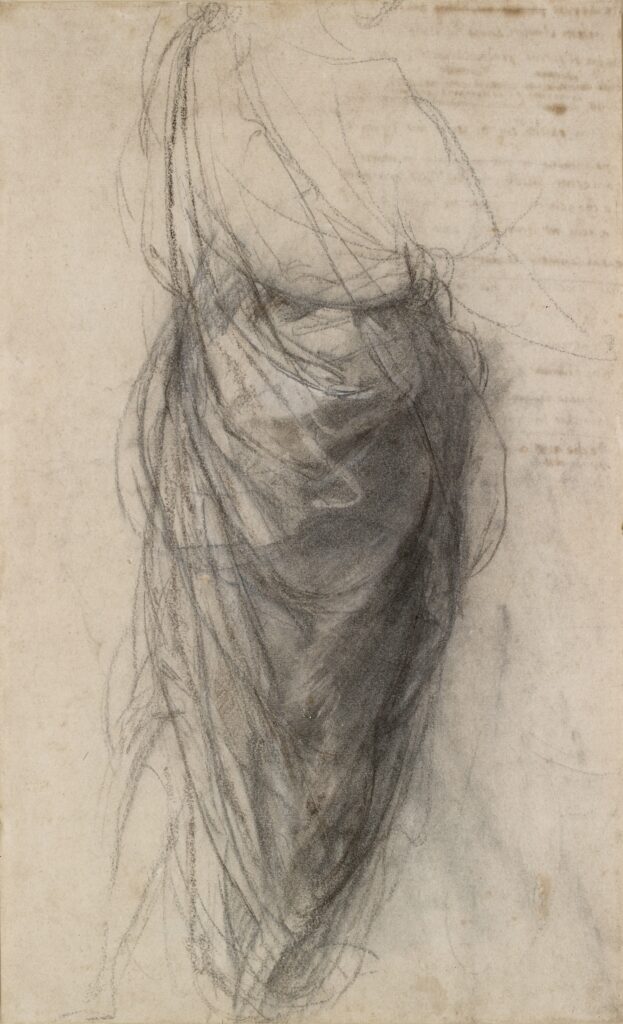
Raphael, Drapery Study of a Standing Figure for the Disputa, ca. 1509–1511, Ashmolean Museum, University of Oxford, Oxford, UK.
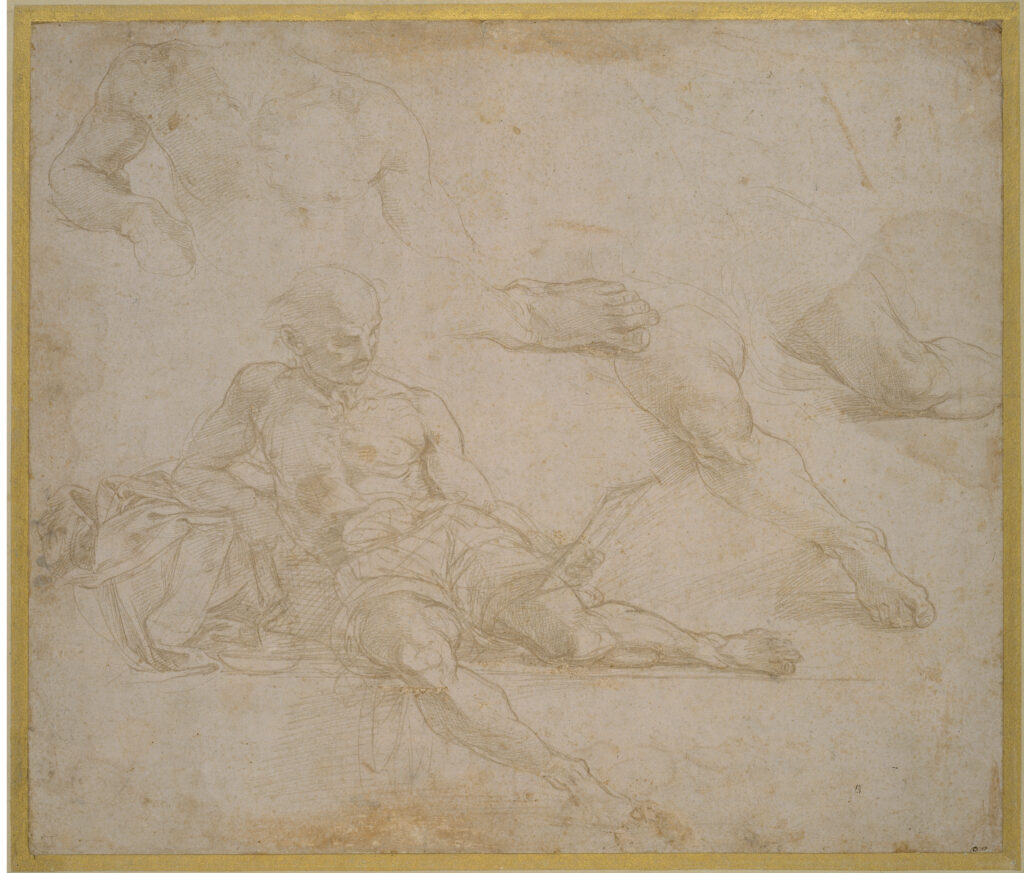
Raphael, Study for Diogenes for The School of Athens, ca. 1508–1510, Städel, Frankfurt, Germany.
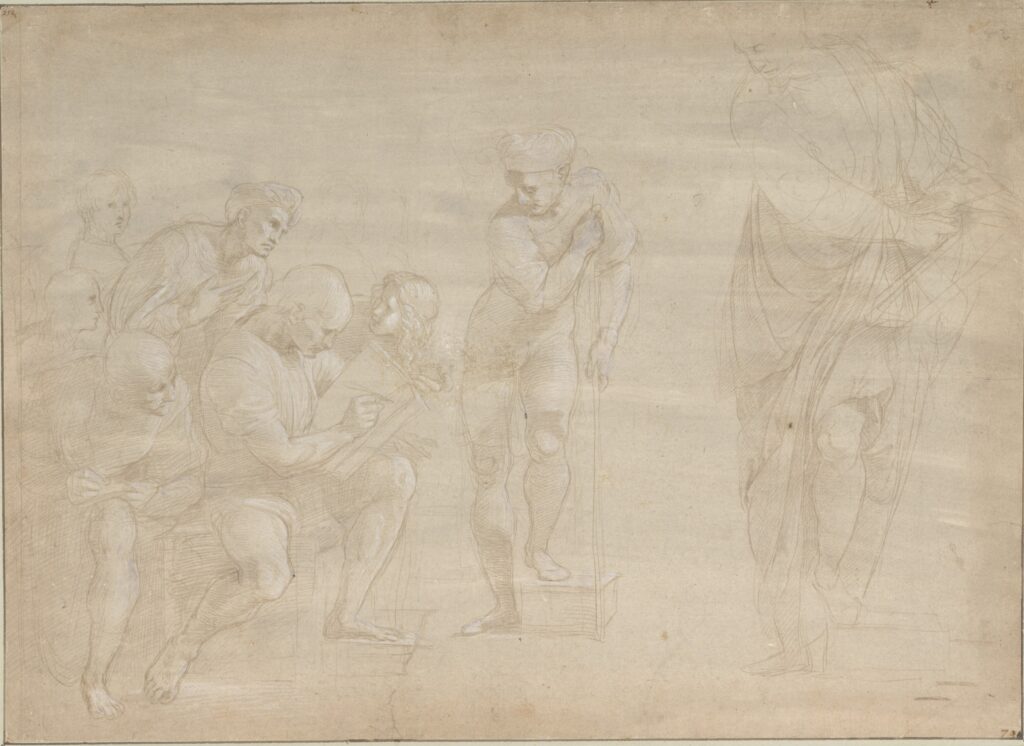
Raphael, Studies of Pythagoras and His Disciples for The School of Athens, ca. 1509–1510, Albertina, Vienna, Austria.


A digital video shows Raphael’s monumental fresco cycles in four rooms of the Vatican Palace. the Met’s Raphael exhibition is the most comprehensive U.S. survey of the Renaissance master, highlighting his role as an early influencer.
The exhibition pairs preparatory drawings with digital video of the corresponding Vatican frescoes.
Drapery Study of a Standing Figure is a preparatory drawing that shows how carefully Raphael studied the folds of fabric to shape the figure for the Disputa fresco.
Study for Diogenes in The School of Athens by Raphael is a preparatory sketch in which he explores the relaxed, reclining pose of Diogenes of Sinope for The School of Athens.
Studies of Pythagoras and His Disciples by Raphael is a preparatory study in which he works out the grouping and gestures of Pythagoras and his followers for The School of Athens.
In a show this rigorous, the immersive environment works as a practical tool. These reconstructions allow patrons to imagine the works within their original architectural context, an integral aspect of Renaissance frescoes, which were highly dependent on spatial considerations. It is a thoughtful use of digital technology, not focused on mere spectacle (though it is pretty spectacular), but with a clear interpretive purpose.
There may be no better way to appreciate these frescoes than through this kind of digital reconstruction—certainly more effective than trying to glimpse them in the tight, circuitous quarters, often partially obscured by scaffolding, that masses of tourists hustle through on their way to the Sistine Chapel.
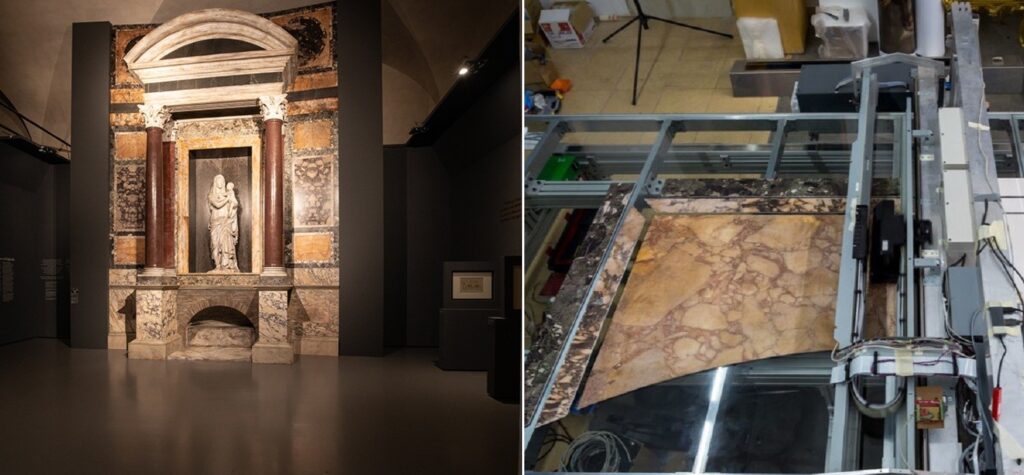
Digitally-printed facsimile of Raphael’s tomb created for the Raffaello 1520–1483 exhibition in Rome in 2020. © 2020 Scuderie del Quirinale—Ales. Factum Arte.
The Met is not unique in this approach. Digital reconstructions and fully immersive, projection-based environments are strategies now used across museums and cultural institutions around the world. This reflects a broader shift toward new ways of reengaging with Old Masters.
For example, at Saint Bavo’s Cathedral, visitors can use AR glasses to explore a digital version of the Ghent Altarpiece in its original 1432 state, while the actual masterpiece undergoes long-term restoration. Full-scale digital facsimiles of Raphael’s tomb at the Pantheon and Leonardo’s Last Supper have been produced by Factum Arte, a Madrid-based group specializing in high-resolution scanning and exact digital reproduction of artworks and cultural heritage sites.
Researchers at the University of Florence even created a digitally produced replica of Michelangelo’s David for the 2020 Dubai Expo. At the National Gallery of Denmark, Michelangelo Imperfect went further, using digital tools not simply to reconstruct lost designs but to analyze the process of artistic creation itself.
Old Masters, New Amsterdam at New York Historical promises a “first-of-its-kind exhibition” that will use works by Rembrandt and contemporaries to present daily life in the Dutch colony that would become New York. The exhibition literature describes a 3D digital reconstruction, accessed through a touchscreen interface, which will navigate a model of Manhattan circa 1660. Interactive tablets and other smart technology are similarly being used worldwide to blend the physical and digital exploration of Old Master works.
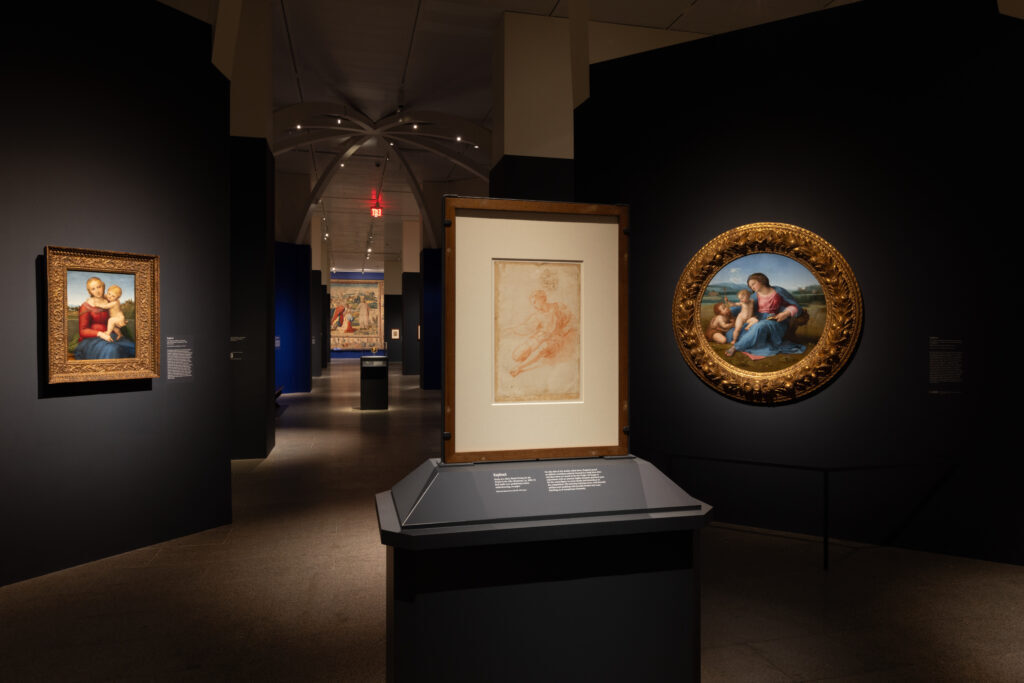
Installation view of Raphael: Sublime Poetry, 2026, Metropolitan Museum of Art, New York City, NY, USA. Photograph by Eileen Travell, courtesy of the Metropolitan Museum of Art. Detail.
In this context, technology must not function as a gimmick but as a bridge across the historical chasm that so often renders Old Master works irrelevant to modern viewers. Whether these efforts fully succeed remains an open question, as they can, at times, reinforce the very gap they seek to close.
Old Masters have not faded but have become a problem to be solved and a legacy to be negotiated. Their future may lie not in preservation alone, but in carefully constructed new contexts in which they can be understood within today’s relentless consumption of digital imagery. Raphael: Sublime Poetry delivers in creating such contexts, even if the problem at large remains unresolved.
DailyArt Magazine needs your support. Every contribution, however big or small, is very valuable for our future. Thanks to it, we will be able to sustain and grow the Magazine. Thank you for your help!
Rivera is a New York City–based journalist with more than two decades of experience, known for thriving in a media capital that tests endurance as much as talent. Reporting has taken her from the World Cup to the Louvre. Her wide-ranging interests in art history have been shaped by years of independent study and research in New York’s major museums and many leading art institutions around the world.

Leigh is a writer, reader, art lover, radio nerd and herbalist based in Nashville, TN.
It is not uncommon for an artist to become known primarily through the circumstances of their life rather than through the complexity of their work.
Ania Kaczynska 6 August 2026
Very few artists can claim to be as ubiquitous and iconic as Frida Kahlo. This hotly anticipated exhibition at Tate Modern delves into how and why...
Edoardo Cesarino 6 July 2026
Few museums can trace their origins to an act of collective generosity. Fewer still continue to build their identity around that same principle...
Zuzanna Stańska 17 August 2026
Back in 1998, the Hayward Gallery was the first to host a major exhibition of Anish Kapoor’s work in the UK. Now, in the year of the Southbank...
Edoardo Cesarino 22 June 2026