Think of Romani people in art—what comes to mind? When we look at traditional art history, it is really rather disappointingly scarce. If Romani people are depicted at all, it is with a romantic fascination for beautiful and passionate women in “exotic” costumes with hoop earrings or makeshift encampments where crones cook stolen rabbits over an open fire. In the popular imagination, fortune-telling, and crystal balls pop up quite often, but actually, there is so much more beauty and uniqueness. Let’s look at some examples of Romani people in art!
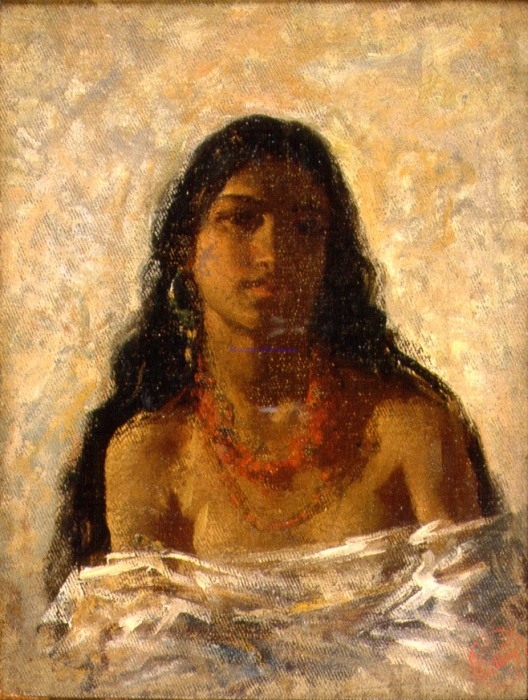
Maria Fortuny, Gitana, c. 1870, Museo Fortuny, Venice, Italy.
But there is so much more to the Romani story. Romani people are the largest ethnic minority community within the European Union with over 12 million people. They can also be found in the Middle East, USA, and South America.
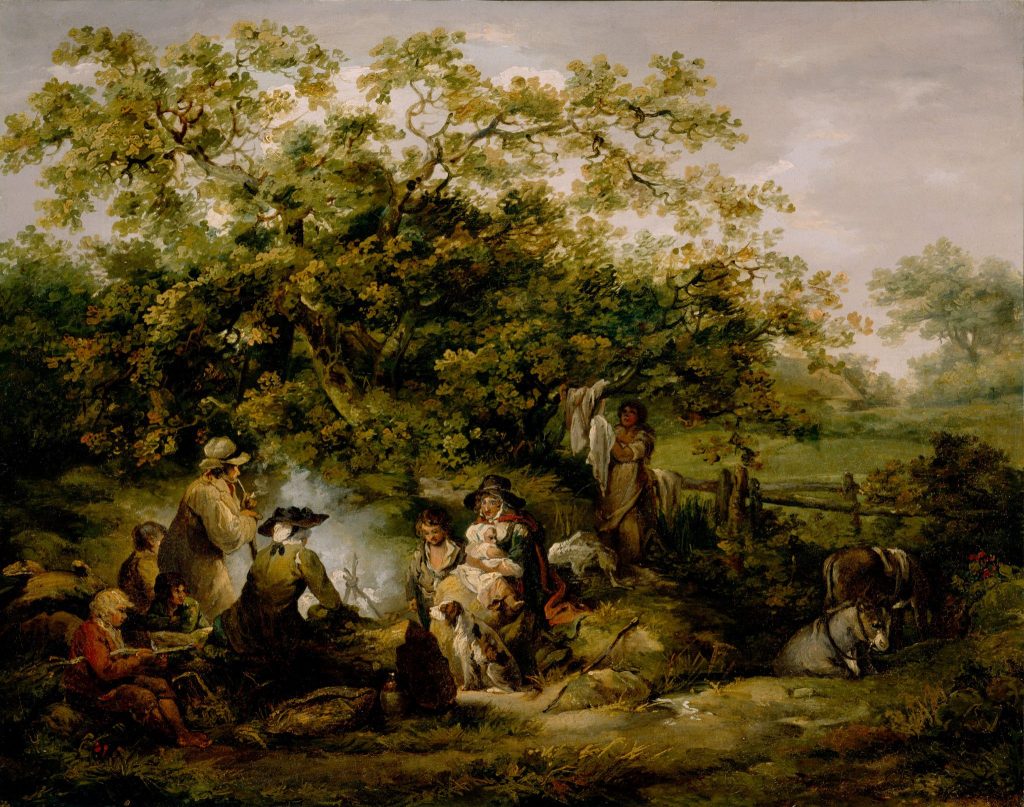
George Morland, Gypsy Encampment, c. 1790, Detroit Institute of Arts, Detroit, MI, USA.
Although trying to define the art of a diverse and geographically spread minority group is problematic, it is essential to bring these artists into the mainstream. We want to share with you just a few gems from the history of Romani art and highlight some of its brightest contemporary stars.
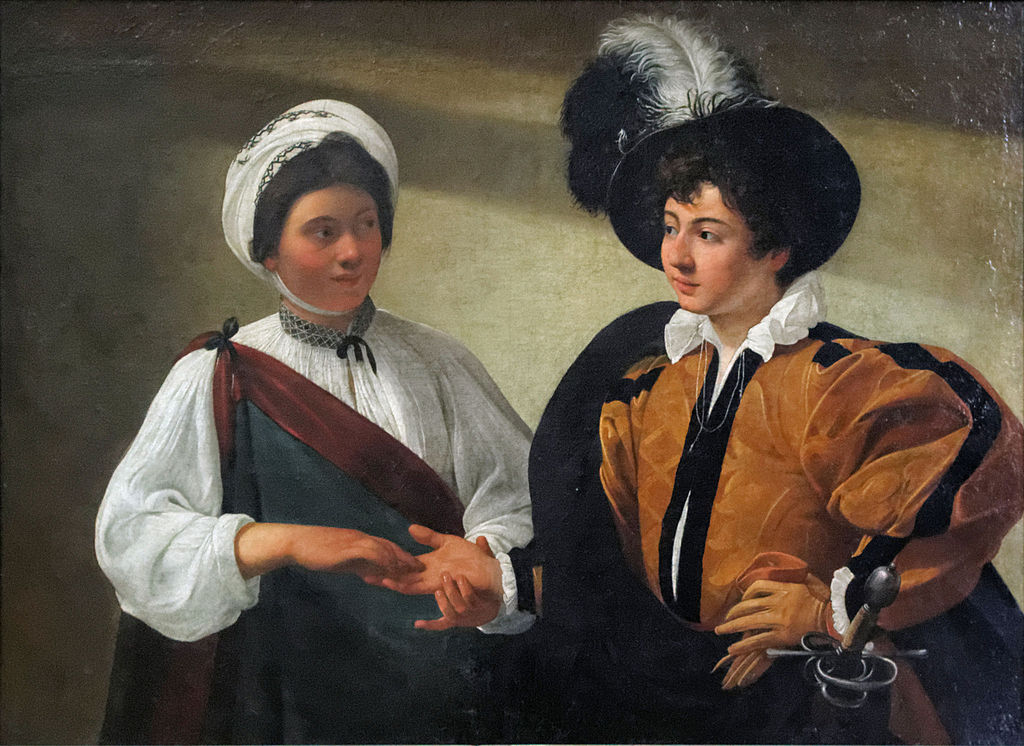
Caravaggio, The Fortune Teller, 1595, Louvre, Paris, France.
The Term “Roma”
The word “Roma” is increasingly used as a generic description, including by Amnesty International and the United Nations. But we acknowledge that Gypsy, Roma, Romani, and Traveller people have diverse origins, that they have the right to self-identify and to have their chosen designation respected.
Artist Ladislava Gažiová says:
It is important to say that many of us have had a long-standing problem with the category ‘Roma artist.’ None of us wanted to accept this category, we all wanted to be artists without an ethnic label… But we all have come to understand that there is a need for the category of Roma art to be created, although it is not entirely pleasant to us personally.
Tomkova, Denisa, “Romani Feminism in Works of Female Roma Artists,” Secondary Archive.
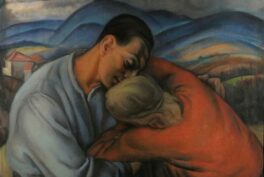
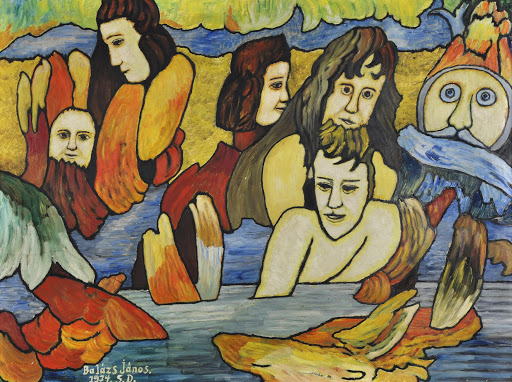
Janos Balasz, Untitled, 1959, Kalman Maklary Fine Arts, Budapest, Hungary.
Medieval Indian Origins
Not to be confused with Romanians (people from the country Romania), Sinti, Gitano, Cygan, Romanes, Romanichal, Nachins, Minceir, and Kale are just a few of the groups (or tribes) found within this community. The Romani have been in Europe for over 600 years and can be settled or nomadic. Often called a nation without a homeland, genetic research and linguistic evidence seem to indicate a medieval Indian origin for the early Romani. The spoken languages are believed to have Sanskrit origins.
Emilia Rigova, Transgressing the Past, Shaping the Future, 2018. Artist’s website.
Artistic Forms
The survival of Romani art and culture has depended upon a wide range of artistic forms. These include oral history, poetry, storytelling, music, dance, and arts like metalwork or woodwork and visual arts like painting.
Henri Rousseau, The Sleeping Gypsy, 1897, Museum of Modern Art, New York, NY, USA.
Romani Influences
The Romani influence can be seen in all cultural spheres. Think of Spanish flamenco, the folk violin and accordion, the Welsh harp, the influence of Django Reinhardt and Stephane Grappelli on jazz, spectacular circus or fairground performances—all of these have Romani roots or influence.
From a philosophical point of view, where would all the avant-garde and bohemian artists be without the influence of the Romani? A love of freedom and a critique of bourgeois respectability are central to the Romani spirit.
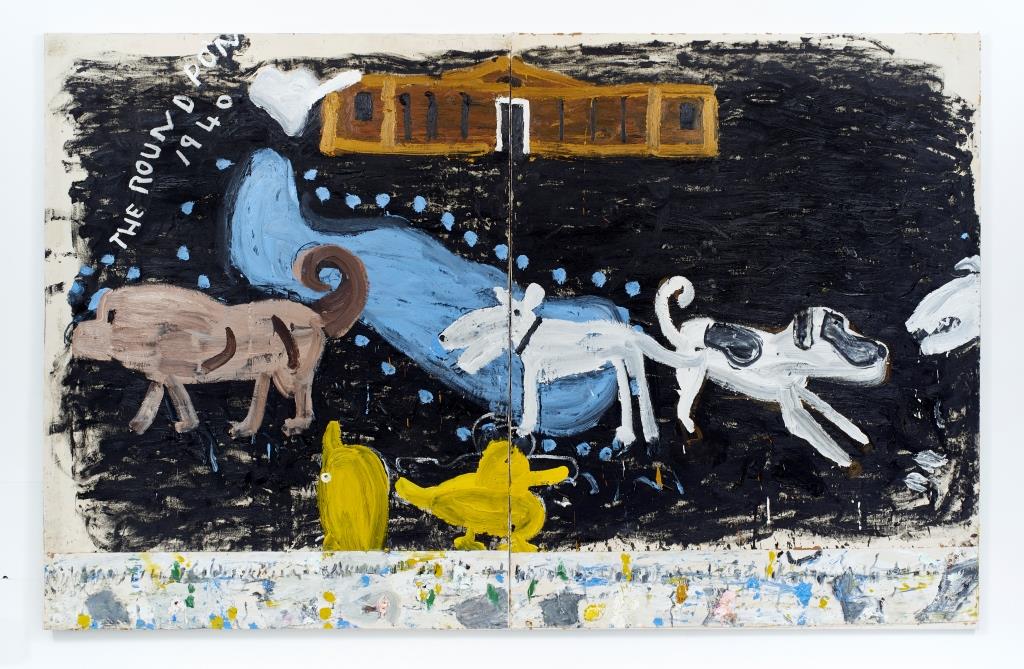
Rose Wylie, Park Dogs and Air Raid, 2017, private collection, Newlyn Art Gallery, Newlyn, UK.
Women and Gender Roles
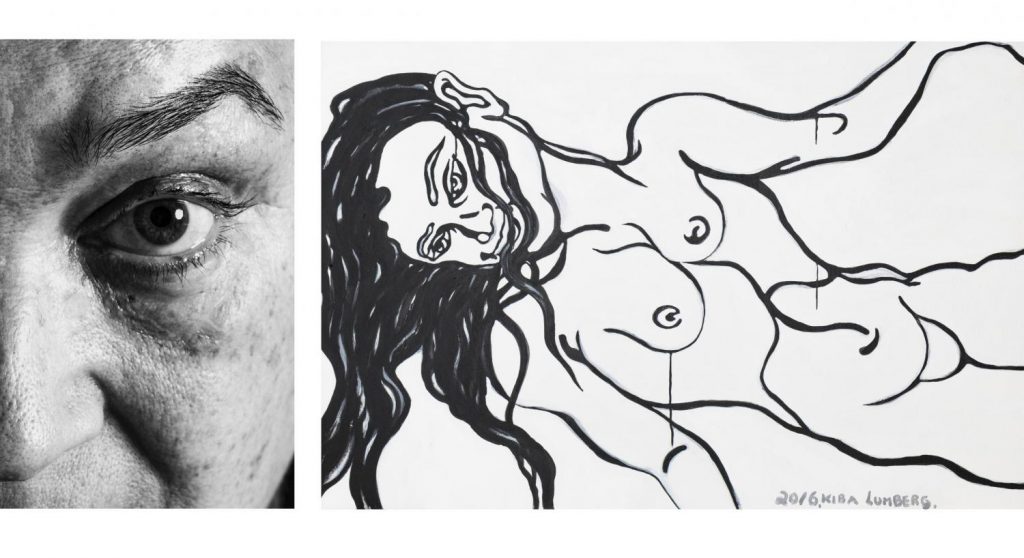
No culture is without its demons, however, and traditional Romani culture can be highly patriarchal, with rigid gender roles. In response, there are female Romani artists who challenge that system, foregrounding strong Romani women. Kiba Lumberg is a lesbian Finnish Kale artist who has been outspoken about the restrictions of some aspects of traditional Romani life and received death threats as a result. However, she finds both Romani and non-Romani cultures suspicious of her sexuality, and her work challenges the viewer to see her as an individual, not as a label. She is a visual artist, performance artist, and writer, and her work is hugely popular across Europe and beyond.
Kiba Lumberg, Kutsukuvu, Pirkko-Liisa Topelius Gallery, Helsinki, Finland.
Romance
To Gadjo (non-Romani) artists, the Romani added a romanticized “foreign” flavor to their work. Some artists’ portrayals are more complex and sympathetic than others. Try to avoid My Big Fat Gypsy Wedding and the sexualized teenager Esmerelda in The Hunchback of Notre Dame by Victor Hugo.
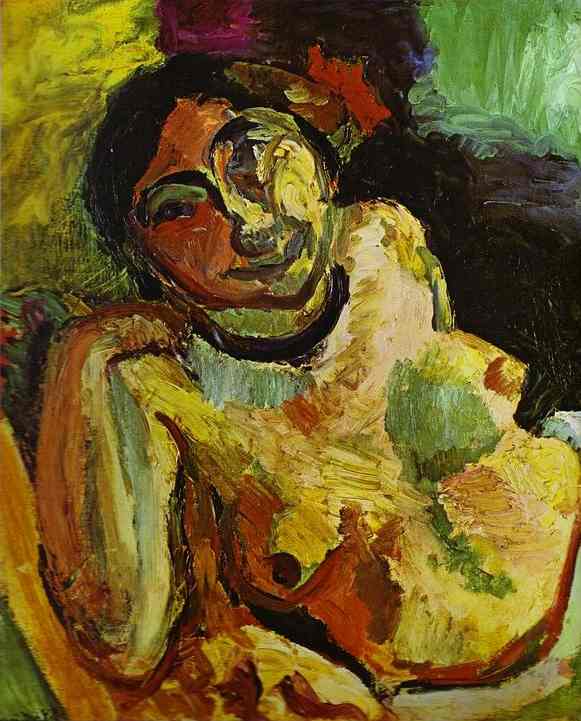
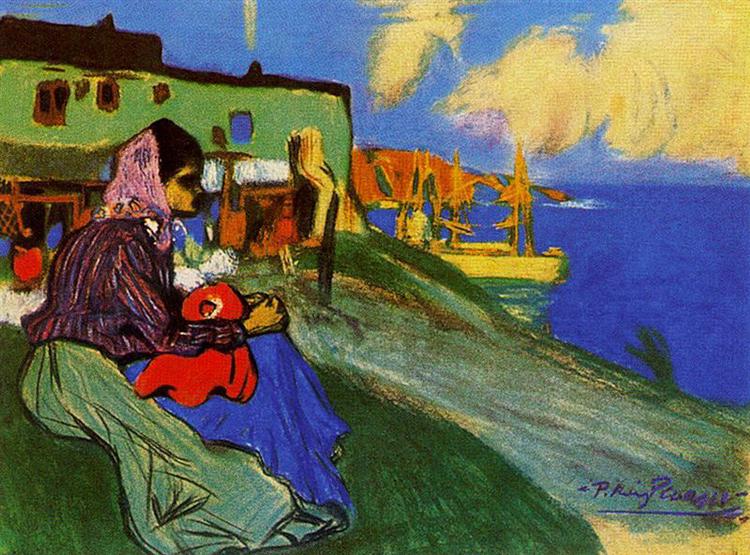
Pablo Picasso, Gypsy in front of Musca, 1900, private collection. WikiArt.
Romani in Popular Culture
Examples from popular culture depicting Romani people include Carmen in the opera by Bizet and the “Gyptians” in Philip Pullman’s His Dark Materials books. In Star Wars the Ryn race is inspired by Romani. Robin in the Batman comics is part Romani, as is Doctor Doom. Buffy The Vampire Slayer on TV has Romani characters and the popular BBC series Peaky Blinders features the Lee and Shelby families, both with Romani heritage. One of the greatest artists of the 20th century, Pablo Picasso, was exceptionally proud of his Romani origin. Charlie Chaplin also claimed Romani heritage. Some even say Elvis Presley had Romani blood!
Lo Zingaro
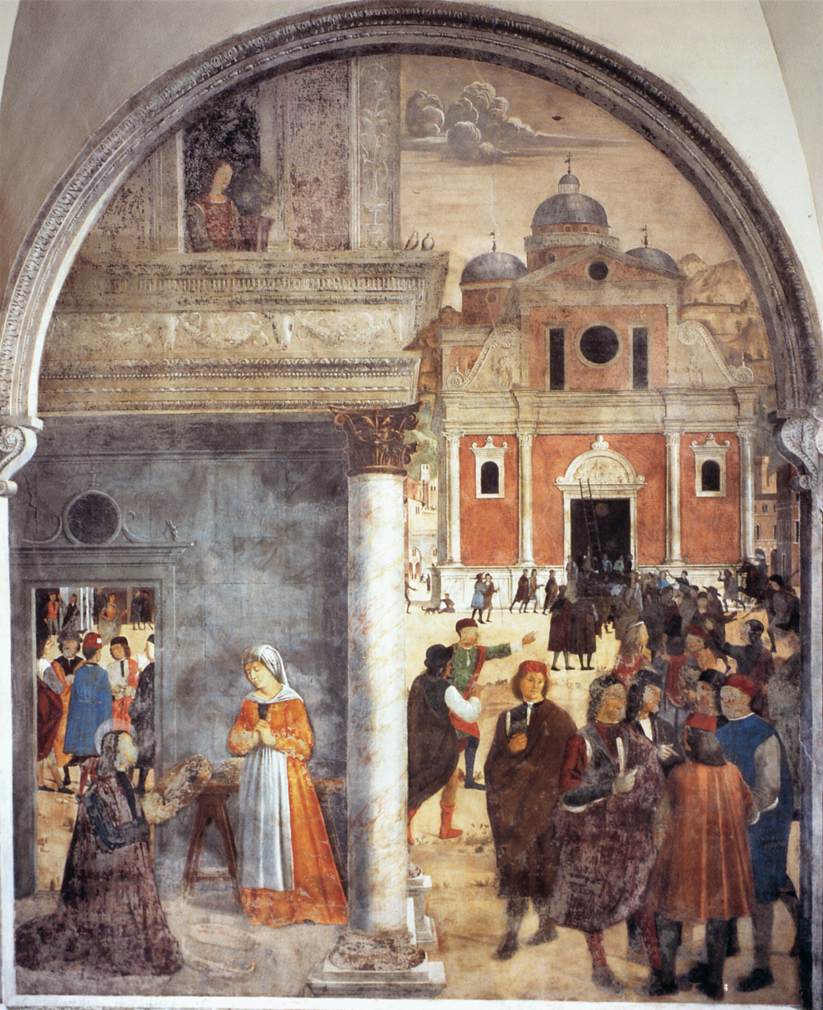
Antonio Solario, Scene from The Life of St Benedict, 1502, Cloisters of the Monastery of Saints Severino and Sossio, Naples, Italy.
Records of early Romani painters are scarce, except for Antonio Solario, known as “Lo Zingaro.” His career is obscured, although it is confirmed he was born in Venice, Italy. He is mostly known for a series of 20 huge religious frescoes (image above) in the Monastery of Saints Severino and Sossio in Naples.
Master of the Gypsies
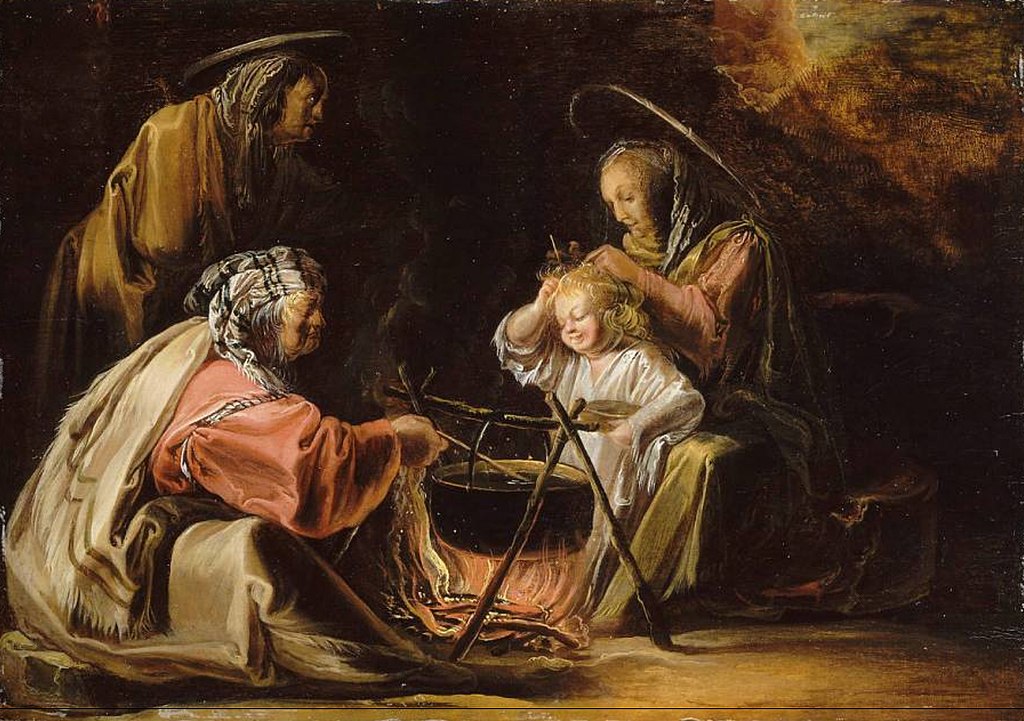
Jan van de Venne, Gypsy Encampment, c. 1631, Louvre, Paris, France.
Jan van de Venne was known as the “Master of the Gypsies.” This Flemish painter often chose to depict realistic Romani characters, in their daily activities. Above we see women cooking in a camp while one de-louses a child’s hair.
Augustus John and the Kale
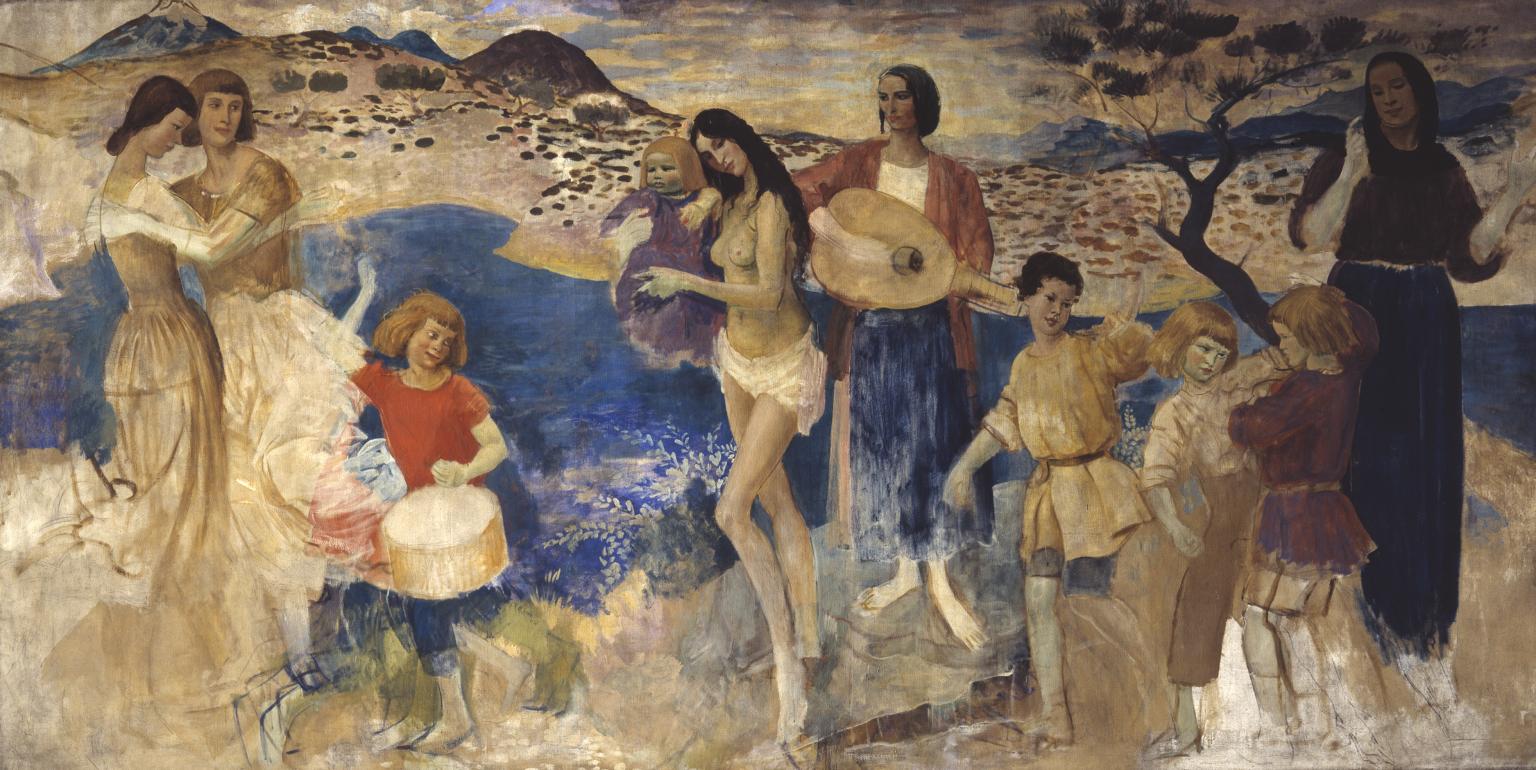
A less respectful attitude is sadly quite common. Take Augustus John for instance. John was a larger-than-life artist, who would dress himself and his family up in what he considered a “bohemian” costume and turn up at encampments of the Welsh Romani (called the Kale). We don’t know what they thought of him, but he seems to have enjoyed carousing, drinking, and dancing before heading back to his comfy London abode where he painted expensive portraits of the great and the good of British society.
Augustus John, Lyric Fantasy, c. 1913, Tate, London, UK.
Camille Corot
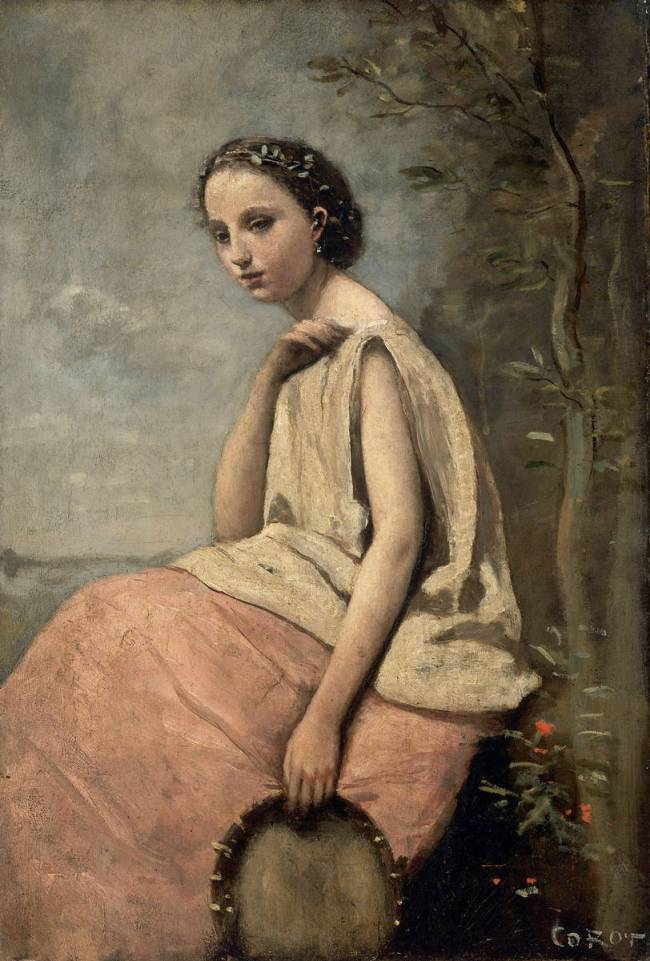
Camille Corot was another bourgeois painter who felt the sentimental pull of the rustic gypsy dream. His parents made fine hats and millinery for fashionable Parisians, but Corot hated commerce and instead became a pivotal figure in landscape painting. He was also known for having a soft spot for dreamy portraits, and the painting below is one example. It is no doubt a studio model, but it has a lyrical melancholy.
Camile Corot, Zingara with Basque Tambourine, c. 1865, Louvre, Paris, France.
Gypsy Mueller
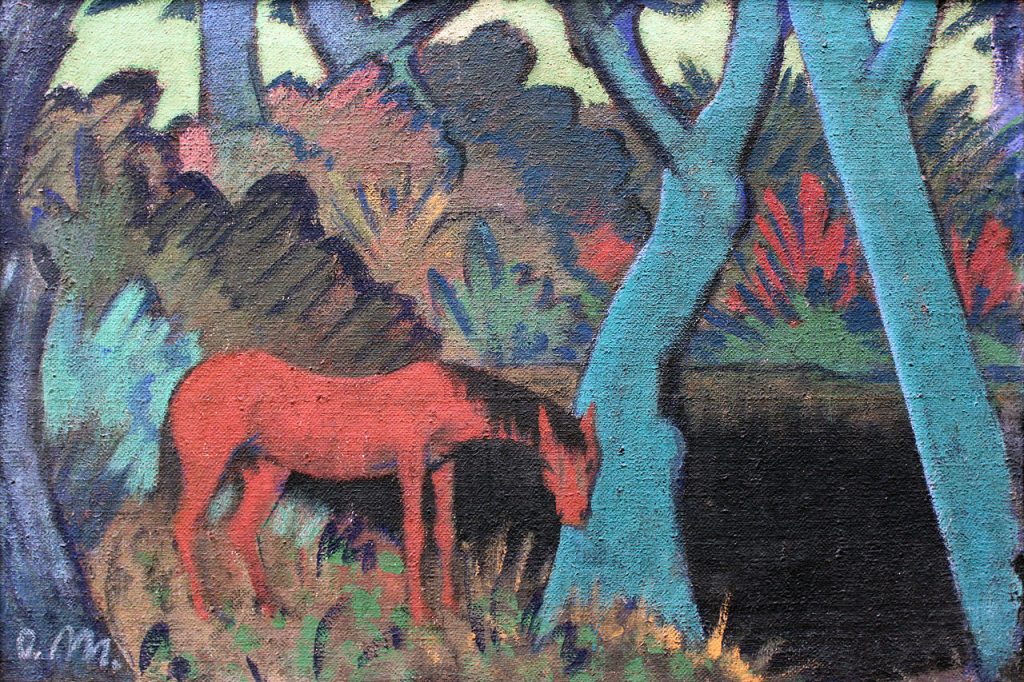
But enough of the Romani fans, let’s move on to actual Romani painters. Otto Mueller was a German Expressionist painter and printmaker. His nickname was “Gypsy Mueller.” He fought as a German soldier in World War I but was labeled a “degenerate” by the Nazis and over 300 of his works were seized, with many others lost or stolen.
Otto Mueller, Gypsy Horse at Black Water, 1928, Germanisches National Museum, Nuremberg, Germany.
Romani in Concentration Camps
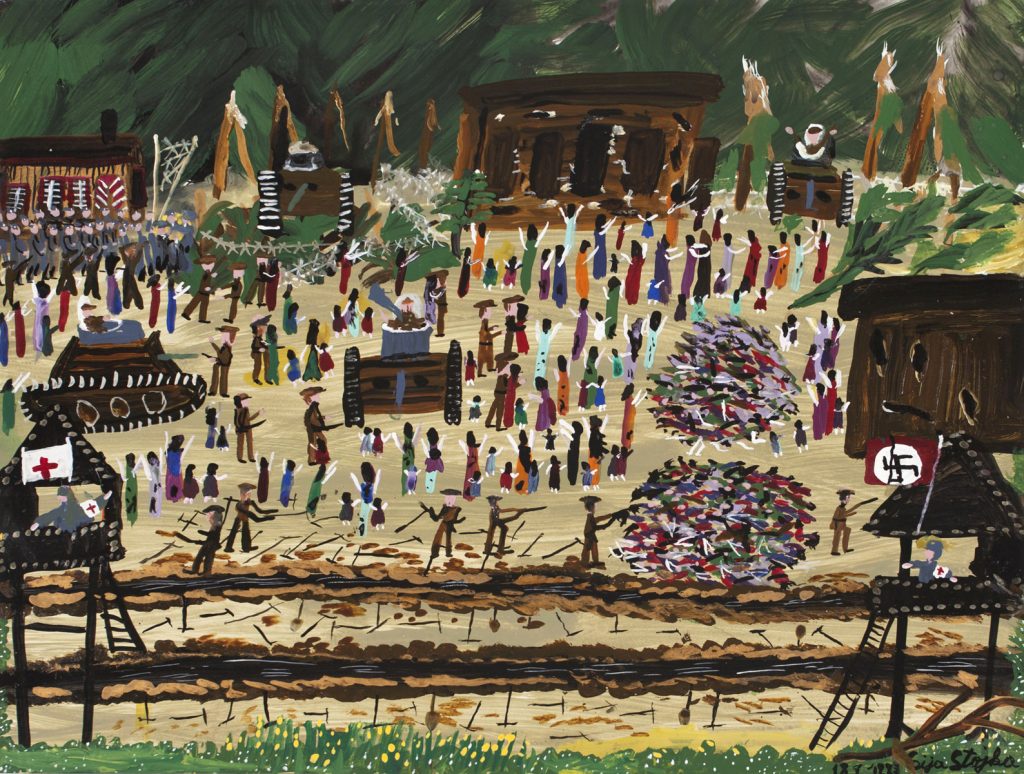
Ceija Stojka came from a family of Austrian Romani horse traders. Like many Romani, she was deported to a concentration camp. She was just 10 years old. She miraculously survived three camps: Auschwitz-Birkenau, Ravensbrück, and Bergen-Belsen. In later life, although considered illiterate, she started to paint and write about her experiences. She became the first Romani woman to have survived the death camps and tell her story. Until she died in 2013 she was a vocal spokeswoman for the recognition of the Romani and Sinti genocides.
Ceija Stojka, The liberation of Belgen-Belsen, 1993. Artist’s website.
La Chunga
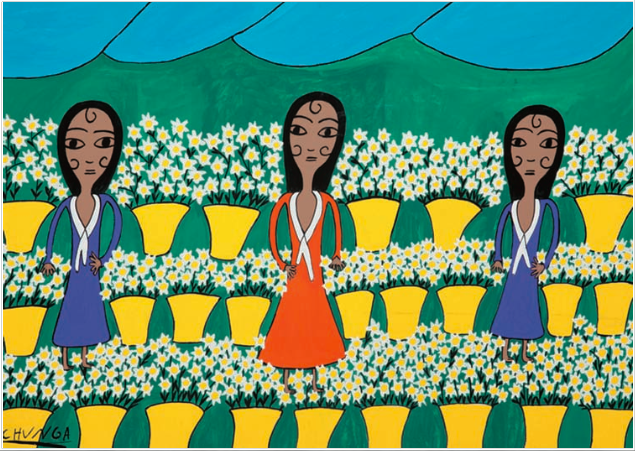
Micaela Flores Amaya was more well known as “La Chunga”—“the difficult woman”. A talented barefoot flamenco dancer, she was the muse of many writers, musicians, and artists including Picasso and Dali. She even starred in a couple of Hollywood movies and painted in a “naive” style.
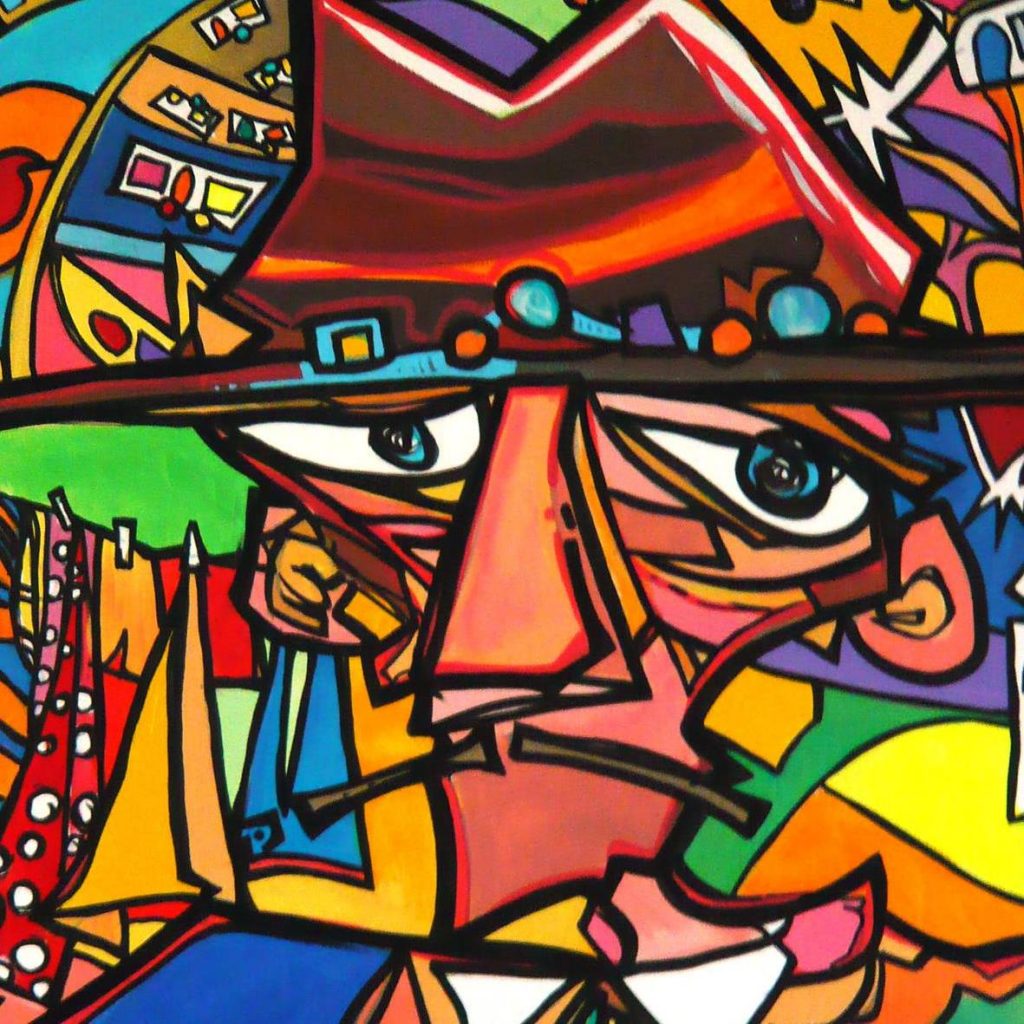
Gabi Jiménez is an award-winning painter and sculptor whose Pop Art works are infused with his passion for Romani political activism. He lives in France and is committed to making the lives of Romani people more visible in all their color and vibrancy.
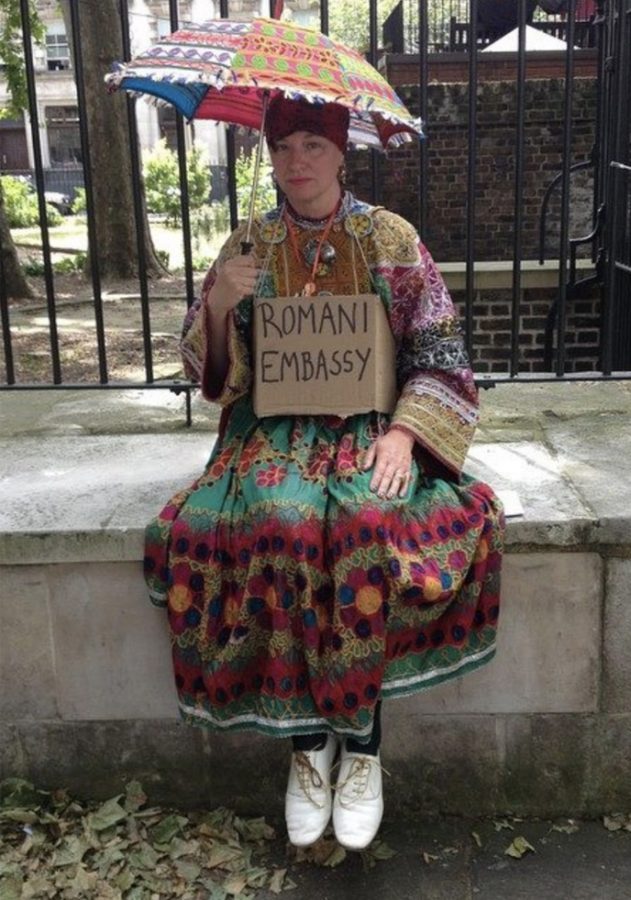
One of the most well-known Romani couples of the art world is of Damian and Delaine Le Bas. Both were outstanding artists in their own right, as well as working on collaborative projects. Damian began work on the Romani Pavilion at the Venice Biennale, but died in 2017.
Damian worked predominantly on maps, globes, and discarded packaging. Delaine is a performance artist who takes her challenging works out across the globe. Both produced work that asks questions about geographical borders and the rights of Romani people everywhere.
As a community we have no ‘one homeland,’ no one country, no one nation state as such. We are in many lands but never fully accepted, at any time we can be purged from the general population. We are an embodiment of an international population, we have many religions, we speak many languages and speak many versions of our own language. We have little self-representation politically and no Embassy anywhere to run to in times of trouble.
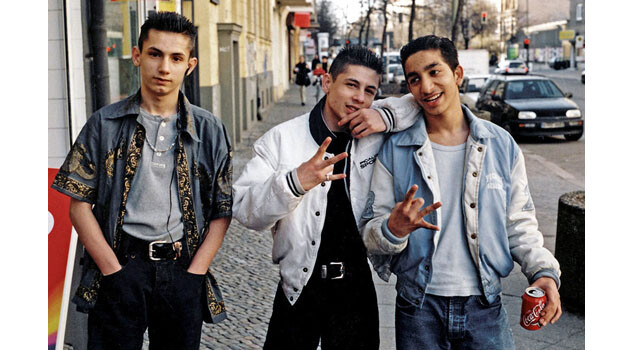
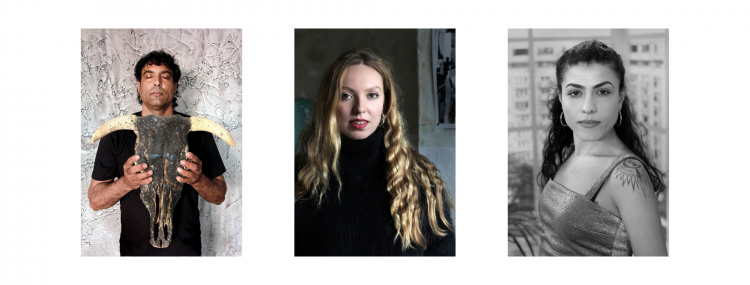
Nihad Nino Pušija, an art photographer, was born in Sarajevo but is based in Germany. His work focuses on documentary and portrait photography which explores Romani identity in Europe. An ongoing project of his has been Roma in Rome, where he repeatedly re-visits the same Romani families, following their lives. He says he has found:
Young gladiators, proud adolescents, disillusioned persons and those full of life, trying under the most difficult circumstances to secure their survival.
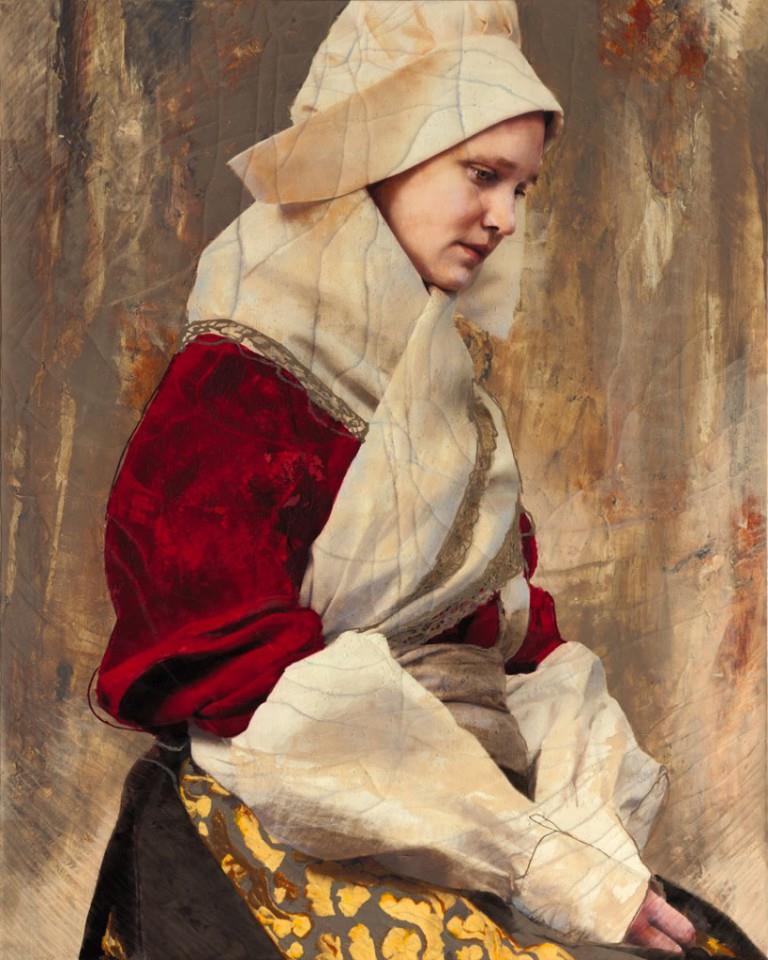
Lita Cabellut is one of Spain’s most successful artists. She often works on huge canvases, using a modern fresco technique. Her life story is fascinating. Her mother, a Sinti, ran a brothel in Barcelona. Lita spent time living on the streets, then went into an orphanage. From there she was adopted, at age 12, by a Catalan family who encouraged her interest in art. She is now based in the Netherlands, where she was named Artist of the Year in 2021.
Romani Homes
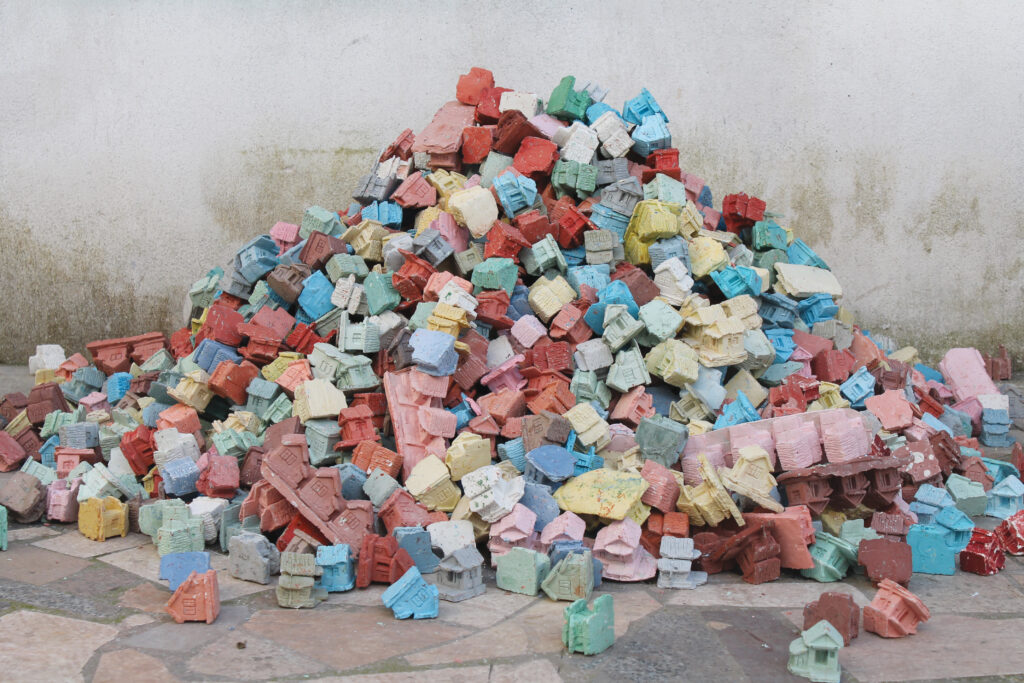
Sead Kazanxhiu, Shtepizeza (Home Sweet Home), 2014. Roma Biennale, Italy.
In 2014, Albanian artist Sead Kazanxhiu presented a multimedia installation at the Venice Biennale, consisting of 2,500 tiny, individually crafted plaster homes. His work called attention to the tragic housing situation of Romani, asking how can Romani feel safe, if they do not have a home, both symbolically and literally?
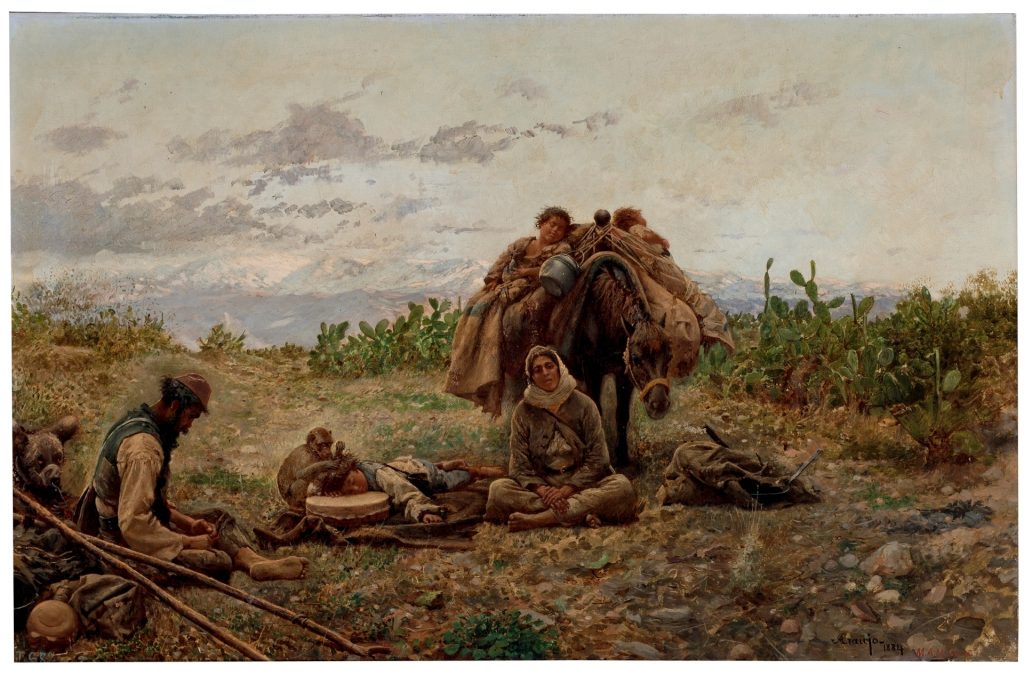
Joaquín Araujo Sánchez-Ruano, Where Will We Go? (Bosnians), 1884, Prado Museum, Madrid, Spain.
200 years before Sead Kazanxhiu, the Spanish artist Joaquin Araujo Sanchez-Ruano was asking the same question, depicting a group of bohemians, weary from their travels, deciding on their next destination.
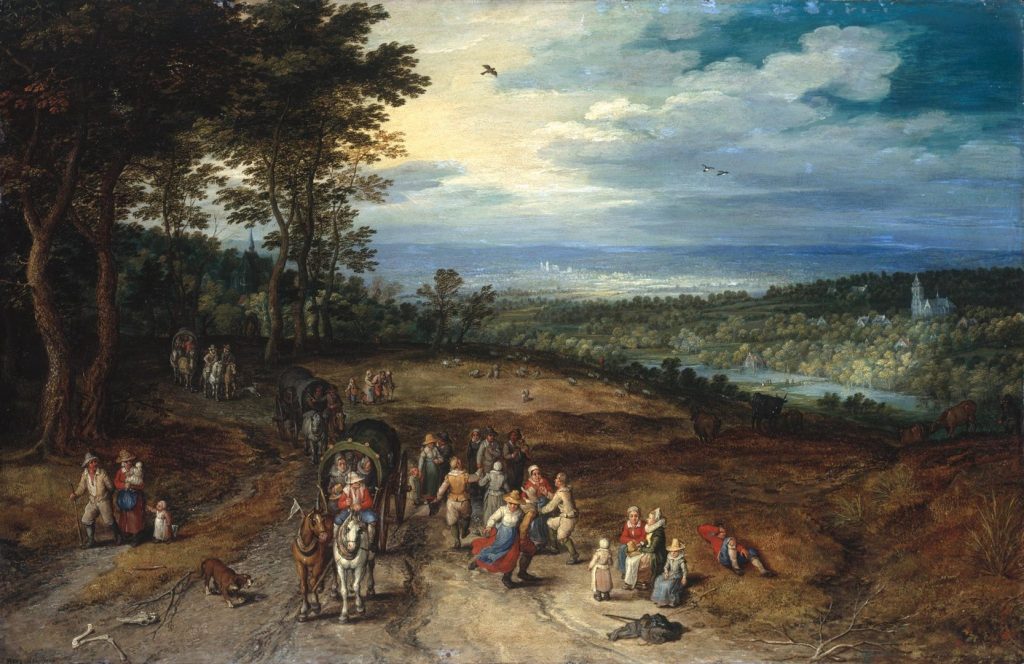
Jan Breughel the Elder, Landscape with travelers and peasants on a track, 1610, National Gallery, London, UK.
If we delve even further back in the past, we see Romani people depicted in the landscape by Jan Brueghel the Elder. The Flemish master’s marvelous treatment of landscape is beautiful to see, but this scene is in fact at odds with laws throughout Europe at the time, which barred the Romani from following their traveling lifestyle or trading in livestock to make a living.
Communicating Without Words
Shamus McPhee, Our Destiny. Hidden Treasures.
Shamus McPhee is a Nackin or Scottish Gypsy Traveller. He is a community-based artist and also a translator and linguist. McPhee was instrumental in bringing about the Scottish Government’s 2008 decision to recognize Gypsy Travellers as a national ethnic minority. He believes that art is key to understanding the Romani – using imagery to recreate and reclaim cultural identity. He said:
I like arts because it’s not written, it’s a visual thing and I think sometimes visuals can speak more loudly to an onlooker, or maybe someone who doesn’t want to communicate with you—who would choose not to speak to you. But look at an image and you can still impact their perception without words.
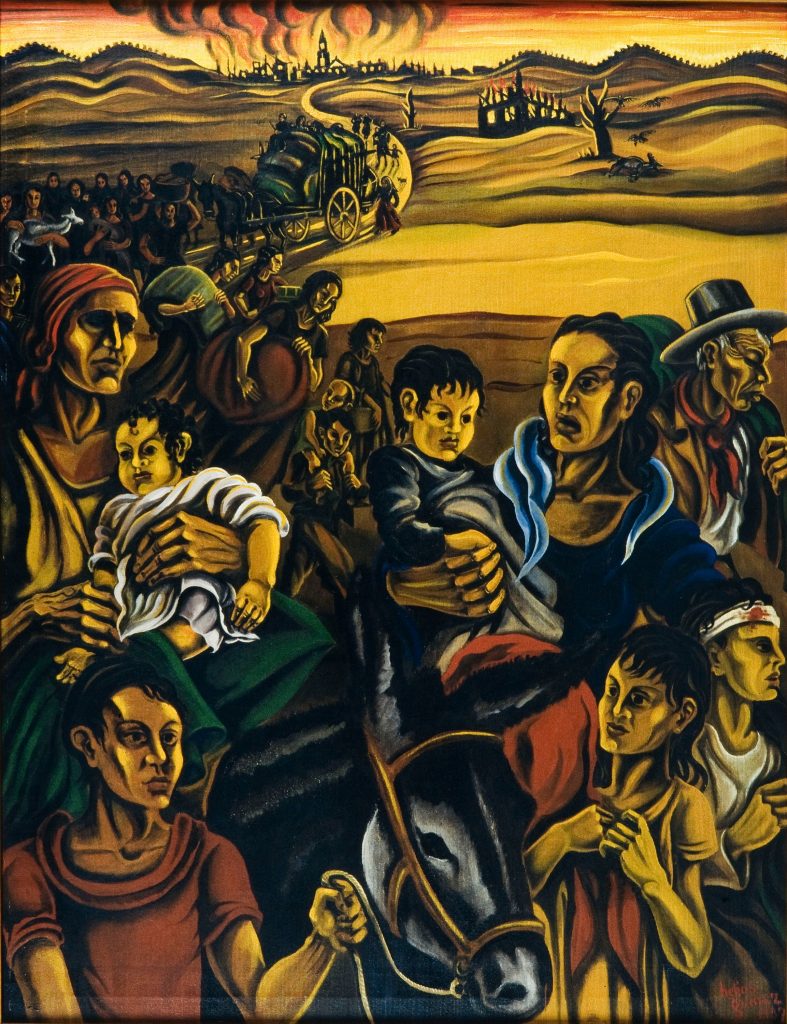
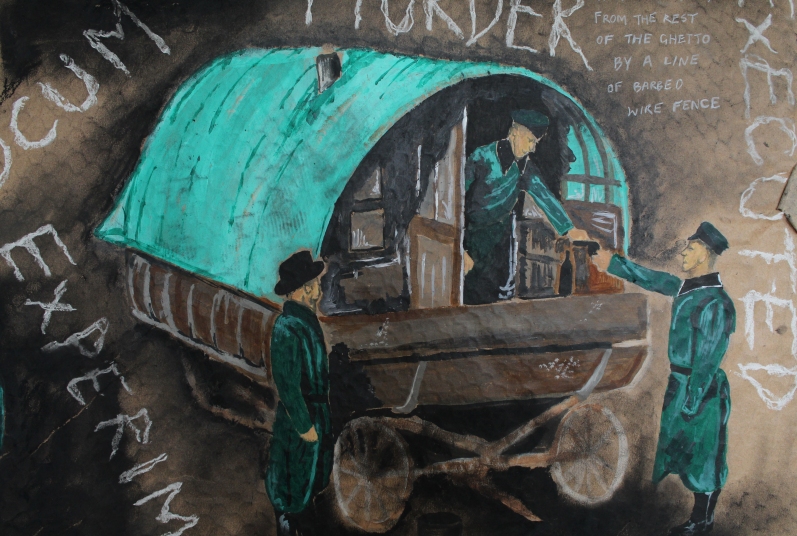
Romani people have been subjected to genocide, persecution, slavery, and forced assimilation throughout their long history. This culminated in the Nazi Porajmos (Holocaust) when the Nuremberg Laws stripped all Romani of their citizenship. The numbers of those killed were never properly recorded, but experts estimate anything up to 1.5 million Romani were exterminated.
Helios Gomez, Evacuation, 1937, Museu Nacional d’Art de Catalunya, Barcelona, Spain.
Stacey Hilton is a young artist from the Romani community in Scotland. Her work, The Storyteller’s Jacket, was exhibited at the Scottish Parliament at Holyrood. The Devouring seriesis her artistic response to the horrors of the Porajmos.
The humiliation of the Romani people continues today. Forced evictions are commonplace. An increasing number of nationalist, paramilitary, racist, or neo-Nazi groups are attempting to amplify anti-Romani hatred and violence. Economic exploitation and political exclusion are on the rise. The answers to this are complex, but to challenge prejudice and stereotypes with magnificent art may be one of them. We are proud to have shared just a few of the diverse and immense talents of the remarkable Romani.
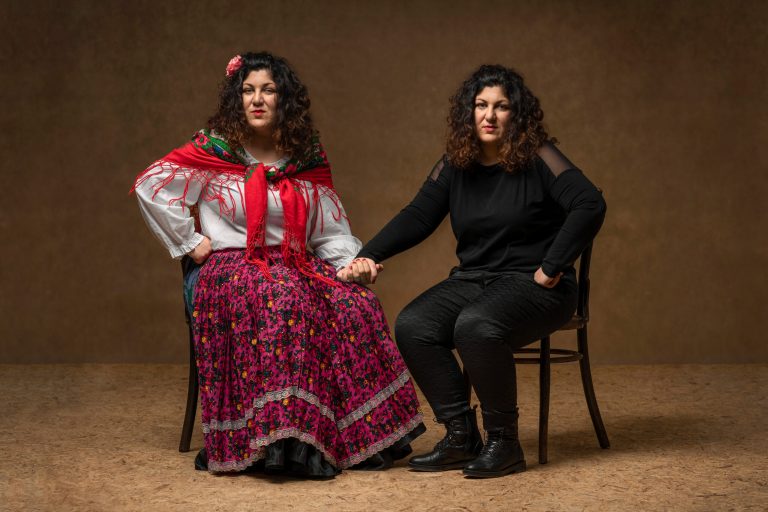
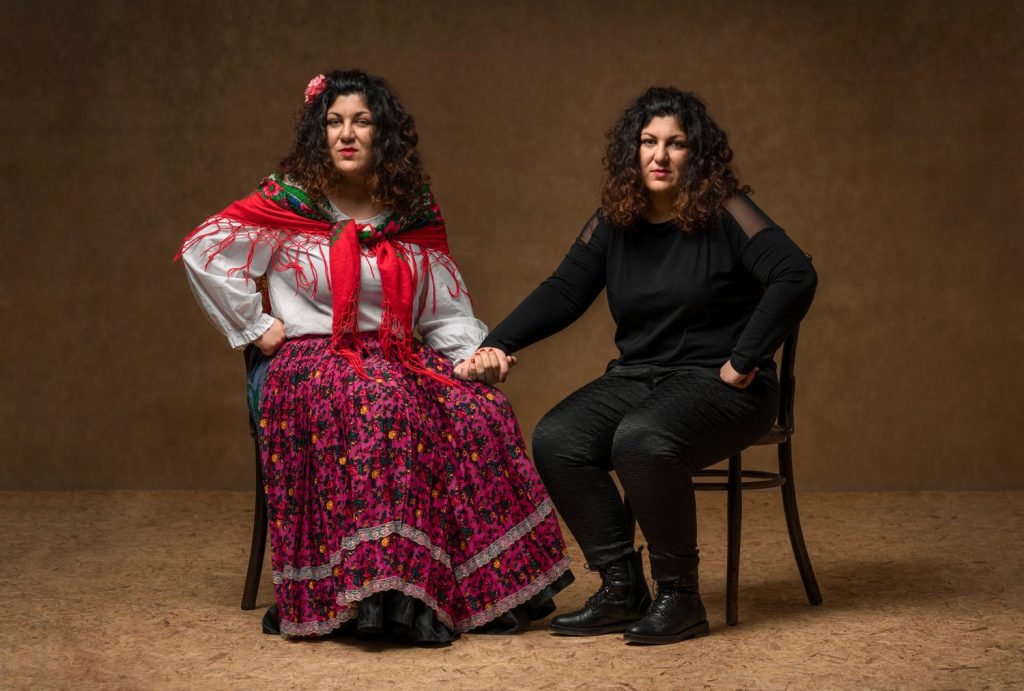
Nihad Nino Pušija, Roma Artists: Manuel Gómez, Riah May Knight, Mihaela Dragan, 2016-2019. ERIAC.
If you would like to find out more about Romani art and culture, there are some impressive resources worldwide. Here are just a few:
European Roma Institute for Arts and Culture. ERIAC, based in Germany, is a groundbreaking institute showcasing and promoting the artistic and cultural contribution of Europe’s 12 million Romani people. Led by Romani artists, activists and scholars, it will promote Romani culture as well as contribute towards overcoming the deep-rooted hostility and discrimination directed against Romani communities across the continent.
The Galerie Kai Dikhas dedicated to Romani art, has become a vital platform for Roma artists. It encourages the wider community to engage in a dialogue with often marginalized Roma and Sinti people.
Romani Herstory celebrates women of Romani descent from the past and present, unsung heroines and trailblazers who refuse to conform to stereotypes.
Travellers Times is a print and online magazine often covering Romani art and many other cultural issues.
Robert Dawson has collected almost 2,000 images of Romani.
Click and follow us on Google News to stay updated all the time
We love art history and writing about it. Your support helps us to sustain DailyArt Magazine and keep it running.
DailyArt Magazine needs your support. Every contribution, however big or small, is very valuable for our future. Thanks to it, we will be able to sustain and grow the Magazine. Thank you for your help!
Candy's remote, rain soaked farmhouse clings to a steep-sided valley in rural Wales. She raises cats, chickens and children with varying degrees of success. Art, literature and Lakrids licorice save her sanity on a daily basis.
Color theory has played a central role in art throughout history, shaping how viewers respond to images even before they consciously think about the...