
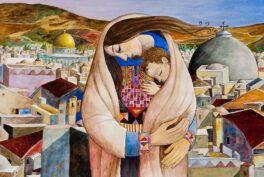
Sliman Mansour, Painter of Palestinian Resistance, Dies at 79
Sliman Mansour, one of the leading figures in Palestinian art, died yesterday at the age of 79. Mansour’s practice was profoundly intertwined...
Martha Teverson 25 August 2026
7 May 2026 min Read
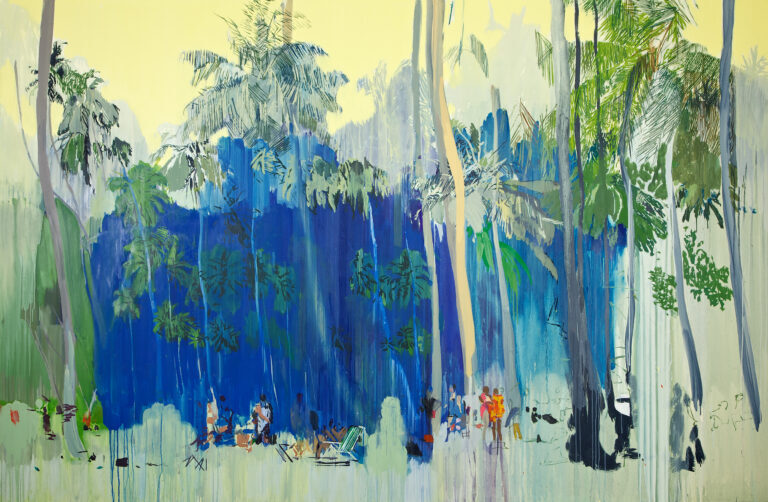
Hurvin Anderson, Maracus III, 2004. © Hurvin Anderson. Courtesy the artist and Thomas Dane Gallery. Photo: Richard Ive. Press materials.
If the thought of exploring the big ideas of identity, history, longing, and belonging seems like an impossible task, you’d be right. But enter the enormous, lush landscapes of Hurvin Anderson, and you get a breathtaking insight into how an artist can do just that. See these works on screen and they are impressive. But in a gallery space, your senses start humming. The huge color-drenched canvases of Anderson are places to step into and immerse yourself.
The Hurvin Anderson exhibition currently running at Tate Britain is divided into six areas, each exploring a different setting or time, in both personal, national, and international history. On view, you will find 80 canvases covering 30 years of work. Throughout his career, Anderson has been creating atmospheric landscapes and interior scenes.
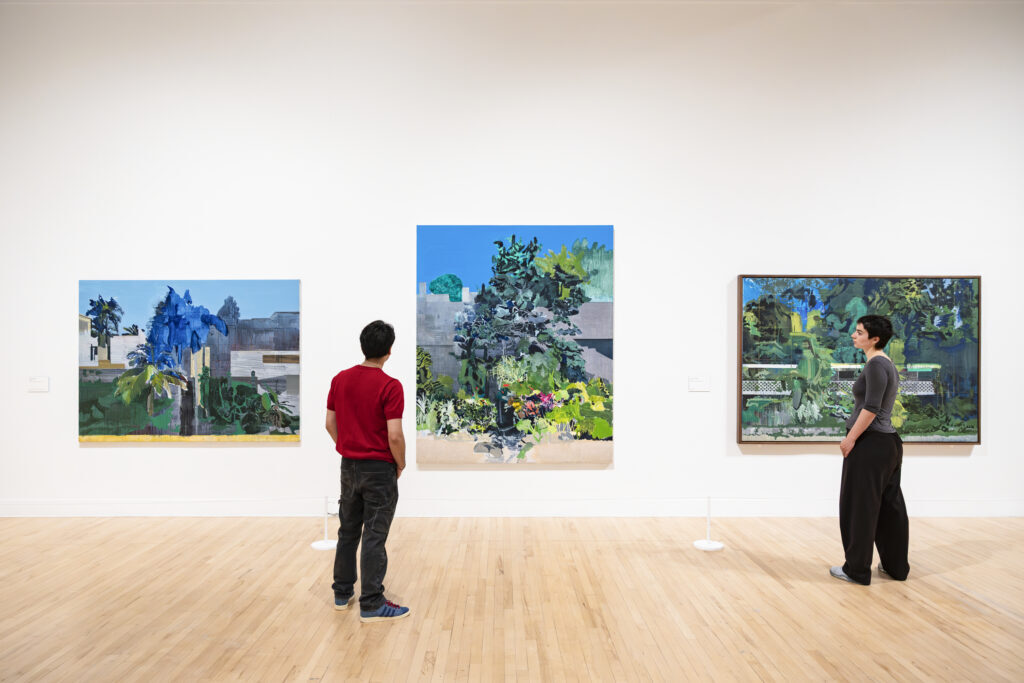
Installation view of Hurvin Anderson at Tate Britain, London, UK. Photo Tate Photography (Larina Annora Fernandez). Press materials.
Anderson has an educated and thoughtful understanding of the long traditions of European and American landscape painting. But his works powerfully delve into the lived experiences of contemporary Britain. Original and visually rich, there really is no one else currently creating such astonishing works. When we realize that he is probably one of the most important painters of his generation, why isn’t he a household name? Louder for the art world gatekeepers at the back!
I define these paintings as wanting to see the Black vision. How we saw things was not quite the same. In Britain, your vision shrinks somehow. I want to broaden that out.
Hurvin Anderson exhibition catalogue, ed. by Dominique Heyse-Moore, Tate Britain, London 2026.
With a complicated, double-sided heritage, Anderson, born in 1965, has Jamaican roots and an English upbringing. His parents were part of the Windrush generation. In 1948, Britain invited any of its Commonwealth citizens to migrate and settle in the UK, to assist with labor shortages. On arrival, they were exposed to brutal racism and prejudice, and this historical event is still an unresolved and problematic legacy. Hurvin was the youngest child of the family, born in Birmingham.
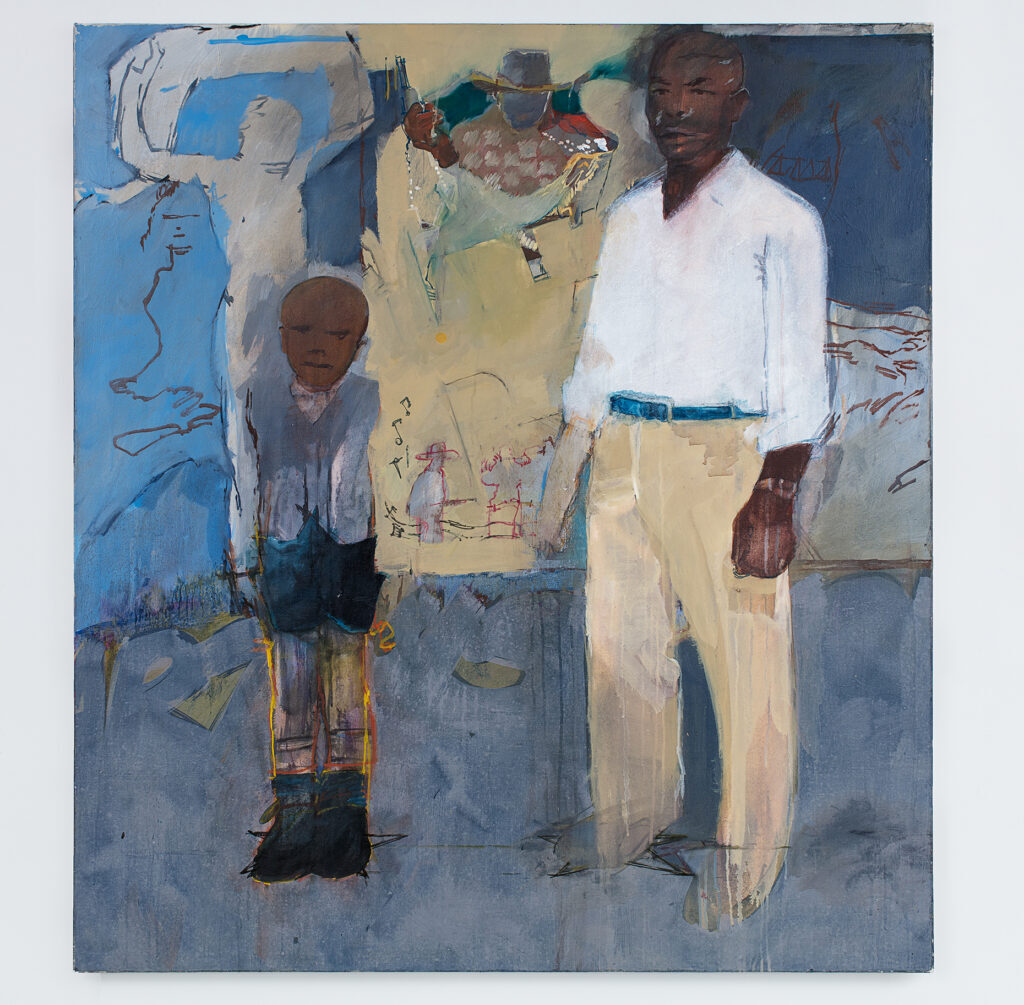
Hurvin Anderson, Hollywood Boulevard, 1997. © Hurvin Anderson. Courtesy the artist and Thomas Dane Gallery. Photo: Richard Ivey. Press materials.
His childhood was spent sketching superheroes and exploring photography with an older brother. His first paintings were taken from early family photographs, and he continues to work from his own photographic record. The urge to paint his experience as a Black man of Caribbean heritage, belonging to two places, led him to art school. He describes this as “being in one place but thinking about another.” And of course, those reflections lead us to the socio-cultural effects of colonialism, and the bloody remnants of slavery. This is where experience, memory, and our collective history collide.
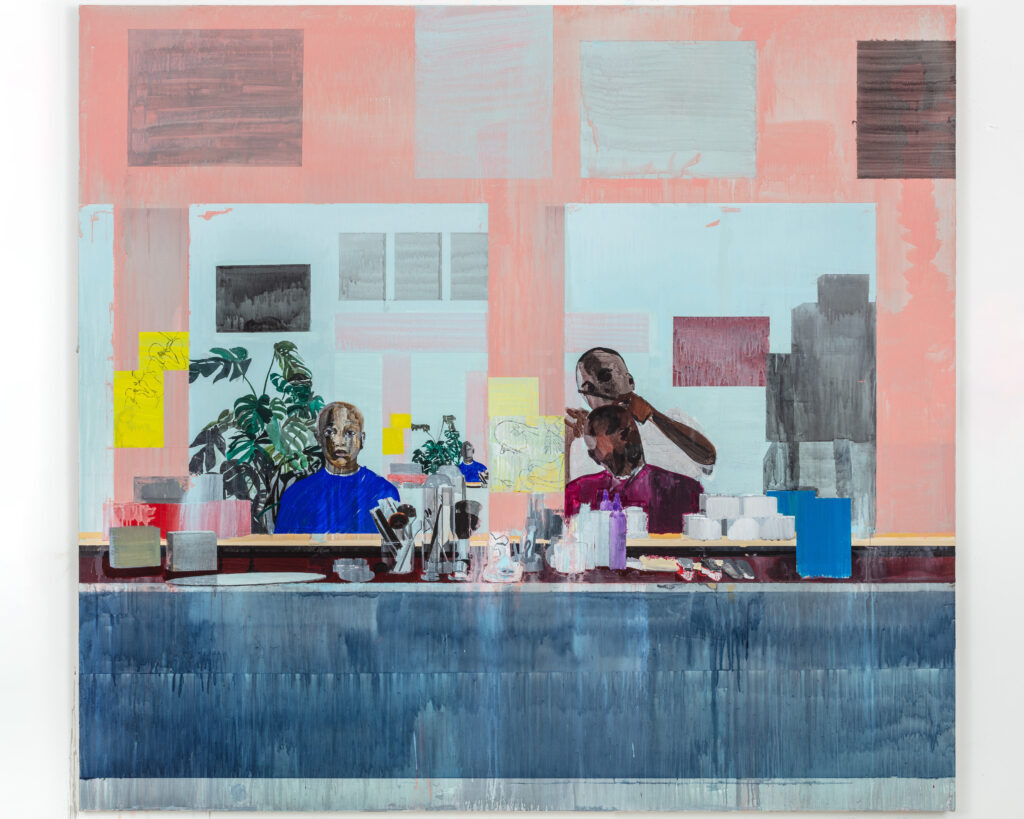
Hurvin Anderson, Shear Cut, 2023. © Hurvin Anderson. Courtesy the artist and Thomas Dane Gallery. Photo: Richard Ivey. Press materials.
Psychology is one of Anderson’s interests, and this is obvious in the barbershop paintings. At first glance, these seem like friendly, social spaces, familiar to anyone who has walked down a British high street. But of course, given the overt prejudice faced by Black families, barbershops were much more than a place to get a haircut. They were a much-needed sanctuary and a vital cultural haven, where your skin and your hair were not just understood but loved and cared for.
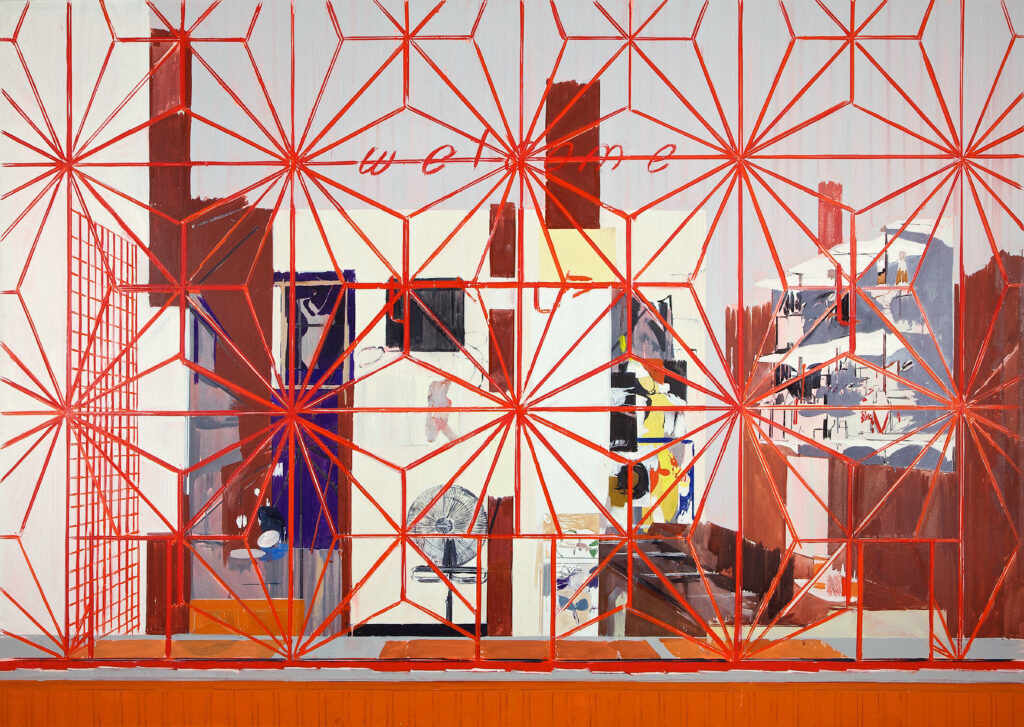
Hurvin Anderson, Welcome: Carib, 2005, Private Collection. © Hurvin Anderson. Courtesy the artist and Thomas Dane Gallery. Photo: Richard Ivey. Press materials.
Many canvases are full of Caribbean color, with greens and blues of lush, tropical foliage. At times, these seem almost abstract, with a sense of an image dissolving. Others show the twilight greys of a British winter sky, a thousand miles away. In some, we see a repeating theme of grids, grills, and gates, superimposed before us, blocking or obscuring our view of the scene. This is an unsettling vision Anderson personally met on visiting the Caribbean, where he found security barriers dividing rich and poor, tourist and resident. A bitter after-taste of colonial segregation.
People use color in a very different way in the Caribbean.
Hurvin Anderson exhibition catalogue, ed. by Dominique Heyse-Moore, Tate Britain, London 2026.
Slipping through his own personal time and space, looping backwards and forwards, Anderson gives us a glimpse into the reality of Black British life, brutal at times, yet beautiful too. Accompanying the canvases is a video of the social and political upheaval faced over decades by Black Britons.
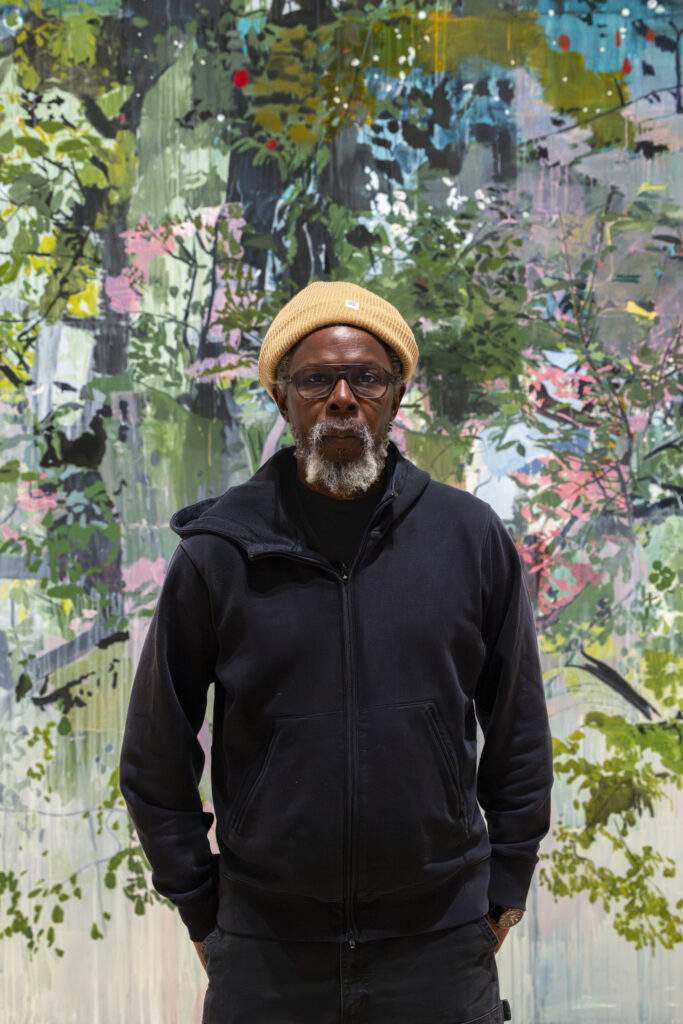
Hurvin Anderson, Artist’s Portrait, 2026. Photo Tate Photography (Lucy Green).
London always has more than its fair share of places to engage with art. And lots of busy, big name exhibitions too. But if you are anywhere near Tate Britain before August 23, 2026, do head to the Hurvin Anderson exhibition. You can thank me later! For a tantalizing glimpse at the works, check out this short video by Tate.
Hurvin Anderson is on view at Tate Britain until August 23, 2026.
DailyArt Magazine needs your support. Every contribution, however big or small, is very valuable for our future. Thanks to it, we will be able to sustain and grow the Magazine. Thank you for your help!

Candy's remote, rain-soaked farmhouse clings to a steep-sided valley in rural Wales. She raises cats, chickens, and children with varying degrees of success. Art, literature, and Lakrids licorice save her sanity on a daily basis.
Sliman Mansour, one of the leading figures in Palestinian art, died yesterday at the age of 79. Mansour’s practice was profoundly intertwined...
Martha Teverson 25 August 2026
There is a particular vertigo in crouching down to look at something the size of a fingernail. Since 2006, Slinkachu has built an entire career...
Errika Gerakiti 3 August 2026
Few would claim real shock at the loss of an artist a month shy of turning 89. And then David Hockney passed away on June 11. Born in 1937, the lad...
MJ Rivera 22 June 2026
Between marquee art fairs, auction-house madness, downtown openings, uptown previews, long-awaited gallery and museum exhibitions, and the artsy...
MJ Rivera 28 May 2026