
Masterpiece Story: Judith and Holofernes by Caravaggio
Judith and Holofernes is a Caravaggio masterpiece that captures Biblical murder and drama. Rarely has death been captured so intensely and violently...
James W Singer 13 September 2026
21 September 2026 min Read
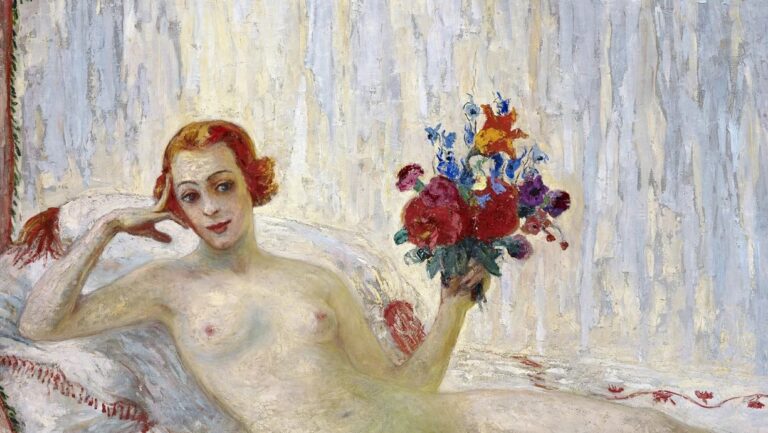
Florine Stettheimer, A Model (Nude Self-Portrait), ca. 1915, Avery Architectural and Fine Arts Library, Columbia University, New York City, NY, USA. Detail.
If you could choose to do anything you wanted in life, what would you do? It is rare that artists have the total freedom to paint whatever they want, whenever they want. But Florine Stettheimer did—she had confidence, talent, money, and time. What can this radical, modernist artist tell us about what happens when women are creatively, personally, and financially free? Her 1915 nude self-portrait can tell us!
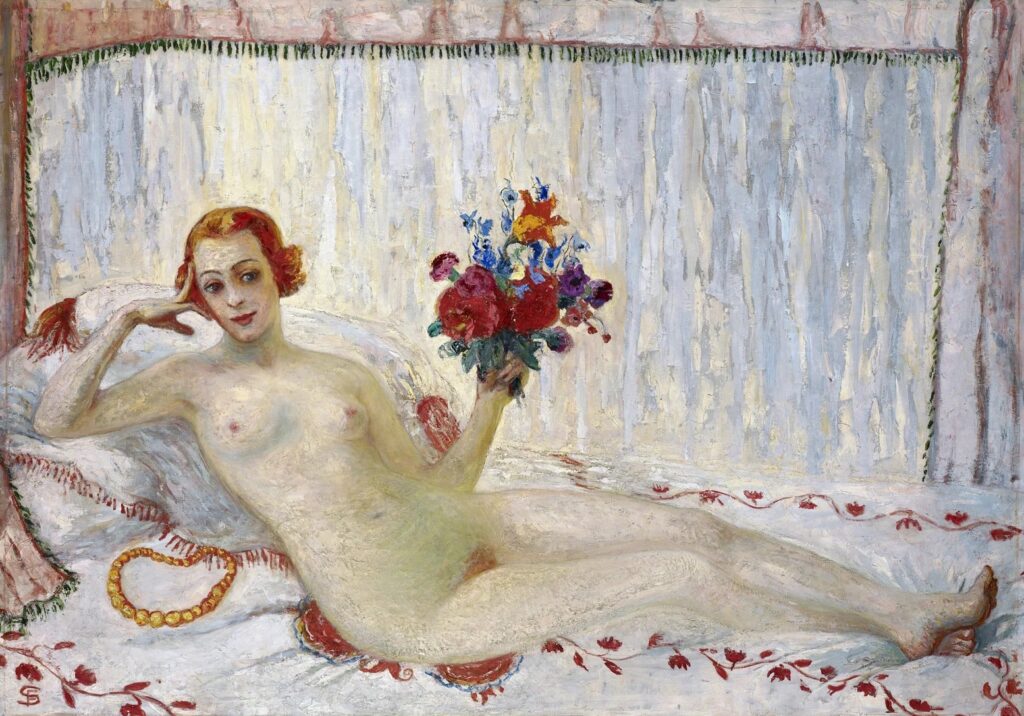
Florine Stettheimer, A Model (Nude Self-Portrait), ca. 1915, Avery Architectural and Fine Arts Library, Columbia University, New York City, NY, USA. Artsy.
A prominent and well-educated member of high society during the American Jazz Age, Florine Stettheimer was a painter, a poet, and a designer. Born into an affluent German-Jewish family, she lived a life of financial security, surrounded by family and friends who numbered amongst the great and the good of both art and business. So no, this is not the tale of an artist starving in a garret. This is art born of freedom. This is the story of a woman who made the most of every opportunity that came her way. A woman who seized the day—and how!
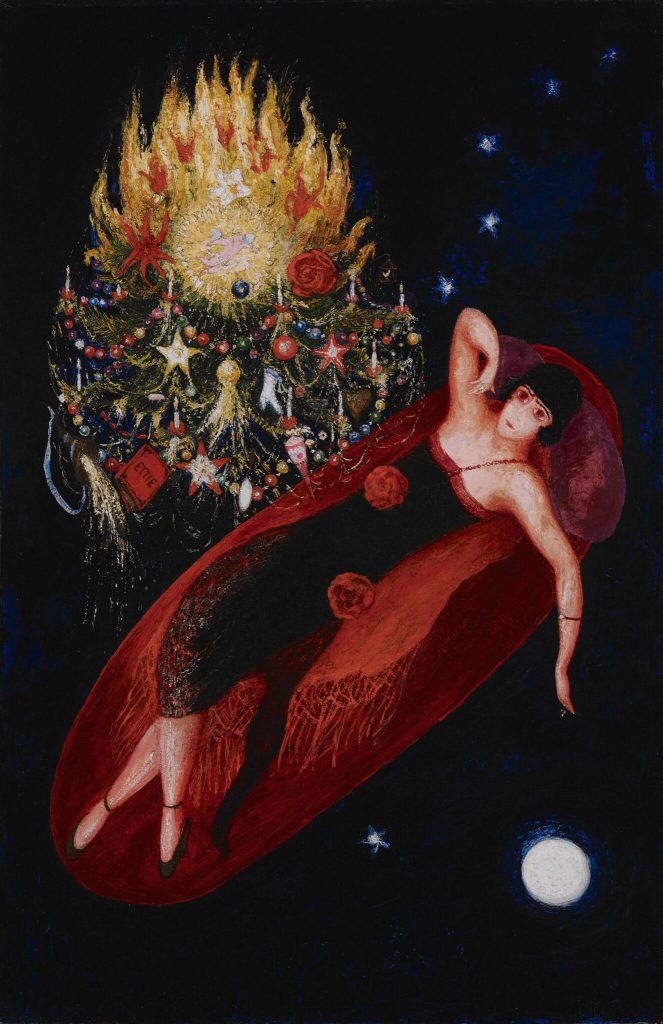
Florine Stettheimer, Portrait of My Sister, Ettie Stettheimer, 1923, Avery Architectural and Fine Arts Library, Columbia University, New York City, NY, USA.
After extensive travels around Europe with her family, Stettheimer settled in New York, evolving her own personal aesthetic, which encompassed her home, her lifestyle, and even her painting style. She regularly hosted parties for artists, gallery owners, and their wealthy patrons. Many of these scenes make it into her artworks. Her sisters make for fascinating studies too; take a look at the glorious reclining figure above, her sister Ettie.
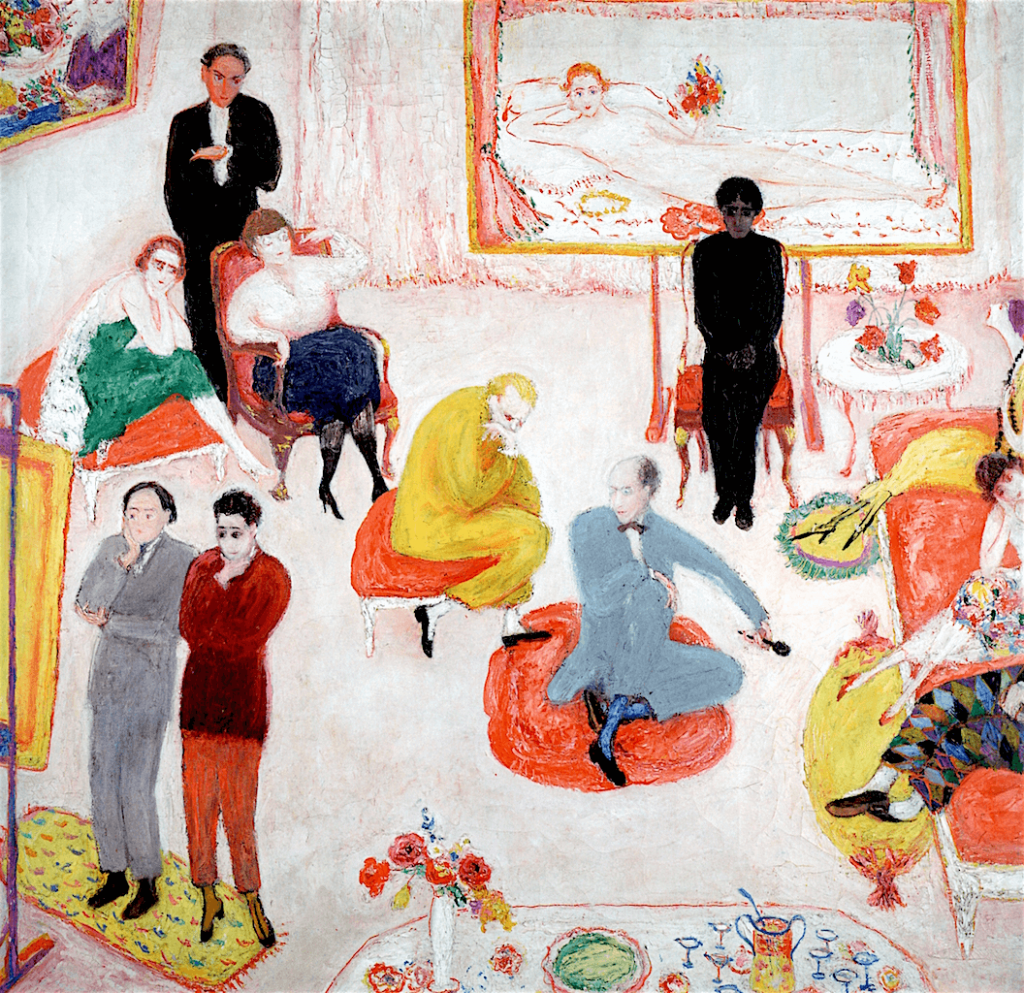
Florine Stettheimer, Studio Party (Soirée), ca. 1917–1919, Yale University Art Gallery, New Haven, CT, USA
In the image above, you can see a studio party she painted, where her own nude self-portrait hangs in the background! She celebrated women’s bodies in spaces that might be considered frivolous, such as parties, swimming, and even shopping (see image below). Her bright, packed canvases are full of sensory details. She also painted her LGBTQ friends at a time when they would not have been welcome in so-called polite society. Her contemporaries rated her art, and they loved her company. As a woman, and a frivolous one at that, art history has not been kind to her. She was dismissed as an eccentric old lady. As art lovers today, let’s reclaim her joyously feminine work.
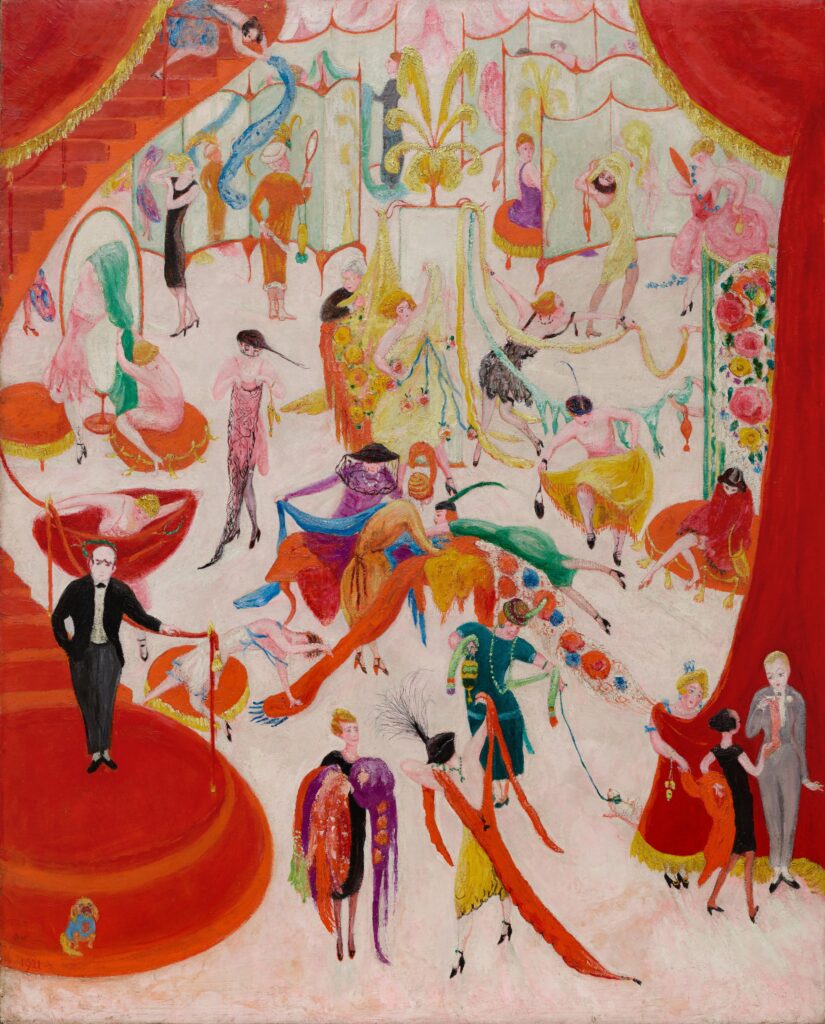
Florine Stettheimer, Spring Sale at Bendel’s, 1921, Philadelphia Museum of Art, Philadelphia, PA, USA
Given her intelligence and wit, Stettheimer must have known that making her art from a female point of view was provocative. She did not paint to please others; she painted to please herself. She was self-centered in a way that every male artist is (and has to be), but in a woman that was considered odd, even rude. But this artist was truly committed to her craft. Whilst attending the radical Art Students League of New York, she skilfully painted a number of female nudes. All preparation for her own nude self-portrait two decades later.
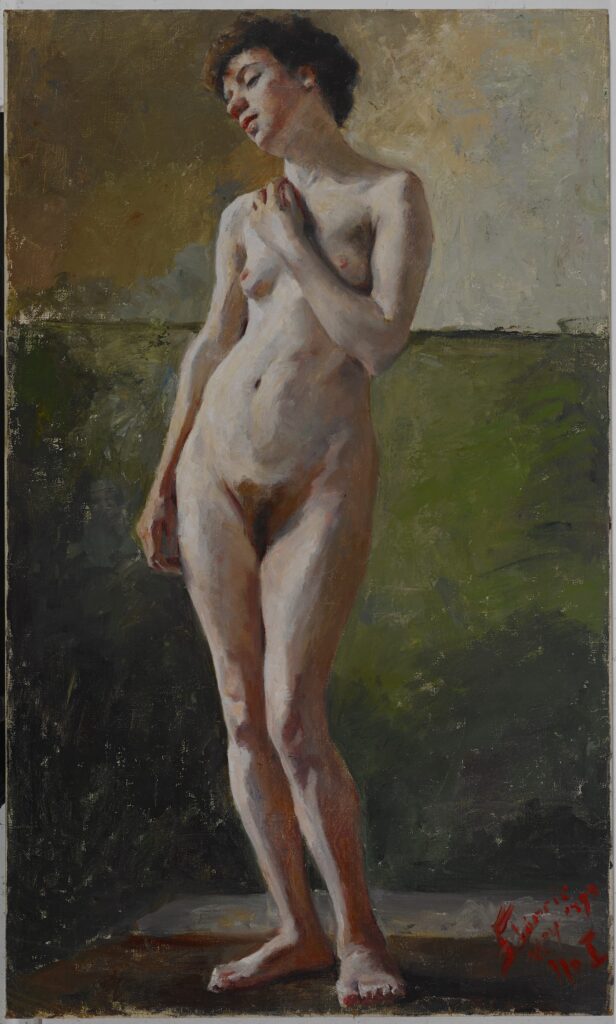
Florine Stettheimer, Nude Study, Standing with Hand to Shoulder, 1895, Avery Architectural & Fine Arts Library, Columbia University, USA
And so we move into a closer examination of that 1915 nude self-portrait. Completed in 1915, this is one of the first ever full-length nude self-portraits by a professional woman artist. Paula Modersohn-Becker had completed semi-nude self-portrait works a few years earlier. Are the amber beads lying on the bed in Stettheimer’s painting a reference to the beads worn by Modersohn-Becker in her 1906 painting Self-Portrait at 6th Wedding Anniversary?
Stettheimer revels in her subversive, female gaze. Her eyes are not modestly downcast; they are challenging and slightly amused. Stettheimer was 45 when she painted this—she challenges the viewer to dare to consider her “past her prime.”
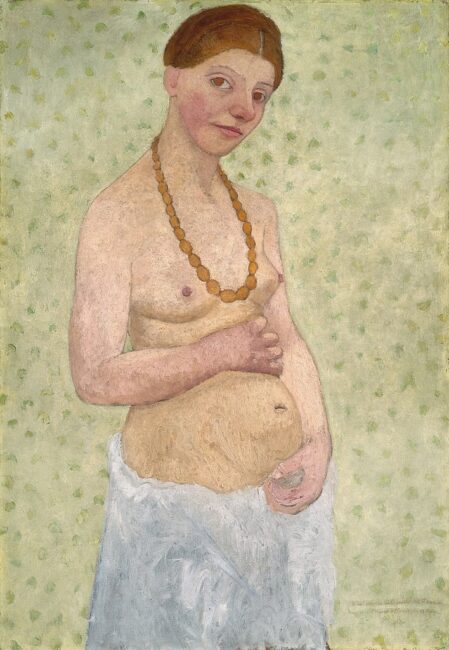
Paula Modersohn-Becker, Self-Portrait at 6th Wedding Anniversary, 1906, Paula Modersohn-Becker Museum, Bremen, Germany.
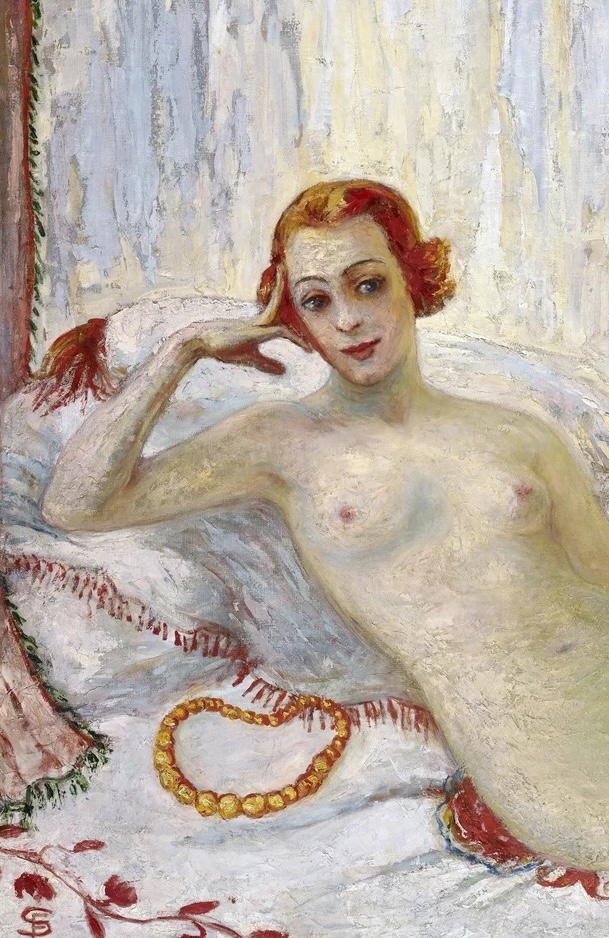
Florine Stettheimer, A Model (Nude Self-Portrait), ca. 1915, Avery Architectural and Fine Arts Library, Columbia University, New York City, NY, USA. Detail.


At this point in her life, Modersohn-Becker had decided to leave her husband and devote herself to her art. Her gaze is searching, questioning.
In this painting, Florine Stettheimer is relaxed, looking out with curiosity.
With a nod to her extensive art history knowledge, this nude was in part an homage to masterpieces she had seen and studied: Goya‘s The Nude Maja from 1797 and Manet‘s Olympia from 1863. In all three paintings, the woman is lounging sensually on pillows. Goya’s Maja is considered the earliest Western painting with visible female pubic hair. Stettheimer’s red pubic hair is a vivid reminder of her womanly sexuality. Maja, Olympia, and Stettheimer look out to meet our gaze. These are real women, not mythological figures.
Stettheimer’s crossed ankles mirror Olympia‘s, but she is not receiving flowers; she has her own. Olympia shocked audiences because she was obviously a sex worker. Stettheimer shocks because she is unapologetically a modern woman, in control of her own body and how she chooses to represent it. This nude is wealthy, middle-aged, and exudes confidence.
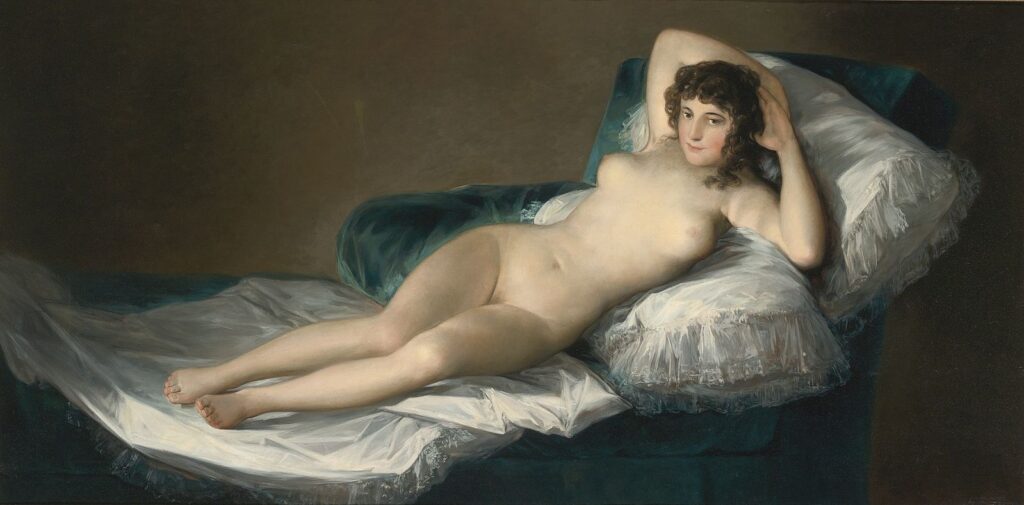
Francisco Goya, The Nude Maja, 1797–1800, Museo del Prado, Madrid, Spain
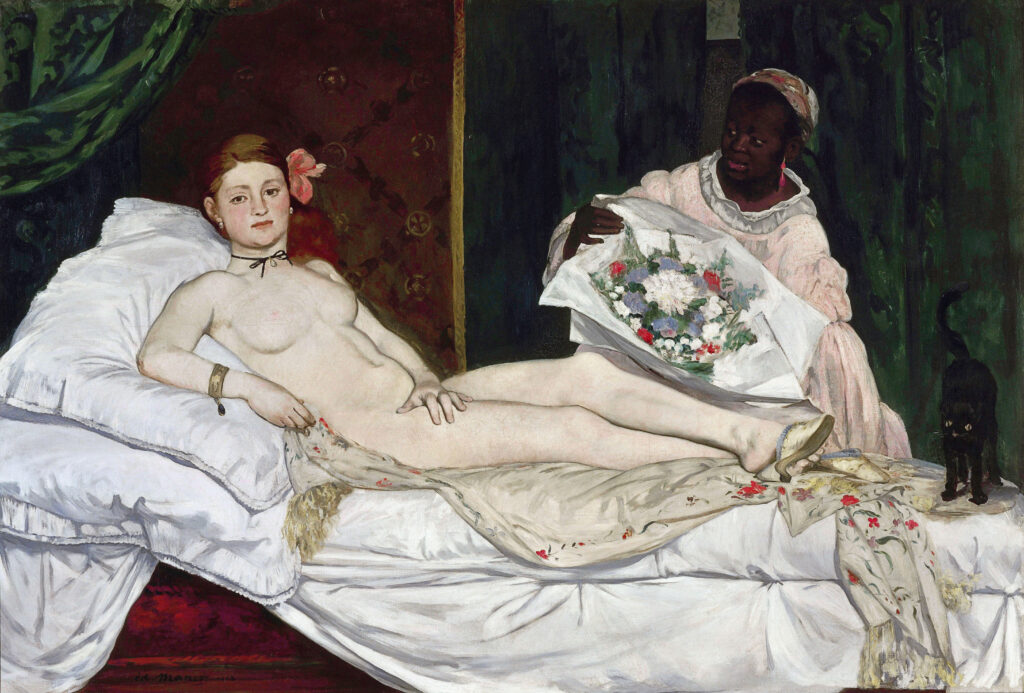
Édouard Manet, Olympia, 1863, Musée d’Orsay, Paris, France.
This painting has influenced other female painters such as Mary Cassatt and Berthe Morisot.
Olympia’s gaze is cool and confrontational. She created a huge public scandal when first exhibited in France.
This artist never seemed particularly interested in selling her work. Yes, her wealth meant she didn’t need to sell it to live, but more than that, she wanted to keep her precious creations close by. Peopled by her loved ones, her canvases were a personal record of her life. The poet Mary Oliver said, “Tell me, what is it you plan to do with your one wild and precious life?” Florine Stettheimer had her answer—she lived her best life and enjoyed every minute of it. A lesson for us all!
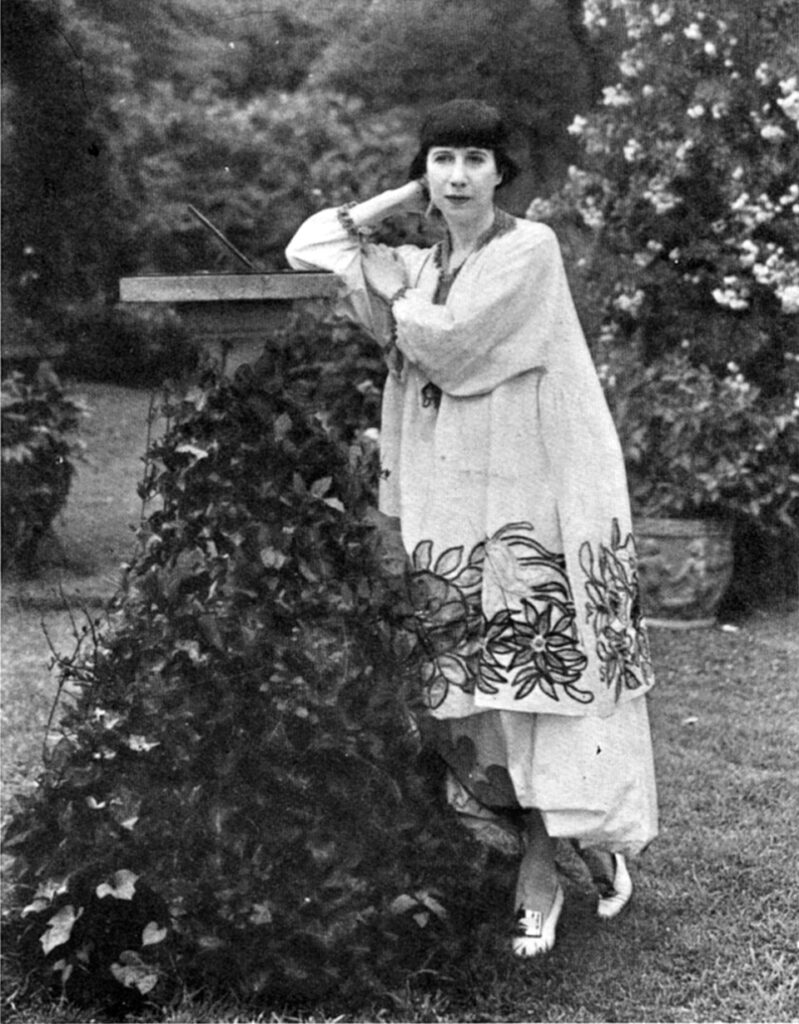
Florine Stettheimer in Bryant Park, between 1917 and 1920, Wikimedia Commons (public domain).
P.S. Florine Stettheimer’s works are featured in both of our Women Artists postcard sets, available in our online shop. You can also get a museum-quality print of her Sunday Afternoon in the Country!
DailyArt Magazine needs your support. Every contribution, however big or small, is very valuable for our future. Thanks to it, we will be able to sustain and grow the Magazine. Thank you for your help!

Candy's remote, rain-soaked farmhouse clings to a steep-sided valley in rural Wales. She raises cats, chickens, and children with varying degrees of success. Art, literature, and Lakrids licorice save her sanity on a daily basis.

Judith and Holofernes is a Caravaggio masterpiece that captures Biblical murder and drama. Rarely has death been captured so intensely and violently...
James W Singer 13 September 2026
Winslow Homer (1836–1910) was one of the leading American Realist painters. His painting The Veteran in a New Field is a masterpiece of late...
James W Singer 30 August 2026
At first glance, A Goldsmith in His Shop (1449) appears to depict an ordinary visit to a jeweller. Yet Petrus Christus transformed an ordinary...
Shivani Gupta 23 August 2026
With Virgin and Child as a cornerstone of her reputation, Elisabetta Sirani should be recognized as an important Italian Baroque artist. Far more...
James W Singer 16 August 2026