1. A Finnish Artist
When Helena Sofia (Helene) Schjerfbeck (1862-1946) started out on her career, art education in her native Finland was in its infancy. There was no official school of painting and artists had either the choice of private teachers or traveling abroad. Schjerfbeck showed early talent, and was enrolled at the Drawing Academy in Helsinki at the age of 11. By the age of 17, she was exhibiting and winning prizes at the Finnish Art Society (which became the country’s Academy).
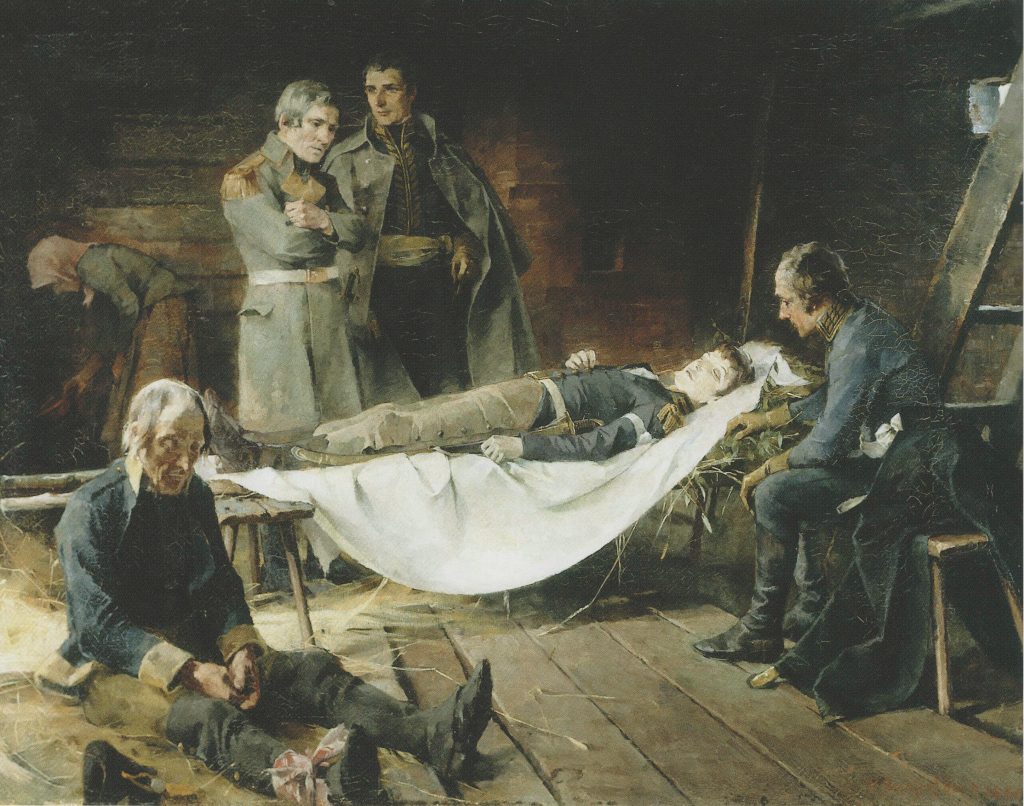
This was a period of growing Finnish nationalism, as the country tried to assert its independence from Russian rule and celebrate its distinctive cultural identity. Helene Schjerfbeck’s early work exploited this with a series of history paintings, including The Death of Wilhelm von Schwerin, the first version of which she painted in 1879. A hero of the 1808–1809 Finnish War between Sweden and Russia, which had established the Grand Duchy of Finland, Schwerin had died of his wounds aged only 15.
As a woman artist, Schjerfbeck was defying convention by choosing a heroic, historical subject. However, in this, and other works like the Wounded Warrior in the Snow, she focuses on human tragedy rather than military glory. Despite being painted firmly within the language of 19th-century Realism, the limited palette and harrowing subject, particularly Schwerin’s ghostly and dehumanizing pallor, might be seen to foreshadow Schjerfbeck’s later work.
2. A Student Abroad
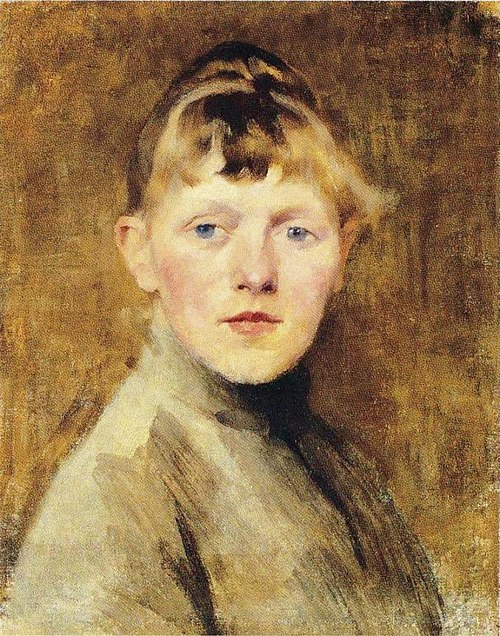
Like many of her compatriots, Schjerfbeck left Finland to pursue her studies: in 1880, having been awarded a grant by the Academy, she arrived in Paris. There, and in summer trips to Pont Aven in Brittany and St Ives in the UK, she soaked up the work of the Impressionists and influential naturalist, Jules Bastien-Lepage. The first of Helene Schjerfbeck’s many self-portraits—she painted over 40 during her lifetime—shows her with a simple sincerity which seems straight out of one of Lepage’s “peasant” paintings. There is delicate detailing on the face, but her dress and the background are barely sketched in.
Schjerfbeck is often represented as a solitary, even lonely figure, but during her student years, she was part of a lively artistic circle. She lived with a group of Finnish women painters, including lifelong friend, Helena Westermarck. Along with many other foreign artists, she attended the popular Académie Colarossi and exhibited at the Salon. She traveled to St Ives at the invitation of Marianne and Adrian Stokes.
3. St Ives and Naturalism
Schjerfbeck’s most popular work in Finland today is The Convalescent, painted during her stay in St Ives in 1888. Its insignificant genre subject, given weight by the size of the canvas, shows a characterful, impish girl clearly bored by her enforced idleness. Given that Schjerfbeck herself suffered a childhood fall that left her with a permanent limp, there may well be a biographical element. It has also been suggested that the child represents the adult Schjerfbeck, recovering from a recent, failed engagement. Equally, however, children in everyday interiors were popular among Lepageists, and sick children were a common theme throughout 19th-century art.
The Convalescent was initially criticized for its excessive realism. It is full of the sort of extraneous detail which Schjerfbeck would later eliminate from her work, whilst at the same time having a cropped, cluttered composition which suggests it is a casual “slice of life.”
4. Impressionist Landscape
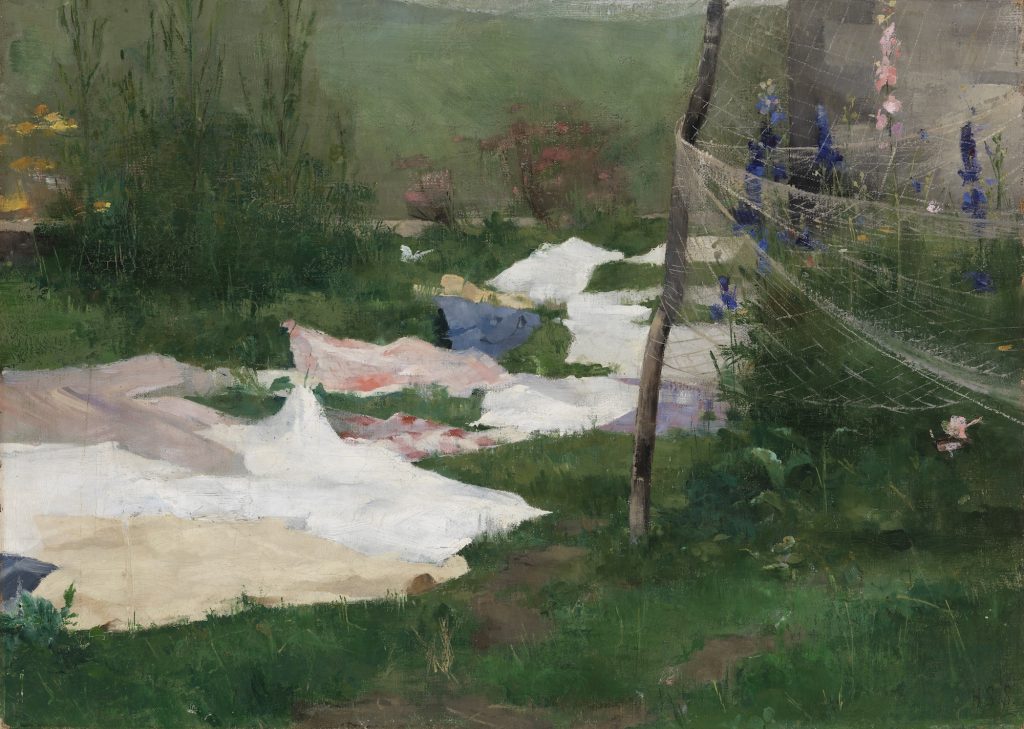
Impressionist and Post-Impressionist influences can also be seen in Schjerfbeck’s work during her Parisian years. Clothes Drying takes a bright, breezy day and manipulates it into a claustrophobic composition of sharp angles and restricted views, which was criticized at the time for its lack of subject. There is no sky, no point of focus but rather an absence at the center of the canvas where the crisp, white sheets look like empty spaces in the grass. The palette is reminiscent of Berthe Morisot’s cool blues, greens, and whites. The technique is similarly loose with an uncharacteristic interest in movement, exemplified by the butterfly. One senses that the paint itself and the abstracted shapes interest Schjerfbeck far more than any specific subject.
Later, she would visit Italy, a trip funded so that she could copy Renaissance works to provide examples for students back in Helsinki. She also painted landscapes there, further reduced in depth and form. By then, however, she had abandoned all interest in naturalism and her Italian paintings take on a misty, static dreaminess.
5. Going Her Own Way—Reduction
In 1902, Schjerfbeck moved with her mother to the small Finnish town of Hyvinkää. She had tried teaching in Helsinki, silent and forbidding according to her students, and had grown frustrated by her inability to concentrate full-time on her art. Now, thanks to her mother’s small widow’s pension, Helene Schjerfbeck could devote herself to painting.
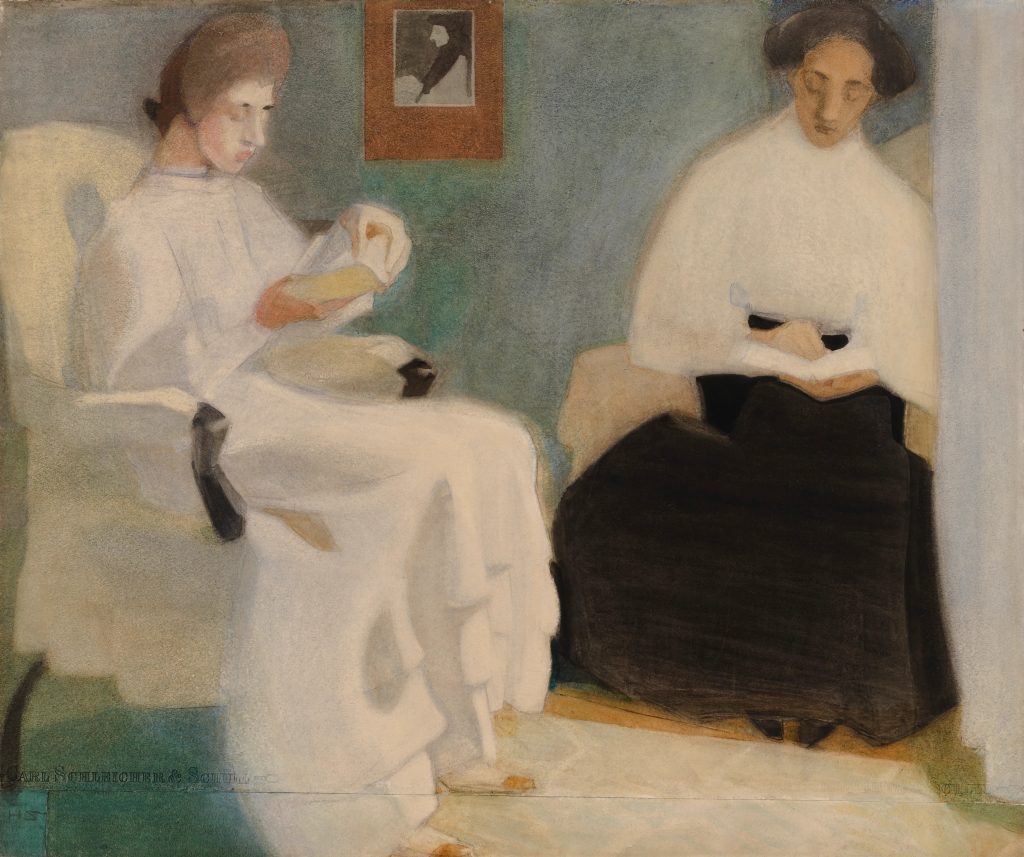
Using local people and her mother as models, she developed the simplified, abstracted style which would, in ever more exaggerated form, dominate her work for the rest of her life: “the mere hint,” as she described it. In Girls Reading, the two figures have become insubstantial, space is concertinaed, and the restricted palette is applied to deliberately confuse the eye. The woman’s white dress has grey shadows creating a sense of form, but the strong black of the chair arms breaks this down. Meanwhile, Schjerfbeck includes a Holbein portrait on the back wall to remind us that she is working within, but playing with, artistic tradition.
6. Going Her Own Way—Removal
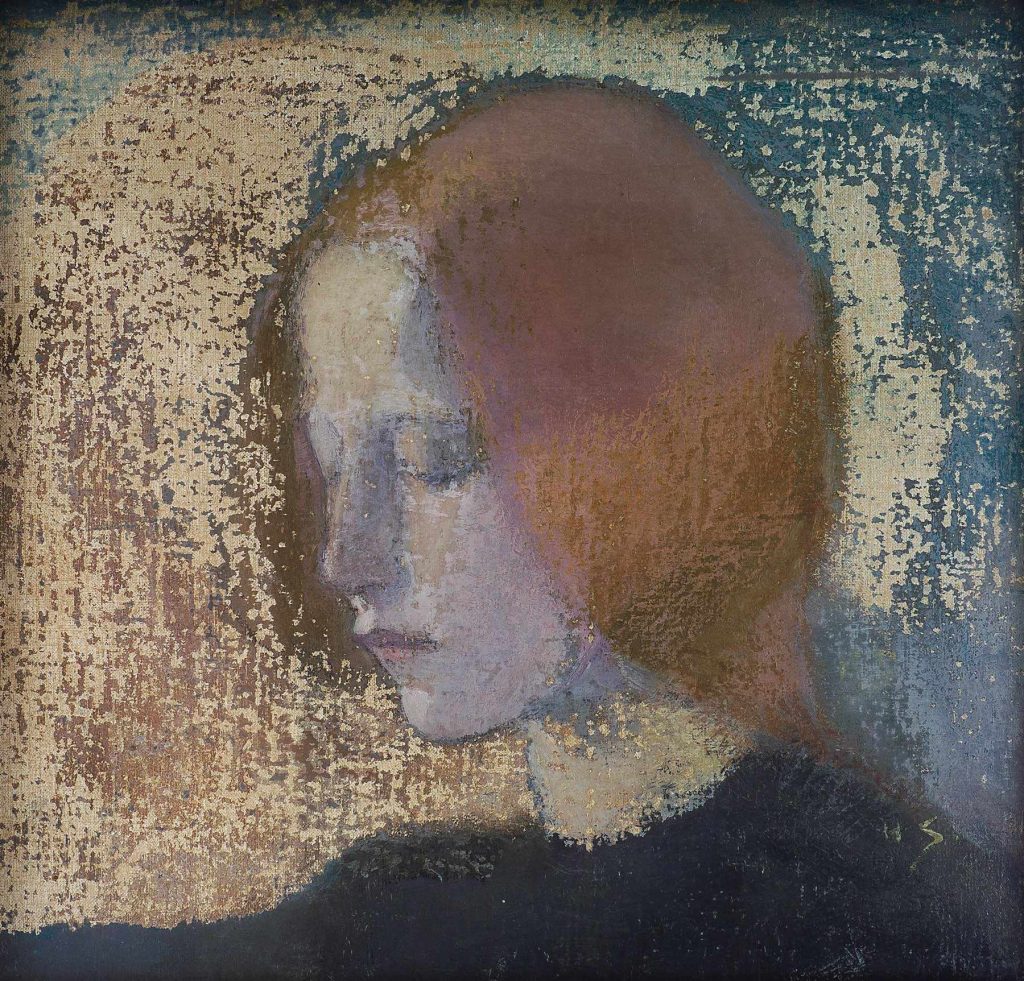
The other significant development in Schjerfbeck’s practice at this time involved her application of materials. Increasingly, she saw paint as something to be removed as much as applied. Using blades, styluses, and sandpaper, she would scrape away at the paint surface, exposing the weave of the canvas and creating scratches and channels into which she could then work thinned colors. Increasingly, too, Schjerfbeck mixed materials, working charcoal, watercolor, and tempera alongside her oils.
A Fragment was an early experiment with this technique. The sharp profile and deliberately aged background suggest that perhaps Schjerfbeck was initially inspired by Early Renaissance frescoes she had seen in Italy. The head has a spiritual, almost Madonna-like quality. Equally, however, Edvard Munch‘s Sick Child exploits a similar profile and distressed surface, and Odilon Redon‘s profile heads share the same calm introspection.
7. Myth-making Schjerfbeck
Schjerfbeck’s first biographer was fellow artist Einar Reuter, a lifelong friend and confidante. Although he was 18 years her junior, Schjerfbeck initially harboured romantic feelings for him and was devastated when he married. She painted him several times, most notably in the affectionately jokey guise of The Sailor. It was apparently created as he was suffering from sunburn during the two weeks in summer that they spent painting together in the coastal town of Tammisaari. There is a muscle-man sensuality to the sinuous way she represents Reuter, who is at once a very physical, active presence and barely there: a mere outline floating against thin, scratchy paint.
Reuter’s biography (initially written in Finnish, which the Swedish-speaking Schjerfbeck was unable to read) promoted the idea that she lived a life of lonely isolation, that she suffered from bouts of depression, and that her art was a product of this instability and insecurity. It was an interpretation which seemed borne out by her distanced, insubstantial, increasingly monochrome works.
8. Self-Image
The reality is more complex. Schjerfbeck did suffer from depression and did prize her own company. She was, however, far from isolated. Her work was championed by art dealer Gösta Stenman, who not only got her sales and exhibitions but also ensured she kept in touch with developments in the European avant-garde. Schjerfbeck obsessively collected art books and contemporary magazines. She consciously referenced artists of the past, notably El Greco, and the present, particularly the work of Amedeo Modigliani.
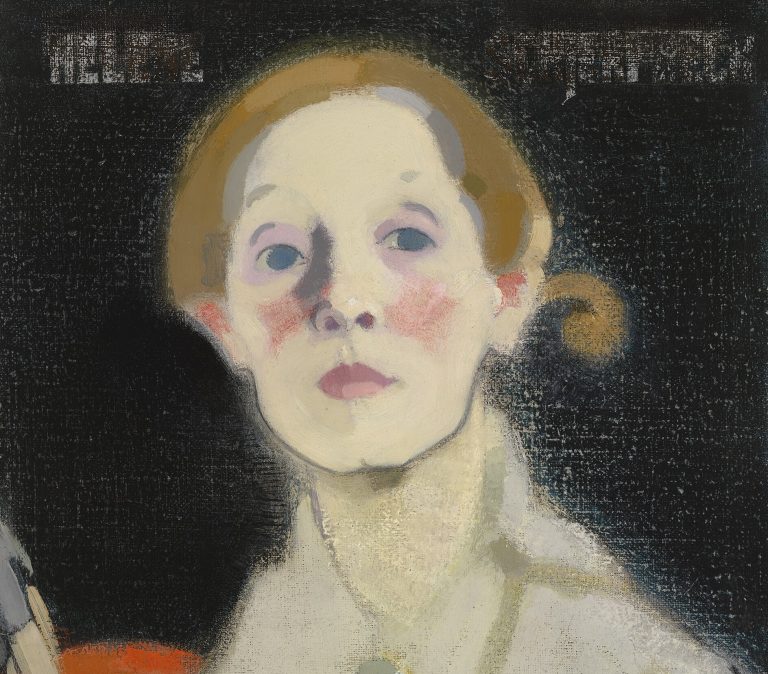
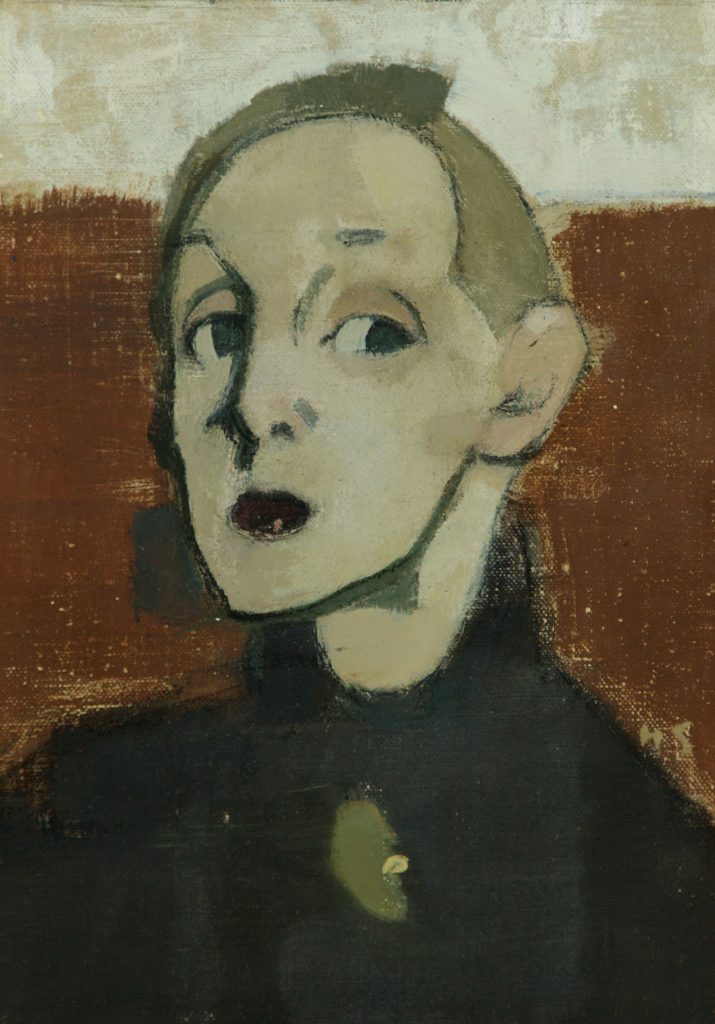
Both these influences can be seen in Self-Portrait in Black Dress, one of a number that show Schjerfbeck as a strong, modern, albeit rather wary, woman. She typically focuses solely on her head and shoulders, against a minimal background. Here, the strong outlines and heavy shadow under her chin give a graphic simplicity, whilst the sleek hair, dark lips, and prominent brooch have a fashionable chic. Although it is sometimes suggested that Schjerfbeck hides behind a stylized mask, this seems more like defiant confidence than defensiveness.
9. Surprising Still Life
Color is not something readily associated with Schjerfbeck’s work, but she was constantly, sometimes surprisingly, experimental. Throughout her career, in a number of still lifes and flower paintings, she explored different artistic idioms, exploiting and manipulating these most traditional of genres. Her works range from naturalistic studies of flowers to flattened, restricted-palette simplifications.
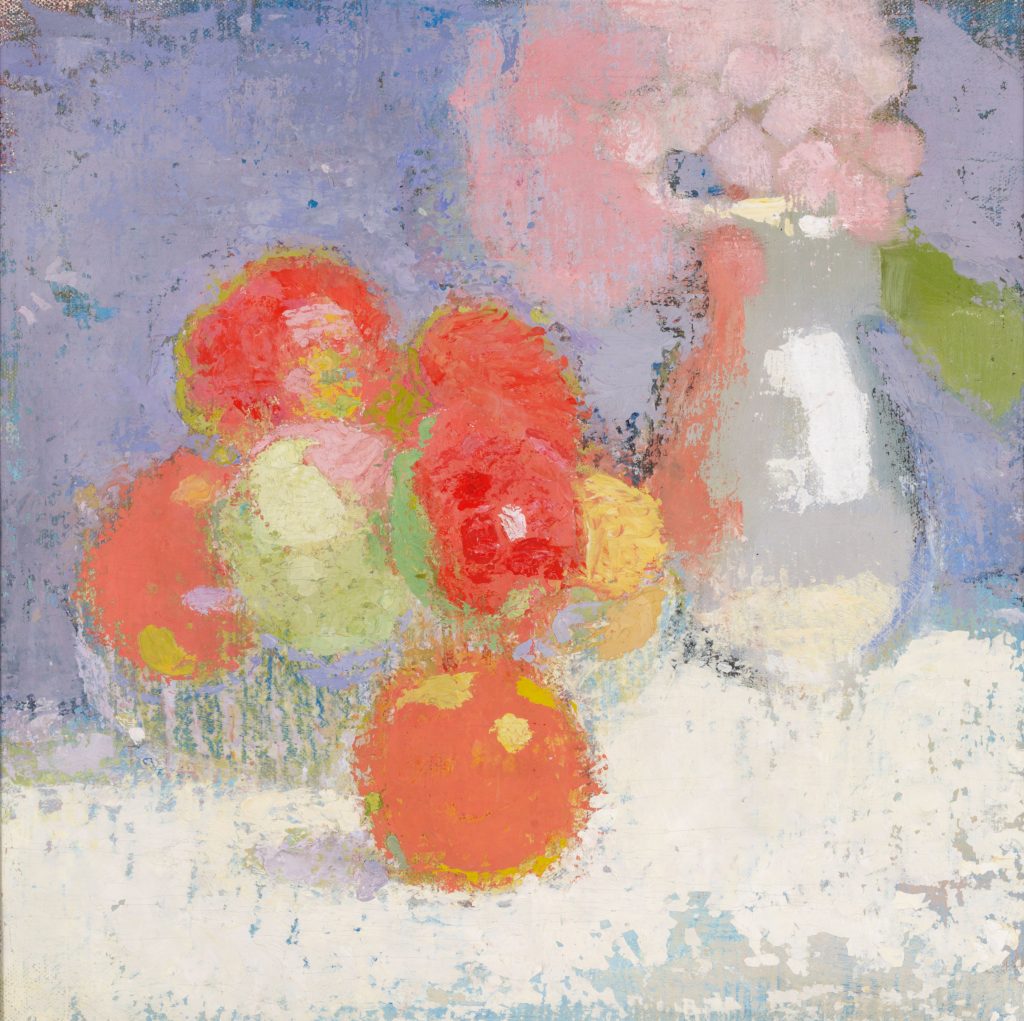
In 1915, in the midst of winter and the midst of World War I, Schjerfbeck defiantly employs vivid, joyful color as she shows apples spilling out of a bowl, as bright as Christmas baubles. The background dazzles like crisp, sunlit snow, creating a haze over the whole scene as if our eyes are struggling to deal with the light. In direct challenge to Paul Cezanne‘s interest in space and form, Schjerfbeck reduces her fruit to discs of woolly-edged color, highlighted with single brushstrokes. The only solidity comes from the paint itself, uncharacteristically thick and substantial.
10. Facing Mortality
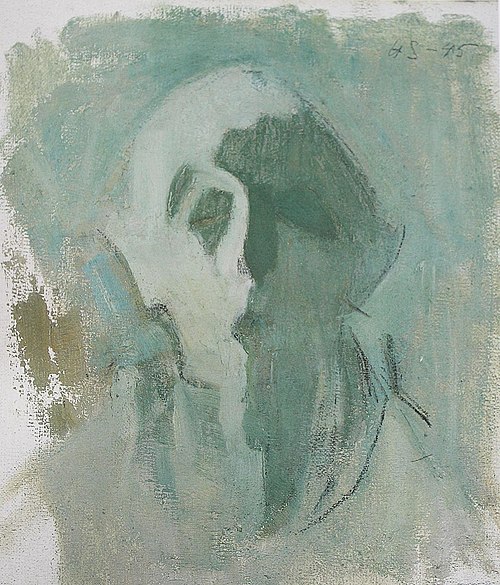
Schjerfbeck’s most extraordinary works are a series of late self-portraits, which are unique in the raw honesty with which she represented her aging features and accepted the reality of her own mortality. Thinly painted and monochrome, these heads float in undefined space, ghostly and skeletal, with Schjerfbeck’s features so reduced that they become generalized representations of humanity. Self-Portrait, Light and Shade may be eerie and haunting but it is remarkably unsentimental and unselfpitying.
Helene Schjerfbeck is a national hero in Finland, but her art remains relatively unknown elsewhere. She does not easily fit into any art historical category and instead of being championed, her unique style and her truly revolutionary self-portraits have been seen as oddities. In a gendered reading, her work has been discussed in terms of her mental health rather than her innovative use of techniques and materials. Thankfully, this is changing. With exhibitions in London in 2019 and New York in 2026, Schjerfbeck is finally getting the recognition her work deserves.
If you are a fan of art made by women artists, be sure to check out two sets of our Women Artists postcards—both sets featuring works by Helene Schjerfbeck.
All the works presented in this article are part of Seeing Silence: The Paintings of Helene Schjerfbeck, currently on view at the Metropolitan Museum of Art in New York, USA, through April 5, 2026.







_-_Google_Art_Project.jpg#/media/File:Jules_Bastien-Lepage_-_Pas_M%C3%A8che_(Nothing_Doing)_-_Google_Art_Project.jpg)

.jpg#/media/File:Helene_Schjerfbeck_-_Cypresses,_Fiesole_(1894).jpg)
.jpg)

.jpg#/media/File:Helene_Schjerfbeck_-_Girl_with_Blue_Ribbon_(1943).jpg)


.jpg#/media/File:Helena_Sofia_Schjerfbeck_-_Pansies_in_a_Japanese_Vase_(15491570896).jpg)
.jpg#/media/File:Red_Roses_in_a_Glass_Bowl(112233).jpg)
