Turner and Constable: Rivals and Originals at Tate
Two of Britain’s most famous Romantic painters meet again in Tate Britain’s new exhibition. Turner & Constable: Rivals and Originals...
Sandra Juszczyk 8 December 2025
At Fundació Joan Miró in Barcelona, a new exhibition sheds light on an often-overlooked chapter of modern art: the transatlantic dialogue between Miró and a generation of American artists who redefined painting in the 20th century. Miró and the United States brings together over 130 artworks in a magnificent curatorial narrative that transcends geography and captures the shared search for freedom that united Joan Miró with artists active in the United States. This ambitious project, shaped over four years of intense work, offers a unique opportunity to experience some of the most powerful and thought-provoking artistic dialogues of the 20th century.
Joan Miró in Carl Holty’s studio, in front of the mural painting for the Terrace Plaza Hotel in Cincinnati. Photo: Arnold Newman © Arnold Newman / Getty Images. Press materials.
The show is framed within the 50th anniversary of the Foundation and co-organized with The Phillips Collection in Washington, its next destination after Barcelona. The exhibition seeks to expand Miró’s legacy beyond Europe and to trace the making of his international reputation. Also, it reveals how, as the center of the art world moved from Paris to New York in the postwar years, Miró found in the United States a space of openness and possibility, a significant contrast to the repression he faced in Francoist Spain.
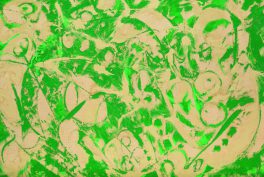
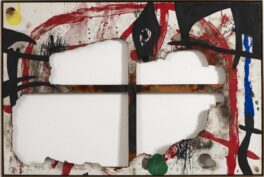
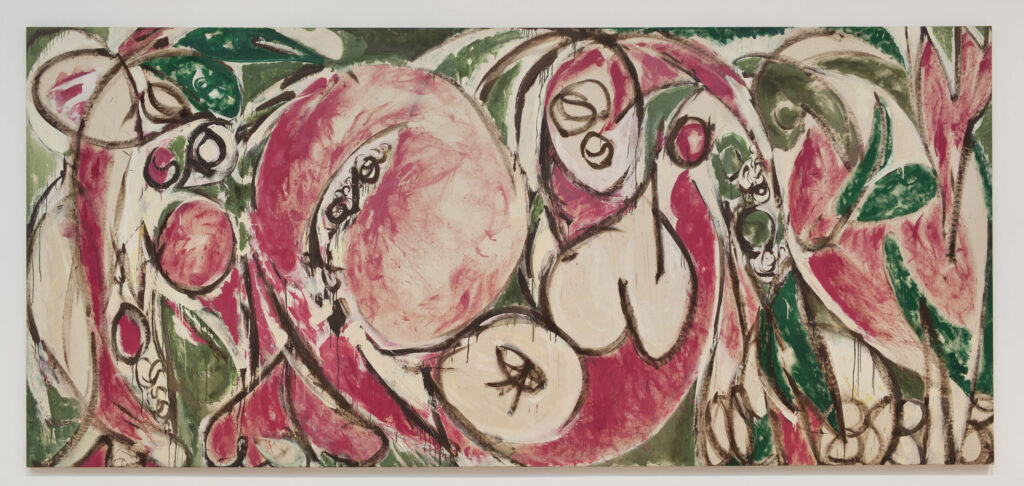
Through carefully staged dialogues between Miró and artists such as Lee Krasner, Helen Frankenthaler, Jackson Pollock, Janet Sobel, Louise Bourgeois, and Mark Rothko, the exhibition offers more than a historical reading. It becomes a living conversation between generations, genders, and forms, amplified by Josep Lluís Sert’s luminous architecture. An exhibition that has been in the making since 2021, driven by the powerful idea of deeply exploring this two-way exchange, something that had never been done before with such precision.
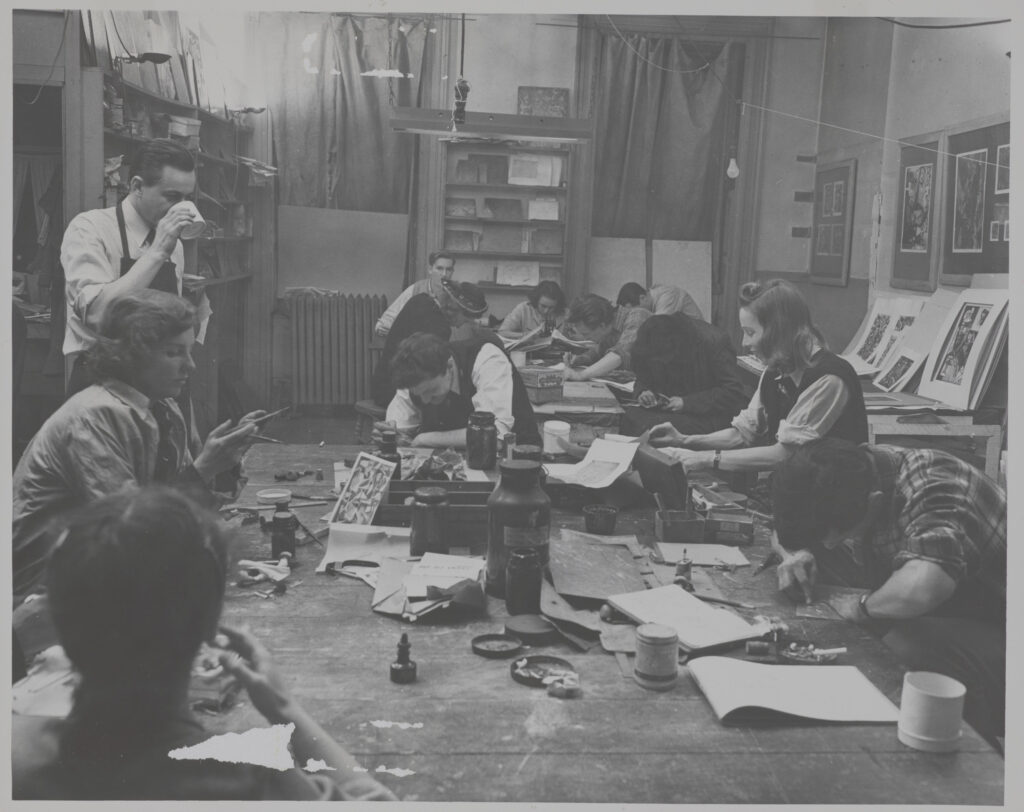
Atelier 17, meeting point for European and American artists in New York. Martin Harris (SFAM). Fine Arts Museums of San Francisco. Foto: © Martin Harris. Press materials.
DailyArt Magazine had the opportunity not only to visit the exhibition but also to speak with Dolors Rodríguez Roig, one of its curators, who shared key insights into its conception and design. The result is a closer look at some of the most compelling dialogues that capture the spirit and ambition of the new exhibition at Fundació Joan Miró.
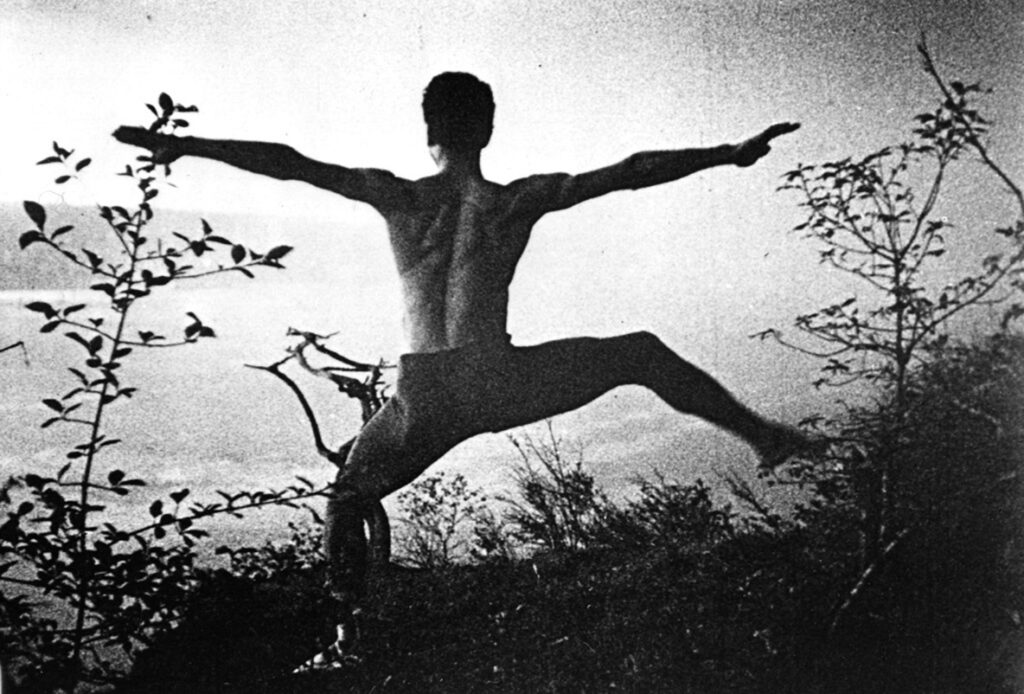
As curator Dolors Rodríguez Roig explains, the most striking moments in Miró and the United States are not confined to a single room but created through architecture itself. For example, from Room Three, Sert’s architectural design opens a line of sight that connects the works of Lee Krasner in Room Eight with those of Louise Bourgeois and filmmaker Maya Deren in Room Three. This visual bridge exemplifies how the exhibition breaks away from the idea of self-contained gallery “capsules” to create a more fluid and spatial dialogue. The effect unfolds across the building and links artists through light, distance, and perspective, creating a rich path that amplifies across the visit.
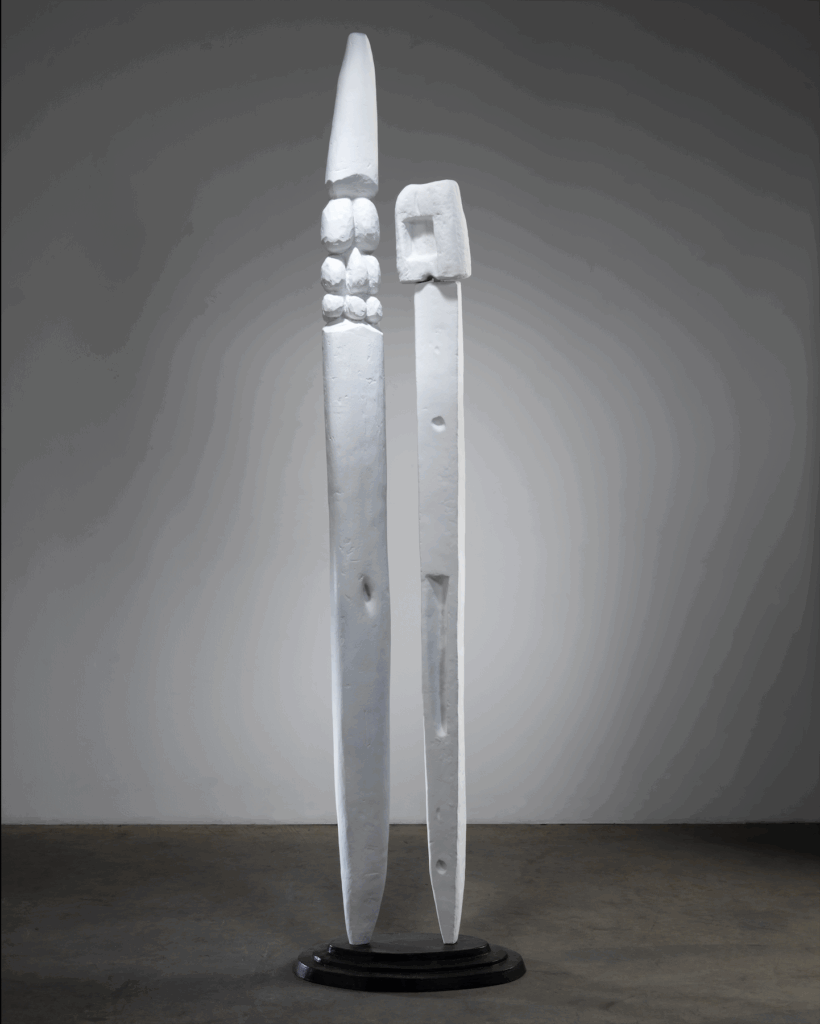
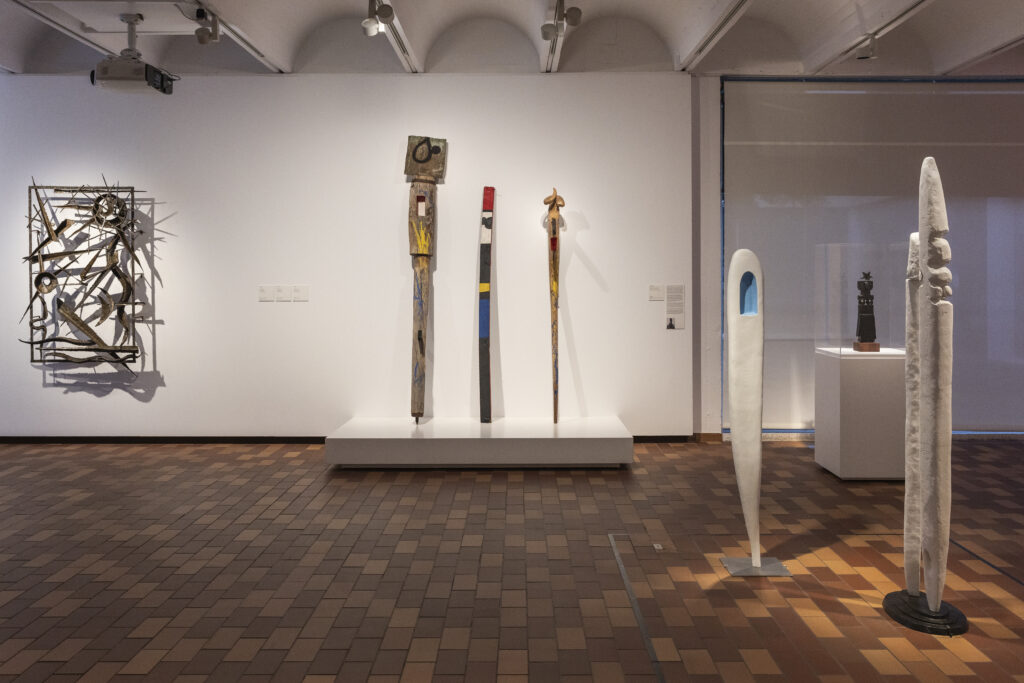
At the same time, this connection reflects another important achievement of the show: its attention to the women who shaped 20th-century abstraction. Out of 49 featured artists, 19 are women. In fact, all of them were active participants in their own artistic scenes, although they were less visible in critical discourse and major exhibitions. Each has been chosen in relation to Miró, who serves as a connective thread: some knew him personally, others took his language as a reference. For example, in case of Louise Bourgeois, the two artists met in Paris in 1937. The exhibition brings together the dialogue between Miró’s Les Trois Majestés and Bourgeois’s early Personages series (see the image below).
Through this lens, the show not only repositions Miró in a broader transatlantic context but also reconstructs a more inclusive network of artistic exchange, supported by archival materials and documentation that reveal the depth of these creative dialogues.
Rooms of the exhibition Miró and the United States. Curators Marko Daniel, Matthew Gale, and Dolors Rodriguez Roig. Artworks (from left to right): Herbert Ferber, The Sun, the Moon, and the Stars II, 1956; Joan Miró, His Majesty the King, His Highness the Prince, and Her Majesty the Queen, 1974; Louise Bourgeois, Untitled, 1947–1949, and Listening One, 1947; Louise Nevelson, Archaic Figure with a Star in Her Head, 1949–1950. Photo: Davide Camesasca. © Fundació Joan Miró.
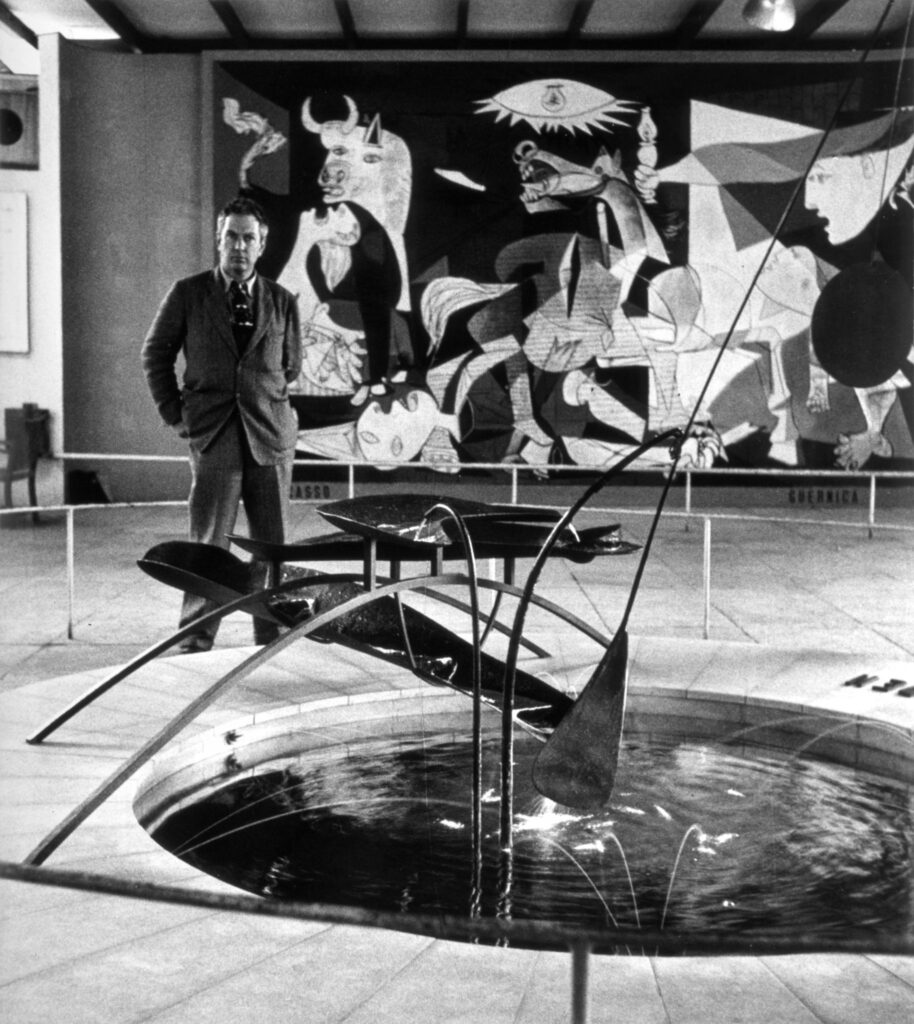
In 1928, while in Paris, Alexander Calder wrote to Miró to introduce himself personally. From that encounter grew a lifelong friendship and, for Joan Miró, a vital bridge to the United States. Actually, Miró would later say of Calder, “We are like brothers.”
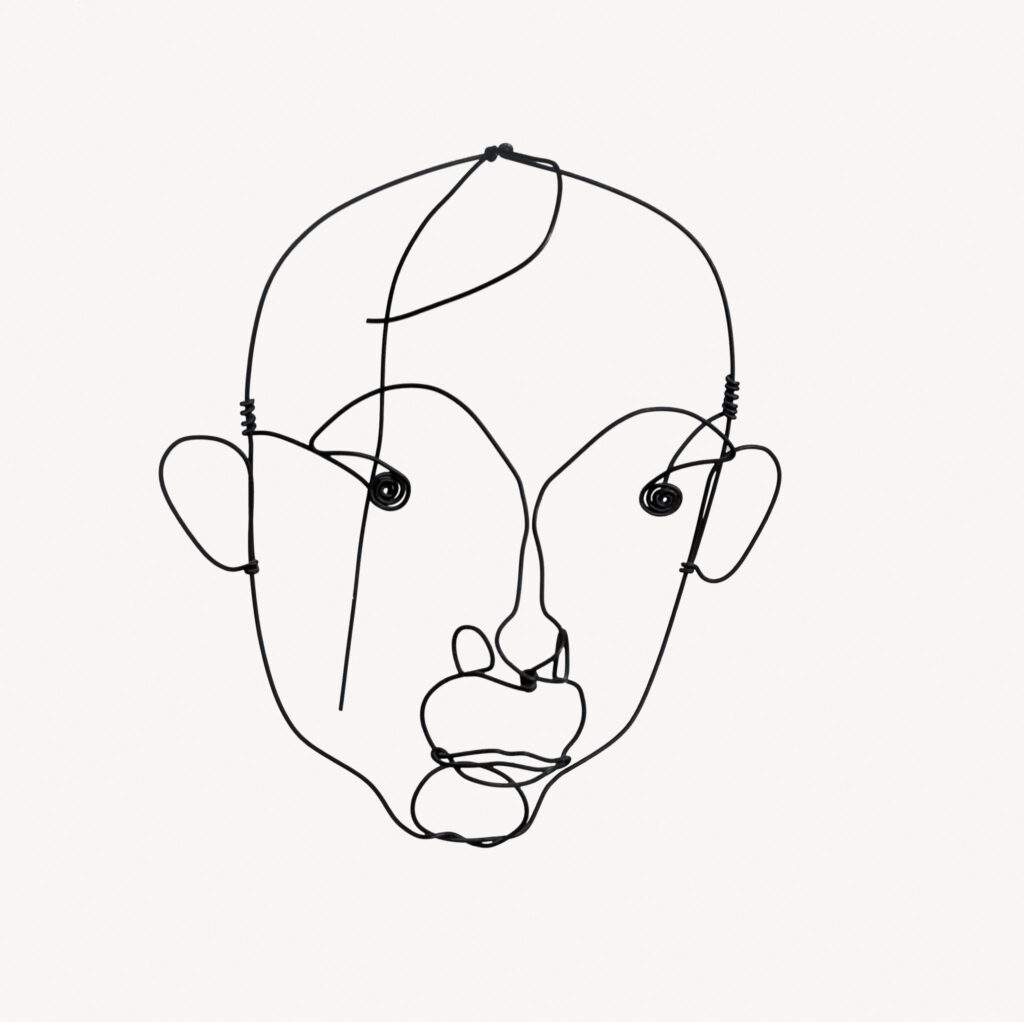
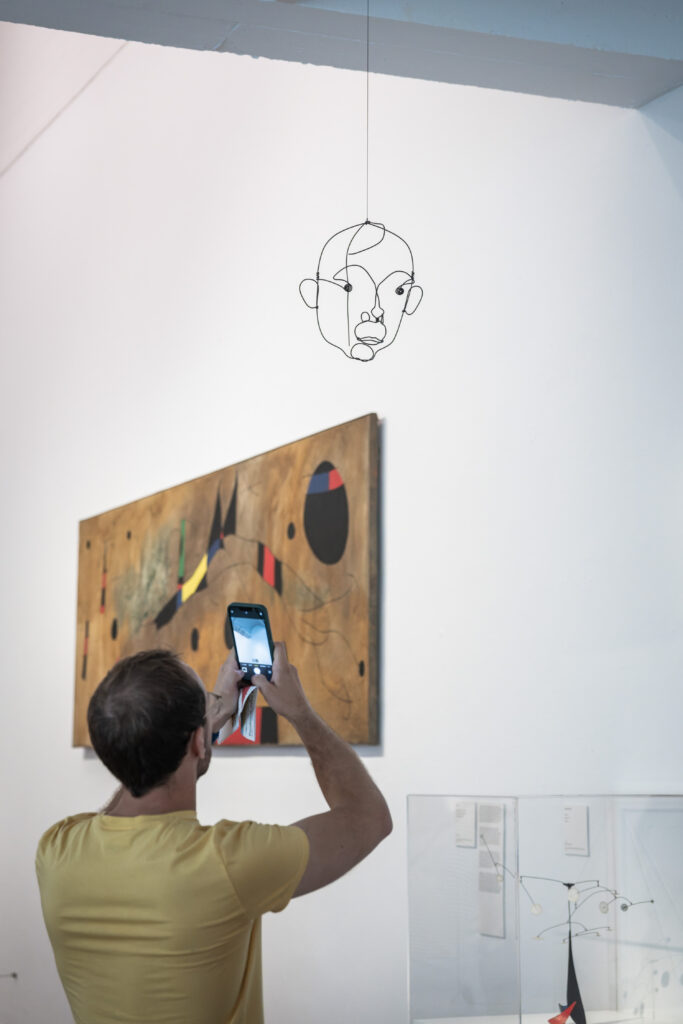
Room Two of the exhibition opens precisely with this story of artistic companionship and with a delicate wire portrait of Miró created by Calder, a symbol of their creative bond. This gesture marked the start of an exchange that would last decades, both in art and friendship. In 1947, when Miró arrived in the United States with his wife, Pilar Juncosa, and their daughter Dolors, the Calders welcomed them at the airport. Soon after, the two artists traded artworks: Calder’s Polygons Noirs for Miró’s Women and Birds in the Night.
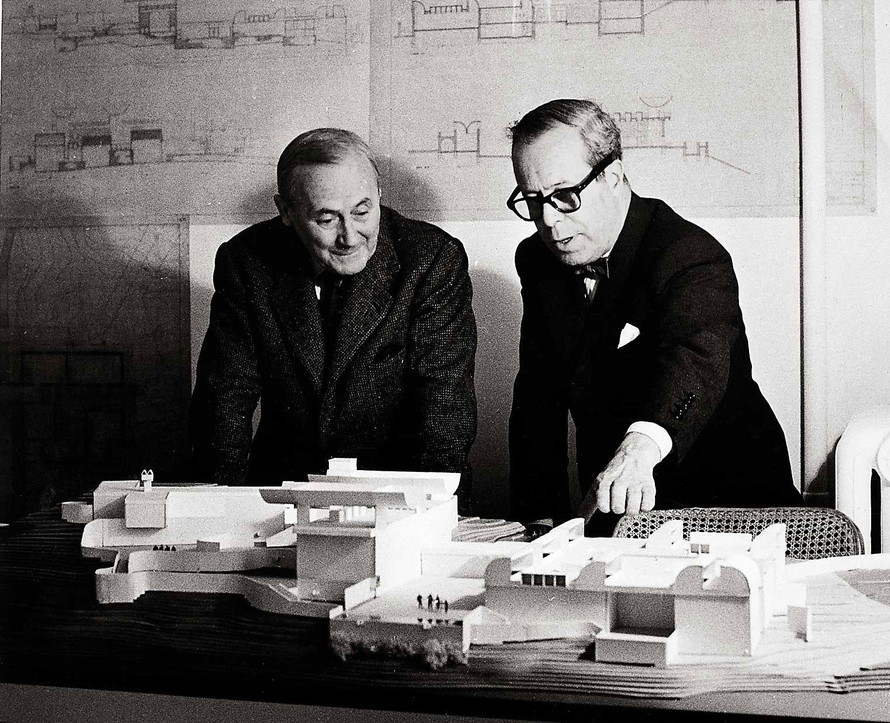
Their connection expanded into a triangle of collaboration with architect Josep Lluís Sert, who linked both artists through his transatlantic career. Sert, a close friend to both, would later become Dean of Architecture at Harvard University and a key figure in Joan Miró’s introduction to the American art scene. His architecture in Fundació Joan Miró provided not just a physical space but a shared vision of movement, balance, and light qualities that resonate throughout this room, merging art and architecture into a rhythmic conversation.
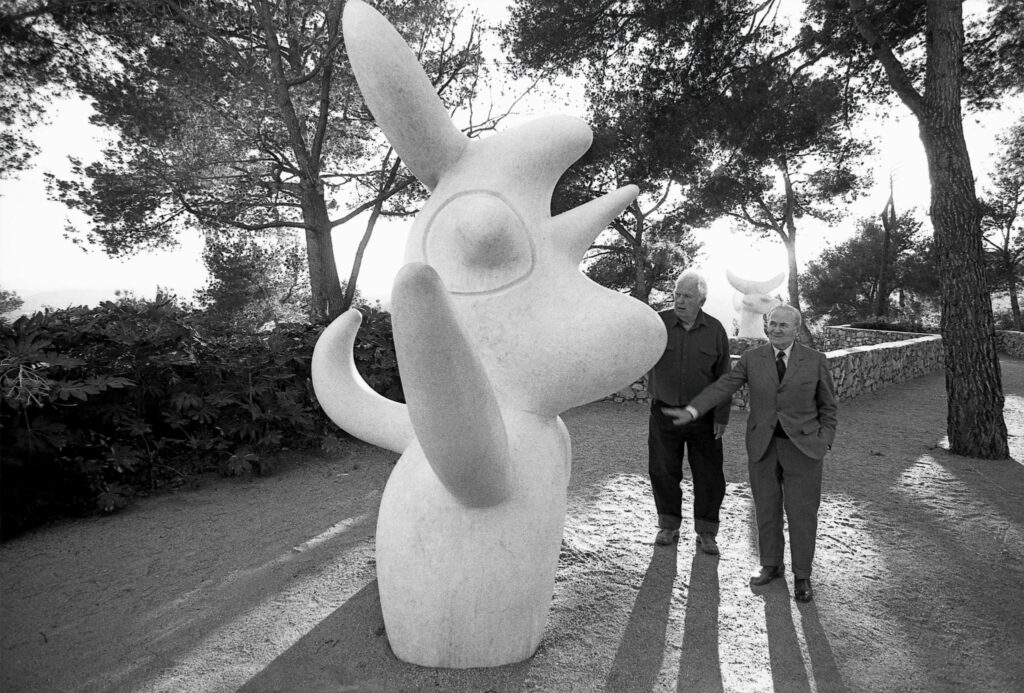
Josep Lluís Sert, and Joan Miró in front of a model of Fondation Maeght, Archives of Fondation Maeght, Saint-Paul-de-Vence, France. Le Monde.
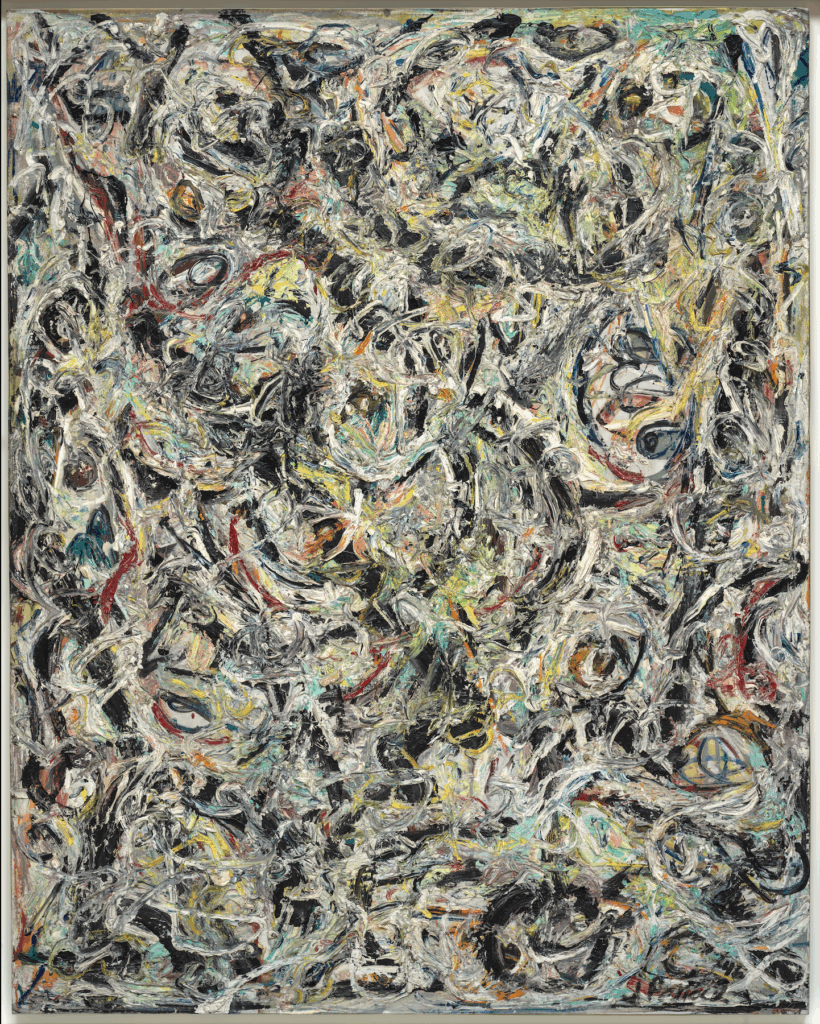
As co-curator and coordinator of the exhibition Dolors Rodríguez Roig highlights, one of the most powerful and unexpected dialogues in the exhibition takes shape in Room Four. On a single wall, three works “breathe” together: Eyes in the Heat (Jackson Pollock, 1946), Femme et oiseaux (Joan Miró, 1940) in the center, and Untitled [Little Image Painting] (Lee Krasner, 1947–1948). This is a rare triad, one that repositions the familiar dialogue between Pollock and Krasner within a broader constellation of influences.
Rooms of the exhibition Miró and the United States. Curators Marko Daniel, Matthew Gale, and Dolors Rodriguez Roig. Artworks from left to right: Jackson Pollock, Eyes in the Heat, 1946; Joan Miró, Femme et oiseaux, 1940; Lee Krasner, Untitled [Little Image Painting], 1947–1948. Photo: Davide Camesasca. © Fundació Joan Miró. Press materials.
For Lee Krasner, Miró’s Constellations were, in her own words, “small miracles.” That fascination would leave a visible imprint on her late-1940s Little Image Paintings—a series where she translated Miró’s sense of rhythmic fragmentation and cosmic density into her own language of abstraction. The connection became particularly tangible in 1945, when Krasner saw Miró’s Constellations at the Pierre Matisse Gallery in New York. The works deeply resonated with her.
While Miró’s Constellations emerged from the exile of World War II, evoking both escape and rebirth, Krasner and Pollock absorbed a similar pulse of energy into the foundations of Abstract Expressionism. Their works, dense with gesture and inner rhythm, expand Miró’s celestial universe into a new terrain of psychological and material exploration. Standing before this wall, one senses this deep resonance: three artists connected through movement and intuition.
Jackson Pollock, Eyes in the Heat, 1946, Peggy Guggenheim Collection, Venice (Solomon R. Guggenheim Foundation, New York) © 2025 The Pollock-Krasner Foundation, VEGAP, Barcelona. Press materials.
Miró and the United States continues the Fundació Joan Miró’s longstanding commitment to exploring the artist’s relationships with other key figures of the 20th century, following previous exhibitions dedicated to Klee, Picasso, and Matisse. Through this new chapter, the Foundation once again sheds light on the complexity of Miró’s practice, his network of dialogues and inspirations, and its ongoing dedication to bringing world-class curatorial projects to the city of Barcelona.
At the same time, the exhibition stands out for its transatlantic perspective with a decentralized reading of modern art that resonates deeply with contemporary curatorial thought. By acknowledging women artists and creators working from contexts of exile and diaspora, it redefines the American scene as a fertile and plural space of openness and exchange. In doing so, it not only expands Miró’s legacy but also mirrors the power of art to transcend borders, histories, and hierarchies.
Miró and the United States is on view at Fundació Joan Miró in Barcelona Spain, until February 22, 2025.
DailyArt Magazine needs your support. Every contribution, however big or small, is very valuable for our future. Thanks to it, we will be able to sustain and grow the Magazine. Thank you for your help!