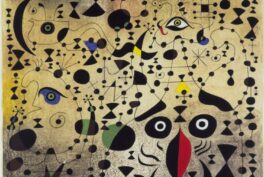
Joan Miró is an artist who is very difficult to categorize. In general, he is considered to be a Surrealist. However, his works show a great diversity that goes beyond Surrealism, Dadaism and Fauvism. Some pieces remind us of childish paintings, some are quite enigmatic and some fill the viewer with awe. Today, we will have a look at the anti-painting of Joan Miró – very specific works he created during the 1970s.
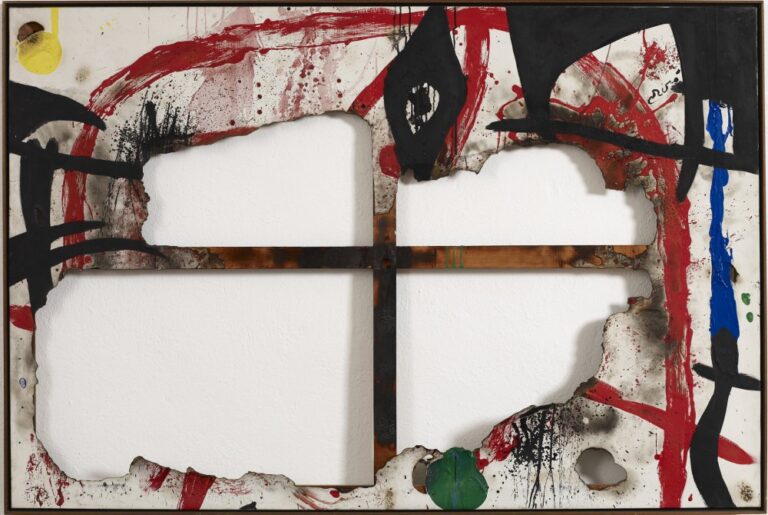
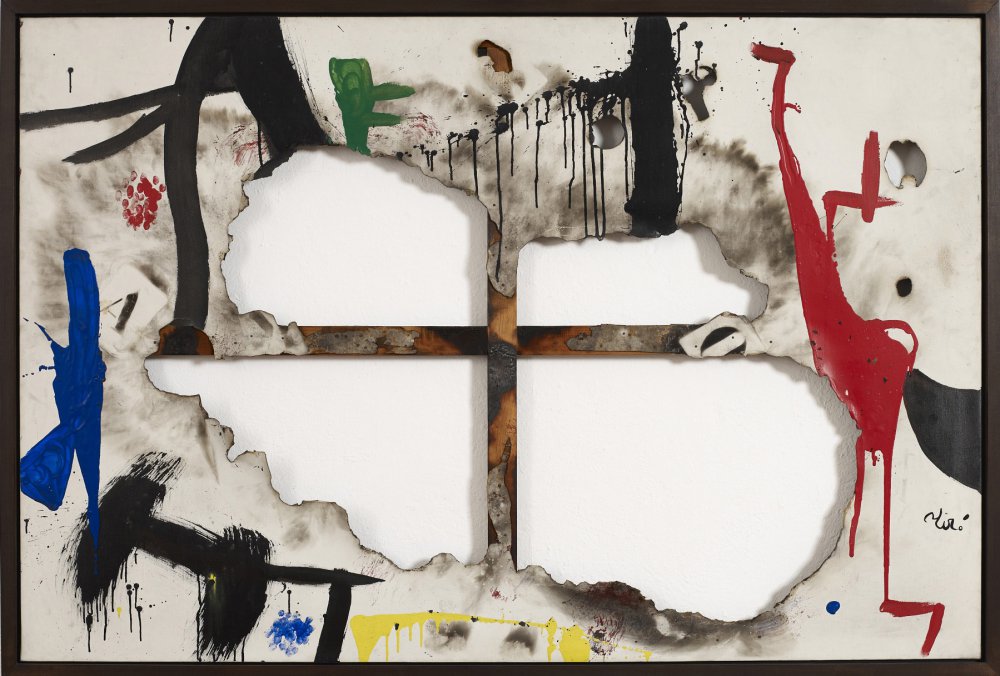
Joan Miró, Burnt Canvas 5, Fundació Joan, Miró Barcelona, Spain.
The anti-painting of Joan Miró is not an actual technique as it is more of a statement. He didn’t mean to violate or deconstruct the norms and traditions of painting, but rather to remove all sacred qualities and status of the artistic work. It began with his claim:
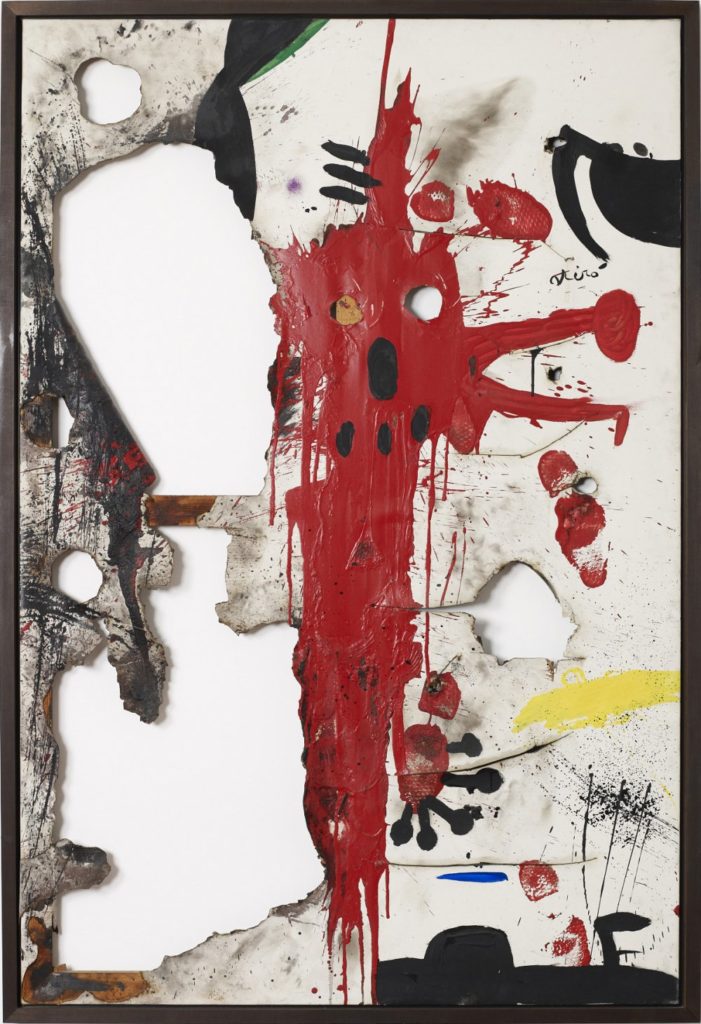
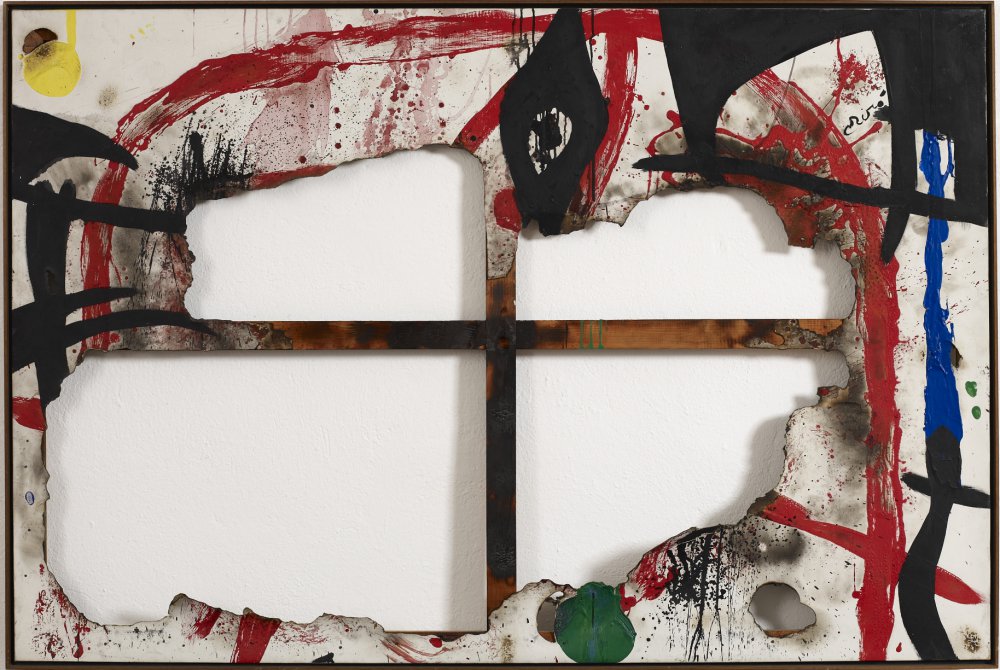
Miró tortured the canvas with unconventional methods: he burned it, wounded it, and perforated it in order to create a grotesque disfigurement.
Joan Miró, Burnt Canvas 4, Fundació Joan Miró, Barcelona, Spain.
By challenging the very notion of painting, Miró questioned its economic value and the interests of the art market. Thus, he used art to join the growing struggle for freedom that emerged towards the end of the Franco dictatorship.
Joan Miró, Burnt Canvas 1, Fundació Joan Miró, Barcelona, Spain.
The anti-painting of Joan Miró proved that he was an artist of violence and resistance who never ceased to be a painter.
The anti-painting canvases are part of the permanent collection of the Foundation of Joan Miró in Barcelona. If you plan to visit Catalonia, you should see the collection!
We love art history and writing about it. Your support helps us to sustain DailyArt Magazine and keep it running.
DailyArt Magazine needs your support. Every contribution, however big or small, is very valuable for our future. Thanks to it, we will be able to sustain and grow the Magazine. Thank you for your help!
I'm Errika Gerakiti, an art writer and curator based in Athens. I write about modern and contemporary art, fashion, and cinema — with a particular interest in the overlooked, the uncomfortable, and the underrepresented. When I'm not writing, I'm curating exhibitions, reading, painting, sculpting, or reading.
For longer reads, personal essays, and an occasional science-fiction or horror story, find me on Substack.