
Between the Body, Nature, and Image: Ana Mendieta at Tate Modern
It is not uncommon for an artist to become known primarily through the circumstances of their life rather than through the complexity of their work.
Ania Kaczynska 6 August 2026

Front cover of The Faberge Girl (May 2024) by Ina Christova.
The Fabergé Girl, written by Ina Christova, takes you on a beautiful journey into early 20th century Saint Petersburg to explore side-by-side the magic luxury of the Fabergé workshop and the heart-breaking poverty that eventually erupted during the October Revolution. Interestingly, it is based on real characters and while the plot is fictionalized, it still gives you a good glimpse of the realities of pre-Soviet Russia.

Photographs of Alma Pihl. Fabergé.
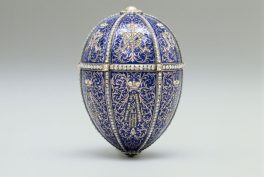
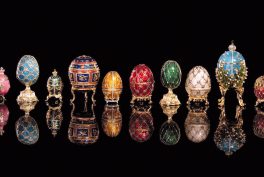
The Fabergé jewelry workshop is most renowned for its famous Easter Eggs. They are a symbol of the ultimate luxury, but also of an era long gone and irretrievably lost. Emperor Alexander III ordered the first Fabergé egg for his wife Maria Feodorovna in 1885. It was a touching gift; a luxurious object, with a surprise hidden inside, that had no other purpose than to bring delight. Funny and charming at the same time, these eggs allowed for the jeweler an opportunity to show off his craft.

Alma Pihl (design), Albert Holmström (artisan), Snowflake pendant, c. 1913, Sotheby’s.
The workshop employed two women designers. At the time it may have seemed surprising and had nothing to do with the fight for equality, Fabergé was just a smart businessman who knew he needed the best designers there were, and gender didn’t matter to him, as long as the objects produced by the workshop were the most exquisite ones.

Alma Pihl design for House of Fabergé, Nobel Ice Egg, 1914. Faberge.
Alma Pihl, the titular Fabergé Girl in Ina Christova’s book, was the granddaughter of the workshop’s lead designer August Holmström. Her uncle Albert Holmström and aunt Hilma Alina Holmström also worked for Fabergé. In 1909 Alma joined the workshop as a draughtswoman and her drawings quickly caught Fabergé’s eye. She trained as a jewelry designer, which gave her a good understanding of the techniques available and their limitations. What Alma brought to the table was creativity and imagination unrestricted by long formal training, which pushed the company’s designs into new realms.

Alma Pihl (design), The Winter Egg, 1913, private collection. The Jewellery Editor.
In her book, Christova focuses not only on Alma’s designs, she also attempts to paint us a panorama of Saint Petersburg in the early 20th century. We get to see the life of middle-class designers, the luxurious life of the people who buy their designs, and the extreme poverty that pushed people into desperation. While some of Alma’s emotional concerns may not be fully convincing, the broad landscape of the city and the change that happened as the October Revolution was brewing is fascinating. The radical break and destruction of the existing order that the revolution brought make us realize that the fragility of the Winter Easter Egg designed by Alma was closer to reality than we may wish for.
DailyArt Magazine needs your support. Every contribution, however big or small, is very valuable for our future. Thanks to it, we will be able to sustain and grow the Magazine. Thank you for your help!

Art historian by education, data geek by trade, art and book lover by passion, based in London in love with Europe and traveling around it. You can visit my book blog here: https://bookskeptic.com/

It is not uncommon for an artist to become known primarily through the circumstances of their life rather than through the complexity of their work.
Ania Kaczynska 6 August 2026
Very few artists can claim to be as ubiquitous and iconic as Frida Kahlo. This hotly anticipated exhibition at Tate Modern delves into how and why...
Edoardo Cesarino 6 July 2026
Few museums can trace their origins to an act of collective generosity. Fewer still continue to build their identity around that same principle...
Zuzanna Stańska 17 August 2026
Back in 1998, the Hayward Gallery was the first to host a major exhibition of Anish Kapoor’s work in the UK. Now, in the year of the Southbank...
Edoardo Cesarino 22 June 2026