
Masterpiece Story: Judith and Holofernes by Caravaggio
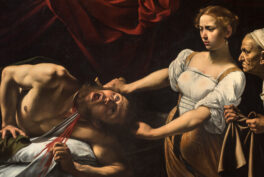
Judith and Holofernes is a Caravaggio masterpiece that captures Biblical murder and drama. Rarely has death been captured so intensely and violently...
James W Singer 13 September 2026
31 August 2026 min Read
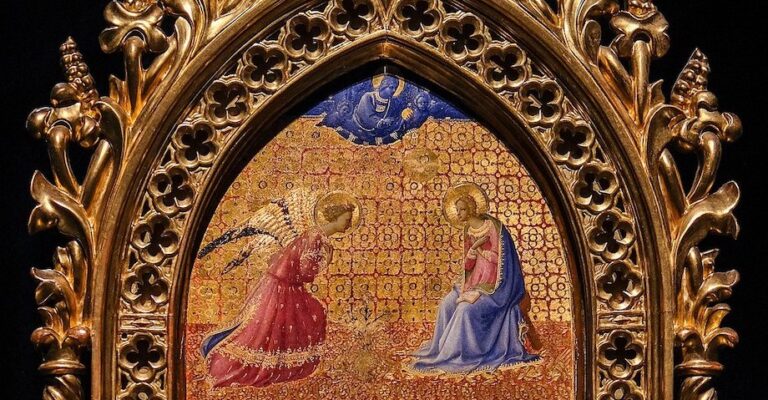
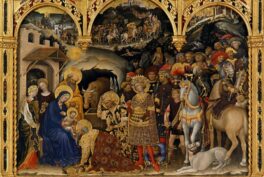
Fra Angelico, Annunciation and Adoration of the Magi, c. 1431-2. Museum of San Marco, Florence, Italy. Photograph by Sharon Mollerus via Wikimedia Commons (CC BY 2.0). Detail.
Annunciation and Adoration of the Magi by Fra Angelico is a masterpiece that can be viewed both as medieval and Renaissance. How so? Keep on reading to find that out.
Fra Angelico (born Guido di Pietro, c. 1395-1455) was a Dominican monk from Florence, Italy. He was active in a period in Italian art called Proto-Renaissance (ca. 1300–1400), which marked the transition from medieval to early Renaissance styles.
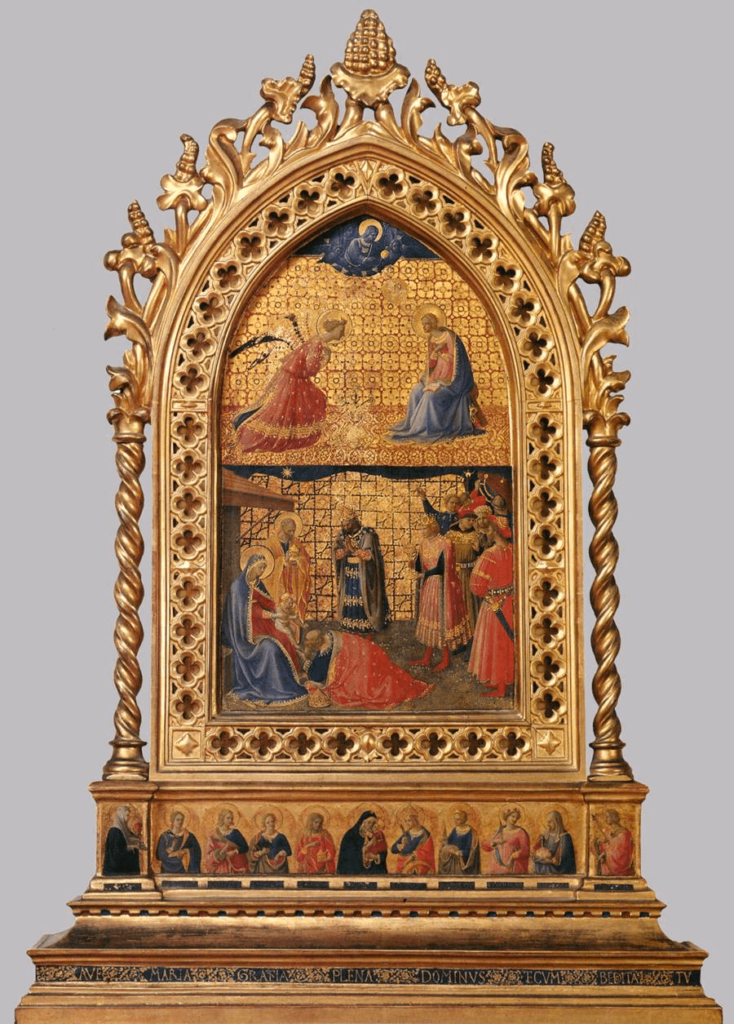
Although this panel looks at first like an altarpiece, it is actually a reliquary (container for religious relics). Fra Angelico made a total of four reliquary panels like this for the church of Santa Maria Novella in Florence. All four, three have been identified pretty firmly and the fourth tentatively, depict scenes from the life of the Virgin Mary.
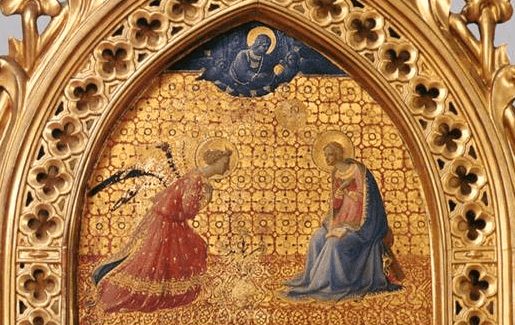
The upper scene represents the Annunciation, in Christian iconography, it is the moment when the angel Gabriel appeared to Mary to tell her that she would be the mother of God. This event is celebrated by the church on March 25th. It’s a very common scene in European religious painting, and Fra Angelico himself painted it many times. His versions always include a kneeling Gabriel on the left and a pious-looking Mary seated on the right with her arms folded across her chest. The monochrome figure with a gilt halo at the very top of the composition is probably God the Father, sending down the rays of the Holy Spirit.
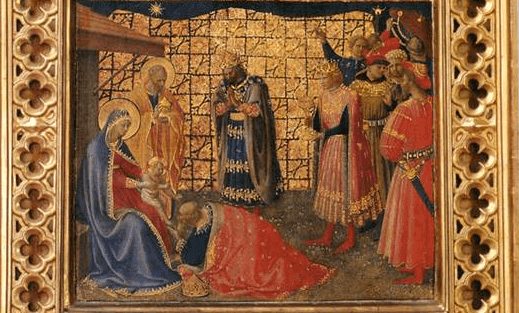
The lower scene depicts the Adoration of the Magi, in which three wise men (magi) or kings visited the newborn Jesus Christ to worship him and give him gifts of gold, frankincense, and myrrh. This event is celebrated on January 6th during the Epiphany, which is an important event in Christian countries. It is also commemorated in the popular Christmas carol We Three Kings. In this version, the Virgin Mary sits inside the manger with baby Jesus on her knee and Joseph standing behind her. The magi are easy to recognize through their crowns. One has placed his crown on the ground as he kneels at the Virgin’s feet, while the other two stand further back in prayer. A small crowd of other figures on the right has also come to see the baby Jesus.
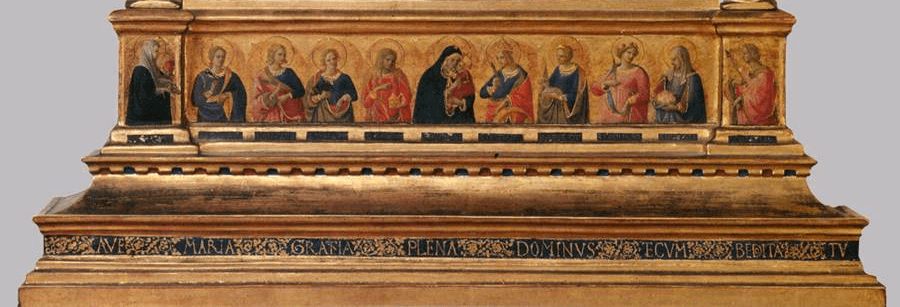
Ten female saints, each identifiable through small name labels below their images, appear on the predella (lower ledge) of the reliquary panel. The Virgin and Child appear in the center.
One of the reliquary’s most impressive features is its elaborate wooden frame carved into a Gothic pointed arch with twisted columns, stylized vegetation, and quatrefoil (four-lobed) decorations. The relics it once contained were probably housed somewhere within this frame.
Laurence B. Kanter and others: Painting and Illumination in Early Renaissance Florence 1300-1450. New York: The Metropolitan Museum of Art, 1994. p. 342-345 Accessed December 2019.
Laurence B. Kanter & Pia Palladino. Fra Angelico. New York: The Metropolitan Museum of Art, 2005. p. 148-150. Accessed December 2019.
Alexandra Kiely. “‘Pictor Angelicus’: Fran Angelico the Angelic Painter“. A Scholarly Skater. December 12, 2019.
DailyArt Magazine needs your support. Every contribution, however big or small, is very valuable for our future. Thanks to it, we will be able to sustain and grow the Magazine. Thank you for your help!

Alexandra Kiely is an independent art historian based in the greater New York area. Her work focuses on making art, architecture, and art museums understandable to a general audience. She is the author of The Art Museum Insider, a book that guides those without art history training to have more informed and empowered experiences with art. Visit her website, A Scholarly Skater, and follow her on Instagram.
Judith and Holofernes is a Caravaggio masterpiece that captures Biblical murder and drama. Rarely has death been captured so intensely and violently...
James W Singer 13 September 2026
Explore an astonishing 1915 nude self portrait by American modernist painter Florine Stettheimer.
Candy Bedworth 21 September 2026
Winslow Homer (1836–1910) was one of the leading American Realist painters. His painting The Veteran in a New Field is a masterpiece of late...
James W Singer 30 August 2026
At first glance, A Goldsmith in His Shop (1449) appears to depict an ordinary visit to a jeweller. Yet Petrus Christus transformed an ordinary...
Shivani Gupta 23 August 2026


.jpg)