




Halloween Monsters: What Our Fears Reveal About Society
Halloween monsters have long served as mirrors of human fear and imagination. From vampires and witches to zombies and digital phantoms, they reveal...
Errika Gerakiti 30 October 2025
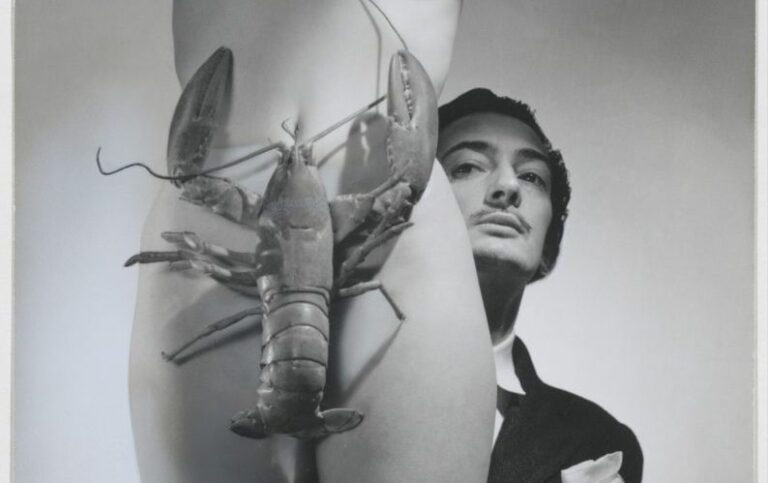
Horst P. Horst, George Platt Lynes, Salvador Dali and the lobster, 1939. Carolyn Tillie. Detail.
Lobsters, large marine crustaceans, have been eaten by humans since prehistoric times. They became a delicacy by the Roman period. They were also popular among the Moche people of Peru. Historically, lobsters weren’t a very common subject of artists’ interests, but they appeared from time to time. Here we have gathered all the famous lobsters we could find in art:
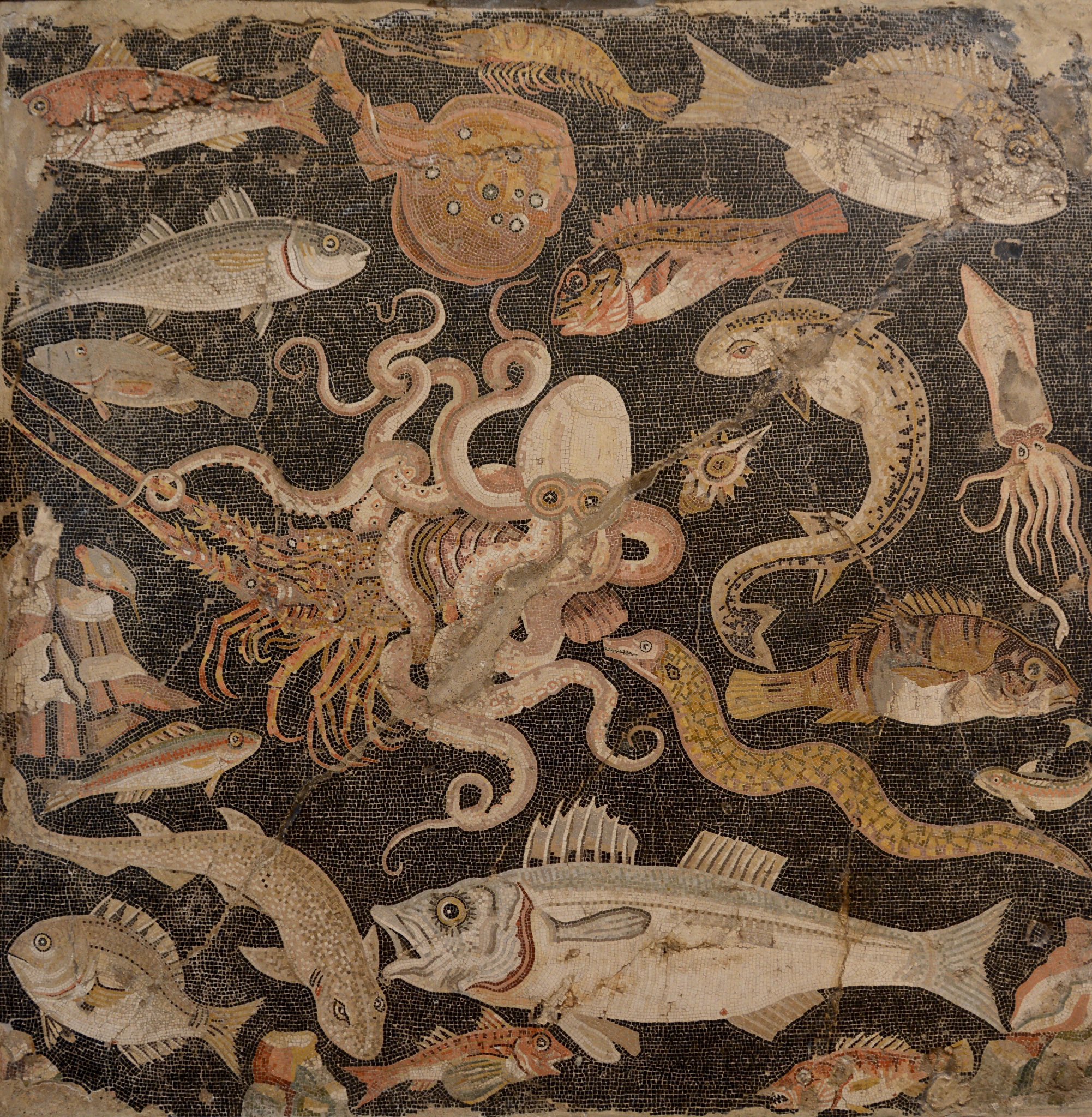
Lobsters became a popular dish during Roman times, as well as other marine crustaceans, which remain popular to this day. In this fine mosaic from Pompeii, two spiny lobsters are tangled in octopus tentacles, thus creating a dynamic composition. It also suggests that this type of lobster was known and present in the Roman cuisine of the early imperial period.
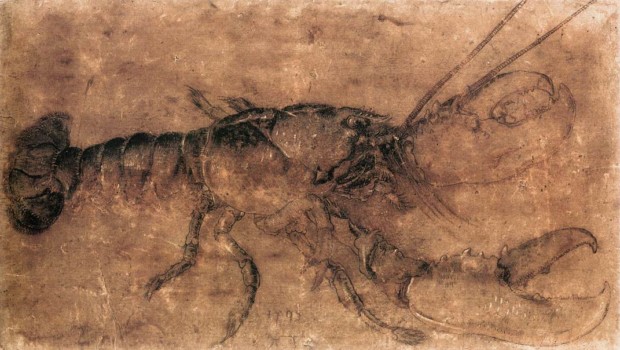
The lobster was mentioned in cookbooks during the medieval period. Meanwhile, its interesting shape caught the attention of the famous German draftsman and painter, Albrecht Dürer. During his first trip to Italy, the young artist showed an interest in all the unusual and exceptional features of nature, documenting plenty of weird animals. For example, in this pen drawing, the lobster is positioned to fill the entire page. This sheet is one of the studies that Dürer used as independent, rather than concrete study material.
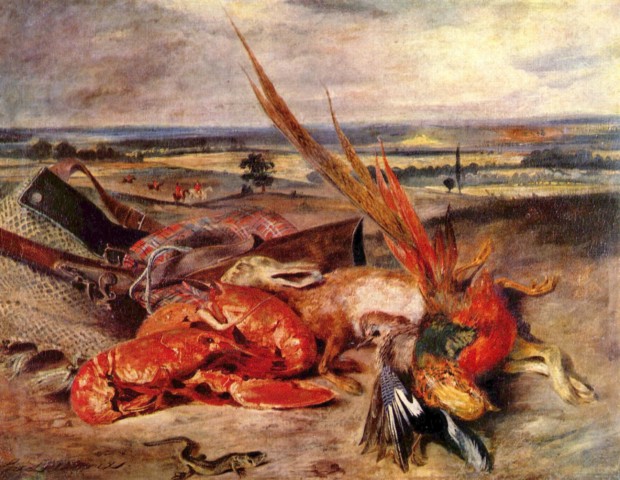
This painting comes from a group of artworks that Delacroix sent to the Salon of 1827. It also included The Death of Sardanapalus, as well as others from among his finest pictures. On 28 September 1827, Delacroix wrote to his friend Charles-Raymond Soulier:
I have finished the General’s animal picture, and I have dug up a rococo frame for it, which I have had regilded and which will do for it splendidly. It has already dazzled people at a gathering of amateurs, and I think it would be amusing to see it in the Salon.
A. Joubin, Correspondance générale de Eugène Delacroix, Paris 1932–1938, I, pp.196–97. After M. Hannoosh.
Delacroix painted this picture when he returned from England, and the influence of English painters can be seen here.
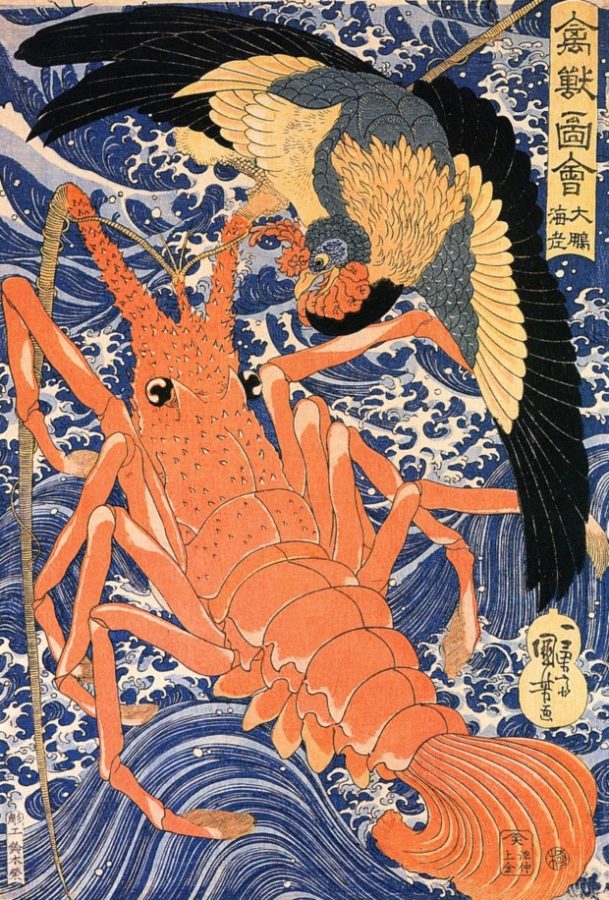
Utagawa Kuniyoshi was one of the last great figures of ukiyo-e, the Japanese tradition of woodblock printing and painting. A prominent member of the Utagawa school, he became known for the remarkable variety in his work, which ranged from landscapes and portraits to Kabuki actors, cats, and fantastical beasts. In this particular print, a bird—likely a hawk—dramatically swoops down to attack a lobster.
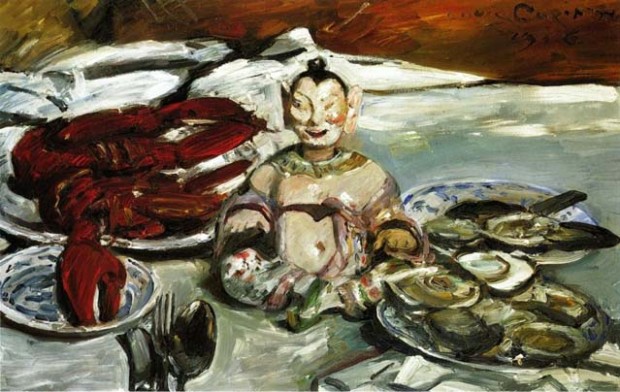
Lovis Corinth, a German painter and writer, created art that combined elements of both Impressionism and Expressionism. After studying in Paris and Munich, he became part of the Berlin Secession, later taking over as its president from Max Liebermann. His art combined a naturalistic style with strikingly bold use of color—a quality clearly visible in his depiction of the lobster.
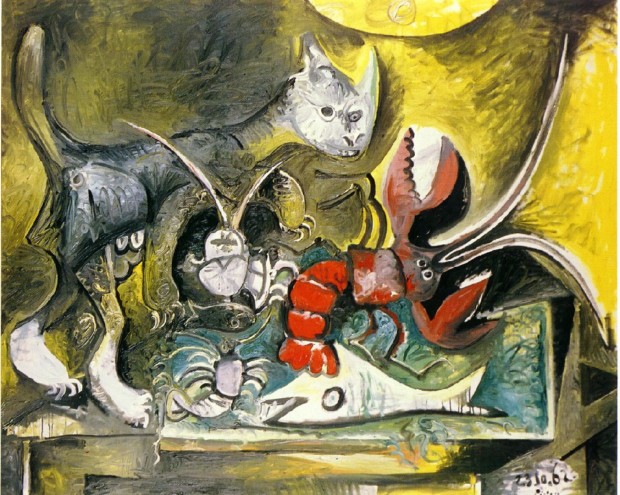
In the 1960s, Pablo Picasso was already 80 years old. In his last years, he created more than at any other comparable period of his life. At this time, he turned to creations of fantasy and comic invention—you must admit there is something funny in this painting (personally, I love how the fish is painted). With unabated vigor, Picasso painted brilliant variations on the works of other masters, including Delacroix and Velázquez. The Still Life with Cat and Lobster copies the colors of Delacroix’s palette.
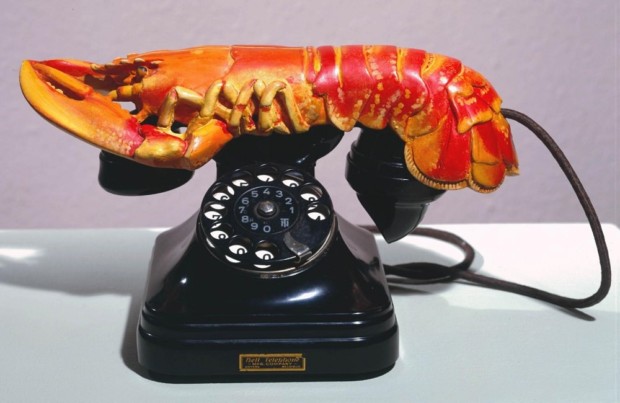
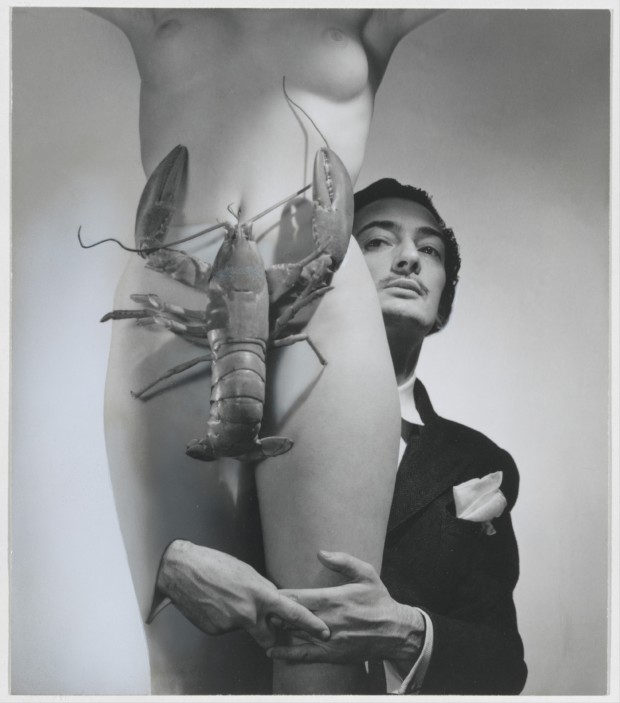
For the 1939 New York World’s Fair, Salvador Dalí designed a multi-sensory installation called The Dream of Venus. As part of the spectacle, live nude models were adorned with “costumes” crafted from fresh seafood. The event was documented by photographers Horst P. Horst and George Platt Lynes. In a provocative touch typical of Dalí, lobsters were placed to cover the models’ sexual organs.
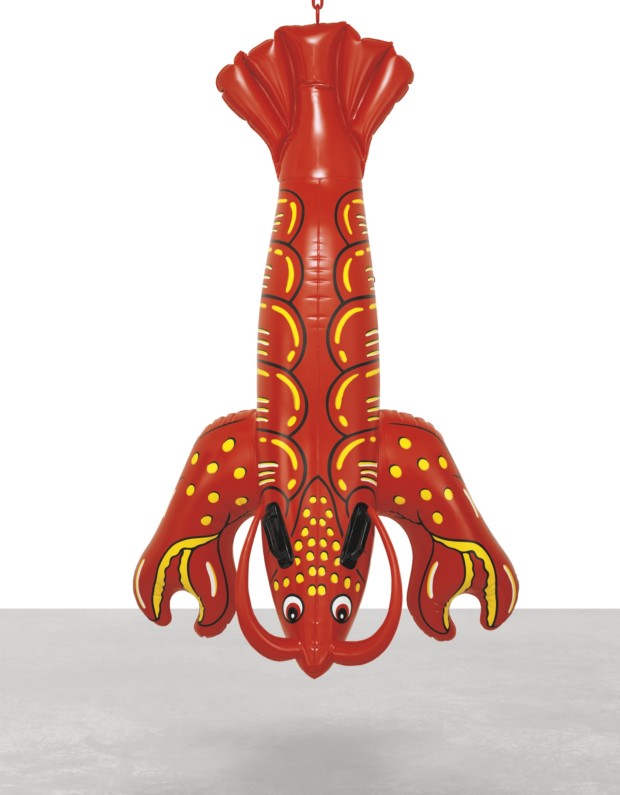
Furthermore, Jeff Koons‘ lobster is an obvious reference to Dali. By creating a plastic pool toy, he elevates a simple rubber toy to the art level. Lobster presents its viewers a familiarity and nostalgia, thus summoning childhood memories of summers spent by the pool. It also refers to the legacy of Duchamp. As Koons himself stated:
I’ve returned to the ready-made. I’ve returned to really enjoying thinking about Duchamp. The whole world seems to have opened itself up again to me, the dialogue of art.
Jeff Koons in Versailles, 2008.
DailyArt Magazine needs your support. Every contribution, however big or small, is very valuable for our future. Thanks to it, we will be able to sustain and grow the Magazine. Thank you for your help!

Art Historian, founder and CEO of DailyArtMagazine.com and DailyArt mobile app. But to be honest, her greatest accomplishment is being the owner of Pimpek the Cat.
Halloween monsters have long served as mirrors of human fear and imagination. From vampires and witches to zombies and digital phantoms, they reveal...
Errika Gerakiti 30 October 2025
When you picture Halloween, a flood of familiar images rushes in: glowing jack-o’-lanterns, fluttering bats, skeletons, and black cats. But the...
Errika Gerakiti 31 October 2025
Marian Henel’s tapestries are huge. The largest one measures over 6 m in length and 3 m in width (19 ft. 8 in. by 9 ft. 10 in.). Created in the...
Zuzanna Stańska 22 May 2026
Los Caprichos are some of the most disturbing of Francisco Goya’s works. A sharp critique of society and its values, there are plenty of monsters...
Edoardo Cesarino 31 October 2024