
The Timeless Persian Rug
The production of Persian rugs has traveled from ancient looms to modern living rooms. By blending artistry with science, weavers of antiquity...
Maya M. Tola 19 March 2026

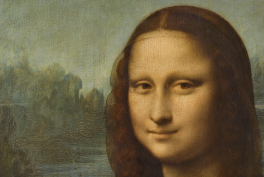
Leonardo da Vinci, Mona Lisa, 1503–1519, Louvre, Paris, France. Detail.
The Mona Lisa by Leonardo da Vinci is probably the most famous painting in the world. But did you know she went missing for two years? This tale of a stolen portrait will involve bumbling policemen, incompetent galleries, a wild gang of young artists, the Mona Lisa hiding under a bed, and a frenzy of media coverage. Are you ready for a cracking crime caper? Let’s go!
Painted sometime between 1503 and 1519 in Florence, Italy, the Mona Lisa (also known as La Joconde or La Gioconda), with her tender half-smile, is perhaps the world’s most famous human art object. However, the theft of the Mona Lisa in 1911 was perhaps the easiest art heist of the century! We’re going to take a close look at the bones of this tale, and also ask a difficult question: Is the Mona Lisa really worthy of her reputation? Or, like so many modern celebrities, is she just famous for being famous?
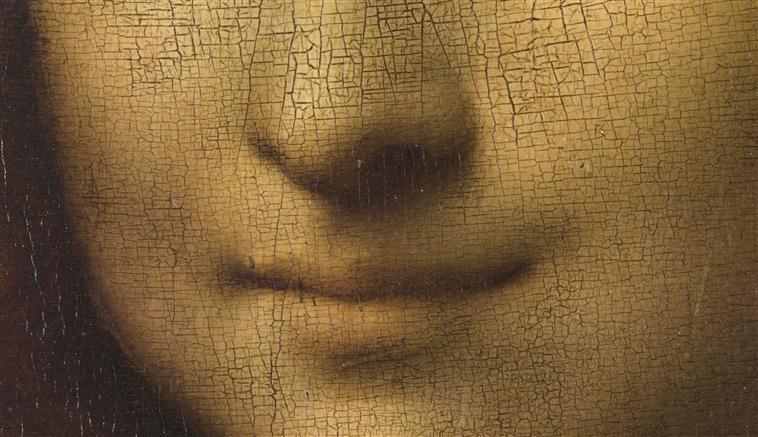
Leonardo da Vinci, Mona Lisa, 1503–1519, Louvre, Paris, France. Detail.
The art heist is usually a tale full of intrigue, espionage, and secrets, much loved by novelists and filmmakers. This tale starts on an ordinary morning in summertime Paris. Handyman and part-time petty criminal Vincenzo Peruggia strolls freely out of the Louvre with the Mona Lisa under his arm. And so begins Lisa’s journey to international stardom.
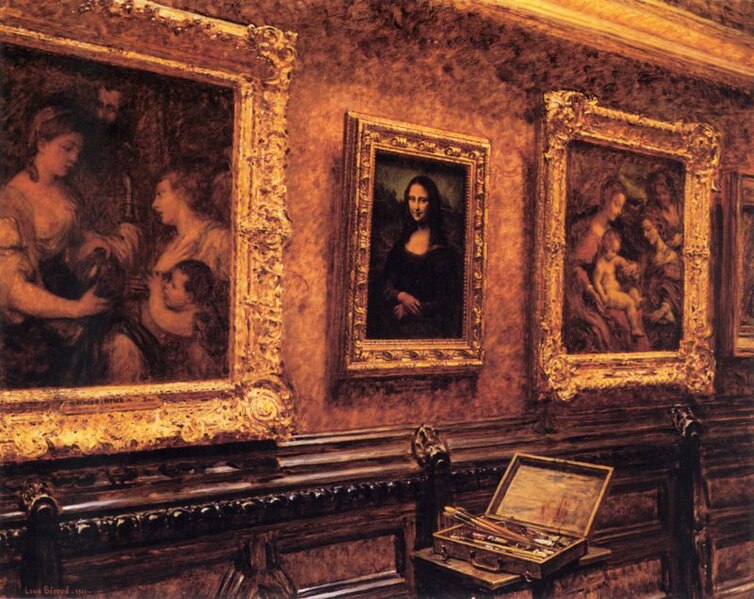
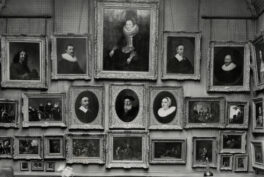
Louis Béroud, Mona Lisa at the Louvre, 1911, showing the interior of the Louvre where the Mona Lisa was hung. Wikimedia Commons (public domain).
Italian Vincenzo Peruggia had been working on and off within the Louvre, cleaning and reframing paintings. In fact, he constructed the glass case that held Leonardo da Vinci’s Mona Lisa. Clearly, she caught his eye. Because on August 20, 1911, he entered the gallery as a normal visitor. He hid in a broom closet all night. And then at 7 am the next day, August 21, he calmly lifted Lisa off the four iron pegs that held her on the wall, and removed her from the glass case he had constructed himself. He wrapped her in a workman’s smock and headed out into the sunny street.
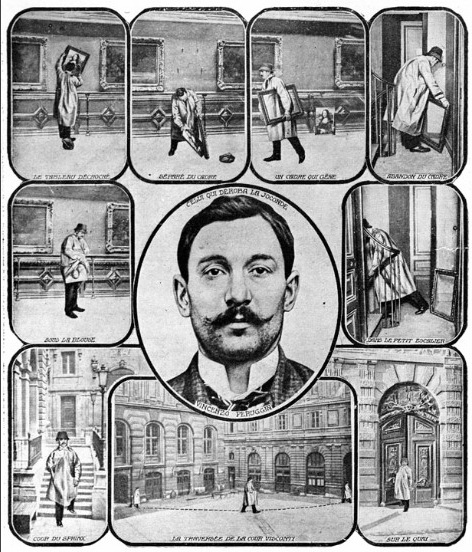
Illustration of Vincenzio Peruggia stealing the Mona Lisa, 1911. Wikimedia Commons (public domain).
There was one minor hiccup in his plan, as the external door to the street was locked. He removed the doorknob—still no luck! However, a friendly plumber saw him struggling. He recognized him as a fellow Louvre craftsman and released him to freedom. Mon Dieu! It was lunchtime the next day before anyone realized that Lisa was missing. And it was not the staff who noticed, but an artist who had been hoping to copy her.
A catalogue of disasters and missteps followed. All employees were interviewed. The police questioned Peruggia at his home twice (yes, twice!) but let him go without charge. The Louvre staff seemed to have little interest in monitoring or recording the movement of their artworks. Rather laissez-faire of them! While galleries across Europe were instigating excellent security measures (including bolting paintings to walls), the Louvre seemed quite unbothered by such things.

The New York Times headline, August 24, 1911, National Public Radio.
At this point, enter Pablo Picasso, who is one of our suspects! “The Wild Men of Paris” were a group of young artists, including Pablo Picasso, Andre Breton, Henri Matisse, Georges Braque, and the poet Guillaume Apollinaire. They were firebrands of modern art, striding around Paris, behaving badly. The poet had declared that museums should rid themselves of their old art, to make way for the new. Apollinaire’s Belgian secretary, Honoré-Joseph Géry Pieret, had a habit of slipping small museum artefacts into his pockets for his friends.
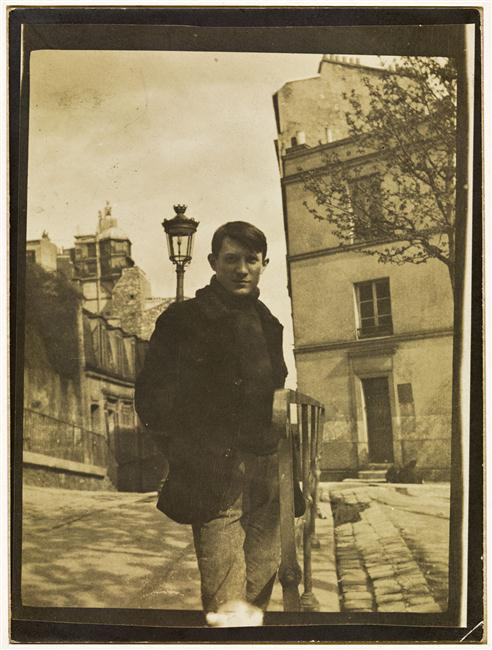
Pablo Picasso in Montmartre, Paris, 1904, Musée Picasso, Paris, France. The New York Times.
Pieret had previously stolen Iberian statues from the Louvre for Picasso. The artist admitted that these prized treasures were the inspiration for his work Les Demoiselles d’Avignon. The authorities wondered: Apollinaire was famous for declaring that museums should be burned to the ground. Rumor had it that Picasso was not averse to a bit of art theft. Did they take the Mona Lisa? What a caper that would be!
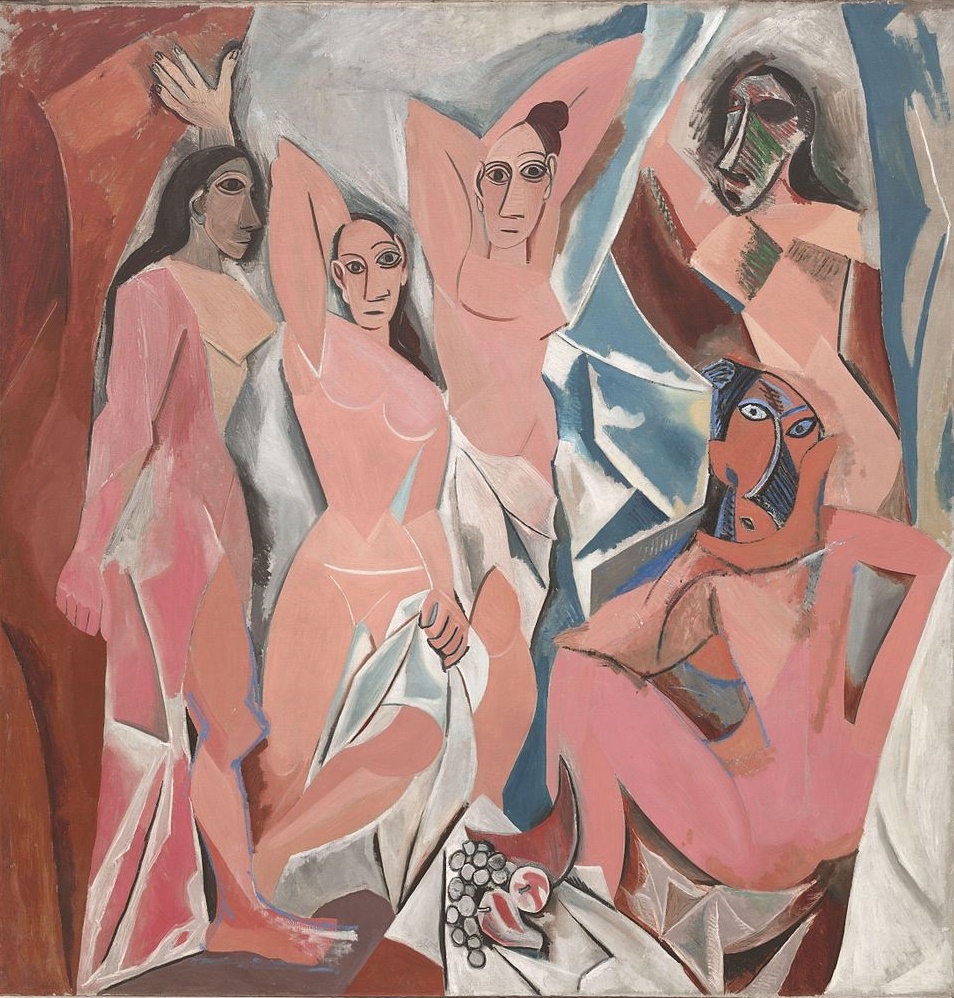
Pablo Picasso, Les Demoiselles d’Avignon, 1907, Museum of Modern Art, New York City, NY, USA.
Police arrested Picasso and Apollinaire, who turned into blubbering babies under examination, pleading they knew nothing about Lisa. They hid, however, the fact that they had other stolen artefacts. The trail turned cold, even after the audacious artnapping story spread across the globe. The press whipped up a frenzy of suspicion and false leads.
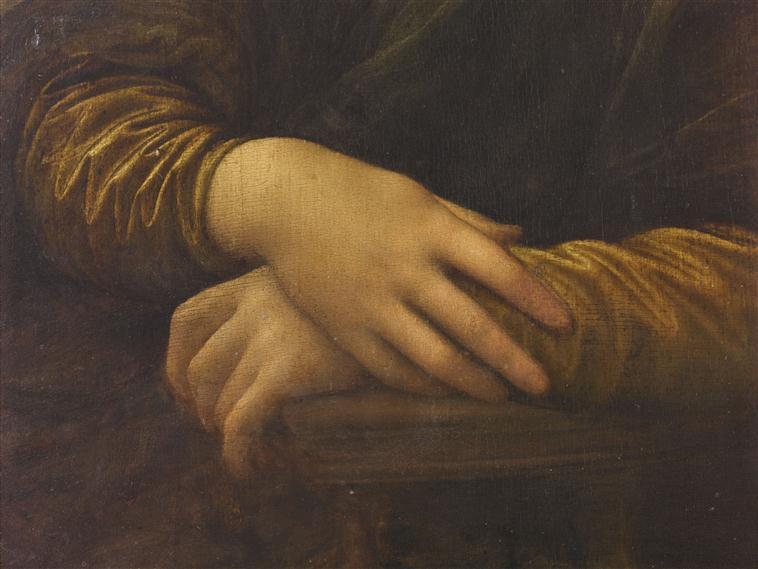
Leonardo da Vinci, Mona Lisa, 1503–1519, Louvre, Paris, France. Detail.
All this time, Lisa lay hidden in Peruggia’s humble room in Paris, a few miles from the Louvre. She lay in the false bottom of a trunk, under the bed. But our daring thief didn’t seem to know what his next step would be. For two years, he (almost literally) sat on Lisa, until November 1913, when he took her to Florence, Italy, trying to sell her on to a dealer. The potential buyer immediately informed the authorities and the police. Quelle horreur!
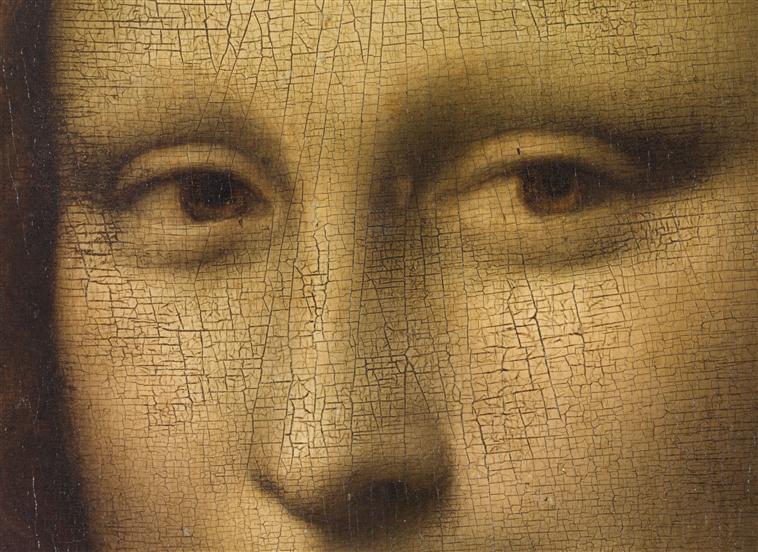
Leonardo da Vinci, Mona Lisa, 1503–1519, Louvre, Paris, France. Detail.
Peruggia was arrested in Italy in December 1913. Claiming that he wanted to return the Mona Lisa to her homeland, he was hailed as something of a national hero and sentenced to just one year and 15 days in prison. No one is entirely clear why he took Lisa. Was he telling the truth about his desire to repatriate her? Some say he was in cahoots with forgers, who planned to make money from making copies. Or, perhaps, he fell under her magical spell? Suffice it to say, he was not a criminal mastermind; though the Louvre authorities and the police didn’t cover themselves in glory either.

People gather around the Mona Lisa painting on January 4, 1914 in Paris, France. Photo Roger-Viollet/Getty Images. New York Times.
Although Italian in origin, the Mona Lisa has been in France since 1797. She was a gift from Leonardo to the French King Francis I. He kept her in his opulent bathroom. This painting is a portrait of a young woman, Lisa del Giocondo (nee Gherardini), wife of a wealthy Florentine silk merchant. She sits on a wooden poplar board just 30 cm tall. Plain, brown, unsigned, undated. Hidden beneath layers of ancient varnish. For many years, she was not especially popular with the public, who much preferred Leonardo’s other works. Let’s be honest—this is not the best painting in the Louvre.
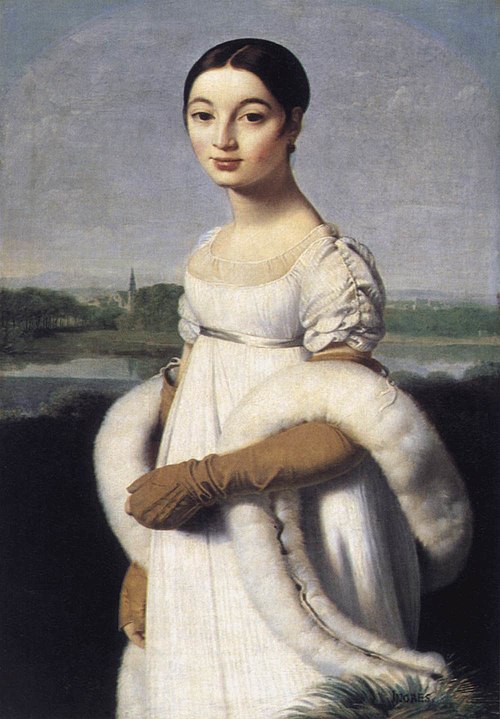
Jean-Auguste-Dominique Ingres, Mademoiselle Caroline Rivière, 1805, Louvre, Paris, France.

Paolo Veronese, Portrait of a Venetian Woman (La Bella Nani), c. 1560, Louvre, Paris, France.
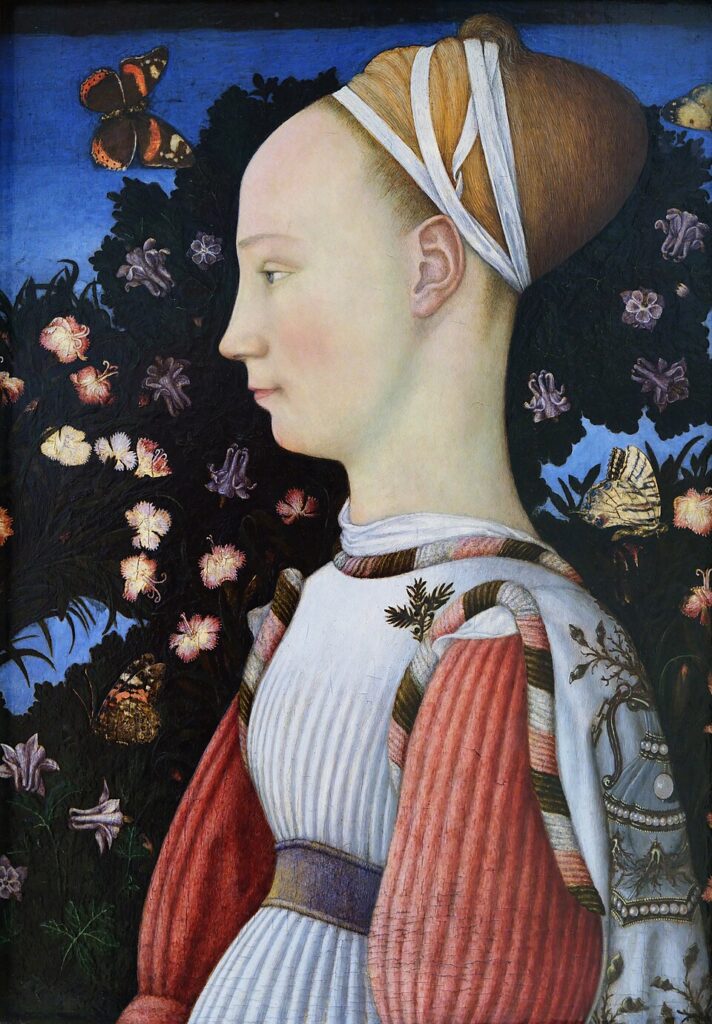
Pisanello, Portrait of a Princess, 1425–1450, Louvre, Paris, France.


The young sitter for this portrait sadly died just a year after the painting was completed.
Veronese rarely portrayed women, but this is considered one of the most beautiful female portraits of the 16th century.
Butterflies (a symbol of the soul) dance around a sharply defined, exquisite profile.
Head to the Louvre in Paris on any given day. The Mona Lisa, who sits behind three layers of bulletproof glass, is the most visited object in the whole museum. You will queue (possibly for hours), you will jostle and elbow your way in, for a mere 30 seconds in front of the painting. The Louvre holds 35,000 artworks. If you want to be enchanted by a femme fatale, you could marvel at Mademoiselle Caroline Rivière by Jean-Auguste-Dominique Ingres or gaze at La Bella Nani by Paolo Veronese. Pisanello’s Portrait of a Princess is an intriguing work. And if it really must be a Leonardo, seek out La Belle Ferronnière, which is equal to (or dare I say better than?) the Mona Lisa.
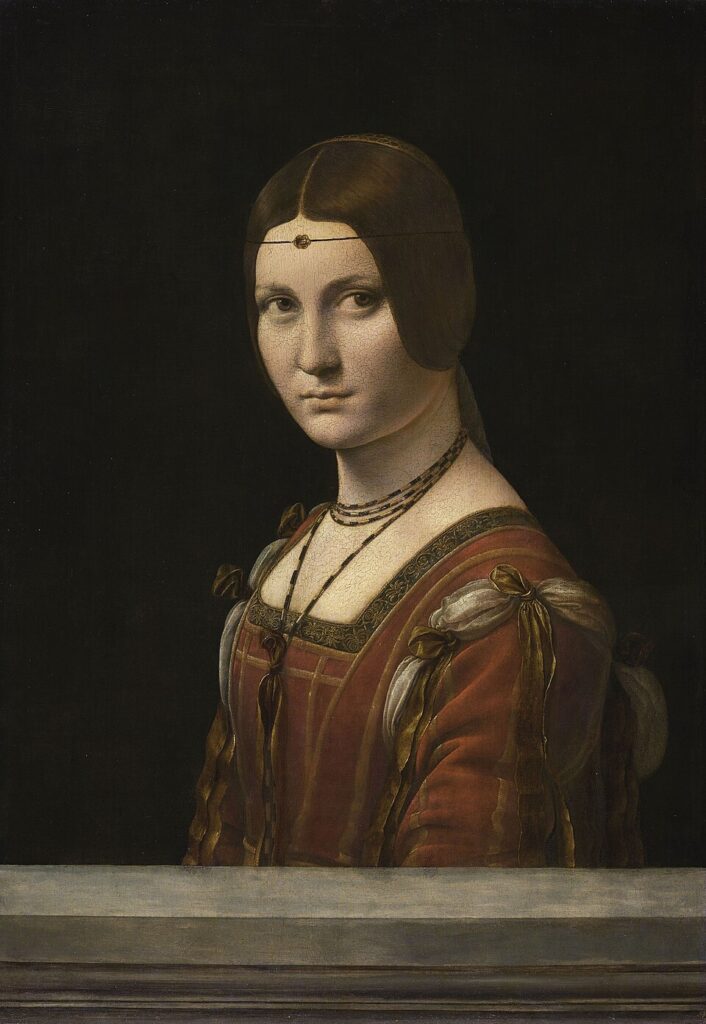
Leonardo da Vinci, La Belle Ferronière, 1490–1497, Louvre, Paris, France.
Turned into a multi-million dollar brand, Lisa can now sell anything—she is in music, novels, films, and adverts. You can wear her, you can even dry your dishes on her. Artists from Dalí to Duchamp, and from Banksy to Warhol have appropriated her. The perfect site for protest, she has been slashed and stoned, and covered in cake and soup. And she even joined the superstar Beyoncé in a rap video.
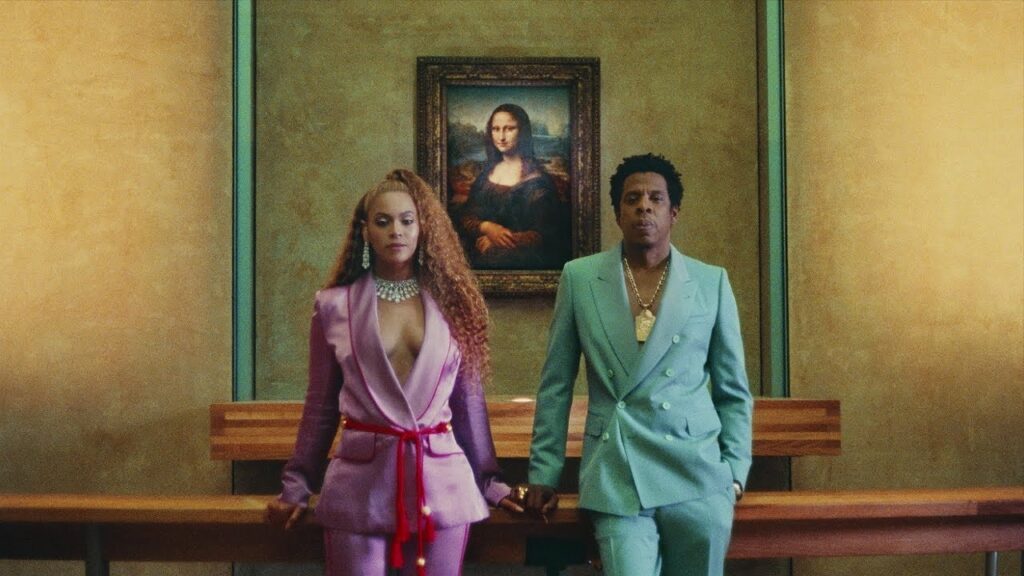
Beyoncé and Jay-Z in front of Leonardo da Vinci’s Mona Lisa, still from The Carters, APES**T, 2018. YouTube.
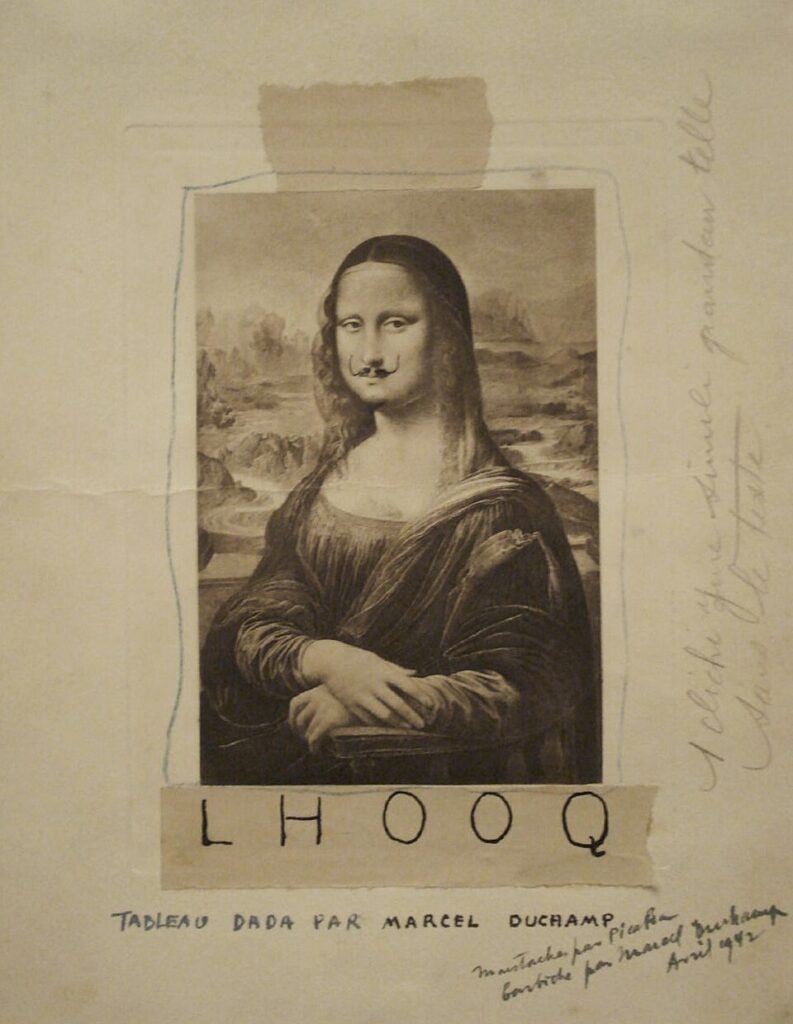
Marcel Duchamp, L.H.O.O.Q, 1919. Wikimedia Commons (public domain).

Salvador Dalí, Self-Portrait as Mona Lisa, 1954. Dali Paintings.
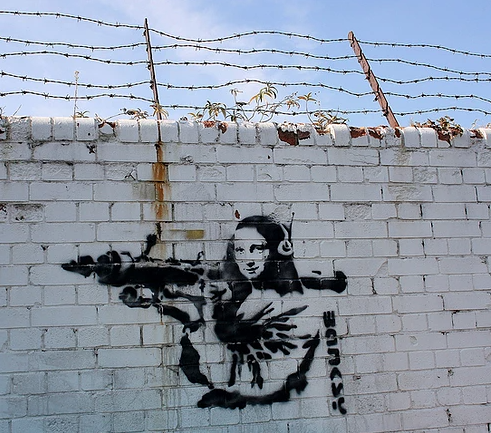
Banksy, Mona Lisa with Bazooka, 2007–2008. Banksy Explained.

Andy Warhol, Colored Mona Lisa, 1963, private collection. Artsy.
Renting out the Louvre for a video shoot, Beyonce and Jay-Z challenged the notion that galleries and museums are the preserve of rich, white men.
Adding a moustache to Lisa and including rude comments about her bottom helped bring Duchamp to a wider audience.
A wild-eyed Dalí adds his trademark handlebar moustache to the Mona Lisa.
Juxtaposing a powerful woman with a powerful weapon. Is she serene, or is she menacing?
Here we see the meeting of two much-revered and mass-produced icons exploring high art and popular culture.
Pity the Mona Lisa. The gallery where she sits is never empty. She is never alone. Cameras, 24-hour security, and hordes of hungry eyes scrutinize her every inch. No wonder she looks a little tired—women never get a moment to themselves, do they? Lisa has had precious few private moments.
She gazed down on Napoleon Bonaparte when she was hung in his bedroom in the Tuileries Palace for a couple of years. That must have been quite an eye-opener! She was boxed up and hidden away in secret locations across France during the Second World War. Watch out for those Nazis! And don’t forget those couple of dusty years in a trunk under the bed of our thief Mr. Peruggia. Hardly the place for a woman of such beauty and privilege!

Leonardo da Vinci, Mona Lisa, 1503–1519, Louvre, Paris, France.
Let’s be honest, who am I to question the art establishment’s view that the Mona Lisa is a star turn? She is the most highly valued painting in the world. And who can quibble with the nine million visitors who gaze upon her in awe every single year? This is a Leonardo da Vinci after all, the Master of all painters. But can I at least quietly ask the question: Is Mona Lisa the best painting in the world? Or did theft, happenstance, and a media frenzy explain how she shot to international stardom? What do YOU think?
P.S. The iconic Mona Lisa is part of our Great Masterpieces postcard set, featuring some of the most famous works in art history—from Da Vinci to Monet, Munch, and Hopper. Check it out in our shop!
Get your daily dose of art
Click and follow us on Google News to stay updated all the time

DailyArt Magazine needs your support. Every contribution, however big or small, is very valuable for our future. Thanks to it, we will be able to sustain and grow the Magazine. Thank you for your help!

Candy's remote, rain soaked farmhouse clings to a steep-sided valley in rural Wales. She raises cats, chickens and children with varying degrees of success. Art, literature and Lakrids licorice save her sanity on a daily basis.

The production of Persian rugs has traveled from ancient looms to modern living rooms. By blending artistry with science, weavers of antiquity...
Maya M. Tola 19 March 2026
The invention of the collapsible paint tube in the mid-19th century revolutionized the art world with a single squeeze. What had once required...
Natalia Iacobelli 29 December 2025
When it comes to art and Nazis, attention often goes to those artists persecuted as creators of so-called “Degenerate Art” or robbed of their...
Jimena Escoto 5 February 2026
Among the many artistic depredations that devastated France under Nazi rule, the looting of the Schloss collection came to be seen as a defining...
Javier Abel Miguel 4 February 2026