

Plunder and Survival: Suzanne Loebl’s Account of Nazi Art Looting
Written by Holocaust survivor Suzanne Loebl with Abigail Wilentz, Plunder and Survival (Bloomsbury, 2025) traces the Nazi looting of art across...
Javier Abel Miguel 16 February 2026
5 March 2026 min Read
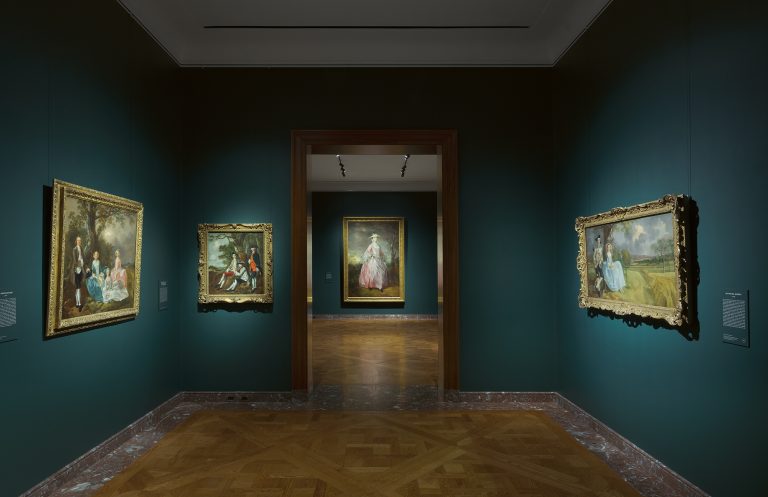
Installation view of Gainsborough: The Fashion of Portraiture at The Frick Collection. Photo: Joseph Coscia Jr. Detail.
Thomas Gainsborough assembled a veritable army of portraits of “the great and the good” in Georgian Britain. And the new exhibition at the Frick Collection presents his grand manner portraiture at its most dazzling. Duchesses and countesses, earls and dukes, were all portrayed as living embodiments of social rank. Many of the loans appear in New York for the first time, emphasizing their rarity and significance; some making their public debut.
But one painting disrupts all expectations: Gainsborough’s only known portrait of a Black man, Ignatius Sancho.
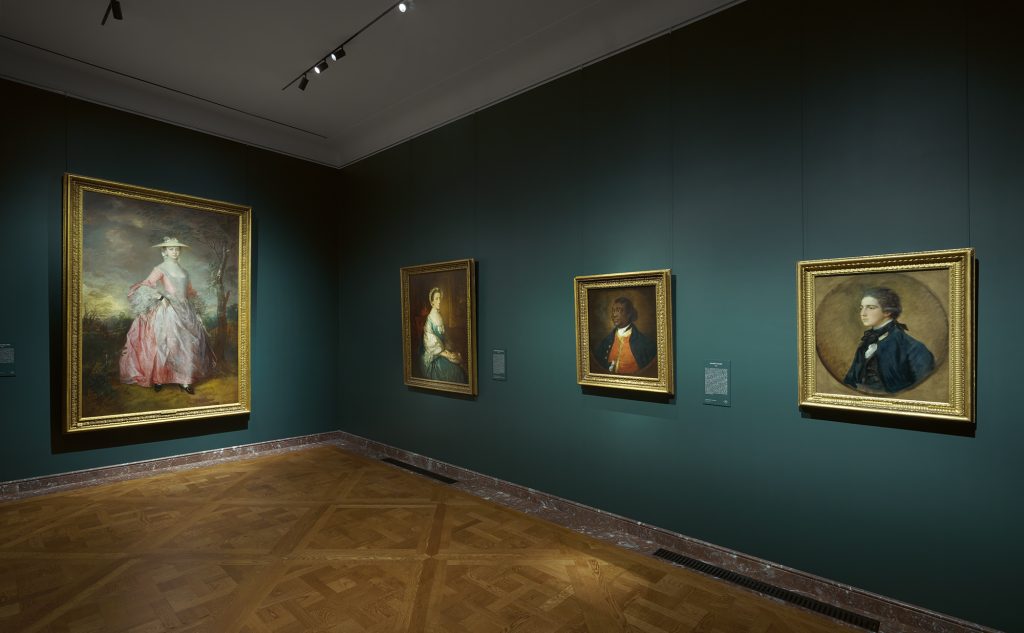
Installation view of Gainsborough: The Fashion of Portraiture at The Frick Collection. Photo: Joseph Coscia Jr.
Sancho is dressed like an 18th-century gentleman, clad in a brick-red waistcoat edged with gold brocade and a crisp white cravat, with his hand slightly tucked, posture relaxed, and expression self-assured. The painting checks every box of British grand manner portraiture, except that the sitter is Black.
No other portrait of its kind exists.
“Out of the hundreds of portraits that Gainsborough left behind, the vast majority are people with money who wanted really beautiful pictures of themselves,” said The Frick’s chief curator, Aimee Ng, in a one-on-one interview with DailyArt Magazine. “But that’s not the only story.”
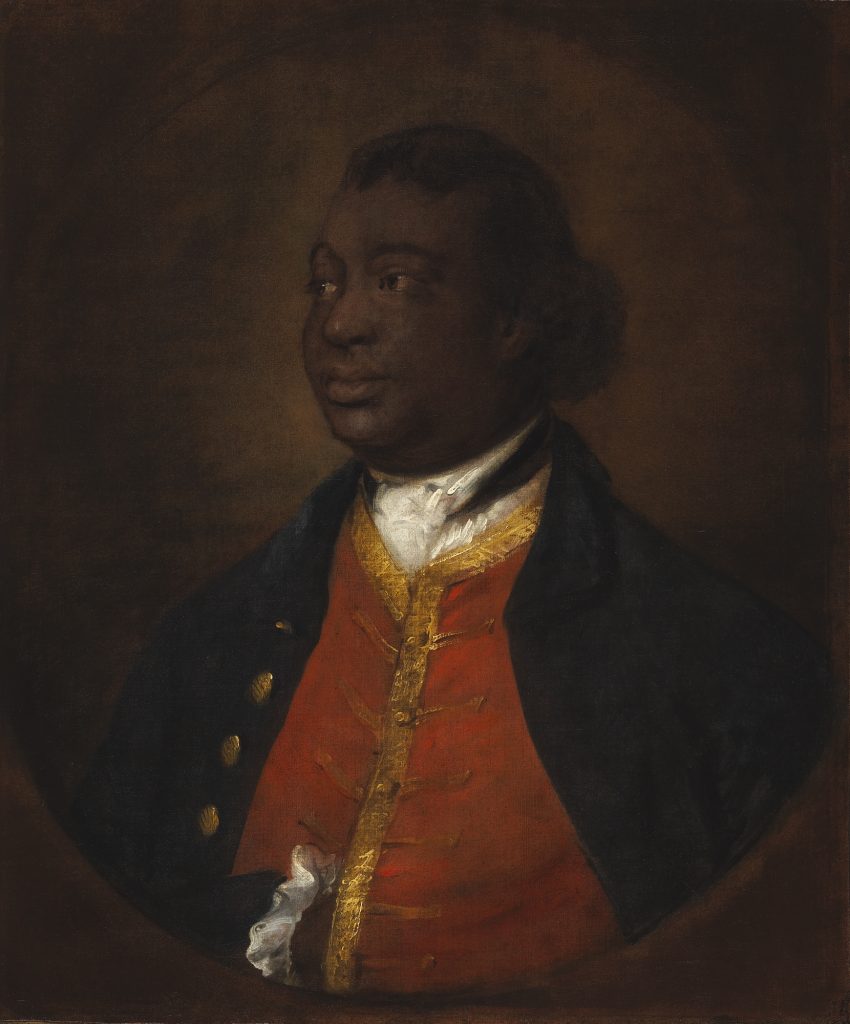
Thomas Gainsborough, Ignatius Sancho, 1768, National Gallery of Canada, Ottawa.
Ignatius Sancho (ca. 1729–1780) was born aboard a slave ship and brought to a family in Greenwich, England, as a child, where he grew up orphaned and in oppressive servitude. Yet, encouraged by the Duke of Montagu, he pursued his own education. After 1749, he served the Montagu family for decades, eventually rising to the position of valet, the role he likely held when the portrait was painted.
While a servant, he corresponded widely and became a prominent voice in the abolition movement. He wrote to celebrity novelist Laurence Sterne, whose response became a landmark abolitionist text. Largely self-taught, Sancho became a published composer, Westminster shopkeeper, and the first known Black Briton to vote and have an obituary in the British press. Sancho’s portrait was the first historical European painting to be purchased by the National Gallery of Canada in 1907.
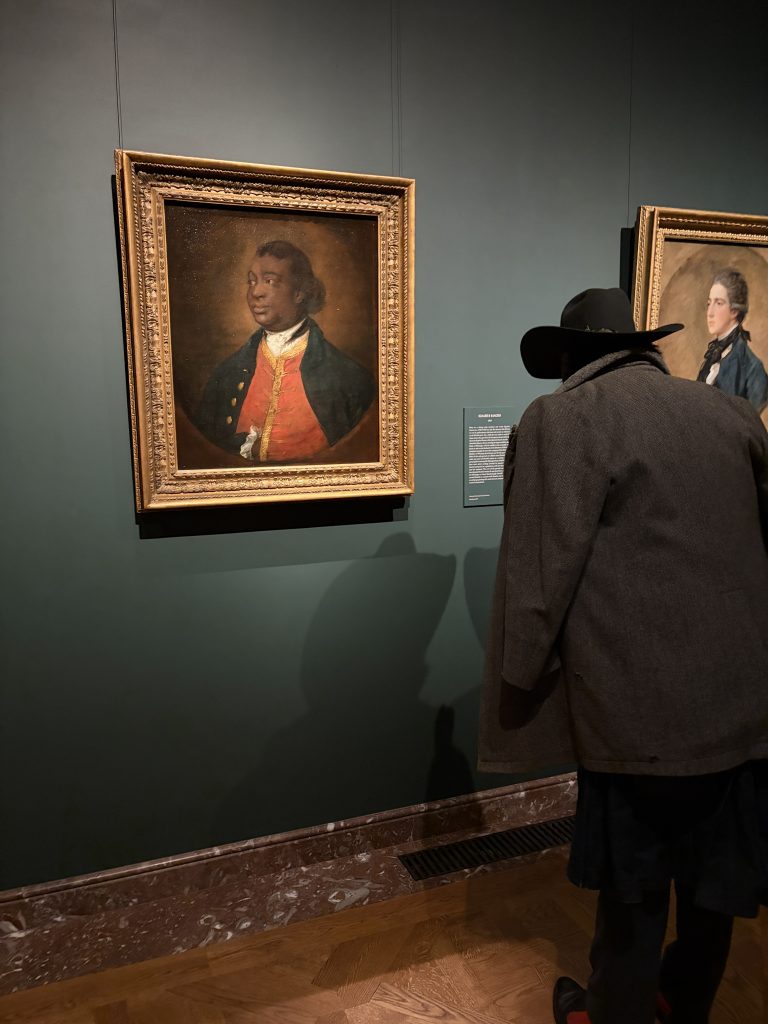
A patron admires Ignatius Sancho’s portrait at Gainsborough: The Fashion of Portraiture, Frick Collection, New York City, NY, USA. Photograph by the author.
“British 18th-century painting was very fashionable in Canada and the USA at the time, and Ignatius Sancho was a fascinating figure,” explained Christopher Etheridge, Ph.D., Associate Curator of European, American, and Asian Art at the National Gallery of Canada, discussing the original acquisition with DailyArt Magazine. “It is one of our most important 18th-century works of art. Ignatius Sancho was an extraordinary man. We are happy to share this work with other museums so that as many people as possible can see it.”
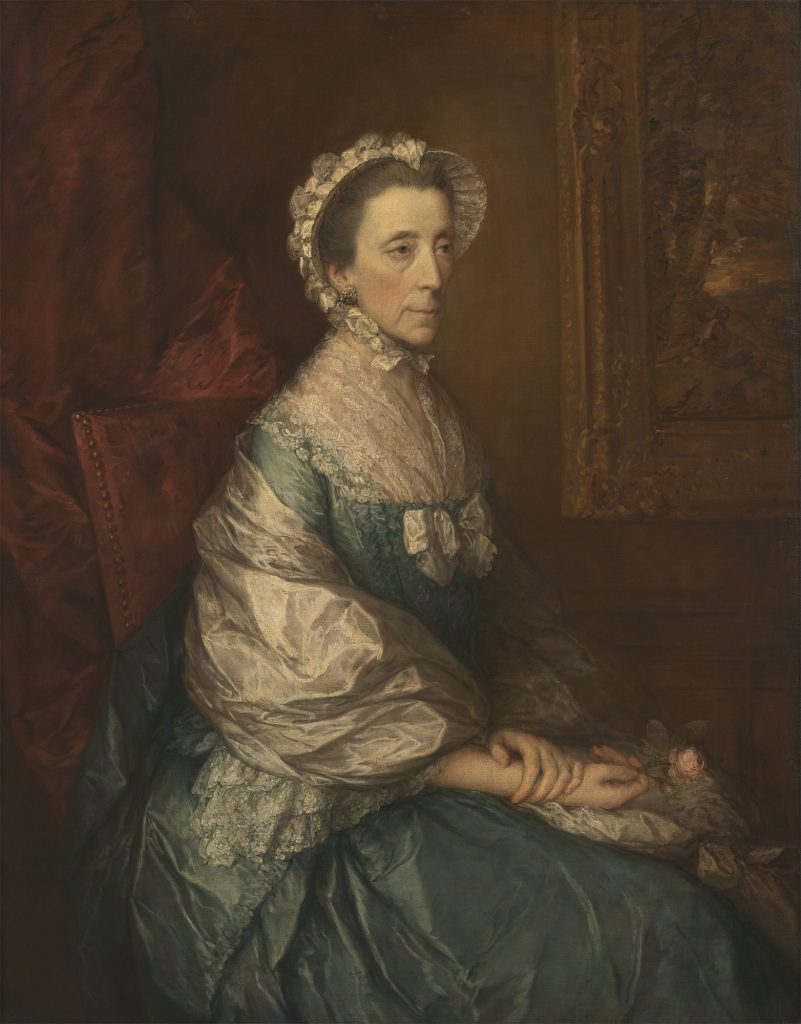
Thomas Gainsborough, Mary, Duchess of Montagu, ca. 1768, Duke of Buccleuch, Bowhill House, Scottish Borders. Photo courtesy The Buccleuch Living Heritage Trust.
Gainsborough’s portrait cemented the image of this Black British polymath, whose letters were published posthumously in 1782. The inclusion of the Sancho portrait, intentionally placed to the right of Mary, Duchess of Montagu—his employer at the time, helps the exhibition insist on a broader story. Sancho, a servant then, is not depicted in his livery but in the clothes of a gentleman.
To focus solely on aristocratic glamour would miss the point.
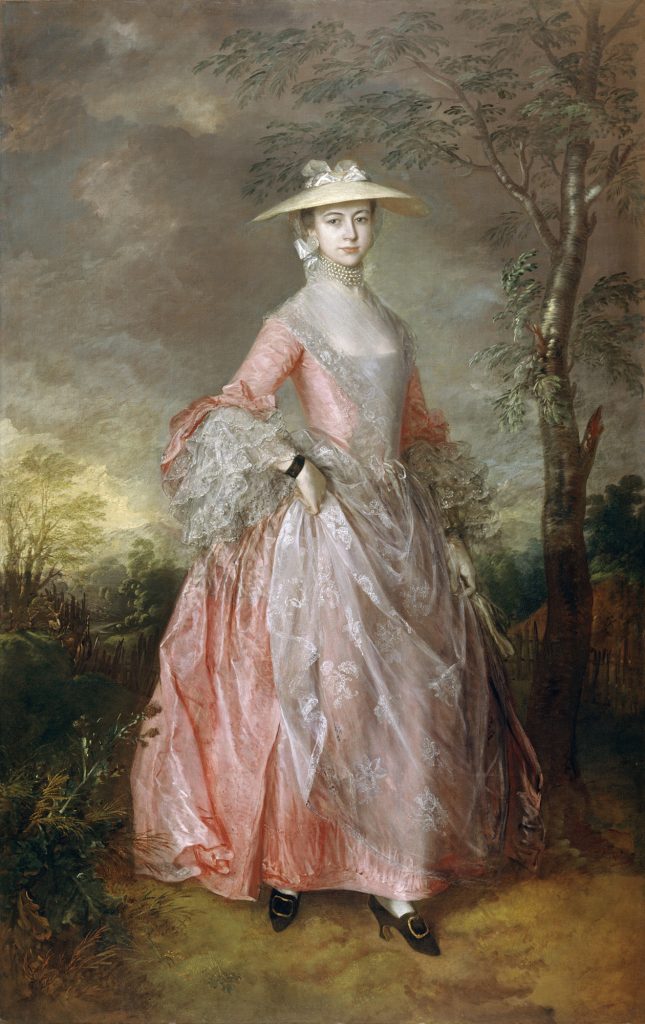
Thomas Gainsborough, Mary, Countess Howe, 1763–1764, English Heritage, Kenwood House, London © Historic England/Bridgeman Images.
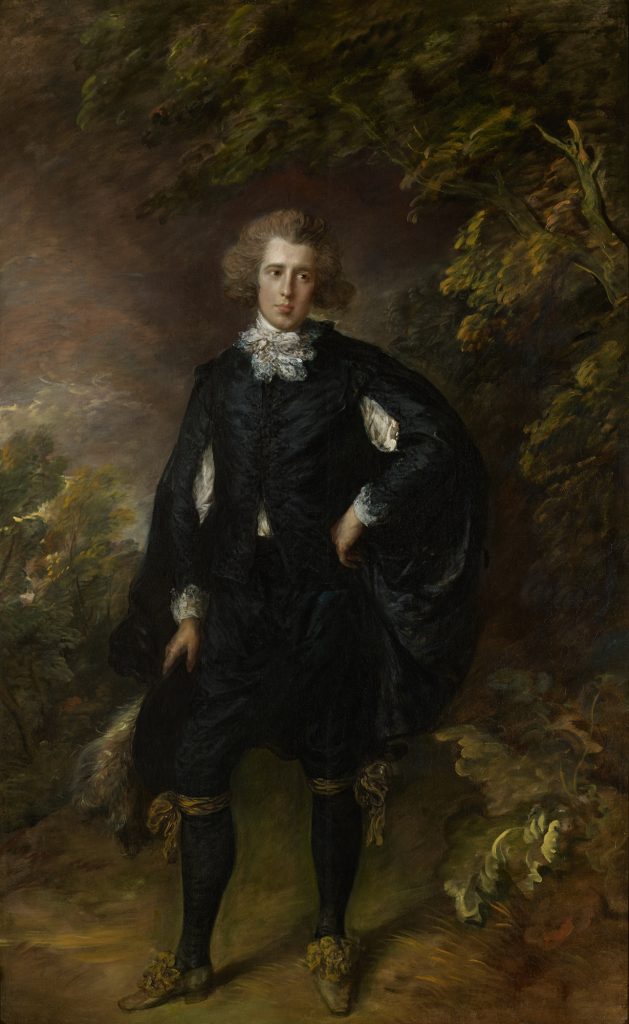
Thomas Gainsborough, Bernard Howard, Later 12th Duke of Norfolk, 1788, His Grace, the Duke of Norfolk, Arundel Castle, Sussex.
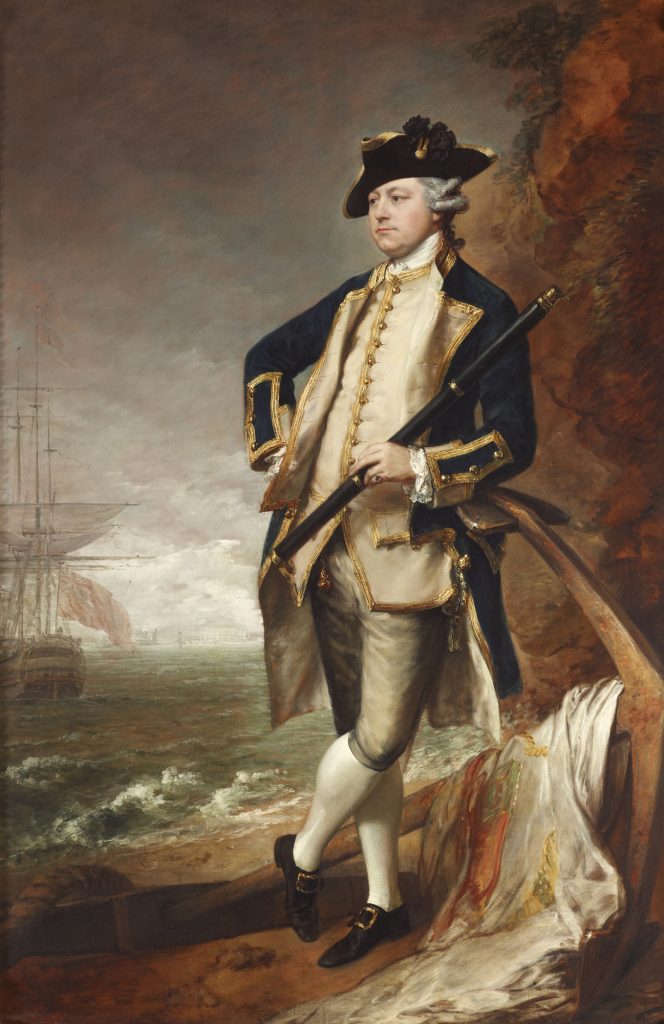
Thomas Gainsborough, Captain Augustus John Hervey, Later 3rd Earl of Bristol, ca. 1768, Ickworth House, Suffolk © National Trust Images.


Exhibition and catalog poster-girl Mary, Countess Howe (1763–1764), one of Gainsborough’s earliest acclaimed full-length society portraits, is on exceptional loan from Kenwood House and showcases the artist’s mastery of 1760s fashion.
Bernard Howard, later 12th Duke of Norfolk (1788), makes an entrance in an elegant portrait in the style of Anthony van Dyck. In its first public display outside Arundel Castle in Sussex, it demonstrates Van Dyck’s enduring appeal and influence on Gainsborough.
While the Duchess of Montagu radiates aristocratic poise with her sumptuous attire, Captain Augustus John Hervey, later 3rd Earl of Bristol (also ca. 1768), projects his status in full naval uniform.
In her portrait selection, Ng achieves the goal of presenting Gainsborough’s fashion choices as an aid in understanding 18th-century history and society, even if the lavish outfits may seem “to modern eyes, absurd.”
Those fashioned in satin and power, many whose fortunes were entwined with colonialism and slavery, share space with figures of exceptional talent, often from more humble backgrounds, and even “demi-reps”—women of questionable reputation. Regardless of so-called “lowborn” or “highborn” status, all are rendered in the same naturalistic, fluid manner.
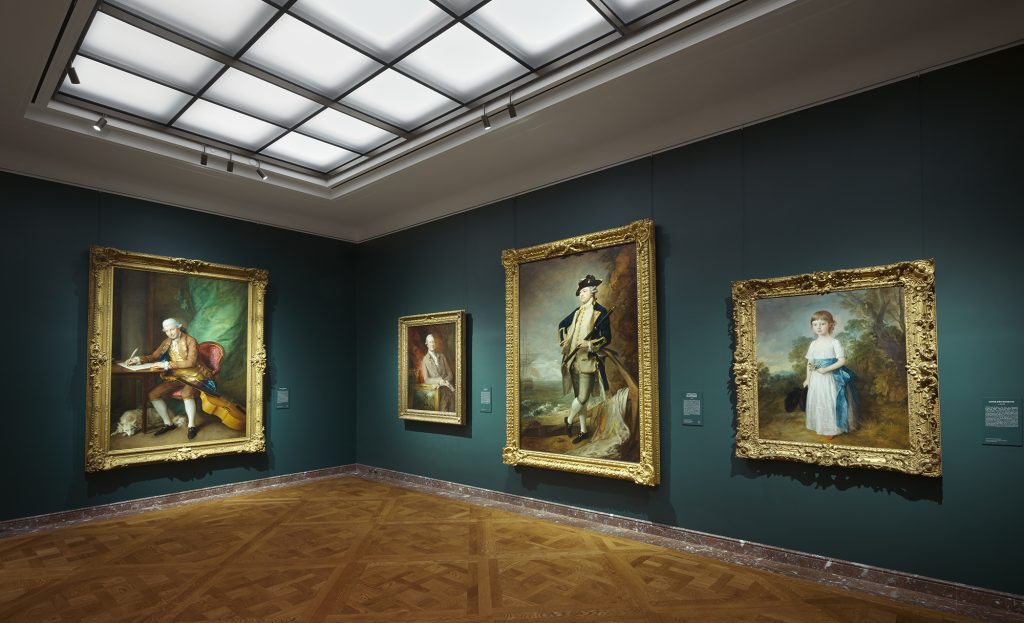
Installation view of Gainsborough: The Fashion of Portraiture at The Frick Collection. Photo: Joseph Coscia Jr.
Ng draws out this aspect of Gainsborough’s work by choosing to display portraits of aristocrats alongside figures like Sancho, high-profile London courtesan Grace Dalrymple Elliot (1778), and German composer and renowned viola da gamba player Carl Friedrich Abel (1777), a close friend of the artist. (Gainsborough moved in musical circles and was a skilled multi-instrumentalist himself.)
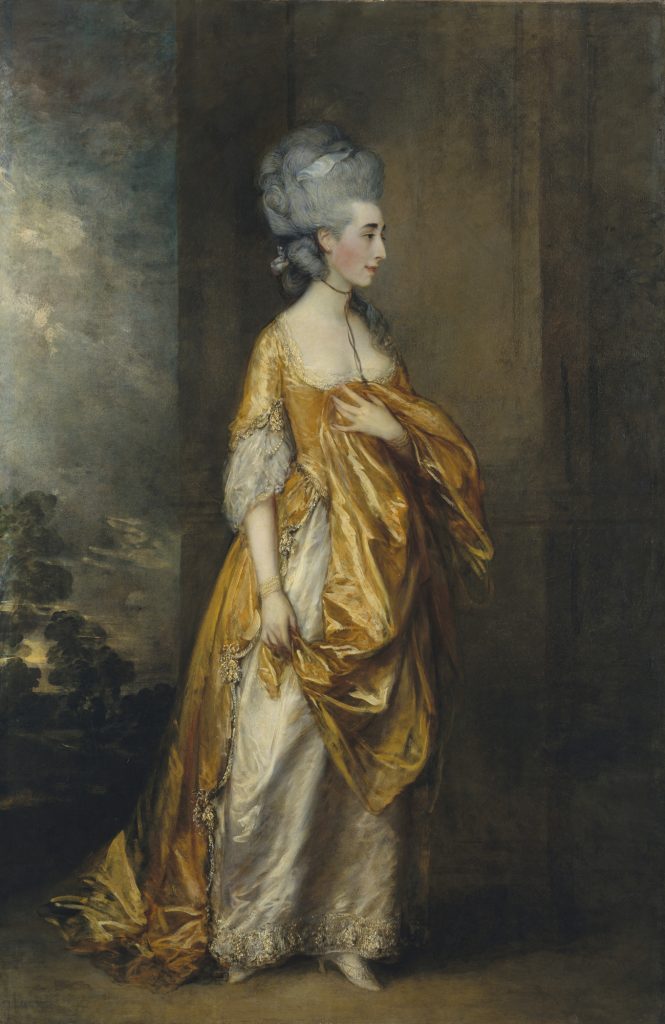
Thomas Gainsborough, Mrs. Grace Dalrymple Elliott, 1778, The Metropolitan Museum of Art, New York. Photo courtesy The Metropolitan Museum of Art/ArtResource.
The exhibition introduces a small gallery of Gainsborough’s early conversation pieces, including Mr. and Mrs. Andrews (ca. 1750), on rare loan from the National Gallery in London. In this icon of early British portraiture, Gainsborough indulged his love of landscape by placing figures in detailed, natural settings, which later shaped his grander portraits.
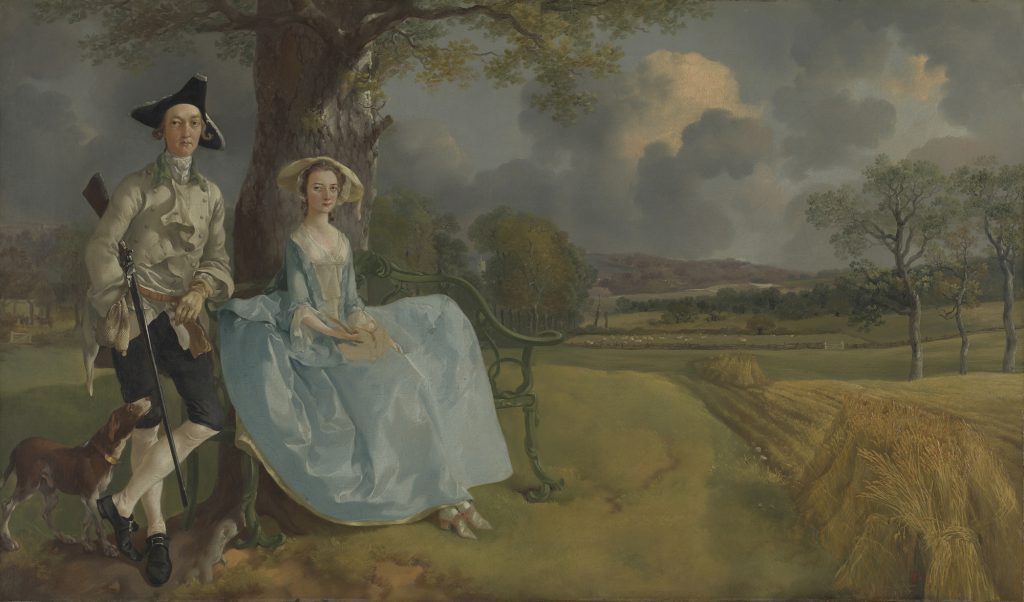
Thomas Gainsborough, Mr. and Mrs. Andrews, ca. 1750 © The National Gallery, London.
Gainsborough was a landscape artist at heart but painting them was mostly, in modern slang, his “side hustle.” Portraiture paid the bills. Gainsborough counted among his patrons some of the most influential figures of the time, including King George III.
Nonetheless, he did not confine himself to aristocratic commissions. Gainsborough repeatedly depicted his family and people close to him in informal or personal works, a marked contrast to his royal portraitist persona. He even depicted animals with sensitivity and attention rather than just as props.
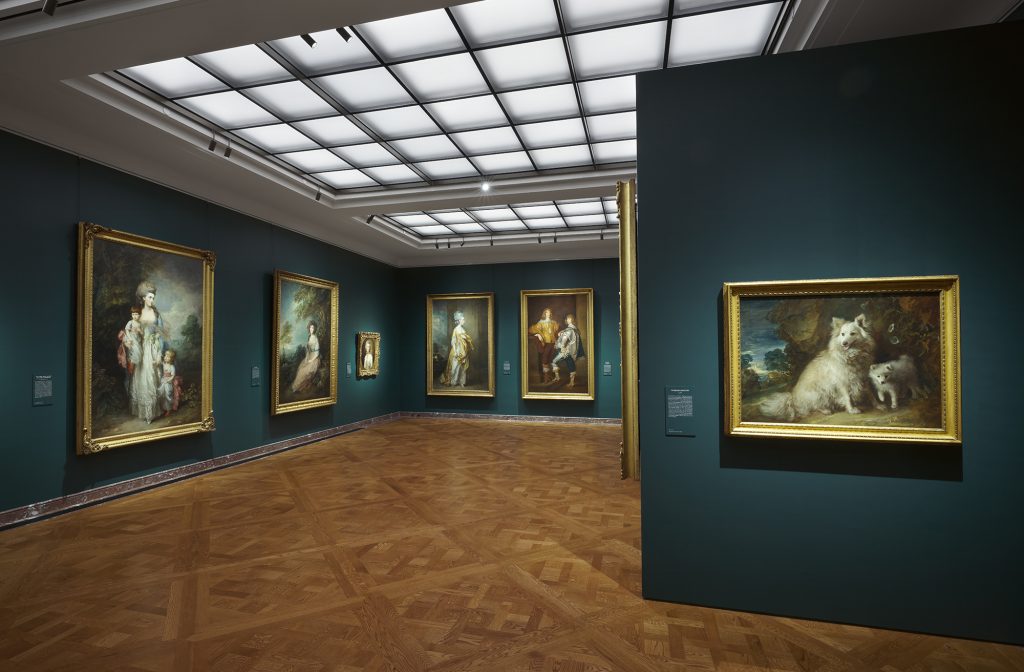
Installation view of Gainsborough: The Fashion of Portraiture at The Frick Collection. Photo: Joseph Coscia Jr.
The exhibition contains several charming examples of that personal side of Gainsborough, including a superb depiction of his wife, Margaret Gainsborough, one of the jewels of London’s Courtauld Gallery.
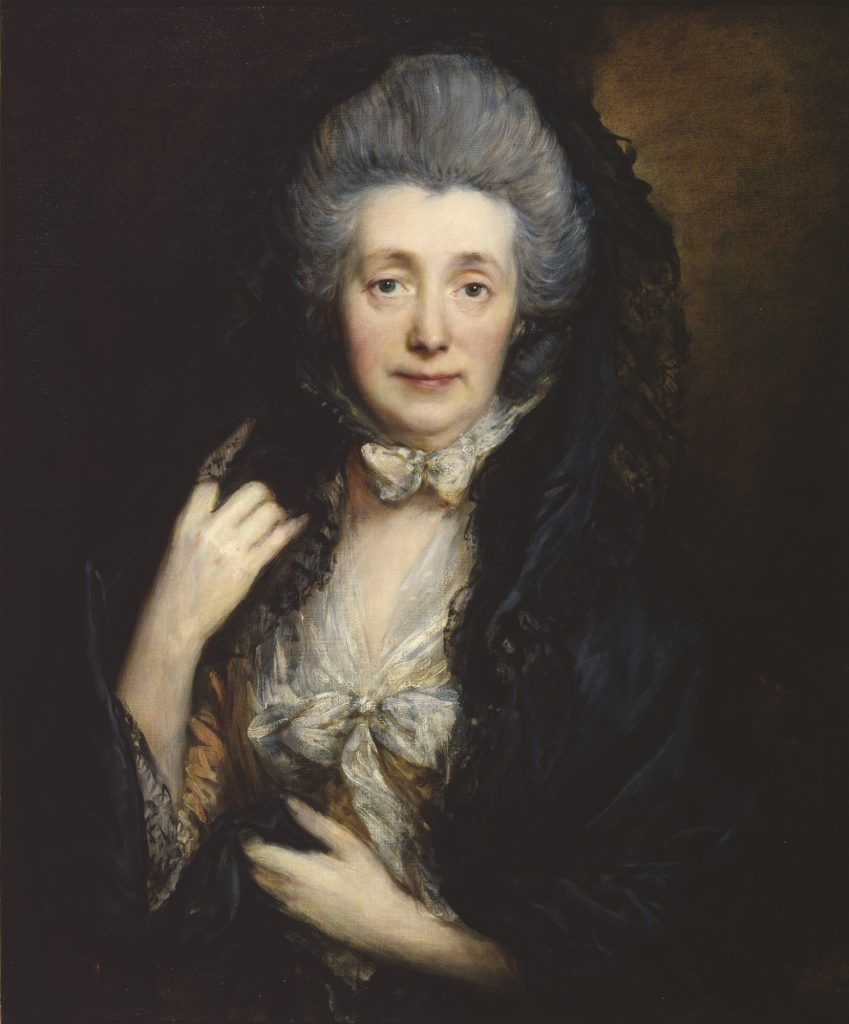
Thomas Gainsborough, Portrait of Margaret Gainsborough, ca. 1778, The Courtauld, London © The Courtauld / Bridgeman Images.
The exhibition also highlights Gainsborough’s use of fashion as a dynamic, expressive element of portraiture; clothing, accessories, and hairstyles are all part of the construct of identity and status. Gainsborough painted the most up-to-date ensembles; accessories were retouched or removed; Marie Antoinette-like hairstyles were freshly coiffed. Premier examples of this reworking appear in the powerful, if occasionally claustrophobic arrangement of works.
That focus helps the exhibition succeed in proposing “fashion” beyond a garment to an idea, and ultimately to an action, the act of “fashioning” oneself.
The immensely wealthy steel magnate Henry Clay Frick sought out Gainsboroughs to fashion his own image as a Gilded Age collector of prestige and refined taste. That ambition helped make the Frick Collection a premier repository of 18th-century British portraiture, including more than 10 masterpieces by Gainsborough. It is of no surprise, then, that when Ng arrived at the museum in 2015, her Renaissance scholarship was challenged by the Frick’s significant holdings of British art.
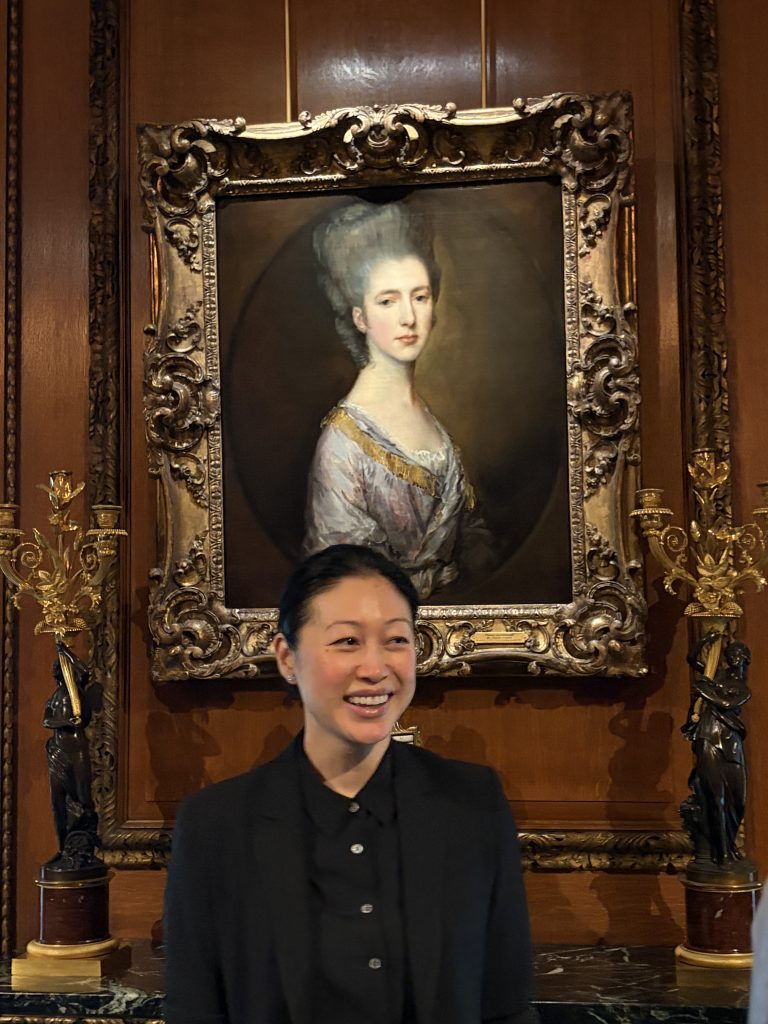
Chief curator Aimee Ng in front Mrs. Alexander Champion, 1767, reworked ca. 1775, a promised gift from a museum trustee; it is the first work by Gainsborough to enter the Frick Collection in 80 years. Photograph by the author.
Ng, who earned her Ph.D. at Columbia University, admits that it took her “a long time” to get comfortable with the subject of British art, an area where she claims to be “still no expert.” Nonetheless, she curated the first-ever comprehensive monographic exhibition of Gainsborough’s portraits in New York with remarkable polish and unexpected sensitivity.
It’s a brilliant show that challenges the perception of Gainsborough as a stuffy portrait painter with no relevance today. The portraits on display are not only of aristocrats and the landed gentry, but Sancho, the musician Abel, Gainsborough’s studio assistant, courtesans, and “demi-reps.” They demonstrate his ability to imbue a portrait with a real sense of personality and psychological depth, but also his incredible technical facility, especially when it comes to painting fashion.
Keeper of Art and Place, Gainsborough’s House, Sudbury, UK. Interview for DailyArt Magazine.
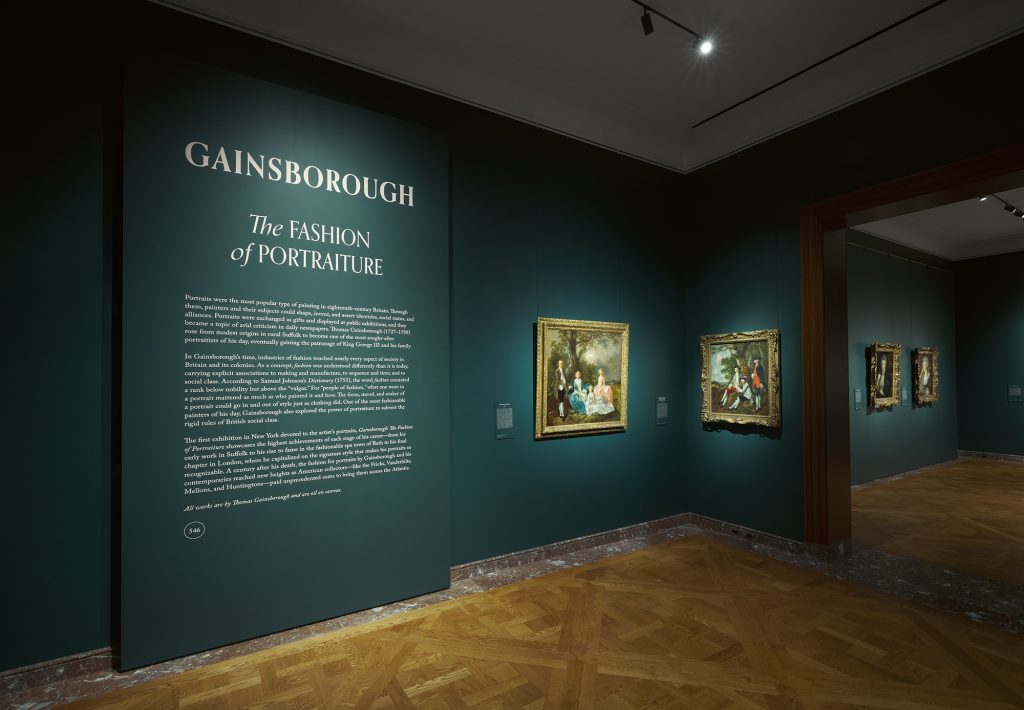
Installation view of Gainsborough: The Fashion of Portraiture at The Frick Collection. Photo: Joseph Coscia Jr.
Originally from rural Suffolk, despite being one of the Royal Academy’s founding members, Gainsborough never quite fit within its constraints. He was a portraitist of the powerful never entirely at ease with power, as relished by academicians like Sir Joshua Reynolds.
Gainsborough employed a unique studio technique, standing at the same distance from canvas and sitter, using brushes with poles that could reach 6 ft. His mastery of light, frequently described as enigmatic, was crucial to his style. He also insisted on painting the face with the model present, all in pursuit of likeness, even as he referred to it as the curs’d Face Business.
Following Gainsborough’s death at 61, the Royal Academy president Joshua Reynolds, perennially at odds with the self-taught artist, paid him the greatest possible compliment. He devoted his entire annual Academy speech to Gainsborough. Reynolds declared, “If ever this nation should produce genius sufficient to acquire to us the honorable distinction of an English School, the name of Gainsborough will be transmitted to posterity, in the history of the art, among the very first of that rising name.”
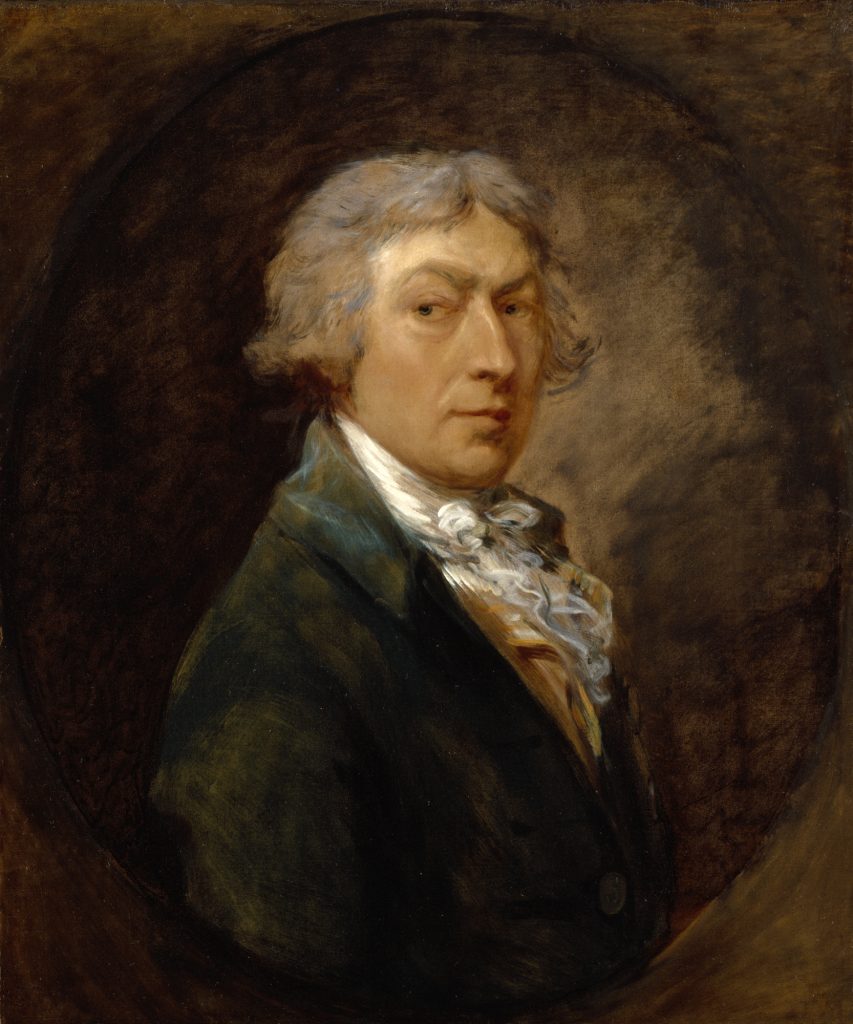
Thomas Gainsborough, Thomas Gainsborough, ca. 1787 © Royal Academy of Arts, London. Photo: Prudence Cuming Associates Limited. Gainsborough requested this self-portrait to be the only image of him ever to be engraved.
Dr. Ng assumed the role of Peter Jay Sharp Chief Curator at the Frick in November 2025, a position historically held by male scholars. The appointment of an Asian American woman marks a shift toward broader representation in interpreting canonical Western collections, a necessary evolution in museum scholarship. Ng is nonetheless clear about her new and pivotal role in an institution like the Frick, a small but globally respected museum whose European masterpieces rival those of leading art institutions in Europe.
“Something that I firmly believe in is that my job is to make the curator disappear and to tell the stories through the art. It is my goal to put forth the stories of these specific humans in history; that is what leads the story,” Ng asserted. “I hope that people walk away from this exhibition with an understanding that yes, (the paintings) are beautiful, but they’re much, much more than that.”
Gainsborough: The Fashion of Portraiture is on show at the Frick Collection, New York, USA, through May 25, 2026.
Get your daily dose of art
Click and follow us on Google News to stay updated all the time

DailyArt Magazine needs your support. Every contribution, however big or small, is very valuable for our future. Thanks to it, we will be able to sustain and grow the Magazine. Thank you for your help!
Rivera is a New York City–based journalist with more than two decades of experience, known for thriving in a media capital that tests endurance as much as talent. Reporting has taken her from the World Cup to the Louvre. Her deep knowledge of art history has been shaped by academic research, extensive international travel, and years of study in New York’s major museums and many leading art institutions around the world.

Written by Holocaust survivor Suzanne Loebl with Abigail Wilentz, Plunder and Survival (Bloomsbury, 2025) traces the Nazi looting of art across...
Javier Abel Miguel 16 February 2026
Thomas Kaplan and his wife, Daphne Recanati Kaplan, have amassed the world’s largest private collection of 17th-century Dutch paintings. The...
Tom Anderson 5 February 2026
André Kertész is the patron saint of amateur photography. A man as full of passion for capturing life between glass and film as he is with...
Coleman Richards 9 February 2026
More than a historical avant-garde, Surrealism continues to function as a living language, one capable of addressing uncertainty, desire, and...
Carlotta Mazzoli 5 January 2026