

Alfred Sisley: The Purest Impressionist
A look at the life of Alfred Sisley, the French Impressionist who lived and died an Englishman.
Candy Bedworth 26 October 2026
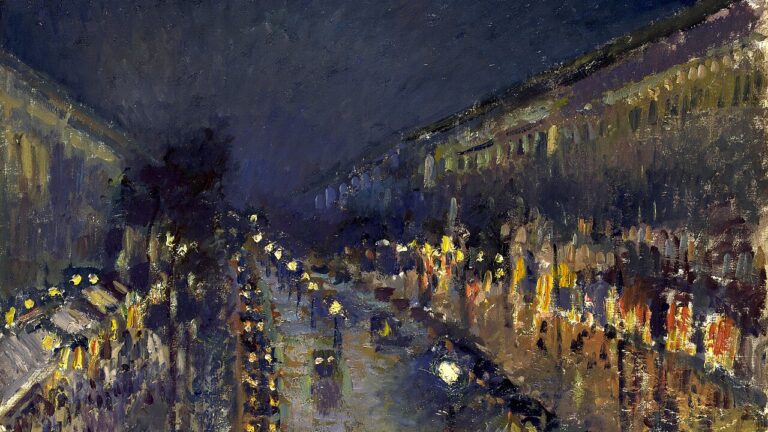
Camille Pissarro, The Boulevard Montmartre at Night, 1897, National Gallery, London, UK. Detail.
An incredibly prolific artist, Camille Pissarro was born in the Caribbean but spent the majority of his life living and working in France. He experimented in Impressionism when the movement was still in its infancy. Sometimes referred to as “Father Pissarro,” he was also a mentor to other artists in his circle.
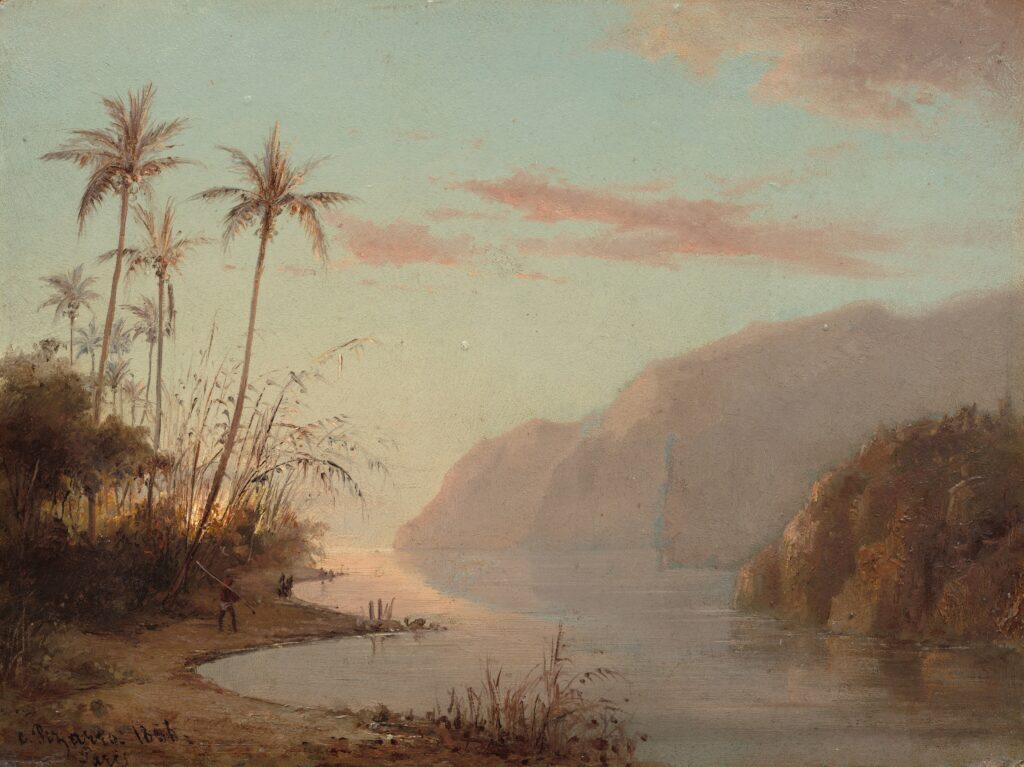
Camille Pissarro, A Creek in St. Thomas (Virgin Islands), 1856, National Gallery of Art, Washington, DC, USA.
Pissarro was born on the island of St. Thomas, depicted here. His parents sent him to a boarding school in France when he was 12 years old and he returned to St. Thomas in his mid-teens to learn the family business. He ultimately pursued a career in the arts instead, spending the bulk of his life living and working in France.
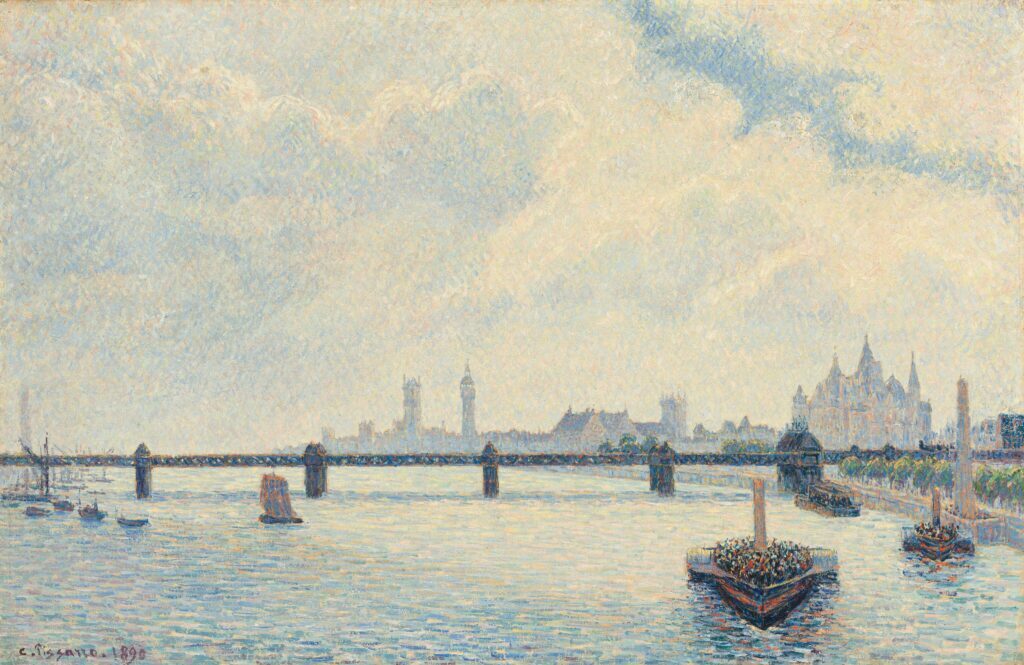
Camille Pissarro, Charing Cross Bridge, London, 1890, National Gallery of Art, Washington, DC, USA.
During the Franco-Prussian War, Pissarro was forced to temporarily relocate to England, living in a town just outside of London from 1870 to 1871. Although he returned to France as soon as he could, he made trips back to London over the following two decades. This work from one such trip in 1890 features his signature care given to depicting the effects of light on his subject matter.
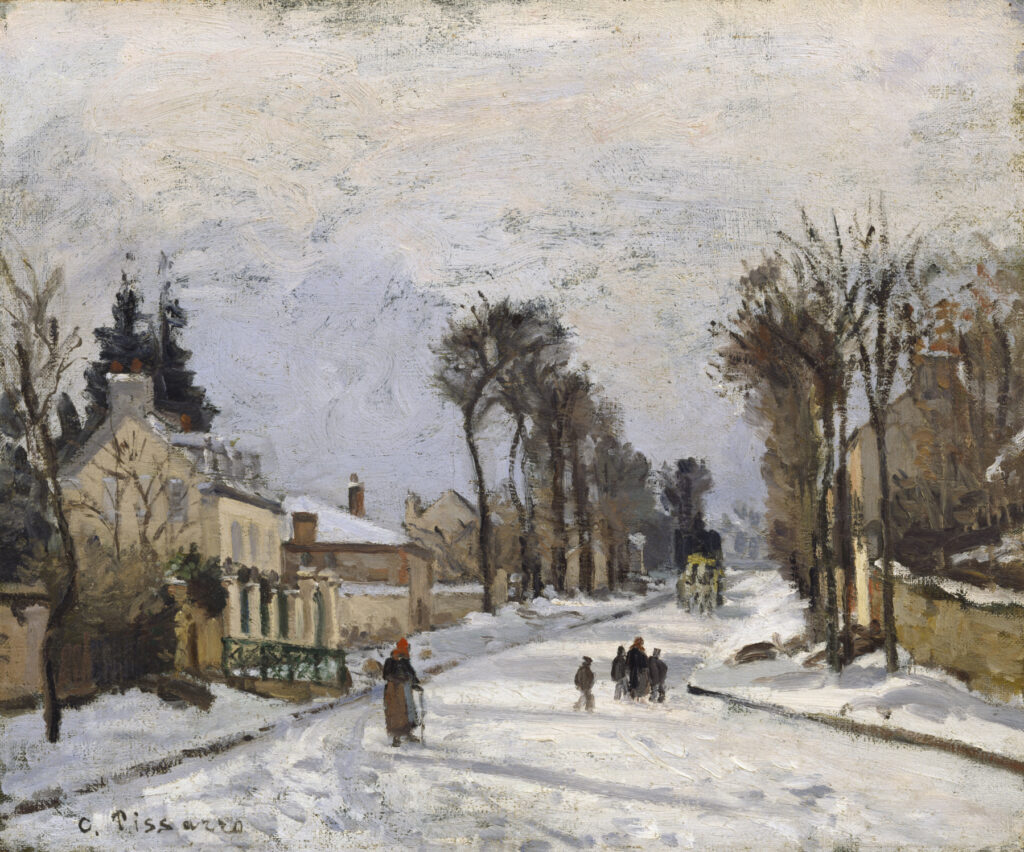
Camille Pissarro, The Corner of the Route de Versailles and the Chemin de l’Aqueduct, Louveciennes, 1869, Walters Art Museum, Baltimore, MD, USA.
While Pissarro was sojourning in England during the Franco-Prussian War, he left behind approximately 1500 paintings that he had completed over the 1850s and 1860s. When he returned, only 40 of them remained. Sadly, the rest were destroyed by soldiers in Pissarro’s absence. They had used them as outdoor floor mats to keep their boots out of the mud!
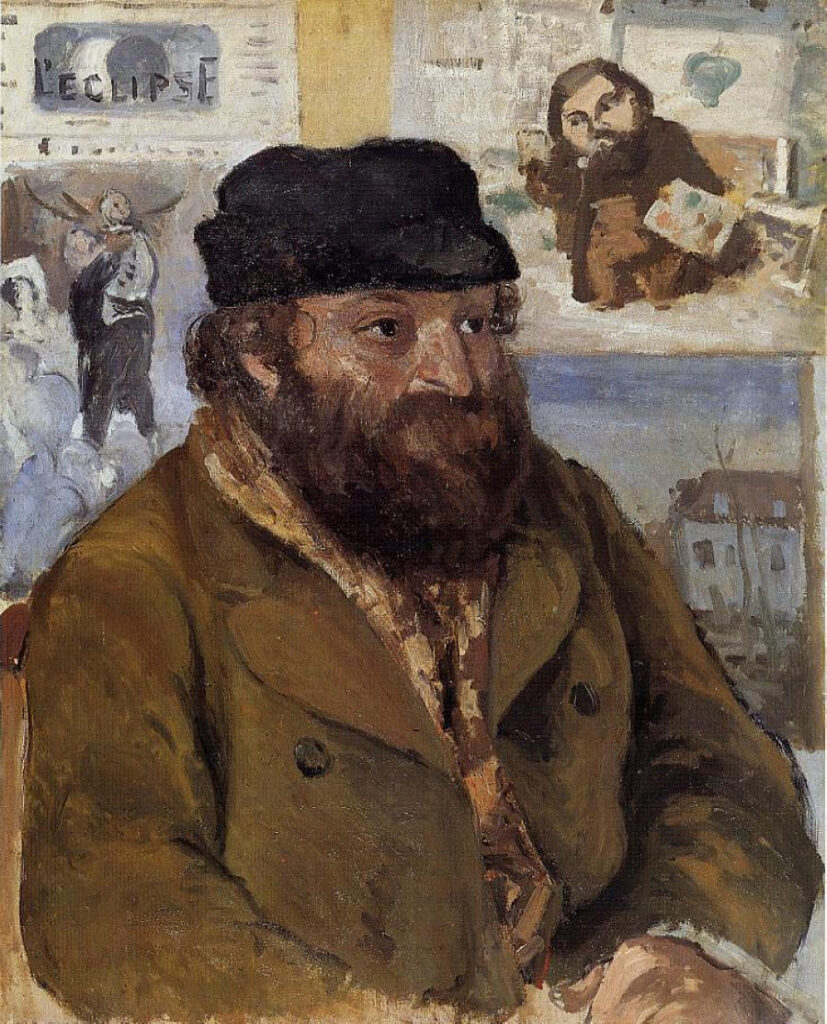
Camille Pissarro, Portrait of Cézanne, 1874, National Gallery, London, UK.
Many of the other Impressionists referred to Pissarro as “Father Pissarro.” This was likely because he was about 10 years older than the rest of the group. Here, he depicts Post-Impressionist Paul Cézanne, sporting a full beard and black cap.
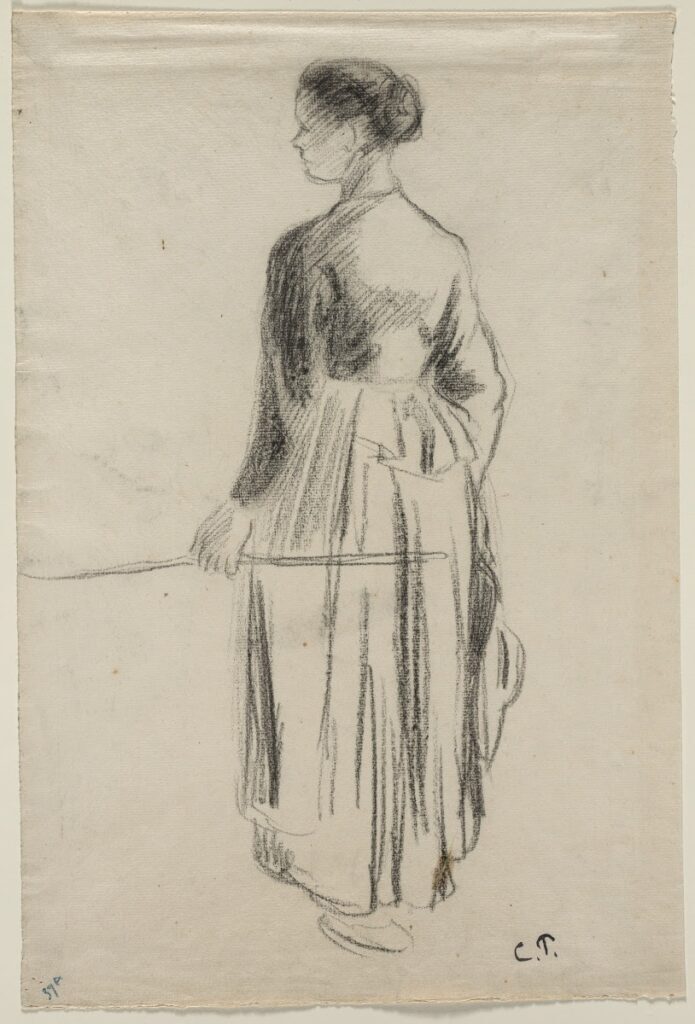
Camille Pissarro, The Cowherdess, Eragny, 1886, Cleveland Museum of Art, Cleveland, OH, USA.
The subject matter of the bulk of Pissarro’s works generally fall into three categories: landscapes, cityscapes, and portraits/figure studies. Pissarro made countless sketches over the years. Some were in preparation for works that he would later recreate in oil, meanwhile others were mere figure studies, such as this depiction of a cowherdess.
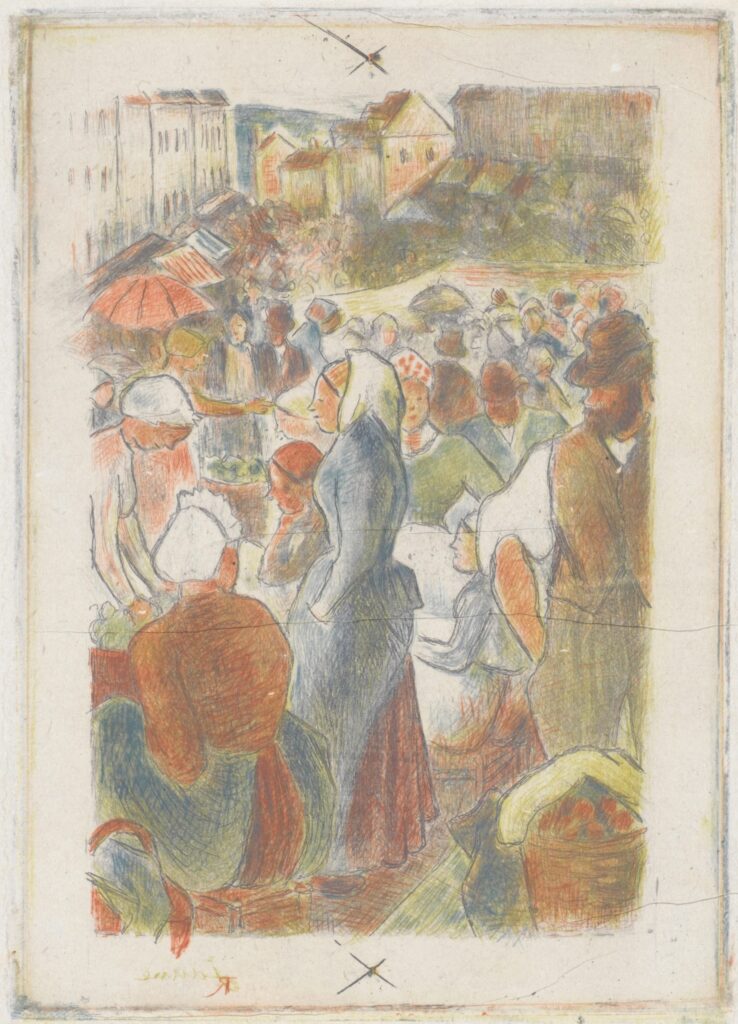
Camille Pissarro, The Market at Gisors: Rue Cappeville, 1894–1895, Van Gogh Museum, Amsterdam, Netherlands.
In addition to his paintings and drawings, Pissarro also experimented extensively with printmaking. He tried out various media including etching, woodblock printing, and lithography. This work (an etching and drypoint) is one of his many figure studies, converted into a vibrant print.
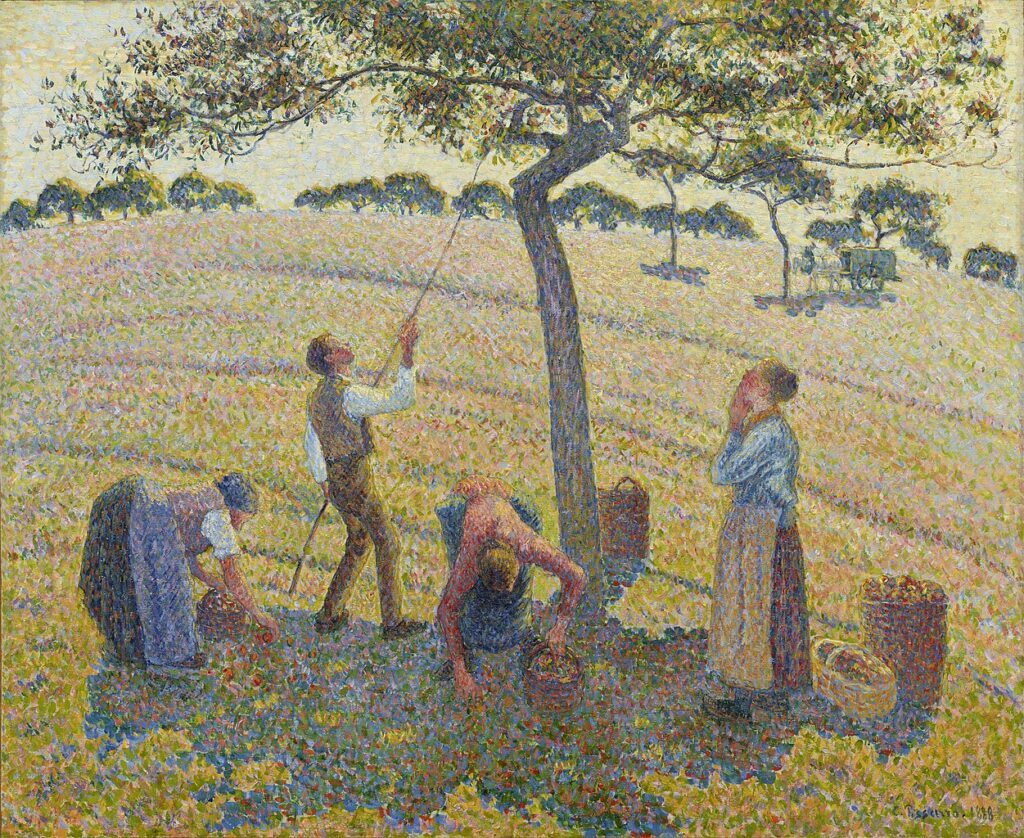
Camille Pissarro, Apple Harvest, 1888, Dallas Museum of Art, Dallas, TX, USA.
In 1885, Pissarro was in close contact with the Pointillist artists Georges Seurat and Paul Signac. Pissarro experimented with Pointillism over the following few years, having taken an interest in the technique and its effects. Many of his works in this style were painted in Erangy and its rural surroundings, such as this piece.
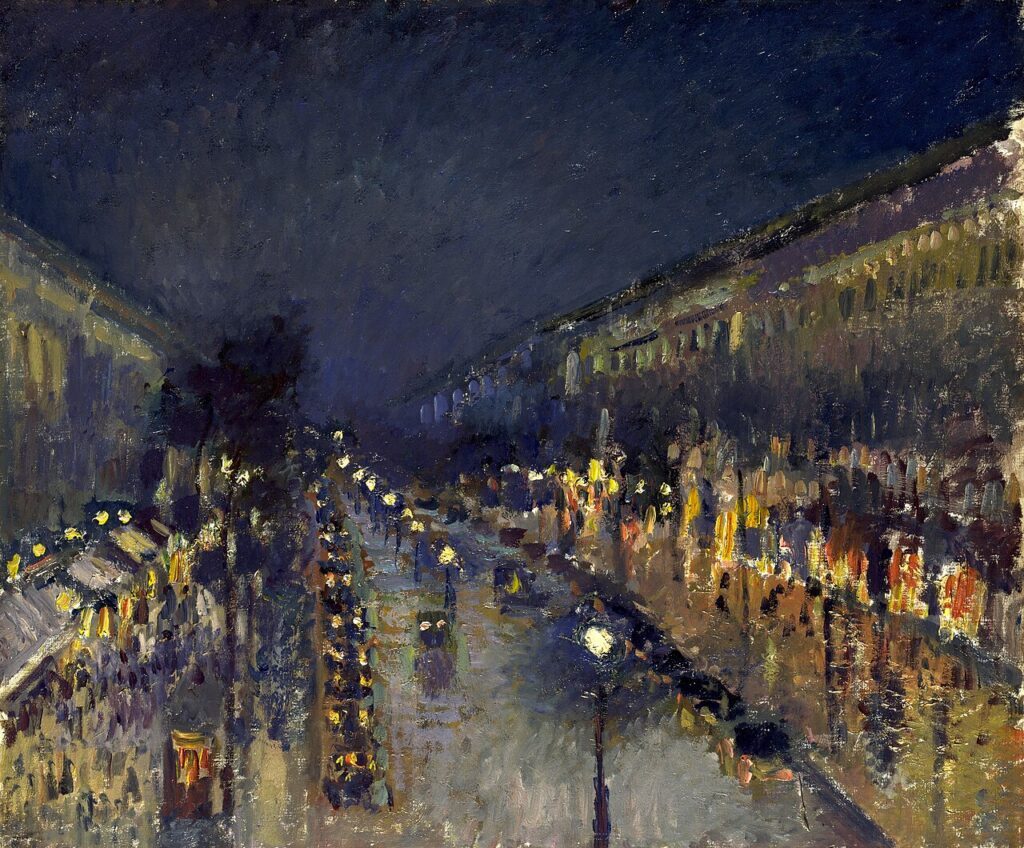
Camille Pissarro, The Boulevard Montmartre at Night, 1897, National Gallery, London, UK.
Pissarro was very interested in the effects of lighting, both natural and man-made. He painted multiple versions of this scene under various lighting and weather conditions to examine such effects. Each rendition has its own unique mood even though the subject matter remains the same. For example, here in the night version, he captures the reflections of light on the wet pavement.
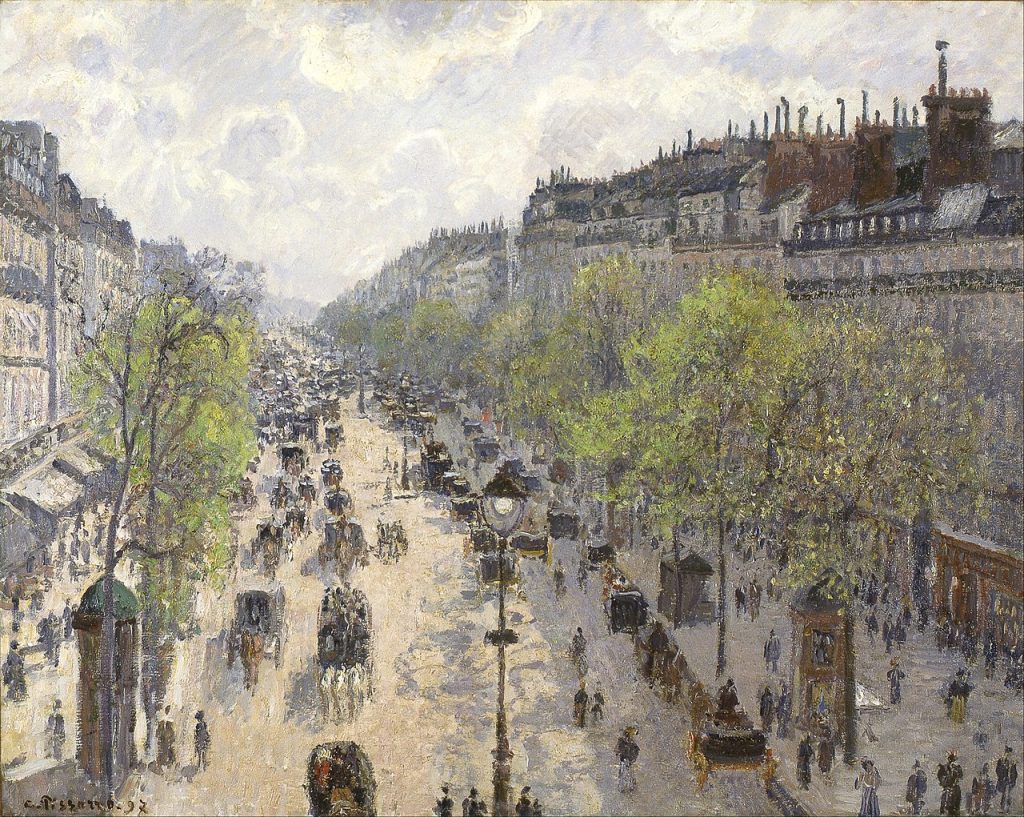
Camille Pissarro, Boulevard Montmartre, Spring, 1897, Israel Museum, Jerusalem, Israel.
Meanwhile, this version painted in the springtime features trees with their first budding leaves. Note how here Pissarro meticulously renders the shadows cast by the buildings and figures in the streetscape. In all, Pissarro painted 14 versions of this scene from the window of his room in the Grand Hotel de Roussie.
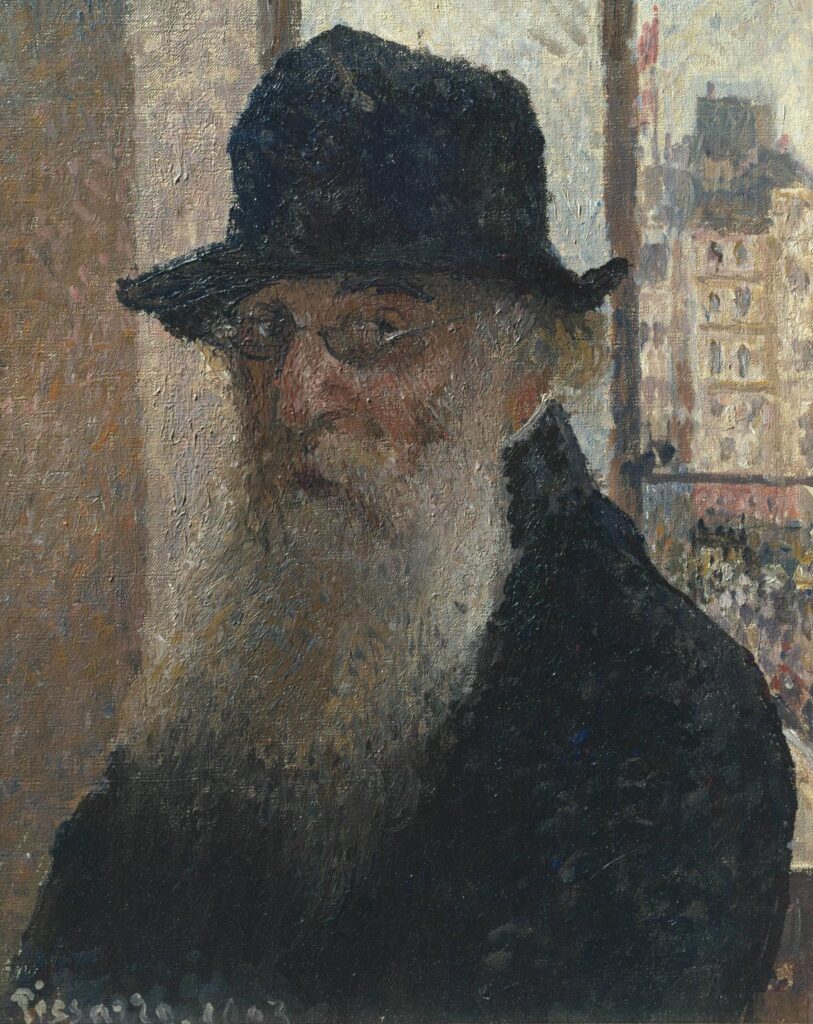
Camille Pissarro, Self-Portrait, 1903, Tate, London, UK.
One of Pissarro’s last pieces, he completed this painting the same year as his death. By this point, he was suffering from a recurrent eye infection that disallowed him from working outdoors for extended periods. Consequently, his later works were all completed indoors, many of cityscapes painted from his window, but also portraits such as this one. This work contains none of the vibrant colors we see in earlier works, perhaps a reflection of how the infection impacted his vision.
P.S. If you’d like to explore art by other Impressionists, be sure to check out our online course on French Impressionism. First lesson is free of charge!
DailyArt Magazine needs your support. Every contribution, however big or small, is very valuable for our future. Thanks to it, we will be able to sustain and grow the Magazine. Thank you for your help!

Bec is an art nerd, bicycle enthusiast, cat mom, artist/crafter/maker from sunny Toronto, Canada.

Chris Dobson was born in Preston, UK. He likes to play chess, visit museums and model for art classes in Amsterdam. He can be followed on Instagram @litterarum_magister.
A look at the life of Alfred Sisley, the French Impressionist who lived and died an Englishman.
Candy Bedworth 26 October 2026
Light-filled moments in nature—Pierre-Auguste Renoir’s Impressionist paintings are a reminder of how simple and beautiful summer can feel.
Kinga Dobosz 9 July 2026
Autumn is such a colorful season! Here are 10 activities inspired by Impressionist autumn paintings to enjoy during this time of year.
Andra Patricia Ritisan 25 September 2026
Summer has arrived! It is time to enjoy some deserved vacations, rest, go to the beach, enjoy the sunshine, and have fun. Here are 10 Impressionist...
Jimena Escoto 28 August 2025


