Rolinda Sharples was born in 1793 in either Bristol or Bath to a couple named James and Ellen Sharples who were both artists. In 1794, the Sharples family travelled to America. On the way, their ship was captured by a French privateer and the family was imprisoned in Brest in France for seven months. After their release, they continued their journey to America and settled in New York in 1796.
Her mother Ellen taught Rolinda drawing and pastels. By the age of 13, Rolinda joined her two brothers and Ellen in making small miniature portraits of famous people. They also produced smaller copies of James’s work which were sold for money.
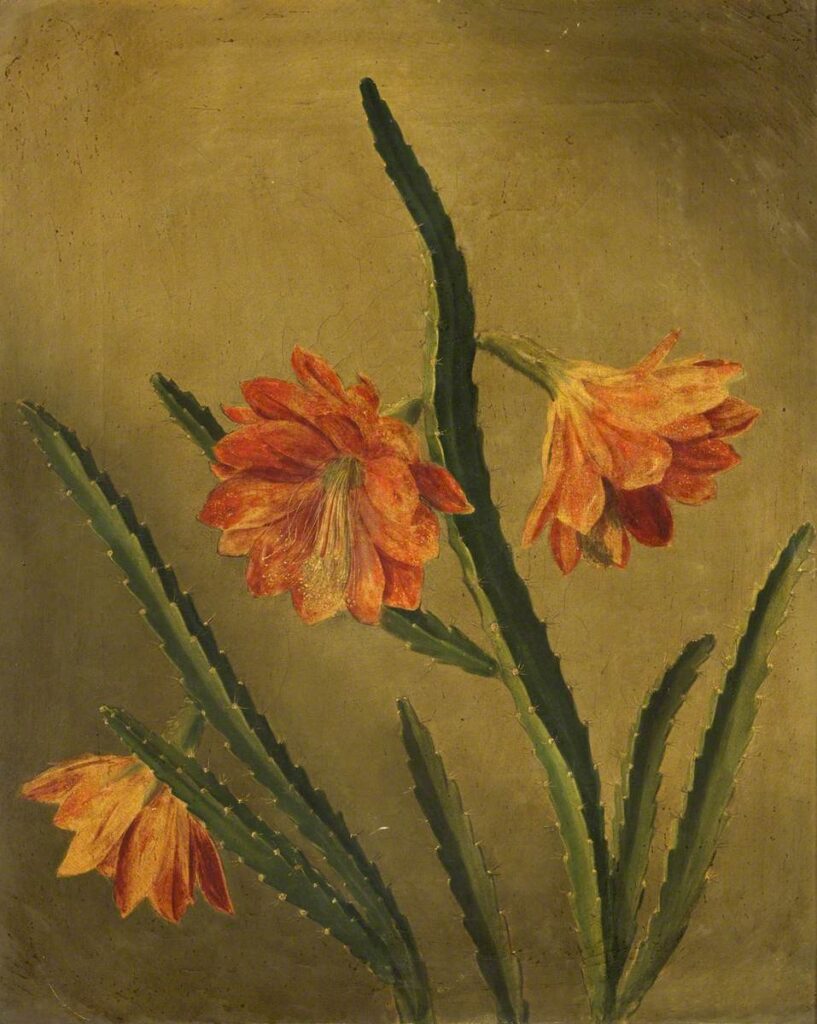
The Sharples family returned to England in 1801, but decided to move back to America a few years later, with the brothers going first, followed by Rolinda and her parents. In 1811, James died, and Rolinda and Ellen moved permanently to Bristol while Rolinda’s brothers stayed in America. Around this time, Rolinda had moved from making small portraits to large-scale ones as well as producing contemporary history paintings. The artist furthermore painted images of shells, flowers and animals.
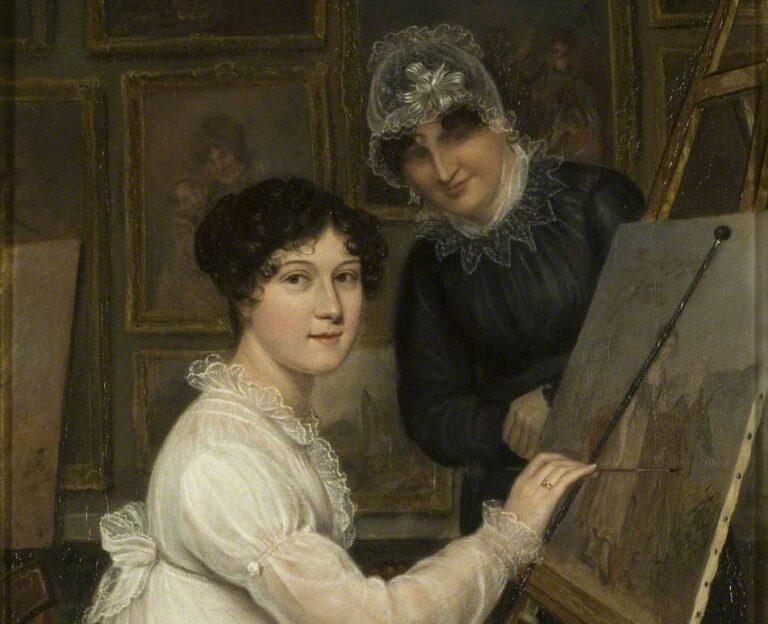
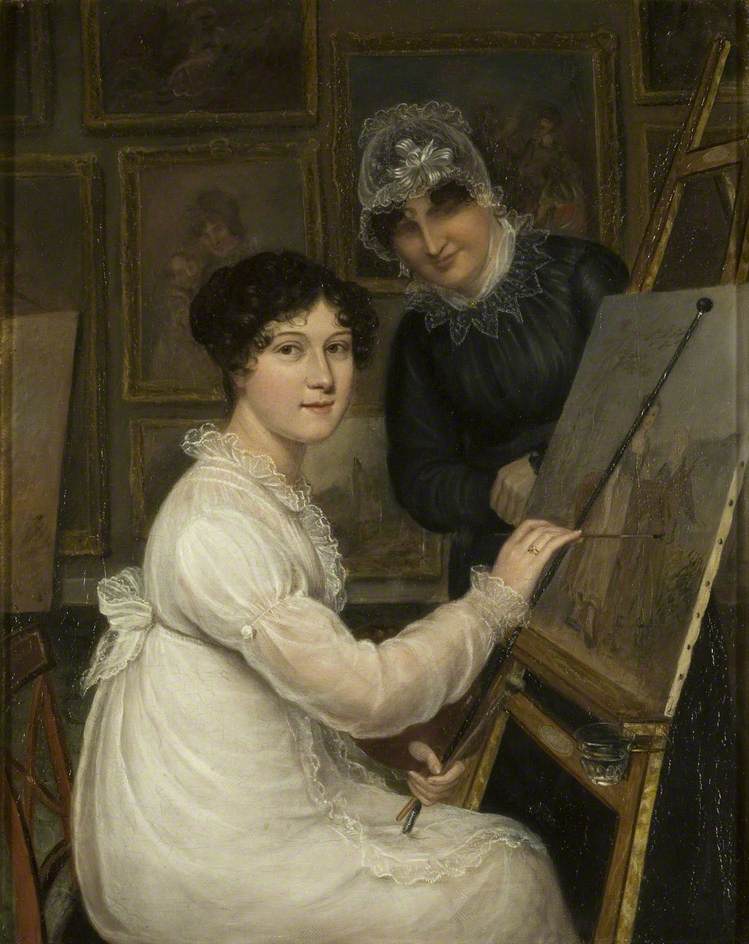
In 1815, Rolinda Sharples painted a double portrait of her and her mother called The Artist and Her Mother. This image shows Rolinda sitting at an easel painting, while Ellen watches her work. Ellen was very supportive of her daughter’s career and recorded Rolinda’s progress and achievements in her diary.
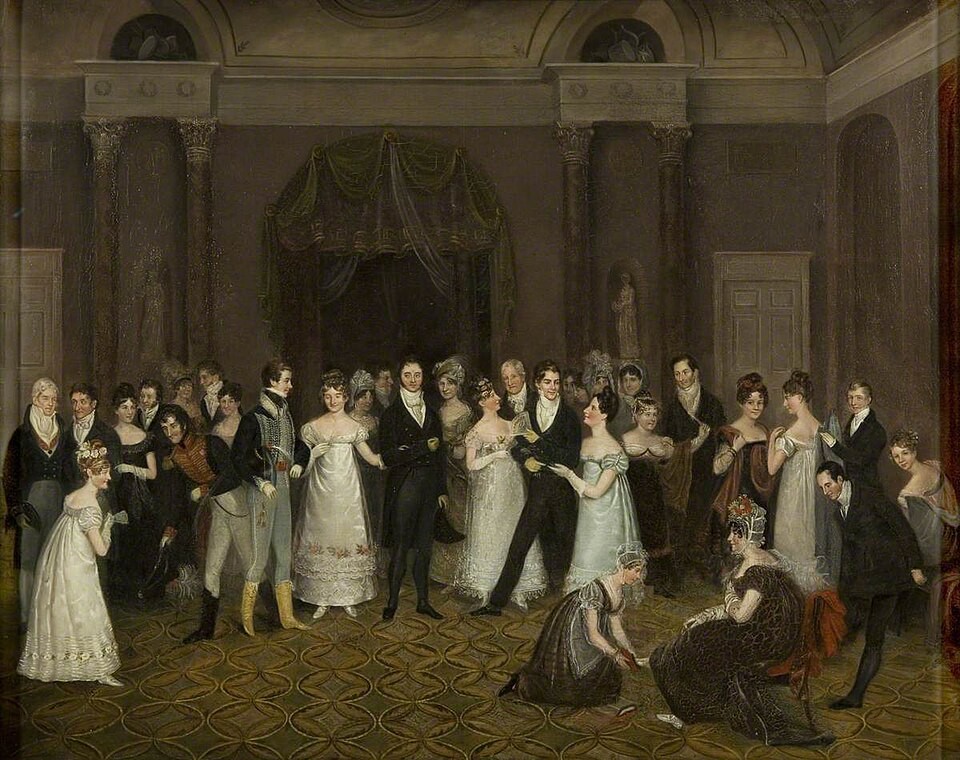
One of Rolinda Sharples’ most popular works is The Cloak-Room, Clifton Assembly Rooms. It shows a group of people arriving at the Clifton Assembly Rooms in Bristol for a ball. They are shown taking off cloaks and changing shoes or removing their overshoes. Shoes that were worn to balls were delicate and easily became dirty, so changing them or wearing overshoes helped protect them.
This painting has been used on editions of Jane Austen novels or books about or related to the study of the writer. This scene is highly relevant as balls feature in many of Austen’s works and Austen was a contemporary of Sharples.
In 1827, Rolinda Sharples became an honorary member of the Society of British Artists. Her artworks were shown all over Britain, including in Leeds, Carlisle, Birmingham and Bristol. She also exhibited several works at the Royal Academy in London.
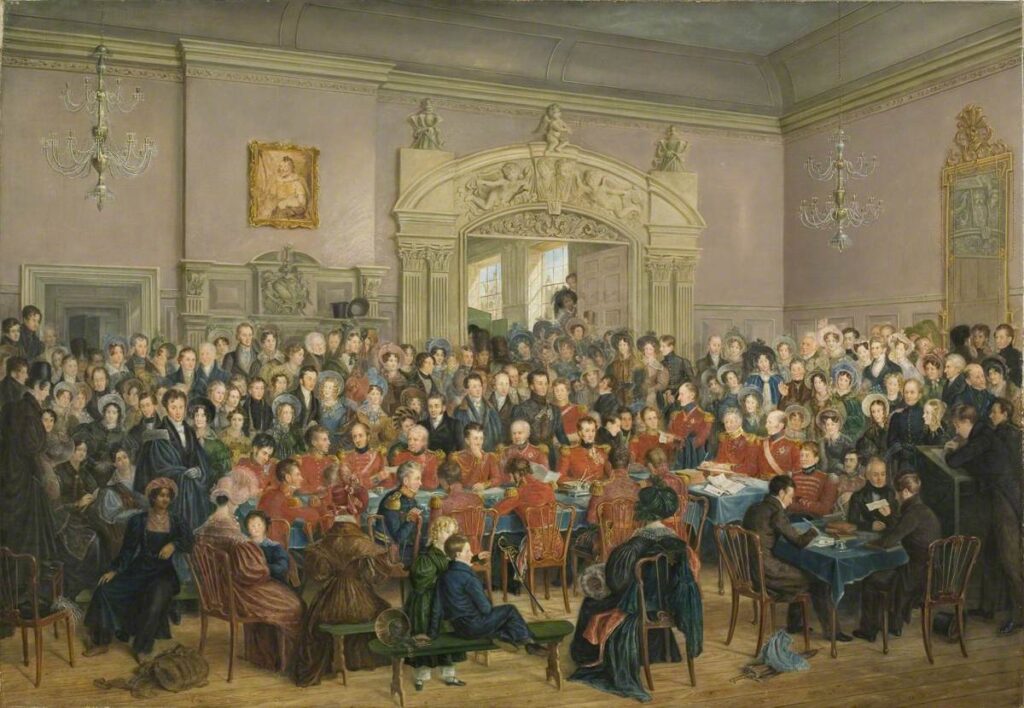
Another well-known work by Sharples is The Trial of Colonel Brereton, which was painted after the Bristol Reform Riots. This was a violent protest against the House of Lords, which blocked a bill that would have allowed more people to vote. In Britain in the late 1820s to early 1830s, only a small proportion of people had the right to vote. This changed in 1832, when the Reform Act was passed, extending the right to vote to more people. However, it excluded women by defining a voter as a man—a distinction previous laws had not made, meaning that women had occasionally been able to vote.
After the Bristol Reform Riots, Lieutenant Colonel Brereton was court-martialed for negligence in his handling of the riots, and Sharples’ painting represents his trial. As it happened, the artist drew the events, and she got people who attended it to sit for her.
Rolinda Sharples died in 1838 of breast cancer. One of the houses in Bristol, where both Rolinda and Ellen lived, has a plaque on it commemorating them.
After Rolinda’s death, Ellen was instrumental in establishing the Bristol Academy for the Promotion of Fine Arts, which is now known as the Royal Western Academy (RWA). She organized money to help establish the RWA, and this included persuading Prince Albert, Isambard Kingdom Brunel, and other wealthy people to help fund it. Ellen Sharples also left money in her will to the academy and after her death, it opened.
Author’s bio:
Elizabeth Strange is an art history graduate from the University of Sussex. She is interested in feminist art history, particularly art from the 18th and 19th century. She is also interested in fashion history and has some expertise on silk and silk ribbons.