
Masterpiece Story: Judith and Holofernes by Caravaggio
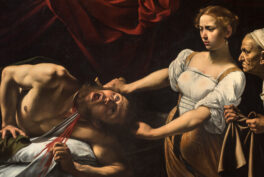
Judith and Holofernes is a Caravaggio masterpiece that captures Biblical murder and drama. Rarely has death been captured so intensely and violently...
James W Singer 13 September 2026
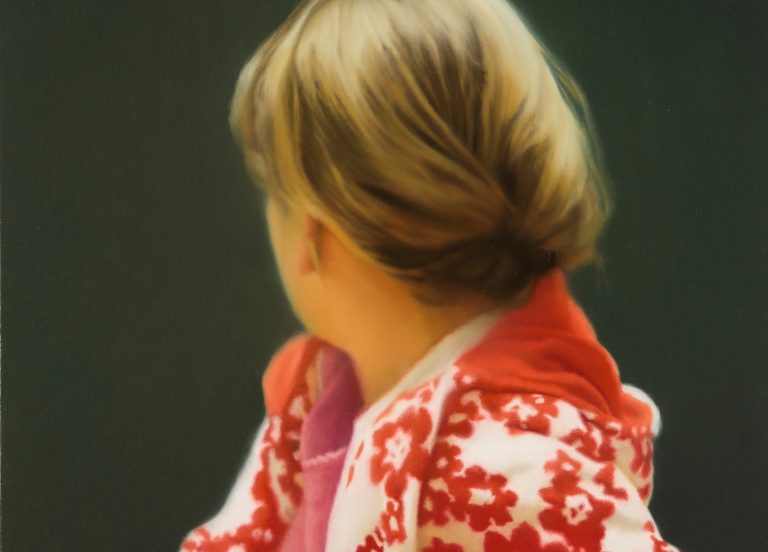
Gerhard Richter, Betty, 1988, Saint Louis Art Museum, St. Louis, MO, USA. Detail.
An unconventional portrait where the sitter looks away. The striking colors and flawless technique. A photo or a painting? Let’s dive into the astonishing portrait of Betty by Gerhard Richter.
The first thing we think about Gerhard Richter’s Betty is: what an interesting photo! And then, we look again, get a little closer, and realize, it is in fact a painting! The confusion about the technique is an essential part of why Betty is a contemporary masterpiece.

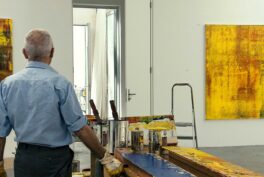
Gerhard Richter in front of Strip, 2013 on view at London’s Marian Goodman Gallery. The Wall Street Journal.
Gerhard Richter (b. 1932) started his career as a designer working in advertising in Dresden, his hometown. He used the official art style of East Germany, Socialist Realism, to produce murals and public art that later were covered up or destroyed. In 1961, he established himself in Düsseldorf and began to create in a movement that became known as Capitalist Realism. Using the advertising language, Richter highlighted the increasing cult of highly curated images and appearances.
Richter is an artist who refuses labels as much as to be stuck within a movement or a style.
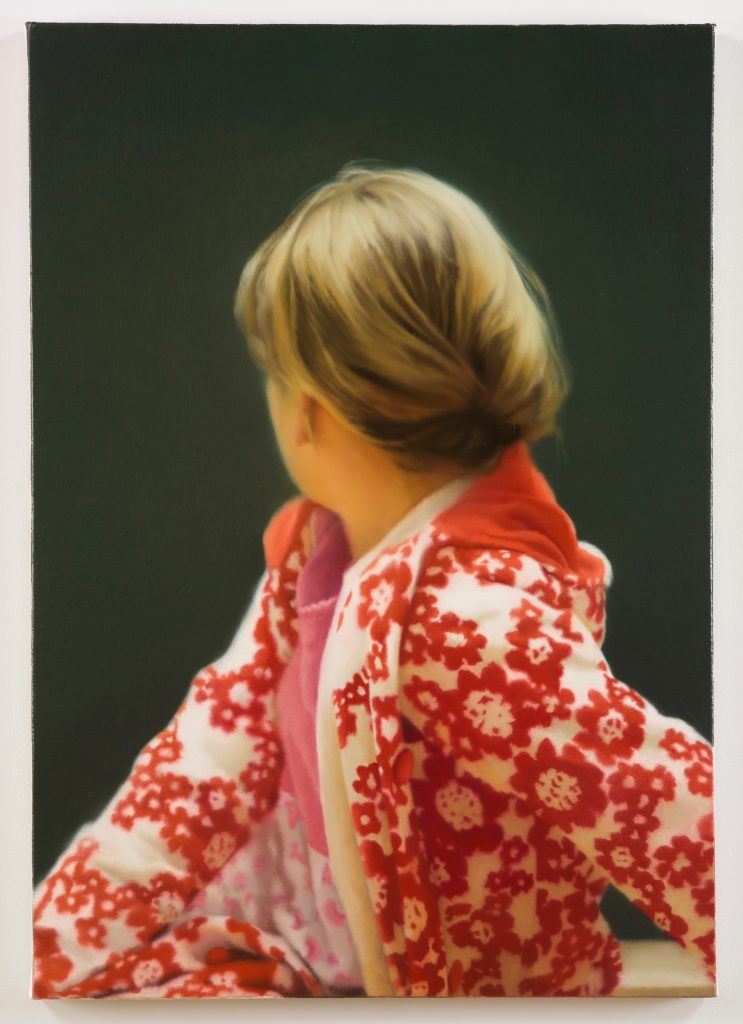
Gerhard Richter, Betty, 1988, Saint Louis Art Museum, St. Louis, MO, USA.
It’s common for an artist to develop his/her signature throughout the years and be recognized for a particular style or technique. Richter, however, subverts this logic and constantly changes his approach making “the anti-style” the only constant in his work. During his long career, he created works across abstraction, conceptualism, photography, hyperrealism, and Capitalist Realism.
Celebrated as one of the most important contemporary artists of our time, Richter accumulates record prices in art auctions and has had major exhibitions in museums like the Tate in London, Centre Pompidou in Paris, MoMa in New York, and the Neue Nationalgalerie in Berlin.
An interesting curiosity for the music fans out there is that another of Gerhard Richter’s paintings, Candle, 1983, illustrates the cover of the immensely acclaimed 1988 album Daydream Nation by Sonic Youth, considered one of the most influential albums of alternative music.
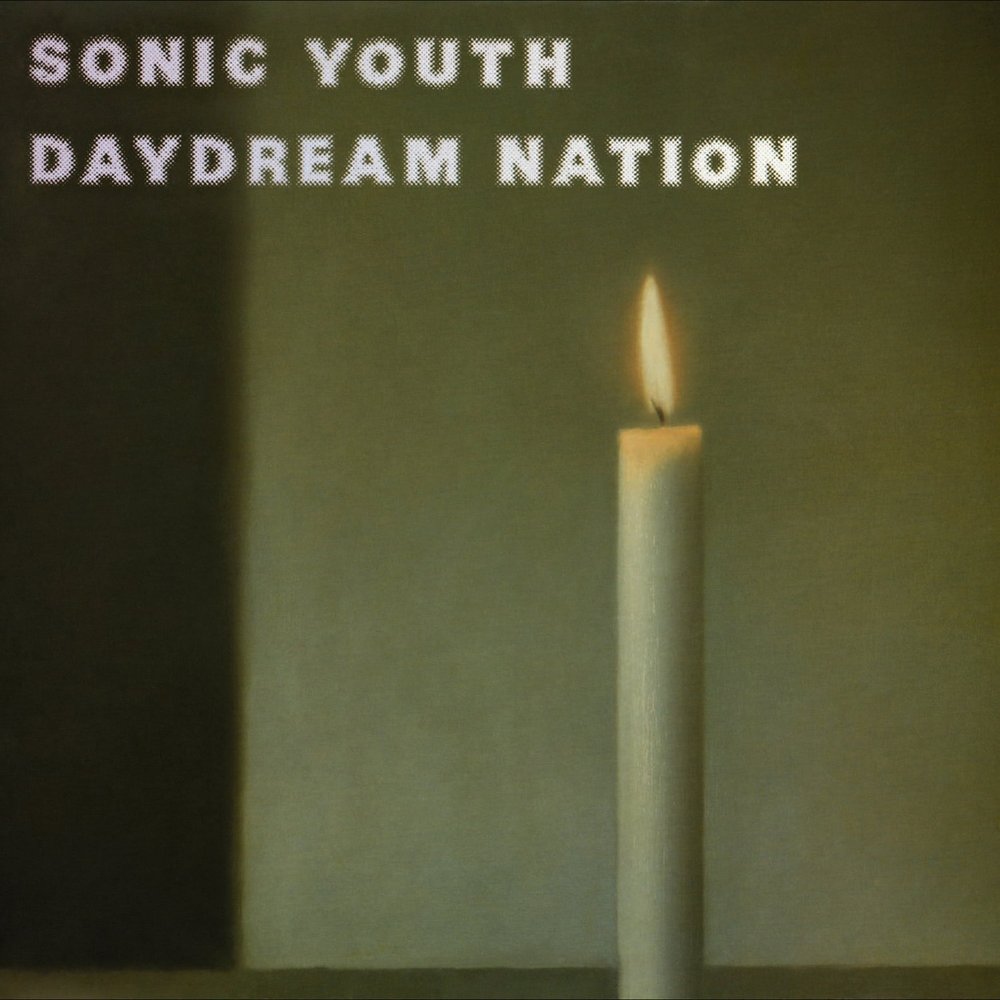
Sonic Youth, Daydream Nation, cover by Gerhard Richter, 1988, Enigma Records.
Betty is a very enigmatic painting; firstly, because of Richter’s mastery of painterly techniques that go back to the great masters of pre-modernism. This is seen in his level of detail, use of color and light, and rendering of textures. It’s all so brilliantly executed that is hard to believe it was created in 1988.
And then we look at Betty, one of the artist’s daughters, looking away from the viewer and interested in something else. Something we cannot see and it’s left to our imagination.
Her pose is a nod to the Neoclassical painting The Bather of Valpinçon created in 1808 by Jean Auguste Dominique Ingres. Richter plays with the juxtaposition between a classical painting and photography, tradition and contemporary, resulting in an ambiguous and fascinating image.
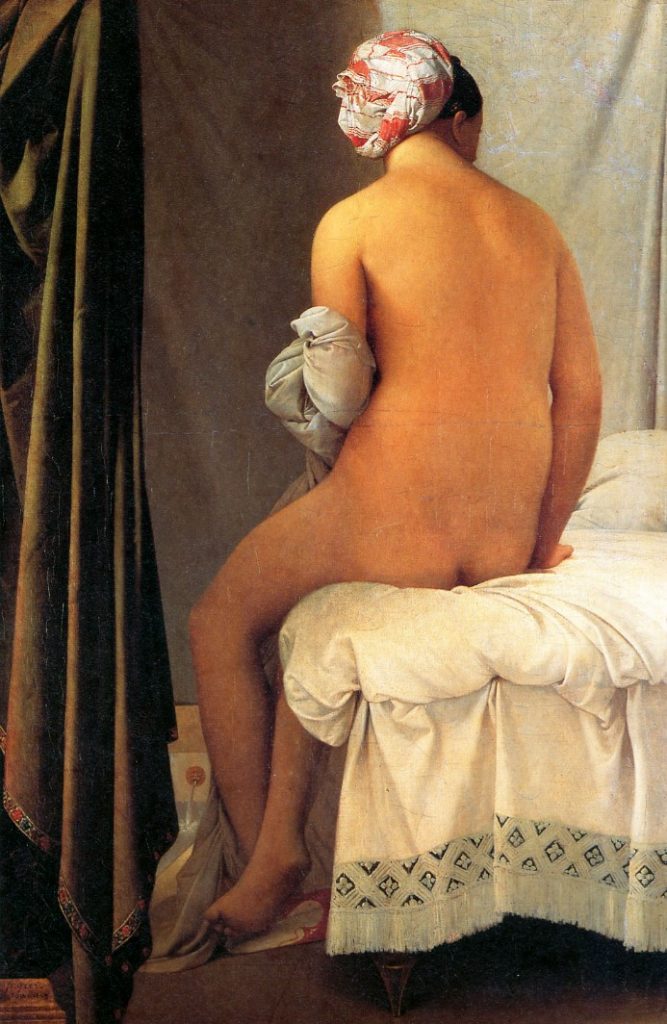
Jean Auguste Dominique Ingres, The Bather of Valpinçon, 1808, Louvre Museum, Paris, France.
The painting is currently on view at the Saint Louis Art Museum where it shares the space with a number of other works of postwar German art. Artists of this period were exploring conflicting feelings of uncertainty and enthusiasm in a devastated landscape that was being reconstructed and experiencing a boom in societal welfare and economy. Furthermore, it is through exploring the contradictions and proximities that Richter questions the meaning of artworks.
As a German artist that has lived on both sides of the Berlin wall, Richter understood that what was considered art varied immensely depending on the society you lived in. For that reason, he never compromised on sticking to a particular “trendy” style, choosing instead to embrace all of them, mixing them with different techniques to create art that can confuse, but never ceases to amaze.
DailyArt Magazine needs your support. Every contribution, however big or small, is very valuable for our future. Thanks to it, we will be able to sustain and grow the Magazine. Thank you for your help!

Art enthusiast that loves modernism, abstraction, textiles, and Latin America.

Bec is an art nerd, bicycle enthusiast, cat mom, artist/crafter/maker from sunny Toronto, Canada.
Judith and Holofernes is a Caravaggio masterpiece that captures Biblical murder and drama. Rarely has death been captured so intensely and violently...
James W Singer 13 September 2026
Explore an astonishing 1915 nude self portrait by American modernist painter Florine Stettheimer.
Candy Bedworth 21 September 2026
Winslow Homer (1836–1910) was one of the leading American Realist painters. His painting The Veteran in a New Field is a masterpiece of late...
James W Singer 30 August 2026
At first glance, A Goldsmith in His Shop (1449) appears to depict an ordinary visit to a jeweller. Yet Petrus Christus transformed an ordinary...
Shivani Gupta 23 August 2026