
Masterpiece Story: Judith and Holofernes by Caravaggio
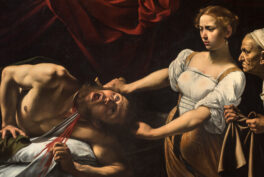
Judith and Holofernes is a Caravaggio masterpiece that captures Biblical murder and drama. Rarely has death been captured so intensely and violently...
James W Singer 13 September 2026
23 July 2026 min Read
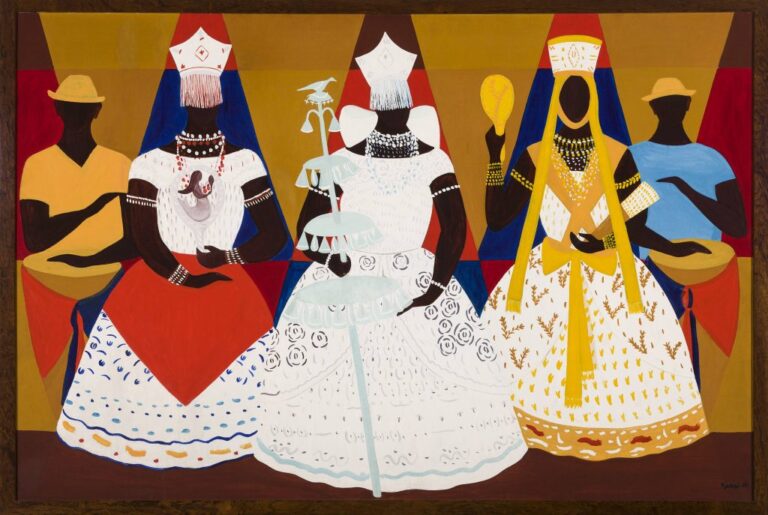
Djanira da Motta e Silva, Três Orixás, 1966, Pinacoteca do Estado de São Paulo, São Paulo, Brazil. Enciclopedia Itaú Cultural.
Djanira da Motta e Silva pictured a very unusual Holy Trinity made of three deities from the Afro-Brazilian Pantheon. They are accompanied by musicians playing drums to call ancient spirits and gods for their appearance here and now, on earth, to help the living, to ease their pain, and to increase their joys.
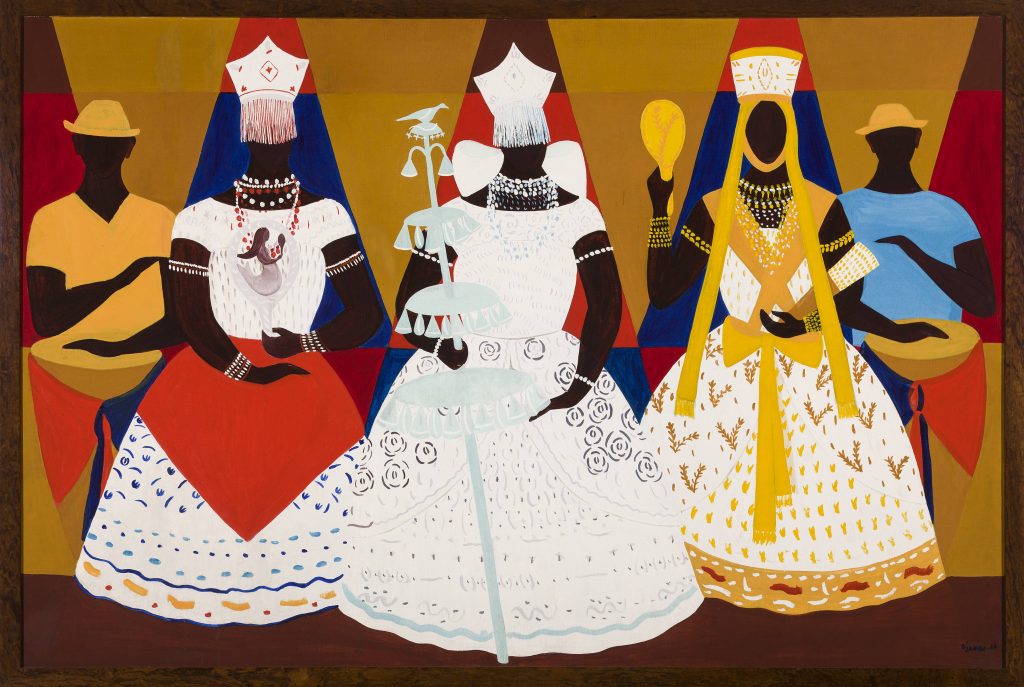
In the foreground, we see three orishas who are goddesses, holy spirits, and fundamental figures in Candomblé. It is a religious tradition that combines African beliefs of Yoruba, Fon, and Bantu. It was brought by the slaves to the Portuguese colonies and developed especially in Salvador, in Bahia state. Each orisha represents a certain force in nature and is associated with certain foods, colors, animals, and days of the week.
Between 1516 and 1888, Brazil imported the majority of the slaves in the transatlantic trade. In the 18th century alone, around 1.7 million people were shipped against their will from Western Africa (mostly from today’s Ghana, Nigeria, Angola, Congo, Guinea, and Gabon). They represented different ethnic groups, languages, traditions, and religious beliefs. This cultural heritage survived centuries and is still alive in Brazil.
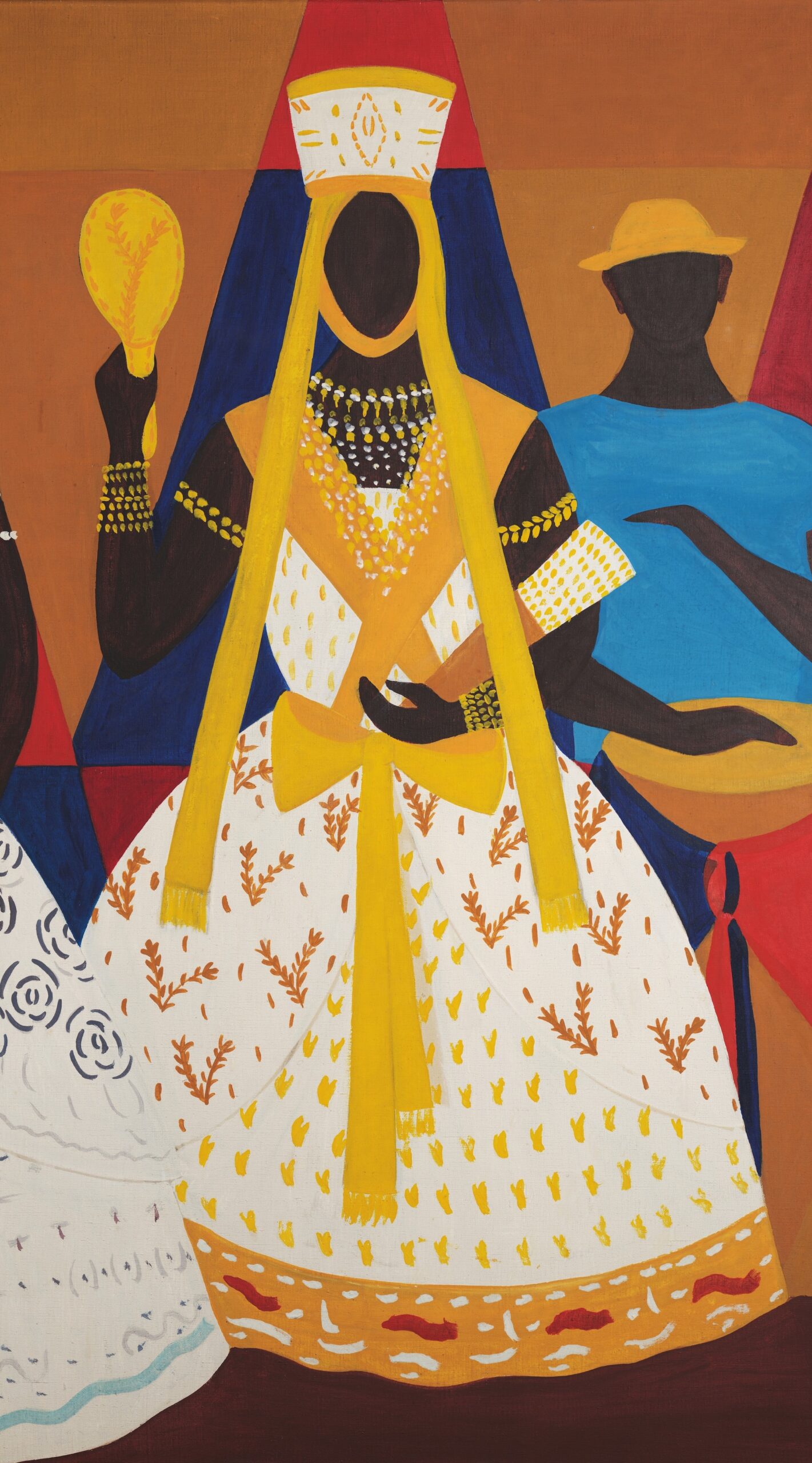
The first character on the left is Yemaya, in the middle there is Oxalá, and the last one on the right is called Oxum. Oxum (Oshun) is one of the most worshipped of the orishas. It’s a deity of the river and fresh water, luxury and pleasure, sexuality and fertility, as well as beauty and love.
The reference to Oxum can be seen in Beyoncé’s Hold Up video. The musician, dressed in a yellow Roberto Cavalli gown, opens the door, letting massive water spill outside. Djanira da Motta e Silva also painted Oxum in a yellow dress. The goddess hails to the viewer with the left arm.

Yemaya, in turn, is often identified with the Catholic Our Lady of Regla. Yemaya has maternal characteristics: a protective deity often depicted as a mermaid. She is responsible for everything about childbirth: conception, parenthood, child safety, love, and healing. According to the myth, when her waters burst, they caused a great flood that created rivers and streams. It also says that the first mortal people came from her womb. Djanira da Motta e Silva painted her on the left, with a mermaid emblem on the chest, dressed with red accessories. Beyoncé also paid homage to Yemaya in her pregnancy photoshoot in 2017.
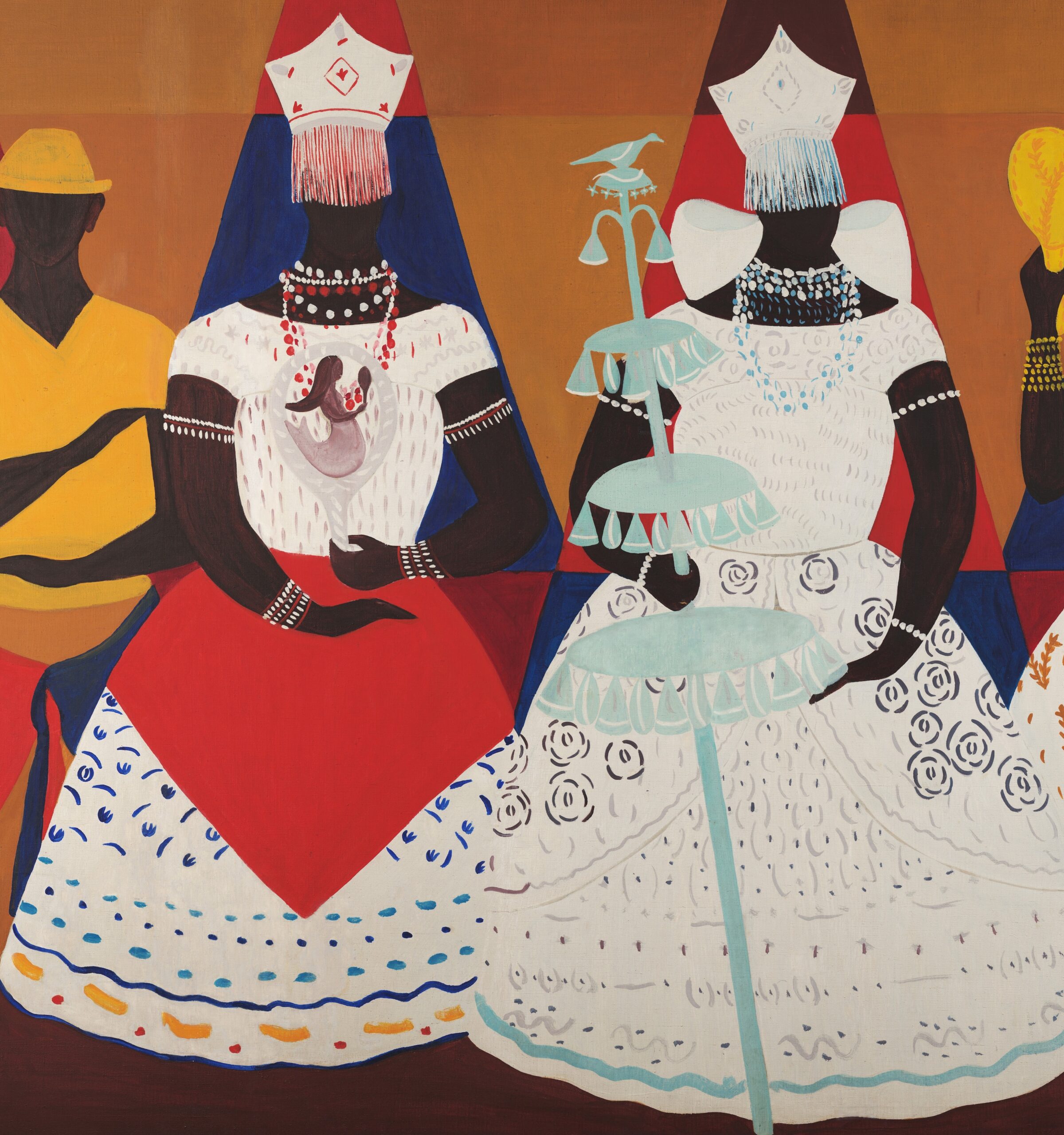
Oxala, in the center of the picture, resembles God the Father, the creator. He is considered to be the Father of Heaven and the creator of human bodies. He is the second son of Olodumare and was authorized by his father to create land on the water under the sky. Surprisingly, Djanira da Motta e Silva painted Oxalá as a woman.
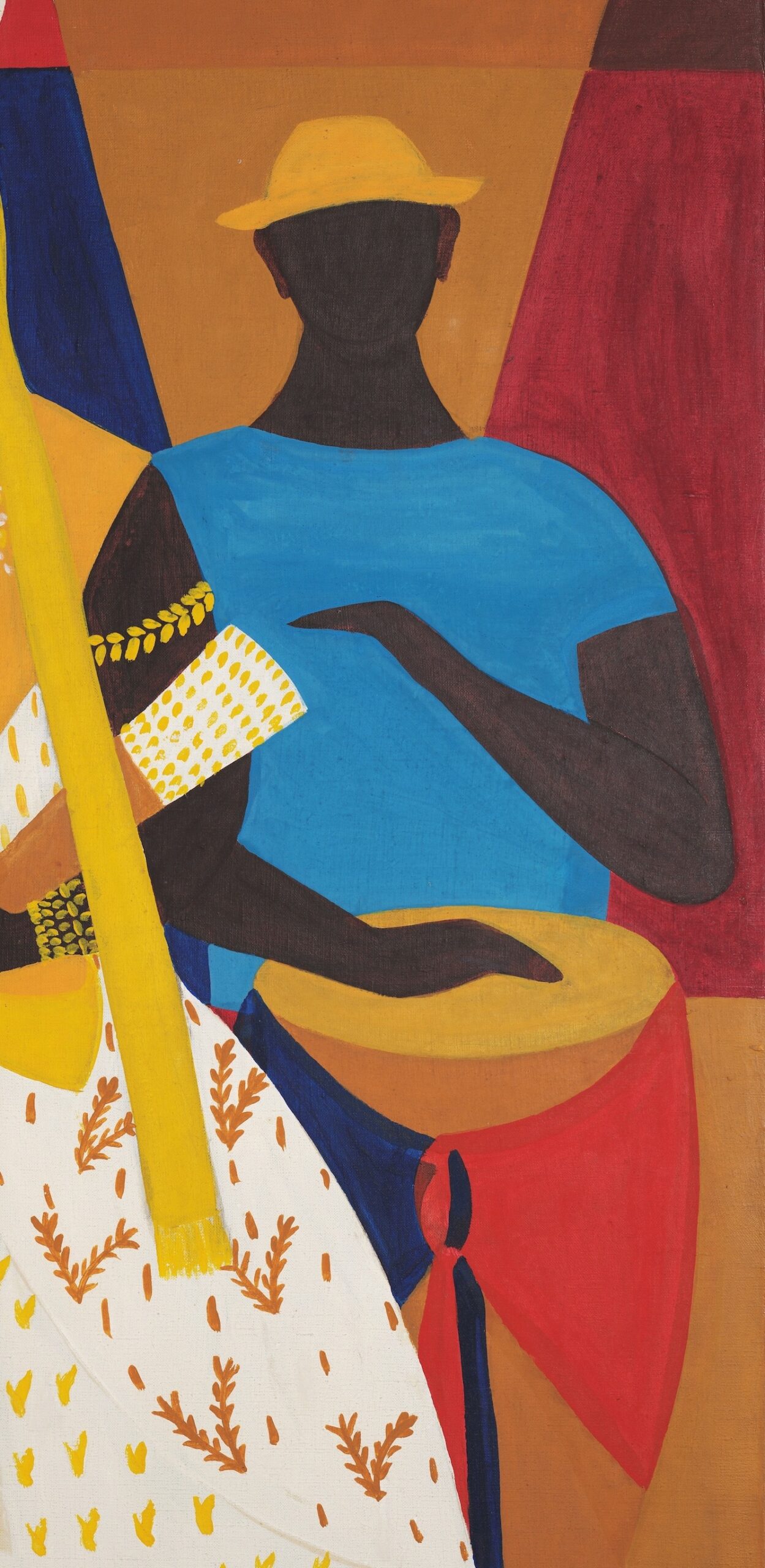
Djanira da Motta e Silva captured in this painting the custom typical to festivities in Bahia. For the Candomblé, music is essential. The role of rhythm and melody is to bring magic and spiritual forces to the room. The drums appease the orishas and hypnotize individuals participating in the ceremony. There are drummers shown in the background who are playing for the goddesses.
The painting Três Orixás gives us a representation of the ritual of Afro-Brazilians celebrating their ancestry in a modern country, centuries after they were brought from their motherland to a new homeland.
Discover South American Art in the Museum of Solidarity “Salvador Allende” in Chile and in the MNBA, Rio de Janeiro!
DailyArt Magazine needs your support. Every contribution, however big or small, is very valuable for our future. Thanks to it, we will be able to sustain and grow the Magazine. Thank you for your help!

Ex political science researcher at the Jagiellonian University. Lover and promoter of Latin American art and design (via blog www.thebananas.pl). In spare time president of the board of FOH Foundation, non profit, pro publico bono organization whose mission is to further safety and professional standards in the entertainment productions industry.

As an educator, writer, and neurodivergent creative, I enjoy learning and sharing through nature, the arts and novel experiences.
Judith and Holofernes is a Caravaggio masterpiece that captures Biblical murder and drama. Rarely has death been captured so intensely and violently...
James W Singer 13 September 2026
Explore an astonishing 1915 nude self portrait by American modernist painter Florine Stettheimer.
Candy Bedworth 21 September 2026
Winslow Homer (1836–1910) was one of the leading American Realist painters. His painting The Veteran in a New Field is a masterpiece of late...
James W Singer 30 August 2026
At first glance, A Goldsmith in His Shop (1449) appears to depict an ordinary visit to a jeweller. Yet Petrus Christus transformed an ordinary...
Shivani Gupta 23 August 2026