


10 Artworks from Lima Art Museum You Need to See
Welcome to the largest art museum in Peru: the Lima Art Museum (Museo de Arte de Lima), aptly named MALI. Opened in 1961, it presents around 1,200...
Anthony Royer, Szymon Jocek 24 September 2026
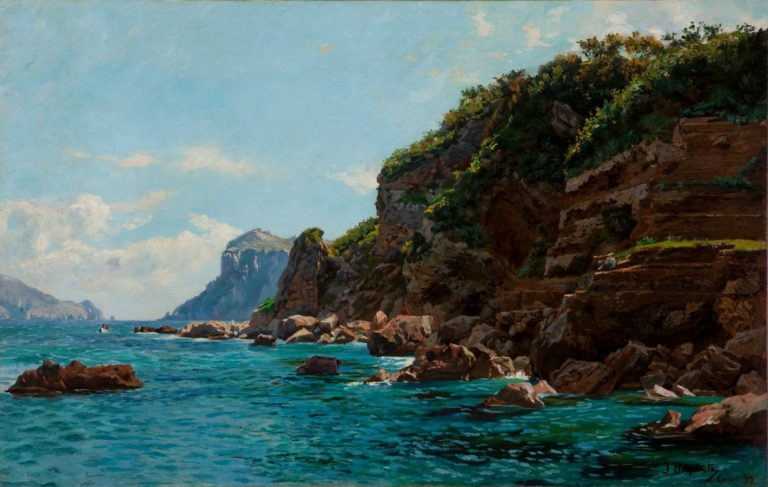
João Batista da Costa, Blue Cave, ca. 1898, Pinacoteca do Estado de São Paulo, Sao Paulo, Brazil. Wikimedia Commons.
This collection of paintings in idyllic settings is the legacy of artist and illustrator João Batista da Costa. Batista da Costa was active in the late 19th and early 20th century in Brazil. Despite a difficult start in life, Batista da Costa’s natural artistic acumen pushed him to exceptional creative heights and earned him several notable accolades.
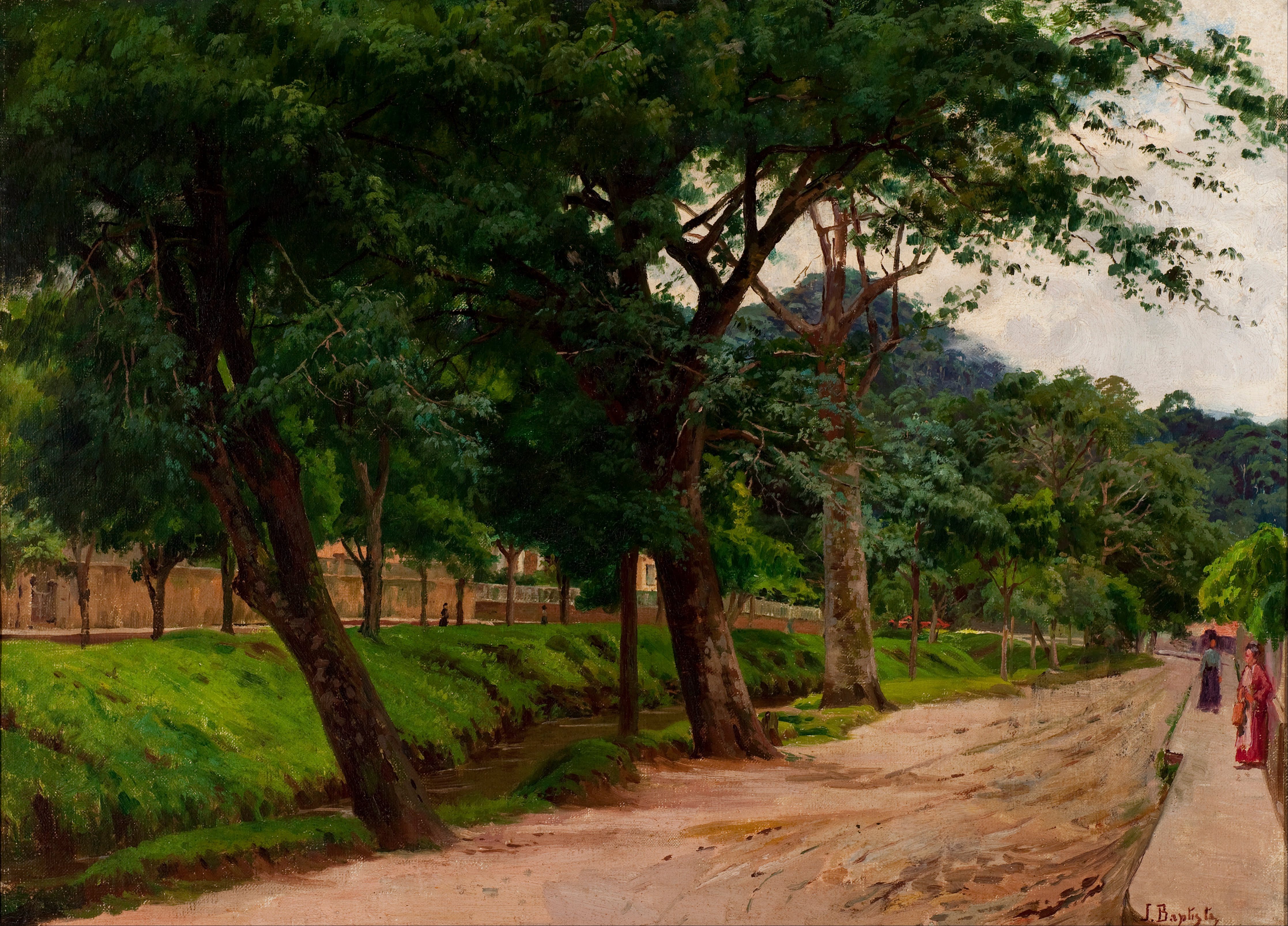
João Batista da Costa was from the Itaguaí municipality of Rio de Janeiro. He was orphaned at the age of 8 and spent his childhood being shuttled between relatives and in orphanages. It was during his time in an orphanage that he was introduced to creative pursuits such as music and art. His talent was noticed by his teacher, Antônio de Souza Lobo, another accomplished Brazilian artist. The support of his teacher and others lead him to continue his artistic training first at the Academia Imperial de Belas Artes in Rio de Janeiro. Here, he became acquainted with other notable Brazilian painters such as Zeferino da Costa and Rodolfo Amoedo with whom he attended classes until his graduation in 1889.

Following graduation from Academia Imperial de Belas Artes in 1889, Batista da Costa continued his art education in Paris at the esteemed Académie Julian in 1896. During this period in Europe, he also traveled to Germany and Italy before finally returning to Brazil in 1898.

The return to Brazil marked a significant turning point in the artist’s life. Batista da Costa had just lost his first wife and found himself severely depressed. Although his early works also betray his preference for natural elements over the figurative form, the paintings from this period of his life show the significant predominance of nature in his works.

João Batista da Costa’s works are a homage to the rich Brazilian countryside. He depicted rural landscapes and scenes from Brazil in a style that fits into the parameters of realism and hyperrealism and is reminiscent, both in quality and rhythm with the works of Jean-Baptiste-Camille Corot and other artists of the Barbizon school.
Batista da Costa’s dedication to rural landscapes resulted in a significant oeuvre of serene and contemplative compositions. The fresh air of the setting is delightfully apparent in his works.

João Batista da Costa continued to receive medals and recognition for his paintings throughout his life. After overcoming the loss of his first wife he married again and fathered four children. He became a professor at the Escola Nacional de Belas Artes in Rio de Janeiro in 1906 and continued to work there until his demise in 1926 at the age of 60.
DailyArt Magazine needs your support. Every contribution, however big or small, is very valuable for our future. Thanks to it, we will be able to sustain and grow the Magazine. Thank you for your help!

Maya Tola is a Dallas-based attorney, with a zest for art history. A time traveler at heart, Maya often finds herself consumed in the contemplation of life in antiquity. She has been sharing her infectious enthusiasm for art and history since 2018 through her posts and articles for the DailyArt App and DailyArt Magazine. When she's not working or writing, you'll find Maya obsessing over plants, animals, and food (in no particular order).
Welcome to the largest art museum in Peru: the Lima Art Museum (Museo de Arte de Lima), aptly named MALI. Opened in 1961, it presents around 1,200...
Anthony Royer, Szymon Jocek 24 September 2026
When we speak about contemporary art in Latin America, women artists are at the center stage. Working around various mediums and highlighting themes...
Natalia Tiberio 16 December 2024
I must tell you something in secret – I love Fernando Botero’s works. Many of his works were inspired by classic art. Or maybe...
Zuzanna Stańska, Aniela Rybak-Vaganay 17 September 2026
Arthur Bispo do Rosário is a mythic figure in Brazilian art. He never considered himself an artist and he spent many years living in a psychiatric...
Natalia Tiberio 29 March 2024