
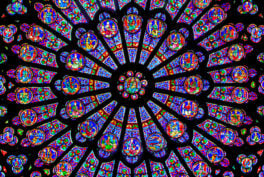
The Light Beyond Stone: The Hidden Meaning of Gothic Stained Glass
Imagine living in medieval Europe. Disease, famine, and war are constant companions, and life is fragile and uncertain. Your faith shapes every...
Guest Author 21 September 2026
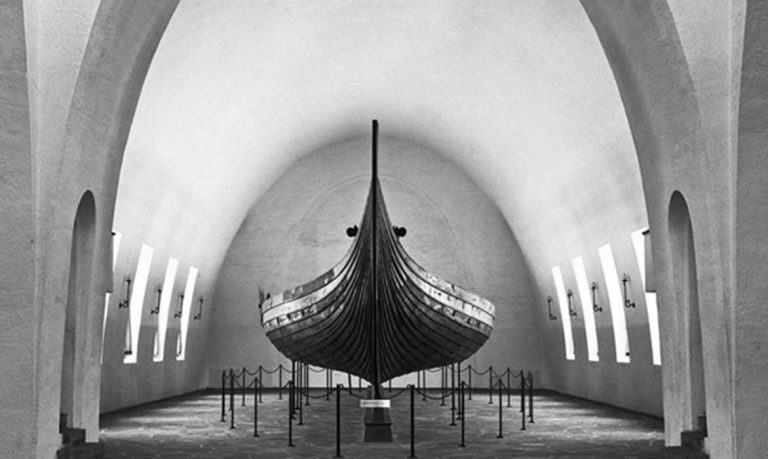
Viking Art: Gokstad Ship, ca. 890 BCE, Museum of Cultural History, University of Oslo, Oslo, Norway. Ancient Origins.
Vikings and their culture have interested us since the days of the Viking expansion. There are numerous TV shows about them and sports teams named after them. Nordic culture and mythology permeate the media with superhero characters like Thor and Loki, while anime series, such as Attack on Titan, utilize Norse mythology in their storylines. Viking history and Viking art represent something epic, in a sense. For the centuries since their exploration and reign in the known world, the Vikings have garnered the constant attention of academics, comic book aficionados, and people of all ages in general.
Whatever their involvement in history, the Vikings left a lasting impact in their wake.
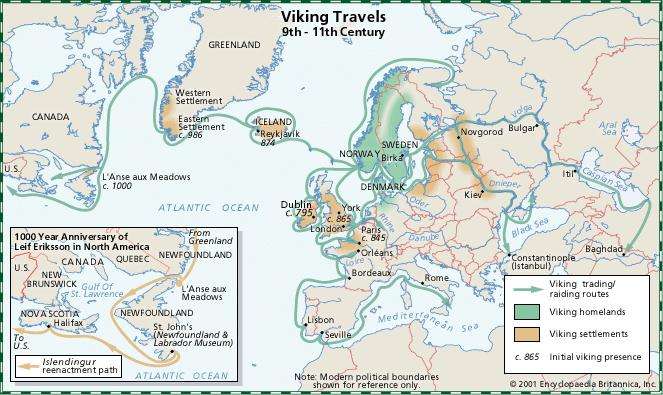
The Vikings were active from roughly 793–1066. The Viking Age was a period in European (Northern European and Scandinavian) history that followed the German Iron Age (400–800). During this period, Scandinavian Norsemen explored Europe by its seas and rivers for “trade, raids, colonization, and conquest.” It is safe to say that their interaction with the world around them vastly changed the course of history.
The term “Viking” stems from the word “pirate” in the early Scandinavian language. Since the Vikings were from the Northern European peninsula, the term took on different meanings in each language and culture. The term “Viking,” as we know it today, comes from the period from the 8th to the 11th centuries when the Vikings were on the path to conquest and colonization.

As an extension of their unique history, Viking art has an enchanting quality.
The Museum of Cultural History in Oslo has several examples of preserved and restored Viking longships and artifacts, which were previously used on the sea but eventually returned to land to act as the burial place for their owners. Ranging from full-scale restorations to merely parts of the ship pieced together, the Museum showcases three main ships. These ships were more than likely a part of the vast maritime technology of the Vikings, allowing them to reach multiple continents centuries before the Age of Discovery. In that era, those in power sought to race others for the exploration and colonization of the “unknown” world.
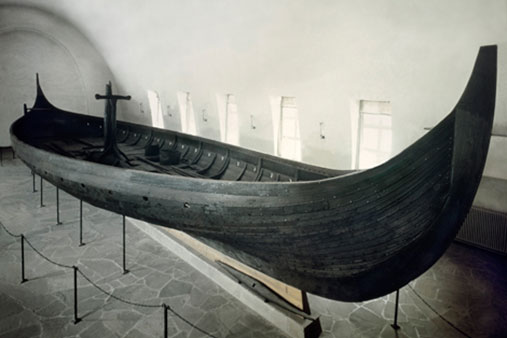

The Gokstad ship, while less threatening in appearance now, would have been a sight to behold on the seas in which it sailed. Upon its discovery, archaeologists found 32 shields attached to the sides of the ship itself. At roughly 16 feet across and 76 feet long, the Gokstad was able to carry upwards of 34 men.
Scholars believe that grave robbers took many of the items from the burial. Although much was missing, much still existed by which the nature of burial and status of the deceased could be assessed. Among kitchen utensils and 64 shields, there was a “gaming board with counters of horn, fish-hooks and harness fittings made of iron, lead, and gilded bronze, six beds, one tent, a sleigh, and three small boats”. Like other burials in neighboring cultures of the time, archaeologists also discovered animals ranging from horses and dogs to the exotic peacock.
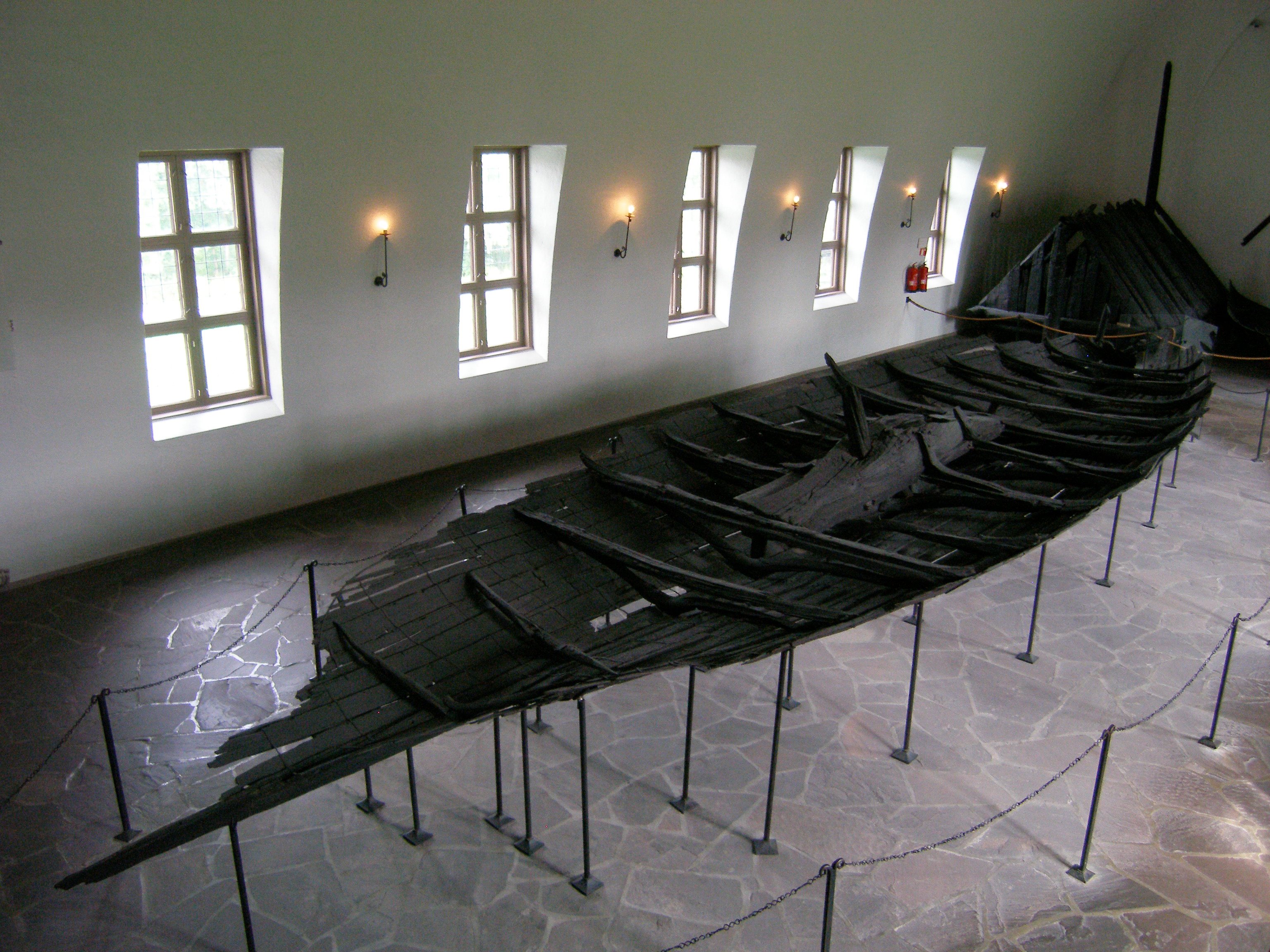
The Tune ship was discovered in 1867, outside of modern archaeological techniques. As a result, much of what was documented or found never made its way into the museum. It was the first Viking ship to be discovered, but it is less put together than the other well-documented collections.
Much like the Gokstad ship (above) and the Oseberg ship (below), various items are believed to have been buried with the deceased: horses, weapons, and utilitarian items such as a saddle were documented from this ship.
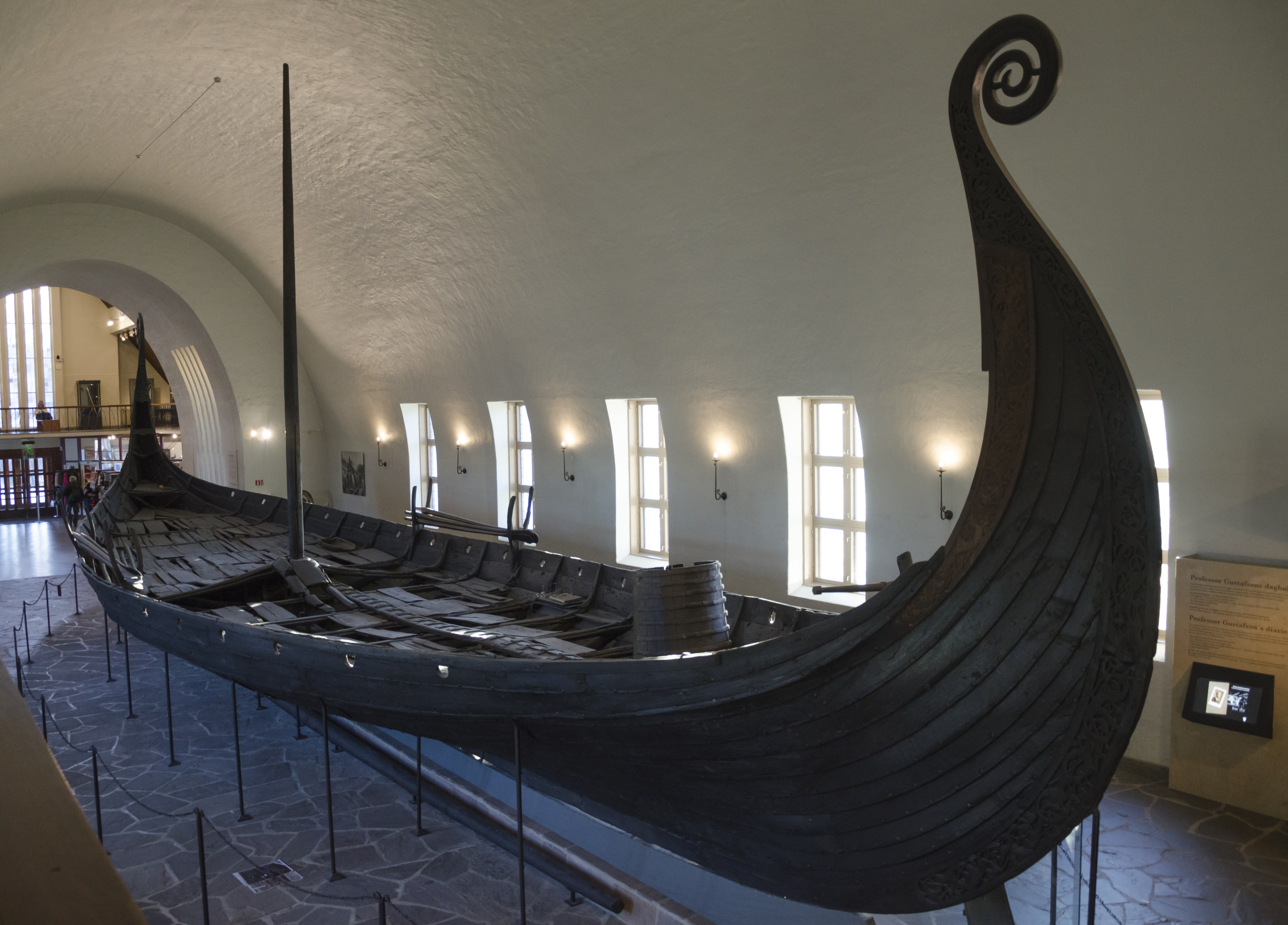
The Oseberg ship, both a sailboat and used for rowing, would have held up to 30 oarsmen. The ornate decoration of this particular early 9th-century ship leads scholars to believe that it was reserved for someone of more aristocratic status. From the spiraling serpent heads at each end to the animal designs that decorate the sides of the oak and pine ship, no detail was spared.
As a grave, the Oseberg ship held two women of significance. A full list of the items in the burial chamber with the women and ship can be found here. It is an extensive list that ranges from food items to animals and appears much more extensive than the lists of the two ships above.
If we take a look at the actual artwork of the Vikings, specifically looking at the utilitarian pieces such as buckles, swords, or ships, it is quite easy to see that they did not earn the “Barbarian” title because of their artwork. More so, it was because of their brute force and domination of the seas and the places they pillaged. But, if we go based on their artwork, it was much more progressive than the term “Barbarian” would have us believe.
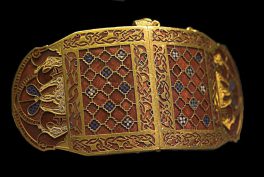
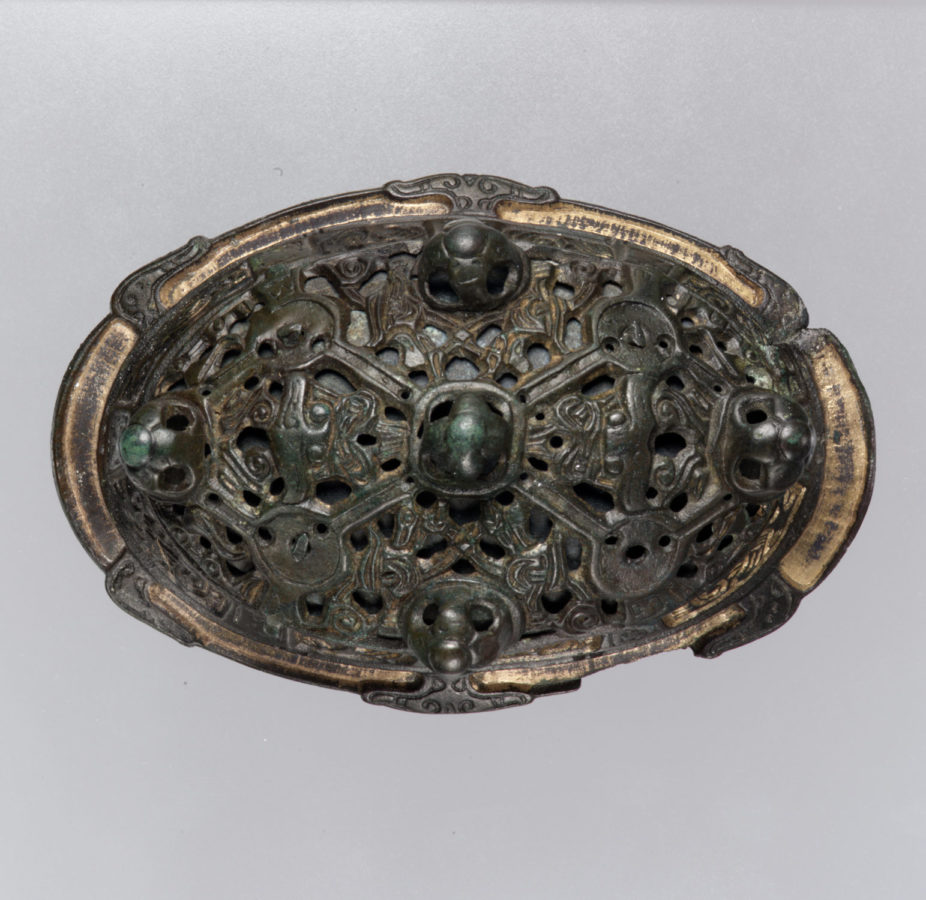
The oval brooch shown below is only 11.4 x 7.5 x 4.3 cm in size. It is large enough to be a clothing fastener for women in the Viking community. Classified in the metal-work and copper department, the animal heads adorning the front of the brooch would originally have been covered in some goldwork (even though gold was not as common as silver in Viking culture).
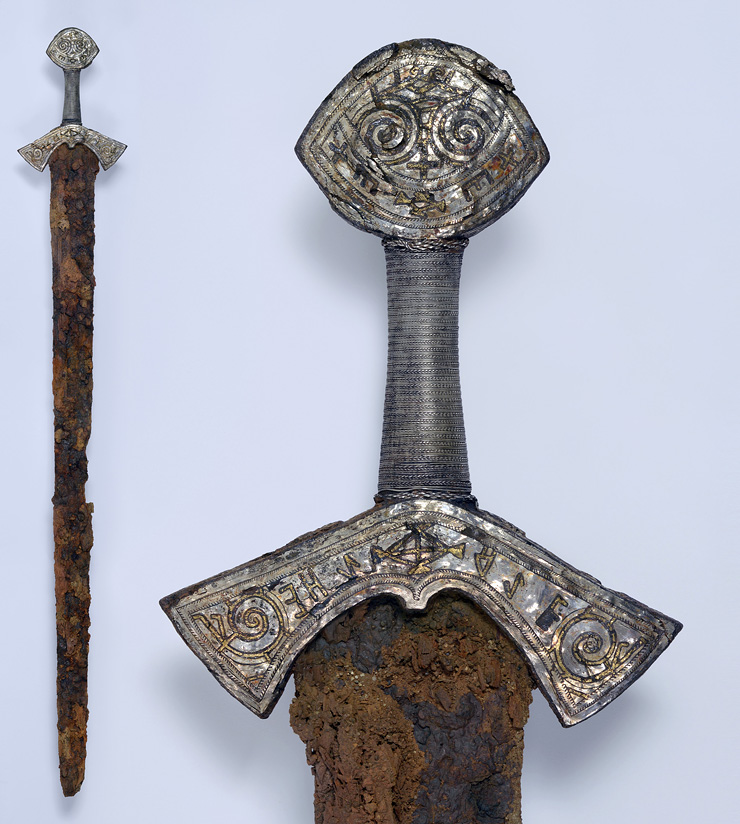
The sword shown below was discovered in Langeid, Norway. Measuring 91 cm in length, this mostly-preserved sword is one of several thousand recovered over the years. What makes this sword unique are the mystical signs on its hilt and pommel, which differ from earlier-known examples where there is little to no decoration. The symbols on this sword can be linked to Christianity through the use of Latin letters. However, the Museum has yet to clarify the true meaning of everything as this is a recent find.
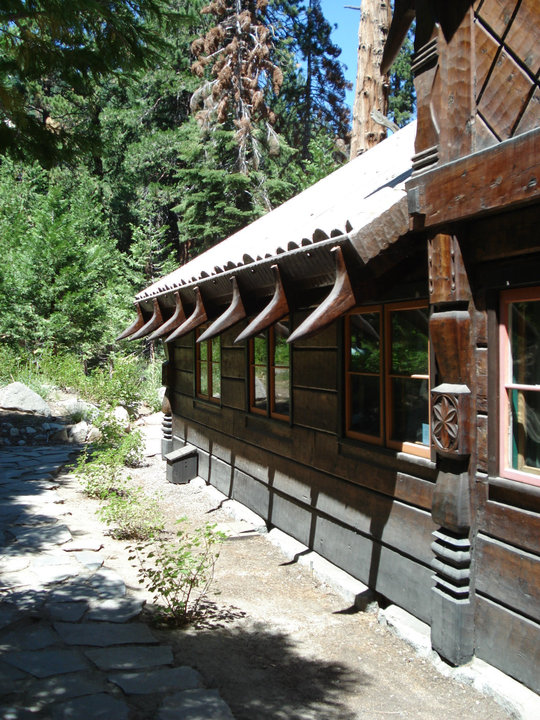
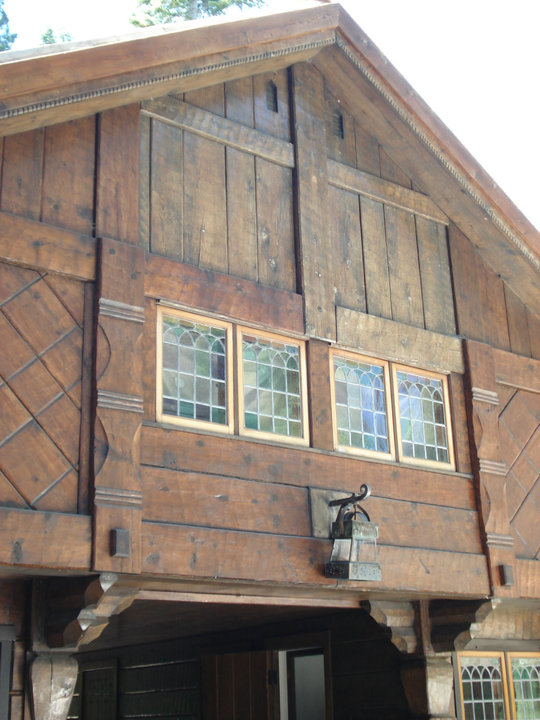
In 2010, I visited Lake Tahoe, CA/NV with my husband. Amid the vacation homes and ski resorts of the mountain town lies a Viking-inspired home. The home is only accessible by boat or a 1-mile hike down a rather steep hill. It was completed in 1929 after the owner, Lora J. Knight, saw Emerald Bay on which the land sat and was reminded of a Scandinavian fjord. Her nephew by marriage, Swedish architect Lennart Palme, designed the home. During their 1928 trip to Scandinavia, Palme and Knight gathered many ideas for what would become Vikingsholm.
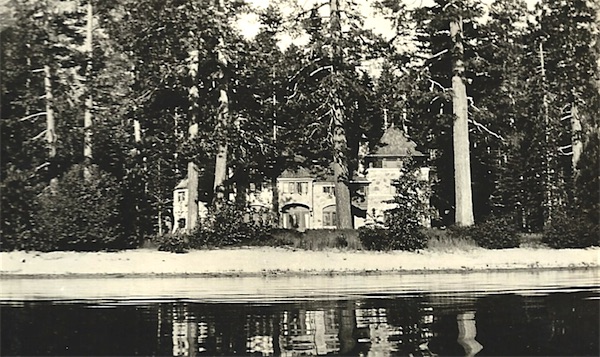
Old wooden churches, stone castles, and rural homes provided them with much inspiration, which Palme directly translated into this now 90-year-old home.
DailyArt Magazine needs your support. Every contribution, however big or small, is very valuable for our future. Thanks to it, we will be able to sustain and grow the Magazine. Thank you for your help!

Rachel is attempting to navigate this crazy world with her two kids, husband, a whole lot of coffee, and some good books in tow. She holds a Master's degree in Art History and a Bachelor's in History. When she's not writing, she can be found day dreaming about traveling to all of the art museums and coffee shops.
Imagine living in medieval Europe. Disease, famine, and war are constant companions, and life is fragile and uncertain. Your faith shapes every...
Guest Author 21 September 2026
The Bayeux Tapestry is one of the most remarkable artistic achievements of the Middle Ages. Filled with knights, warships, mythical beasts, and royal...
Shivani Gupta 3 September 2026
The Middle Ages were an exciting time in art history—a revival of imaginative, vivid art, both religious and secular, was spreading across Europe.
Justin Fenech 28 May 2026
While her gleaming gold body might remind you of a Star Wars droid, this masterpiece is something far more mysterious and sacred. Beneath layers of...
Jimena Aullet 5 December 2025