
Beyond William Morris: The Artistic Family of the Morrises
The Morris family stood at the centre of the 19th-century Arts and Crafts movement and were an integral influence on the Pre-Raphaelites. While...
Martha Teverson 19 October 2026
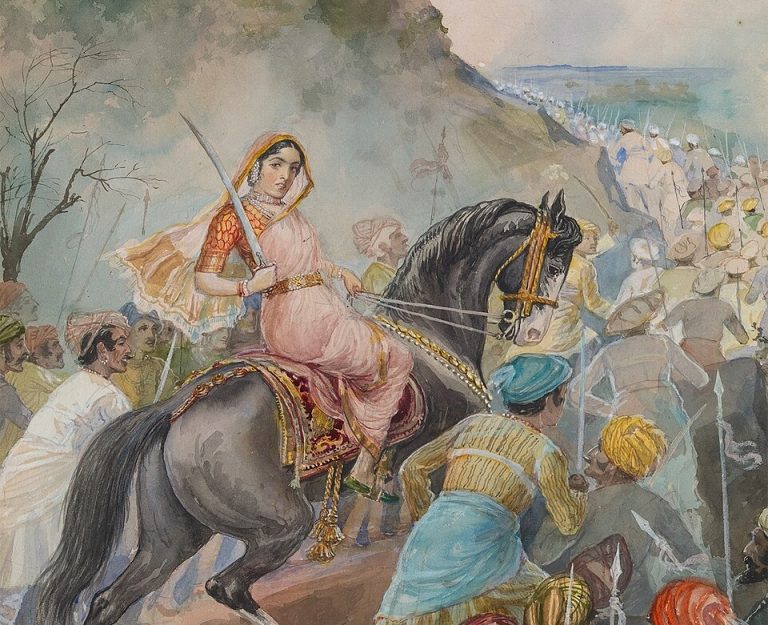
M. V. Dhurandhar, Tarabai—Founder of the Kolhapur Confederacy, 1927, private collection. SaffrontArt. Detail.
Men have been waging war for the longest time. But when we look closely, we find women fighting gallantly in bloody battles, who also commanded armies and strategized against enemies. Some of them have transcended time and become larger than life. Here are 10 of these extraordinary female warriors from all over the world.
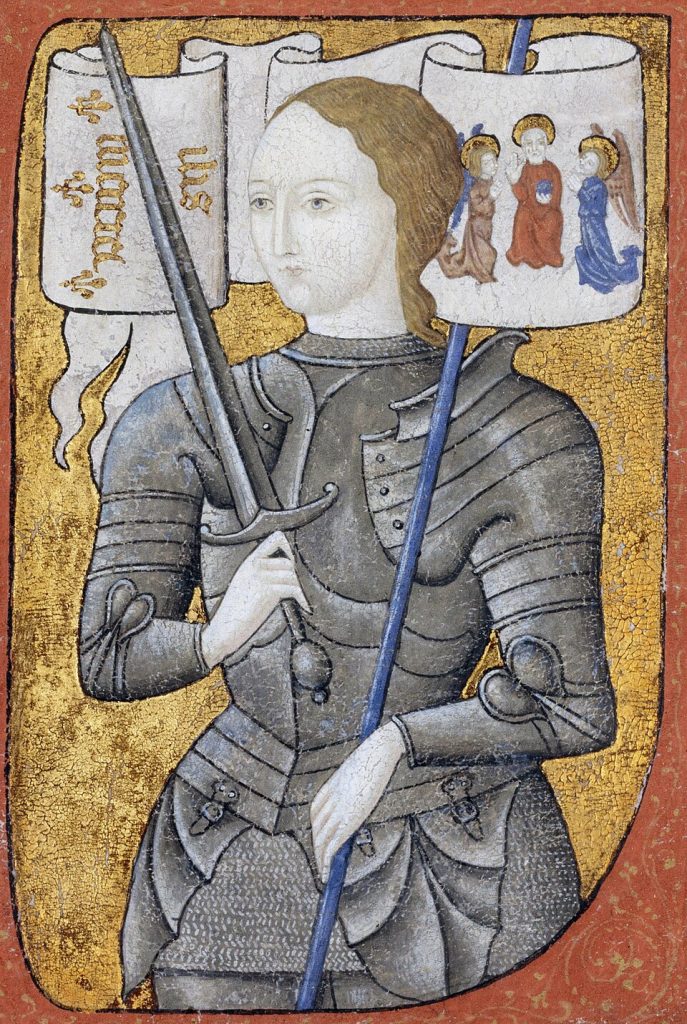
Joan of Arc, 19th century, Archives Nationales, Paris, France.
The story of Joan of Arc’s (ca. 1412–1431) is one of the legends. At 17 years old, this female warrior inspired the French army to fight against the English during the Hundred Years’ War (1337–1453). How did a teenage girl achieve that much in the 15th century? Why would anyone listen to her?
Joan of Arc had visions of the archangel Michael that led to visions of Saint Margaret and Saint Catherine. Those voices told her prophecies of a young virgin woman who would save France. Her fame then reached Charles VII of France, who quickly summoned her and took her to the battlefield. She was often on the front lines, dressed as a man. In 1431, the English captured her and burned her on a stake for heresy. Today, Joan of Arc is a feminist icon and patron saint of France.
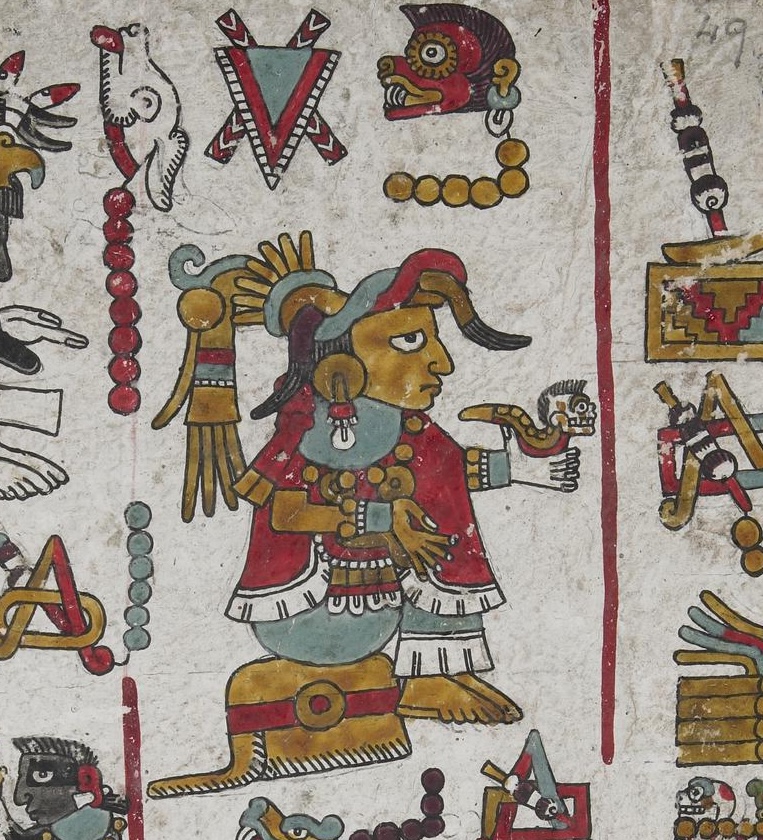
Six Monkey War Quechquemitl, ca. 1200–ca. 1521, The Tonindeye (Nuttall) Codex, British Museum, London, UK.
Six Monkey War Quechquemitl (ca. 1073–1101) was a Mixtecan queen. Her story appears in the Selden and Nuttall codices, two of the few surviving Mesoamerican codices. After the death of her three brothers, she became the heir to the noble family in the city-state of Jaltepec. On her way towards her fiancé’s house, she defeated Lord Two Alligator and Lord Six Lizard, earning her the name “War Quechquemitl.” She later married Eleven Wind, the ruler of the city-state of Huachino. Together, they fought against Eight Deer, another lord with expansionist ambitions. Her memory lives on in the town of Jaltepec, Oaxaca, Mexico.
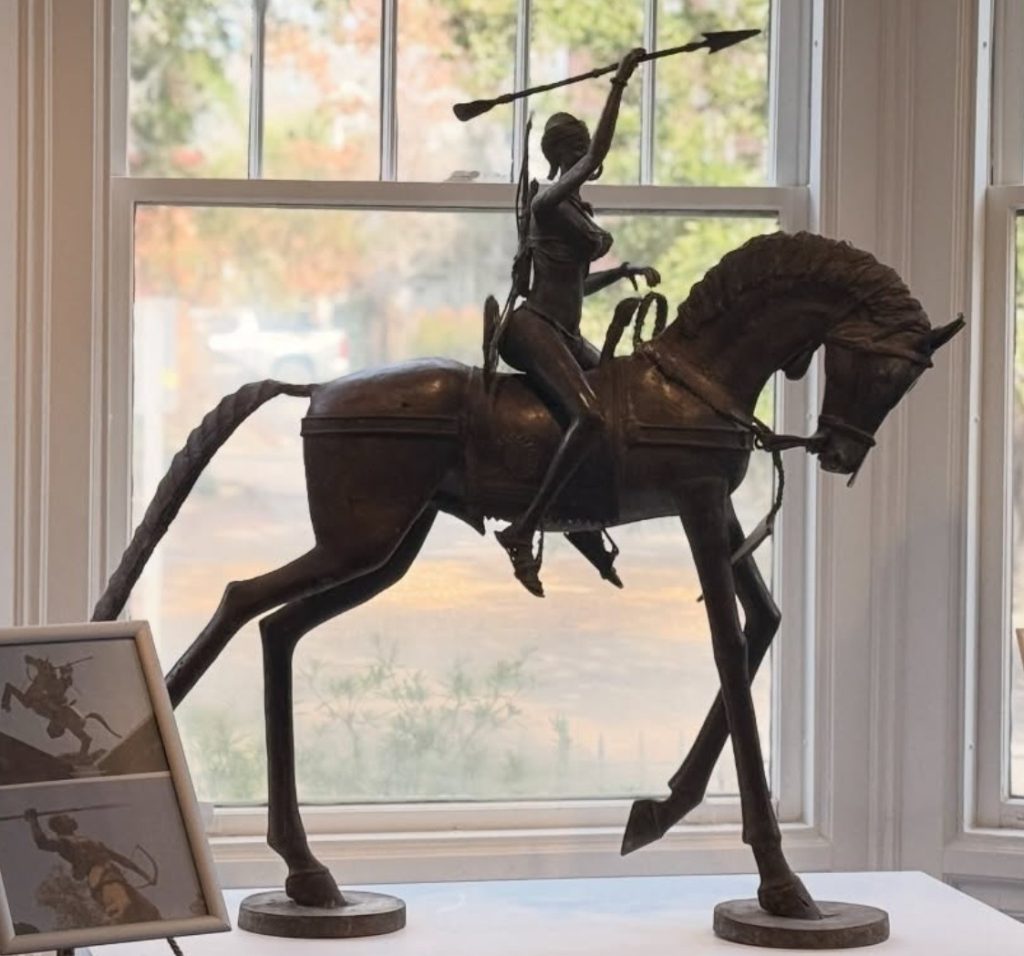
Equestrian Figure of Princess Yennenga, late 19th–early 20th century, Savannah African Art Museum, Savannah, GA, USA. Instagram.
Yennenga lived between the 11th and 15th centuries. Her upbringing was unconventional in a way that she was raised like a man. She hunted with her father, a chief in the Gambaga region (modern Ghana) and was trained to wield a spear and bow. As an adult, she joined the army, where she earned the respect of the soldiers and the population. However, she began to look for an heir to the throne, as she wanted a family with children. Tired of her father’s excuses, she fled and met Rialé, a hunter. Together, they became parents to Ouedraogo, the first chief of the Mossi people in Burkina Faso. She is now a symbol of power and national pride. Yennega is often depicted on horseback.
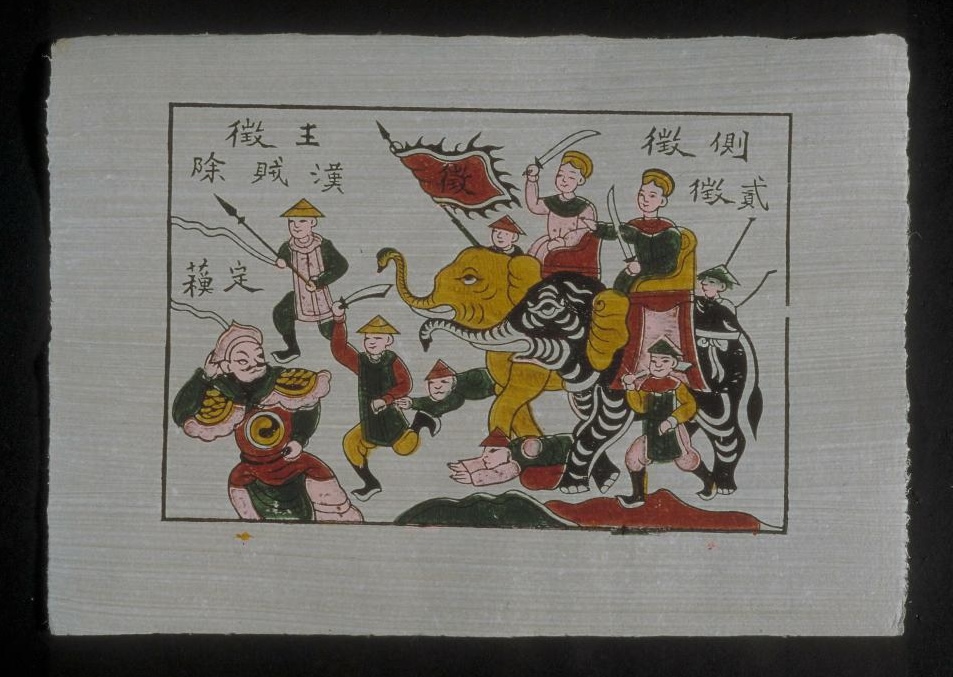
Nguyen Huy Sam, The Trung Sisters, 2001, Asian Civilisations Museum, Singapore.
Trưng Trắc and Nhị (ca. 14–43) were daughters of a Lạc lord in modern Vietnam. At the time, the Han dynasty controlled the area where they lived, resulting in protests from the local population. When the Chinese governor executed Trắc’s husband, Thi Sách, the sisters raised an army composed mostly of women and attacked. They defeated the Chinese and forced them out of their territory. Three years later, the Han army returned, defeated, and killed the Trưng Sisters. Regardless, Vietnamese people remember them as fierce female warriors who fought against invaders. They are usually represented riding elephants.
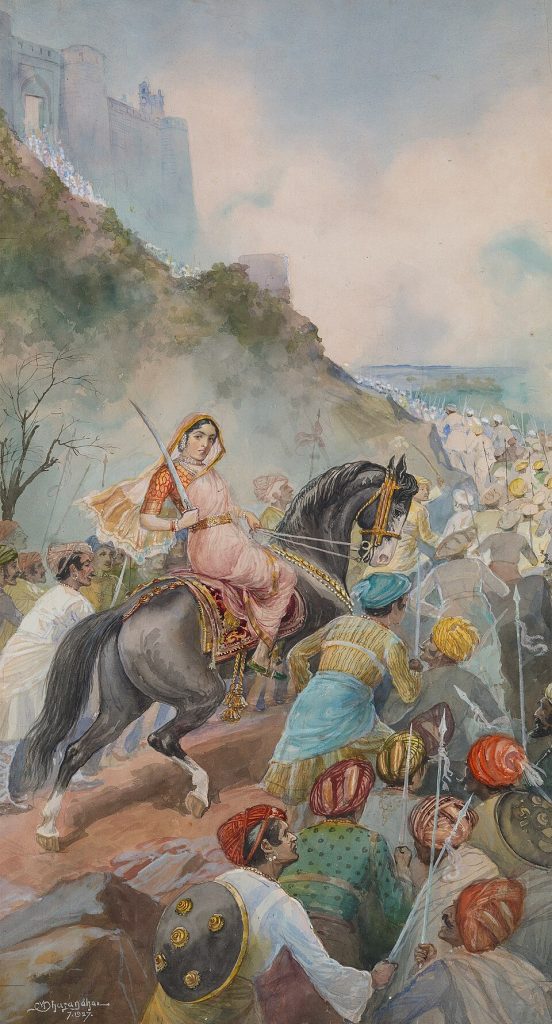
M. V. Dhurandhar, Tarabai—Founder of the Kolhapur Confederacy, 1927, private collection. SaffrontArt.
Maharani Tarabai Bhonsle (1675–1761) was queen of the Maratha Kingdom (modern-day India). Upon her husband’s death in 1700, she assumed the role of queen regent before her son Shivaji could inherit the throne. She was skilled at armed combat and cavalry, and helped design battle strategies against the Mughal Empire. Not only did Tarabai’s forces push the Mughals out of her kingdom, but they reached further into the Mughals’ territory in central India.
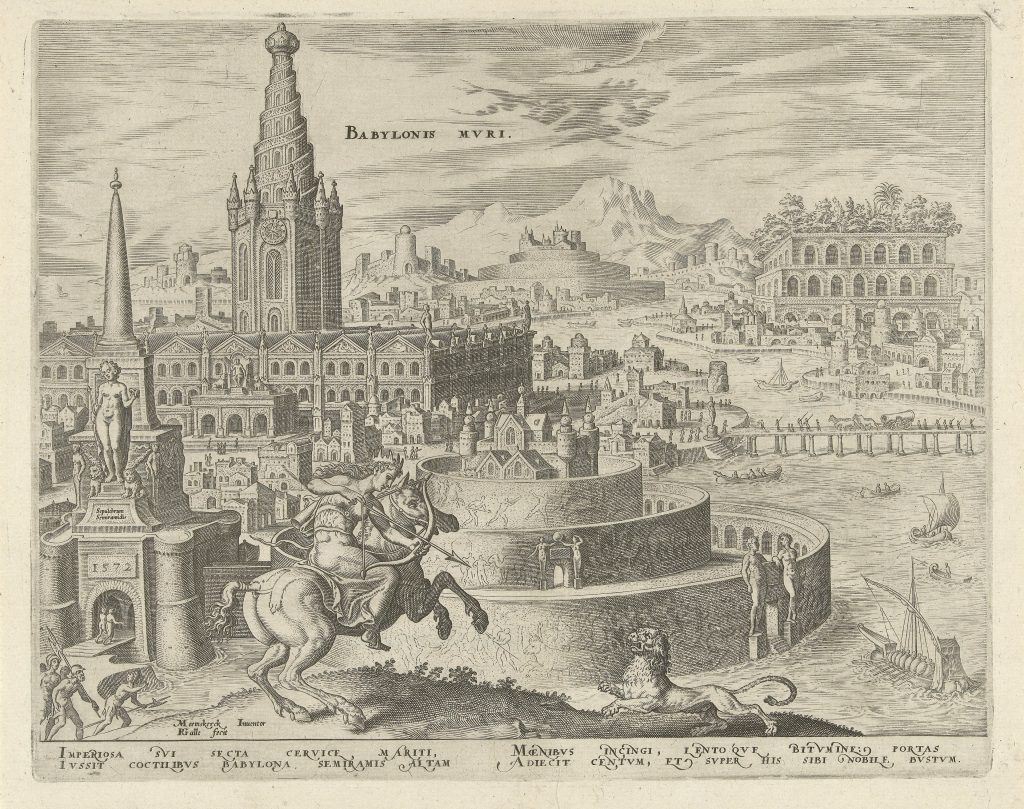
Philips Galle (printer) after Maarten van Heemskerck, Semiramis at the Walls of Babylon from The Eight Wonders of the World, 1572, Rijksmuseum, Amsterdam, Netherlands.
Semiramis was a demigod, daughter of the goddess Derceto (Atargatis), and queen of Assyria. Greek Historian Diodorus tells her story in Bibliotheca Historica. She played a crucial role at the Siege of Bactra during King Shamshi-Adad V’s campaign against the Bactrians. Following her success, the king fell in love with her and married her (taking her from her first husband). After he died in 811 BCE, she became queen regent. She was known for renovating the city of Babylon, as well as building palaces in other cities. But her greatest achievements by far were the military campaigns that took her as far as Egypt, Ethiopia, and even India, making her journey comparable to that of Alexander the Great.
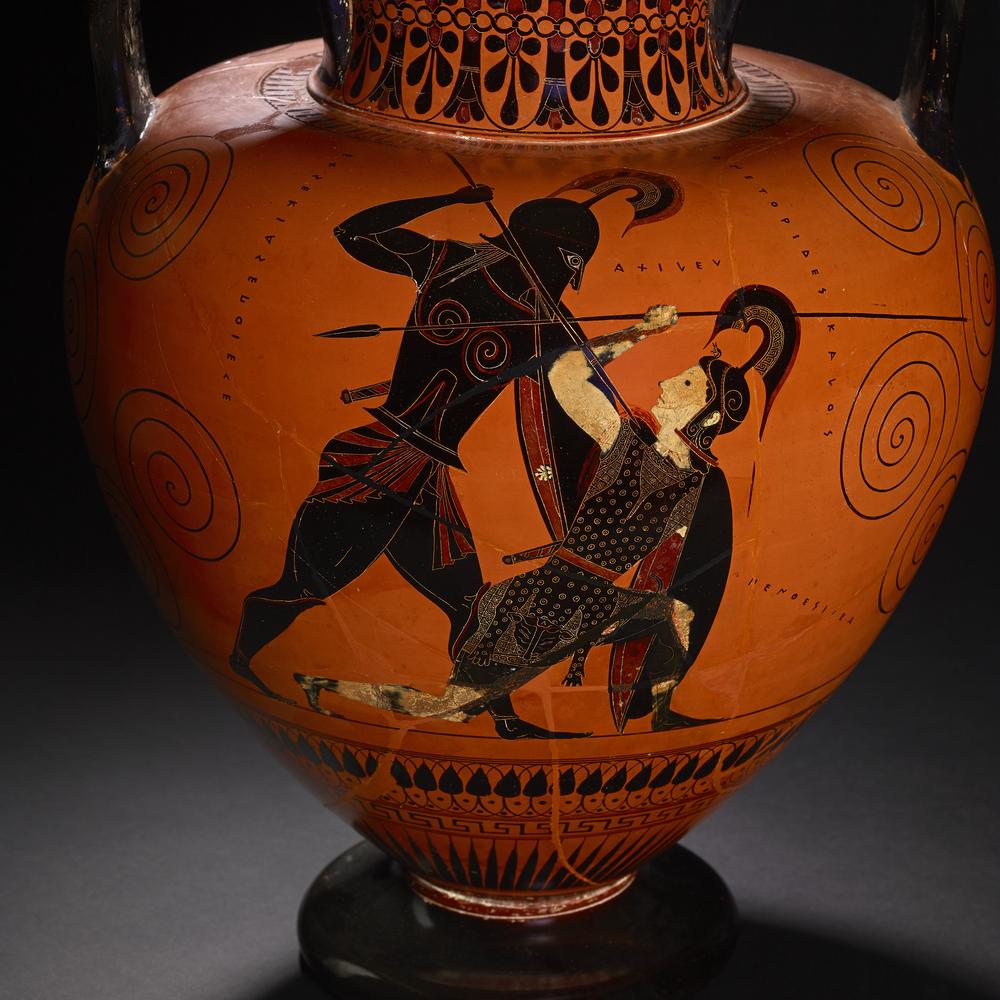
Exekias, The Exekias Amphora with Achilles killing Penthesilea, ca. 540 BCE–530 BCE, British Museum, London, UK.
Penthesilea was the daughter of Ares, god of war, and Otrera, an Amazon queen. This impressive lineage led her to become an Amazon herself, a fierce female warrior on horseback. Legend says she killed her sister Hippolyta, another Amazon, and the trauma caused by this event led her to seek death. During the Trojan War, she sided with the Trojans. She met her fate fighting Achilles and died, as Amazons wished to do, on the battlefield.
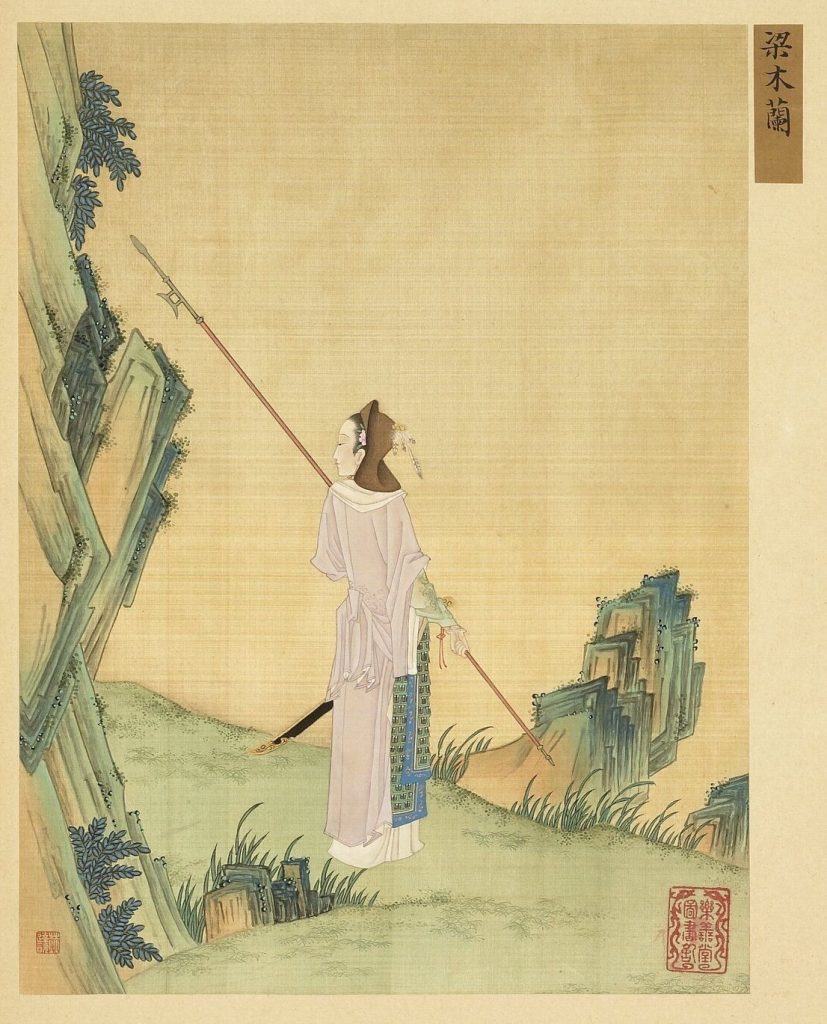
He Dazi, Hua Mulan from Gathering Gems of Beauty, 18th century, National Palace Museum, Taipei, Taiwan.
Mulan may be one of the most famous female warriors in this list, thanks to Disney. Based on legend, she was a young girl who saved her father’s life dressing as a man and joining the army for him. The first written accounts come from the 6th century, called The Ballad of Mulan. Historians believed that the story took place during the 5th or 6th century during conflicts between the Northern Wei dynasty and the Rouran. For centuries, her image has been immortalized in countless artworks.
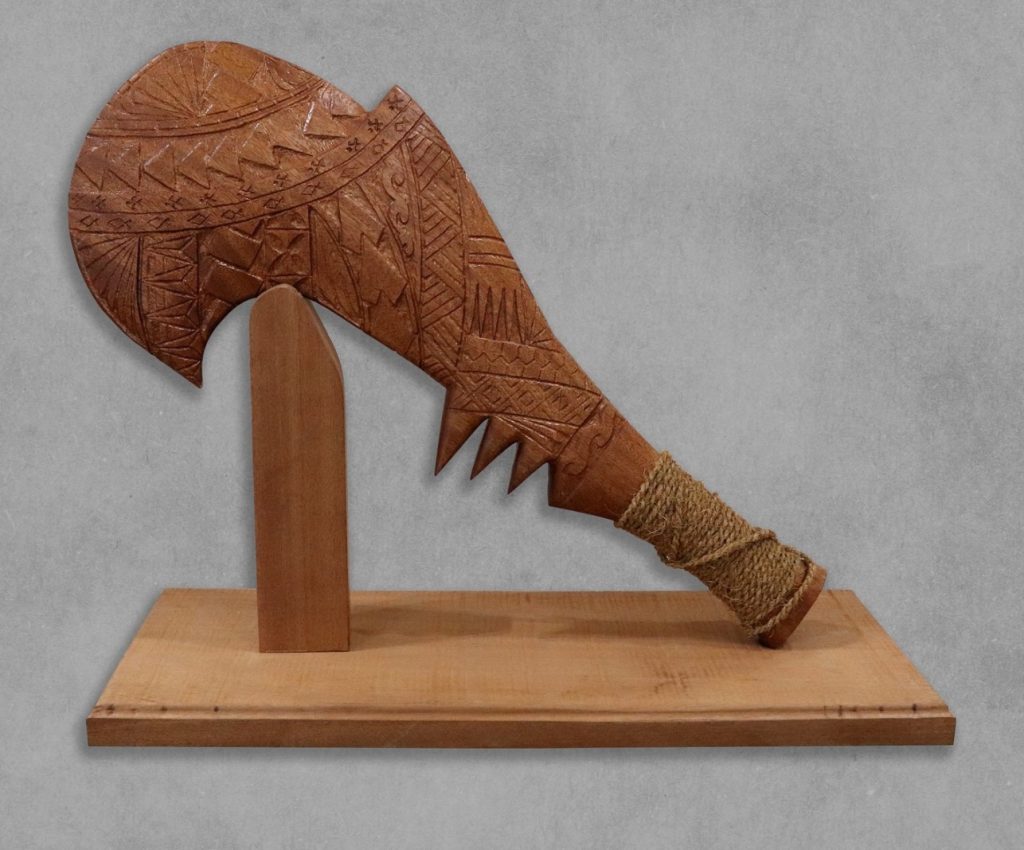
Sulika Laulu, Ta Fesilafa’i: To Kill with Courtesy, ca. 2024, Urban Arts Gallery, Salt Lake City, UT, USA. Instagram.
In Samoan legends, Nafanua became the goddess of war after defending her people on the island of Savai’i. She condemned the High Chief Lilomaiava of the east, who sought to expand his territory to the west. Nafanua stopped the High Chief from perpetuating a traditional humiliation ritual that consisted of forcing prisoners, one of them was her uncle, to climb a coconut tree feet first. She designed weapons using the coconut tree for herself and everyone else to fight against her foes.
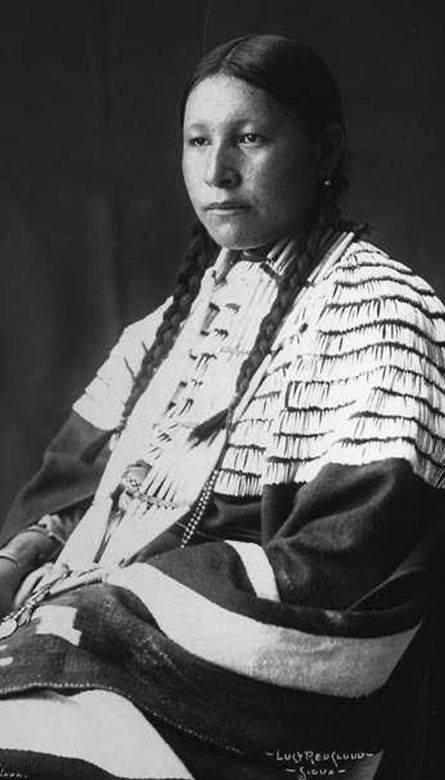
Photograph of Moving Robe Woman. Facebook.
Last but not least, Moving Robe Woman (c. 1854–1935) was a Hunkpapa Sioux female warrior. She was the daughter of the Hunkpapa chief in modern South Dakota. Since adolescence, she engaged in battles against the Crows. In the Battle of the Little Bighorn (1876), she fought alongside Sitting Bull and Crazy Horse, as well as other women warriors, such as Pretty Nose (Arapaho) and Buffalo Calf Road Woman (Northern Cheyenne). They defeated the U.S. army led by General Custer, who perished on the battlefield. Luckily, Moving Robe Woman’s testimony of the event survived. She described it as “a hotly contested battle between two armed forces.”
These 10 examples show the strength and tenacity of women who fought for themselves, their rights, and their people.
Nafanua, The Guardian, 2024, National Park of American Samoa. Accessed: Feb 19, 2026.
Seis Mono | Mujeres en la historia, 2025, YouTube. Accessed: Feb 19, 2026.
Yann Degruel, Sylvia Serbin, and Edouard Joubeaud: Yennega: Princesse de Gambaga, 2014, UNESCO. Accessed: Feb 19, 2026.
T. Fleischmann: Vietnamese Rebels: The Trưng Sisters and Triệu Thị Trinh, 2023, Ebsco. Accessed: Feb 19, 2026.
Mandy Nachampassack-Maloney: How Achilles and Penthesilea’s Myth Defied Ancient Gender Norms, 2025, The Collector. Accessed: Feb 19, 2026.
Sara Relli: The Indigenous Women Who Fought at the Battle of Little Bighorn, 2025, The Collector. Accessed: Feb 19, 2026.
Diodorus Siculus: The Library of History, UChicago. Accessed: Feb 19, 2026.
DailyArt Magazine needs your support. Every contribution, however big or small, is very valuable for our future. Thanks to it, we will be able to sustain and grow the Magazine. Thank you for your help!

An International Relations graduate and an art lover. I prefer art prior to the 20th century, in general. I'm interested in art from Mexico and by female artists.

The Morris family stood at the centre of the 19th-century Arts and Crafts movement and were an integral influence on the Pre-Raphaelites. While...
Martha Teverson 19 October 2026
The mirror has functioned as a recurring symbol throughout art, particularly in representations of women. Historically, its presence in art has often...
Martha Teverson 24 August 2026
Explore the stigma of syphilis in Victorian art and society. Science was advancing in this transformative era, but societal attitudes lagged behind. How did the art world respond?
Candy Bedworth 15 June 2026
Rosita Mauri was one of the most talented dancers of her generation, and her mastery on stage drew the attention of countless artists. They created...
Jimena Escoto 11 June 2026