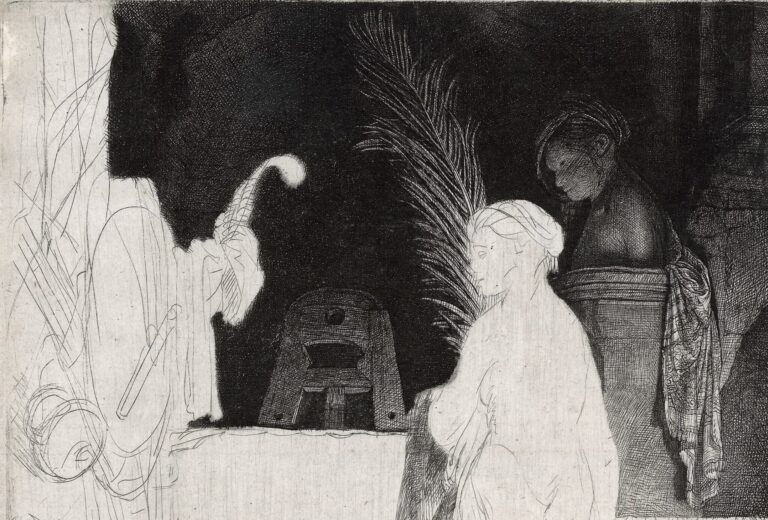
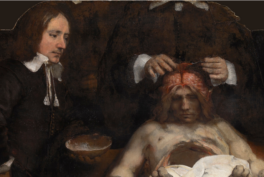
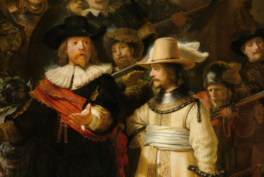
The exhibition runs through January 4th, 2027, in the heart of Amsterdam, but curator Nathalie Maciesza is giving readers of DailyArt Magazine an exclusive sneak peek. She paired Rembrandt’s work with three contemporary artists who have creativity and a talent for experimentation to match the old master’s.
Throughout his entire life, Rembrandt experimented with paper, ink, and pencil. By trying out different techniques and materials, he continually discovered something new. And he approached the same theme over and over with a fresh perspective. Thanks to these experiments, he developed his craftsmanship into mastery.
1. Rembrandt & Glenn Brown
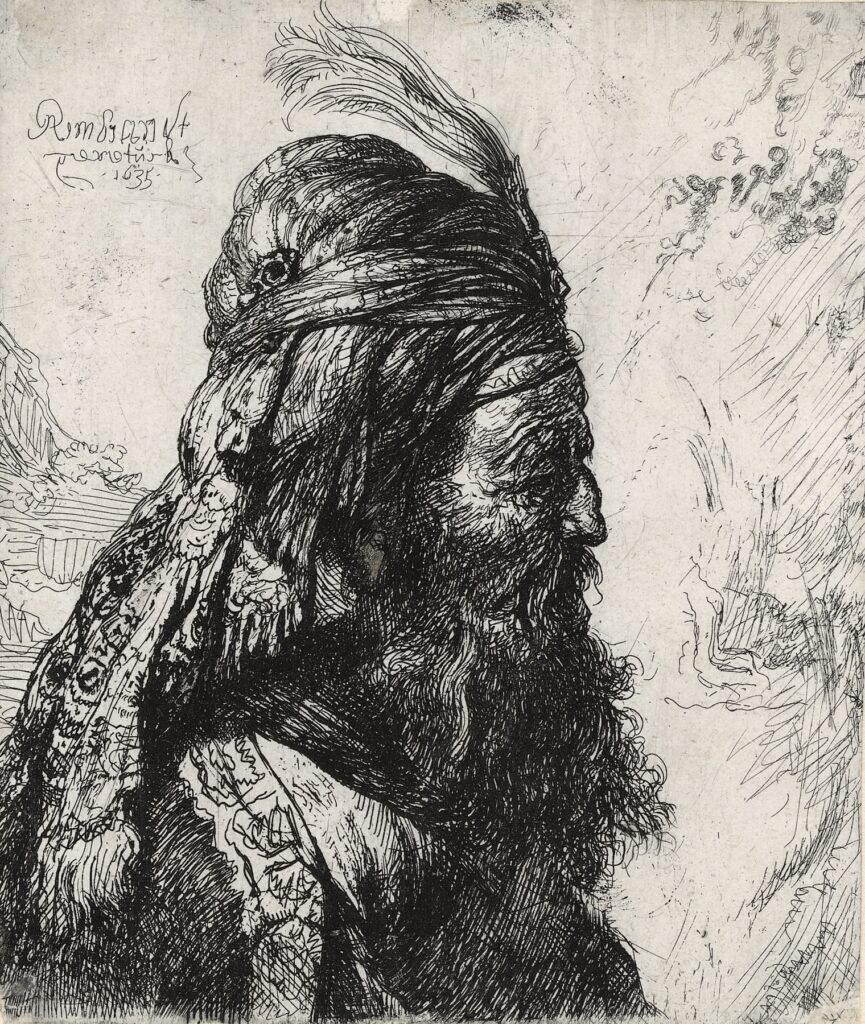
Tronies were very popular in the 17th century. They are portraits of models that depict a specific type of person, emotion, or light effect. Rembrandt was a master at making tronies. This specific etching is supposed to represent a man from the Middle East. It is not made “after life.” The artwork is part of a series of four: every version slightly different.
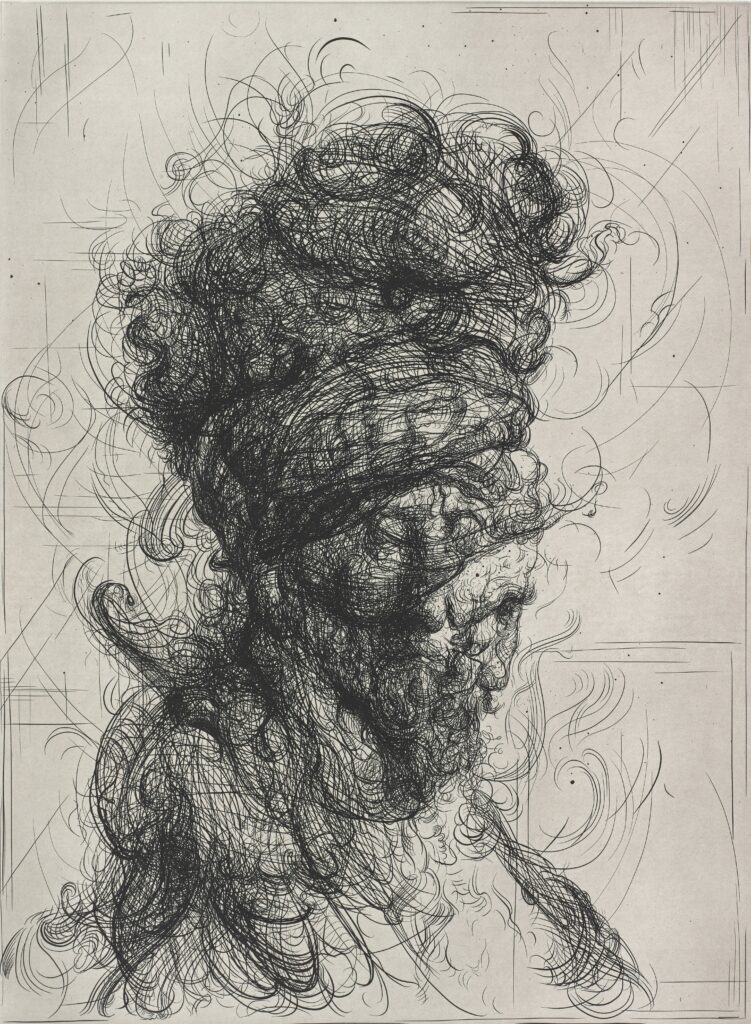
The British artist Glenn Brown (1966) took Rembrandt’s tronies as the basis for his own series. On his iPad, he transformed Rembrandt’s artworks into a wild interplay of lines. He then made an etching of the new tronie. Finally, he superimposed two etchings and made new prints.
2. Rembrandt & Horst Janssen
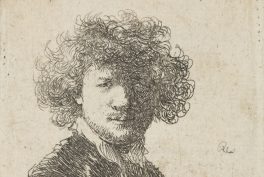
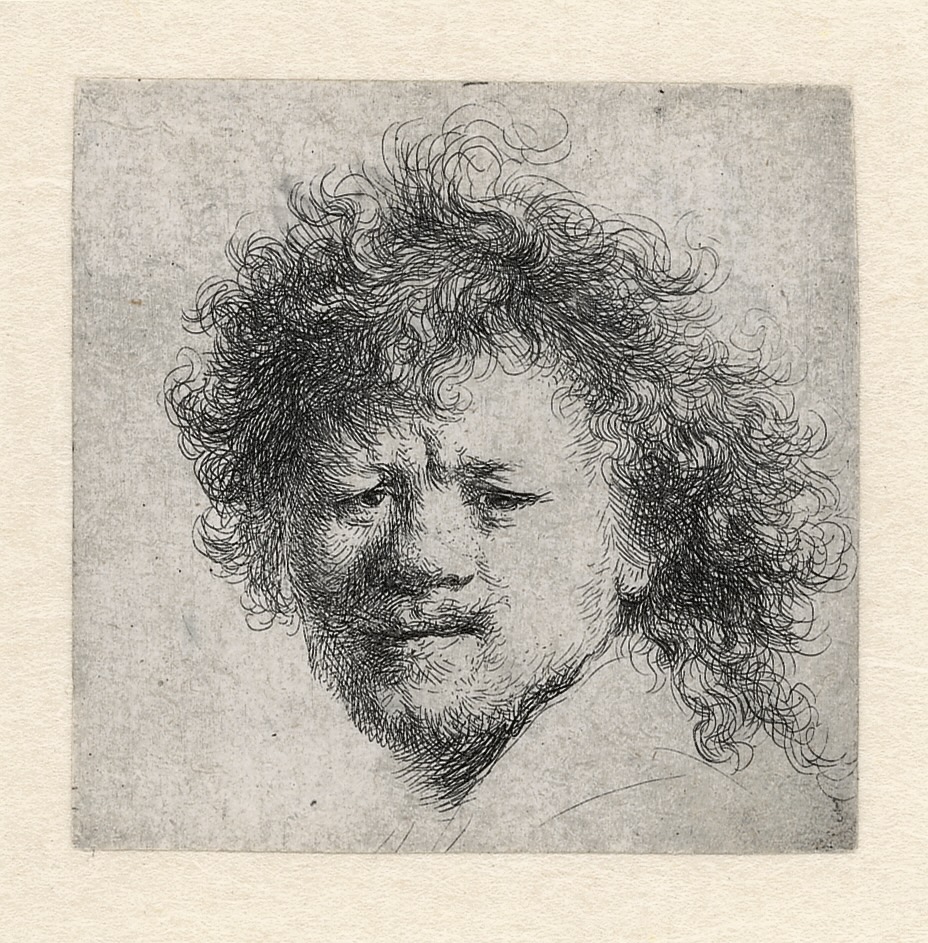
Rembrandt made around 80 self-portraits, from the age of 20 until he was 63, more than any other artist in the 17th century. Many of these self-portraits are studies in which Rembrandt used himself as his model. This saved money and trouble, but it was clever marketing as well. Thanks to the many self-portraits, Rembrandt’s work and his face, too, became widely known.
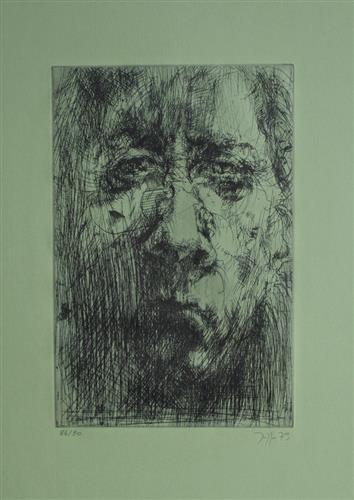
The German artist Horst Janssen (1929–1995) rivaled Rembrandt in the sheer number of self-portraits he produced. Among his works is this 23-part series of etchings. The title (Hanno’s Death) refers to a character from Thomas Mann’s first novel, Buddenbrooks (1901). Hanno is the youngest scion of a wealthy merchant family. The family chronicle deals with decadence and decline—themes that evidently came to Janssen’s mind as he gazed at his own face.
3. Rembrandt & Guy Vording
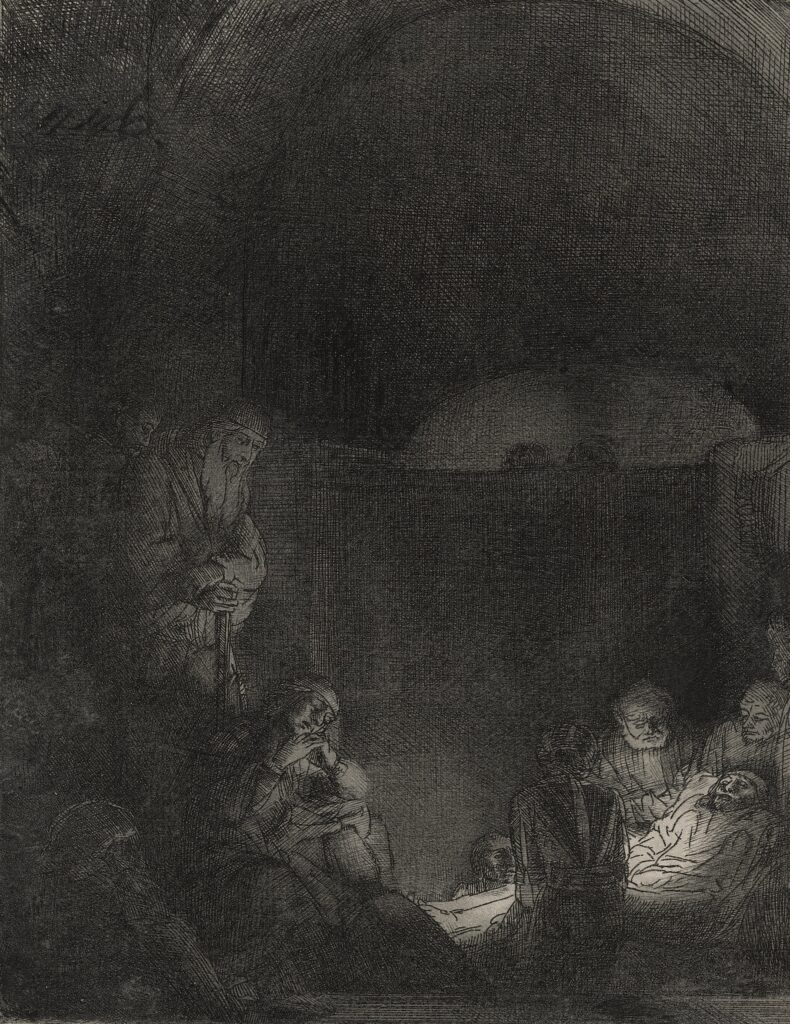
Rembrandt often played with the effects of light and dark. Not just in his paintings but also in his prints. This is particularly challenging, as making a print very dark requires making a great many scratches on the plate. The difficulty lies in preserving nuances so that details remain visible even within the darkness.
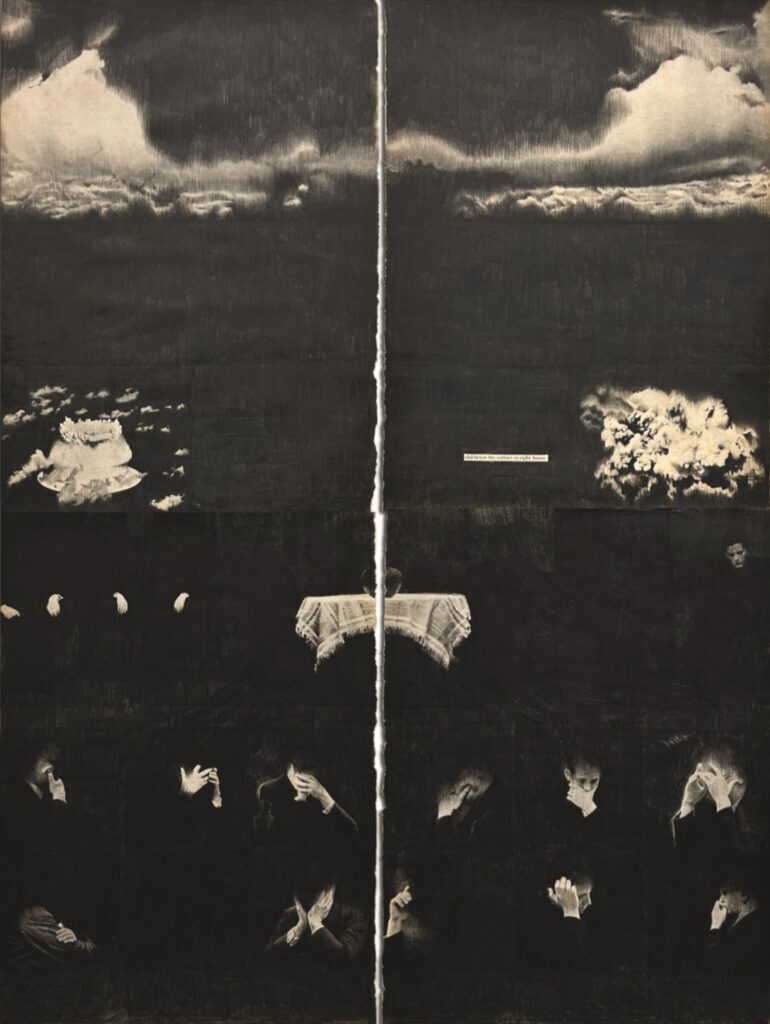
Artists who came after Rembrandt also experimented with this: what do you show, and what do you let fade into the black? The Dutch artist Guy Vording (1985) is a master of concealment. The basis for all his artwork comprises American magazine articles from the 1940s, which he has been collecting in albums for years. After choosing a suitable page, Vording first decides which part of the illustration and text he wants to keep. He then colors the rest with pencil. What remains each time is a surprising new visual story.
Nathalie Maciesza, Curator of Contemporary Art and Interpretation of the Rembrandt House Museum, Amsterdam, Netherlands.