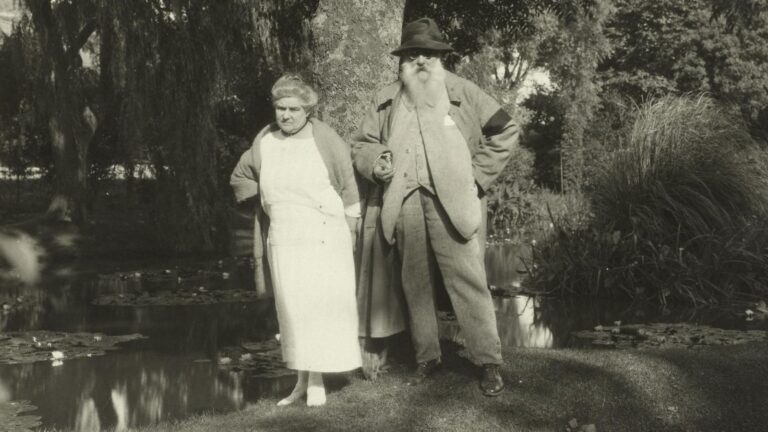
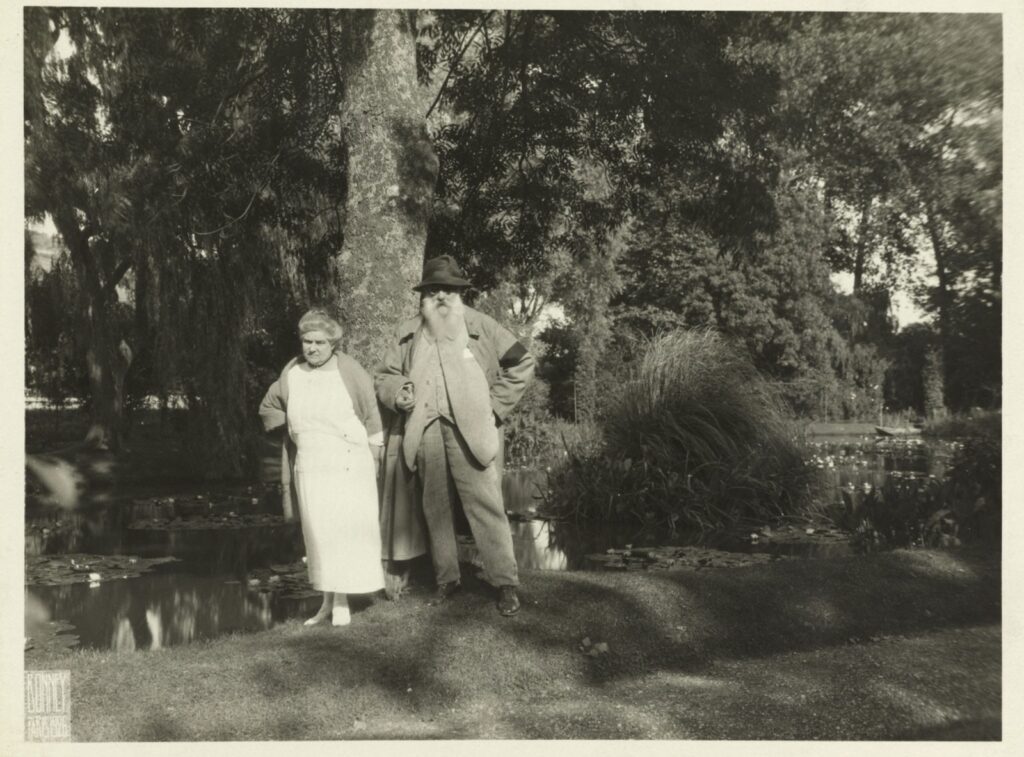
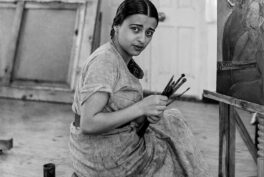
Her name was Blanche Hoschedé-Monet (1865–1947), and her rediscovery is now underway. The Eskenazi Museum of Art at Indiana University devoted a major 2025 exhibition to her– Blanche Hoschedé-Monet: In the Light. But even that title carries a problem: it returns her to visibility only by keeping her inside Monet’s orbit. Drawing on archives I have worked with for over 30 years, I want to suggest a different story—one in which Blanche was never just in anyone’s light.
A Painter Before She Was a Caretaker
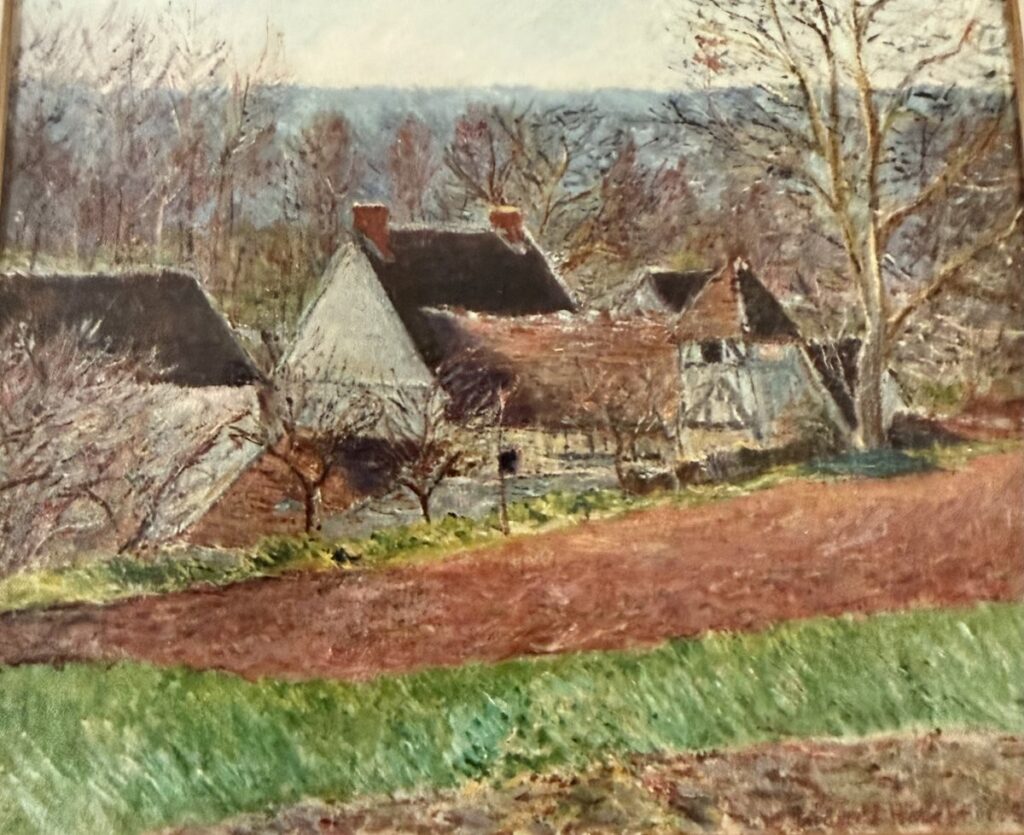
A small oil sketch, Vue de Giverny, signed and dated 1889, sits quietly at the start of her timeline. It was painted eight years before she married Jean Monet, Claude’s son, and 16 years before the first newspaper clipping that mentions her work. Long before Giverny needed a guardian, Blanche was already someone who picked up a brush and went outside to paint.
The Detective Story Hidden in a Press Subscription
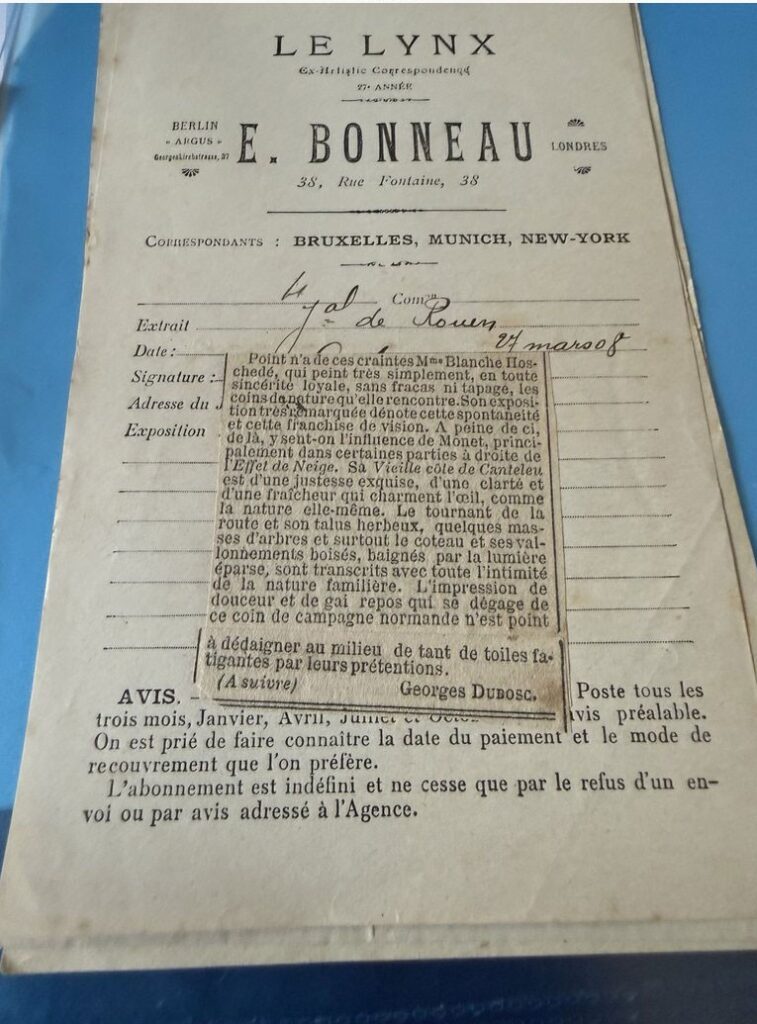
Here is the detail that changes everything. In the early 1900s, Claude Monet subscribed Blanche to Le Lynx, a Paris press-clipping agency, so that every newspaper mention of her exhibited paintings would land on his desk. 53 clippings survive from this dossier, dated between 1905 and 1912. Monet was not a sentimental man about other people’s painting careers. If he paid to track Blanche’s press coverage, it was because he considered her a working artist whose public reception was worth following—not a hobbyist tucked away in the family home.
The clippings themselves read like real reviews of a real painter. Critics praised the freshness of her brushwork, the accuracy of her tonal values, and her sensitivity to the changing light over the Seine at Rouen. They discussed her Vieille Côte de Canteleu and her winter effects the way they discussed any working professional—sometimes admiringly, sometimes with reservations, but always as someone whose work mattered enough to assess.
On the Market with Pissarro and Sisley
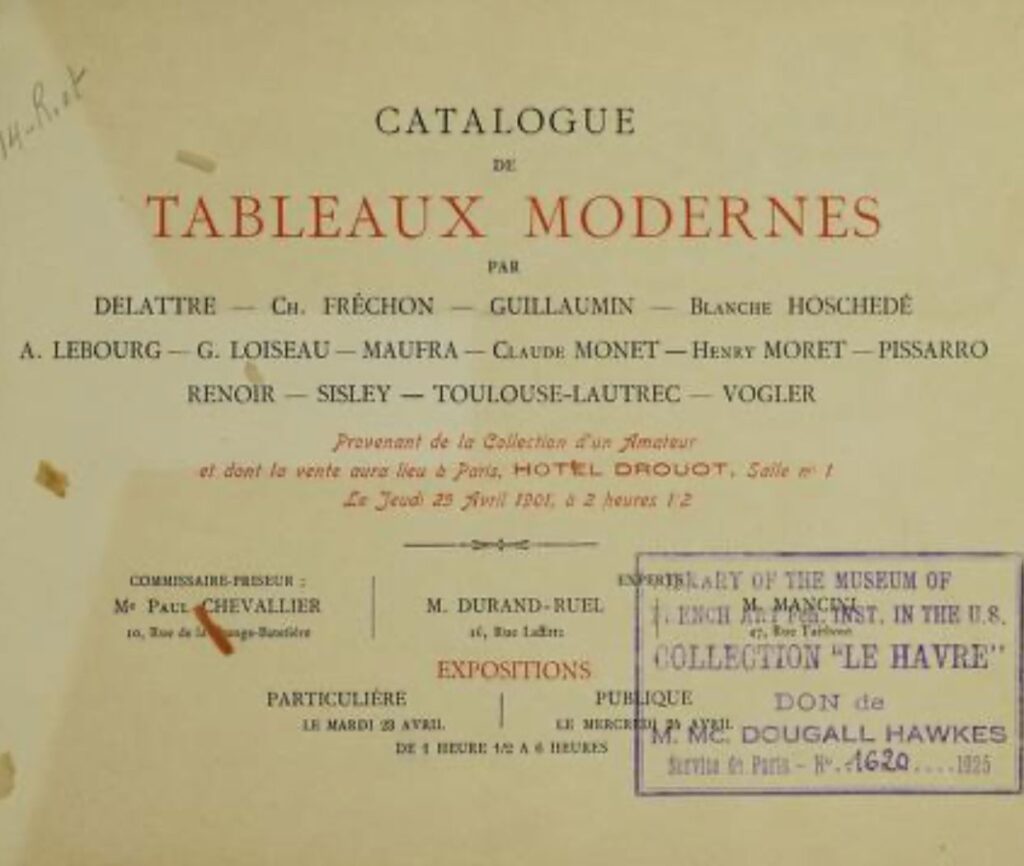
Recognition did not stay confined to newsprint. As early as 1901, Blanche’s name appeared in a Hôtel Drouot sale catalog alongside Monet, Pissarro, Sisley, Renoir, and Toulouse-Lautrec—four years before her first Salon submission. In 1923, two of her paintings sold at Drouot to Durand-Ruel, the legendary dealer who had championed the Impressionists from the start.
Then, in 1928, one of her paintings appeared in the estate sale of Camille Pissarro’s own collection, shown alongside Cézanne, Mary Cassatt, Seurat, and Signac. 14 years later, in 1942, the stock book of Galerie Félix Gérard—now held at the Getty Research Institute—recorded the gallery buying and reselling her work in the same ledger as paintings by Van Gogh, Renoir, and Utrillo.
This is not the trail of a hobbyist. It is the documented trail of a painter whose work circulated inside the Impressionist market for more than four decades.
Why a Studio of Her Own Would Have Changed Everything
So why isn’t she famous? The archives point to something structural rather than personal. Monet never gave Blanche a studio of her own. She painted in whatever space was available—near him, behind him, in the garden, inside the house that was, in every sense, his. A male painter working in Monet’s shadow might have been called a disciple, or an heir. Because Blanche was a woman tied to the household by marriage, duty, and care, the vocabulary used for her was different: stepdaughter, widow, guardian, devoted presence.
Her husband Jean Monet, Claude’s son, fell ill and died in 1914. Where another artist might have responded by seeking dealers, exhibitions, and a public strategy, Blanche was pulled back into care, mourning, and the daily maintenance of Giverny. The years afterward were not, by her own family’s account, years of painting.
The Freedom That Came Too Late
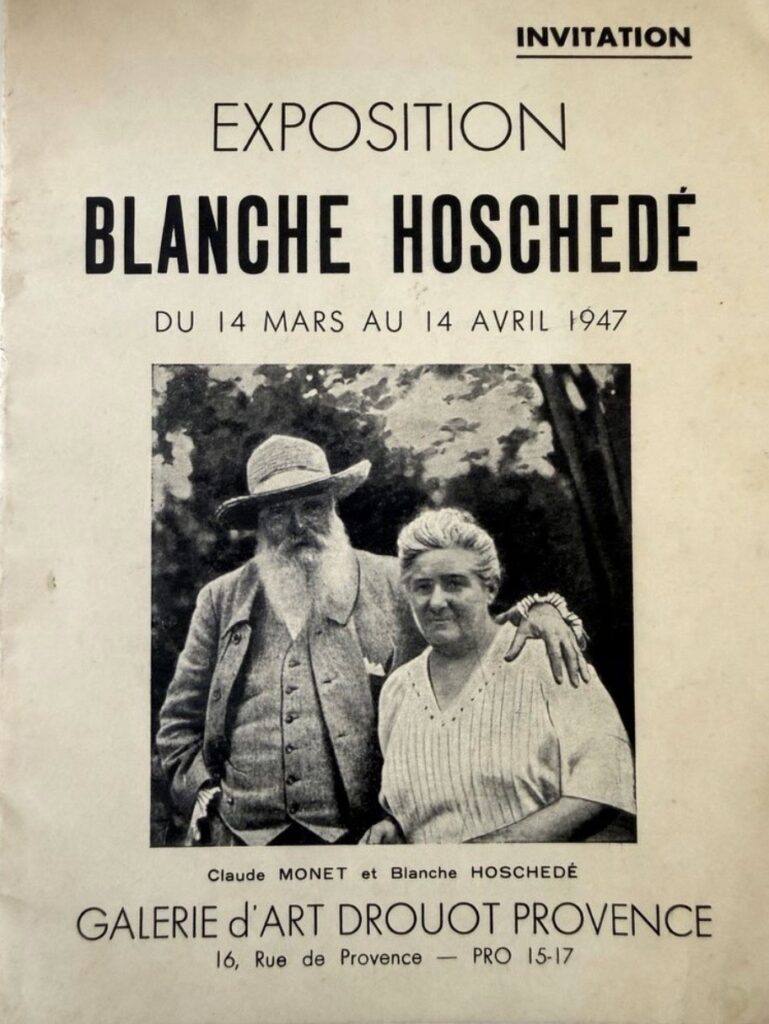
Everything changed in December 1926, when Monet died. The following year, at the age of 62, Blanche held her first solo exhibition at the Galerie Bernheim-Jeune in Paris. She exhibited there again in 1931, at Galerie Daber in 1942, and at the Galerie d’Art Drouot Provence in 1947—only months before her death in Nice at 82.
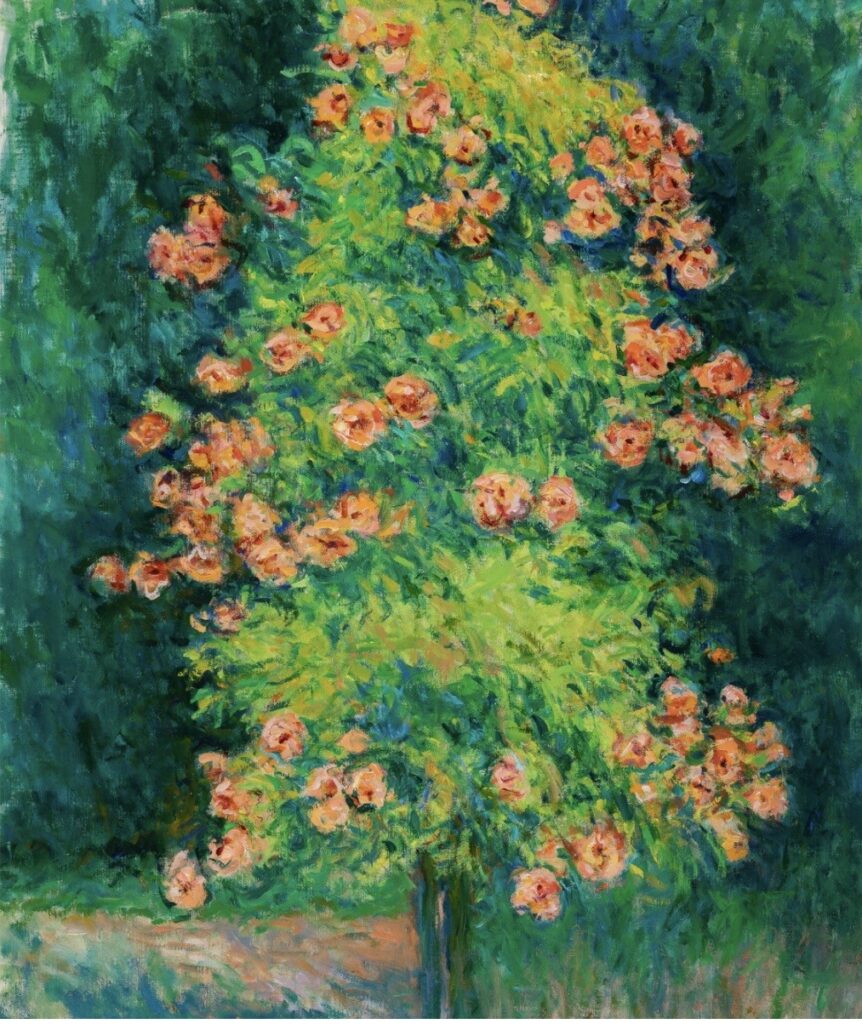
A late painting, Le bégonia dans le jardin, dated that same final year, shows she never put the brush down. It was a real freedom. It simply arrived decades too late, and only after the man whose name she carried had stopped needing her care.
Writing Her Back Into Her Own Story
None of this requires diminishing Monet or treating Blanche as his rival. It requires something simpler: reading the documents that already exist. The press clippings, the sale catalogues, the dealer ledgers, and the succession papers describe a woman who worked, exhibited, and was reviewed throughout her adult life—not a quiet shadow who emerged briefly “into the light” near the end.
Blanche Hoschedé-Monet was not forgotten because no one saw her. She was forgotten because the role of devoted family caretaker was easier to remember than the role of working artist. The archives suggest it’s time to remember both.
Author’s bio
Patrick Bertrand is the founder of ArtGiverny and an independent researcher specializing in the Giverny art colony. He is currently preparing the catalogue raisonné of Theodore Earl Butler in collaboration with the artist’s descendants.