
Masterpiece Story: Judith and Holofernes by Caravaggio
Judith and Holofernes is a Caravaggio masterpiece that captures Biblical murder and drama. Rarely has death been captured so intensely and violently...
James W Singer 13 September 2026
17 August 2026 min Read
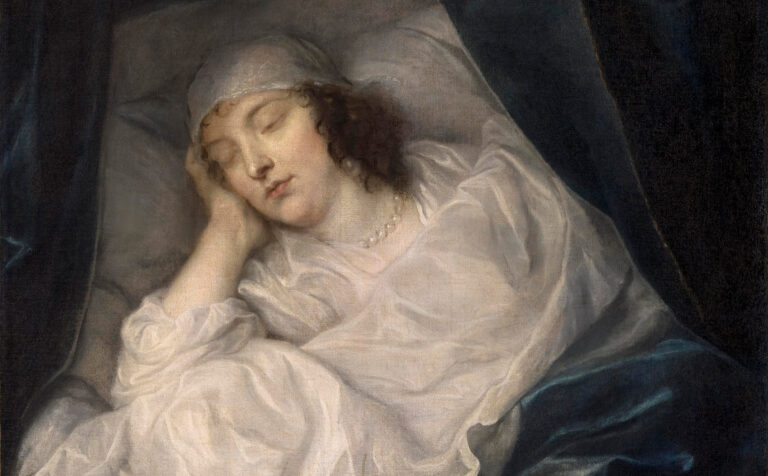
Anthony van Dyck, Venetia, Lady Digby, on Her Deathbed, 1633, Dulwich Picture Gallery, London, UK. Wikimedia Commons (public domain). Detail.
Anthony van Dyck was one of the great portraitists of the 17th century. It is largely through his eyes that we now view the doomed reign of Charles I and his Cavalier courtiers, all satin and lace, and long-limbed elegance. Venetia Stanley on Her Deathbed is a very different image. It is an intimate, emotional record of the passing of the much-loved wife of one of van Dyck’s closest friends.
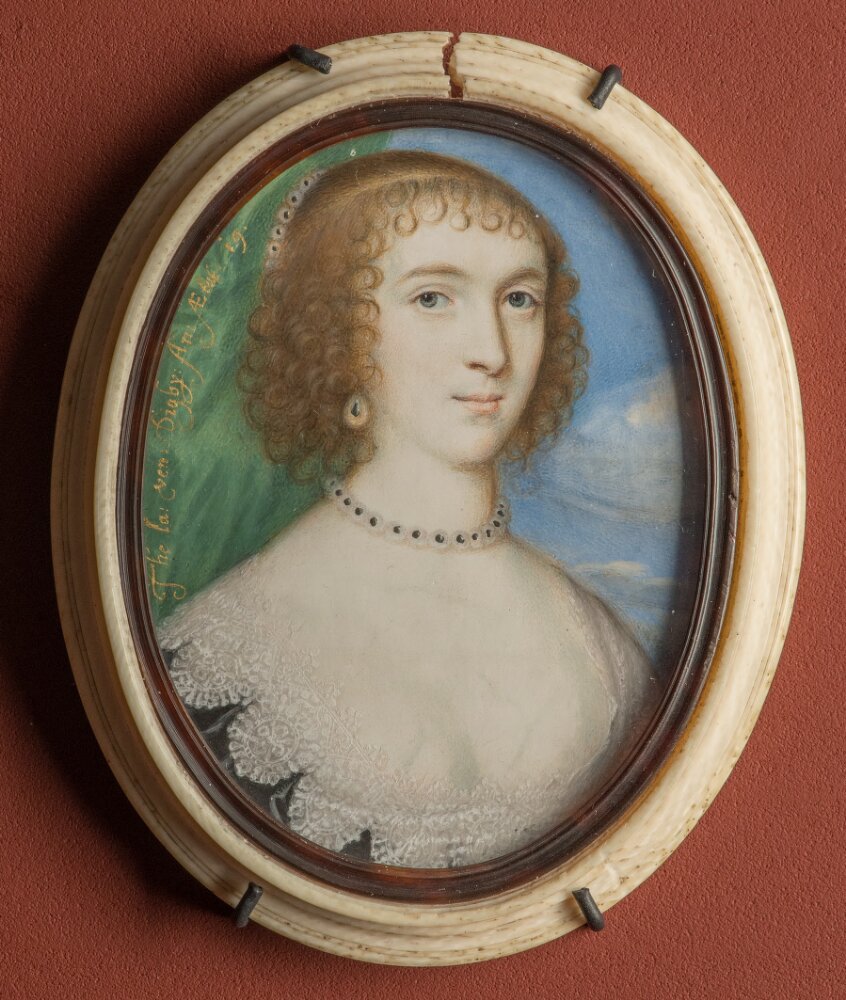
Peter Oliver, Lady Venetia Anastasia Digby, Nationalmuseum, Stockholm, Sweden. Wikimedia Commons (public domain).
Born in the late 1600, Venetia Anastasia Stanley was the daughter of a Shropshire baronet. Her mother, Lucy Percy, was the daughter of the disgraced Earl of Northumberland, who had been imprisoned by Elizabeth I for his role in a Catholic plot. She died shortly after Venetia was born.
Venetia was presented at court as a teenager and quickly gained a reputation as a beauty. Less fortunately, her name became associated with admirers including the Earl of Dorset. There were rumors that she gave birth to a child and received an annuity from the Earl of £500. After the Earl’s death in 1624, his brother also allegedly fought a duel over Venetia. None of this has ever been proven. Most likely, as a young, single, and attractive woman, she was the victim of court gossip. However, her beauty was celebrated by miniaturists like Peter Oliver, who produced several portraits of her.
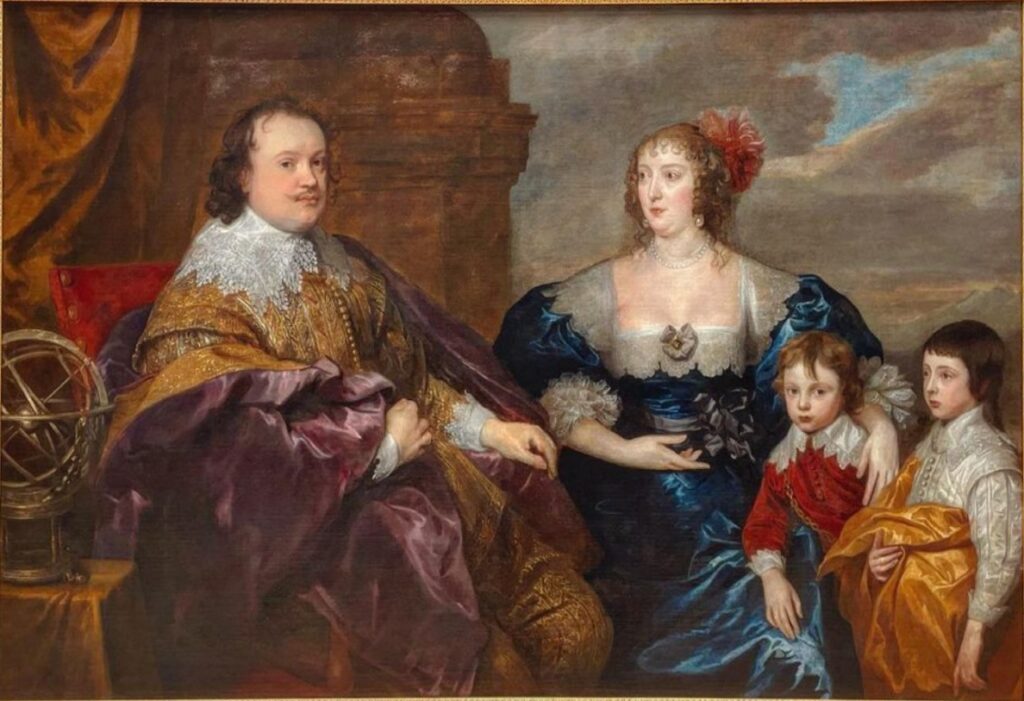
Anthony van Dyck, Family Portrait of Sir Kenelm Digby and Lady Venetia Anastasia Stanley with Their Sons Kenelm and John, 1632–1633, private collection. Wikimedia Commons (public domain).
Sir Kenelm and Venetia had known each other as children, and shared the dubious bond of a treasonous relative: Kenelm’s father had been executed for his role in the Gunpowder Plot. They rekindled their relationship at court, much to the disapproval of his mother, who sent Kenelm abroad for an extended trip and even intercepted his letters back to Venetia. All this was later recorded and embellished in Digby’s memoirs, published after his death as Loose Fantasies. On his return, they married in 1625, initially in secret, and went on to have four children.
Anthony van Dyck portrayed the couple alongside their two sons in a portrait of 1632–1633. Venetia is placed center-stage, her hand indicating the heirs that she has provided for her husband. Sir Kenelm is shown alongside an astrolabe, symbolizing his learning but also suggesting the harmonious unity of this family group. By this time, Digby was a significant figure at court, appointed Surveyor General of the Navy and, thanks to a successful privateering mission, wealthy and famous.
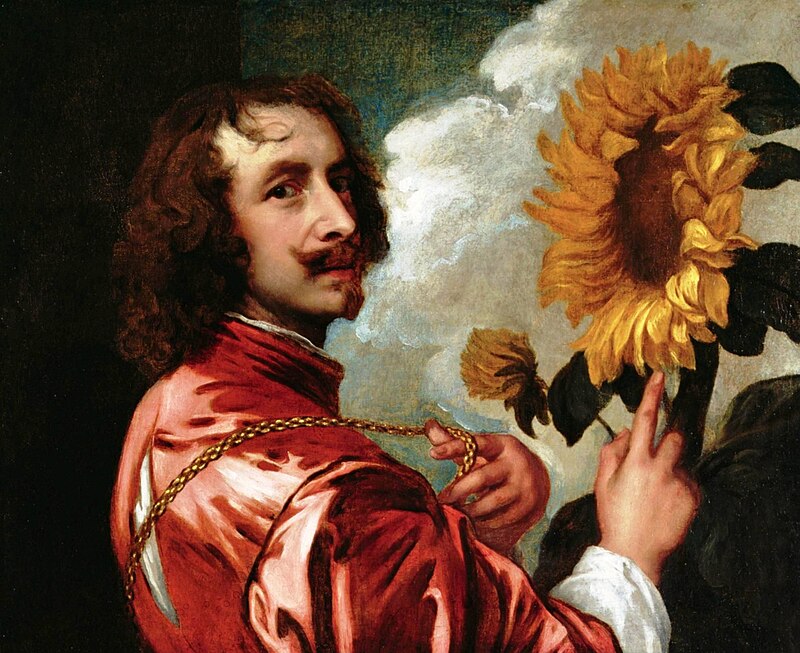
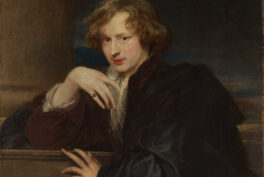
Anthony van Dyck, Self-Portrait with a Sunflower, 1633, private collection. Wikimedia Commons (public domain).
The Flemish artist Anthony van Dyck (1599–1641) arrived in London in 1632 and quickly became the go-to artist for the wealthy and fashionable. He already had close court connections, having previously visited briefly in 1620, and now he was awarded a knighthood, a pension and numerous royal commissions. His relationship with Charles I is celebrated in his 1633 self-portrait, in which he self-consciously holds up a medallion presented by the King and gestures towards an oversized sunflower which, in part, symbolizes the radiance of monarchy.
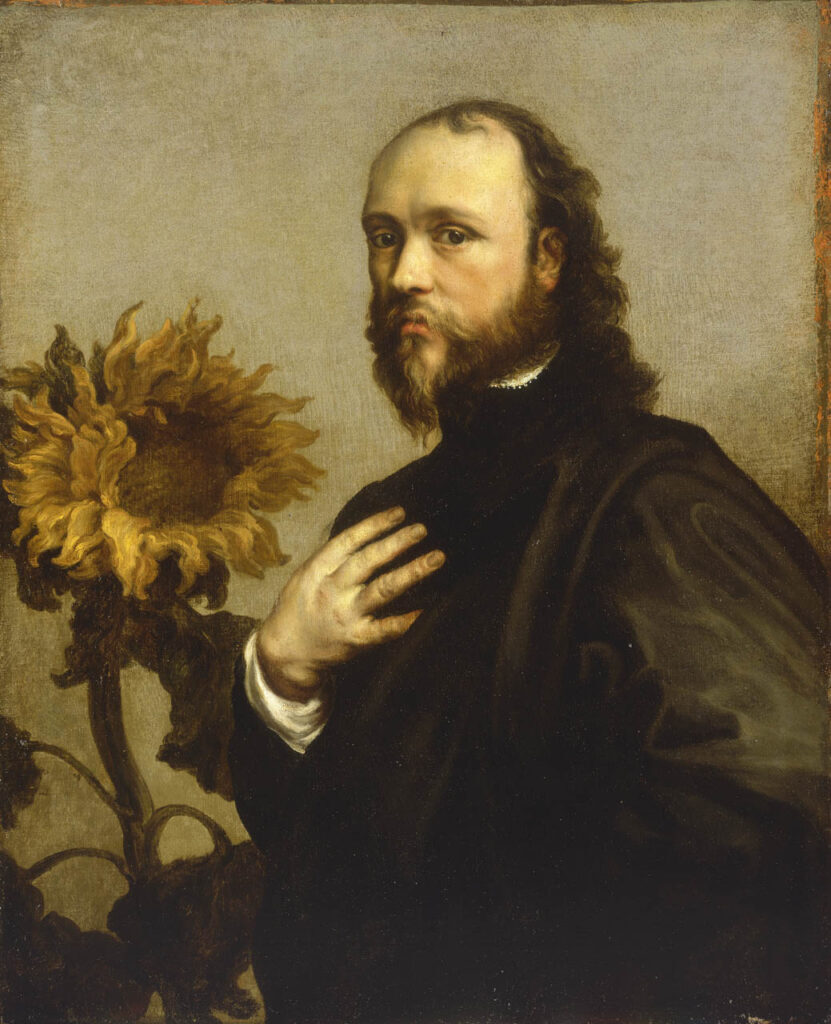
Workshop of Anthony van Dyck, Sir Kenelm Digby with Sunflower, 1630s, National Maritime Museum, Greenwich, London, UK. Wikimedia Commons (public domain).
Van Dyck was a close personal friend of Sir Kenelm, who was at least partly responsible for the painter’s arrival in England. Their bond was emphasized by Van Dyck’s use of the same sunflower motif in a portrait of Digby. Like the painter, Digby is shown in the orbit and favor of the king, symbolizing his loyalty with his hand delicately placed on his heart. Van Dyck also uses the flower to reference his friend’s interest in natural science and philosophy.
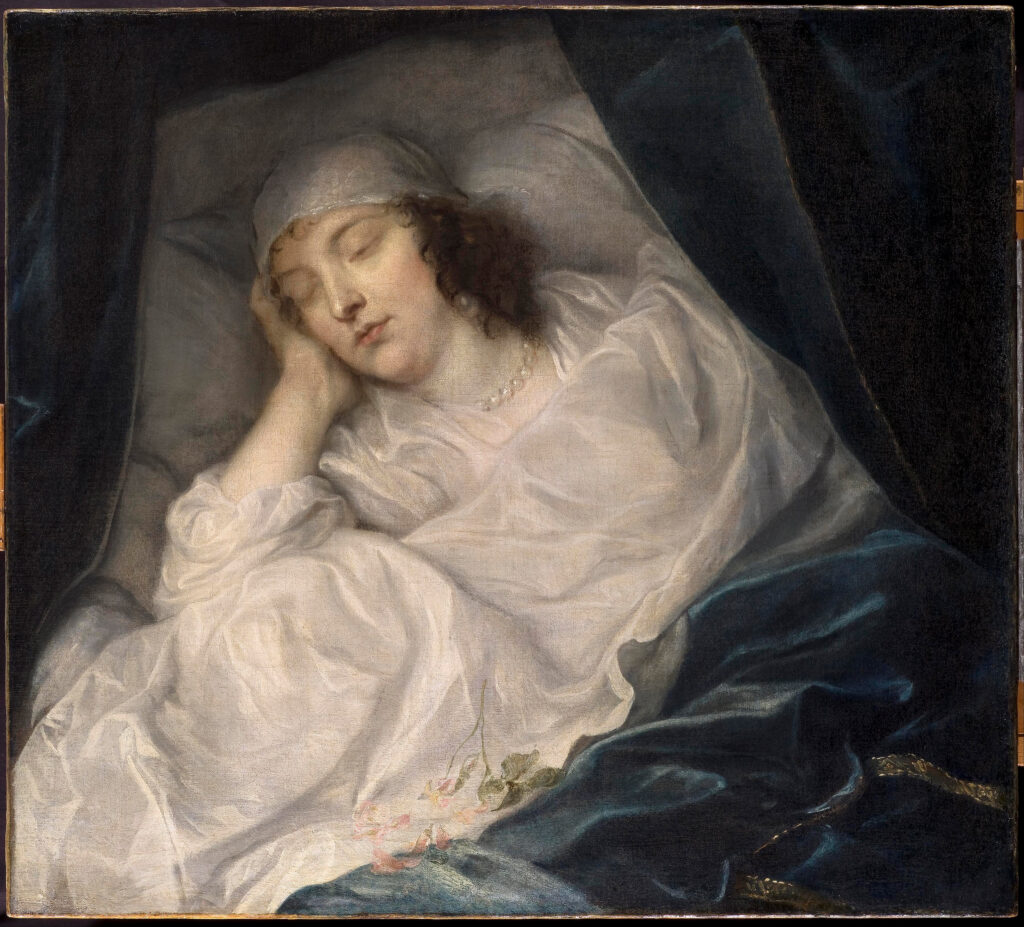
Anthony van Dyck, Venetia, Lady Digby, on Her Deathbed, 1633, Dulwich Picture Gallery, London, UK. Wikimedia Commons (public domain).
On May 1, 1633, Venetia was found dead in her bed, having passed away peacefully in her sleep. She was only 32. Unusually, an autopsy was ordered, perhaps fuelled by rumours of misadventure. Sir Kenelm, who was known for his interest in medicinal and herbal treatments, was perhaps inadvertently responsible. His wife had been taking viper wine, a gruesome beauty potion expected to maintain her looks. A death mask was ordered, the usual way of commemorating a loved one’s features, and Digby commissioned an elaborate bronze memorial.
More unusually, Kenelm also sent for van Dyck to paint a likeness of his dead wife. The resulting portrait shows Venetia as if she is sleeping, naturally posed with her hand against her cheek and her hair falling loosely from beneath her nightcap. The rumpled fabrics, painted thinly and rapidly, suggest recent movement, an echo of life. Only the pallor of her skin, as white as the surrounding bed linen, suggests that she has passed away.
To die peacefully was evidence of having led a good, pious life and having a clear conscience. Equally, in this case, it provided evidence of death by natural causes. The portrait therefore acts as a reassurance as well as a record of Venetia’s appearance. It is, however, a beautiful fiction, carefully posed and dressed. Venetia would not have slept in a pearl necklace, and the apparently carelessly scattered petals symbolize a fallen rose.
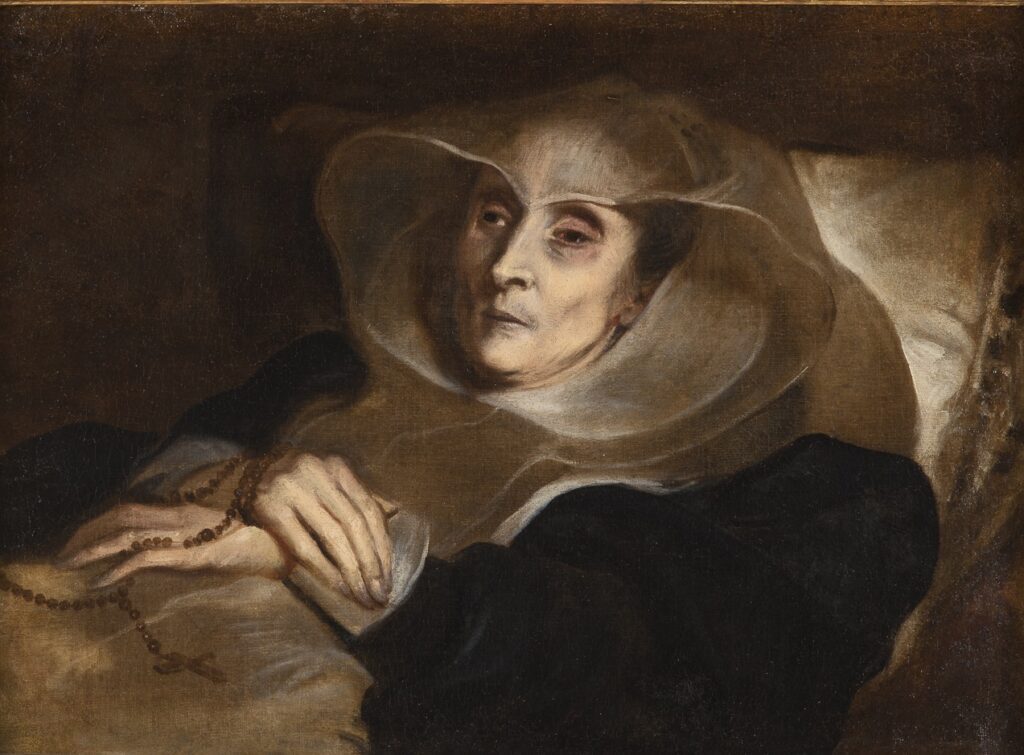
Anthony van Dyck, Sofonisba Anguissola on Her Deathbed, 1625, Royal Palace of Turin, Turin, Italy. Wikimedia Commons (public domain).
Famously, van Dyck visited Italian artist Sofonisba Anguissola in Sicily in 1624. Anguissola was around 90 and unable to paint due to her failing eyesight, but van Dyck seems to have been star-struck by the meeting and recorded her advice to him alongside the sketch he made. The resultant portrait shows an old and rather stern woman who has a steely determination about her.
After hearing of Anguissola’s death in 1625, it seems that van Dyck used his sketch and portrait as the basis for a deathbed commemoration of the artist he admired. Anguissola is shown in similar dress, lying against a white pillow, her features now more hollowed and gaunt, her eyes open but unfocused. Strikingly, van Dyck illuminates her long fingers, the tools of her trade.
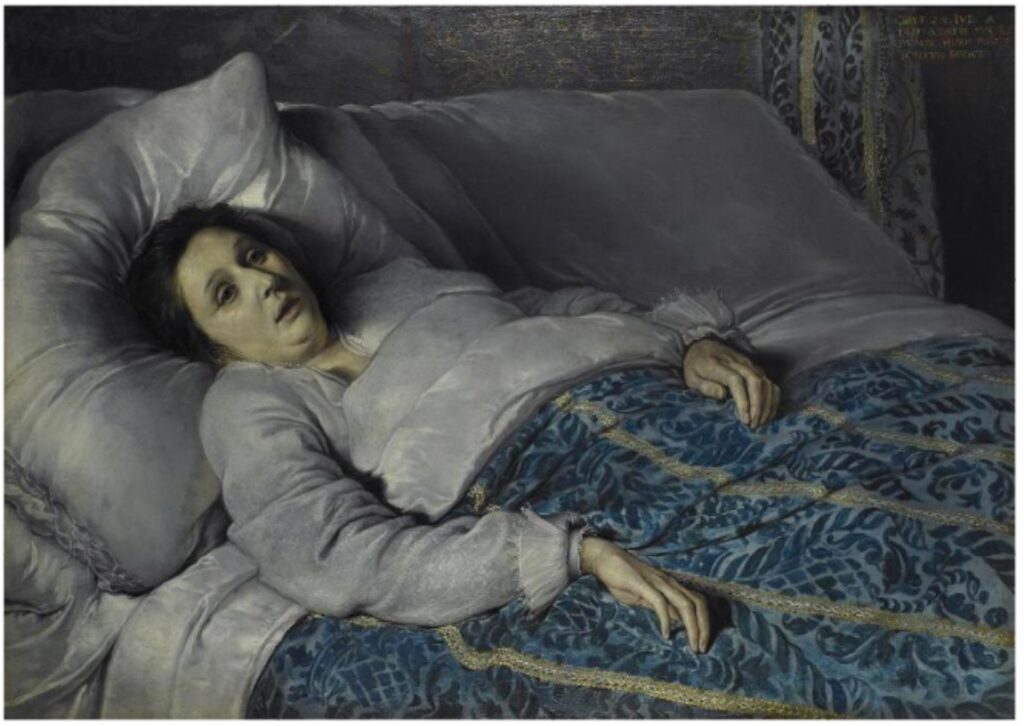
Unknown Flemish artist, Young Woman on Her Deathbed, c. 1625, Musée des Beaux-Arts de Rouen, Rouen, France. Wikimedia Commons (public domain).
Van Dyck’s image of Anguissola was part of a recognized genre for commemorating famous or religious figures. Lucas Cranach the Elder had painted Protestant reformer Martin Luther after his death in 1546, the oil based on sketches produced at the scene. English poet John Donne posed in a burial shroud for his own effigy just before his death in 1631. Paintings of ordinary people, either after death or when terminally ill, were much less common.
The anonymous woman depicted by a Flemish artist in 1625 shares certain similarities with van Dyck’s image of Venetia. The young woman is lying in her own bed, the pose natural, her head tilted slightly towards the viewer, who is positioned as if standing looking down. Both paintings have a cool palette of whites and blues. However, this is a woman who is dying rather than one who has passed. There is added pathos in her eyes as they look towards us. We can assume that, like Venetia, this was commissioned (or even painted) by a close, grieving relative.
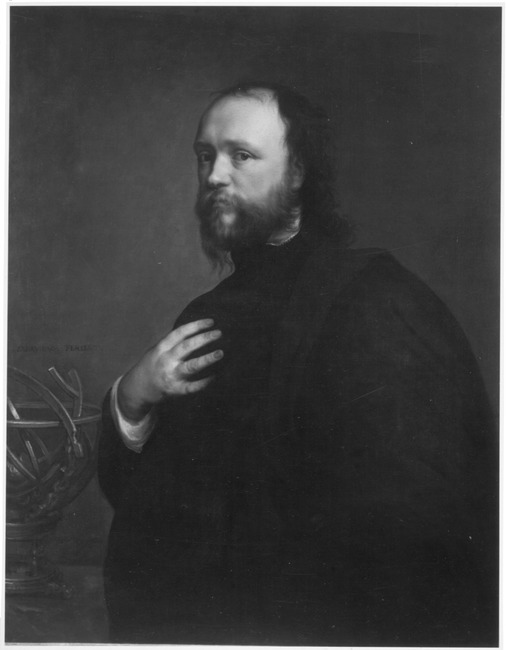
Anthony van Dyck, Portrait of Sir Kenelm Digby, 1635–1639, private collection. Wikimedia Commons (public domain).
Kenelm went into extravagant, extended mourning after Venetia’s death, withdrawing from society for two years to live at Gresham College, where he pursued his scientific interests. He wrote hundreds of letters praising her “beauty, modesty, sweetnesse, and gentlenesse…she was an Angell,” and on the first anniversary of her death, he preached a sermon extolling her virtues. One might argue that such ostentatious grieving was a result of guilt.
Digby was painted by van Dyck, in mourning, with the astrolabe from the earlier family portrait, now symbolically broken, beside him. The painting seems a deliberate reworking of the sunflower portrait, but this is now a man who has turned his back on the court and seeks solace in study.
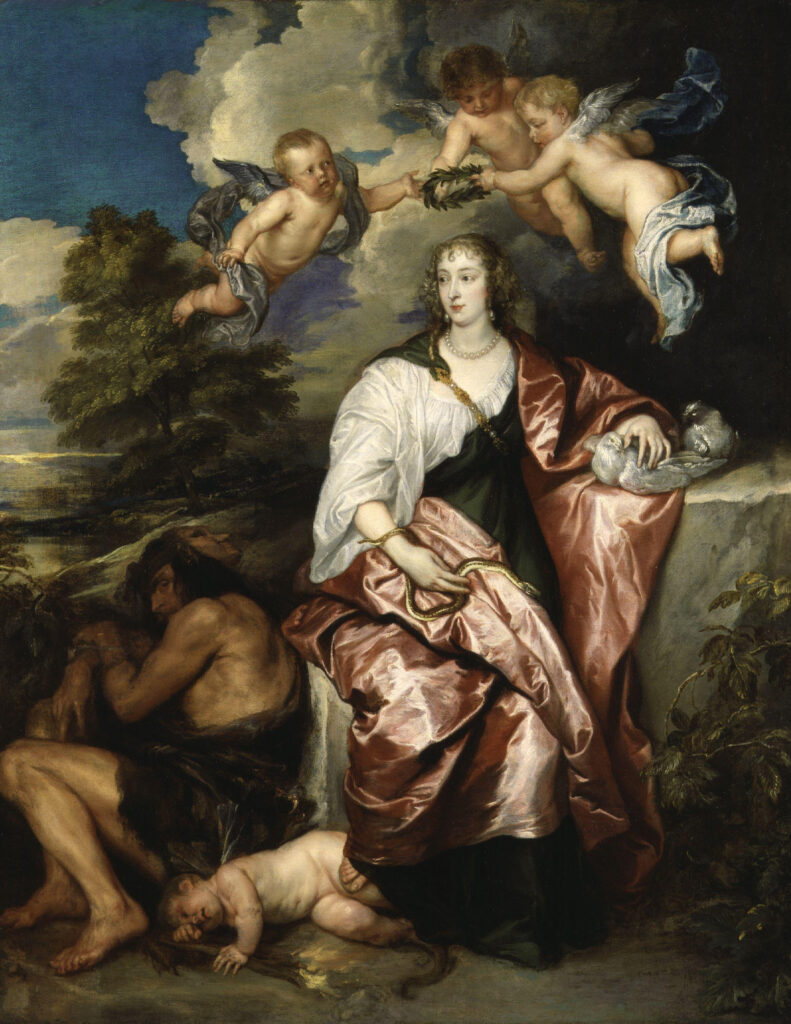
Anthony van Dyck, Venetia, Lady Digby as Prudence, 1633–1634, National Portrait Gallery, London, UK. Wikimedia Commons (public domain).
An allegorical portrait of Venetia as Prudence, which had been commissioned before her death, was now finished with greater significance. Lady Digby, holding snakes (wisdom) and doves (purity, peace and married love), is crowned by cherubs as she tramples on Love (Cupid). Two-faced Deceit is chained in the shadows, swarthy and ugly in comparison with Venetia’s illuminated paleness.
Van Dyck, who was not known for his allegorical works, combines all this complex symbolism with his characteristically luxuriant fabrics and loose landscape background. Venetia is part court beauty, part myth. Above all, she is represented as having risen above the gossip that dogged her early years.
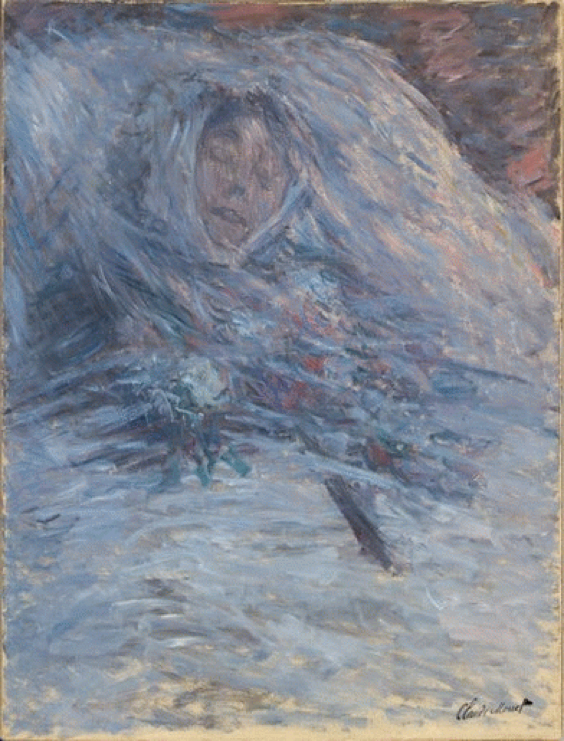
Claude Monet, Camille Monet on Her Deathbed, 1879, Musée d’Orsay, Paris, France. Wikimedia Commons (public domain).
Van Dyck’s image of Venetia, Lady Digby, on Her Deathbed remains an unusual one. Two and a half centuries later, Claude Monet recorded his first wife, who also died at age just 32, in the same way. There is no evidence that Monet knew of the earlier work, but his painting shares similarities with van Dyck’s in its cool palette and focus on the head of the figure against the bedlinen; there is even a flower.
Monet’s portrait, however, is wracked with rawness and emotion. There is no attempt to idealize the features, and he brutally described “the sequence of changing colors that death was imposing on her rigid face.” Big, scraped brushstrokes create an angry, emotional surface—it is almost as if we are viewing Camille through tear-filled eyes. Yet they are also distancing, as if the figure is being lost to us behind a symbolic “veil of death.”
Anthony van Dyck, Venetia, Lady Digby, on Her Deathbed, 1633, Dulwich Picture Gallery, London, UK. Wikimedia Commons (public domain).
Van Dyck’s Venetia, Lady Digby, on Her Deathbed is a far cry from the big, showy, luxurious portraits for which he is famous. It is small, intimate, deeply personal. Cynically, with knowledge of the backstory, it can be read as a rehabilitation piece, or a salving of guilt. Its appeal, however, is surely the way van Dyck has captured a peaceful passing, the sort of death we might all wish for. It might be a fiction, but it is a very reassuring one; but thanks to van Dyck’s skill, it is very easy to believe.
Death, Passion and Politics, Van Dyck’s Portraits of Venetia and George Digby, Dulwich Picture Gallery, London, UK, 1995.
Hermione Eyre: Viper Wine, Jonathan Cape, 2014.
DailyArt Magazine needs your support. Every contribution, however big or small, is very valuable for our future. Thanks to it, we will be able to sustain and grow the Magazine. Thank you for your help!

Catriona Miller is an art historian and freelance writer on art. Having studied at Oxford and St Andrews, she is currently researching issues of nationalism and identity in British landscape painting. She has taught art history and lectures on art history and art appreciation.
Judith and Holofernes is a Caravaggio masterpiece that captures Biblical murder and drama. Rarely has death been captured so intensely and violently...
James W Singer 13 September 2026
Explore an astonishing 1915 nude self portrait by American modernist painter Florine Stettheimer.
Candy Bedworth 21 September 2026
Winslow Homer (1836–1910) was one of the leading American Realist painters. His painting The Veteran in a New Field is a masterpiece of late...
James W Singer 30 August 2026
At first glance, A Goldsmith in His Shop (1449) appears to depict an ordinary visit to a jeweller. Yet Petrus Christus transformed an ordinary...
Shivani Gupta 23 August 2026